 Kevin Fuchs
Introduction
In an abrupt and unprecedented move to terminate physical classroom arrangements across the country for all higher education institutions (HEI), the paradigm of emergency remote teaching, or ERT for short, emerged (Hodges and Fowler, 2020; Shim and Lee, 2020). The purpose of ERT is to give students coherent, but temporary and quick access to training and instructional support (Fuchs, 2021). The quick transition concerned not just instructors but also students, who had little time to adjust to the new circumstances (Hodges and Fowler, 2020). COVID-19 has had a significant impact on education (Aguliera and Nightengale-Lee, 2020). Indeed, since the outbreak of the pandemic, more than 91 percent of the world's student population has faced educational obstacles (Silletti et al., 2021).
Amid the COVID-19 outbreak, many educators across the world struggled to modify the format of their lectures to remote teaching within a matter of days (Ferri et al., 2020; Fuchs and Karrila, 2021). This worldwide pandemic revealed a large gap in “distance teaching readiness and training required for emergency remote teaching, including using technology to assure continuity of learning for students at a distance” (Trust and Whalen, 2020, p. 197). Although, there is no systematic approach for HEI on how to handle educational continuity throughout COVID-19's rapid shift that occurred all over the world (Hodges and Fowler, 2020; Whittle et al., 2020; Silletti et al., 2021).
Based on the bibliometric analysis by Karakose et al. (2021a), it can be concluded that the majority of empirical studies have been conducted in a Western context (i.e. American–European origins), therefore, more empirical evidence from Asia is needed to appropriately evaluate the effectiveness of blended learning environments during COVID-19 and beyond. Similarly, Aguayo et al. (2022) argue that more empirical evidence is needed to accurately investigate the paradigm of e-learning in higher education. For example, the perspective of teachers and their digital capabilities is well-documented (Karakose et al., 2021b), wherein the student perspective in developing countries (such as Thailand) is lacking empirical evidence.
Furthermore, Can and Bardakci (2022) suggest that instructional design for distance education (e.g., to eliminate technological infrastructure problems) and improving student-teacher communication are important issues to address in the design of e-learning environments. In a related study with high school students, it is suggested that COVID-19 negatively affects sustainable education by deteriorating the perceived quality of life and increasing internet addiction (Karakose et al., 2022a). Moreover, it was revealed that COVID-19 had an indirect effect on student burnout and social media addiction (Karakose et al., 2022b). Although the effects are beyond the scope of the empirical data collection presented in this article, Karakose et al. (2022b) noted that developing digital literacy competencies are a possible way to alleviate the side-effects of studying during COVID-19. Therefore, a better understanding of the student perceptions has the potential for a much-needed baseline of new research.
The scope of the dataset allows for analyzing the perceived satisfaction of undergraduate students in Thailand toward emergency remote teaching (ERT) during COVID-19. Furthermore, different socio-demographic characteristics can be used as moderators and analyzed how these characteristics influence perceived satisfaction. For that purpose, data were gathered via a bilingual questionnaire that received 874 valid responses from undergraduate students across three different HEI in Thailand. The dataset provides an informative reference for practitioners and policymakers in higher education to adapt their pedagogy, as well as a secondary data source for educational researchers to analyze undergraduate students' perceived satisfaction with emergency remote teaching in Thailand (Fuchs and Karrila, 2022).
Research design
Sampling and procedure
The data were collected in three individual phases from three different universities in Thailand. The sample was selected based on the convenience sampling methodology, which according to Stratton (2021), is the most common form of non-probability sampling and participants are drawn from a close population group (p. 373). The included data were collected from full-time undergraduate students in different disciplines (including business studies, science, computing, medicine, language and cultural studies, mathematics, and tourism and hospitality management). The learning environment at the time of sampling was that traditional on-site classes were shifted to virtual classrooms in Microsoft Teams or Zoom with the support of an LMS (learning management system). An LMS is “a software application that facilitates the virtual administration and delivery of course content” (Bradley, 2021, p. 75) between the course instructor and students.
The questionnaire to obtain the sample was self-administered electronically with a bilingual option, i.e., English and Thai languages shown simultaneously. After a rigorous screening process, 51 responses were excluded from the analysis. The redundant responses included 16 responses from another university, 14 responses from international exchange students, and 21 incomplete responses. The 16 responses from other universities were removed since they could potentially deplete the sampled results (Tables 1–3) neither they were large enough to stand on their own as a separate sample. The 14 responses from international exchange students were dismissed since the course selection and nature of stay (usually limited to 5 months) differed substantially from the remainder of the sample. Furthermore, 21 responses had incomplete fields, i.e., blank responses, that did not allow for further analysis. A total of 874 eligible responses were included as a population sample for the data analysis. The level of confidence for precise sampling was quantified at 95% (p < 0.05). Based on included responses, the characteristics of the participants were summarized by their gender, nationality, year of study, age range, institution, and preferred mode of study (Tables 1–3). The ratio between female and male students is the result of a large representation of tourism and hospitality students in the sample, which is generally more attended by female than male students.
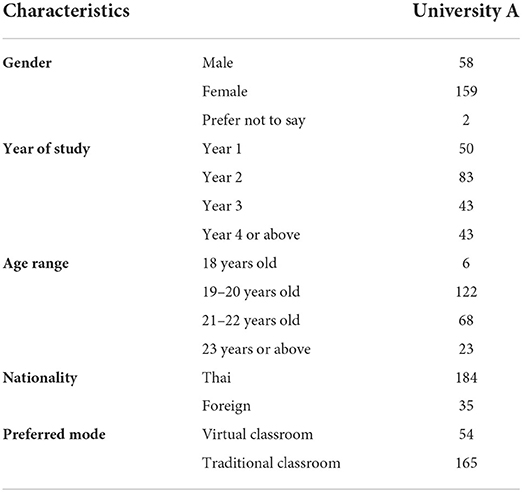
Table 1. Sample from Prince of Songkla University in Phuket, Thailand.
The first phase of the data collection took place at the Prince of Songkla University in Phuket, Thailand. The preliminary findings from this isolated sample were previously reported by Fuchs and Karrila (2021). The data was gathered in the first quarter of 2021 collected during a nationwide ERT policy as a result of the forthcoming spread of the coronavirus pandemic. Henceforth, this sample is referred to as University A (n = 219). The sociodemographic variables of the sampled participants are summarized in a tabular format (Table 1).
The second phase of the data collection took place at Khon Kaen University in Khon Kaen, Thailand. The preliminary findings from this isolated sample were previously reported by Fuchs and Karrila (2022). The data was gathered in the second quarter of 2021 collected during a nationwide ERT policy as a result of the forthcoming spread of the coronavirus pandemic. Henceforth, this sample is referred to as University B (n = 363). The sociodemographic characteristics of the sample are summarized in Table 2.
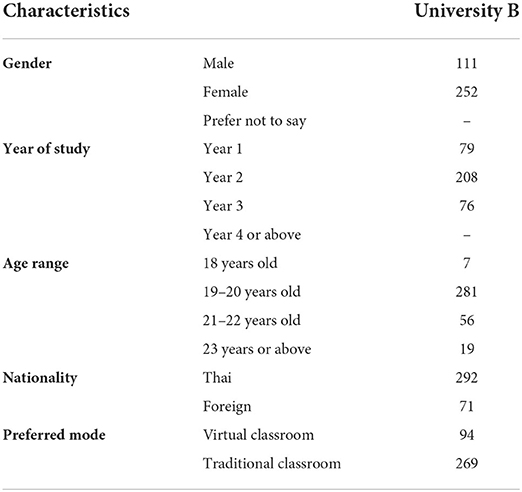
Table 2. Sample from Khon Kaen University in Khon Kaen, Thailand.
The third phase of the data collection took place at the Mae Fah Luang University in Chiang Rai, Thailand. The findings from this isolated sample were not previously published. The data was gathered in the third quarter of 2021 collected during a nationwide ERT policy as a result of the forthcoming spread of the coronavirus pandemic. Henceforth, this sample is referred to as University C (n = 292). The sociodemographic characteristics of the sample are summarized in Table 3.
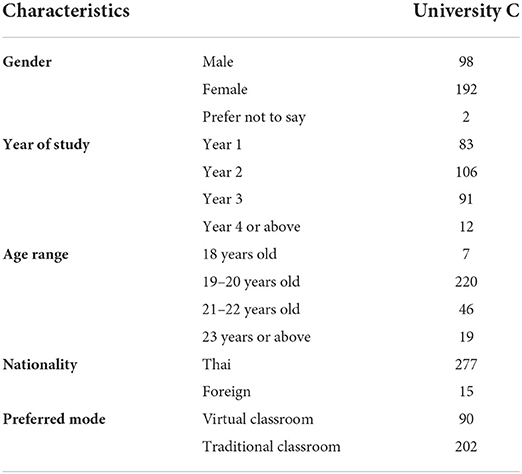
Table 3. Sample from Mae Fah Luang University in Chiang Rai, Thailand.
Research instrument
The survey questionnaire was divided into three sections with a total of 27 items and was adopted from an earlier case study (Fuchs and Karrila, 2021). The first component of the survey questionnaire was designed to gather information about the participant's socio-demographic profile. The second and third sections contained 10 items each, wherein the participant was able to express their view on a 5-point Likert-type scale with “pre-coded responses for Not Important At All (1), Not Very Important (2), Somewhat Important (3), Very Important (4), and Extremely Important (5) in the second section. Similarly, the third section had pre-coded Likert-type responses for Not At All Satisfied (1), Not Very Satisfied (2), Somewhat Satisfied (3), Very Satisfied (4), and Extremely Satisfied (5)” (Fuchs and Karrila, 2021, p. 119). Otherwise, the items in the second and third sections of the questionnaire were identical to compare the perceived importance and performance of each item (Table 5). The questions and organization of the administered questionnaire were scrutinized for validity by three senior colleagues. Moreover, the questionnaire was tested with 10 students for comprehension of the questions. These preliminary examinations generated minimal modifications to improve the clarity of the questionnaire.
Ethics statements
Before attempting the questionnaire, the participants were informed about the aim of the study and its purpose. Moreover, it was made clear to the participants that their participation is voluntary and that they had the right to withdraw at any stage. Furthermore, it was explained to the students that their participation would have no impact on their academic performance. The information gathered would be treated with confidentiality (i.e., anonymized in all reporting). For ethical reasons and to protect the participants' identities, some specific information in the socio-demographic profile was generalized before disclosure in this paper. Namely, some specific minority nationalities were labeled as “foreign” rather than displaying the specific nationality as this could potentially expose the participant's identity. The participating students were of legal age (i.e. 18 years or above), and therefore, no consent from their legal guardians was obtained. However, all participating students gave informed consent to participate in the study.
Empirical results
Table 4 shows the summarized results of the three samples based on the 874 responses included in the dataset. The sociodemographic characteristics include information about the participant's reported gender, year of study, age range, nationality, and preferred classroom arrangement (i.e., traditional on-site classroom or virtual emergency remote teaching).
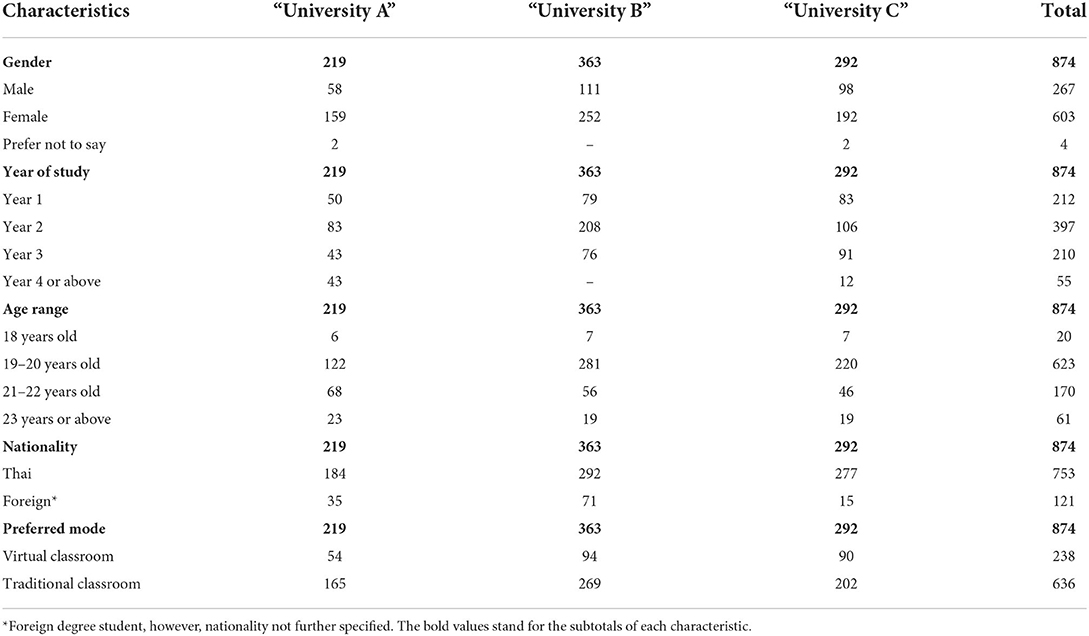
Table 4. Characteristics of the participants organized by their institution.
The accompanying dataset can be further analyzed and discussed based on the data labels and statements shown in Table 5, as well as a copy of the survey can be accessed through the digital object identifier in Mendeley Data at doi: https://doi.org/10.17632/44mm73sgws.1.
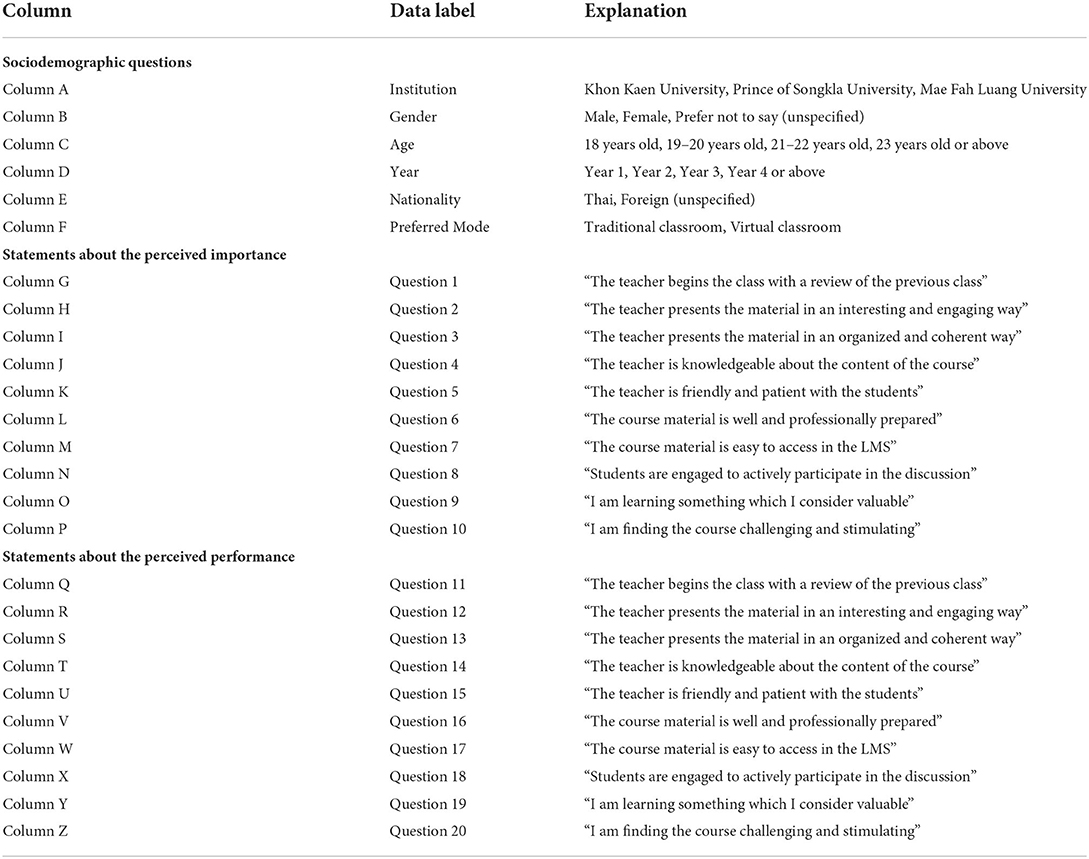
Table 5. Description of the characteristics in the dataset [adopted from the original study by Fuchs and Karrila (2021)].
Conclusion
The scope of the dataset allows for analyzing the satisfaction with ERT as perceived by undergraduate students in Thailand during the global coronavirus pandemic. Furthermore, different sociodemographic characteristics can be used as moderators and analyzed how these characteristics influence perceived satisfaction. For example, the dataset permits the study of socio-demographic characteristics that influence the perceived satisfaction of these undergraduate students. The empirical data functions as an insightful reference for educators and policymakers in higher education to adjust their pedagogics based on the performance of specific items in the questionnaire. Moreover, the data acts as a secondary data source for researchers in higher education to examine the perceived satisfaction of undergraduate students' perception of ERT. Finally, the dataset offers graduate students and early-career researchers authentic data that allows them to practice their data analytics skills with real-world data.
Data availability statement
The dataset has been deposited into an open repository and is available under the following permanent digital object identifier in Mendeley Data at https://doi.org/10.17632/44mm73sgws.1.
Ethics statement
The studies involving human participants were reviewed and approved by the Research Committee of the Faculty of Hospitality and Tourism, Prince of Songkla University. Written informed consent for participation was not required for this study in accordance with the national legislation and the institutional requirements.
Author contributions
The author confirms being the sole contributor to this work and has approved it for publication.
Funding
The empirical work was supported by the Faculty of Hospitality and Tourism, Prince of Songkla University through the Fast Track Data Collection Grant.
Conflict of interest
The author declares that the research was conducted in the absence of any commercial or financial relationships that could be construed as a potential conflict of interest.
Publisher's note
All claims expressed in this article are solely those of the authors and do not necessarily represent those of their affiliated organizations, or those of the publisher, the editors and the reviewers. Any product that may be evaluated in this article, or claim that may be made by its manufacturer, is not guaranteed or endorsed by the publisher.
References
Aguayo, J. M. B., Valdes, J. H., Cordoba, V. H. M., Nájera, M. J., Vázquez, F. R. S., Muñoz, E. M., et al. (2022). Digital activism in students of a university in central Mexico in the COVID-19 era. Adv. Mob. Learn. Educ. Res. 2, 297–307. doi: 10.25082/AMLER.2022.01.014
Aguliera, E., and Nightengale-Lee, B. (2020). Emergency remote teaching across urban and rural contexts: perspectives on educational equity. Inf. Learn. Sci. 121, 471–478. doi: 10.1108/ILS-04-2020-0100
Bradley, V. M. (2021). Learning management system (LMS) use with online instruction. Int. J. Technol. Educ. 4, 68–92. doi: 10.46328/ijte.36
Can, Y., and Bardakci, S. (2022). Teachers' opinions on (urgent) distance education activities during the pandemic period. Adv. Mob. Learn. Educ. Res. 2, 351–374. doi: 10.25082/AMLER.2022.02.005
Ferri, F., Grifoni, P., and Guzzo, T. (2020). Online learning and emergency remote teaching: opportunities and challenges in emergency situations. Societies 10, 86. doi: 10.3390/soc10040086
Fuchs, K. (2021). Students' perceptions concerning emergency remote teaching during COVID-19: a case study between higher education institutions in Thailand and Finland. Perspect. Glob. Dev. Technol. 20, 278–288. doi: 10.1163/15691497-12341595
Fuchs, K., and Karrila, S. (2021). The perceived satisfaction with emergency remote teaching (ERT) amidst COVID-19: an exploratory case study in higher education. Educ. Sci. J. 23, 116–130. doi: 10.17853/1994-5639-2021-5-116-130
Fuchs, K., and Karrila, S. (2022). Satisfaction with remote teaching in thai higher education. Educ. Sci. J. 24, 206–224. doi: 10.17853/1994-5639-2022-2-206-224
Hodges, C. B., and Fowler, D. J. (2020). The COVID-19 crisis and faculty members in higher education: from emergency remote teaching to better teaching through reflection. Int. J. Multidiscip. Perspect. High. Educ. 5, 118–122. doi: 10.32674/jimphe.v5i1.2507
Karakose, T., Ozdemir, T. Y., Papadakis, S., Yirci, R., Ozkayran, S. E., Polat, H., et al. (2022a). Investigating the relationships between COVID-19 quality of life, loneliness, happiness, and internet addiction among K-12 teachers and school administrators—a structural equation modeling approach. Int. J. Environ. Res. Public Health 19, 1052. doi: 10.3390/ijerph19031052
Karakose, T., Polat, H., and Papadakis, S. (2021b). Examining teachers' perspectives on school principals' digital leadership roles and technology capabilities during the COVID-19 pandemic. Sustainability 13, 13448. doi: 10.3390/su132313448
Karakose, T., Yirci, R., and Papadakis, S. (2022b). Examining the associations between COVID-19-related psychological distress, social media addiction, COVID-19-related burnout, and depression among school principals and teachers through Structural Equation Modeling. Int. J. Environ. Res. Public Health 19, 1951. doi: 10.3390/ijerph19041951
Karakose, T., Yirci, R., Papadakis, S., Ozdemir, T. Y., Demirkol, M., Polat, H., et al. (2021a). Science mapping of the global knowledge base on management, leadership, and administration related to COVID-19 for promoting the sustainability of scientific research. Sustainability 13, 9631. doi: 10.3390/su13179631
Shim, T. E., and Lee, S. Y. (2020). College students' experience of emergency remote teaching due to COVID-19. Child. Youth Serv. Rev. 119, 105578. doi: 10.1016/j.childyouth.2020.105578
Silletti, F., Ritella, G., Iacobellis, B., Semeraro, C., Episcopo, E., Cassibba, R., et al. (2021). Distance learning in Higher Education during the first pandemic lockdown: the point of view of students with special educational needs. Qwerty-Open Interdiscip. J. Technol. Cult. Educ. 16, 30–46. doi: 10.30557/QW000042
Stratton, S. J. (2021). Population research: convenience sampling strategies. Prehosp. Disaster Med. 36, 373–374. doi: 10.1017/S1049023X21000649
Trust, T., and Whalen, J. (2020). Should teachers be trained in emergency remote teaching? Lessons learned from the COVID-19 pandemic. J. Technol. Teach. Educ. 28, 189–199. Available online at: https://www.learntechlib.org/primary/p/215995/
Keywords: emergency remote teaching, COVID-19, distance education, student satisfaction, Thailand
Citation: Fuchs K (2022) The perceived satisfaction with emergency remote teaching: Evidence from Thailand in higher education during COVID-19. Front. Educ. 7:969850. doi: 10.3389/feduc.2022.969850
Received: 15 June 2022; Accepted: 22 August 2022;
Published: 28 September 2022.
Edited by:
Stamatios Papadakis, University of Crete, GreeceReviewed by:
Milan Kubiatko, J. E. Purkyne University, CzechiaHanita Ismail, National University of Malaysia, Malaysia
Copyright © 2022 Fuchs. This is an open-access article distributed under the terms of the Creative Commons Attribution License (CC BY). The use, distribution or reproduction in other forums is permitted, provided the original author(s) and the copyright owner(s) are credited and that the original publication in this journal is cited, in accordance with accepted academic practice. No use, distribution or reproduction is permitted which does not comply with these terms.
*Correspondence: Kevin Fuchs, a2V2aW4uZkBwaHVrZXQucHN1LmFjLnRo