 Paola Andreucci-Annunziata
 Andrea Riedemann
 Susana Cortés
 Augusto Mellado*María Teresa del Río
 Alejandro Vega-Muñoz*
- Instituto de Investigación y Postgrado, Facultad de Ciencias de la Salud, Universidad Central de Chile, Santiago, Chile
Aim: This systematic review identified systematic reviews of quantitative and qualitative empirical studies on the promotion and development of critical thinking in higher education students that allowed us to answer the following research questions: (1) What are the main definitions of critical thinking found in systematic reviews of critical thinking in higher education, and what are their similarities and differences? and (2) What are the most commonly used teaching strategies in higher education for teaching or promoting critical thinking, and how effective have they proven to be?
Methods: Systematic reviews were selected according to the guidelines for systematic reviews and meta-analyzes (PRISMA, 2020) and the eligibility criteria proposed by the PICOS strategy (population, interventions, comparators, outcomes and study design), based on 23 records of scientifically identified registers in the Journal Citation Report databases of the Web of Science.
Results: The bibliometric and systematic search of reviews of empirical studies on the topic allowed the selection of five systematic reviews. The results highlighted that conceptually critical thinking is related to both dispositions and skills, and that although there is no consensus on its definition, it is established that it is a higher-order cognitive process that can be trained. However, the results show that more studies have been conducted considering critical thinking as a skill than as a disposition, that the immersion approach has been widely used, and that some instructional strategies have shown greater effectiveness than others when the disciplines are evaluated independently.
Discussion: Despite the relative consensus on the importance of critical thinking for professional development in higher education, this review highlights some difficulties in conceptualizing critical thinking, in the relationship between dispositions and skills, and in its assessment in academic disciplines.
1. Introduction
How we think has become a fundamental pedagogical discussion, in terms of the kinds of thinking skills needed in particular societies, and the role and possibilities of education in developing or fostering these skills. In this context, critical thinking has become a central notion, understood in educational institutions in the Global North as a key necessity in contemporary societies. In this regard, the UN and UNESCO have gone so far as to define critical and creative thinking, which enables innovation and knowledge sharing, as a requirement for achieving the Sustainable Development Goals and therefore a priority for any educational institution (Fejes, 2006; Beneitone and Yarosh, 2015; Organización de Naciones Unidas, 2018; Sabzalieva et al., 2021). As a result, various higher education (HE) institutions around the world have included critical thinking among their objectives (Zahavi and Friedman, 2019; Cruz et al., 2021). However, despite broad agreement on its relevance, there is neither a single definition of critical thinking that satisfies the complex and diverse aspects that are part of critical thinking discussions, nor agreement on the best method for teaching or fostering critical thinking in HE, or on how to assess or measure it (Halpern, 1998; Van Damme and Zahner, 2022). Moreover, recent studies show that even within HEIs that have established critical thinking as an explicit pedagogical objective and developed specific strategies for teaching it, students do not appear to become significantly more skilled as critical thinkers as a result of their education, with variables such as nationality, languages, gender and socio-economic background having varying degrees of impact in this regard. As suggested by van Damme and Zahner (2022), given the importance that critical thinking has gained in higher education and the limited success of these critical thinking programmes, universities should make greater efforts in this regard.
In terms of its conceptualization, a specific link between critical thinking and education dates back to the beginning of the twentieth century. El Soufi and See (2019) noted that the Deweyan approach had already pointed to the role of education in strengthening critical thinking among students as a key objective. More recently, in 1980, Peter Facione gave rise to the Delphi Project (Facione, 1990). This was based, on the one hand, on the observation in various cases that students did not reason adequately. And on the other, the identification of a lack of agreement about how critical thinking was defined, taught and assessed, despite its agreed relevance to higher education (Facione, 1990). The Delphi project brought together 46 experts from around the world, including philosophers, scientists, and educators, with the aim of defining critical thinking and developing recommendations on how to teach and assess it (El Soufi and See, 2019).
The resulting definition – and one of the most widely quoted – referred to critical thinking as: “purposeful, self-regulating judgment that results in interpretation, analysis, evaluation, and conclusion, as well as an explanation of the evidential, conceptual, methodological, critical, or contextual considerations on which that judgment is based. Critical thinking is essential as a tool of inquiry. As such, critical thinking is a liberating force in education and a powerful resource in personal and civic life” (Facione, 1990, p. 651). However, despite this agreed definition, some authors have noted that there is still a lack of agreement on how to define and approach critical thinking (Niu et al., 2013). For example, there is a debate about whether it is even possible to teach critical thinking. This discussion relates, on the one hand, to the argument that critical thinking is a socio-culturally specific practice that cannot be easily taught or learned (Ramanathan and Kaplan, 1996; Atkinson, 1997). In this regard, variables such as nationality, culture, language and socio-economic background may be key to differentiating students’ critical thinking learning processes (Giacomazzi et al., 2022; Van Damme and Zahner, 2022).
And, on the other hand, a discussion related to this academic talent from the creative perspective or the development of divergent thinking (Crossley-Frolick, 2010), distinguishing nativist, deterministic or dispositional approaches from others that are more developmental or related to formal and informal learning (Andreucci-Annunziata, 2012, 2016; Payan-Carreira et al., 2019). In this last sense, from a relational, socio-constructivist, dialogical, and critical conception, both academic talent and critical thinking are referred to from their possibilities and limitations in the field of pedagogical interaction and problem-solving (Andreucci-Annunziata, 2016; Ahern et al., 2019). In this sense, Puig et al. (2019) suggest that the transition from ‘what to think’ to ‘how to think’ adequately summarizes the challenge of teaching critical thinking, a challenge that requires major transformations in instructional paradigms and that, in turn, questions the initial conceptions.
Given the polysemy of the concept and the divergences around it, critical thinking is generally understood as doubly constituted: on the one hand, as an ability (skill) and, on the other, as a disposition, both dimensions being closely related (Dumitru et al., 2018). The former understands critical thinking as a cognitive skill, or a set of cognitive skills necessary to think critically. As a disposition, critical thinking refers to a set of basic, predetermining affective dispositions, toward life in general and toward specific thinking situations (Cruz et al., 2021). These dispositions are considered necessary (as prerequisites) for the development of the cognitive skills that constitute critical thinking. Understood as dispositions, critical thinking is close to what Dewey (1910) calls “good mental habits” or what Siegel (1988) has conceptualized as “critical spirit.” Facione (1990) proposes a list of affective dispositions grouped into two categories: approaches to life in general (e.g., confidence in one’s own reasoning abilities, interest in keeping informed, openness to different world views, flexibility in considering other alternatives and opinions, etc.) and approaches to specific issues, questions or problems (e.g., clarity in formulating questions and concerns, diligence in seeking relevant information, etc.). The distinction between these two categories is important because it emphasizes that critical thinking is not developed exclusively in relation to specific aspects of reasoning but is rather a way of approaching different aspects of everyday life and questioning this process of approach (Facione, 2000; Braun et al., 2020).
Simultaneously, critical thinking studies point out that it is not enough to teach cognitive skills, but that people should: “understand the value of critical thinking and have an interest and enthusiasm in applying it. While critical thinking skills can be explicitly taught, dispositions need to be modeled and nurtured so that students progressively adopt an identity as critical thinkers” (Al-Ghadouni, 2021, p. 241). However, while many educators agree that critical thinking is an important skill to teach, not all agree on the best way to teach it. The disagreement falls mainly on whether it is a generic skill that can be transferred between different dimensions and that can be taught independently of the subject or topic, or whether it is specific to each dimension and, therefore, requires positioning (McPeck, 1981; Bailin et al., 1999; Moore, 2013). Therefore, a detailed analysis of how critical thinking is translated into teaching-learning processes shows several possible paths. Generally, however, there is agreement among educational researchers on the key principles that should shape teaching and learning processes to promote critical thinking, including: “facing open-ended problems, encountering real-world complexity, using multiple knowledge sources, developing knowledge artifacts to explicate thinking, utilizing collective efforts and group resources instead of favoring individual student work, and integrating rich use of modern technologies into the work processes” (Hyytinen et al., 2019, p. 71). Regarding these teaching-learning processes, three relevant concepts are identified in the literature: (1) approaches, (2) instructional strategies, and (3) learning materials.
The concept of approaches is usually used in critical thinking studies referring to Ennis (1989)’s distinction between four different ways of teaching critical thinking mainly differentiated according to the explicit or implicit teaching of critical thinking (Ahern et al., 2019; El Soufi and See, 2019). These pedagogical approaches to critical thinking have been synthesized into four types: general method; infusion; immersion and mixed method, which we briefly explain below (Al-Ghadouni, 2021). The general method consists of the explicit teaching of critical thinking, to acquire or developing critical thinking skills as the sole focus. In the infusion method, critical thinking constitutes an explicit objective but in parallel to a specific topic of study. Critical thinking is taught in relation to the topic at hand, and students are encouraged to think critically about it, while the basic principles of critical thinking are explicitly taught as well. In the immersion approach, critical thinking is not an explicit teaching objective. The focus is on immersion in a specific theme or subject, which is taught in a way that provokes critical thinking. Critical thinking principles are not explicitly addressed, and students are not necessarily aware that they are being trained to think critically. Finally, the mixed method consists of a combination of the general method and the infusion or immersion method.
The second key concept in relation to critical teaching-learning processes is instructional strategies. These refer to more specific kinds of activities through which teachers expect students to develop and engage in critical thinking practices. Some of these strategies are: defining arguments, evaluating the reliability of sources, identifying fallacies and assumptions, using inductive and deductive logic, synthesizing information, making inferences, assessment techniques like peer-review, teacher evaluation, and self-evaluation, debates, brainstorming techniques, journal writing, scaffolding, active learning strategies, FRISCO (Ennis, 1996), the guidelines of Elder and Paul (2003), the ‘IDEALS’ technique of Facione (2011), Lecture-Discussion Teaching (LDT), Problem-Based Learning (PBL) (Ennis, 2016), problem-solving (inquiry), lecture discussions (argumentation), group work, role-play, self-study, self and peer-assessment, context-based learning (Dominguez, 2018a), constructing maps with structured arguments, concept mapping, dialog (learning through discussion), authentic instruction (presenting real problems, simulation, sequential assignments, and performance-based assessment).
The third concept, learning materials, is suggested by Puig et al. (2019) to identify relevant materials that are part of critical thinking teaching-learning processes, such as literary and narrative texts (articles, essays), E-learning activities, and authentic problems.
In addition to the conceptual and methodological discussion around the critical thinking pedagogical approach, critical thinking studies have also focused on discussing the possibility of evaluating it. Various instruments have been developed for this purpose, such as the California Test, which is based on the work of Facione (2000) and focuses on skills, or the Cornell Test, which is based on the work of Ennis and Weir (1985) and focuses on dispositions.
Given the current relevance of critical thinking in higher education and the breadth of its conceptual approaches and the heterogeneity of pedagogical methods used to address it, this article discusses the results of a systematic review of systematic reviews that have addressed critical thinking in relation to higher education. This review responds to the need to identify the main definitions and didactic approaches that have emerged from the establishment of critical thinking as a pedagogical objective in different HE institutions worldwide, systematizing what has been learned in this process to facilitate the formulation of guidelines. Theoretical and methodological support to those academic institutions that intend to implement critical thinking among their teaching objectives and hallmarks in the present and future. In this way, the article develops by answering the following questions.
• What are the main definitions of critical thinking found in systematic reviews of critical thinking in higher education? What are their similarities and differences?
• What are the most commonly used teaching strategies in higher education to teach or promote critical thinking, and how effective have they been shown to be?
In what follows, the materials and methods of the systematic reviews are presented, and then the findings are presented and discussed.
2. Materials and methods
In this review, the Preferred Reporting Items for Systematic Reviews and Meta-Analyzes (PRISMA, 2020) guidelines (Page et al., 2021a,b) were used, and the PICOS (participants, interventions, comparators, outcomes, and study design) strategy was used to establish the eligibility criteria for the articles (Methley et al., 2014). In addition, the initial search for articles was performed using bibliometric procedures (Porter et al., 2002). Systematic reviews of systematic reviews and bibliometrics have recently been used separately to address educational topics related to learning in general and critical thinking competencies in HE students (Djamnezhad et al., 2021; Pagán Castaño et al., 2022). Both methods blend allows for increased accuracy and replicability of study (Andreucci-Annunziata et al., 2022).
A set of articles was used as a homogeneous citation base, avoiding the impossibility of comparing indexing databases that use different calculation bases to deter-mine journals’ impact factors and quartiles (Bakkalbasi et al., 2006; Falagas et al., 2008; Chadegani et al., 2013; Harzing and Alakangas, 2016; Mongeon and Paul-Hus, 2016), relying on the Web of Science (WoS) core collection, selecting articles published in journals indexed by WoS in the Science Citation Index Expanded (WoS-SCIE) and Social Science Citation Index (WoS-SSCI), from a search vector on critical thinking TS = ((critical NEAR/0 (thinking OR perspective OR approach)) AND (Higher NEAR/0 Education)), without restricted temporal parameters, performing the extraction on 3 October 2022. The following types of documents were included: articles and review articles.
A complementary bibliometric analysis was carried out on a set article obtained for the topic under study. Using two fundamental bibliometric laws:
1. Exponential science growth or Price’s Law, through the exponential adjustment degree of the annual growth of publications, as a measure of a strong interest among the scientific community to develop studies on critical thinking in HE, conforming a critical researcher mass developing this knowledge topic (Price, 1976; Dobrov et al., 1979), and determining the time median and its contemporary and obsolete periods.
2. Then we have excluded proceeding papers, book reviews and editorial materials and other languages, for estimate the publications concentration in journals by Bradford’s Law, distributing the journals in thirds according to the decreasing number of documents published in them, establishing as the nucleus of journals with the highest concentration that cover at least 33% of the total publications (Bulik, 1978; Morse and Leimkuhler, 1979; Pontigo and Lancaster, 1986; Swokowski, 1988; Kumar, 2014).
According to the checklist of the PRISMA 2020 guidelines (Page et al., 2021a,b), the following quality steps for systematic reviews were verified according to the following sections: 1 (title), 2 (structured abstract), 3 (rationale), 4 (objectives), 5 (eligibility criteria), 6 (sources of information), 7 (search strategy), 8 (selection process), 9 (data extraction process), 10a and 10b (data items), 16a and 16b (study selection), 17 (study characteristics), 19 (results of individual studies), 23 (discussion), 24 (registration and protocol), 25 (support), 26 (competing interests), and 27 (availability of data, code and other materials). The following sections were excluded because, as a review of reviews or umbrella review (Aromataris et al., 2015), the data from each study to satisfy their criteria were not considered pertinent within the narrative synthesis of the present review, or were not available, or were presented only in a general way after having been part of a respective protocol: 11 (study risk of bias assessment), 12 (effect measures), 13 (synthesis methods), 14 (reporting bias assessment), 15 (certainty assessment), 18 (risk of bias in studies), 20 (results of syntheses), 21 (reporting biases), and 22 (certainty of evidence).
Through PRISMA guidelines, the selection of articles was specified based on eligibility criteria: the target population (participants), the interventions (methodological techniques), the elements of comparison of these studies, the outcomes of these studies, and the study designs (the criteria of the PICOS strategy as shown in Table 1). Screening of the preselected systematic reviews was first performed independently by the following authors, PA-A, AR, SC, AM, and AV-M. Then, the final review of the included reviews was done in the following pairs: PA-A, AM; AR, SC; and AV-M, AM. In case of doubt, it was decided to include a third reviewer among the six authors.
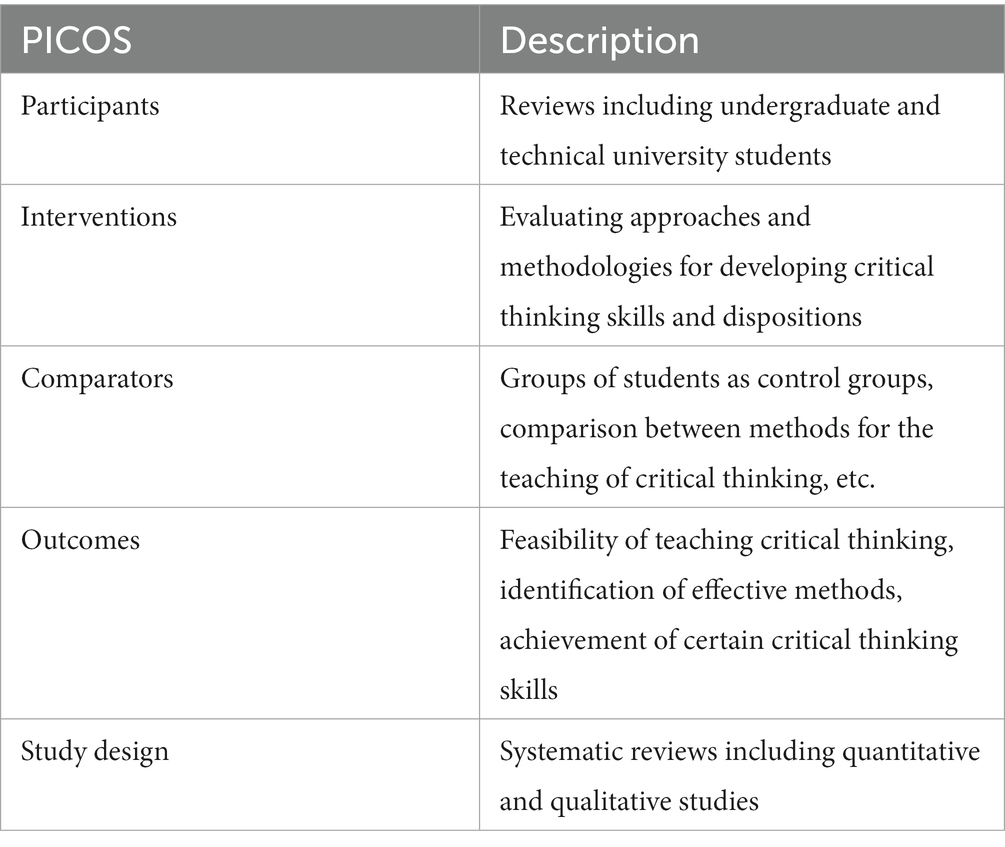
Table 1. Eligibility criteria using PICOS (participants, interventions, comparators, outcomes, and study design).
3. Results
The bibliometric systematization over an unrestricted period in the WoS main collection resulted in 1999 documents between 1965 and 2022, showing a continuous publication record from 1994 onwards. Figure 1 shows an exponential publication growth between 1994 and 2022 with an R2 adjustment of 78% (trend line and value in red). In addition to highlighting as a semi-period of more recent publications between 2018 and 2022 (green shaded area), with an analysis set reduced to 1,084 documents for this period.
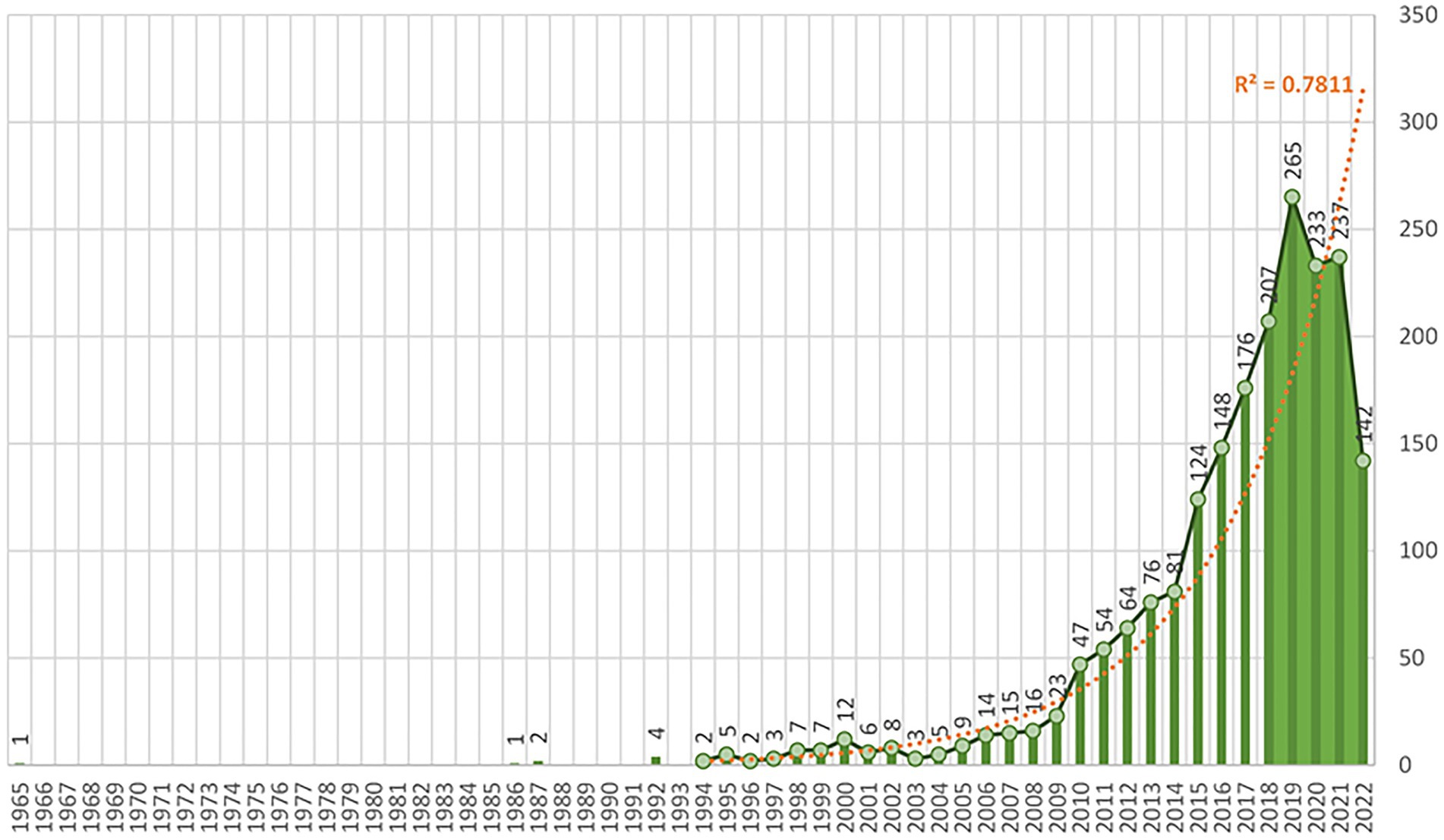
Figure 1. Publications on critical thinking between 1965 and 2022.
After the exclusions are made, 847 documents are fragmented in search of the Bradford core (Table 2). This estimate narrows the core to 38 journals that concentrate the publication of 276 articles between 2018 and 2022 (See detail in Table A1 in Appendix A, and data in Supplementary Table S1).
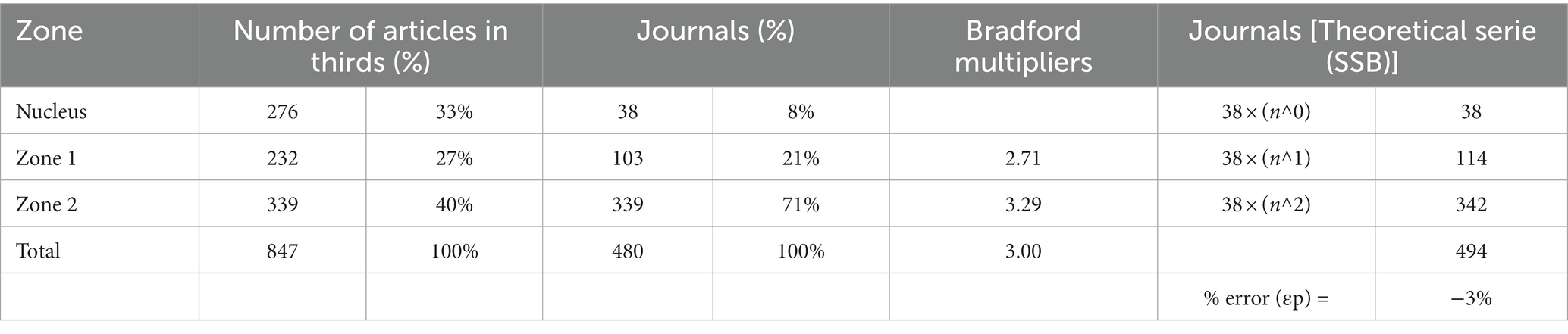
Table 2. Bradford zones estimation, articles by journal zones.
The absolute percentage error is estimated at 3%, therefore the adjustment achieved by the nuclear zone is considered adequate (See Equation 1).
This 276-document set is entered as input to the PRISMA diagram flow (Figure 2), according to the eligibility criteria (PICOS) set out in Table 1.
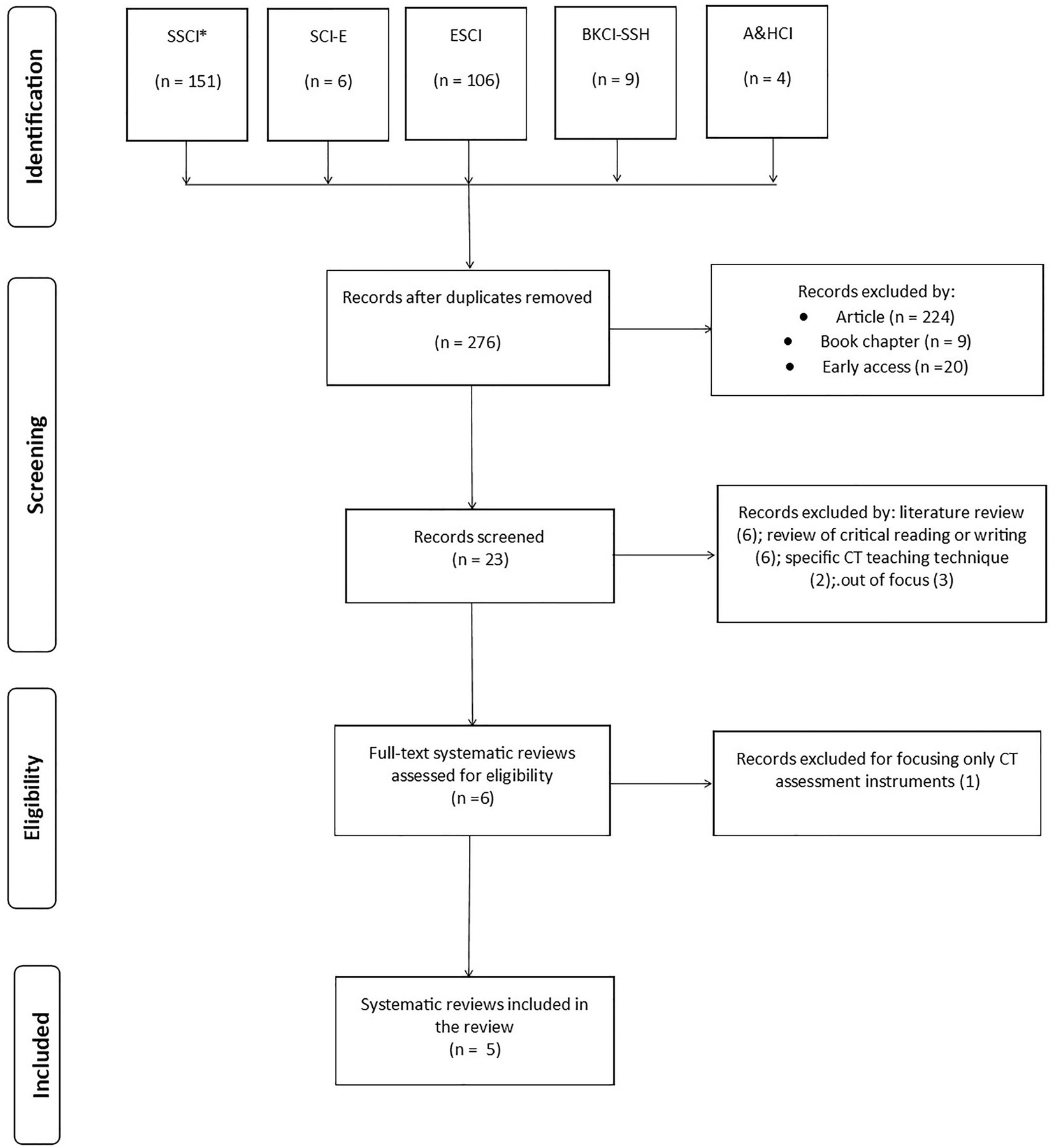
Figure 2. PRISMA 2020 diagram flow. *SSCI, Social Sciences Citation Index; SCI-E, Science Citation Index Expanded; ESCI, Emerging Sources Citation Index; BKCI-SSH, Book Citation Index Social Sciences & Humanities; A&HCI, Arts & Humanities Citation Index.
Thus, this search identified a total of 276 articles from five different databases in the collection Web of Science (SSCI, Social Sciences Citation Index; SCI-E, Science Citation Index Expanded; ESCI, Emerging Sources Citation Index; BKCI-SSH, Book Citation Index –Social Sciences & Humanities; A&HCI, Arts & Humanities Citation Index). Excluding records by type of document, particularly articles (224), book chapters (9), and early access (20), 23 records were obtained for the screening, corresponding only to systematic reviews of the subject.
Then, 17 systematic reviews were excluded because they presented literature reviews (6); critical reading and writing reviews (6); specific critical thinking teaching techniques, because they focus on how to implement a specific technique and marginally on the development of critical thinking (2) or were outside the focus of this review (3), reducing the corpus to be analyzed to six full-text systematic reviews in English, retrieved and screened using the selection criteria defined with the PICOS strategy. Finally, a last review that included studies on the assessment of critical thinking through standardized instruments was excluded at this stage. Thus, the screening made it possible to identify five systematic reviews that met the inclusion criteria, as shown in Figure 2. A summary of the general characteristics of the included systematic reviews can be found in Table 3.
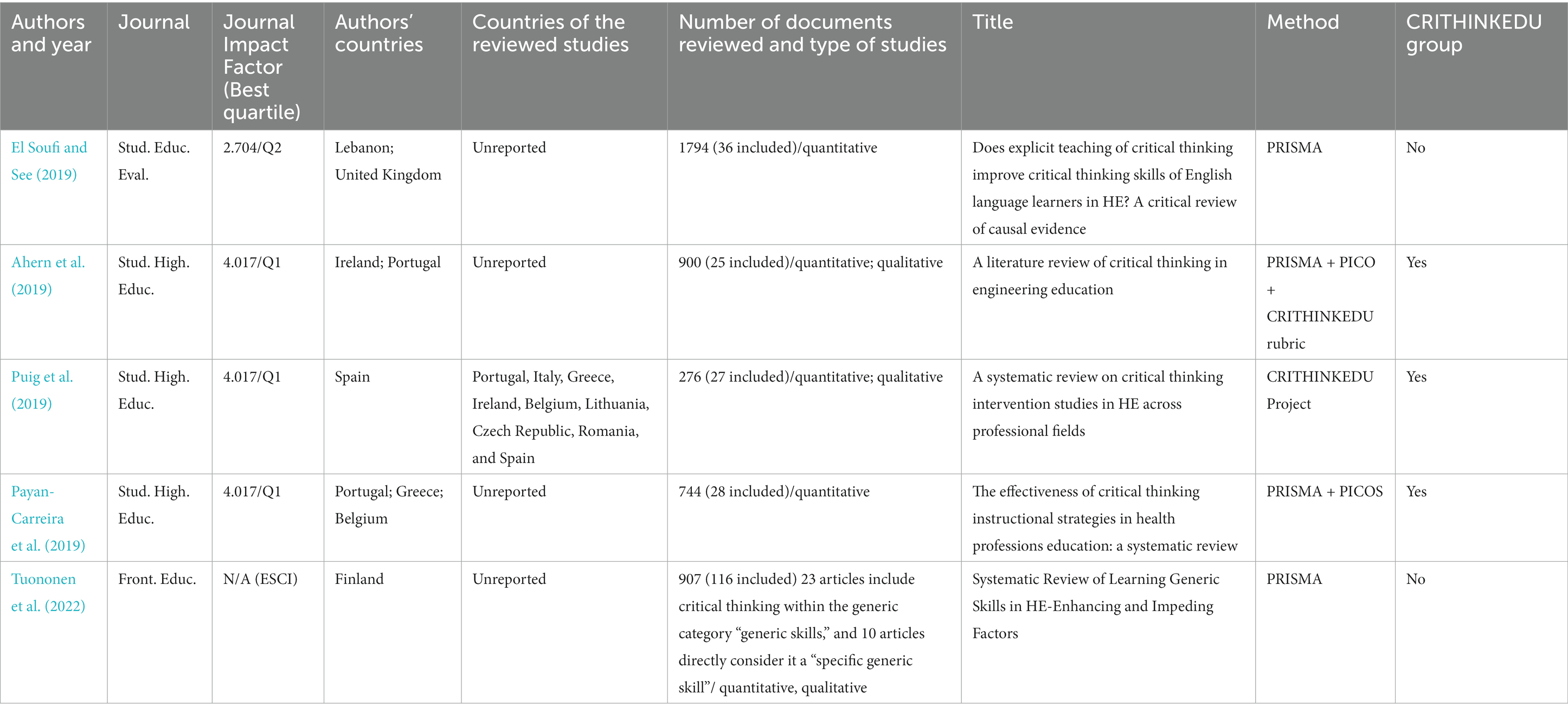
Table 3. Characteristics of the included reviews.
The selected reviews included studies with different methodological designs, both quantitative (2) and a mixture of quantitative and qualitative design (3). The reviews addressed 29.8 critical thinking studies on average, all chosen following PRISMA 2020 guidelines for their respective selection. It was not possible to conduct a meta-analysis mainly due to the heterogeneity of the studies included in the reviews. One of them considered the Hedge’s g effect size, although not all the studies reviewed by their authors provided the necessary data to perform the calculation (El Soufi and See, 2019). Another review reported three types of statistically significant gains (general, specific, and no gain) assessed from standardized tests in their studies, but without giving values or effect sizes (Payan-Carreira et al., 2019). Finally, the remaining revisions informed methodological limitations of the studies they selected and/or did not report specific statistical tests from the studies (Ahern et al., 2019; Puig et al., 2019; Tuononen et al., 2022).
The narrative synthesis of the selected systematic reviews made it possible to answer the proposed research questions. For this purpose, we consulted the guidelines for narrative syntheses in systematic reviews (Popay et al., 2006) suggested by the document PRISMA-P 2015 (Shamseer et al., 2015).
A summary of the objectives, definition of critical thinking, associated concepts and variables, and background and/or assumptions of each of the selected reviews can be found in Table 4, while Table 5 presents a summary of the relevance of critical thinking to HE, key findings and challenges for future research arising from each of the selected reviews.
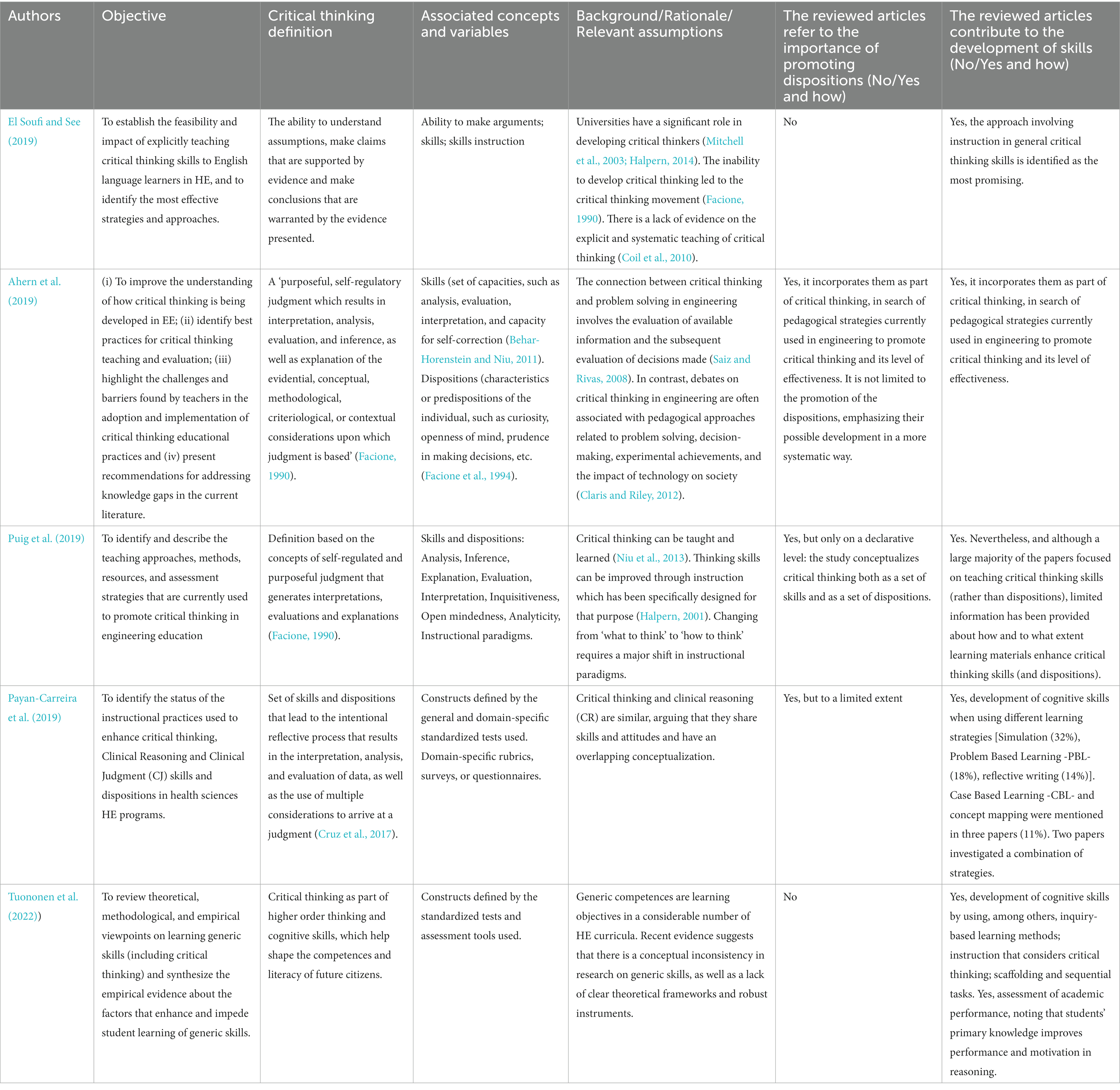
Table 4. Summary of the objectives, definition of critical thinking, associated concepts and vari-ables, assumptions, and relevant authors of each of the reviews.
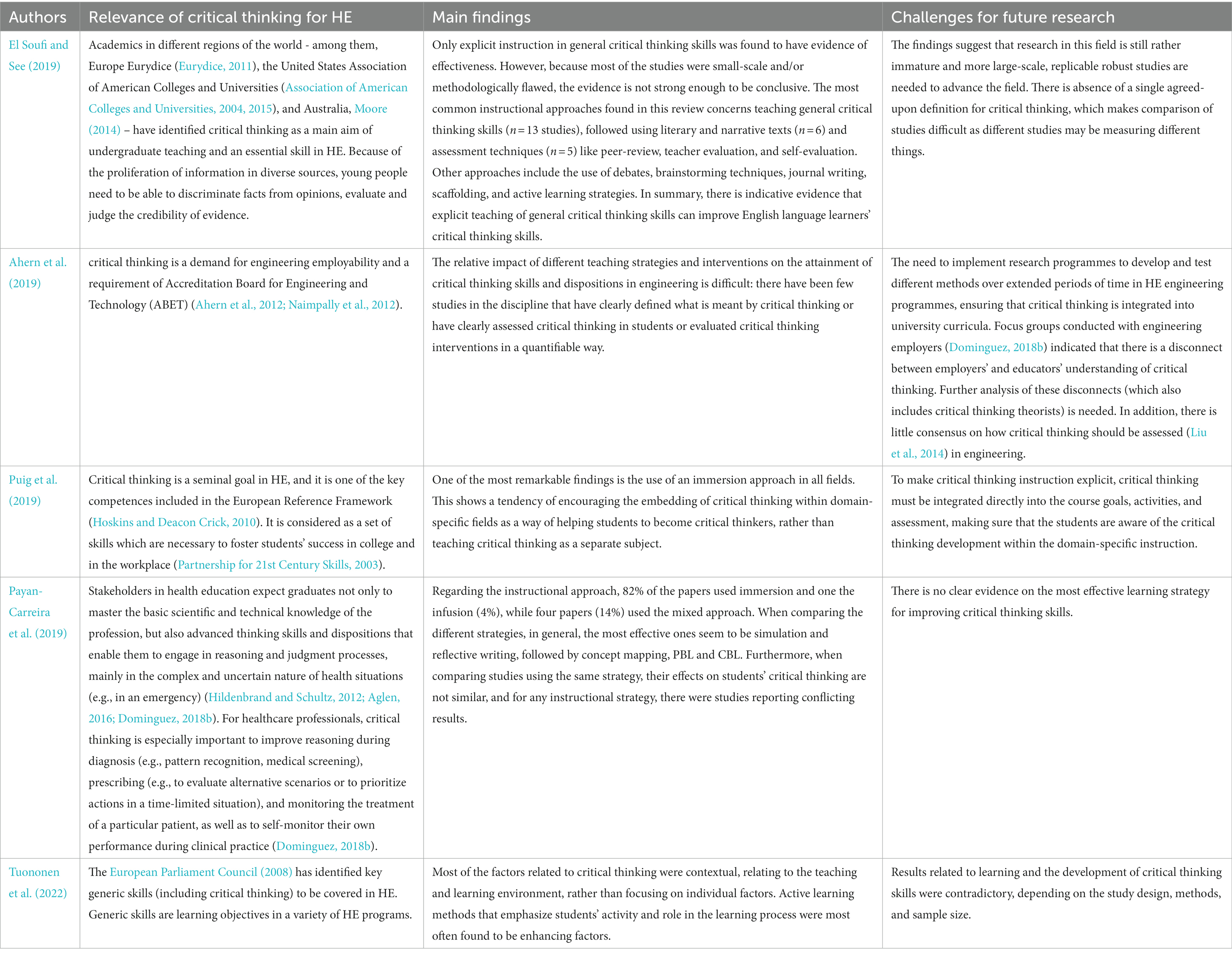
Table 5. Summary of the relevance of critical thinking to HE, key findings, and challenges for future research of each of the reviews.
Table 6 synthesizes the findings of the approaches and strategies applied for the development of critical thinking in HE in each of the selected reviews.
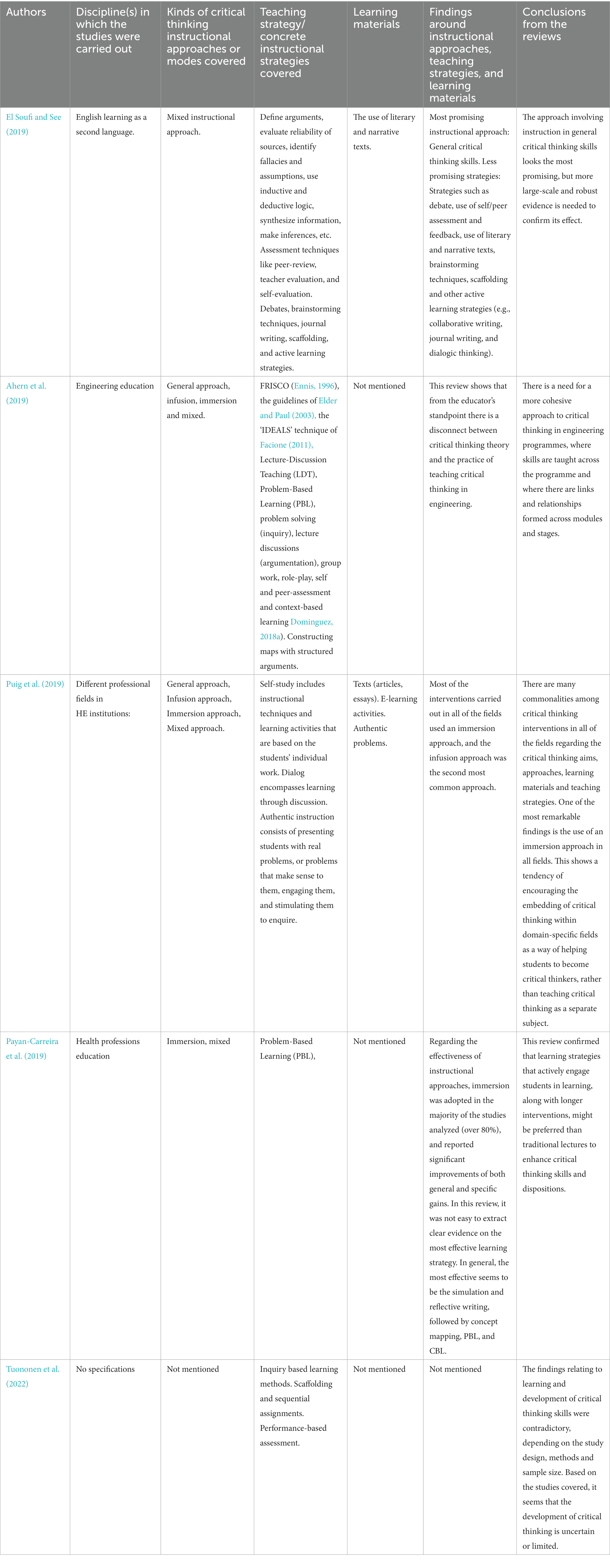
Table 6. Approaches and strategies applied for the development of critical thinking in HE from selected reviews.
One of the selected reviews sought to examine the teaching of generic competencies in HE (Tuononen et al., 2022) and another one examined critical thinking in different disciplines, such as biomedical sciences, STEM (science, technology, engineering, and mathematics), social sciences, and humanities (Puig et al., 2019). The other three studies have referred to the teaching of critical thinking in specific disciplines: English as a second language (El Soufi and See, 2019), engineering (Ahern et al., 2019), and health sciences (Payan-Carreira et al., 2019).
Regarding the definition of critical thinking, in two of the five systematic reviews addressed, the definition used by the authors is literally the one proposed by Facione (1990), who led the Delphi project on this topic.
Reviews argue that the critical thinking literature suggests that critical thinking is a disposition and skill (Ahern et al., 2019; Puig et al., 2019). However, our results - that analyzed the set of the above five systematic reviews - show that, currently, the concept of skill is more prevalent in the literature than that of disposition. Two of the five reviews do not refer to dispositions at all (El Soufi and See, 2019; Tuononen et al., 2022), and the other three do so only narrowly (Payan-Carreira et al., 2019; Puig et al., 2019). In contrast, the five systematic reviews highlight the skills aspect, and two of them go deeper into it, highlighting the specific role of cognitive skills (Payan-Carreira et al., 2019; Tuononen et al., 2022).
The different existing conceptualizations of critical thinking in the academic field have in common that it is a type of thinking that enables a reflective process and the ability to make evidence-based judgments. In addition to reflexivity and judgment, other terms and verbs highlighted in the conceptualizations are competence, ability, disposition, understanding, analyzing, inferring, and concluding, among others.
Regarding the approaches and methodologies used to teach critical thinking, the first reassuring finding is that the greatest effect is in the explicit teaching of general critical thinking skills (El Soufi and See, 2019). In relation to teaching English, the methodologies identified as effective are the use of literary and narrative texts, assessment techniques such as peer review, teacher assessment and self-assessment, and approaches such as conducting debates, brainstorming, daily writing, scaffolding and active learning strategies (El Soufi and See, 2019). In relation to engineering education, it is concluded that to date there has been no quantifiable evaluation of interventions implemented to enhance critical thinking (Ahern et al., 2019). This review, which looked at critical thinking in different professional fields, concludes that the most commonly used teaching approach across all fields is the so-called immersion approach (Puig et al., 2019). This finding suggests that the teaching of critical thinking is more effective when it is integrated transversely into the teaching of different fields than when it is treated as a separate subject. The reviews that have addressed critical thinking in the health sector are consistent with this review in highlighting the high use of the immersion approach. Within this approach, the most effective strategies appear to be simulation, reflective writing, concept mapping, problem-based learning [PBL] and case-based learning [CBL] (Payan-Carreira et al., 2019). Finally, this review, which focused on the learning of generic skills in higher education, shows that active learning methods, i.e., those that promote students’ activity and role in their learning process, are factors that enhance the learning of critical thinking (Tuononen et al., 2022).
These systematic reviews agree that the development of critical thinking skills is a key objective of different higher education programmes. They also agree that critical thinking contributes to the integration and performance of professionals in different work settings. Two of the reviews offer arguments to support this relevance. Firstly, a pedagogical argument suggests that, given the large amount of information available today, it is relevant that students can distinguish facts from opinions and evaluate and judge the credibility of the evidence presented to them (El Soufi and See, 2019). In the same vein, it is pointed out that health science students should complement scientific and technical knowledge with advanced thinking dispositions and reasoning and decision-making skills (Payan-Carreira et al., 2019). A second argument, of a more technical nature, relates to the requirements of university accreditation processes with assessment agencies (Ahern et al., 2019).
4. Discussion
This systematic review of critical thinking in HE with PRISMA 2020 guidelines identified the main definitions of critical thinking, their commonalities, and differences, instructional strategies, and their effectiveness. The revision was conducted with five reviews from WoS databases which allowed focusing the search according to the PICOS strategy (Porter et al., 2002; Liberati et al., 2009; Moher et al., 2009; Methley et al., 2014; Andreucci-Annunziata et al., 2022).
This work has shown that there are several definitions of critical thinking, which has implications for the formulation of theoretical and methodological guidelines in the teaching and learning process in higher education. Through the analysis (Table 4), we found that critical thinking involves complex cognitive activities, which in turn need to be applied to specific contexts in which HE students operate.
Facione’s (1990) definition appears to be the most comprehensive, emphasizing critical thinking as evaluation carried out in a self-regulatory manner through sequential cognitive processes. There are nuances in what constitutes a skill, which implies a situated and evaluative implementation (Cruz et al., 2017; Tuononen et al., 2022). El Soufi and See’s (2019) definition is more focused on evidence-based reasoning. Cruz et al. (2017) emphasize dispositions that point to mental and character qualities inherent in a person, which extends the definition to look beyond cognitive abilities.
Comparing these definitions, there is no complete consensus on what needs to be done in order to think critically, except that it involves higher order cognitive processes. The literature emphasizes the fact that students should move from what to learn to how to learn from a socio-constructivist perspective (Andreucci-Annunziata, 2012, 2016).This means that students must be able to make sense of the task they are doing, because at this level of complex thinking it is not enough to follow instructions or perform tasks: critical thinking necessarily implies students’ ability to evaluate.
Since the information in Table 4, the question would be how to approach critical thinking, considering two related aspects: one has to do with the training of cognitive tasks in an instructional setting; the other requires aspects more linked to the affective/emotional being, a comprehensive quality that is trained according to the idiosyncrasy and background of each person. The five selected papers do not provide a common answer on how to do this. Critical thinking is associated with formal education in certain fields, such as engineering, language teaching, etc. This means that it is generally approached from specific problem situations and generalized to broader aspects where competences are demonstrated.
The review by El Soufi and See (2019) highlights specific teaching methods that enable critical thinking to be exercised. However, when looking for an answer, they suggest studies with larger populations and add that not all studies agree on a common definition of critical thinking so that different aspects of the process could be measured. Ahern et al. (2019) add that studies should be longer and integrate critical thinking into the curriculum, which would make it possible to evaluate a period of training. They question the assessment of critical thinking in the absence of a more consensual definition of the term. Finally, they suggest that stakeholders interested in demonstrating or assessing critical thinking, such as employers, should be involved.
Payan-Carreira et al. (2019) also discuss the difficulties in studying critical thinking, arguing that no consistent results are obtained from studies using the same teaching strategies. Nor are conclusive results obtained from different strategies. Puig et al. (2019) state that the conceptualization of critical thinking as both a set of skills and a set of dispositions lacks more specific information on how and to what extent learning strategies enhance critical thinking skills and dispositions.
There are several unresolved issues. There is still no consensus on what is meant by critical thinking. On the one hand, reference is made to formal teaching factors provided by universities, which recommend different strategies to acquire the necessary cognitive skills. On the other hand, there is recognition of defined dispositions, which are attributed to action tendencies, personality traits and positive qualities of individuals. Although the authors agree on the existence of both, studies on strategies for training during higher education prevail and the discussion on individual factors of students would appear in disposition or aspects of it. From the selected reviews, it can be seen that the definition of critical thinking obtained by the Delphi project (Facione, 2011) is still valid, although this project was carried out three decades ago. It is worth noting that in the current discussion of critical thinking, the high cognitive skills are most often mentioned, more often than the dispositions, which raises a question. Is this because dispositions are more difficult to study or measure than skills?
It is recognized that critical thinking or reasoning requires dispositions; however, the relationship between dispositions and skills is not yet clear in light of these recent reviews. That is, critical thinking can be developed in students whose dispositions in terms of personal attributions favor this process (Cruz et al., 2017; Wechsler et al., 2018). A possible question that arises is whether critical thinking skills are developed from motivational, attitudinal and other dispositions. From the perspective of individual development, there would be environmental conditions and people’s emotional world that favor the acquisition of critical thinking.
Another relevant finding of our analysis is that several of the reviews emphasize the need for methodologically sound studies to advance knowledge about critical thinking in general and how to teach it. For example, Tuononen et al. (2022) found that active learning occurs in learning environments. However, they found conflicting results regarding methodological issues such as study design, methods and sample size.
One question is whether there should be more research on the dispositional aspects of successful critical thinking students, taking into account socio-cultural factors. For example, it is easier to compare individuals with similar educational opportunities (e.g., Finland), as in the study included in this systematic review (Tuononen et al., 2022), which alludes to methodological shortcomings.
If a framework definition of critical thinking training for higher education students were to be proposed, a high level of training in cognitive skills and a complex and comprehensive view of the conditions that make this possible would be paramount. These, as well as aspects of human talent, have been addressed as a condition that favours the development of critical approaches whenever pedagogical scenarios make it possible (Andreucci-Annunziata, 2012, 2016).
Looking more closely at the strategies that promote the development of critical thinking, and with a view to contributing to the construction of theory in this area, the emphasis on training in cognitive tasks in discipline-based teaching scenarios in four of the five reviews examined stands out. Focusing on the second question guiding this review, Table 6 shows that, with the exception of Tuononen et al. (2022), who do not mention this aspect, the authors agree on strategic approaches such as the general approach, the infusion approach, the immersion approach or the mixed approach, depending on the specificity of the students.
When considering the specificity of the student, it seems appropriate not to forget the specificity of the teacher. Only the study by Ahern et al. (2019) shows that, from the perspective of the educator, there is a disconnect between the theory of critical thinking and the practice of teaching critical thinking in engineering. The above seems to be relevant to the repair of teacher education beyond techniques. In other words, although some techniques have demonstrated their effectiveness, the interventions carried out in all areas, such as the immersion approach and the infusion approach (Payan-Carreira et al., 2019; Puig et al., 2019), followed by general critical thinking skills (El Soufi and See, 2019), operate in a specific interactional framework between teacher and student (Andreucci-Annunziata, 2016; Salas et al., 2021).
This interactional framework seems to be relevant for further research. It is within this framework that the teaching-learning process takes place. In turn, this teaching-learning process, of which the development of critical thinking becomes a fundamental part, is inserted into a defined institutional educational and strategic project with guiding guidelines. The guidelines for the process of restructuring and strategic planning of universities in the world, and especially in Latin America, have emphasized the review of the integration of the respective institutional educational projects into the general academic task. This has implications not only for the objectives of academic quality, but also for a rigorous analysis of the curricular models postulated in institutional educational projects. In this sense, the approaches that pay attention to critical thinking because of and in the process of development, focus on the students and enable them to insert themselves in the framework of the challenges imposed by global citizenship, the strengthening of academic skills (cognitive, affective and/or bonding) and life skills, sustainable development, the inclusion of diverse perspectives and openness to internationalization (Delors et al., 1996; Sabzalieva et al., 2021). According to Molina et al. (2018), an educational model in a university setting expresses “synthetic visions of theories or pedagogical approaches that guide specialists and teachers from the development and analysis of study programmes to the systematization of the teaching-learning process in university classrooms” (p. 153). It is this last process that is particularly highlighted in this review.
5. Conclusion
Not surprisingly, since critical thinking is the foundation of integral education in complex times, there has been much research and study on this topic. The recent bibliometric analysis of critical thinking (Pagán Castaño et al., 2022) allowed us to support a review of reviews with current and updated data. Our review shows that dispositions and skills are key concepts in the promotion of critical thinking, and Giancarlo and Facione (2001) point out that the disposition to think critically is conceptually different from having the skills to think critically. Although all the authors reviewed agree in recognizing the importance and influence of dispositions in the area of critical thinking, there has been more research on skills than on dispositions. When turning to the aspect of teaching strategies for critical thinking, there was no consensus on how this should be done. In fact, the common recommendation to conduct further research on how to teach critical thinking raises the question of whether it is possible to teach this disposition or skill at all.
Further concerns arise about the conditions under which critical thinking can be developed in contexts that do not sufficiently validate it, or in higher education institutions that do not explicitly define it in their policies, although they require it in academic outcomes, and vice versa. The strategies derived from the methodologies reviewed do not fully respond to the development of critical thinking because they focus almost exclusively on the evaluation of outcomes rather than on the process of constructing this type of thinking and its applicability. It would be helpful to update paradigms in this area that support both study and teaching practice. A possible alternative is to consider complex paradigms (Delors et al., 1996; Elfert, 2015) that support life skills in this 21st century and are concerned with placing students at the center of their learning process, in close contact with their interactional dialog environment (family members, teachers and classmates), which challenges them and proposes joint problem solving.
In the context of educational transformation, which is the purpose of this type of study, the elements to be considered are (1) the institutional educational project (mission, vision, objectives), (2) the institutional strategic plan (strategic quality objectives in the areas of teaching, management, research and links with the environment), (3) the study plan (degree programmes, undergraduate and postgraduate programmes and their respective curricula), and (4) the teaching-learning process. At this last level, which is also the first (the micro-genesis of educational transformations), the development of critical thinking is considered key in two senses: as training in cognitive tasks (instructional scenario) and as “training” in affective-relational attitudinal skills (expressive scenario). It is clear, in the opinion of the authors of this review, that this second approach is the one that requires further study and constitutes a line of research to be deepened and strengthened in future research. The conclusive analysis presented is consistent with the potential of complexity theory to address the challenges, at the micro- and macro-genetic levels, in establishing a new field of research in higher education from the perspective of educational psychology, and to provide possible solutions for the implementation of complex and creative thinking as a developmental goal for students and a strategic goal for higher education institutions. (Davis and Sumara, 2014; Scott et al., 2018; Harmat and Herbert, 2020).
On the other hand, the main limitation of this review is that there is not enough information to explore the different weight of the methodologies implemented for the development of cognitive, affective-attitudinal, creativity, talent and academic performance skills in higher education in academic programmes. Likewise, given the origin of the systematic reviews found and analyzed in this study, there is no information on the application of critical thinking conceptualizations and teaching practices in Latin America (Beneitone and Yarosh, 2015), which constitutes a challenge and line of research for a working team such as ours.
Author contributions
PA-A: original idea and institutional link. PA-A, AR, SC, and MR: conceptualization and writing—original draft preparation. AM and AV-M: methodology. AM and AR: formal analysis. PA-A, AM, and AV-M: writing—review and editing. PA-A: funding acquisition. PA-A: proofreading and final editing. All authors have read and agreed to the published version of the manuscript.
Funding
The article processing charge (APC) was funded by Instituto de Investigación y Postgrado, Facultad de Ciencias de la Salud, Universidad Central de Chile (Code: ACD 219201).
Conflict of interest
The authors declare that the research was conducted in the absence of any commercial or financial relationships that could be construed as a potential conflict of interest.
Publisher’s note
All claims expressed in this article are solely those of the authors and do not necessarily represent those of their affiliated organizations, or those of the publisher, the editors and the reviewers. Any product that may be evaluated in this article, or claim that may be made by its manufacturer, is not guaranteed or endorsed by the publisher.
Supplementary material
The Supplementary material for this article can be found online at: https://www.frontiersin.org/articles/10.3389/feduc.2023.1141686/full#supplementary-material
References
Aglen, B. (2016). Pedagogical strategies to teach bachelor students evidence-based practice: a systematic review. Nurse Educ. Today 36, 255–263. doi: 10.1016/j.nedt.2015.08.025
Ahern, A., Dominguez, C., McNally, C., O’Sullivan, J. J., and Pedrosa, D. (2019). A literature review of critical thinking in engineering education. Stud. High. Educ. 44, 816–828. doi: 10.1080/03075079.2019.1586325
Ahern, A., O’Connor, T., Mac Ruairc, G., McNamara, M., and O’Donnell, D. (2012). Critical thinking in the university curriculum: the impact on engineering education. Eur. J. Eng. Educ. 37, 125–132. doi: 10.1080/03043797.2012.666516
Al-Ghadouni, A. (2021). Instructional approaches to critical thinking: an overview of reviews. Rev. AR. de Clin. Psicol. 30, 240–246. doi: 10.24205/03276716.2020.2020
Andreucci-Annunziata, P. (2012). El Talento: Una Construcción en y Desde la Pedagogía Dialógica. Psicoperspectivas 11, 185–205. doi: 10.5027/psicoperspectivas-Vol11-Issue2-fulltext-200
Andreucci-Annunziata, P. (2016). Talento y argumentación: Una alianza dialógica en el aula. Profesorado Revista de Currículum y Formación de Profesorado 20, 2–17. doi: 10.30827/profesorado.v20i2.10405
Andreucci-Annunziata, P., Mellado, A., and Vega-Muñoz, A. (2022). Telesupervision in psychotherapy: a bibliometric and systematic review. Int. J. Environ. Res. Public Health 19:16366. doi: 10.3390/ijerph192316366
Aromataris, E., Fernandez, R., Godfrey, C. M., Holly, C., Khalil, H., and Tungpunkom, P. (2015). Summarizing systematic reviews: methodological development, conduct and reporting of an umbrella review approach. JBI Evid. Implement. 13, 132–140. doi: 10.1097/XEB.0000000000000055
Association of American Colleges and Universities (2004). Liberal Education Outcomes: A Preliminary Report on Student Achievement in College. Washington, DC, Association of American Colleges and Universities.
Association of American Colleges and Universities (2015). Falling Short? College Learning and Career Success. Washington, DC. Available at: http://www.aacu.org/sites/default/files/files/LEAP/2015employerstudentsurvey
Atkinson, D. (1997). A critical approach to critical thinking. TESOL Q. 31, 71–94. doi: 10.2307/3587975
Bailin, S., Case, R., Coombs, J., and Daniels, L. (1999). Common misconceptions of critical thinking. J. Curric. Stud. 31, 269–283. doi: 10.1080/002202799183124
Bakkalbasi, N., Bauer, K., Glover, J., and Wang, L. (2006). Three options for citation tracking: Google Scholar, Scopus and Web of Science. Biomed. Digit. Libr. 3:7. doi: 10.1186/1742-5581-3-7
Behar-Horenstein, L. S., and Niu, L. (2011). Teaching critical thinking skills in higher education: a review of the literature. J. Coll. Teach. Learn. 8, 25–42. doi: 10.19030/tlc.v8i2.3554
Beneitone, P., and Yarosh, M. (2015). Tuning impact in Latin America: is there implementation beyond design? Tuning. J. High. Educ. 3, 187–216. doi: 10.18543/tjhe-3(1)-2015pp187-216
Braun, H. I., Shavelson, R. J., Zlatkin-Troitschanskaia, O., and Borowiec, K. (2020). Performance assessment of critical thinking: conceptualization, design, and implementation. Front. Educ. 5:156. doi: 10.3389/feduc.2020.00156
Bulik, S. (1978). Book use as a Bradford-Zipf phenomenon. Coll. Res. Libr. 39, 215–219. doi: 10.5860/crl_39_03_215
Chadegani, A. A., Salehi, H., Yunus, M. M., Farhadi, H., Fooladi, M., Farhadi, M., et al. (2013). A comparison between two main academic literature collections: Web of Science and Scopus databases. Asian Soc. Sci. 9:5. doi: 10.5539/ass.v9n5p18
Claris, L., and Riley, D. (2012). Situation critical: critical theory and critical thinking in engineering education. Eng. Stud. 4, 101–120. doi: 10.1080/19378629.2011.649920
Coil, D., Wenderoth, M. P., Cunningham, M., and Dirks, C. (2010). Teaching the process of science: faculty perceptions and an effective methodology. CBE Life Sci. Educ. 9, 524–535. doi: 10.1187/cbe.10-01-0005
Crossley-Frolick, K. A. (2010). Beyond model UNITED NATIONS: simulating multi-level, multi-actor diplomacy using the millennium development goals. Int. Stud. Perspect. 11, 184–201. doi: 10.1111/j.1528-3585.2010.00401.x
Cruz, G., Payan-Carreira, R., and Dominguez, C. (2017). Critical thinking education in the Portuguese higher education institutions: a systematic review of educational practices. Rev. Lusofona Educ. 38, 43–61. doi: 10.24140/issn.1645-7250.rle38.03
Cruz, G., Payan-Carreira, R., Dominguez, C., Silva, H., and Morais, F. (2021). What critical thinking skills and dispositions do new graduates need for professional life? Views from Portuguese employers in different fields. High. Educ. Res. Dev. 40, 721–737. doi: 10.1080/07294360.2020.1785401
Davis, B., and Sumara, D. (2014). Complexity and Education: Inquiries into Learning, Teaching, and Research. Lawrence Erlbaum. Routledge.
Delors, J., Amagi, I., Carneiro, R., Chung, F., Geremek, B., Gorham, W., et al. (1996). La educación encierra un tesoro: informe para la UNESCO de la Comisión Internacional sobre la Educación para el Siglo Veintiuno. París, Santillana Ediciones UNESCO.
Djamnezhad, D., Koltcheva, N., Dizdarevic, A., Mujezinovic, A., Peixoto, C., Coelho, V., et al. (2021). Social and emotional learning in preschool settings: A systematic map of systematic reviews. Front. Educ. 6:691670. doi: 10.3389/feduc.2021.691670
Dobrov, G. M., Randolph, R. H., and Rauch, W. D. (1979). New options for team research via international computer networks. Scientometrics 1, 387–404. doi: 10.1007/bf02016658
Dominguez, C. (2018a). A European Review on Critical Thinking Educational Practices in higher Education Institutions. UTAD/EU: Vila Real
Dominguez, C. (2018b). A European Collection of the Critical Thinking Skills and Dispositions Needed in Different Professional Fields for the 21st Century. ERASMUS + Programme/EU UTAD: Vila Real
Dumitru, D., Bigu, D., Elen, J., Jiang, L., Railienè, A., Penkauskienè, D., et al. (2018). A European Collection of the Critical Thinking Skills and Dispositions Needed in Different Professional Fields for the 21st Century. UTAD: Vila Real, Portugal.
El Soufi, N., and See, B. H. (2019). Does explicit teaching of critical thinking improve critical thinking skills of English language learners in higher education? A critical review of causal evidence. Stud. Educ. Eval. 60, 140–162. doi: 10.1016/j.stueduc.2018.12.006
Elder, L., and Paul, R. (2003). Critical thinking: teaching students how to study and learn. J. Dev. Educ. 27, 36–38.
Elfert, M. (2015). UNESCO, the Faure report, the Delors report, and the political utopia of lifelong learning. Eur. J. Educ. 50, 88–100. doi: 10.1111/ejed.12104
Ennis, R. H. (1989). Critical Thinking and Subject Specificity: Clarification and Needed Research. Educ. Res.. 18, 4–10. doi: 10.3102/0013189X018003004
Ennis, R. H. (2016). Critical Thinking Across the Curriculum: A Vision. Topoi 37, 165–184. doi: 10.1007/s11245-016-9401-4
Ennis, R. H., and Weir, E. (1985). The Ennis-Weir Critical Thinking Essay Test. Pacific Grove, CA: Critical Thinking Press and Software.
European Parliament Council (2008). The establishment of the European qualifications framework for lifelong learning. Official Journal of European Union: EU. Available at: https://www.cedefop.europa.eu/en/projects/european-qualifications-framework-eqf
Eurydice (2011). Science Education in Europe: National policies, practices and research. EACEA: Brussels, Belgium.
Facione, P.A. (1990). Critical Thinking: A Statement of Expert Consensus for Purposes of Educational Assessment and Instruction. The California Academic Press: Millibrae, CA, USA.
Facione, P. A. (2000). The disposition toward critical thinking: its character, measurement, and relationship to critical thinking skill. Informal Log. 20, 61–84. doi: 10.22329/il.v20i1.2254
Facione, P. A. (2011). Critical Thinking: What It Is and Why It Counts. San Jose: California Academic Press.
Facione, N. C., Facione, P. A., and Sanchez, C. A. (1994). Critical thinking disposition as a measure of competent clinical judgment: the development of the California critical thinking disposition inventory. J. Nurs. Educ. 33, 345–350. doi: 10.3928/0148-4834-19941001-05
Falagas, M. E., Pitsouni, E. I., Malietzis, G., and Pappas, G. (2008). Comparison of PubMed, Scopus, web of science, and Google scholar: strengths and weaknesses. FASEB J. 22, 338–342. doi: 10.1096/fj.07-9492LSF
Fejes, A. (2006). The Bologna process-governing higher education in Europe through standardisation. Revista Española de Educación Comparada 12, 203–232.
Giacomazzi, M., Fontana, M., and Camilli Trujillo, C. (2022). Contextualization of critical thinking in sub-Saharan Africa: a systematic integrative review. Think. Ski. Creat 43:100978. doi: 10.1016/j.tsc.2021.100978
Giancarlo, C. A., and Facione, P. A. (2001). A look across four years at the disposition toward critical thinking among undergraduate students. J. Gen. Educ. 50, 29–55. doi: 10.1353/jge.2001.0004
Halpern, D. F. (1998). Teaching critical thinking for transfer across domains. Dispositions, skills, structure training, and metacognitive monitoring. Am. Psychol. 53, 449–455. doi: 10.1037//0003-066x.53.4.449
Halpern, D. F. (2001). Assessing the effectiveness of critical thinking instruction. J. Gen. Educ. 50, 270–286. doi: 10.1353/jge.2001.0024
Halpern, D. F. (2014). Thought and knowledge: An introduction to critical thinking, 5th. Psychology Press: New York, United States.
Harmat, L., and Herbert, A. (2020). Complexity thinking as a tool for understanding the didactics of psychology. Front. Psychol. 11:542446. doi: 10.3389/fpsyg.2020.542446
Harzing, A. W., and Alakangas, S. (2016). Google scholar, scopus and the web of science: A longitudinal and cross-disciplinary comparison. Scientometrics 106, 787–804. doi: 10.1007/s11192-015-1798-9
Hildenbrand, K. J., and Schultz, J. A. (2012). Development of a rubric to improve critical thinking. Athl. Train. Educ. J. 7, 86–94. doi: 10.4085/070386
Hoskins, B., and Deacon Crick, R. (2010). Competences for learning to learn and active citizenship: different currencies or two sides of the same coin? Eur. J. Educ. 45, 121–137. doi: 10.1111/j.1465-3435.2009.01419.x
Hyytinen, K., Saari, E., and Elg, M. (2019). “Human-centered co-evaluation method as a means for sustainable service innovations,” in Human-centered digitalization and services. eds. M. Toivonen and E. Saari (Springer), 57–75.
Kumar, S. (2014). Application of Bradford’s law to human-computer interaction research literature. DESIDOC J. Libr. Inf. Technol. 34, 223–231.
Liberati, A., Altman, D. G., Tetzlaff, J., Mulrow, C., Gøtzsche, P. C., Ioannidis, J. P., et al. (2009). The PRISMA statement for reporting systematic reviews and meta-analyses of studies that evaluate health care interventions: explanation and elaboration. J. Clin. Epidemiol. 62, e1–e34. doi: 10.7326/0003-4819-151-4-200908180-00136
Liu, O. L., Frankel, L., and Roohr, K. C. (2014). Assessing critical thinking in higher education: current state and directions for next-generation assessment. ETS Res. Rep. Ser. 2014, 1–23. doi: 10.1002/ets2.12009
Methley, A. M., Campbell, S., Chew-Graham, C., McNally, R., and Cheraghi-Sohi, S. (2014). PICO, PICOS and SPIDER: a comparison study of specificity and sensitivity in three search tools for qualitative systematic reviews. BMC Health Serv. Res. 14:579. doi: 10.1186/s12913-014-0579-0
Mitchell, R., Myles, F., Johnston, B., and Ford, P. (2003). “Criticality and the ‘key skills’ agenda in undergraduate linguistics” in Notes of Talk given at Subject Centre for Languages, Linguistics, and Area Studies Seminar: ‘Key Skills Linguistics’. University of Southampton, London (Southampton, London, England: CILT)
Moher, D., Liberati, A., Tetzlaff, J., and Altman, D. G. (2009). The PRISMA Group. Preferred reporting items for sstematic reviews and meta-analyses: the PRISMA statement. PLoS Med. 6:e1000097. doi: 10.1371/journal.pmed.1000097
Molina, J. M., Lavandero, J., and Hernández, L. M. (2018). El modelo educativo como fundamento del accionar universitario: Experiencia de la Universidad Técnica de Manabí, Ecuador [the educational model as the Foundation of University Action.: the experience of the technical University of Manabi, Ecuador]. Revista Cubana de Educación Superior 37, 151–164.
Mongeon, P., and Paul-Hus, A. (2016). The journal coverage of web of science and scopus: a comparative analysis. Scientometrics 106, 213–228. doi: 10.1007/s11192-015-1765-5
Moore, T. (2013). Critical thinking: seven definitions in search of a concept. Stud. High. Educ. 38, 506–522. doi: 10.1080/03075079.2011.586995
Moore, T. (2014). Wittgenstein, Williams and the terminologies of higher education: a case study of the term ‘critical’. J. Acad. Lang. Learn. 8, A95–A108.
Morse, P. M., and Leimkuhler, F. F. (1979). Technical note—exact solution for the Bradford distribution and its use in modeling infor-mational data. Oper. Res. 27, 187–198. doi: 10.1287/opre.27.1.187
Naimpally, A., Ramachandran, H., and Smith, C. (2012). Lifelong Learning for Engineers and Scientists in the Information Age. Elsevier: Amsterdam, Holland.
Niu, L., Behar-Horenstein, L., and Garvan, C. W. (2013). Do instructional interventions influence college students’ critical thinking skills? A meta-analysis. Educ. Res. Rev. 9, 114–128. doi: 10.1016/j.edurev.2012.12.002
Organización de Naciones Unidas (2018). Objetivos de Desarrollo Sostenible. Available at: https://unstats.un.org/sdgs/files/report/2018/TheSustainableDevelopmentGoalsReport2018-es.pdf
Pagán Castaño, J., Arnal-Pastor, M., Pagán-Castaño, E., and Guijarro-García, M. (2022). Bibliometric analysis of the literature on critical thinking: an increasingly important competence for higher education students. Econ. Res-Ekonomska Istraživanja, 1–22. doi: 10.1080/1331677X.2022.2125888
Page, M. J., McKenzie, J. E., Bossuyt, P. M., Boutron, I., Hoffmann, T. C., Mulrow, C. D., et al. (2021a). The PRISMA 2020 statement: an updated guideline for reporting systematic reviews. Int. J. Surg. 88:105906. doi: 10.1016/j.ijsu.2021.105906
Page, M. J., Moher, D., Bossuyt, P. M., Boutron, I., Hoffmann, T. C., Mulrow, C. D., et al. (2021b). PRISMA 2020 explanation and elaboration: updated guidance and exemplars for reporting systematic reviews. BMJ 372:n160. doi: 10.1136/bmj.n160
Partnership for 21st Century Skills (2003). Learning for the 21st Century. Partnership for 21st Century Learning. Washington, DC, USA.
Payan-Carreira, R., Cruz, G., Papathanasiou, I. V., Fradelos, E., and Jiang, L. (2019). The effectiveness of critical thinking instructional strategies in health professions education: a systematic review. Stud. High. Educ. 44, 829–843. doi: 10.1080/03075079.2019.1586330
Pontigo, J., and Lancaster, F. W. (1986). Qualitative aspects of the Bradford distribution. Scientometrics 9, 59–70. doi: 10.1007/BF02016608
Popay, J., Roberts, H., Sowden, A., Petticrew, M., Arai, L., Rodgers, M., et al. (2006). Guidance on the conduct of narrative synthesis in systematic reviews: a product from the ESRC Methods Programme. Institute for Health Research, University of Lancaster.
Porter, A. L., Kongthon, A., and Lu, J. C. (2002). Research profiling: improving the literature review. Scientometrics 53, 351–370. doi: 10.1023/A:1014873029258
Price, D. D. S. (1976). A general theory of bibliometric and other cumulative advantage processes. J. Am. Soc. Inf. Sci. 27, 292–306. doi: 10.1002/asi.4630270505
Puig, B., Blanco-Anaya, P., Bargiela, I., and Crujeiras Pérez, B. (2019). A systematic review on critical thinking intervention studies in higher education across professional fields. Stud. High. Educ. 44, 860–869. doi: 10.1080/03075079.2019.1586333
Ramanathan, V., and Kaplan, R. B. (1996). Audience and voice in current L1 composition texts: some implications for ESL student writers. J. Second. Lang. Writ. 5, 21–34. doi: 10.1016/S1060-3743(96)90013-2
Sabzalieva, E., Chacon, E., Bosen, L. L., Morales, D., Mutize, T., Nguyen, H., et al. (2021). Thinking higher and beyond perspectives on the futures of higher education to 2050. UNESCO IESALC. ISBN: 978-980-7175-57-9. Available at: https://www.voced.edu.au/content/ngv:90677
Saiz, C., and Rivas, S. (2008). Assessment in critical thinking: a proposal for differentiating ways of thinking. Ergo Nueva Época 22, 25–66.
Salas, M., Díaz, A., and Medina, L. (2021). Mentorías en Chile: De la política diseñada a la puesta en acto [Mentoring in Chile: from policy design to implementation.]. Rev. Mex. Investig. Educ. 26, 449–474.
Scott, A., Woolcott, G., Keast, R., and Chamberlain, D. (2018). Sustainability of collaborative networks in higher education research projects: why complexity? Why now? Public Manag. Rev. 20, 1068–1087. doi: 10.1080/14719037.2017.1364410
Shamseer, L., Moher, D., Clarke, M., Ghersi, D., Liberati, A., Petticrew, M., et al. (2015). Preferred reporting items for systematic review and meta-analysis protocols (PRISMA-P) 2015: elaboration and explanation. BMJ 349:g7647. doi: 10.1136/bmj.g7647
Siegel, H. (1988). Educating Reason: Rationality, Critical Thinking, and Education. Routledge: New York, United States.
Swokowski, E.W. (1988). Calculus with Analytic Geometry, 4th; Grupo Editorial Planeta: Mexico City, Mexico.
Tuononen, T., Hyytinen, H., Kleemola, K., Hailikari, T., Männikkö, I., and Toom, A. (2022). Systematic review of learning generic skills in higher education—enhancing and impeding factors. Front. Educ. 7:885917. doi: 10.3389/feduc.2022.885917
Van Damme, D., and Zahner, D. (2022). Does Higher Education Teach Students to Think Critically? OECD Publishing: Paris, France
Wechsler, S. M., Saiz, C., Rivas, S. F., Vendramini, C. M. M., Almeida, L. S., Mundim, M. C., et al. (2018). Creative and critical thinking: independent or overlapping components? Think. Skills Creat. 27, 114–122. doi: 10.1016/j.tsc.2017.12.003
Keywords: critical thinking, higher education, teaching strategies, skills, dispositions
Citation: Andreucci-Annunziata P, Riedemann A, Cortés S, Mellado A, del Río MT and Vega-Muñoz A (2023) Conceptualizations and instructional strategies on critical thinking in higher education: A systematic review of systematic reviews. Front. Educ. 8:1141686. doi: 10.3389/feduc.2023.1141686
Edited by:
Maria J. Hernandez-Serrano, University of Salamanca, SpainReviewed by:
Slavi Stoyanov, Open University of the Netherlands, NetherlandsCarlos Ossa, University of the Bío Bío, Chile
Copyright © 2023 Andreucci-Annunziata, Riedemann, Cortés, Mellado, del Río and Vega-Muñoz. This is an open-access article distributed under the terms of the Creative Commons Attribution License (CC BY). The use, distribution or reproduction in other forums is permitted, provided the original author(s) and the copyright owner(s) are credited and that the original publication in this journal is cited, in accordance with accepted academic practice. No use, distribution or reproduction is permitted which does not comply with these terms.
*Correspondence: Augusto Mellado, YXVndXN0by5tZWxsYWRvQHVjZW50cmFsLmNs; Alejandro Vega-Muñoz, YWxlamFuZHJvLnZlZ2FAdWNlbnRyYWwuY2w=