 Leonardo David Glasserman-Morales
 Carolina Alcantar-Nieblas
 Sergio Nava-Lara2
- 1Institute for the Future of Education, Tecnológico de Monterrey, Monterrey, NL, Mexico
- 2Institute for Social Innovation and Resilience (WISIR), School of Environment Enterprise, University of Waterloo, Waterloo, ON, Canada
The development of social entrepreneurship competencies in university students favors the generation of proposals for solutions to different social problems, thus promoting a positive social impact capable of transforming people’s living conditions. This study aims to analyze the relationship between the dimensions of social entrepreneurship competence: entrepreneurial management, social value, leadership, effective communication and social innovation. A total of 408 higher education students from 13 countries and six different disciplinary areas participated in the study, ranging in age from 18 to 58 years (M = 22.4, SD = 6.0). The social entrepreneurship instrument was used, which is composed of 28 items grouped into five dimensions. A structural equation model was calculated. The findings indicate that entrepreneurial management, social value, and leadership are directly and positively related to personal competencies and social innovation. These results prove the importance of social entrepreneurship training in the development of social innovation in students, it is important that educational institutions in general carry out a review of their curricula and programs that take into account the development of social innovation competence as a factor that can enhance social change.
1 Introduction
Today’s society is undergoing accelerated transformations due to the technological revolution, environmental challenges, and cultural diversity. In this context of change, education faces essential demands for the training of future generations that will inhabit this uncertain context (Balladares et al., 2016; Jiménez, 2019). According to Forte-Celaya et al. (2021), educational systems are now focusing on skills enhancement, such as creative thinking skills (CTS), as a means of long-lasting, significant learning. To this end, some universities and higher education institutions foster active learning (AL) strategies as CTS developers. Educational institutions worldwide have had to rethink the mission and vision of their core business through the revision and updating of their academic programs.
In particular, Higher Education Institutions (HEIs) face specific demands on the type of students that should graduate from their academic programs. In this sense, different organizations have stated that students must have the ability to be agents of change to propose innovative solutions with a positive impact on people’s lives (Kumari et al., 2019; Odumosu et al., 2020; Ramírez and Zarazúa, 2021); specifically, it is necessary to train students with social entrepreneurship competencies. Matsumoto-Royo et al. (2022) found that actions planned for academic programs such as teaching education promote the developing of lifelong learning tendencies and metacognitive skills, which are key factor in entrepreneurship intention. Therefore, in recent years, HEIs have begun to include in their plans and programs the development of social entrepreneurship competencies (Campo et al., 2021; Hurtado and Ortiz, 2022).
Social entrepreneurship competency has gained particular relevance as a resource for promoting societal changes (Talmage, 2021). International organizations such as UNESCO (2019) have set among their objectives that education should mobilize theoretical and practical knowledge to promote the transformation of society and sustainability. Social entrepreneurship, as a competence, is developed in different dimensions such as social innovation, entrepreneurial management, leadership, effective communication, and social value (García-González et al., 2020).
Although there are different academic programs oriented to the development of entrepreneurial competencies, Silveyra et al. (2021) mention that there needs to be more attention to their development despite the perceived potential of students to start new entrepreneurial initiatives of different kinds.
As in entrepreneurship, social entrepreneurship uses business principles and knowledge, as well as skills, to ensure efficiency, effectiveness, and accountability for an organization to achieve its objectives through innovation and risk-taking (Schoof, 2006); however, unlike traditional entrepreneurship, the creation of economic value in the form of wealth generation is a way to ensure the sustainability of socially oriented objectives.
Increasingly, more and more importance is given to social value creation, where the focus goes beyond economic aspects. According to Donaldson et al. (2024), more in-depth knowledge must be generated about the potential impact of perceptions of failure and their relationship with social entrepreneurship intentions. Regarding the latter, the authors suggest that social entrepreneurship intention is complex and equifinal and that there is no single combination of conditions necessary to trigger social entrepreneurship intention.
Some proposals suggest that those who aspire to be social entrepreneurs should develop a particular set of competencies such as openness to experiences, extraversion, and self-agency (Miller et al., 2012) in addition to having personal traits such as showing responsibility, commitment to innovation, and entrepreneurial self-efficacy (Dees, 2008; Smith and Woodworth, 2012). Regarding skills, Ballesteros-Sola and Magomedova (2023) suggest that they should demonstrate self-efficacy, stress management, and conflict resolution.
Returning to the dimensions of social entrepreneurship, social innovation implies novel solutions to existing problems that, for years, have been addressed conventionally without guaranteeing positive social change and impact (Kumar et al., 2021; Vázquez-Parra et al., 2022). In the training of students, social innovation is one of the aspects to which greater relevance is being given, as it implies the ability to develop and implement effective solutions that contribute to social progress, often related to social or environmental issues (Schröer, 2021; Gleason Rodríguez et al., 2022; Iqbal and Piwowar-Sulej, 2022). Students with a social innovation profile are characterized as determined, persevering, and creative individuals with a sense of sensitivity to the issues of the surrounding social context (İrengün and Arıkboğa, 2015; Ghalwash et al., 2017; Bacq and Alt, 2018).
The capacity to innovate socially is linked to different cultural, social, and personal factors. Entrepreneurial management, as a dimension of social entrepreneurship, refers to the characteristics that entrepreneurs must develop to ensure the success of their organization (García-González et al., 2020). These characteristics include strategic development based on risk models in social organizations, management of limited resources, business administration, and various financing strategies (Lackéus, 2014; Bell and Bell, 2020).
Research on entrepreneurial management has been mainly related to the business sphere (Long et al., 2021; Ratten et al., 2021; Singh et al., 2022; Pallathadka et al., 2023) highlighting it as an essential element in the concretization of the actions raised, in the case of entrepreneurial management as a social entrepreneurship competence studies are scarce (Bonesso et al., 2018; Okolie et al., 2021; Cruz-Sandoval et al., 2022; Parejo et al., 2022; Romero and Nalangan, 2023) in particular, no studies were identified that relate entrepreneurial management to other variables that can explain the profile of social innovation in students, The literature on the subject highlights that entrepreneurial management is one of the elements in education to which less importance has been given and that this could have repercussions on the lack of confidence to undertake social entrepreneurship and thus to carry out actions that generate a social impact, so it is necessary to develop educational programs to promote entrepreneurial skills in the economic, social or technological fields (Ahmed et al., 2020; Jena, 2020; Aledo Ruiz, 2022).
Entrepreneurial management implies the creation of value in the development of proposals for solutions to the different problems that are addressed; this creation of value can be directed towards the economic, social, or cultural (Peredo and McLean, 2006). Social value implies that social entrepreneurs carry out their procedures and actions with a strict sense of ethics, empathy, and sensitivity to the needs of others or the environment; it is from this that their proposals seek to impact issues such as environmental sustainability, cultural respect, and social responsibility (Castro et al., 2018; Pérez-Rojas, 2020; Di Vaio et al., 2022). Research on the creation of social value is focused on the field of social entrepreneurship as a business model (Kuratko et al., 2017; Arslan et al., 2022; Kim and Kim, 2022; Bals et al., 2023); there are limited studies that are developed around social value as competence to be developed in students or from an educational approach, what is conclusive is the need to conduct research on social value from scientific research, particularly in the area of social entrepreneurship (von Jacobi et al., 2023).
Leadership is another fundamental competence that higher education students need to develop; leadership is highly relevant in entrepreneurship and social innovation. Students who develop leadership skills are characterized by effective conflict management solutions involving people and time, as well as the ability to promote teamwork for the achievement of group goals, including elements such as critical thinking, confidence, perseverance, and persuasion (Velasco-Martínez et al., 2019; García-González and Ramírez-Montoya, 2021). Research on the development of leadership competencies in students is a topic frequently addressed in the scientific literature over time (Connolly et al., 2019; Cortellazzo et al., 2019; Paudel, 2019) in particular with topics related to social entrepreneurship. However, few studies relate leadership to variables such as entrepreneurial management, social value, and the social innovation profile of students, so this gap in the literature makes it necessary to address it to understand its effects on the variables raised.
Effective communication is a vital competence in social entrepreneurship; thanks to it, ideas, resources, and communities can be connected (Suárez Brito et al., 2022), which implies transmitting clear messages, cultivating solid relationships, and generating trust for the long-term success of projects. Research related to communication and social entrepreneurship has been a recurring topic of study, in which communication is considered a fundamental competence to be developed in people and of relevance to be able to carry out activities, maintain positive interpersonal relationships, and achieve the objectives set (Nugroho et al., 2023; Tambunan et al., 2023; Zaumane and Leščevica, 2023). As for studies relating communication to variables such as entrepreneurial management, social value, leadership, and social innovation profile in the training of higher education students, studies are still limited.
Training for the development of social innovation profiles in students is fundamental to be able to contribute to the resolution of complex social problems; such problems need to be addressed through innovative, effective, and sustainable solutions. The evidence in the literature shows that research on social innovation has focused only on the organizational domain (Angelidou and Psaltoglou, 2017; Ziegler, 2017; Roblek et al., 2019; Grilo and Moreira, 2022) despite the importance they have in the field of social entrepreneurship and complex problem solving, research around the profile of social innovation as a competence in students is a research topic that is at an early stage, existing studies have limited to analyze the generation of creative ideas, problem-solving and teamwork as manifestations of such a profile (Parés et al., 2017; Amorim et al., 2019; Howaldt and Schwarz, 2021; Pless et al., 2021).
That is why this study is timely to generate knowledge on the subject, particularly by addressing the social innovation profile from a multifactorial perspective, integrating in a theoretical model different variables for its explanation; therefore, this study analyzes the relationship between entrepreneurial management, social value, leadership, and communication with the social innovation of higher education students (see Figure 1). It is expected to find a positive relationship between entrepreneurial management communication and social innovation profile; likewise, social value will be positively related to communication and social innovation profile; and finally, leadership will be positively associated with students’ communication and social innovation profile.
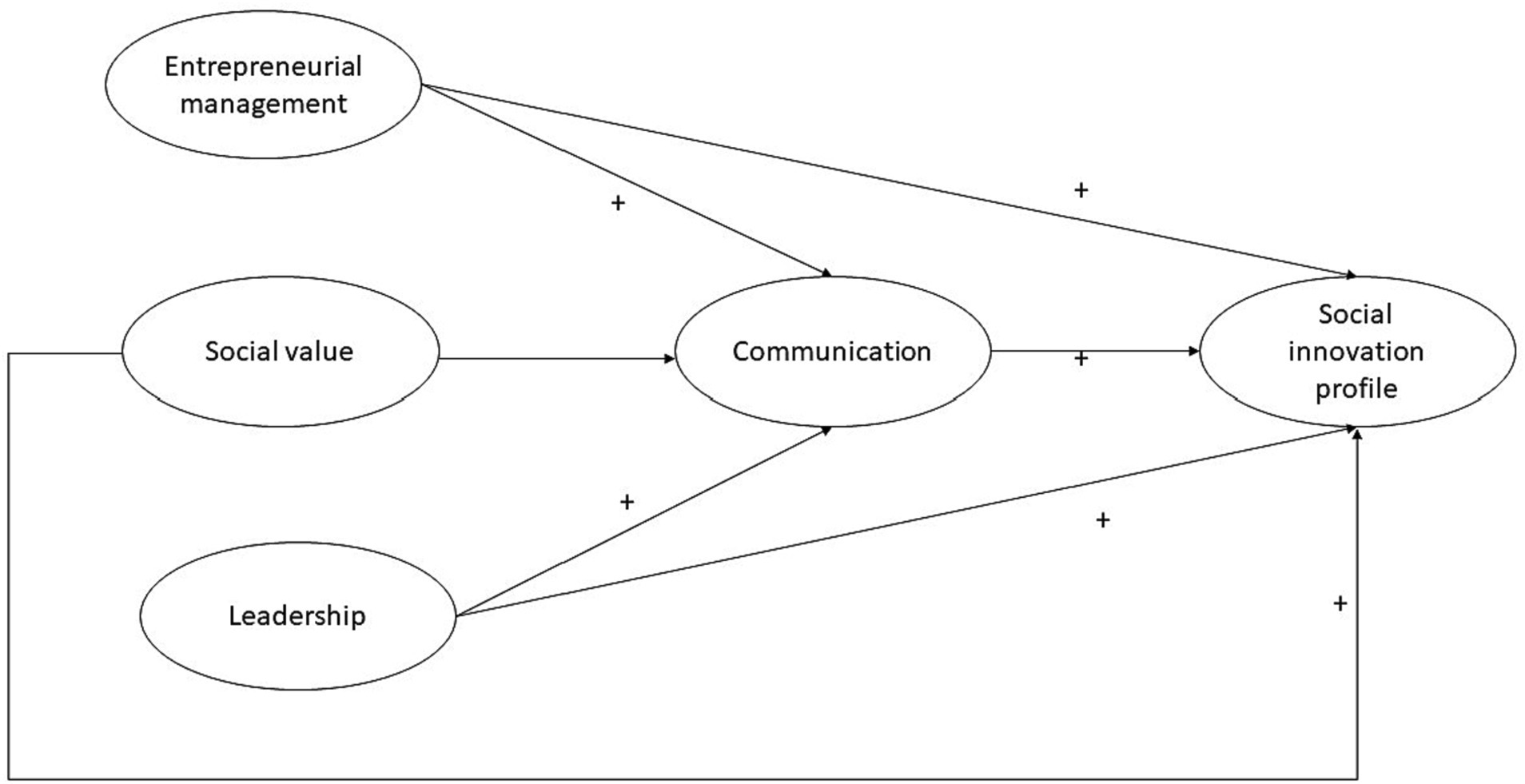
Figure 1. Theoretical model of relationships between entrepreneurial management, social value, leadership, communication, and social innovation profile.
2 Materials and methods
2.1 Type of study
A quantitative cross-sectional study with an explanatory relational scope was conducted.
2.2 Participants
A total of 408 higher education students from 12 different countries (Mexico, Colombia, Paraguay, Peru, Ecuador, Spain, Guatemala, Costa Rica, France, Germany, South Korea and the Dominican Republic) and from six different disciplinary areas (Humanities and Education, Business, Social Sciences and Government, Architecture and Design, Engineering and Science, and Health Sciences) were selected on a non-probabilistic basis. Ages ranged from 18 to 58 years (M = 22.4, SD = 6.0).
2.3 Instruments
Social entrepreneurship. The Profile of the Social Entrepreneur instrument of García-González et al. (2020) was used, which measures the perception of achievement of the social entrepreneurship competency and its sub-competencies: (a) entrepreneurial management (five items, e.g., I have the ability to set a clear goal and the steps to achieve it); (b) social value (five items, e.g., I am interested in leading an initiative with favorable results for society and the environment); (c) leadership (four items, e.g., I am interested in leading an initiative with favorable results for society and the environment); (d) communication (four items, e.g., I am able to delegate activities to members of my team according to their profiles). I am able to delegate activities to my team members according to their profiles; (d) communication (six items, e.g., I master different ways of communicating my ideas: in writing, in a video, or in face-to-face talks) and (e) social innovation (eight items, e.g., I am able to identify problems in the social or environmental setting to generate innovative solutions). The scale has a Likert-type response format with values from 1 “strongly disagree” to 5 “strongly agree.” The reliability of the scale by Cronbach’s Alpha method presented acceptable values in its dimensions: entrepreneurial management α = 0.82, social value, α = 0.76, leadership α = 0.70, communication α = 0.76, and social innovation α = 0.74. Overall, the scale has a reliability index of 0.89.
2.4 Procedure
To obtain the data, the students were invited to participate voluntarily in the study, the objective of the study was explained to them, and they were asked for their informed consent in which they were guaranteed the proper handling of the data. The administration of the instrument was carried out by those responsible for the project and lasted approximately 20 min. First, the database was cleaned and missing values were inputted by the mean, then descriptive data and Pearson correlations between variables were analyzed with the support of the SPSS 23 statistical package. For the analysis of the structural equation model, the following chi-square values, and their associated probability (X2 with p > 0.001), SRMR (≤ 0.08), Tucker Lewis index (TLI ≥ 0.90), CFI (≥ 0.90) and RMSEA (≤ 0.05) will be considered (Blunch, 2013; Byrne, 2013).
3 Results
Table 1 reports Pearson correlations between the variables, the relationships found are significant and of medium intensity, so it was decided to include them in the structural equation model, likewise, mean differences of the variables are presented in relation to the gender of the participants, the results show that statistically significant differences were only found in the social value variable, with women having a higher mean.
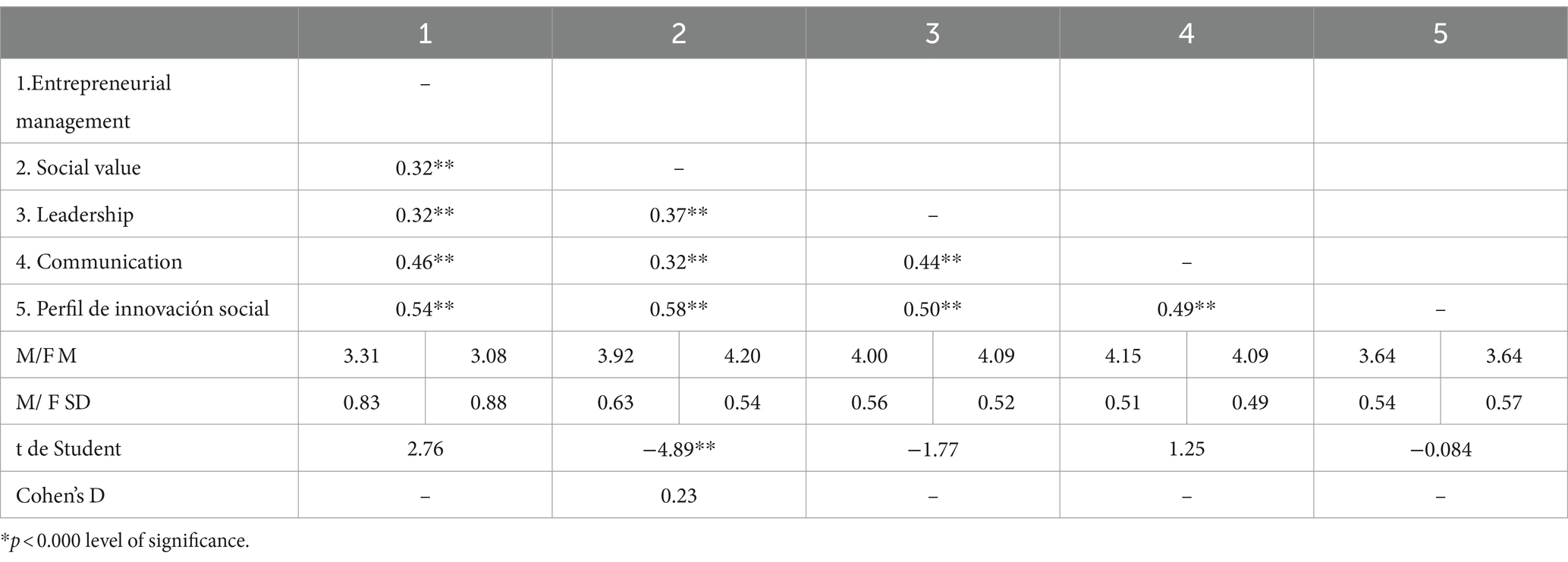
Table 1. Pearson correlations and mean differences between variables and sex of participants.
3.1 Structural model
The proposed structural model was an acceptable fit to the data [X2 = 456.2, gl = 259, p = 0.000; CFI = 0.93; TLI = 0.92; SRMR = 0.04; RMSEA = 0.04, CI 90 (0.03, 0.05)]. The R2 values indicate that the model explains 88% of the variance of the students’ social innovativeness profile (see Figure 2). Entrepreneurial management was positively related to personal competencies (β = 0.21, p < 0.001) and to the social innovativeness profile (β = 0.17, p < 0.001), social value was equally positively related to personal competencies and to the social innovativeness profile (β = 0.18, p < 0.001; β = 0.59, p < 0.001), leadership was also positively related to personal competencies and social innovativeness profile (β = 0.65, p < 0.001; β = 0.41, p < 0.001).
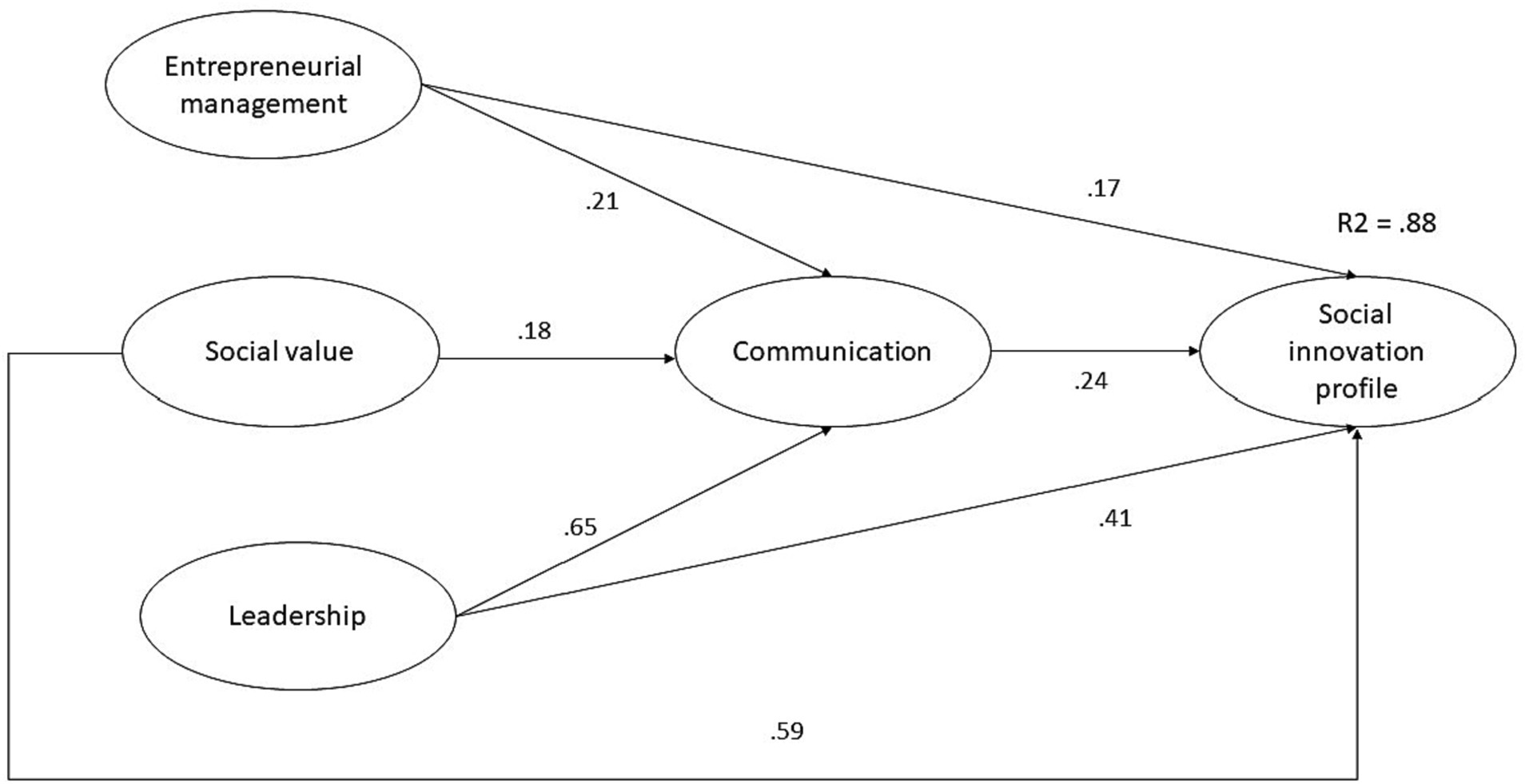
Figure 2. Result of the structural model of relationships between entrepreneurial management, social value, leadership, personal competence with the social innovation profile.
4 Discussion and conclusions
Social entrepreneurship competence in higher education students represents an essential tool for developing innovative proposals to solve different current problems. This study analyzed the relationship between entrepreneurial management, social value, leadership, communication, and social innovation in higher education students. The results confirm the adequate adjustment of the data to the theoretical model presented.
The findings of the relationships raised allow us to confirm the hypotheses; firstly, the positive relationship between entrepreneurial management, communication, and social innovation profile was confirmed; our findings are in line with what is reported in the literature, which noted that people who have management skills have a higher development in the ability to communicate effectively, as well as the ability to generate creative ideas in the face of different situations (Castro et al., 2018; Pérez-Rojas, 2020; Di Vaio et al., 2022). These results show the importance of entrepreneurial management for developing competencies such as communication and social innovation profiles in students; however, further studies are needed to strengthen this finding.
Similarly, the relationship between social value with communication and social innovation was confirmed; this is consistent with what is reported in the literature on the subject, which explains that people who have a sense of social value, i.e., who feel a commitment to develop ideas for the benefit of society, have better communication and creative skills (Abebe et al., 2020; Sotiropoulou et al., 2021) this implies that communication is a relevant competence to be able to develop innovation ideas for social change. It is necessary to analyze further the relationships raised in the study; it would be essential to include variables mediating the relationships between social value, communication, and the innovation profile of higher education students.
Finally, the positive relationship between leadership, communication, and social innovation was also confirmed; this is consistent with what is reported in the studies (Velasco-Martínez et al., 2019; García-González and Ramírez-Montoya, 2021); leadership competence in people implies that they can communicate effectively with the people who are part of the group, it is often found that people who are leaders can manage people’s time and efforts, they can analyze people’s strengths and put these efforts into operation to achieve the objectives. Likewise, leadership in people implies that they are creative and innovative in addressing social problems.
4.1 Conclusion
The results show the relevance of social entrepreneurship competency in higher education students as a fundamental training element to promote in students a profile of active social commitment to current problems. It shows the importance of entrepreneurial management, social value, leadership, and communication competencies for the social innovation profile. These findings are solid evidence for higher education institutions wishing to reformulate their study plans and programs on the social entrepreneurship competencies they want to develop in their students so that they can face the social problems of the times.
4.2 Limitations and future directions.
Despite the contributions of this study, the results must be taken with caution due to the limitations it presents; firstly, the type of cross-sectional study limits the ability to establish cause-effect relationships between the variables, so it is suggested that longitudinal studies be carried out; secondly, the self-report format with which the variables were measured, although this type of measurement is one of the most used, this may have an essential burden of social desirability, so it is suggested that other types of measurements be carried out. Finally, regarding the sample size, although a representative sample was obtained, the findings cannot be easily generalized to samples with extreme cultural differences, so it is suggested that the study be replicated in other types of contexts that make it possible to expand knowledge and understanding of the factors that enhance the student’s social innovation profile.
In general, it is suggested to continue conducting studies on the factors related to the students’ innovation profile, and teachers and decision-makers are urged to include in plans, programs, and development agendas the training in social innovation in students as a resource to face the future of education and society.
Data availability statement
The raw data supporting the conclusions of this article will be made available by the authors, without undue reservation.
Ethics statement
The studies involving humans were approved by Institute for the Future of Education, Tecnologico de Monterrey. The studies were conducted in accordance with the local legislation and institutional requirements. The participants provided their written informed consent to participate in this study.
Author contributions
LG-M: Conceptualization, Writing – original draft. CA-N: Methodology, Supervision, Writing – original draft. SN-L: Data curation, Writing – review & editing.
Funding
The author(s) declare that financial support was received for the research, authorship, and/or publication of this article. The authors would like to thank the financial support from Tecnologico de Monterrey through the “Challenge-Based Research Funding Program 2022.” Project ID # I005 - IFE001 - C2-T3 – T.
Acknowledgments
The authors would like to acknowledge the financial and the technical support of Writing Lab, Institute for the Future of Education, Tecnologico de Monterrey, Mexico, in the production of this work.
Conflict of interest
The authors declare that the research was conducted in the absence of any commercial or financial relationships that could be construed as a potential conflict of interest.
Publisher’s note
All claims expressed in this article are solely those of the authors and do not necessarily represent those of their affiliated organizations, or those of the publisher, the editors and the reviewers. Any product that may be evaluated in this article, or claim that may be made by its manufacturer, is not guaranteed or endorsed by the publisher.
References
Abebe, M. A., Kimakwa, S., and Redd, T. (2020). Toward a typology of social entrepreneurs: the interplay between passionate activism and entrepreneurial expertise. J. Small Bus. Enterp. Dev. 27, 509–530. doi: 10.1108/JSBED-08-2019-0279
Ahmed, T., Chandran, V. G. R., Klobas, J. E., Liñán, F., and Kokkalis, P. (2020). Entrepreneurship education programmes: how learning, inspiration and resources affect intentions for new venture creation in a developing economy. Int. J. Manag. Educ. 18:100327. doi: 10.1016/j.ijme.2019.100327
Aledo Ruiz, M. D. (2022). Desarrollo de habilidades blandas e intención emprendedora en los estudiantes universitarios. TECHNO REVIEW. Int. Technol. Sci. Soc. Rev. 12, 1–11. doi: 10.37467/revtechno.v11.4468
Amorim, M., Dias, M. F., Sarmento, M., and Madaleno, M. (2019). “Competences for social innovation: an international exploratory study” in EDULEARN19 proceedings (IATED), Ed. IATED Academy. Spain. 9286–9294.
Angelidou, M., and Psaltoglou, A. (2017). An empirical investigation of social innovation initiatives for sustainable urban development. Sustain. Cities Soc. 33, 113–125. doi: 10.1016/j.scs.2017.05.016
Arslan, A., Buchanan, B. G., Kamara, S., and al Nabulsi, N. (2022). Fintech, base of the pyramid entrepreneurs and social value creation. J. Small Bus. Enterp. Dev. 29, 335–353. doi: 10.1108/JSBED-10-2020-0370
Bacq, S., and Alt, E. (2018). Feeling capable and valued: a prosocial perspective on the link between empathy and social entrepreneurial intentions. J. Bus. Ventur. 33, 333–350. doi: 10.1016/j.jbusvent.2018.01.004
Balladares, J., Avilés, M., and Pérez, H. (2016). Del pensamiento complejo al pensamiento computacional: retos para la educación contemporánea. Sophia 21:6. doi: 10.17163/soph.n21.2016.06
Ballesteros-Sola, M., and Magomedova, N. (2023). Impactful social entrepreneurship education: a US-Spanish service learning collaborative online international learning (COIL) project. Int. J. Manag. Educ. 21:100866. doi: 10.1016/j.ijme.2023.100866
Bals, L., Huang, F., Tate, W. L., and Rosca, E. (2023). Creating social value at the bottom of the pyramid: elaborating resource orchestration via social intermediaries. J. Bus. Res. 168:114209. doi: 10.1016/j.jbusres.2023.114209
Bell, R., and Bell, H. (2020). Applying educational theory to develop a framework to support the delivery of experiential entrepreneurship education. J. Small Bus. Enterp. Dev. 27, 987–1004. doi: 10.1108/JSBED-01-2020-0012
Blunch, N. J. (2013). Introduction to structural equation Modeling using IBM SPSS statistics and AMOS. London: SAGE Publications.
Bonesso, S., Gerli, F., Pizzi, C., and Cortellazzo, L. (2018). Students’ entrepreneurial intentions: the role of prior learning experiences and emotional, social, and cognitive competencies. J. Small Bus. Manag. 56, 215–242. doi: 10.1111/jsbm.12399
Campo, N. C., Reyes, C. J. P., and Barros, H. S. (2021). Formación del emprendimiento social: Compromiso de la Universidad de la Guajira en Colombia. Rev. Cienc. Soc. 27, 216–227.
Castro, M. P., González, J. R. V., and Corona, C. N. (2018). Diseño y validación de un test de evaluación del potencial en emprendimiento social. REVESCO. Revista de Estud. Coop. 128, 192–211. doi: 10.5209/REVE.60207
Connolly, M., James, C., and Fertig, M. (2019). The difference between educational management and educational leadership and the importance of educational responsibility. Educ. Manag. Adm. Leadersh. 47, 504–519. doi: 10.1177/1741143217745880
Cortellazzo, L., Bruni, E., and Zampieri, R. (2019). The role of leadership in a digitalized world: a review. Front. Psychol. 10:1938. doi: 10.3389/fpsyg.2019.01938
Cruz-Sandoval, M., Vázquez-Parra, J. C., and Alonso-Galicia, P. E. (2022). Student perception of competencies and skills for social entrepreneurship in complex environments: an approach with Mexican university students. Soc. Sci. 11:314. doi: 10.3390/socsci11070314
Dees, J. G. (2008). Philanthropy and Enterprise: harnessing the power of business and social entrepreneurship for development. Innov. Technol. Gov. Glob. 3, 119–132. doi: 10.1162/itgg.2008.3.3.119
Di Vaio, A., Hassan, R., Chhabra, M., Arrigo, E., and Palladino, R. (2022). Sustainable entrepreneurship impact and entrepreneurial venture life cycle: a systematic literature review. J. Clean. Prod. 378:134469. doi: 10.1016/j.jclepro.2022.134469
Donaldson, C., Neck, H., and Linton, G. (2024). Fearful pathways to social entrepreneurship intention: a fuzzy-set qualitative content analysis. Int. J. Manag. Educ. 22:100925. doi: 10.1016/j.ijme.2023.100925
Forte-Celaya, J., Ibarra, L., and Glasserman-Morales, L. D. (2021). Analysis of Creative Thinking Skills Development under Active Learning Strategies. Education Sciences 11:621. doi: 10.3390/educsci11100621
García-González, A., and Ramírez-Montoya, M. S. (2021). Social entrepreneurship education: changemaker training at the university. High. Educ. Skills Work Based Learn. 11, 1236–1251. doi: 10.1108/HESWBL-01-2021-0009
García-González, A., Ramírez-Montoya, M. S., De León, G., and Aragón, S. (2020). El Emprendimiento Social Como Una Competencia Transversal: Construcción y Validación de Un Instrumento de Valoración En El Contexto Universitario. REVESCO: Rev. Estud. Coop. 136, 213–230. doi: 10.5209/reve.71862
Ghalwash, S., Tolba, A., and Ismail, A. (2017). What motivates social entrepreneurs to start social ventures? Soc. Enterp. J. 13, 268–298. doi: 10.1108/SEJ-05-2016-0014
Gleason Rodríguez, M. A., Rubio-Barrios, J. E., Ruíz-Godoy Rivera, J. A., and Velázquez-Díaz, M. L. (2022). Proyectos de innovación social como estrategia para el desarrollo de competencias de estudiantes universitarios. Rev. Educ. Sup. 51, 69–88. doi: 10.36857/resu.2022.202.2118
Grilo, R., and Moreira, A. C. (2022). The social as the heart of social innovation and social entrepreneurship: an emerging area or an old crossroads? Int. J. Innov. Stud. 6, 53–66. doi: 10.1016/j.ijis.2022.03.001
Howaldt, J., and Schwarz, M. (2021). "Social innovation and social change. Research agenda for social innovation." Available at: https://www.e-elgar.com/shop/usd/a-research-agenda-for-social-innovation-9781789909340.html
Hurtado, P. D., and Ortiz, D. O. (2022). Perspectivas y tendencias de investigación en emprendimiento social. Desarrollo Gerencial 14, 1–26. doi: 10.17081/dege.14.1.5082
Iqbal, Q., and Piwowar-Sulej, K. (2022). Sustainable leadership in higher education institutions: social innovation as a mechanism. Int. J. Sustain. High. Educ. 23, 1–20. doi: 10.1108/IJSHE-04-2021-0162
İrengün, O., and Arıkboğa, Ş. (2015). The effect of personality traits on social entrepreneurship intentions: a field research. Procedia. Soc. Behav. Sci. 195, 1186–1195. doi: 10.1016/j.sbspro.2015.06.172
Jena, R. K. (2020). Measuring the impact of business management Student’s attitude towards entrepreneurship education on entrepreneurial intention: a case study. Comput. Hum. Behav. 107:106275. doi: 10.1016/j.chb.2020.106275
Jiménez, P. (2019). La educación como derecho social, humano y fundamental: principios y perspectivas de la educación moderna. Rev. Investig. Constit. 6, 669–689. doi: 10.5380/rinc.v6i3.58017
Kim, Y., and Kim, H. (2022). Social value in public enterprises from the perspective of creating shared value (CSV): the case of the Korea expressway corporation. Int. Rev. Adm. Sci. 88, 1211–1227. doi: 10.1177/00208523211029765
Kumar, S., Kumar, P., Wisetsri, W., Raza, M., and Norabuena-Figueroa, R. P. (2021). Social entrepreneurship education: insights from the Indian higher educational courses. Acad. Strateg. Manag. J. 20, 1–8.
Kumari, R., Kwon, K. S., Lee, B. H., and Choi, K. (2019). Co-creation for social innovation in the ecosystem context: the role of higher educational institutions. Sustain. For. 12:307. doi: 10.3390/su12010307
Kuratko, D. F., McMullen, J. S., Hornsby, J. S., and Jackson, C. (2017). Is your organization conducive to the continuous creation of social value? Toward a social corporate entrepreneurship scale. Bus. Horiz. 60, 271–283. doi: 10.1016/j.bushor.2016.12.003
Lackéus, M. (2014). An emotion based approach to assessing entrepreneurial education. Int. J. Manag. Educ. 12, 374–396. doi: 10.1016/j.ijme.2014.06.005
Long, Z., Zhao, G., Wang, J., Zhang, M., Zhou, S., Zhang, L., et al. (2021). Research on the drivers of entrepreneurship education performance of medical students in the digital age. Front. Psychol. 12:733301. doi: 10.3389/fpsyg.2021.733301
Matsumoto-Royo, K., Ramírez-Montoya, M. S., and Glaserman-Morales, L. D. (2022). Lifelong Learning and Metacognition in the Assessment of Pre-Service Teachers in Practice-Based Teacher Education. Frontiers in Education, 7:879238. doi: 10.3389/feduc.2022.879238
Miller, T. L., Wesley, C. L., and Williams, D. E. (2012). Educating the minds of caring hearts: comparing the views of practitioners and educators on the importance of social entrepreneurship competencies. Acad. Manag. Learn. Edu. 11, 349–370. doi: 10.5465/amle.2011.0017
Nugroho, S., Sitorus, A. T., Habibi, M., Wihardjo, E., and Iswahyudi, M. S. (2023). The role of chat GPT in improving the efficiency of business communication in management science. Jurnal Minfo Polgan 12, 1482–1491. doi: 10.33395/jmp.v12i1.12845
Odumosu, A. A., Binuyo, A. O., Adefulu, A. D., and Asikhia, O. U. (2020). Social innovation and graduate entrepreneurship in Nigeria. J. Bus. Manag. 22, 48–55. doi: 10.9790/487X-2202024855
Okolie, U. C., Igwe, P. A., Ayoola, A. A., Nwosu, H. E., Kanu, C., and Mong, I. K. (2021). Entrepreneurial competencies of undergraduate students: the case of universities in Nigeria. Int. J. Manag. Educ. 19:100452. doi: 10.1016/j.ijme.2021.100452
Pallathadka, H., Ramirez-Asis, E. H., Loli-Poma, T. P., Kaliyaperumal, K., Ventayen, R. J. M., and Naved, M. (2023). Applications of artificial intelligence in business management, e-commerce and finance. Mater. Today Proc. 80, 2610–2613. doi: 10.1016/j.matpr.2021.06.419
Parejo, J.-L., Revuelta-Domínguez, F. I., Guerra-Antequera, J., and Ocaña-Fernández, A. (2022). An analysis of educational innovation culture by a Delphi expert panel. Front. Educ. 7:991263. doi: 10.3389/feduc.2022.991263
Parés, M., Ospina, S. M., and Subirats, J. (Eds.) (2017). Social innovation and democratic leadership: Communities and social change from below. United Kingdom: Edward Elgar Publishing.
Paudel, S. (2019). Entrepreneurial leadership and business performance. South Asian J. Bus. Stud. 8, 348–369. doi: 10.1108/SAJBS-11-2018-0136
Peredo, A. M., and McLean, M. (2006). Social entrepreneurship: a critical review of the concept. J. World Bus. 41, 56–65. doi: 10.1016/j.jwb.2005.10.007
Pérez-Rojas, J. G. (2020). Retos de las instituciones de educación superior para su articulación en la Industria 4.0. Revista CEA 6, 9–11. doi: 10.22430/24223182.1584
Pless, N. M., Murphy, M., Maak, T., and Sengupta, A. (2021). Societal challenges and business leadership for social innovation. Soc. Bus. Rev. 16, 535–561. doi: 10.1108/SBR-10-2020-0129
Ramírez, E., and Zarazúa, G. (2021). Emprendimiento social: Una solución innovadora para problemas socioeconómicos. Rev. Estud. Soc. 4, 1–96.
Ratten, V., Fakhar Manesh, M., Pellegrini, M. M., and Dabic, M. (2021). The journal of family business management: a bibliometric analysis. J. Family Bus. Manag. 11, 137–160. doi: 10.1108/JFBM-02-2020-0013
Roblek, V., Mesko, M., Dimovski, V., and Peterlin, J. (2019). Smart technologies as social innovation and complex social issues of the Z generation. Kybernetes 48, 91–107. doi: 10.1108/K-09-2017-0356
Romero, R. S., and Nalangan, R. M. (2023). Assessment of personal entrepreneurial competencies of university of mindanao graduating business students. Int. J. Ind. Manag. 17, 50–59. doi: 10.15282/ijim.17.1.2023.9213
Schoof, U. (2006). Stimulating youth entrepreneurship: barriers and incentives to enterprise start-ups by young people International Labour Organization, 76.
Schröer, A. (2021). Social innovation in education and social service organizations. Challenges, actors, and approaches to foster social innovation. Front. Educ. 5:555624. doi: 10.3389/feduc.2020.555624
Silveyra, G., Herrero, Á., and Pérez, A. (2021). Model of teachable entrepreneurship competencies (M-TEC): scale development. Int. J. Manag. Educ. 19:100392. doi: 10.1016/j.ijme.2020.100392
Singh, R. K., Kumar Mangla, S., Bhatia, M. S., and Luthra, S. (2022). Integration of green and lean practices for sustainable business management. Bus. Strateg. Environ. 31, 353–370. doi: 10.1002/bse.2897
Smith, I. H., and Woodworth, W. P. (2012). Developing social entrepreneurs and social innovators: a social identity and self-efficacy approach. Acad. Manag. Learn. Edu. 11, 390–407. doi: 10.5465/amle.2011.0016
Sotiropoulou, A., Papadimitriou, D., and Maroudas, L. (2021). Personal values and typologies of social entrepreneurs. The case of Greece. J. Soc. Entrep. 12, 1–27. doi: 10.1080/19420676.2019.1668827
Suárez Brito, P., Baena Rojas, J. J., López Caudana, E. O., and Glasserman Morales, L. D. (2022). “Academic literacy as a component of complex thinking in higher education: A scoping review ”.
Talmage, C. (2021). Social entrepreneurship: a needed tool for contemporary community development education. Int. J. Community Well-Being 4, 227–243. doi: 10.1007/s42413-021-00112-y
Tambunan, S. K. S., Absah, Y., and Siahaan, E. (2023). The influence of effective communication and the utilization of information technology on employee performance with job satisfaction as a mediation variable in Medan mayor office. Int. J. Econ. Bus. Account. Agric. Manag. Sharia Adm. 3, 808–819. doi: 10.54443/ijebas.v3i3.923
UNESCO . (2019). Recursos Educativos Abiertos. Available at: https://es.unesco.org/naveguemosporlainclusion/recursos
Vázquez-Parra, J. C., Amézquita-Zamora, J. A., and Ramírez-Montoya, M. S. (2022). Student perception of their knowledge of social entrepreneurship: gender gap and disciplinary analysis of an Ashoka changemaker campus in Latin America. J. Appl. Res. High. Educ. 14, 1224–1241. doi: 10.1108/JARHE-02-2021-0067
Velasco-Martínez, L. C., Estrada Vidal, L. I., Pabón Figueras, M., and Tójar Hurtado, J. C. (2019). Evaluar y promover las competencias para el emprendimiento social en las asignaturas universitarias REVESCO Revista de Estudios Cooperativos. 131, 199–123. doi: 10.5209/REVE.63561
von Jacobi, N., Chiappero-Martinetti, E., Maestripieri, L., and Giroletti, T. (2023). Creating social value by empowering people: a social innovation perspective. Ann. Public Coop. Econ. 1–26. doi: 10.1111/apce.12447
Zaumane, I., and Leščevica, M. (2023). Functional responsibility for internal communication management and its integration in contemporary businesses. Int. J. Organ. Anal. 31, 1492–1512. doi: 10.1108/IJOA-06-2021-2822
Keywords: higher education, educational innovation, entrepreneurship, social innovation, future of education
Citation: Glasserman-Morales LD, Alcantar-Nieblas C and Nava-Lara S (2024) The social innovation profile in students as a transformation strategy: structural equation modeling. Front. Educ. 9:1336576. doi: 10.3389/feduc.2024.1336576
Edited by:
Diana Hernández Montoya, Universidad Estatal a Distancia, Costa RicaReviewed by:
Francis Thaise A. Cimene, University of Science and Technology of Southern Philippines, PhilippinesAna María Sandoval Poveda, Universidad Estatal a Distancia, Costa Rica
Copyright © 2024 Glasserman-Morales, Alcantar-Nieblas and Nava-Lara. This is an open-access article distributed under the terms of the Creative Commons Attribution License (CC BY). The use, distribution or reproduction in other forums is permitted, provided the original author(s) and the copyright owner(s) are credited and that the original publication in this journal is cited, in accordance with accepted academic practice. No use, distribution or reproduction is permitted which does not comply with these terms.
*Correspondence: Carolina Alcantar-Nieblas, Y2Fyb2xpbmEuYWxjYW50YXJAdGVjLm14