 Mengistu Anagaw Engida
 Ashagrie Sharew Iyasu
 Yalemwork Mossu Fentie1
- 1Department of English Language and Literature, Debre Markos University, Debre Markos, Ethiopia
- 2Department of Statistics, Debre Markos University, Debre Markos, Ethiopia
Studies indicate that students who have access to highly qualified teachers tend to achieve at a higher rate, regardless of other factors. However, the essence of quality teaching and teacher quality has not been adequately established in these studies. Nonetheless, recent developments favoring integrations have led to three lines of teaching quality research: professional standards, value-added measures, and student evaluations. This study explores how the quality of mathematics and English language teachers is associated with students' achievement using a professional standard observation tool for student evaluation. A representative multistage sample of students and teachers selected from high schools in the East Gojjam Administrative Zone participated in the study. By using the domains in the Framework for Teaching (FfT) as indicators of teaching quality, the study identified the indicators that are associated with the academic achievement of students in mathematics and English subjects. A multiple linear regression analysis was used to study the relationships between the independent variables (teachers' quality indicators) and the dependent variable (students' grade 10 exam scores). Of the four domains of FfT, the delivery of instruction revealed a positive and significant association (sig = 016) with students' scores in the English language. The delivery of instruction encompasses communicating with students, using questioning and discussion techniques, and demonstrating flexibility and responsiveness, which are positively associated with students' scores in the English language. Conversely, managing classroom procedures was the only subdomain associated (sig = 014) with an increase in students' mathematics scores. Accordingly, suggestions are made for further research and practice.
1 Introduction
The assertion that “the quality of an education system cannot exceed the quality of its teachers” (Barber and Mourshed, 2007, p. 61) highlights that teachers are the most important factor in student learning and achievement. Research studies (López-Martín et al., 2023; Sanfo and Malgoubri, 2023) indicate that students who have access to highly qualified teachers achieve a higher rate of success. Test score improvement differs substantially for students with different teachers but in the same school and grade. Hanushek and Rivkin (2010) conclude that, although explanations for these differences are not readily captured by common measures of teacher quality, they nevertheless indicate that teachers play an influential role. Similarly, Hanushek and Rivkin (2010) reported that teacher quality accounts for a considerable percentage of the variation in student achievement with salient influences on student achievement (Rowe, 2003), which lasts a long time. This makes the need for attention to teacher quality instrumental.
To date, educational institutions have relied on three lines of teaching quality research to determine teacher quality: professional standards, value-added measures, and student evaluations. Studies of observable teacher characteristics and inputs that may impact student performance have been a prior agenda of teaching quality research (Goe et al., 2008; Hanushek and Rivkin, 2010). Among the observable characteristics examined in teacher quality studies were teachers' initial education, performance in tests, teacher credentials, and professional development activities. However, the results from these studies are far from conclusive. In addition, teaching quality research emphasizes the analysis of practices and processes based on professional standards and usually through class observation guidelines (Darling-Hammond, 2012; Danielson, 2014). The assessment of teacher practice based on standards, which is often carried out independent of the students' characteristics that may facilitate difficult teaching, is perceived to be more closely associated with the professional teacher's activities and, therefore, could be considered a more valid measure of his/her performance. Alternatively, estimates of value-added measures of student performance on standardized tests, which assume the random assignment of teachers to schools and classrooms (Rothstein, 2010), aim at capturing teacher-specific contributions to the learning process. Such an approach to estimating teacher quality, however, is criticized for many reasons, including its estimation instability (Hanushek and Rivkin, 2010), test content and measurement error, and the difficulty in attributing learning gains to a teacher (Simonson et al., 2022), among other factors. Recent developments in the measurement of teaching quality propose the integration of various sources of information and their use in teacher quality evaluation (Goe et al., 2008; Darling-Hammond, 2012; cf. Fauth et al., 2014).
Although these lines of studies have made significant contributions, much remains unexplored, especially with regard to how students observe and evaluate teachers' teaching quality. Besides these contributions, there are gaps in identifying and cultivating which, if any, readily identifiable teacher qualities contribute to and are associated with students' learning gains. As part of such efforts, Sanfo and Malgoubri (2021, 2023) used a three-dimensional (Klieme et al., 2001) conceptualization of teaching quality, student support, effective classroom management, and cognitive activation dimensions. Sanfo and Malgoubri (2021, p. 1131) revealed that ‘classroom management does not affect students' EFL achievements' while Sanfo and Malgoubri (2023) reported that the three dimensions of teaching quality are positively associated with learning achievements. However, some studies that investigated the effectiveness of the three basic dimensions of teaching quality reported mixed findings (Praetorius et al., 2018), suggesting further studies. Others, for instance, van der Scheer et al. (2019), investigated the validity and reliability of student perceptions of teaching quality and reported that a positive and inclusive classroom climate, the quality of classroom management, a clear and activating instructional approach, adaptive instruction, teaching relevant learning strategies, and goal orientation signify important dimensions of teaching quality. Similarly, Azigwe et al. (2016) tested a dynamic multilevel model that comprises factors operating at the student, classroom, school, and educational system levels. The findings of a multilevel analysis revealed that a larger share of the variance in student achievement was situated at the classroom level, suggesting that the teacher effect is much greater. Thus, despite the convergence in how teaching quality is conceptualized and identified (Stronge et al., 2007), there is limited understanding and consensus about the specific teacher quality features and metrics that capture practices as well as how practices might influence achievement.
The Framework for Teaching (FfT; Danielson, 2014) is a multi-dimensional and widely used measure of teaching effectiveness. The framework is an instrument designed to assess teacher performance in planning and preparation, classroom environment, instruction, and principled teaching domains. The FFT (Danielson, 2014) measures and promotes teaching practices associated with student outcomes. FfT is a research-based set of elements of instruction (Danielson, 2014), rooted in a constructivist paradigm of teaching and learning. The framework divides the complex process of teaching into 22 components grouped into four domains of teaching: planning and preparation, classroom environment, instruction, and principled teaching. While FfT shows modest relations between scores and student outcomes (Sandilos et al., 2019), there is a need to validate its localized validity.
1.1 Teaching and teacher quality in Ethiopia
Considered nationally, Ethiopia has made undeniable achievements in expanding access to basic education. Moreover, “the existence of professionally competent and ethically minded teachers in the system” was stipulated as one of the basic requirements of the education system (MOE, 2002). To ensure high-quality education, the government should be committed to providing every student with the opportunity to learn from a competent and inspiring teacher. Teachers' continuous professional development programs have been instigated to address the issues of improving teaching quality. Moreover, various kinds of teacher training and capacity-building projects have been executed to deliver quality education (Workneh and Woldehanna, 2013), as cited in Ahmad (2014). However, complaints related to teacher quality and the failure to positively impact student learning are frequent nationwide.
With recent developments favoring integrations, investigations on teaching quality and teacher effectiveness foster three lines of research focusing on observations based on professional standards, value-added measures, and student evaluations,. The current research envisages determining how the teaching quality of teachers (as evident in students' ratings on the basis of rubrics from domains of FfT) is associated with student achievement. Student responses to well-designed survey items may provide effective and reliable alternative evidence (Ferguson and Danielson, 2014; van der Scheer et al., 2019) from students who are increasingly involved in teaching quality evaluations, primarily because students observe their teachers daily over much longer periods of time (Doherty and Jacobs, 2015). Thus, this study explores how the quality of mathematics and English language teachers is associated with students' achievement using a professional standard observation tool for student evaluation. Thus, the study aims to examine the association between the four domains and subdomains of teaching quality and student learning achievements across schools. Specifically, this study identified teaching quality indicators that are strongly associated with student achievement while also determining teachers' teaching quality, as measured by FfT domains (look at the Appendix).
2 Research methods
This study explores how students perceive the impacts of teacher quality on the achievement of students from selected schools in the East Gojjam Administrative Zone. The research purpose can be best addressed if a descriptive research design (Creswell, 2003) in which quantitative data collected from students are used. Quantitative methods such as descriptive methods and statistical models are used to describe the data obtained through questionnaires to explore teachers' quality indicator variables significantly associated with the academic achievement of students. The study encompasses students and teachers in the public high schools (in particular, grade 10) currently found in the East Gojjam zone, Amhara Regional State. First, to address all the Woredas in the East Gojjam zone, one high school was randomly selected from each Woreda using the probability proportional to size method. Second, among the high school teachers, two mathematics teachers and two English teachers were selected randomly using the lottery method. Third, students from each selected high school were selected using a stratified sampling technique with proportional allocation.
To determine the number of students needed, the following formula from Cochran (1977) was used:
where n is the required sample of students whose academic achievement is observed and whose perceptions about the quality of their teachers have been asked; α is the level of significance, which is 0.05 to give Z0.025 = 1.96; S is the sample standard deviation to be determined either with a pilot survey; and d is the margin of error with a range of values between 0 and 1. In this research, the margin of error was 3%.
Quantitative data were collected using the following instruments:
1. Self-Administered Questionnaire: The questionnaire was prepared based on FfT (Danielson, 2014) and evaluated by colleagues. It provides data on selected teachers' qualities that are associated with students' learning and, thereby, achievement. The students completed the questionnaire. As indicated by a Cronbach's alpha of 0.86, the internal consistency of the FfT items can be considered good. However, this value is lower than the alpha value obtained from previous findings (Patrick et al., 2020), which used FfT values ranging from 0.87 to 0.79 for reading and mathematics, proving the relevance of the measure of teaching effectiveness.
2. Document Analysis: Students' exam scores were collected from their schools. The scores of the selected students are collected from their grade 10 lists.
To collect data, the research participants were identified via sampling procedures. Then, selected students were personally contacted and briefed about the purposes of the study and its ethical considerations. Cognizant of this, selected students were briefed further about how they had to respond to the questionnaire. After the briefing, the questionnaire was administered. Finally, students' academic scores were collected from their schools. In this study, the researchers attempted to identify significant associations between teachers' quality indicators and students' achievement using a statistical model in which two types of dependent and independent variables are considered. The dependent variable was students' exam scores in mathematics and English examinations. The independent variables include teachers' planning and preparation, managing the classroom environment, delivering instruction, and principled teaching (Danielson, 2014), regardless of the personal and socioeconomic characteristics of the students and their families. Other factors affecting and explaining their teaching quality were assumed to include teachers' planning and preparation, classroom management, delivery of instruction, and principled teaching. Teachers' personal characteristics and their teaching quality directly impact the aforementioned variables, which in turn impact students' academic performance.
The quantitative data were organized and analyzed through the use of the Statistical Package for the Social Sciences (SPSS). Simple descriptive statistics, namely frequency, percentage, and mean and standard deviation scores, are used along with a multiple linear regression analysis as the dependent/outcome variable (students' examination scores) is continuous. A multiple linear regression analysis was applied to study the relationships between the independent variables (teachers' quality indicators) and the dependent variable (students' grade 10 exam score). The following regression equation was used for this purpose:
where
Y is the dependent variable (students' academic score on the 10th exam),
β0 is the intercept,
X1, X2, X3,… Xp are independent variables supposed to impact students' academic achievement,
β1, β2…βp are the coefficients of the independent variables (the slope of the regression model), and
ε is the random error term.
3 Results and discussion
This study explores how students perceive the impacts of teacher quality on the achievement of students from selected schools in the East Gojjam zone. More specifically, the study intended to identify teacher quality indicators strongly impacting the academic achievement of students in mathematics and English, identify teachers' quality levels in terms of the quality indicators, and compare teachers' quality across schools and between subjects. Therefore, this study incorporates attitudinal and perceptive variables. The research purpose is addressed through a descriptive research design (Creswell, 2003), in which quantitative data collected from students are used. The English language score was collected from 189 sampled students learning in nine schools, and its summary values in each school are presented in Table 1.

Table 1. English language score.
The maximum score was 99, observed in Berenta High School, followed by 97, observed in Amanuel, and the minimum score was 27, observed in Yejube, Liyew Asres, and Rebugebya High Schools. The maximum median value was 73, followed by 71, observed in Berenta and Amanuel High Schools, respectively. However, in most schools, the median score was 54, which shows that half of the students scored below 54 and their performance was not good. Considering the variability of students' English subject scores among schools, the variability was almost similar (CV = 0.223, 0.221, and 0.213, respectively) in Lumame, Yejube, and Liyew Asress High Schools, and higher than that in other schools, whereas in Rebu Gebeya High School, the variability was the least, followed by Berenta High School. This means that, in these two schools, students' English exam scores were closer than those at other schools. The overall mean score of students in all schools was 59.82, and the median score was 53. This implies that a considerable number of students scored < 50.
Table 2 presents descriptive statistics of students' scores in mathematics. Considering students' scores in mathematics, the maximum score was 96, observed in Amanuel High School, followed by 88, observed in Gojjam Ber and Yejube High Schools, and the minimum score was 27, observed in Berenta High School. The maximum median value was 61, observed in Gojjam Ber High School, followed by 59 in Amanuel and Yejube High Schools. This indicates that half of the sample students in these schools scored more than 61 and 59, respectively, which implies the students' performance was moderate. However, in most schools, the median score was 54, which shows that half of students scored below 54. The worst score was observed at Menkorer High School, with a median value of 52. Looking at the variability of students' scores in math, in three schools, maximum variability was observed in Amanuel High School, followed by Berenta High School (CV = 0.232 and 0.200, respectively). Minimum variability was observed in Lumame, Menkorrer, and Rebu Gebya (CV = 0.139, 0.162, and 0.164, respectively) High Schools. The overall mean score of students in all schools was 56.76, and the median score was 55. This implies that a significant number of students scored < 50.
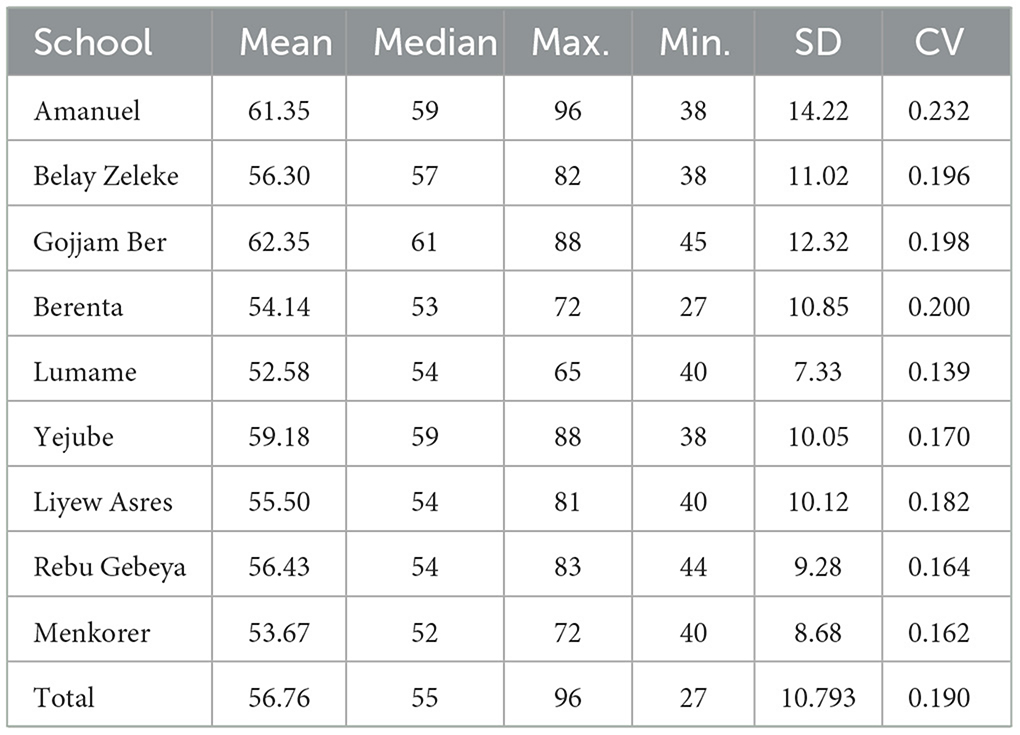
Table 2. Mathematics exam score.
3.1 Associations between teaching quality measures and student achievement
Respondents showed the importance of the four domains in the FfT (Danielson, 2014), which comprise planning and preparation, classroom practices, instructional practices, and principled teaching. Specific impacts of each domain for either of the school subjects are illustrated subsequently.
As displayed in Table 3, of the four domains of FfT, the third domain, i.e., delivery of instruction, has a positive and significant association (sig = 016) with English language teachers to improve students' scores in examinations. The delivery of instruction, which encompasses communicating with students, using questioning and discussion techniques, and demonstrating flexibility and responsiveness, is positively associated with students' scores in the English language.
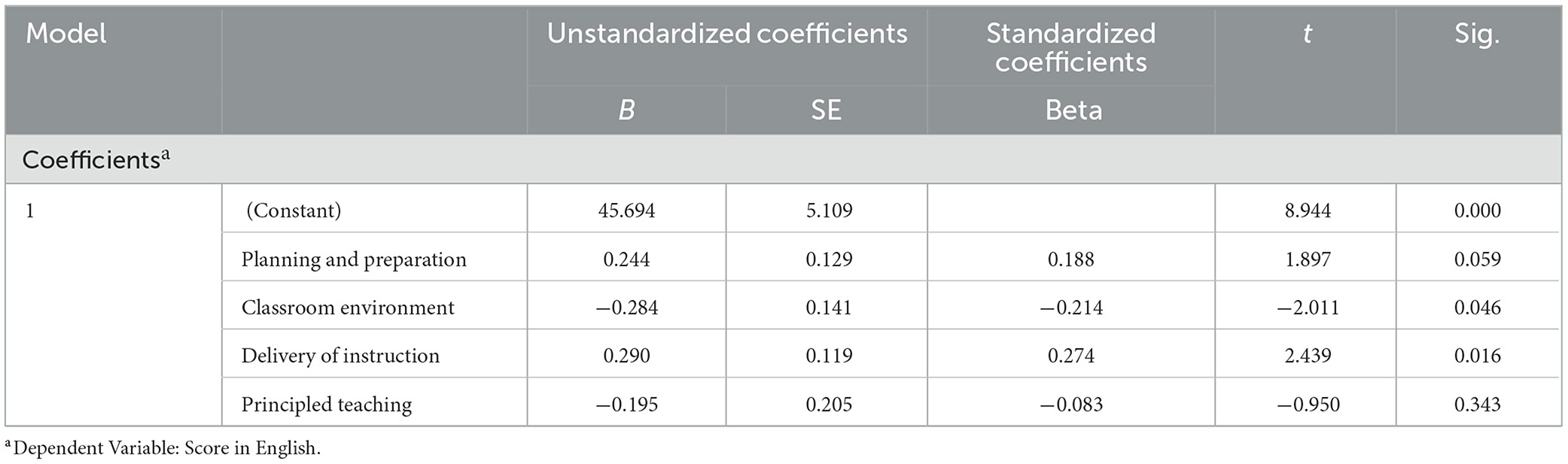
Table 3. Association of FfT domains of English language teachers with students' scores.
Overall, for English language teachers, their effectiveness in planning and preparation and principled teaching did not exhibit statistically significant associations with students' achievement in the English subject. In contrast, the classroom environment and delivery of instruction showed notable relationships with students' achievement. Improvements in the delivery of instruction have been found to have a strong association with enhancing students' achievement in the English language.
Of planning and preparation, classroom environment, delivery of instruction, and principled teaching indicators in FfT, none had a strong association with the students' scores in mathematics. Moreover, most of the subdomains do not have a positive or strong association with students' mathematics scores. In addition, the regression analysis examined the relationship between the four domains and a dependent variable score in mathematics. Overall, the model does not provide strong evidence that the four domains examined are predictive of achievement in mathematics, implying that other factors may need to be considered to better understand and make predictions.
However, managing classroom procedures was the only subdomain associated (sig = 014) with an increase in students' mathematics scores. The coefficients, as displayed in Table 4 indicate the change in scores in mathematics is associated with a one-unit change in each predictor variable, holding all other variables constant. Among the predictor variables, only managing classroom procedures showed a statistically significant coefficient (p = 0.014), suggesting that it has a significant association with student achievement. Specifically, managing classroom procedures has a positive coefficient (B = 1.856), indicating that for every one-unit increase in managing classroom procedures, the score is predicted to increase by ~1.856 units. A few other predictor variables, such as demonstrating knowledge of students, managing student behavior, and maintaining accurate records, have p-values close to the conventional significance level (p < 0.05), suggesting that these variables might have potential associations with scores that warrant further investigation.
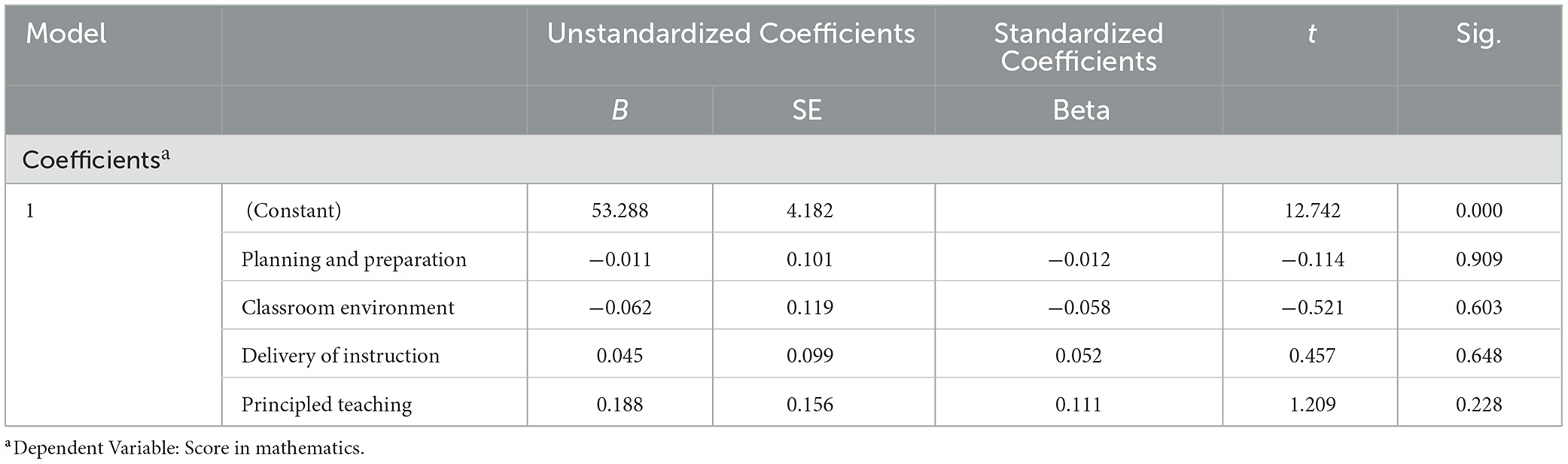
Table 4. Association of FfT domains of mathematics teachers with students' mathematics scores.
The remaining subdomains do not appear to have statistically significant associations with students' scores in math, as their p-values are >0.05. In summary, findings from the regression analysis suggested that managing classroom procedures is significantly associated with scores in mathematics, along with some other variables that have some potential association.
As stated in Table 4 above, there is a significant mean difference in achievement between groups of schools. A pairwise ANOVA demonstrated that there was a significant difference in the students' scores in English between schools but an insignificant achievement difference in mathematics. Thus, teacher quality, as measured by FfT domains, has a significant association with student achievement in the English language yet a minimal effect on students' achievement in mathematics (refer to Table 5 below).
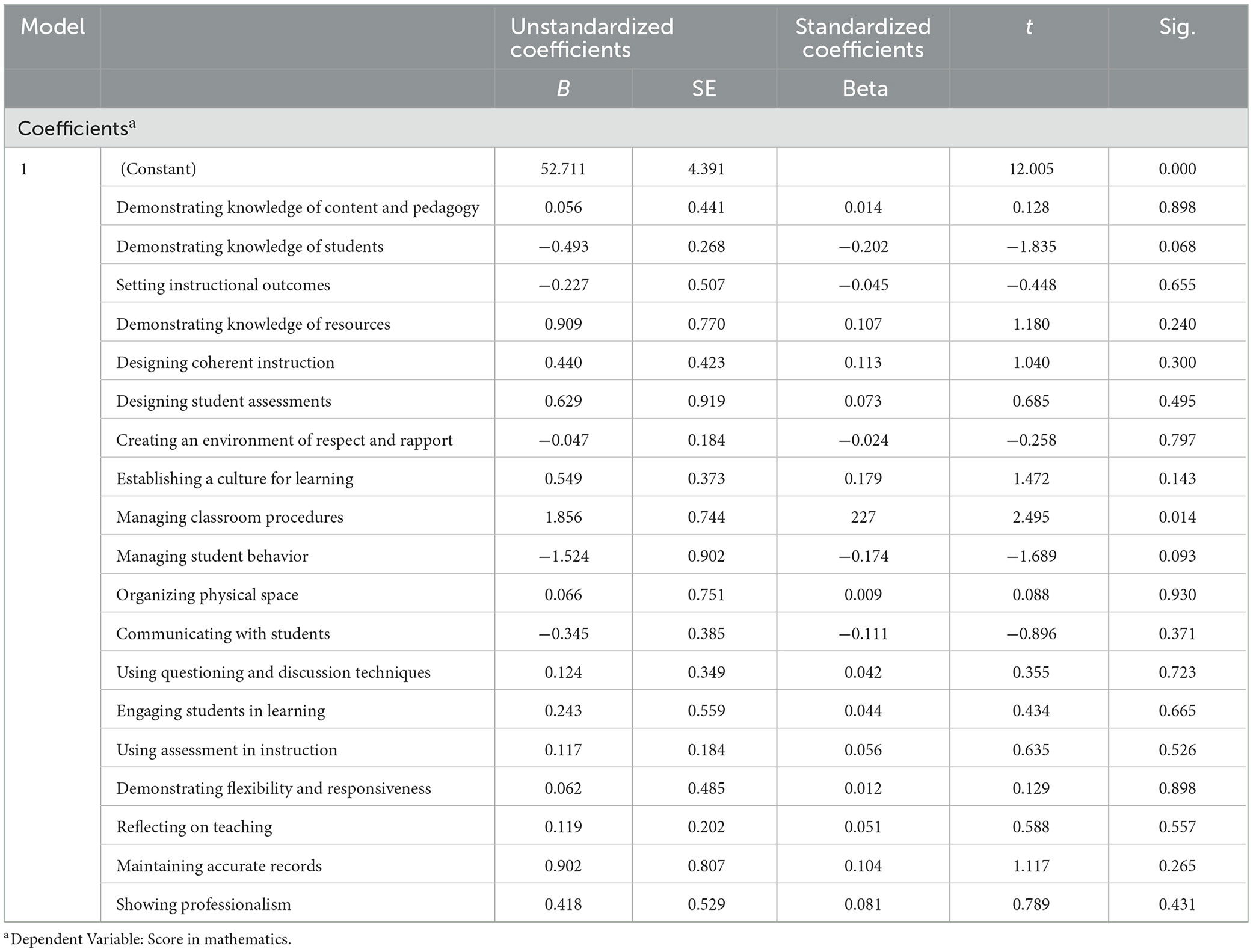
Table 5. Association of FfT subdomains of mathematics teachers with students' scores.
4 Discussion
This study is aimed at exploring the associations between teacher quality and students' achievement in the East Gojjam Administrative Zone. Specifically, the study sought to identify teacher quality indicators that are strongly associated with the achievement of students in mathematics and English and determine the level of teachers' quality in terms of the quality indicators. FfT is a research-based set of elements of instruction (Danielson, 2014), rooted in a constructivist paradigm of teaching and learning. The framework divides the complex process of teaching into 22 components grouped into four domains of teaching: planning and preparation, classroom environment, delivery of instruction, and principled teaching. These components are further divided into 76 elements, of which 48 were found to be appropriate for use in this study after rigorous pilot testing and review.
In relation to the association of teacher quality indicators with student achievement in mathematics and English, findings revealed that teachers' delivery of instruction has a positive and significant association (sig = 016) with students' English language achievement. This coincides with prior findings (Sandilos et al., 2019; Tengberg et al., 2024). For instance, Sandilos et al. (2019) highlight that the FfT was most consistently predictive of students' achievement in the English language and arts. This study suggests that associating more general dimensions of teaching quality with student learning over time seems to require more refined measurements. In line with this finding, as displayed in Table 6 the delivery of instruction in the FfT domain, which encompasses communicating with students, using questioning and discussion techniques, and demonstrating flexibility and responsiveness, has been found to have a strong association with enhancing students' achievement in the English language.
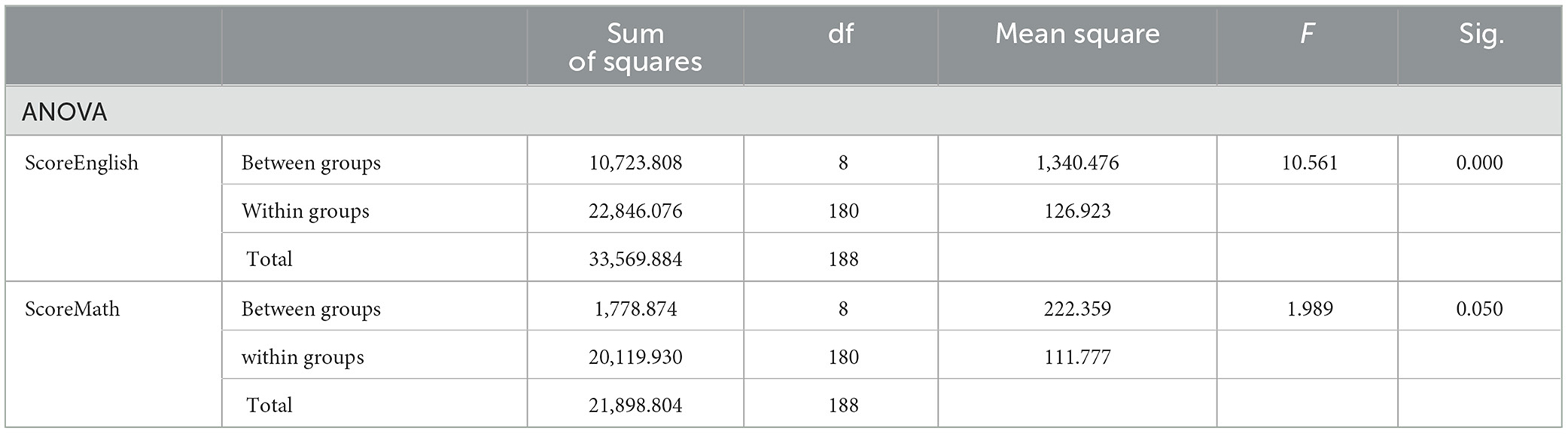
Table 6. Analysis of variance (ANOVA) of student scores across schools.
Findings revealed that English language teachers' planning and preparation and principled teaching did not exhibit statistically significant associations with students' achievement in the English language. In contrast, the classroom environment and delivery of instruction domains showed a notable association with students' achievement. This contrasts with recent findings (cf. López-Martín et al., 2023), which claimed that planning and implementing teaching provide the foundations to transform the teaching practice and to implement quality teaching.
Of the four domains, i.e., planning and preparation, classroom environment, delivery of instruction, and principled teaching in the FfT, none had a strong association with the student's achievement in mathematics. A regression analysis that examined the relationship between the four domains and students' achievement in mathematics did not provide strong evidence that the four domains are strong predictors of achievement. Moreover, most of the subdomains, except for managing classroom procedures, did not have a positive association with students' achievement in mathematics. This finding implies that urban-rural gaps and infrastructural hardships exist beyond what can be addressed by teacher quality. In relation to this finding, Zheng et al. (2023) highlighted the critical role of teacher quality in addressing educational equity. In addition, this weak association of planning and preparation, classroom environment, delivery of instruction, and principled teaching with achievement might relate to the lesser effect of these variables on performance compared to competence in evaluation, which has shown moderate effect sizes (Tang, 2018).
Managing classroom procedures was the only subdomain associated (p = 014) with an increase in students' mathematics scores, suggesting that it has a significant association with students' achievement. Specifically, managing classroom procedures has a positive coefficient (B = 1.856), indicating that, for every one-unit increase in managing classroom procedures, the score is predicted to increase by ~1.856 units. In addition, other predictor variables, such as demonstrating knowledge of students, managing student behavior, and maintaining accurate records, have p-values close to the conventional significance level (p < 0.05), suggesting that they might have potential associations with achievement in mathematics. Similarly, the regression model suggests that managing classroom procedures is a predictor variable significantly associated with student achievement. Similarly, prior studies (cf. Fauth et al., 2019) indicate that effective classroom management provides time on task, which can be considered as a necessary precondition for being actively engaged in learning. The impact of classroom management on achievement is found vital compared to prior studies (cf. Marder et al., 2023) that claimed both students' disruptive behavior and teachers' monitoring activity were negatively associated with students' mathematics achievement, suggesting that teachers' monitoring activity needs to take into account students' disruptive behavior in the classroom. This association highlights the complexity of effective classroom management.
A pairwise ANOVA of achievement between schools demonstrated that there was a significant difference in students' achievement of English language. The difference in achievement was insignificant in mathematics. Thus, teacher quality, as measured by FfT domains, has significant variations in schools and an association with students' achievement in the English language. The effect on students' achievement in mathematics was found to be minimal. Overall, scholars claimed that teachers who rank highly effective on the framework have been linked to greater students' achievement (Kane and Staiger, 2012). Despite this claim, the data revealed that the quality of teachers, according to the perception of students in the selected schools, has no strong association with students' scores in mathematics, but it is strongly associated with one domain in English. This evidence implies that other variables, including raising teachers' status, would explain 20% of the effect on achievement.
5 Conclusions and implications
This study explored how the quality of mathematics and English language teachers is associated with students' academic achievement (as reflected in classroom exam results of high schools in East Gojjam Administrative Zone). Specifically, this study identified teacher quality indicators strongly associated with the academic achievement of students in mathematics and English. In addition, the level of teachers' quality was determined in terms of the quality indicators. Based on this, teachers' quality across schools and between subjects has been compared.
Teaching quality, or effectiveness, as defined by Danielson (2014), is a construct that has been constantly evolving. The findings in this study revealed that students' ratings of teachers' teaching quality are loosely associated with their achievement. Instead of the teachers' attributes, the schools from which the students attended has an impact on their achievement. This is understandable given that the schools have different facilities and, of course, vary in terms of teachers' experiences. Moreover, the examinations for which students' scores are drawn are not standardized. However, for English language teachers, their delivery of instruction, that is, the third domain, had a strong association with students' scores. The third domain, which involves communicating with students, using questioning and discussion techniques, and demonstrating flexibility and responsiveness, was associated with improved scores. For mathematics teachers, managing classroom procedures was associated with students' mathematics scores; however, none of the four domains showed a strong association. The quality of teachers as perceived by students using the FfT is inconclusive, especially when teachers are compared schoolwise. However, the overall rating of English language teachers (very good or excellent quality = 45.5) was considerably lower than that of mathematics teachers (very good or excellent quality = 71%).
Although teacher quality is an indispensable input for quality outcomes, to date, the quality of teachers is not easily measureable. Therefore, alternative approaches to address this gap should be developed. Teacher quality based on the FfT domains and its association with students' achievement is strong, as reported in the literature. However, the findings did not support this association, and school differences strongly explain the achievement gap, which is understandable given the differences in the examined findings. Despite this gap, there is a need to further discern the domains of effective teaching and install the same springboard to improve the quality of teachers and teaching.
6 Limitations
In this quantitative study, survey questions were limited to Likert-style items, which do not allow respondents to provide answers, comments, or clarification. Additionally, because respondents might not have answered survey questions honestly, the results might not correctly reflect the views of all members of the targeted population. In addition, some respondents could have provided inaccurate information through omissions or inadequate reporting. Most importantly, discerning the effects of teacher quality on student achievement may not be adequate. Thus, the findings in this study must be taken into consideration with due care.
Data availability statement
The raw data supporting the conclusions of this article will be made available by the authors, without undue reservation.
Ethics statement
Ethical approval was not required for the study involving human participants in accordance with the local legislation and institutional requirements. Written informed consent to participate in this study was not required from the participants and/or their legal guardians/next of kin in accordance with the national legislation and the institutional requirements.
Author contributions
ME: Writing – original draft, Writing – review & editing, Conceptualization, Data curation, Formal analysis, Funding acquisition, Investigation, Methodology, Project administration, Resources, Software, Supervision, Validation, Visualization. AI: Formal analysis, Methodology, Software, Writing – review & editing. YF: Investigation, Writing – review & editing.
Funding
The author(s) declare that no financial support was received for the research, authorship, and/or publication of this article.
Acknowledgments
The researchers owe a debt of gratitude to the instructors, students, and friends for their participation, support, thought-provoking questions, and suggestions at different stages of the manuscript.
Conflict of interest
The authors declare that the research was conducted in the absence of any commercial or financial relationships that could be construed as a potential conflict of interest.
Publisher's note
All claims expressed in this article are solely those of the authors and do not necessarily represent those of their affiliated organizations, or those of the publisher, the editors and the reviewers. Any product that may be evaluated in this article, or claim that may be made by its manufacturer, is not guaranteed or endorsed by the publisher.
References
Ahmad, S. (2014). Teacher education in Ethiopia: growth and development. Afr. J. Teach. Educ. 3, 1–20. doi: 10.21083/ajote.v3i3.2850
Azigwe, J. B., Kyriakides, L., Panayiotou, A., and Creemers, B. P. (2016). The impact of effective teaching characteristics in promoting student achievement in Ghana. Int. J. Educ. Dev. 51, 51–61. doi: 10.1016/j.ijedudev.2016.07.004
Barber, M., and Mourshed, M. (2007). How the World's Best-Performing School Systems Come Out on Top. Washington, DC: McKinsey and Company.
Creswell, J. (2003). Research Design: Qualitative, Quantitative and Mixed Methods Approaches (2nd ed.). Thousand Oaks, CA: Sage.
Danielson, C. (2014). The Framework for Teaching Evaluation Instrument. Available online at: www.danielsongroup.org (accessed February 21, 2023).
Darling-Hammond, L. (2012). Powerful teacher education: Lessons from exemplary programs. Hoboken, NJ: John Wiley and Sons.
Doherty, K. M., and Jacobs, S. (2015). State of the States 2015: Evaluating Teaching, Leading, and Learning. Washington, DC: National Council on Teacher Quality.
Fauth, B., Decristan, J., Decker, A. T., Büttner, G., Hardy, I., Klieme, E., et al. (2019). The effects of teacher competence on student outcomes in elementary science education: the mediating role of teaching quality. Teach. Teach. Educ. 86:102882. doi: 10.1016/j.tate.2019.102882
Fauth, B., Decristan, J., Rieser, S., Klieme, E., and Büttner, G. (2014). Student ratings of teaching quality in primary school: dimensions and prediction of student outcomes. Learn. Instr. 29, 1–9. doi: 10.1016/j.learninstruc.2013.07.001
Ferguson, R. F., and Danielson, C. (2014). Guide to Tripod's 7Cs Framework. Tripod Education Partners. Available online at: https://www.tripoded.com/teacher-toolkit
Goe, L., Bell, C., and Little, O. (2008). Approaches to evaluating teacher effectiveness: A research synthesis. Washington, DC: National Comprehensive Center for Teacher Quality.
Hanushek, E. A., and Rivkin, S. G. (2010). Generalizations about using value added measures of teacher quality. Am. Econ. Rev. 100, 267–271. doi: 10.1257/aer.100.2.267
Kane, T. J., and Staiger, D. O. (2012). Gathering feedback for teaching: Combining high-quality observations with student surveys and achievement gains (MET project Research Paper). Seattle, WA: Bill and Melinda Gates Foundation.
Klieme, E., Schümer, G., and Knoll, S. (2001). “Mathematikunterricht in der Sekundarstufe I: Aufgabenkultur und Unterrichtsgestaltung [Mathematics instruction at secondary level. Task culture and instructional design],” in TIMSS e Impulse für Schule und Unterricht, ed. Bundesministerium für Bildung und Forschung (BMBF) (München: Mediahaus Biering), 43–57.
López-Martín, E., Gutiérrez-de-Rozas, B., González-Benito, A. M., and Expósito-Casas, E. (2023). Why do teachers matter? A meta-analytic review of how teacher characteristics and competencies affect students' academic achievement. Int. J. Educ. Res. 120, 102199.
Marder, J., Thiel, F., and Goellner, R. (2023). Classroom management and students' mathematics achievement: the role of students' disruptive behavior and teacher classroom management. Learn. Instr. 86:101746. doi: 10.1016/j.learninstruc.2023.101746
Patrick, H., French, B. F., and Mantzicopoulos, P. (2020). The reliability of framework for teaching scores in kindergarten. J. Psychoeduc. Assess. 38, 831–845. doi: 10.1177/0734282920910843
Praetorius, A.-K., Klieme, E., Herbert, B., and Pinger, P. (2018). Generic dimensions of teaching quality: the german framework of three basic dimensions. ZDM 50, 407–426 doi: 10.1007/s11858-018-0918-4
Rothstein, J. (2010). Teacher quality in educational production: tracking, decay, and student achievement. Q. J. Econ. 125, 175–214. doi: 10.1162/qjec.2010.125.1.175
Rowe, K. (2003). The importance of teacher quality as a key determinant of students' experiences and outcomes of schooling. Available online at: http://research.acer.edu.au/research_conference_2003/3 (accessed April 10, 2021).
Sandilos, L. E., Sims, W. A., Norwalk, K. E., and Reddy, L. A. (2019). Converging on quality: examining multiple measures of teaching effectiveness. J. Sch. Psychol. 74, 10–28. doi: 10.1016/j.jsp.2019.05.004
Sanfo, J. B. M., and Malgoubri, I. (2021). Teaching quality and students' EFL achievements in ethiopia: analysis from the perspective of the basic dimensions of teaching quality. Theory Pract. Lang. Stud. 11, 1131–1145. doi: 10.17507/tpls.1110.01
Sanfo, J. B. M., and Malgoubri, I. (2023). Teaching quality and student learning achievements in Ethiopian primary education: how effective is instructional quality in closing socioeconomic learning achievement inequalities?. Int. J. Educ. Dev. 99:102759. doi: 10.1016/j.ijedudev.2023.102759
Simonson, S. R., Earl, B., and Frary, M. (2022). Establishing a framework for assessing teaching effectiveness. Coll. Teach. 70, 164–180. doi: 10.1080/87567555.2021.1909528
Stronge, J. H., Ward, T. J., Tucker, P. D., and Hindman, J. L. (2007). What is the relationship between teacher quality and student achievement? An exploratory study. J. Pers. Eval. Educ. 20, 165–184. doi: 10.1007/s11092-008-9053-z
Tang, Q. (2018). Improving Teaching Effectiveness: Final Report. The Intensive Partnerships for Effective Teaching Through 2015–2016. RAND Corporation.
Tengberg, M., Skar, G. B., and Huebner, A. (2024). The impact of observable and perceived features of instruction on student achievement. Teach. Teach. Educ. 139:104457. doi: 10.1016/j.tate.2023.104457
van der Scheer, E. A., Bijlsma, H. J., and Glas, C. A. (2019). Validity and reliability of student perceptions of teaching quality in primary education. Sch. Eff. Sch. Improv. 30, 30–50. doi: 10.1080/09243453.2018.1539015
Workneh, A., and Woldehanna, T. (2013). Teacher training and development in Ethiopia: Improving education quality by developing teacher skills, attitudes and work conditions. Young Lives, working paper 103. Available online at: http://www.younglives.org.uk/publications/WP/teacher-training-and-development-in-ethiopia (accessed April 10, 2021).
Zheng, L., Qi, X., and Zhang, C. (2023). Can improvements in teacher quality reduce the cognitive gap between urban and rural students in China? Int. J. Educ. Dev. 100:102781. doi: 10.1016/j.ijedudev.2023.102781
7 Appendix
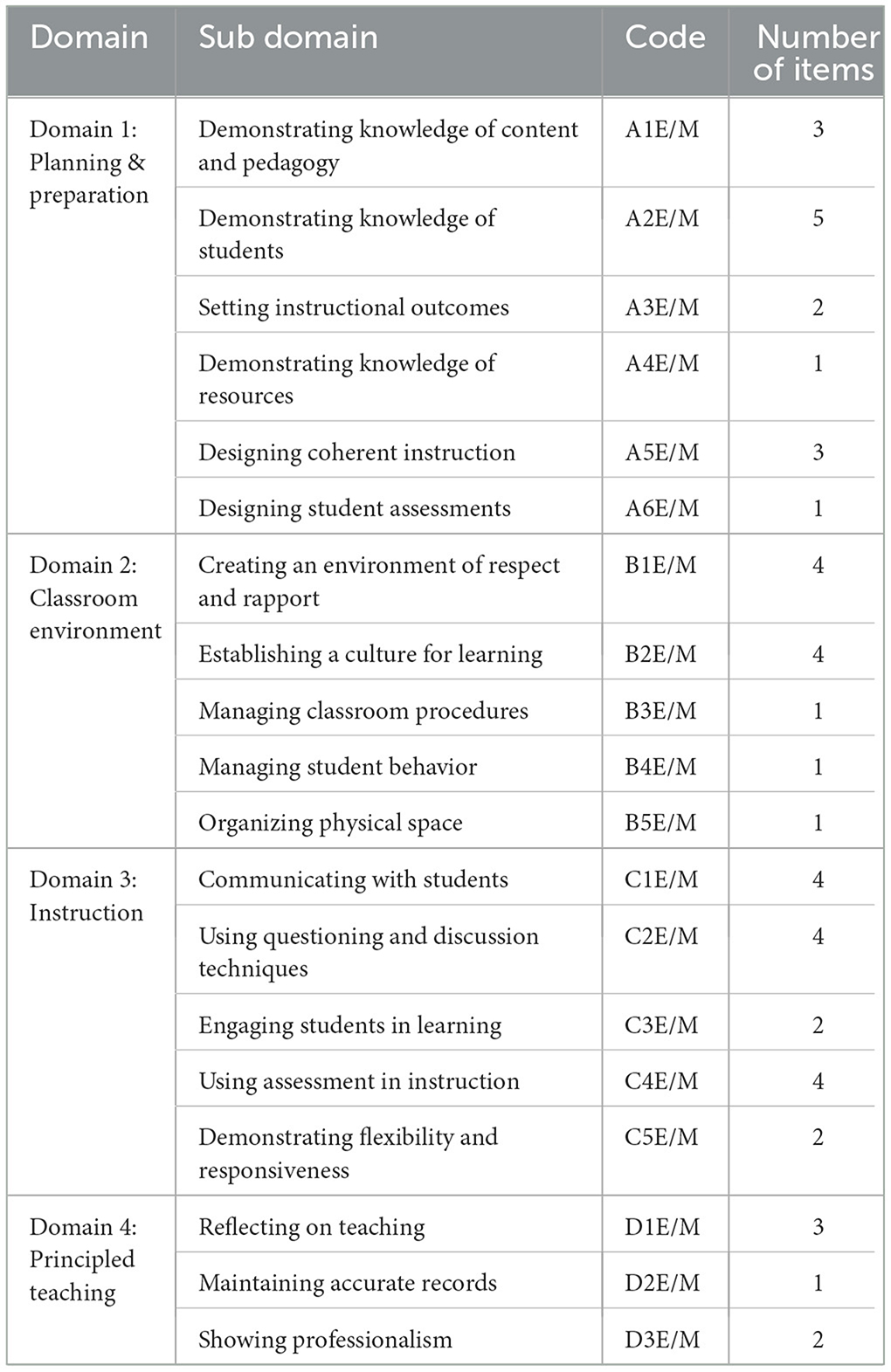
Number of items drawn from FfT domains and components.
Keywords: teacher quality, FFT, achievement, domains, effectiveness
Citation: Engida MA, Iyasu AS and Fentie YM (2024) Impact of teaching quality on student achievement: student evidence. Front. Educ. 9:1367317. doi: 10.3389/feduc.2024.1367317
Received: 08 January 2024; Accepted: 01 July 2024;
Published: 24 July 2024.
Edited by:
Eduardo Encabo-Fernández, University of Murcia, SpainReviewed by:
Juan José Varela Tembra, Universidad San Jorge, SpainSeyeoung Chun, Chungnam National University, Republic of Korea
Copyright © 2024 Engida, Iyasu and Fentie. This is an open-access article distributed under the terms of the Creative Commons Attribution License (CC BY). The use, distribution or reproduction in other forums is permitted, provided the original author(s) and the copyright owner(s) are credited and that the original publication in this journal is cited, in accordance with accepted academic practice. No use, distribution or reproduction is permitted which does not comply with these terms.
*Correspondence: Mengistu Anagaw Engida, bWVuZ2lzdHVfYW5hZ2F3QGRtdS5lZHUuZXQ=