 Karin Černickaja
 Lenka Sokolová
- Faculty of Social and Economic Sciences, Institute of Applied Psychology, Comenius University Bratislava, Bratislava, Slovakia
The experience of dyslexic students is influenced by the beliefs, knowledge, attitudes, and practices of their teachers at all levels of education, including the university. The purpose of this review is to explore the empirical knowledge of dyslexic university students from the point of view of their teachers. Following the PRISMA guidelines, 12 studies (out of the 771 retrieved from 5 main relevant databases) met the inclusion criteria. Reflexive thematic analysis was used to analyze the included studies. Three main themes were identified: dyslexia = gray area; “inclusive university”; and practical training is necessary. In conclusion, awareness of dyslexia among university teachers is sufficient, and their attitudes toward dyslexic students are mostly positive, while expressing some concerns, which would deserve closer examination directly in practice. Higher education teachers would appreciate practical training to acquire skills to work with students with dyslexia. These trainings have the potential to increase the self-efficacy of teachers and thus overall support the well-being not only of teachers but also of dyslexic students. This study advances the existing literature on dyslexia in higher education by adding the point of view of higher education teachers. Based on the results of this study, it is clear that universities should provide more support to their teaching staff, including guidance and practical training, so that their courses could become inclusive and welcoming for all students (including students with dyslexia).
1 Introduction
The manifestations of dyslexia vary among individuals; however, common characteristics include difficulties with phonological skills: low accuracy and fluency of reading and poor spelling; and/or difficulties with rapid visual-verbal response: difficulties with associating sounds with letters, reading dysfluencies, spelling difficulties, challenges with written expression and poor handwriting (Roitsch and Watson, 2019). Dyslexia is a neurodevelopmental disorder, with an estimated prevalence of 5–10% of the general population (Roitsch and Watson, 2019), while it is hard to estimate the number of dyslexic university students, as the data vary strongly from country to country or even depending on the specific institution (Sokolová and Lemešová, 2022). In addition, frequent comorbidities prevail, as dyslexia often occurs mainly with another neurodevelopmental disorder (Moll et al., 2020), like ADHD (Attention Deficit Hyperactivity Disorder). They are both complex neurodevelopmental disorders with a high prevalence and mutual comorbidity (Boada et al., 2012; Kocurová, 2019). Other studies indicate that certain symptoms occur in various neurodevelopmental disorders., e.g., difficulties with switching attention (dyslexia and ADHD; Lonergan et al., 2019) or phonological deficits (dyslexia and stuttering; Elsherif et al., 2021). On the contrary, at the same time we can talk about the concept of neurodiversity (as an umbrella term, including dyslexia, ADHD, autism spectrum disorder, etc., which are perceived as a naturally occurring difference, rather than a deficit). Unlike the medical model of dyslexia, which talks about deficits, the concept of neurodiversity questions the assumption that all humans must conform to the same expectations to flourish. Within this concept, neurodivergent individuals have valuable human differences in behavior and brain function, which are not perceived only as deficit, dysfunction, or impairment (Elsherif et al., 2022; Manalili et al., 2023). This approach is becoming increasingly prevalent in the context of higher education (Clouder et al., 2020; Hamilton and Petty, 2023). Studies focused on the experiences of dyslexic university students (Mullins and Preyde, 2013; Shaw et al., 2016; Serry et al., 2017; Shaw and Anderson, 2018; Stagg et al., 2018; Norris et al., 2019), indicate that their experience is highly dependent on university teachers and their own knowledge and beliefs about dyslexia, attitudes, and practices toward them as students with dyslexia. Although some studies indicate that neurodivergent community in general prefers identity, first language over a person, first language (Botha et al., 2021; Taboas et al., 2022), other studies draw attention to individual preferences within the community (Evans, 2013; Best et al., 2022). The discussion is also influenced by the specific context, which reflects linguistic and cultural differences. In this work, we decided to refer to dyslexic students and students with dyslexia interchangeably, hence, to alternate between identity first and person first language to reflect different preferences within the neurodivergent community and different linguistic and cultural differences, since this study is written in an international context.
University communities are becoming more diverse than we experienced in the past (Černickaja and Sokolová, 2022), with an increasing number of students with disabilities, incl. Dyslexic students entering higher education (Richardson, 2021). The relevance of this issue in the context of higher education is supported by recently published documents reflecting this increasing diversity (American Psychological Association, 2021; Mena, 2022) and reviews already conducted. However, many of these reviews issuing dyslexia do not reflect the latest research data, as they were published nine or more years ago (e.g., Murphy, 2009; Majumder et al., 2010; MacCullagh, 2014; Pino and Mortari, 2014), some focus on dyslexic students only in the context of a specific region (e.g., Asia: Majumder et al., 2010; Australia: MacCullagh, 2014), a specific field (Murphy, 2009; Majumder et al., 2010), or integration into the university environment (Pino and Mortari, 2014). During the past five years, we have identified two review studies (Clouder et al., 2020; Dobson Waters and Torgerson, 2020) on the topic of dyslexia in the context of higher education in the Web of Science Core Collection database. Dobson Waters and Torgerson (2020) focused on the effectiveness of higher education interventions for students with dyslexia, and Clouder et al. (2020) in their narrative synthesis pointed out the experience of students with various disorders, including dyslexic students, within the university environment. The experiences of neurodiverse students show that higher education institutions remain “neurodiversity cold spots” as Clouder et al. (2020) called them, with low levels of staff awareness, ambivalence, and inflexible teaching and assessment approaches. By a manual search on Google Scholar, we identified a synthetic review by Boileau et al. (2017) with the goal of helping mainly clinical teachers in their daily tasks of supervising struggling learners; and the study by Hamilton and Petty (2023) proposing compassionate pedagogy for neurodiverse students in higher education. They argued that the concept of compassion can be used as a template for educators working with neurodiverse students, for example, by harnessing individual strengths to increase students’ sense of competence. To our knowledge, no review has been conducted specifically focusing on the topic of dyslexia in higher education from the point of view of higher education teachers.
The aim of this scoping review is to explore how university teachers reflect on their knowledge and beliefs about studying with dyslexia in higher education and what their attitudes and practices are when working with dyslexic students. The authors set two research questions:
(a) What knowledge and beliefs do higher education teachers have about students with dyslexia and about dyslexia in general?
(b) What attitudes and practices do higher education teachers use when working with students with dyslexia?
2 Method
Since the focus of this study is on exploring and understanding the topic, deviating from the more typical objective of establishing one, as commonly seen in systematic reviews (Gutierrez-Bucheli et al., 2022), the scoping review approach was considered the most suitable. To be able to assess which literature is relevant for this review, we first set inclusive and exclusive criteria.
Inclusion criteria:
(a) formal criteria: peer reviewed articles, written in English and published between 2013 and 2022;
(b) type of study: research-based studies using a qualitative, quantitative or mixed methods approach;
(c) participants: university teaching staff, including higher education teachers, PhD students, and others who teach higher education students;
(d) research questions and research problem: The study focused on the practices, attitudes, beliefs, and knowledge of dyslexia in the context of higher education and included university teaching staff as a primary source of information.
Exclusion criteria:
(a) articles were not published in peer reviewed journals and/ or not written in English and/ or published outside the time frame between 2013 and 2022;
(b) reviews, editorial commentaries, opinion pieces or duplicated articles across databases;
(c) Participants: teachers from other levels of education (e.g., primary/secondary teachers, …) or non-pedagogical university staff;
(d) and articles which research questions and problems did not meet the inclusion criteria.
2.1 Search strategy
Subsequently, to locate relevant studies and clearly report the search strategy, the PRISMA guidelines for scoping reviews (PRISMA Extension for Scoping Reviews (PRISMA-SCR), Tricco et al., 2018) were followed. An overview of the process (identification, screening, eligibility, and inclusion) can be seen in Figure 1.

Figure 1. Overview of the search based on PRISMA guidelines.
We conducted a search for peer-reviewed articles in five major relevant electronic databases in March 2023, including Web of Science Core Collection, Scopus, ProQuest Education Database, Eric, and APA PsycNET. Both authors identified the search terms through the process of hand-searching of the databases. The search terms, including combinations and derivates used in the electronic database search, were: (teacher* OR educator* OR “university teacher*"OR “university teaching staff” OR professor* OR “PhD student*” OR “PhD candidate*” OR doctor*), (college OR “higher education” OR university), (dyslexia OR “learning disorder*”) and (knowledge OR perception* OR perspective* OR attitude* OR practice* OR approach* OR belie*). These terms were combined using the Boolean operators “AND”. + Publication date: 1.1.2013–31.12.2022.
2.2 Scoping review results
Based on keywords, 771 potentially relevant articles were retrieved from the mentioned databases in March 2023. After removing duplicates, the first author evaluated all records (N = 719) and excluded 659 of them, as they did not meet the formal inclusion criteria (N = 153) and/ or were deemed irrelevant by reading titles and abstracts (N = 506). After the screening phase, the full texts of the remaining articles (N = 60) were assessed considering their research questions, research problem, and participants. According to the scoping review methodology, the second author reviewed the process, examining the various stages and outcomes (Gutierrez-Bucheli et al., 2022). In case of disagreement (N = 3; incl. = 0), concrete records or complete texts were discussed with an emphasis on the inclusive and exclusive criteria mentioned above.
2.3 Data analysis
As the next step, the authors proceeded with a qualitative analysis of the studies, which were found eligible (N = 12; main reasons for rejection: research questions/ problem/ participants did not meet inclusion criteria) with the goal of identifying and synthesizing the findings, as well as identifying themes to reflect the knowledge, beliefs, attitudes and practices of higher education teachers working with students with dyslexia. Reflexive thematic analysis with an inductive-deductive approach (Braun and Clarke, 2019; Finlay, 2021) was found to be the most suitable, considering the objective of the review and the different methodological approaches of the included studies (qualitative, quantitative and mixed-method approaches). The authors followed six steps of thematic reflexive analysis: 1. Data familiarization 2. Systematic data coding 3. Generating initial themes from coded and collected data 4. Developing and reviewing themes 5. Refining, defining, and naming themes and writing up 6. Writing report (Braun and Clarke, 2019). Each included study was initially read at least twice. Subsequent readings were used to produce codes. In the next step, the sections: results, discussion and conclusions; of each included study were coded by the first author using a thematic analysis approach (Braun and Clarke, 2019). The first author then sorted the codes into categories, and the second author reviewed the categories and checked if those initial codes fit each category. Within the 34 codes, nine categories were identified (Table 1). The authors then discussed the relationships between codes and categories, and the final themes were developed.
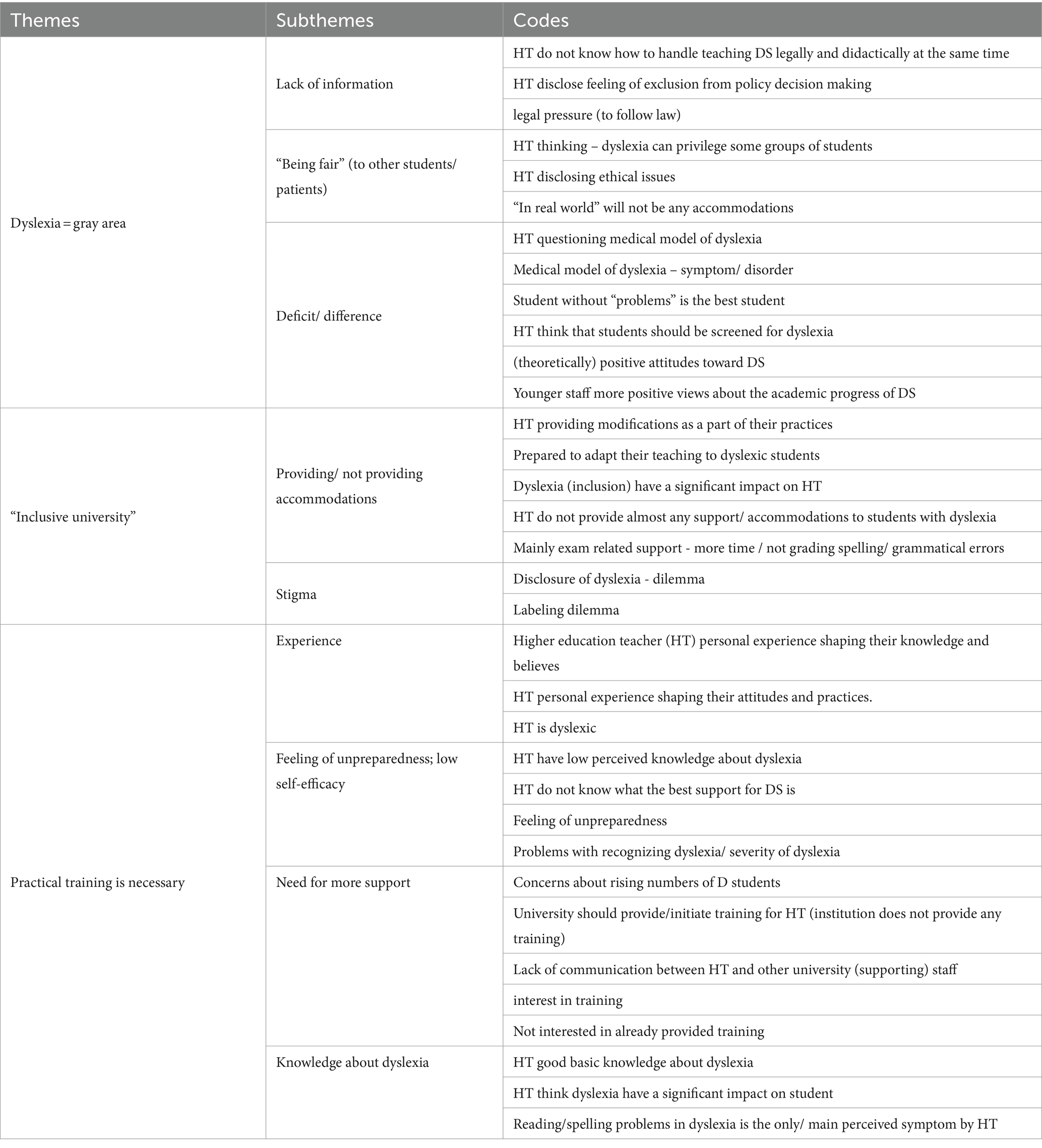
Table 1. Themes, subthemes and codes.
2.4 Epistemological positionality
The themes were extracted and reconstructed by the authors with a “constructivist epistemological position, which recognizes that any knowing is produced by the researcher, who is actively (co-)constructing meanings with participants.” (Finlay, 2021, p.105). However, the data were analyzed systematically by coding and categorizing, while the final themes were validated by co-researchers (coauthors). At the same time, researchers’ own reflexivity and subjectivity are perceived as a resource, rather than as a threat to validity (Finlay, 2021). Both authors are higher education teachers and researchers (first author as a junior researcher, second author as a senior researcher and educator) with an interest in the topic of inclusion. They brought their own ideas and opinions (which cannot be avoided within the constructivist position), but they confronted these predispositions with each other, the data, and the previous literature. Consistent with participatory research, we would like to mention that the first author of this article is neurodivergent, which is considered a contribution to the study, especially in the field of research on neurodevelopmental diversity research (Fletcher-Watson et al., 2021; Gourdon-Kanhukamwe et al., 2023). Critical evaluation of individual sources of evidence was not undertaken as it is not a requirement for scoping reviews (Peters et al., 2020; Gutierrez-Bucheli et al., 2022).
3 Results
3.1 Demographic results
Twelve out of 771 studies met all the inclusion criteria. The total number of participants, higher education teaching staff, who participated in the included studies was 743 (in four studies, other participants also participated, for example, students; those are not included in the number of all participants in our review, as we focused on the higher education teachers’ point of view). The research was carried out primarily in the United Kingdom (n = 4) and the United States of America (n = 3), but also in Japan, Greece, France, Germany, and the Republic of Ireland. Four studies were quantitative, four qualitative, and four with a mixed methods approach. The summary of the articles included is shown in Table 2.
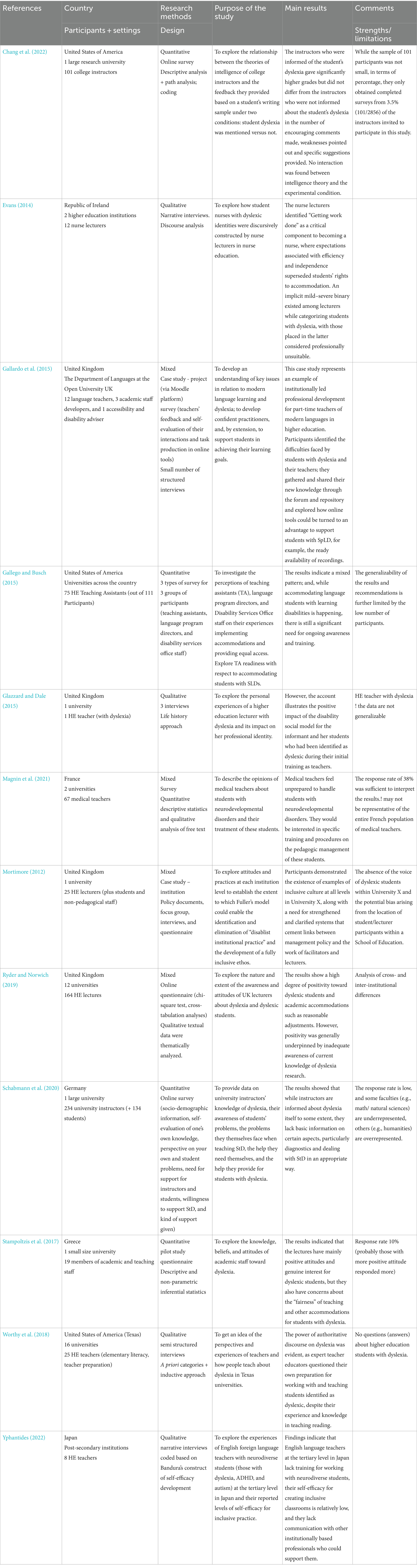
Table 2. Summary of included articles.
3.2 Thematic analysis results
Three themes were identified that represent the knowledge and beliefs of teachers of higher education about dyslexia, as well as their attitudes and practices toward dyslexic students: dyslexia = gray area; “inclusive university”; and practical training is necessary (see Figure 2).
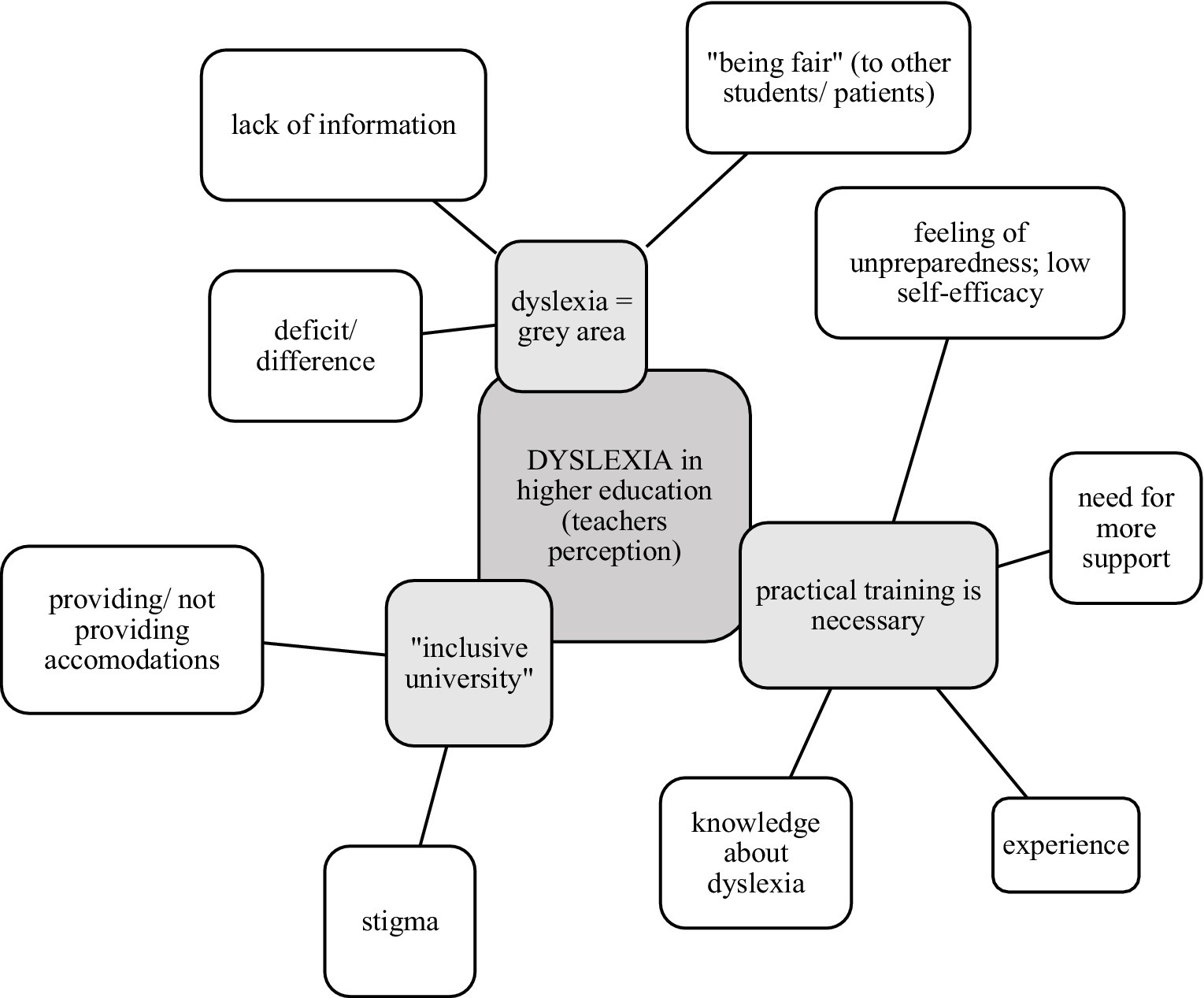
Figure 2. Thematic map of the identified themes and subthemes.
3.2.1 Dyslexia = gray area
In higher education, we can see a pull between the two concepts of dyslexia: seeing it as a deficit (the medical model of dyslexia) or as neurodiversity, a natural difference. Although the study by Mortimore (2012, p. 42) suggests that teachers from medically focused faculties in particular have the potential” to use medical deficit definitions, locating dyslexia as a difficulty or deficit within the learner, using “medical” language such as “symptoms” and commonly citing problems with literacy,” most other studies show that some teachers try to challenge this medical model of dyslexia (Mortimore, 2012; Gallardo et al., 2015; Glazzard and Dale, 2015; Stampoltzis et al., 2017; Worthy et al., 2018). They focus more on strength and view dyslexia as a difference rather than a deficit (Mortimore, 2012; Gallardo et al., 2015; Glazzard and Dale, 2015) with other studies outlining generally positive attitudes toward dyslexic students (Mortimore, 2012; Glazzard and Dale, 2015; Stampoltzis et al., 2017; Ryder and Norwich, 2019; Yphantides, 2022):
“the majority was prepared, at least in theory, to be positive and sympathetic toward the difficulties of dyslexic students. A very high 83% of the participants agreed (63% of them “strongly”) that problems with reading and writing should not be a restriction on an individual from a higher education study.” (No. of participants = 164; Ryder and Norwich, 2019, p. 166).
But despite these largely positive attitudes, participants in many studies (Mortimore, 2012; Evans, 2014; Worthy et al., 2018; Ryder and Norwich, 2019; Schabmann et al., 2020; Magnin et al., 2021; Yphantides, 2022) also mentioned the lack of clarity in policy and practice on dyslexia, which ultimately means that they are not sure how to manage the teaching of students with dyslexia according to the law and in a didactically effective manner. Without clear guidelines comes confusion about how to stay “fair” to all students in their classes; while thinking about the impact on future clients and pupils of these students (Stampoltzis et al., 2017; Worthy et al., 2018; Ryder and Norwich, 2019). Higher education teachers with a medical background disclosed considering ethical issues surrounding patient safety – e.g. the potential risk to future patients treated by these students in case of misorientation and lack of adaptation (Evans, 2014; Magnin et al., 2021):
“I think the difficulty is that in practice, the student is not the most important person” (participant; Magnin et al., 2021, p. 44).
Teachers also reflected the discrepancy between the school environment and the “real world,” questioning the compatibility of the dyslexic student with professional expectations and competency standards (Mortimore, 2012; Evans, 2014; Glazzard and Dale, 2015; Ryder and Norwich, 2019). University teachers are informed about legal requirements that should lead to an inclusive approach. But without support and without specific guidelines, they might end up feeling lost and pressured to meet these requirements (Mortimore, 2012; Gallego and Busch, 2015; Worthy et al., 2018; Yphantides, 2022):
“Most teachers reported private discussions with their colleagues about student difficulties and remarked how these discussions quickly took on a negative tone. For example, one teacher recounted that whenever she spoke to colleagues about a certain “problematic” student they shared in class, the teachers “lamented that nothing significant could really be done to help him because no one knew what to do.” Other teachers mentioned that their conversations with colleagues were not fruitful because there was no protocol in place to reach out for help.” (Yphantides, 2022, p. 132).
3.2.2 Inclusive university
Following from the previous theme, where we started discussing the attitudes of university teaching staff toward students with dyslexia, several studies (Mortimore, 2012; Gallardo et al., 2015; Gallego and Busch, 2015; Glazzard and Dale, 2015; Magnin et al., 2021) suggest a shift toward more inclusive universities. Some of the teachers who participated in these studies are already incorporating accommodations as a natural part of their teaching practices. But despite theoretically positive attitudes toward dyslexic students, other studies show that there are many higher education teachers who provide almost no accommodations or support to dyslexic students (Evans, 2014; Stampoltzis et al., 2017; Schabmann et al., 2020; Magnin et al., 2021) and if they do, these are mainly exam-related: extra time or not grading spelling or grammar errors (Mortimore, 2012; Stampoltzis et al., 2017; Schabmann et al., 2020).
In addition, there is a disclosure dilemma related to stigmatization of disorders. Students are not required to disclose their dyslexia to teachers or other university staff, but to receive any form of legally recognized, but also effective support or accommodations, they must inform at least someone from their university. The study by Chang et al. (2022, p.14) shows that disclosure of student dyslexia can have a significant impact on the grades of dyslexic students: “The instructors who were informed of the student’s dyslexia gave significantly higher grades than those who were not informed..” In the study by Ryder and Norwich (2019), 85% of lecturers (out of 164) expected to be informed about students’ dyslexia by the students themselves or by the Disability Service acting on their behalf. On the other hand, Yphantides (2022) points to cultural differences, as in the Japanese context students are afraid to share important information, and teachers also fear talking to students about their differences due to pressure to conform to others. Other studies (Stampoltzis et al., 2017; Worthy et al., 2018; Magnin et al., 2021) show conflicting views of educators considering the benefits of releasing the diagnosis, but also the social burden associated with it. Here, we have the disclosure dilemma while considering how beneficial the label of a student with specific needs actually is:
“… although the majority of the participants (90%) felt that the label of dyslexia is a useful one, it expressed skepticism about the usefulness of the disclosure of dyslexia at the university (58% of the staff believes that students should declare their dyslexia on entry, while the rest 42% disagrees)” (No. of participants = 12; Stampoltzis et al., 2017, p. 600).
3.2.3 Practical training is necessary
Although educators seem to have some basic knowledge of dyslexia (Mortimore, 2012; Stampoltzis et al., 2017; Schabmann et al., 2020) and are aware of the impact of dyslexia on students (Mortimore, 2012; Evans, 2014; Gallardo et al., 2015; Stampoltzis et al., 2017; Worthy et al., 2018; Ryder and Norwich, 2019; Schabmann et al., 2020; Magnin et al., 2021; Yphantides, 2022) studies revealed a strong sense of unpreparedness in teaching staff, as they perceive their knowledge of dyslexia as low, they are not sure what is the best support for dyslexic students, and they have trouble recognizing dyslexia in general (Mortimore, 2012; Evans, 2014; Gallego and Busch, 2015; Stampoltzis et al., 2017; Worthy et al., 2018; Ryder and Norwich, 2019; Schabmann et al., 2020; Magnin et al., 2021; Yphantides, 2022):
“.. the results suggest that among the participants there was much confusion as to what the construct actually was (dyslexia) and how it affected their diagnosed students. Despite 70% being aware of dyslexia’s effects, only 50% felt confident recognizing their students’ dyslexic difficulties: ‘it is difficult to judge sloppiness versus genuinely untidy handwriting or spelling.’” (No. of participants = 164; Ryder and Norwich, 2019, p. 166).
Furthermore, they are concerned about the increase in the number of dyslexic students (Mortimore, 2012; Worthy et al., 2018; Yphantides, 2022), while there is evidence of a lack of communication between teachers and other university (supporting) staff members (Mortimore, 2012; Gallego and Busch, 2015; Yphantides, 2022), who are typically present at the institution not only to support students with additional needs, but also to communicate with teaching staff. They can help navigate concerns and reduce confusion.
Personal experience (including some teachers who are dyslexic themselves) has been shown to be one of the factors shaping teachers’ knowledge, beliefs, and their practices and attitudes toward dyslexic students (Glazzard and Dale, 2015; Stampoltzis et al., 2017; Worthy et al., 2018; Ryder and Norwich, 2019; Magnin et al., 2021). Practical training for university teachers is undoubtedly a necessity. Training also turns out to be desired from the point of view of higher education teachers (Mortimore, 2012; Magnin et al., 2021; Yphantides, 2022):
“Nineteen of twenty-five endorsed training as developing lecturers’ confidence in their awareness, suggesting that the content must match individual course demands, raise awareness, and share knowledge and good practice in dealing with dyslexic differences.” (Mortimore, 2012, p. 44).
Expanding on the initial theme of dyslexia = gray area, it is evident that teachers perceive dyslexia as a complex subject due to the numerous reasons discussed earlier. However, contrary to this perception, it becomes apparent that educators do not lack knowledge about this diagnosis and its impact on their students. What they require is practical guidance in teaching dyslexic students. Unfortunately, studies indicate a lack of opportunities for teachers, which should be provided by universities as their employers (Gallardo et al., 2015; Gallego and Busch, 2015; Yphantides, 2022).
4 Discussion
It is important to mention that university requirements for students are often more demanding than those at lower levels of school education, while the university settings have mostly been non-inclusive based on the student’s experience (Hopkins, 2011; Kendall, 2016). We draw attention to the fact that a university teacher can act as a facilitating factor in this mostly non-inclusive environment (Shaw et al., 2016; Stagg et al., 2018) but research warns us that the lack of awareness of teachers about the diagnosis of dyslexia and the implementation of various forms of inclusion based on the subjective preferences of the teacher are often barriers in the educational process of university students with dyslexia (Mullins and Preyde, 2013; Serry et al., 2017; Norris et al., 2019). The need for training turned out to be one of the strongest themes of the analysis, as it was identified not only in the teachers’ statements but also as a logical outcome of their experience and needs. However, we must emphasize that this training should be practical, it should not take only the form of passive transfer of basic knowledge about dyslexia to university teachers, as it seems that although teachers are knowledgeable about the topic of dyslexia, they lack skills regarding teaching dyslexic students, which they would be confident about (Mortimore, 2012; Evans, 2014; Gallego and Busch, 2015; Stampoltzis et al., 2017; Worthy et al., 2018; Ryder and Norwich, 2019; Schabmann et al., 2020; Magnin et al., 2021; Yphantides, 2022).
Within the specific practices (that could be taught during trainings) we recommend that ideally the goal would be not to accommodate every student individually, but the format of university courses should be inclusive. So, speaking about dyslexic students, we lean toward the concept of neurodiversity, as well as Clouder et al. (2020) and Hamilton and Petty (2023) in their review of the literature, perceiving dyslexia more as a difference than a deficit in the university environment (while not dismissing the lived experience of people with these disorders, who may perceive it as a deficit). We are talking about different types of assessment (e.g., not canceling a written test for a student who must be proven to be a student with specific needs, but allowing students to be evaluated by a test, oral exam, or other form, based on the student’s preference, without reducing the requirements to pass a particular course) or the form of lectures and seminars, which would be available to all students (use of on-line platforms, technical aids, inclusive language, creating safe space). Students are not obligated to report disorders (Brunswick, 2012) and many choose not to (Hanafin et al., 2006; Doikou-Avlidou, 2015; Serry et al., 2017; Jacobs et al., 2020) for different reasons. With an inclusive format, the need to disclose the student’s disability, differences, or deficit is minimized if the student does not feel comfortable telling it. It also includes help for students who are “borderline” with their symptoms that need support, but are not officially diagnosed with any disability. There is a need to adjust the practices for all.
To be able to create guidelines and trainings, future research should not only focus on “what could be potentially helpful” for students (incl. Dyslexic students), but also on what is effective and actually doable in higher education settings. Transforming universities into inclusive environments is a challenge that cannot be overcome without an interdisciplinary approach. Worthy et al. (2018, p. 140) pointed out that some educators “bristled at the way information about dyslexia is presented as scientifically and medically objective, often by people without teaching experience.” The educators (incl. Higher education teachers) must be brought to these discussions.
Recommendations for universities (faculty) and educators:
1. Universities (faculties) should provide specific guidelines and opportunities for training their pedagogical staff on inclusive practices.
2. These guidelines and trainings should be designed with educators within the context of a specific institution.
3. Subsequently, educators should reflect on their own beliefs, knowledge, attitudes toward students, and specific situations. Reflect on those shaping and reshaping their daily teaching practices (see Figure 3).
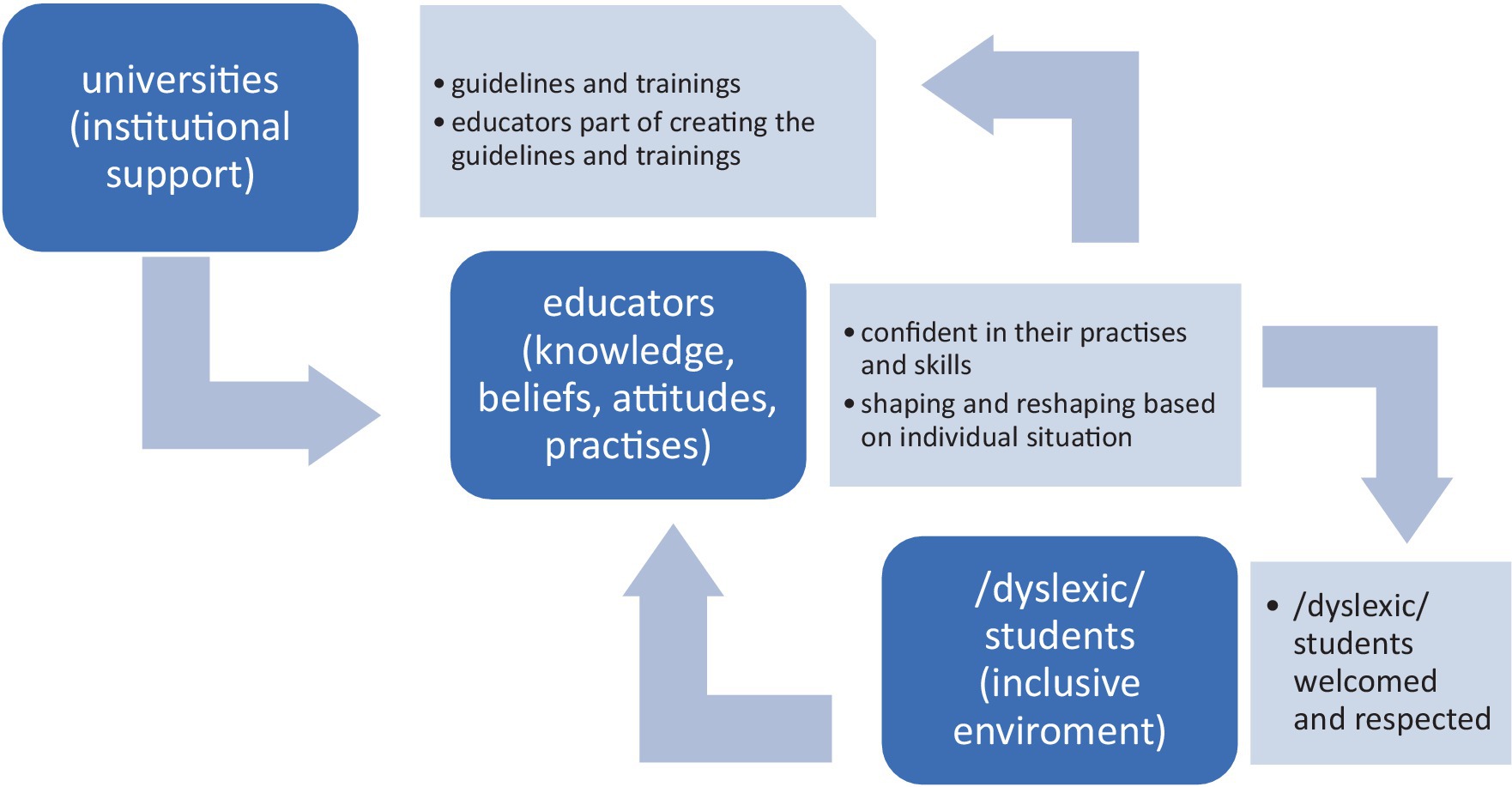
Figure 3. Recommendations for universities (faculties) and educators.
We acknowledge that stress, loneliness, and burnout are well-known phenomena in the teaching profession (Tabancali, 2016; Ortega-Jiménez et al., 2021), so again we emphasize the need for support from individual universities and faculties. In an ideal world, every higher education teacher would have much more (paid) time to prepare their course and sufficient support from their faculty, so their courses could become inclusive and welcoming for all students (not only for those with dyslexia). Although we are not yet there, each individual in the teaching staff has the potential to contribute to the building of an inclusive environment in universities. Meanwhile, when as educators we face challenges in building an inclusive atmosphere in our courses, we emphasize the persistent importance of individual support for students who need it, including dyslexic students (as well as Tobias-Green, 2014; Serry et al., 2017; Sumner et al., 2020). As educators, we must reflect on our own beliefs, knowledge, and attitudes toward students and reflect on those shaping and reshaping our daily teaching practices.
4.1 Limitations
Although this review has a strong potential to spark a debate about the nature of the university environment, most of the included studies have smaller sample sizes, and there is a lack of studies from a broader spectrum of countries (cultural and linguistic dependency). We also acknowledge that our search string could have been broader (e.g., including term lecturer), which would likely have resulted in the inclusion of more studies. Considering that, we would like to highlight that the results of this review should be taken as an insight into the issue, and it is important to continue researching this area, so the results could be more generalizable.
5 Conclusion
The purpose of this scoping review was to explore how university teachers reflect knowledge and beliefs about studying with dyslexia in higher education and what their attitudes and practices are when working with dyslexic students. This review showed that university teachers have a basic knowledge of dyslexia, are aware of the specifics of studying with dyslexia and, in general, their attitudes toward students with dyslexia are largely positive. However, dyslexia remains a gray area for them, associated with lack of information, confusion and some concerns, a feeling of unpreparedness and lack of support. Faculties should provide more support to their pedagogical staff so that these teachers can support their students to a greater extent.
Data availability statement
The original contributions presented in the study are included in the article/supplementary material, further inquiries can be directed to the corresponding author.
Author contributions
KČ: Conceptualization, Data curation, Formal analysis, Methodology, Writing – original draft, Writing – review & editing. LS: Methodology, Supervision, Writing – review & editing.
Funding
The author(s) declare financial support was received for the research, authorship, and/or publication of this article. This work was supported by grant no. VEGA 1/0119/21.
Conflict of interest
The authors declare that the research was conducted in the absence of any commercial or financial relationship that could be construed as a potential conflict of interest.
Publisher’s note
All claims expressed in this article are solely those of the authors and do not necessarily represent those of their affiliated organizations, or those of the publisher, the editors and the reviewers. Any product that may be evaluated in this article, or claim that may be made by its manufacturer, is not guaranteed or endorsed by the publisher.
References
American Psychological Association . (2021), “Equity, diversity, and inclusion: Framework ”. Washington: American Psychological Association
Best, K. L., Mortenson, W. B., Lauzière-Fitzgerald, Z., and Smith, E. (2022). Language matters! The long-standing debate between identity-first language and person first language. Assist. Technol. 34, 127–128. doi: 10.1080/10400435.2022.2058315
Boada, R., Willcutt, E. G., and Pennington, B. F. (2012). Understanding the comorbidity between dyslexia and attention-deficit/hyperactivity disorder. Top. Lang. Disord. 32, 264–284. doi: 10.1097/tld.0b013e31826203ac
Boileau, E., St-Onge, C., and Audétat, M.-C. (2017). Is there a way for clinical teachers to assist struggling learners? A synthetic review of the literature. Adv. Med. Educ. Pract. 8, 89–97. doi: 10.2147/amep.s123410
Botha, M., Hanlon, J., and Williams, G. (2021). Does language matter? Identity-first versus person-first language use in autism research: a response to Vivanti. J. Autism Dev. Disord. 53, 870–878. doi: 10.1007/s10803-020-04858-w
Braun, V., and Clarke, V. (2019). Reflecting on reflexive thematic analysis. Qual. Res. Sport, Exerc. Health 11, 589–597. doi: 10.1080/2159676x.2019.1628806
Brunswick, N. (2012). “Dyslexia in UK higher education and employment. An introduction and overview” in Supporting dyslexic adults in higher education and the workplace, London. ed. N. Brunswick New York: John Wiley & Sons, Ltd.
Černickaja, K., and Sokolová, L. (2022), “University course as an inclusive community: content analysis of students’ expectations”, edited by Baránková. 9th conference and workshop in community psychology in Slovakia 2022: Conference proceedings, 23–34.
Chang, T., Lee, G. T., Bruce, A. T., Powell, D., and Yang, L. (2022). College instructors’ theories of intelligence and awareness of student dyslexia as related to the feedback provided for the student’s writing assignment. Psychol. Rep., 11194–11123. doi: 10.1177/00332941221119407
Clouder, L., Karakuş, M., Cinotti, A., Ferreyra, M. V., Fierros, G. A., and Rojo, P. (2020). Neurodiversity in higher education: a narrative synthesis. High. Educ. 80, 757–778. doi: 10.1007/s10734-020-00513-6
Dobson Waters, S., and Torgerson, C. (2020). Dyslexia in higher education: a systematic review of interventions used to promote learning. J. Further High. Educ. 45, 226–256. doi: 10.1080/0309877x.2020.1744545
Doikou-Avlidou, M. (2015). The educational, social and emotional experiences of students with dyslexia: the perspective of postsecondary education students. Int. J. Spec. Educ. 30, 132–145.
Elsherif, M.M., Middleton, S.L., Phan, J., Azevedo, F., Iley, B.J., Grose-Hodge, M., et al. (2022), “Bridging neurodiversity and open scholarship: how shared values can guide best practices for research integrity, social justice, and principled education”, MetaArXiv, 20 June.
Elsherif, M. M., Wheeldon, L., and Frisson, S. (2021). Do dyslexia and stuttering share a processing deficit? J. Fluen. Disord. 67:105827. doi: 10.1016/j.jfludis.2020.105827
Evans, W. H. (2013). ‘I am not a dyslexic person I’m a person with dyslexia’: identity constructions of dyslexia among students in nurse education. J. Adv. Nurs. 70, 360–372. doi: 10.1111/jan.12199
Evans, W. J. (2014). “If they can’t tell the difference between duphalac and digoxin you’ve got patient safety issues”. Nurse lecturers’ constructions of students’ dyslexic identities in nurse education. Nurse Educ. Today 34, e41–e46. doi: 10.1016/j.nedt.2013.11.004
Finlay, L. (2021). Thematic analysis: the ‘good’, the ‘bad’ and the ‘ugly’. Euro. J. Qualit. Res. Psychother. 11, 103–116.
Fletcher-Watson, S., Brook, K., Hallett, S., Murray, F., and Crompton, C. J. (2021). Inclusive practices for neurodevelopmental research. Curr. Dev. Disord. Rep. 8, 88–97. doi: 10.1007/s40474-021-00227-z
Gallardo, M., Heiser, S., and McLaughlin, X. A. (2015). Modern languages and specific learning difficulties (SpLD): implications of teaching adult learners with dyslexia in distance learning. Open Learn. J. Open Dist. Learn. 30, 53–72. doi: 10.1080/02680513.2015.1031647
Gallego, M., and Busch, C. (2015). Towards the inclusion of students with disabilities: accessibility in language courses. Innov. High. Educ. 40, 387–398. doi: 10.1007/s10755-015-9321-z
Glazzard, J., and Dale, K. (2015). ‘It takes me half a bottle of whisky to get through one of your assignments’: exploring one teacher educator’s personal experiences of dyslexia. Dyslexia 21, 177–192. doi: 10.1002/dys.1493
Gourdon-Kanhukamwe, A., Kalandadze, T., Yeung, S. K., Azevedo, F., Iley, B. J., Phan, J., et al. (2023). Opening up understanding of neurodiversity: a call for applying participatory and open scholarship practices. Cogn. Psychol. Bull. 1, 23–27. doi: 10.53841/bpscog.2023.1.8.23
Gutierrez-Bucheli, L., Reid, A., and Kidman, G. (2022). Scoping reviews: their development and application in environmental and sustainability education research. Environ. Educ. Res. 28, 645–673. doi: 10.1080/13504622.2022.2047896
Hamilton, L., and Petty, S. (2023). Compassionate pedagogy for neurodiversity in higher education: a conceptual analysis. Front. Psychol. 14:1093290. doi: 10.3389/fpsyg.2023.1093290
Hanafin, J., Shevlin, M., Kenny, M., and Neela, E. M. (2006). Including young people with disabilities: assessment challenges in higher education. High. Educ. 54, 435–448. doi: 10.1007/s10734-006-9005-9
Hopkins, L. (2011). The path of least resistance: a voice-relational analysis of disabled students’ experiences of discrimination in English universities. Int. J. Incl. Educ. 15, 711–727. doi: 10.1080/13603110903317684
Jacobs, L., Parke, A., Ziegler, F., Headleand, C. J., and De Angeli, A. (2020). Learning at school through to university: the educational experiences of students with dyslexia at one UK higher education institution. Disabil. Soc. 37, 662–683. doi: 10.1080/09687599.2020.1829553
Kendall, L. (2016). Higher education and disability: exploring student experiences. Cogen. Educ. 3:1256142. doi: 10.1080/2331186x.2016.1256142
Kocurová, M. (2019). Vývojové poruchy učení jako sociální riziko. Štúdie Zo Špeciálnej Pedagogiky/Studies in Special Education 8, 111–126.
Lonergan, A., Doyle, C., Cassidy, C., Mahon, S. M., Roche, R., Boran, L., et al. (2019). A meta-analysis of executive functioning in dyslexia with consideration of the impact of comorbid ADHD. J. Cogn. Psychol. 31, 725–749. doi: 10.1080/20445911.2019.1669609
MacCullagh, L. (2014). Participation and experiences of students with dyslexia in higher education: a literature review with an Australian focus. Aust. J. Learn. Difficul. 19, 93–111. doi: 10.1080/19404158.2014.921630
Magnin, E., Ryff, I., and Moulin, T. (2021). Medical teachers’ opinions about students with neurodevelopmental disorders and their management. BMC Med. Educ. 21:16. doi: 10.1186/s12909-020-02413-w
Majumder, A. A., Rahman, S. A., D’Souza, U. J. A., Elbeheri, G., Abdulrahman, K. A. B., and Huq, M. M. (2010). Supporting medical students with learning disabilities in Asian medical schools. Adv. Med. Educ. Pract. 1, 31–39. doi: 10.2147/amep.s13253
Manalili, M. A. R., Pearson, A., Sulik, J., Creechan, L., Elsherif, M. M., Murkumbi, I., et al. (2023). From puzzle to progress: how engaging with neurodiversity can improve cognitive science. Cogn. Sci. 47:e13255. doi: 10.1111/cogs.13255
Mena, J. A. (2022). Social justice pedagogy: diversity, equity, and inclusion in the teaching of psychology. Teach. Psychol. 50, 95–98. doi: 10.1177/00986283221130697
Moll, K., Snowling, M., and Hulme, C. (2020). Introduction to the special issue ‘comorbidities between Reading disorders and other developmental disorders’. Sci. Stud. Read. 24, 1–6. doi: 10.1080/10888438.2019.1702045
Mortimore, T. (2012). Dyslexia in higher education: creating a fully inclusive institution. J. Res. Spec. Educ. Needs 13, 38–47. doi: 10.1111/j.1471-3802.2012.01231.x
Mullins, L., and Preyde, M. (2013). The lived experience of students with an invisible disability at a Canadian university. Disabil. Soc. 28, 147–160. doi: 10.1080/09687599.2012.752127
Murphy, F. (2009). The clinical experiences of dyslexic healthcare students. Radiography 15, 341–344. doi: 10.1016/j.radi.2008.06.002
Norris, M., Hammond, J. A., Williams, A. M., and Walker, S. (2019). Students with specific learning disabilities experiences of pre-registration physiotherapy education: a qualitative study. BMC Med. Educ. 20:2. doi: 10.1186/s12909-019-1913-3
Ortega-Jiménez, D., Ruisoto, P., Bretones, F. D., Del Rocío Ramírez, M., and Gallegos, S. L. V. (2021). Psychological (in) flexibility mediates the effect of loneliness on psychological stress. Evidence from a large sample of university professors. Int. J. Environ. Res. Public Health 18:2992. doi: 10.3390/ijerph18062992
Peters, M. D. J., Godfrey, C., McInerney, P., Munn, Z., Trico, A., and Khalil, H. (2020). “Chapter 11: scoping reviews” in JBI Manual for evidence synthesis. eds. E. Aromataris and Z. Munn
Pino, M., and Mortari, L. (2014). The inclusion of students with dyslexia in higher education: a systematic review using narrative synthesis. Dyslexia 20, 346–369. doi: 10.1002/dys.1484
Richardson, G. D. (2021). Dyslexia in higher education. Educ. Res. Rev. 16, 125–135. doi: 10.5897/err2021.4128
Roitsch, J., and Watson, S. M. R. (2019). An overview of dyslexia: definition, characteristics, assessment, identification, and intervention. Sci. J. Educ. 7:81. doi: 10.11648/j.sjedu.20190704.11
Ryder, D., and Norwich, B. (2019). UK higher education lecturers’ perspectives of dyslexia, dyslexic students and related disability provision. J. Res. Spec. Educ. Needs 19, 161–172. doi: 10.1111/1471-3802.12438
Schabmann, A., Eichert, H.-C., Schmidt, B., Hennes, A., and Ramacher-Faasen, N. (2020). Knowledge, awareness of problems, and support: university instructors’ perspectives on dyslexia in higher education. Eur. J. Spec. Needs Educ. 35, 273–282. doi: 10.1080/08856257.2019.1628339
Serry, T., Oates, J., Ennals, P., Venville, A., Williams, A., Fossey, E., et al. (2017). Managing reading and related literacy difficulties: university students’ perspectives. Aust. J. Learn. Difficul. 23, 5–30. doi: 10.1080/19404158.2017.1341422
Shaw, S. C. K., and Anderson, J. L. (2018). The experiences of medical students with dyslexia: an interpretive phenomenological study. Dyslexia 24, 220–233. doi: 10.1002/dys.1587
Shaw, S. C. K., Anderson, J. L., and Grant, A. (2016). Studying medicine with dyslexia: a collaborative autoethnography. Qual. Rep. 21, 2036–2054. doi: 10.46743/2160-3715/2016.2570
Sokolová, L., and Lemešová, M. (2022). “Poruchy Učenia a Pozornosti u Vysokoškolákov: Analýza Prevalencie learning and attention disorders among university students: analysis of prevalence” in PhD Existence 12. eds. E. Aigelová, L. Viktorová, and M. Dolejš (Změna: Univerzita Palackého v Olomouci)
Stagg, S. D., Eaton, E., and Sjöblom, A. (2018). Self-efficacy in undergraduate students with dyslexia: a mixed methods investigation. Br. J. Spec. Educ. 45, 26–42. doi: 10.1111/1467-8578.12200
Stampoltzis, A., Tsitsou, E., Plesti, H., and Kalouri, R. (2017). Lecturer perspectives on dyslexia within one Greek university: a pilot study. Revista Electrónica De Investigación Psicoeducativa Y Psicopedagógica 13, 587–606. doi: 10.14204/ejrep.37.15002
Sumner, E., Crane, L., and Hill, E. L. (2020). Examining academic confidence and study support needs for university students with dyslexia and/or developmental coordination disorder. Dyslexia 27, 94–109. doi: 10.1002/dys.1670
Tabancali, E. (2016). The relationship between teachers’ job satisfaction and loneliness at the workplace. Eurasian J. Educ. Res. 16, 1–30. doi: 10.14689/ejer.2016.66.15
Taboas, A., Doepke, K. J., and Zimmerman, C. (2022). Preferences for identity-first versus person-first language in a US sample of autism stakeholders. Autism 27, 565–570. doi: 10.1177/13623613221130845
Tobias-Green, K. (2014). The role of the agreement: art students, dyslexia, reading and writing, art, design and communication in higher education. Intellect 13, 189–199. doi: 10.1386/adch.13.2.189_1
Tricco, A. C., Lillie, E., Zarin, W., O’Brien, K. K., Colquhoun, H., Levac, D., et al. (2018). PRISMA extension for scoping reviews (PRISMA-SCR): checklist and explanation. Ann. Intern. Med. Am. Coll. Phys. 169, 467–473. doi: 10.7326/m18-0850
Worthy, J., Lammert, C., Long, S. L., Salmerón, C., and Godfrey, V. (2018). What if we were committed to giving every individual the services and opportunities they need?’ Teacher educators’ understandings, perspectives, and practices surrounding dyslexia. Res. Teach. Engl. 53, 125–148. doi: 10.58680/rte201829864
Keywords: dyslexia, neurodiversity, higher education, review, inclusion
Citation: Černickaja K and Sokolová L (2024) Dyslexia in higher education – teacher’s perspective: scoping review. Front. Educ. 9:1372699. doi: 10.3389/feduc.2024.1372699
Edited by:
James Hugo Smith-Spark, London South Bank University, United KingdomReviewed by:
Rebecca Gordon, University College London, United KingdomMahmoud Medhat Elsherif, University of Birmingham, United Kingdom
Copyright © 2024 Černickaja and Sokolová. This is an open-access article distributed under the terms of the Creative Commons Attribution License (CC BY). The use, distribution or reproduction in other forums is permitted, provided the original author(s) and the copyright owner(s) are credited and that the original publication in this journal is cited, in accordance with accepted academic practice. No use, distribution or reproduction is permitted which does not comply with these terms.
*Correspondence: Lenka Sokolová, bGVua2Euc29rb2xvdmFAZnNlcy51bmliYS5zaw==