 Hilda Beraun-Vasquez
 Eugenia Fabian-Arias
- Facultad de Trabajo Social, Universidad Nacional del Centro del Peru, Huancayo, Peru
This study aims to determine the factors influencing school violence among students in emblematic educational institutions in the Junín region post-pandemic. A quantitative and explanatory study was conducted with a sample of 1,656 students, aged 12 to 18, selected through simple random sampling. Data collection instruments included a questionnaire for assessing various factors and the School Bullying and Violence Test (AVE) for measuring school violence. Validity was ensured through expert judgment and a pilot test, while reliability was assessed using Cronbach’s alpha, with values of 0.832 and 0.802. Structural equation modeling was used for analysis. The personal factor (β = 0.39, p < 0.001) had a direct and significant influence on school violence. The family factor showed a low and negative relationship (β = −0.06, p < 0.017). The educational factor also presented a negative relationship (β = −0.16, p < 0.001), indicating that changes in norms and structure could reduce violence. Adolescents’ personal factors, such as emotional distress, irritability, and anxiety, directly influence school violence. The family factor did not significantly influence violence, as families felt more cohesive during confinement, acting protectively post-pandemic. The educational factor impacts school violence when norms are not enforced, supervision is insufficient, and spaces are limited.
1 Introduction
School violence has hindered the sense of safety among numerous children and adolescents, as acts of violence often result in school dropouts and, in severe cases, even suicide. According to UNICEF (2021), over half of students aged 13 to 15, approximately 150 million, have experienced violence inflicted by their peers within the school environment. The COVID-19 pandemic exacerbated this issue, confining families and significantly impacting children and adolescents. The inability to socialize or participate in typical developmental activities heightened stress and anxiety levels among the youth (Folayan et al., 2024). Escuadra et al. (2023) noted that the return to school after 2 years of lockdown posed a substantial social problem, with rising levels of school violence among secondary-level students upon their return.
School violence includes intentional aggressive behaviors such as physical and verbal assaults and social isolation (Kaltsas and Kaltsas, 2023). Studies indicate alarming levels of school violence in educational settings, impacting students’ physical and mental health (Ford et al., 2017). Students subjected to bullying often exhibit low academic performance, self-esteem issues, anxiety, and depression (Eyuboglu et al., 2021). In Latin America, violence levels remain particularly concerning; for instance, UNICEF (Castro, 2020) found that 70% of students have experienced some form of violence at school, with virtual violence emerging during the pandemic. In South American countries, such as Chile and Argentina, incidents of physical and verbal assaults shared on social media have raised public alarm (Correa et al., 2021; UNICEF, 2021; Zeladita-Huaman et al., 2020). Incorporating recent studies on the consequences of school violence on academic performance highlights the importance of addressing this issue (Bravo-Sanzana et al., 2021).
In Peru, school violence surged with the return to in-person classes post-pandemic, exacerbated by stress and anxiety accumulated during confinement. Reports from MINEDU’s platform Síseve (2022) recorded 12,099 cases in 2022, encompassing physical, psychological, and sexual violence. This increase emphasizes the urgent need to investigate the key factors contributing to school violence, especially within emblematic educational institutions. Emblematic institutions in Peru were created starting in 1940 by the Peruvian government to address two significant challenges in the education system: the steady increase in student enrollment over the years and the persistently low results in learning evaluations. These institutions aim to provide a comprehensive education that emphasize emotional, social, and academic development while also offering technical training in fields such as electricity and computing.
This research aims to determine the personal, family, and educational factors influencing school violence in emblematic institutions in the Junín region post-pandemic. The study’s focus on emblematic institutions seeks to shed light on the unique dynamics within these prestigious schools, designated as such by the Peruvian government for their historical relevance and efforts to provide comprehensive education across academic and technical disciplines (MINEDU, 2022).
2 Methodology
The study was basic, explanatory, and quantitative in nature, focusing on understanding the factors influencing school violence. It employed a non-experimental, cross-sectional causal design since the variables were not manipulated but rather analyzed in their natural context. Cross-sectional studies collect data at a single point to describe and analyze variable incidence at that moment (Hernández León and Coello González, 2020). The design was causal-correlational, as it sought to identify the factors influencing school violence in emblematic educational institutions in the Junín region. The study population consisted of students from 9 emblematic educational institutions in the Junín region, totaling 10,740 students enrolled in the 2023 academic year. The sample size was determined through simple random probability sampling, ensuring representativeness by setting a 95% confidence level and a 5% margin of error, with approximately 14% of students selected per school, resulting in a sample of 1,656 students. Student ages ranged from 12 to 19 years (M = 14.4), covering from 7th to 12th grade.
Two instruments were used for data collection. The first instrument, designed by the researchers to assess the factors of violence, evaluates three dimensions: personal, family, and educational. It consists of 24 polytomous items, with validity assessed through expert judgment and reliability confirmed by Cronbach’s alpha (α = 0.826). For measuring school violence, the School Bullying and Violence Test (AVE) (Piñuel and Oñate, 2020) was applied. This instrument includes 50 questions that cover dimensions such as bullying (11 items), intimidation (5 items), social exclusion (5 items), assaults (9 items), threats (4 items), coercion (4 items), social blocking (5 items), and social manipulation (7 items), with reliability measured at Cronbach’s alpha (α = 0.832). This study aligns with a quantitative research paradigm that suits the objective of identifying key factors influencing school violence through statistical analysis, facilitating causal and correlational insights into the variables.
2.1 Data collection
Before data collection, permission was obtained from each principal of the 9 selected educational institutions. Once authorization was granted, coordination with the academic tutoring area was established to schedule the appropriate times and select the grades for data collection. Informed consent was obtained from parents or guardians of the students, and informed assent was gathered from the students themselves. Additionally, anonymity and confidentiality were ensured due to the participants’ minor status. The duration for administration of the instruments was 40 min.
2.2 Ethical considerations
This study was registered and approved on June 11, 2023, in accordance with the requirements set by the Research Institute of the Faculty of Social Work at the National University of Central Peru. The approval process included the registration of the research project and authorization letters from the principals of the emblematic educational institutions for the administration of the questionnaires. Ethical guidelines established by the University’s Ethics Committee were strictly followed. Written informed consent was obtained from the parents or guardians of the student participants, and informed assent was collected from the students themselves, ensuring both confidentiality and anonymity.
2.3 Procedures
Instrument validity was assessed by five experts in the field, with results analyzed using Aiken’s V coefficient, which demonstrated validity levels above 0.8 for both clarity and adequacy of the instrument. To ensure the reliability of the instruments, a pilot test was conducted with 399 students from a selected educational institution, confirming the instruments’ suitability for the study population and context. Data collection was conducted in person following coordination with the academic tutoring area to establish appropriate dates and times for administering the instruments.
2.4 Data analysis
The study model was analyzed using structural equation modeling (SEM), a statistical method commonly applied in social sciences to test hypothetical relationships between variables (Hair et al., 2021). This technique allowed for a multivariate statistical analysis of the causal relationships between personal, family, and educational factors and their influence on school violence. The MLR estimator, which is appropriate for numerical variables and robust against deviations from inferential normality, was employed (Muthén and Muthén, 2017). Model fit was assessed using the Comparative Fit Index (CFI), Root Mean Square Error of Approximation (RMSEA), and Standardized Root Mean Square Residual (SRMR), with indicators of good fit being CFI > 0.90 (Bentler, 1990), RMSEA <0.080, and SRMR <0.080 (Browne and Cudeck, 1992). The analyses were controlled for demographic characteristics such as sex and age to improve the accuracy of the model’s relationships. Internal consistency reliability for the variables was assessed using Cronbach’s alpha (α). All data analysis and calculations were conducted using R software version 4.2.3, with the “lavaan” package version 0.6–15 (Rosseel, 2012).
3 Results
Table 1 presents the ages of the students, ranging from 12 to 19 years, with a mean age (M = 14.4) representing the average age of the surveyed population. Students surveyed were in grades seven to eleven. The study was conducted in 9 emblematic schools in the Junín Region.
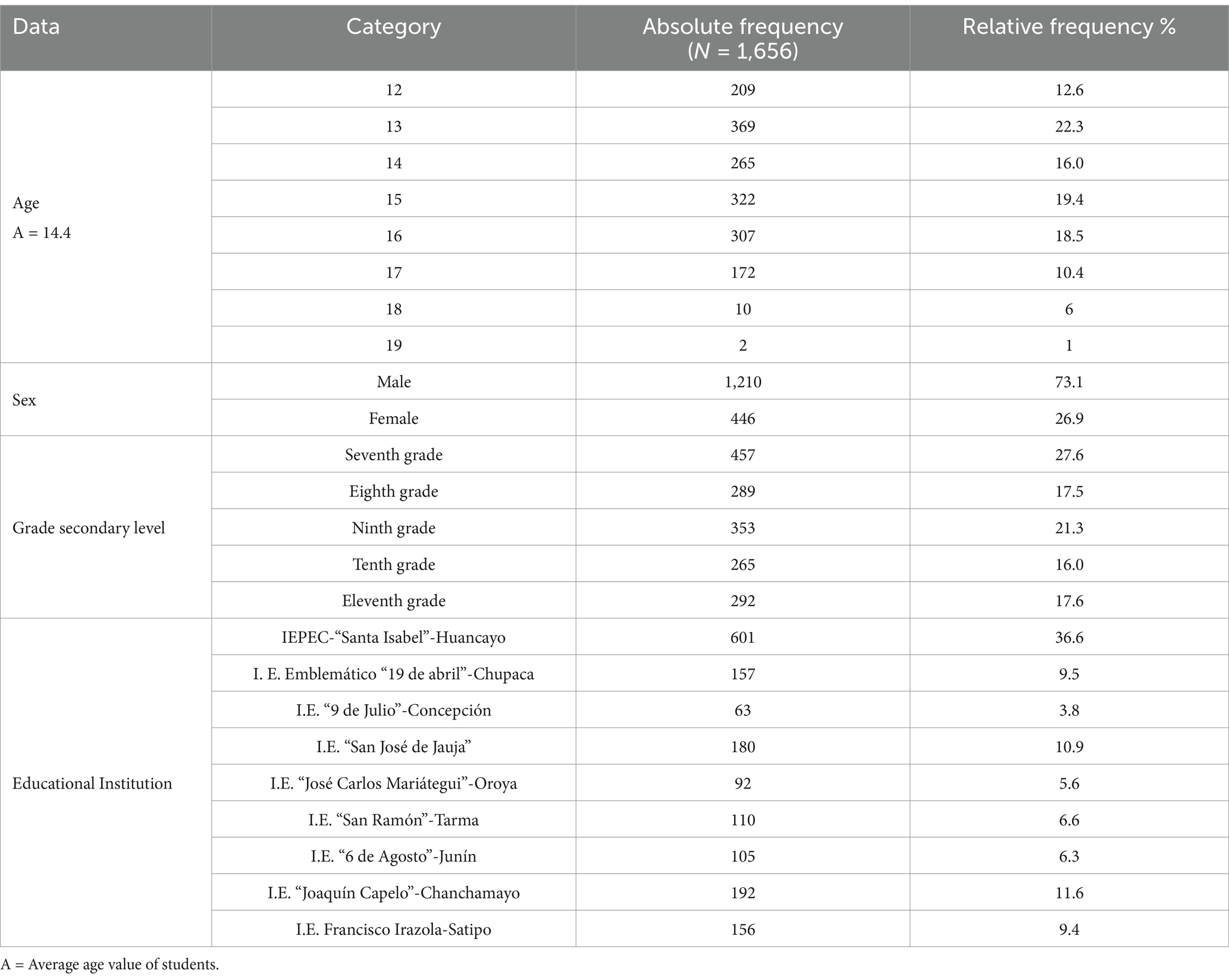
Table 1. Socio-demographic characteristics of students from emblematic schools in the junín region.
In Table 2, the descriptive results show the mean scores for the personal factor (M = 10.2), family factor (M = 18.0), and educational factor (M = 18.2). Regarding the school violence factor, with its subfactors of bullying, intimidation, social exclusion, assaults, threats, coercion, and social blocking, the mean scores are M = 3 and M = 5.7. According to the literature, it is important to consider the central value of the reported data, as it represents the most common value used in responses. The reported skewness (S) values range from −0.5 to 2.3, which are considered appropriate (Kline, 2016). The correlation results range from −0.24 to 0.82. Additionally, this table also shows the internal consistency coefficients, Cronbach’s alpha, which were found to be between 0.67 and 0.83. The data obtained are considered good based on their internal consistency estimator and reliability (Toro et al., 2022).
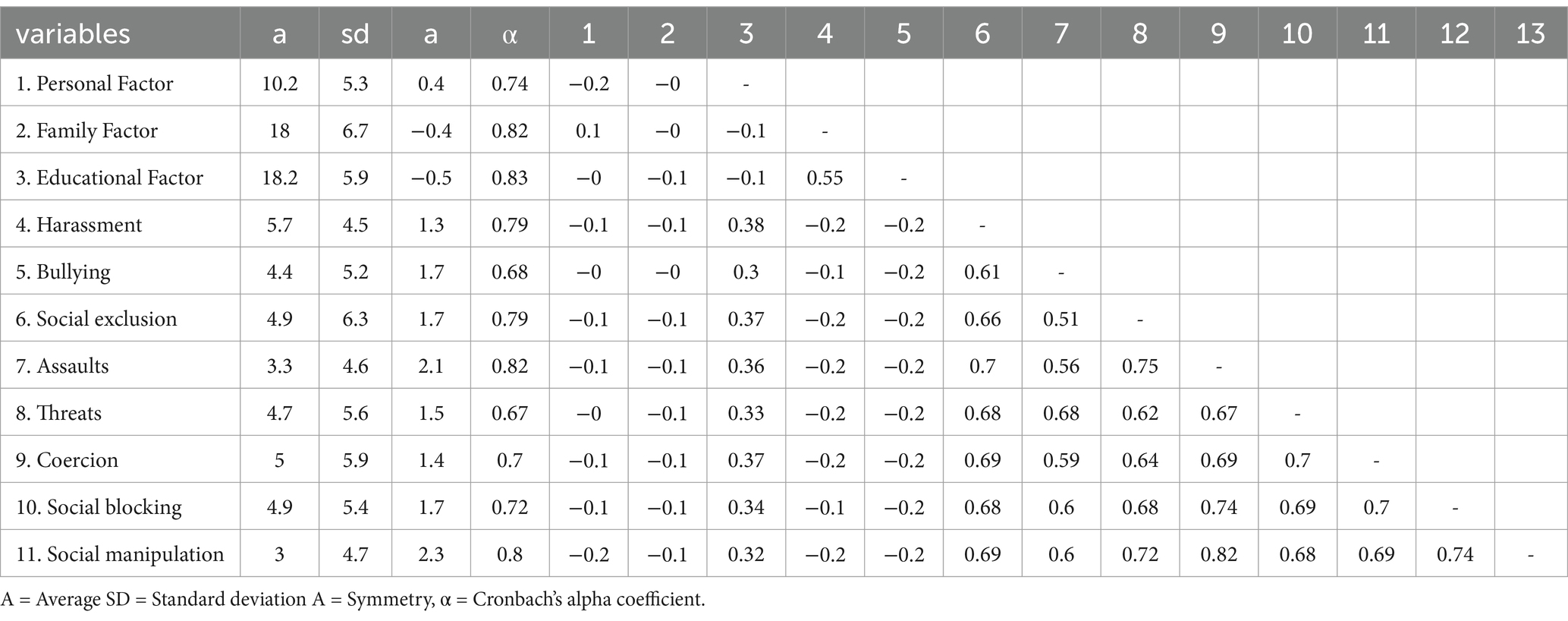
Table 2. Descriptive statistics, internal consistencies and correlations for the study variables.
According to the effect size data obtained and analyzed using Structural Equation Modeling (SEM), it was possible to examine the pattern of relationships between the three-dimensional factors and school violence with eight factors. The obtained results were χ2 (55) = 571.131, p < 0.000, CFI = 0.953, RMSEA = 0.068, SRMR = 0.028. The overall model evaluation considered goodness-of-fit indicators, which range from 0 to 1, with higher values suggesting greater variance explained by the model. The Comparative Fit Index (CFI) and Tucker-Lewis Index (TLI) were used more precisely; the obtained values indicate a good model fit (Fan and Sivo, 2007; Hooper et al., 2008). The reported data confirm the general hypothesis, indicating that personal, educational, and, to a lesser extent, family factors influence school violence. The results for the personal factor were β = 0.39, p < 0.001. As shown in Figure 1, personal factors have a direct and significant influence on school violence. According to Thompson (2001), values around 0.35 are considered high correlations (Table 3).
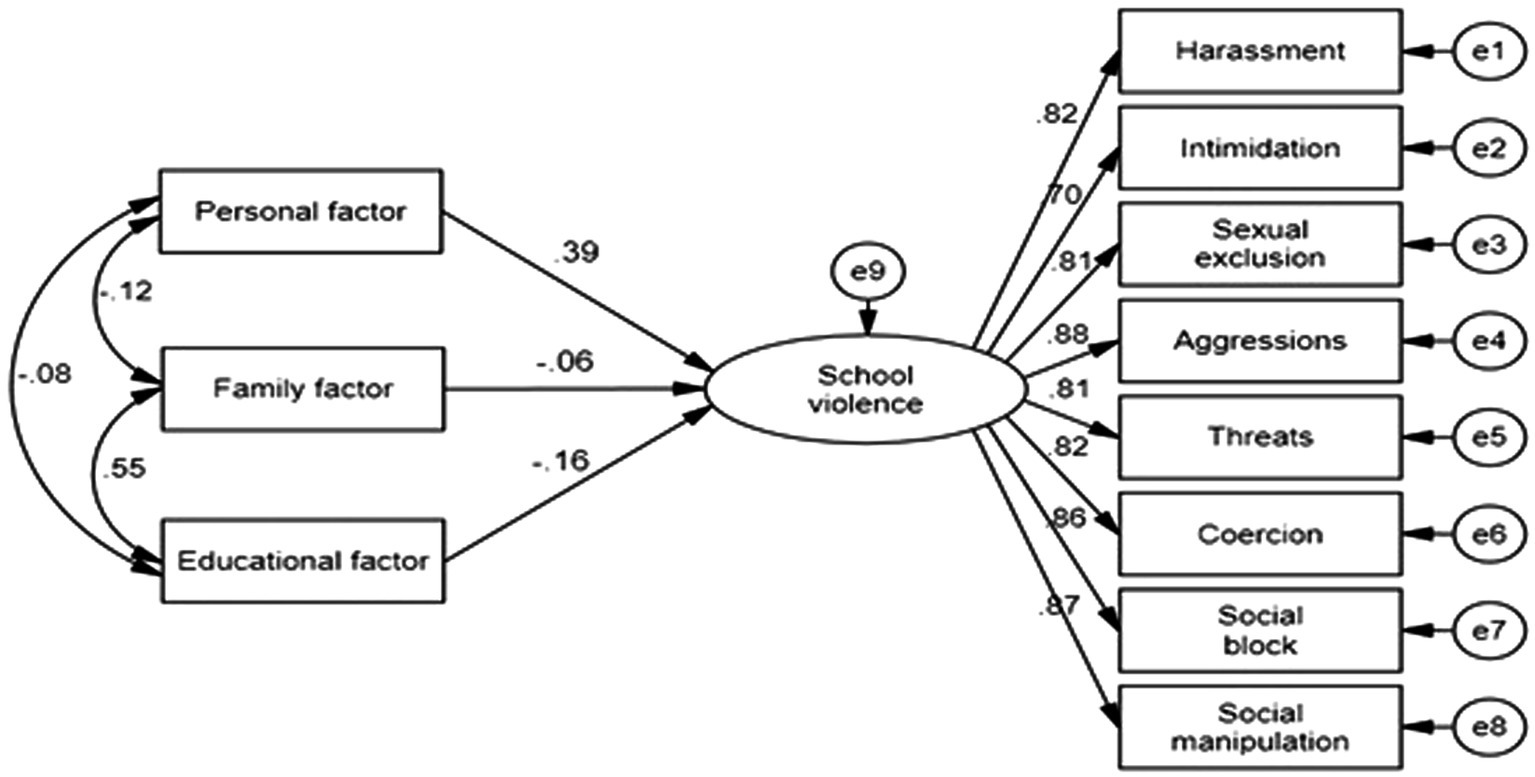
Figure 1. Structural equation model to identify key factors influencing school violence. e = error of each variable, β = beta coefficient; (β = 0.39 p < 0.001**); (β = 0.06 p < 0.05); (β = −0.16 p < 0.001*).

Table 3. Goodness of fit for the explanatory model of factors influencing school violence.
4 Discussion
4.1 Personal factor
The personal factor significantly affects students’ academic development; therefore, the presence of direct acts of school violence poses a risk to personal aspects such as self-efficacy and satisfaction in interpersonal relationships with peers (Bravo-Sanzana et al., 2021). Personality consists of relatively permanent traits that influence behavior, directly affecting how individuals interact in different contexts. This is particularly evident during adolescence, especially in the school environment and peer relationships (Sánchez, 2003). Studies have shown that certain personality traits of students are risk factors for violent behaviors, hindering emotional management and effective conflict resolution (Nocentini et al., 2019). One of the most relevant personal characteristics related to school bullying is emotional intelligence, defined as the ability to recognize one’s own and others’ feelings to self-manage. Consequently, students with higher emotional self-regulation can resolve bullying situations more efficiently. This viewpoint aligns with Ccorahua Quintana (2023), who argues that emotional self-regulation influences violence and aggression among students, encompassing the ability to recognize, understand, and regulate emotions in interpersonal relationships. When interacting with peers, students unable to regulate their emotions are more prone to exhibit aggression and experience social isolation. Concluding that adolescents’ emotional intelligence directly influences school violence levels, low emotional intelligence is associated with impulsivity, lack of empathy, negative self-perception, and egocentrism, increasing the likelihood of developing violent behaviors in the school context due to the inability to recognize and validate the emotions of those around them (Cardozo, 2021; Troncoso Araya, 2022).
The results indicated that personal factors as a risk for school violence worsened after the pandemic, as students returned to in-person classes after a long period of virtual learning without normal peer interaction. This is corroborated by Orgilés et al. (2024), who reported that around 87% of students found social distancing and governmental measures to prevent COVID-19 spread stressful, leading to anxiety and other emotional problems. The lack of normal social contact translated into school adaptation difficulties. Similarly, Correa et al. (2021) noted that the pandemic increased depression and anxiety symptoms in students. Secondary school students, at a crucial stage for identity formation, struggled more to readjust to in-person classes after prolonged suspension, significantly affecting their relationships and causing episodes of aggression and other forms of violence among students. Troncoso Araya (2022) confirmed that the pandemic caused anxiety, distress, and stress in the population, impacting the educational environment as adolescents struggled to adapt without having developed socio-emotional skills during confinement. This resulted in aggressive behavior towards peers due to a lack of empathy, anxiety, conflict avoidance, distress, and difficulty in regulating impulses. Vázquez López et al. (2023) noted that the pandemic caused emotional ambivalence in young people, reducing their ability to use adaptive and emotional regulation strategies in the face of adversity, echoing Chen et al. (2023), who found that students who are victims of school violence exhibit more self-harm, anxiety, and depression.
Adolescence is a developmental stage involving various crises and vulnerabilities, presenting opportunities for risky behaviors such as violence and aggression. Vásquez Palero and Miranda Ayala (2022) asserted that students’ development is influenced by their school environment, leading to physical and psychological changes. Students who spend more time in classrooms are more exposed to teasing, insults, and physical aggression, hindering their personal and academic development. Freud (1933) argued that aggression is a survival instinct of the ego, manifesting as a reaction to libido frustration. High self-esteem can be a risk factor for bullying when associated with negative perceptions of the school climate. Penalva López and Villegas Morcillo (2017) found personality variables related to school violence. Aggressors often exhibit extroverted personalities (ease of relating to their social environment), psychopathy, and leadership, while victims tend to express anxiety and shyness. Another cause of school violence is low learning ability, related to students’ behavioral disorders and tendencies towards antisocial behavior due to the underdevelopment of social skills.
Arroyave-Sierra (2012) suggested that aggressors are characterized by high impulsiveness, dominance, and aggressive responses to conflicts, interpreting that they will be attacked if they do not react first. They have low frustration tolerance, dislike following rules, often do not show a need for help to solve their problems, lack empathy for others, and frequently evade responsibility for their actions. Victims, on the other hand, exhibit depressive and anxiety symptoms, attention difficulties, and impulsively, often respond to attacks with physical retaliation, but showing low self-esteem due to insecurity and social isolation. Frequent aggression leads to victimization, self-devaluation, and distrust of others, causing irritability and deep sadness, sometimes resulting in suicidal ideation. Both aggressors and victims may experience suicide due to impulsiveness. Thus, the significance of the personal factor in school violence is concluded. These results highlight the nuances in the interaction between individual and school factors, suggesting that research should explore these factors simultaneously (Vivolo et al., 2011). Individuals should be considered complex entities, closely associated with aggressiveness and irritability, influenced by social patterns, and with a reaction intensity based on the degree of emotional arousal.
4.2 Family factor
The family factor does not influence adolescent violence in emblematic educational institutions in the Junín region, as indicated by the low and negative beta coefficient. According to Thompson (2001), beta coefficients less than 10 are considered small. Scientific literature identifies family factors influencing school violence, such as exposure to family violence, dysfunctional families, and authoritarian parenting. Obioha et al. (2024) found that exposure to family violence influences adolescents to adopt bully or victim behaviors, likely due to the intensity of violent experiences. Li et al. (2020) noted that negative family violence events alter students’ moods, making them increasingly aggressive. Pichel et al. (2022) found that students from dysfunctional families have a high prevalence of being both perpetrators and victims of school bullying. Authoritarian parenting, characterized by hostility towards children, significantly contributes to adolescents’ reactive aggression towards peers (Chan et al., 2018). In contrast, this study found no relationship between the family factor and student violence, possibly because protective and functional families prevent students from engaging in school violence. These results align with Obioha et al. (2024), who found that families with quality relationships and good communication create an adequate and functional environment, reporting lower child involvement in school violence. Similarly, Gentz et al. (2021) asserted that families acting as protective factors with supportive relationships play a crucial role, as the family is the most important system around adolescents. Support factors and parental efficacy systematically help adolescents against the negative effects of family violence.
According to ecological theory, adolescents are at the center of the system, and the microsystem influences their relationships. Each subsystem represents different components affecting change in adolescence, including the family and immediate environment (Bronfenbrenner, 1999). During the pandemic, families stayed home, and students experienced uncertainty and fear, strengthening family interactions to cope with the fear of death by adapting to closed environments like the home. The family acted as a protective factor against the fear and anxiety experienced by adolescents. From a systemic family perspective, families underwent a radical alteration in their family system, experiencing a crisis that required adaptation to the new context. Significant changes were needed in family organization to meet domestic, educational, and work obligations, contributing to the development of protective factors such as strengthening emotional bonds, increasing communication through dialogue, and maintaining family well-being (Córdoba-Duran and Zamudio-Pardo, 2021).
4.3 Educational factors
School coexistence norms are established in educational institutions but are not disseminated for implementation. If these norms were correctly applied, school violence would decrease. Ayala (2015) asserts that educational institutions have school coexistence manuals, but these norms are more punitive and do not mitigate the school violence problem, and sometimes are not applied in practice. They explain that school coexistence norms are used for sanctions, punishment, and expulsion as effective ways to enforce rules. Bringas-Molleda et al. (2021) indicate that the practice of classroom norms reduces the likelihood of school violence occurring in its various forms. Cedeño Sandoya (2020) points out that if there is no clear set of rules, such as conflict resolution training and clear instructions for teachers and students, school violence will persist. The manual directs conflict resolution, manages alternative solutions, and promotes values. If school coexistence norms are not respected or properly applied, school violence will exist. According to Mastour et al. (2023), violence occurs in schoolyards when they are deficient and lack the necessary resources for play, generating school violence. This is aggravated by limited spaces and inadequate playground planning, affecting peer interaction and participation in recreational games. Additionally, poorly designed spaces facilitate acts of aggression due to the inability to provide adequate supervision of students by teachers.
Regarding peer socialization/interaction, it is weak and/or low, influencing school violence to some extent. Pacheco-Salazar (2018) found in his research that there is weak peer or student interaction, difficulty in setting boundaries in play, and that the roles of some students provoke acts of school violence, relating these acts to the internalization of violence as teasing. Villanueva Ospinal et al. (2022) also argue that there is a correlation between school interaction and violence; greater difficulty in school interaction leads to higher levels of school violence. Post-pandemic studies indicate that the reintegration of students was not optimal, as students, having spent a long time without interacting with peers, lacked effective communication tools for conflict situations. Rodríguez Figueroa et al. (2023) stated that quarantine represented a rupture in students’ daily lives compared to the normalcy with which they interacted with their peers before the pandemic. Therefore, returning to in-person classes was a change, and some found it difficult to socialize.
The result for students being able to trust their teachers is negative and not significant. Although teacher supervision plays an important role, some researchers recognize that certain teachers facilitate bullying by ridiculing and giving nicknames to students. Therefore, students’ lack of trust in teachers inversely affects school violence; less trust in teachers leads to more school violence. Andrades-Moya (2020) notes that teachers not trained in school tutoring influence school violence. Ayala (2015) explains that minimizing the problem and acting as if it does not exist, neglecting the necessary support for victims of school violence, affects school violence. The influence of class hours and satisfaction with academic tasks assigned by teachers is direct and significant. Students are satisfied with class hours and academic tasks perform well academically. Martins Filho and Melo (2023) found that good academic performance protects against violence. High academic performance serves as a protective factor against violence.
Therefore, the results are supported by the ecological theory of Bronfenbrenner’s (1999), which explains that a person is within an interconnected community organized into four levels: (a) Microsystem, comprising the closest contexts to the person, such as family and school, including activities, roles, and interpersonal relationships in their immediate environment. (b) Mesosystem, referring to interactions between microsystem contexts, such as family-school communication. (c) Exosystem, encompassing social environments in which the person does not actively participate but can affect them, such as parents’ and siblings’ friends or the media. (d) Macrosystem, referring to the culture and historical social moment in which the person lives. It is essential to consider that behavioral problems cannot be solely attributed to the person but should be seen as a product of the interaction between the individual and their environment, including family, school, and social environments. This means that the factors influencing school violence are multiple and complex.
5 Conclusion
The research on factors influencing school violence in the post-pandemic period highlights the critical need to pay closer attention to the factors affecting adolescents. Early identification of students with personality traits indicating difficulties in emotional management and impulse control is essential. Families must function as protective units to prevent their children from becoming involved in school violence. Effective management of school coexistence norms should focus on conflict resolution, seeking alternative solutions that promote positive values. By addressing these areas, schools can create a safer and more supportive environment for students, ultimately reducing the incidence of school violence.
6 Limitations
Given that the sample consisted of students in adolescence, there may be some data from the respondents that did not accurately reflect what we were investigating due to the inherent characteristics of this developmental stage. Adolescents are known for their variability in emotional and behavioral responses, which could lead to inconsistencies or inaccuracies in their answers.
Data availability statement
The raw data supporting the conclusions of this article will be made available by the authors, without undue reservation.
Author contributions
HB-V: Conceptualization, Data curation, Investigation, Methodology, Writing – original draft, Writing – review & editing. EF-A: Data curation, Formal Analysis, Methodology, Validation, Writing – review & editing. MR-B: Formal Analysis, Validation, Writing – review & editing.
Funding
The author(s) declare that financial support was received for the research, authorship, and/or publication of this article. This study was funded by the National University of Central Peru under Resolution No. 1709-R-2023, as part of research projects aimed at increasing the number of publications in indexed scientific journals, UNCP 2023.
Acknowledgments
We would like to thank the Universidad Nacional del Centro del Perú for their support and funding of this research. Their commitment to advancing scientific knowledge and increasing the number of publications in indexed scientific journals has been invaluable to our work.
Conflict of interest
The authors declare that the research was conducted in the absence of any commercial or financial relationships that could be construed as a potential conflict of interest.
Publisher’s note
All claims expressed in this article are solely those of the authors and do not necessarily represent those of their affiliated organizations, or those of the publisher, the editors and the reviewers. Any product that may be evaluated in this article, or claim that may be made by its manufacturer, is not guaranteed or endorsed by the publisher.
References
Andrades-Moya, J. (2020). Convivencia escolar en Latinoamérica: Una revisión bibliográfica. Rev. Elect. Educ. 24, 1–23. doi: 10.15359/ree.24-2.17
Ayala, M. (2015). Violencia escolar: Un problema complejo. Ra Ximhai 11, 493–510. doi: 10.35197/rx.11.01.e2.2015.36.ma
Bentler, P. M. (1990). Comparative fit indexes in structural models. Psychol. Bull. 107, 238–246. doi: 10.1037/0033-2909.107.2.238
Bravo-Sanzana, M., Bangdiwala, S. I., and Miranda, R. (2021). School violence negative effect on student academic performance: a multilevel analysis. Int. J. Inj. Control Saf. Promot. 29, 29–41. doi: 10.1080/17457300.2021.1994615
Bringas-Molleda, C., Mercedes-Acosta, J., Álvarez-García, D., Almonte-Mata, M., and Rodríguez-Díaz, F. J. (2021). Percepción diferencial de la intervención para la convivencia entre escolares de Santo Domingo. República Dominicana. Papeles de Población 27, 233–156. doi: 10.22185/24487147.2021.108.18
Bronfenbrenner, U. (1999). “Environments in developmental perspective: theoretical and operational models” in Measuring environment across the life span: Emerging methods and concepts. eds. S. L. Friedman and T. D. Wachs (American Psychological Association), 28.
Browne, M. W., and Cudeck, R. (1992). Alternative ways of assessing model fit. Sociol. Methods Res. 21, 230–258. doi: 10.1177/0049124192021002005
Cardozo, G. (2021). Factores vinculados al bullying en escolares de Córdoba, Argentina, Argentina. Liberabit: Rev. Peruana Psicol. 27:e459. doi: 10.24265/liberabit.2021.v27n1.08
Castro, A. (2020). Desafíos de la pandemia de COVID-19 en la salud de la mujer, de la niñez y de la adolescencia en América Latina y el Caribe.
Ccorahua Quintana, S. (2023). La inteligencia emocional y violencia escolar en los estudiantes de nivel secundario. LATAM 4:1423. doi: 10.56712/latam.v4i6.1423
Cedeño Sandoya, W. A. (2020). La violencia escolar a través de un recorrido teórico por los diversos programas para su prevención a nivel mundial y latinoamericano. Rev. Univ. Soc. 12, 470–478.
Chan, J. Y., Harlow, A. J., Kinsey, R., Gerstein, L. H., and Fung, A. L. C. (2018). The examination of authoritarian parenting styles, specific forms of peer-victimization, and reactive aggression in Hong Kong youth. Sch. Psychol. Int. 39, 378–399. doi: 10.1177/0143034318777781
Chen, H., Guo, H., Chen, H., Cao, X., Liu, J., Chen, X., et al. (2023). Influence of academic stress and school bullying on self-harm behaviors among Chinese middle school students: the mediation effect of depression and anxiety. Front. Public Health 10:1049051. doi: 10.3389/fpubh.2022.1049051
Córdoba-Duran, N., and Zamudio-Pardo, E. D. (2021). Dinámicas familiares: La familia en tiempos de pandemia. Boletín Semillero de Investigación En. Familia 3:806. doi: 10.22579/27448592.806
Correa, D. A., González, L. I., Sepúlveda, M. M., Burón, K. V., Salinas, A. P., and Cavagnaro, F. G. (2021). Debate sobre el retorno a clases presenciales en pandemia. Andes Pediat. 92, 174–181. doi: 10.32641/andespediatr.v92i2.3535
Escuadra, C. J., Magallanes, K., Lee, S., and Chung, J. Y. (2023). Systematic analysis on school violence and bullying using data mining. Child Youth Serv. Rev. 150:107020. doi: 10.1016/j.childyouth.2023.107020
Eyuboglu, M., Eyuboglu, D., Pala, S. C., Oktar, D., Demirtas, Z., Arslantas, D., et al. (2021). Traditional school bullying and cyberbullying: prevalence, the effect on mental health problems and self-harm behavior. Psychiatry Res. 297:113730. doi: 10.1016/j.psychres.2021.113730
Fan, X., and Sivo, S. A. (2007). Sensitivity of fit indices to model misspecification and model types. Multivar. Behav. Res. 42, 509–529. doi: 10.1080/00273170701382864
Folayan, M. O., Zuñiga, R. A. A., Ellakany, P., Yousaf, M. A., Osamika, B. E., Virtanen, J. I., et al. (2024). Socio-economic factors associated with post-traumatic stress symptoms among adolescents and young people during the first wave of the COVID-19 pandemic. Sci. Rep. 14:2276. doi: 10.1038/s41598-023-50333-8
Ford, R., King, T., Priest, N., and Kavanagh, A. (2017). Bullying and mental health and suicidal behaviour among 14- to 15-year-olds in a representative sample of Australian children. Aust. N. Z. J. Psychiatry 51, 897–908. doi: 10.1177/0004867417700275
Gentz, S., Zeng, C., and Ruiz-Casares, M. (2021). The role of individual-, family-, and school-level resilience in the subjective well-being of children exposed to violence in Namibia. Child Abuse Negl. 119:105087. doi: 10.1016/j.chiabu.2021.105087
Hair, J. F., Hult, G. T. M., Ringle, C. M., Sarstedt, M., Danks, N. P., and Ray, S. (2021). “An introduction to structural equation modeling” in Partial least squares structural equation modeling (PLS-SEM) using R. eds. J. F. Hair, G. T. M. Hult, C. M. Ringle, M. Sarstedt, N. P. Danks, and S. Ray (Springer International Publishing), 1–29.
Hernández León, R. A., and Coello González, S. (2020). El proceso de investigación científica (2nd ed.). Editorial Universitaria (Cuba).
Hooper, D., Coughlan, J., and Mullen, M. R. (2008). Structural equation modelling: guidelines for determining model fit. Electron. J. Bus. Res. Methods 6:1.
Kaltsas, E. P., and Kaltsas, J. (2023). Combatting bullying in school and its consequences. Res. Highlights Lang. Literat. Educ. 6, 28–35. doi: 10.9734/bpi/rhlle/v6/9918F
Kline, R. (2016). Principles and practice of structural equation modeling (4th ed). The Guilford Press.
Li, Z., Zha, J., Zhang, P., Shangguan, C., Wang, X., Lu, J., et al. (2020). Negative life events and mood states: emotional resilience as mediator and moderator. Soc. Behav. Personal. Int. J. 48, 1–12. doi: 10.2224/sbp.8843
Martins Filho, T. R., and Melo, S. N. (2023). School performance and violence: intra-urban evaluation of an Amazonian metropolis. Cities 132:104074. doi: 10.1016/j.cities.2022.104074
Mastour, M., Elfiki, S., and El-Ela, M. A. S. A. (2023). Exploring the effects of school-ground design upon students’ bullying in Cairo, Egypt. Civil Eng. Archit. 11, 72–85. doi: 10.13189/cea.2023.110107
MINEDU. (2022). Boletín SíseVe en cifras. Available at: https://repositorio.minedu.gob.pe/handle/20.500.12799/9786
Muthén, L., and Muthén, B. (2017). Mplus statistical analysis with latent variables. Available at: https://www.statmodel.com/download/MplusUserGuideVer_8.pdf (Accessed April 10, 2024).
Nathans, L. L., Oswald, F. L., and Nimon, K. (2012). Interpreting multiple linear regression: a guidebook of variable importance. Practical Assessment, Research and Evaluation. 17, 1–19. doi: 10.7275/5fex-b874
Nocentini, A., Fiorentini, G., Di Paola, L., and Menesini, E. (2019). Parents, family characteristics and bullying behavior: a systematic review. Aggress. Violent Behav. 45, 41–50. doi: 10.1016/j.avb.2018.07.010
Obioha, W. C., Obi, C. J., Nnamani, K. E., Chima, U. E., Mefoh, P. C., Okoye, K. M., et al. (2024). Interparental violence and school bullying among Nigerian adolescents: moderating role of psychological resilience. Child Prot. Pract. 1:100010. doi: 10.1016/j.chipro.2024.100010
Orgilés, M., Serrano-Ortiz, M., Espada, J. P., and Morales, A. (2024). Back to school after the pandemic: Adjustment of Spanish children and adolescents. Anales Psicol. 40, 69–75. doi: 10.6018/analesps.530471
Pacheco-Salazar, B. (2018). Violencia escolar: La perspectiva de estudiantes y docentes. Rev. Elect. Invest. Educ. 20, 112–121. doi: 10.24320/redie.2018.20.1.1523
Penalva López, A., and Villegas Morcillo, A. (2017). Factores de riesgo asociados con la violencia escolar. Rev. Int. Ciencias Soc. Human. SOCIOTAM XXVII, 191–210.
Pichel, R., Feijóo, S., Isorna, M., Varela, J., and Rial, A. (2022). Analysis of the relationship between school bullying, cyberbullying, and substance use. Child Youth Serv. Rev. 134:106369. doi: 10.1016/j.childyouth.2022.106369
Piñuel, I., and Oñate, A. (2020). AVE. Acoso y violencia escolar. Available at: https://pseaconsultores.com/wp-content/uploads/2020/12/AVE.-Acoso-y-Violencia-Escolar.pdf (Accessed April 10, 2024).
Rodríguez Figueroa, H. M., Origel Luna, A. M., and Castro Juárez, J. (2023). La convivencia escolar antes, durante y después de la cuarentena en una universidad privada mexicana. IE Rev. Invest. Educ. REDIECH 14:e1855. doi: 10.33010/ie_rie_rediech.v14i0.1855
Rosseel, Y. (2012). Lavaan: an R package for structural equation modeling. J. Stat. Softw. 48:2. doi: 10.18637/jss.v048.i02
Sánchez, R. O. (2003). Theodore Millon, una teoría de la personalidad y su patología. Psico-USF 8, 163–173. doi: 10.1590/S1413-82712003000200008
Thompson, B. (2001). Significance, effect sizes, stepwise methods, and other issues: strong arguments move the field. J. Exp. Educ. 70, 80–93. doi: 10.1080/00220970109599499
Toro, R., Peña, M., Avendaño, B., Mejía, S., and Bernal, A. (2022). Empirical analysis of cronbach’s alpha coefficient as a function of question response options, sample size and outliers. Revista Iberoamericana de Diagnóstico y Evaluación Psicológica. 2, 17–30. doi: 10.21865/RIDEP63.2.02
Troncoso Araya, J. L. (2022). ¿De vuelta a la normalidad? Análisis psicológico de la vuelta a clases en tiempo de postpandemia. Covid-19. Cuadernos Neuropsicol. 16, 94–99. doi: 10.7714/cnps/16.1.206
UNICEF (2021). Child protection strategy (2021-2030). Available at: https://www.unicef.org/media/105001/file/Child-Protection-Strategy-Spanish-2021.pdf (Accessed May 21, 2024).
Vásquez Palero, W. F., and Miranda Ayala, R. (2022). Bullying y satisfacción con la vida en los escolares adolescentes rurales del Perú: El efecto moderador de los apoyos en la escuela. Rev. Peruana Invest. Educ. 14:337. doi: 10.34236/rpie.v14i16.337
Vázquez López, P., Armero Pedreira, P., Martínez-Sánchez, L., García Cruz, J. M., Bonet de Luna, C., Notario Herrero, F., et al. (2023). Autolesiones y conducta suicida en niños y adolescentes. Lo que la pandemia nos ha desvelado. An. Pediatr. 98, 204–212. doi: 10.1016/j.anpedi.2022.11.006
Villanueva Ospinal, R., Valenzuela Moncada, C., and Chirinos Gastelu, T. G. (2022). Violencia, convivencia escolar y toma de decisiones en adolescentes de una institución educativa en Ventanilla, Perú. Relig. Rev. Ciencias Soc. Human. 7:e210996. doi: 10.46652/rgn.v7i34.996
Vivolo, A. M., Holt, M. K., and Massetti, G. M. (2011). Individual and contextual factors for bullying and peer victimization: implications for prevention. J. Sch. Violence 10, 201–212. doi: 10.1080/15388220.2010.539169
Zeladita-Huaman, J. A., Montes-Iturrizaga, I., Moran-Paredes, G. I., Zegarra-Chapoñan, R., Cuba-Sancho, J. M., and Aparco, J. P. (2020). Factores asociados a las actitudes hacia la violencia en escolares de las zonas urbano-marginales de Lima Metropolitana, 2019. Rev. Peru Med. Exp. Salud Publica 37, 627–635. doi: 10.17843/rpmesp.2020.374.5154
Keywords: school violence, personal factors, family factors, psychological factors, student
Citation: Beraun-Vasquez H, Fabian-Arias E and Ruiz-Balvin M (2025) Key factors influencing school violence in Peruvian emblematic schools post-pandemic. Front. Educ. 9:1462925. doi: 10.3389/feduc.2024.1462925
Edited by:
Jacob Owusu Sarfo, University of Cape Coast, GhanaReviewed by:
María-Mercedes Yeomans-Cabrera, Universidad de las Américas, ChileMónica Viviana Bravo-Sanzana, University of La Frontera, Chile
Copyright © 2025 Beraun-Vasquez, Fabian-Arias and Ruiz-Balvin. This is an open-access article distributed under the terms of the Creative Commons Attribution License (CC BY). The use, distribution or reproduction in other forums is permitted, provided the original author(s) and the copyright owner(s) are credited and that the original publication in this journal is cited, in accordance with accepted academic practice. No use, distribution or reproduction is permitted which does not comply with these terms.
*Correspondence: Hilda Beraun-Vasquez, aGJlcmF1bkB1bmNwLmVkdS5wZQ==