 Zhengyu Ren1
 Rana Yassir Hussain2*
- 1School of Economics and Management, Hubei University of Arts and Science, Xiangyang, Hubei, China
- 2UE Business School, Division of Management and Administrative Science, University of Education, Lahore, Pakistan
In general, all types and sizes of organizations are responsible for the degradation of the environment. However, manufacturing companies are considered one of the most significant sources of environmental pollution and are pressured to adopt practices to mitigate environmental degradation. Therefore, this research explores the direct and indirect effects of green human resource management (GHRM) on the Chinese manufacturing firm’s environmental performance. To this end, we share a closed-ended questionnaire via a web-based survey to collect data from 306 employees. Data analysis was performed using partial least square structural equation modeling techniques (i.e., PLS algorithm, bootstrapping, and blindfolding). Our research finds a positive and significant effect of GHRM on employee and firm environmental performance. In addition, this research evidenced a partial mediation of employee environmental performance. Moreover, our study evidenced that the effect of GHRM on employee environmental performance will be more substantial when there is more involvement of employees’ environmental orientation. This study suggests that manufacturing companies must incorporate GHRM practices, promote green behaviors, respect individual environmental values, and encourage employees to implement those practices for the betterment of firms and the natural environment.
1 Introduction
Environmental protection and its sustainability are a global concern. There is a stimulating concern related to environmental sustainability, and it has become one of the top priorities across the regions and development of countries (Pham et al., 2020). The severity of environmental degradation and the urgency to act has been hot topics for a decade among practitioners, policymakers, and scholars. To address degradation and protect the environment, stakeholders (i.e., customers, employees, suppliers, trading partners, governments, etc.) pressurize contemporary organizations to adopt and implement activities such as green human resource management (hereafter called GHRM) (Ahmad et al., 2021) and green marketing (Groening et al., 2018) to reduce the impact of business activities (e.g., waste, energy consumptions, pollution, etc.), leading to environmental degradation.
All organizations operating in different sectors (i.e., education, service, telecommunication, manufacturing, hospitality, etc.) are responsible for natural environment damages. However, the manufacturing industry is considered and blamed to be one of the most significant sources of environmental pollution, which requires its activities to be critically monitored and rectified (Rehman et al., 2016). Typically, China’s manufacturing sector has a poor environmental record and is constantly under pressure by the government to decrease the rate of pollution (Roscoe et al., 2019). Because this sector plays a critical role in the success of the economic development of the countries is a growing need for manufacturing companies to adopt and implement green practices that can mitigate environmental degradation (Masri and Jaaron, 2017). In addition, it has been argued that environmental sustainability is a prerequisite for all organizations, including manufacturing (Jum’a et al., 2022). In this context, there is a need to explore the effect of GHRM practices in the manufacturing sector.
Previously, many organizations in the hospitality industry that aimed to reduce waste, educate customers, and save energy have enhanced their environmental performance (Pham et al., 2020; Nisar et al., 2022; Umrani et al., 2022). Similarly, organizations operating in the manufacturing industry, especially in China, hope to educate their employees, suppliers, and trading partners to reduce waste and emissions, reduce the risk of environmental accidents and purchases of non-renewable materials, and conserve energy, which results in improved environmental performance (Roscoe et al., 2019). Environmental performance refers to a firm’s commitment to reduce waste, lemmatize the purchase of material and chemicals, and minimize the operations leading to degrading the environment. It has been proposed that an organization’s environmental performance is grounded on the sensitivity of its resources, especially humans, toward environmental concerns (Singh et al., 2019).
In this respect, many scholars gave attention to GHRM. It refers to “a phenomenon related to understanding the associations between firm activities that influence the natural environment and the formulation, evaluation, execution, and effect of the human resource management system” (Haldorai et al., 2022). According to Kramar (2014), all those human resource management activities that positively impact environmental outcomes are considered GHRM. GHRM activities combine traditional human resource management practices such as recruitment, rewards, selection and training, and employee engagement (Masri and Jaaron, 2017; Al-Shammari et al., 2022; Nisar et al., 2022). Typically, GHRM offers several benefits, including lower costs, better efficiency, and developing and fostering a culture that leads to an environment sustainably (Khan et al., 2022). Therefore, GHRM is essential for all organizations (in our case, manufacturing) to build an image, develop an eco-friendly workforce, meet social responsibility requirements, and consequently gain an edge over rivals. In addition, from an employee perspective, it has been observed that GHRM improves employee organizational commitment, eco-friendly behavior (Kim et al., 2019), employee empowerment (Hameed et al., 2020), and employee environmental commitment (Pham et al., 2020).
Although many scholars give attention to employees’ environmental commitment, there are limited empirical evidence regarding the effect of GHRM activities on employees’ environmental performance (Amjad et al., 2021). Using the social exchange theory, it has been argued that environmental and organizational sustainability is possible when employees and their employers have serious concerns about environmental degradation (Paillé and Meija-Morelos, 2019). In addition, it has been stated that measuring employees’ environmental performance is one of the complex tasks for the organization (Ahmad et al., 2021). In addition, it has been argued that there is a gap in our understanding of how employee performance intervenes in relationships (Ahmad et al., 2021). Therefore, we stated that there is a need to understand the mediating effect of employee environmental performance.
Furthermore, employee personal environmental orientations play a critical role in changing an individual’s behavior toward the environment (Chaudhary, 2019). Thus, we argued that when employees have more concerns about environmental protection, he/she should give more attention to the environment and implement GHRM practices more seriously so that environmental degradation will be reduced. Thus, we argued that employees’ environmental orientation could strengthen the link between GHRM practice and employee environmental performance and plays a moderating role. Previously, limited literature has evidenced the moderating role of environmental orientation (Chaudhary, 2018). However, to the best of scholarly knowledge, no one has explored the moderation of employees’ environmental orientation on GHRM–employees’ environmental performance relationship.
Grounded on the previous discussion, we aimed to answer to following research questions. 1) What is the effect of GHRM practices on employees and the firm’s environmental performance? 2) Does the employee’s environmental performance intervene in the link between GHRM and firm environmental performance? 3) Does the employee’s environmental orientation moderates the link between GHRM and employee’s environmental performance? Accordingly, this study’s objectives are to explore the effect of GHRM on employees and firm’s environmental performance; to investigate the mediation of employee’s environmental orientation between GHRM and firm environmental performance, and to assess the moderating role of employee’s environmental orientation on the link between GHRM and employee’s environmental performance.
Based on the objectives, this study offers several contributions. A review study by Tanova and Bayighomog (2022) highlighted the importance of GHRM practices. It stated that there is growing interest in linking the GHRM system with the employee and organizational outcomes. Thus, this study contributes to the direct and indirect links of GHRM with the employee and organizational environmental performance. Although, substantial attention has been given to the direct effects of GHRM on employees (Pham et al., 2020; Ahmad et al., 2021) and firm environmental performance (Masri and Jaaron, 2017; Kim et al., 2019; Hameed et al., 2020). However, to be best of scholars’ knowledge, except Amjad et al. (2021), no one has evidenced the indirect effect of employee environmental performance. This study contributes to mediating the employee’s environmental performance in the context of manufacturing companies operating in China. Finally, this study also contributes to the moderating role of employees’ environmental orientation, which received little attention in the existing literature (Chaudhary, 2019).
2 Theoretical support and hypotheses development
2.1 Applied theoretical support
The success of an organization in achieving environmental performance depends on employee behavior. Therefore, it is crucial to comprehend how GHRM practices affect employees’ performance (Kim et al., 2019). Using the abilities-motivation-opportunity (AMO) theory by Blumberg and Pringle (1982), it has been argued that human resource management practices can lead to enhancing employee AMO, which in turn influences firm performance (Appelbaum et al., 2000). From the green context, it has been suggested that this theory can be utilized to explore the relationships between GHRM and firm environmental performance, as well as the mediation of employee commitment and citizenship behavior (Pham et al., 2020). In addition, the social exchange theory postulates given by Richard and Emerson (1976) stated that if employees receive some benefits from performing some activities, they ought to return or reciprocate (Aboramadan, 2022). Grounded on the social exchange theory, we argue that when employees find consistency among their environmental orientation and evidence of improvement in their performance because of GHRM, they will implement GHRM more effectively, which will improve the overall firm performance. Our argument was supported by Gilal et al. (2019) and Pham et al. (2019). They concluded that when employees incorporate GHRM they are more possessive of the environment and will inject more efforts because it leads to achieve environmental performance, nature sustainability, and satisfy their values.
2.2 Hypotheses development
2.2.1 Green human resource management, employees, and firm environmental performance
GHRM practices are the utilization of human resource management activities and strategies to encourage the use of resources in a way that improves and protects environmental sustainability. Firm’s environmental performance is a firm’s affirmative results toward the natural environment. A study by Gilal et al. (2019) argued that environment-concerned firms must focus on internal and external practices to improve a firm’s performance and environmental sustainability. In addition, it has been argued that effective utilization of an environment-based strategy could facilitate a firm’s green outcomes, such as environmental performance (Latan et al., 2018). Similarly, Ren et al. (2018) highlighted the importance of GHRM in improving a firm’s environmental performance. Focusing on the manufacturing sector, Masri and Jaaron (2017) conducted mixed research and stressed the importance of GHRM practices, namely, green employee empowerment and participation, green management of culture, green performance and appraisal, green recruitment and selection, green reward and compensation, and green training and development for environmental performance. Likewise, Nisar et al. (2022) evidenced the significant correlations between GHRM and environmental performance in the hotel industry context. Recently, many scholars, instead of exploring the individual practice impact on firm environmental performance, utilized a single construct combining all of the practices items and explored its impact (Kim et al., 2019; Hameed et al., 2020). Thus, based on the earlier discussion, we stated that.
H1. there is a positive and significant correlation between GHRM and a firm’s environmental performanceGHRM is mainly used to describe the employee’s and their employers’ concerns in designating and formulating practices for the organization’s ecological planning (Shafaei et al., 2020). Previous studies conclude that when firms incorporate GHRM practices, they demonstrate a strong concern for corporate social responsibility and respect the employee’s social priorities and environmental concerns (Shen et al., 2016; Chaudhary, 2018). In addition, it has been argued that the GHRM system (i.e., career advancement, compensation, development, employee involvement, employee relations, empowerment, recruitment, selection, training, and work-life business) promotes employee competencies, commitment, knowledge sharing, and perception, which in turn, may enhance green behaviors such as employee environmental performance (Ren et al., 2018). Following this, Ahmad et al. (2021) empirically evidenced the positive and significant relationship between GHRM practices (green performance management appraisal, green training and development, and green rewards and compensation) and employee performance in the context of the textile sector of Pakistan (developing country). In the same way, a study conducted by Pham et al. (2020) reported that among GHRM practices, green training has a significant influence on employees’ environmental performance. In contrast, green performance and employee involvement have an insignificant influence. Thus, based on the earlier discussion, contradictory results, and calls for upcoming studies to explore the relationship between GHRM and employee’s environmental performance; we posit that.
H2. there is a positive and significant correlation between GHRM and employee’s environmental performance
2.2.2 Employee’s and firm’s environmental performance
Employees’ environmental performance refers to how employees behave, perceive, and perform their job duties obligated to the environment. It assesses an employee against her/his assigned goals to measure whether results match with goals (Masa’deh et al., 2016). Typically, several methods can be utilized to assess an employee’s job performance, such as quality of work, productivity, judgment, personal characteristics, punctuality, job outcomes, and behaviors (Tseng and Huang, 2011). It has been argued that employee performance is influenced by personal qualities (i.e., capacity, knowledge, motives, and skill) and working environment (i.e., equipment, expectation, incentives, workspace, etc.) (Ibrahim et al., 2017). Previously, some scholars argued that a firm performance measure comprises financial and non-financial aspects (Qalati et al., 2021) whereas argued that the triple bottom line must include financial, social, and environmental concerns (Masa’deh et al., 2016). In this way, it has been argued that there is a need to understand the influence of employee environmental performance on a firm’s performance (Paillé et al., 2014). Several studies identified the importance of employee environmental performance (Hameed et al., 2020; Amjad et al., 2021). However, to the best of our knowledge, limited attention has been given to the direct link between employee performance and firm performance. For example, Sadikoglu and Zehir (2010) explored the direct link between them in the context of total quality management practices in Turkish firms and found a positive and significant relationship. However, no one has explored the direct link between this relationship in the context of green environmental literature and the manufacturing sector among employees’ environmental performance and firm’s environmental performance. The assumption that an employee’s environmental performance is an important predictor of firm environmental performance, which is based on the idea that employees who had a great extent of concerns regarding the environment, mitigate and protect environmental crises, comply with regulations, lemmatize their activities, and educate colleagues about the environmental protection. In this way, their improved performance leads to a great extent to the firm’s overall environmental performance. Thus, based on the earlier discussion and arguments, we posit that.
H3. there is a positive and significant correlation between employees’ and firms’ environmental performance
2.2.3 The mediating role of employee environmental performance
Employee’s environmental performance is one of the important constructs in the environmental literature (Paillé and Meija-Morelos, 2019). In this context, we believe that it is important to enlarge the mediation of employee-level performance. Previously, many scholars have investigated the direct impact of GHRM practices on firm environmental performance (Masri and Jaaron, 2017; Latan et al., 2018; Ren et al., 2018; Roscoe et al., 2019; Umrani et al., 2022), while there is only scant literature available regarding the indirect link of GHRM on firm environmental performance via employee level (Pham et al., 2020). To fill this gap and support the existing literature, Amjad et al. (2021) tested the mediating role of employee-level performance and observed that it positively and significantly mediated the relationship between GHRM practices (i.e., green performance management and appraisal, green training and development, and green rewards and compensation) and organizational sustainability. In addition, it has been noted that psychological mechanisms (e.g., green climate and engagement) may improve employees’ job performance (Shen et al., 2016). In this context, we propose that GHRM activities positively influence employee performance, which in turn predicts firms overall environmental performance. Therefore, predicting the mediating role of an employee’s environmental performance would be logical. Thus, we posit that.
H4. employee environmental performance significantly mediates the relationship between GHRM and the firm’s environmental performance
2.2.4 The moderating role of employee’s environmental orientation
Environmental orientation refers to the extent to which employees and employers are committed to environmental sustainability. It derives from their willingness to recognize and incorporate natural environment concerns into business activities (Banerjee et al., 2003). According to Paillé et al. (2014, p. 455), there are two types of environmental orientation. 1) “External environmental orientation reflects how external community such as customers, commercial partners, or citizens can be affected by a firm’s decisions, and 2) internal environmental orientation reflects the degree of importance given by the employees and employers to environmental issues, as evidenced by the firm defining a clear policy statement, shaping values about the importance of preserving the environment, or efforts made by managerial staff toward employees to help them to protect the environment.” In this way, we define an employee’s environmental orientation as the conception of self or interpersonal experience with environmental concerns. It has been stated that an employee may have a great extent of value orientation toward eco-friendly employers and the welfare of society (Bustamante et al., 2020).
Furthermore, to understand the underlying mechanism through which GHRM practices influence employee performance, it is essential to comprehend employees who are more likely to be affected by the GHRM practices. In the literature, an individual value plays a critical role in determining an attitude and behavior (Choe and Kim, 2018; Hansen et al., 2018). In this context, it is posited that an employee is more likely to reflect a green attitude and behavior when their environmental/social values are in congruence with the company’s green values. As GHRM practice demonstrates the firm’s environmental values, we argued that employee environmental orientation might moderate the influence of GHRM practices on employee environmental performance. Based on the attraction-selection-attrition model, we argued that expected employees are attracted to an employer similar to themselves in the form of attributes, interests, personality, and values (Schneider, 1987). In this way, we posit that when employees’ values are in line with the environmental concerns organization, they will likely perform more. Previously, many scholars have tested the moderation of personal environmental orientation; however, their results have contradictions. For example, Paillé et al. (2014) reported the significant moderation in the link between strategic human resource management and organizational citizenship behavior toward the environment and (Chaudhary, 2019) on the link between GHRM and job pursuit intention. While Dumont et al. (2017) reported no evidence of its moderation on the link between psychological green climate and in-role green performance. Therefore, based on the previous argument, we posit that.
H5. personal environmental orientation moderates the GHRM–employees environmental performance link such that personal environmental orientation strengthens the positive GHRM–employees environmental performance linkFigure 1 demonstrates the hypothetical model of the study. In typical, the black line reflects direct relationships (H1, H2, and H3), the blue-dashed line reflects mediation (H4), and the orange-dotted line demonstrates moderation (H5).
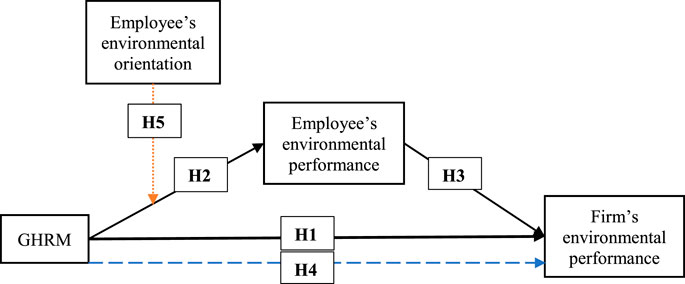
FIGURE 1. Proposed model.
3 Research methodology
3.1 Sampling and data collection
Our study objective is to explore the relationships between constructs. Therefore, we have used a quantitative research approach and convenient random sampling for data collection (Abutabenjeh and Jaradat, 2018; Sileyew, 2019). A closed-ended questionnaire was distributed among employees working in manufacturing companies operating in China. We selected employees and managers because 1) they have important information about their organizations and involve in meetings and decisions regarding environmental concerns (Pham et al., 2020); 3) they are responsible for implementing GHRM practices (Tung et al., 2014); and 4) previous studies employed them in environmental-concern studies (Masri and Jaaron, 2017).
A survey link was created on [www.wjx.cn]. It is one of China’s most popular and widely used questionnaire creation websites (Mei and Brown, 2017). A survey link was shared through widely used social media applications (WeChat, QQ, and Tencent, given that due to the COVID-19 pandemic, this is a widely employed approach nowadays (Qalati et al., 2021). In addition, online surveys have several benefits, such as simple and fast ways to collect data, being cost-effective, and being easy to share (Mei and Brown, 2017; Ostic et al., 2021). The survey link was open for 1 month in March 2022, and each week a reminder was sent to selected participants to complete their response.
We have contacted 450 manufacturing companies’ representatives to participate. Out of 450, only 320 filled questionnaires, 14 have been rejected due to incomplete information; hence 68% is the response rate. Among the 306 participants, 58.5% (179) were male, and 41.5% (127) were females. Nearly 40.2% (123) were aged between 21 and 30 years, followed by 33.3% (102) 21–30 years, and 26.5% (81) over 40 years. In addition, over one-third of them, 38.6% (118), had a master’s degree, followed by a bachelor’s 26.8% (82), basic/secondary level 20.3% (62), and the other 14.4% (44), respectively.
3.2 Measurements
We have adopted well-developed scales from previous studies. All of the scale’s items were ranked on a five-point Likert scale. Typically, GHRM (an independent variable) was measured using six items borrowed from (Dumont et al., 2017). The sample item is “Our organization provides adequate training to promote environmental management as a core value.” Employee environmental performance (a mediator) was assessed using four items adopted from (Paillé and Meija-Morelos, 2019). The sample item is “I comply with environmental regulations.” A firm’s environmental performance (a dependent variable) is assessed using 5 items adopted from (Paillé et al., 2014). The sample item is “Our firm reduced waste and emission from operations.” Employee’s environmental orientation (a moderator) was assessed through a five-item adopted from Etheredge (1999). The sample item is “Firm has an environmental responsibility beyond making a profit.”
3.3 Data analysis
We used a partial least square structural equation modeling (PLS-SEM) technique (PLS algorithm, bootstrapping, and blindfolding) using widely utilized SmartPLS software (Hair et al., 2019; Qalati et al., 2021). In addition, we preferred this software because it is the most comprehensive system of variance (Fang et al., 2021), it does not require a large sample size to run analysis, it is easy to use (Hair et al., 2019), and is recommended for testing complex model (Fan et al., 2021; Qalati et al., 2021; Qalati et al., 2022a; Qalati et al., 2022b). In addition, we employed a statistical package for social sciences for descriptive statistics and several other data cleansing tests such as Harman’s single factors test for common method bias, Kaiser-Meyer-Olkin, and Bartlett’s sample adequacy test for sample adequacy (Li et al., 2020).
3.4 Common method bias
We have used two approaches (Harman’s single factor test and full collinearity) to ensure data are free from bias. Harman’s test result was 31.4% variance, which is far below the acceptable threshold of 50% (Podsakoff et al., 2003). Using the PLS-SEM approach via SmartPLS, researcher suggested the inner variance inflation factor (also called the full collinearity approach). Inner variance inflation factor values retained between 1.307 and 1.67, which is far below the acceptable threshold of 3.33 (Hair et al., 2019; Qalati et al., 2021) (Table 1). Thus, we conclude that the data are satisfactory for the analysis.
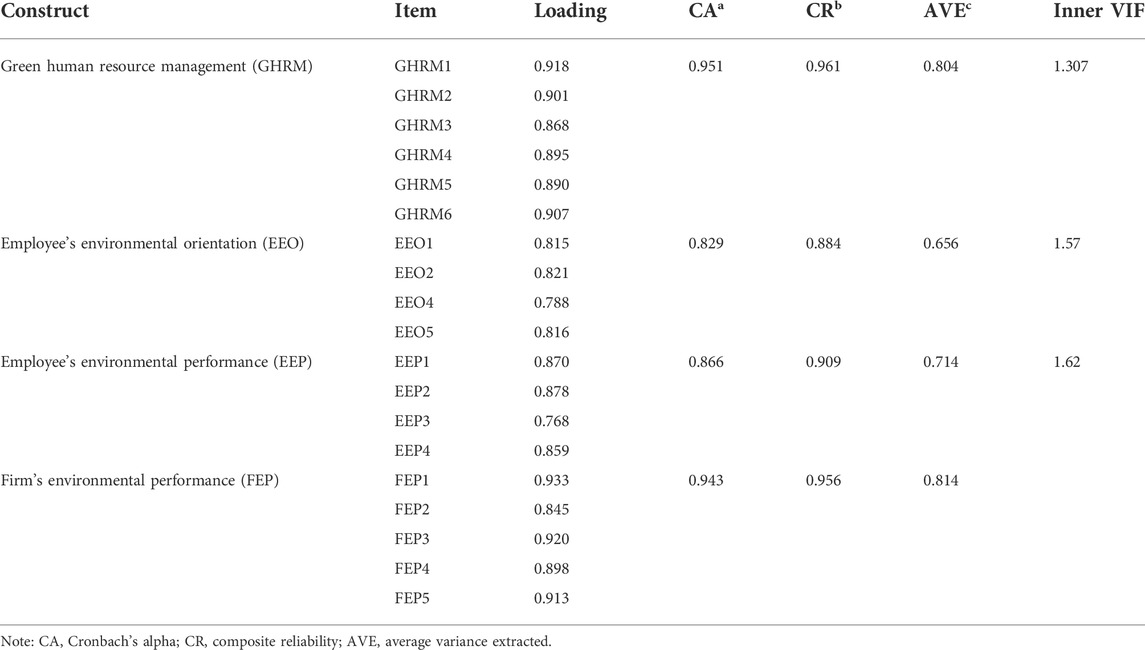
TABLE 1. Measurement model.
4 Results
Henseler et al. (2009) stated that PLS-SEM is a two-step approach that requires the assessment of two models: measurement (outer) and structural (inner).
4.1 Outer model
Typically, we used the PLS algorithm technique using SmartPLS to produce results related to the assessment of the measurement model. The model assessment was performed using reliability, validity, and internal consistency. In particular, Cronbach’s alpha was used to measure reliability and factor loading for inter-item reliability. Typically, all variables CA values were retained between 0.829 and 0.951, and except for employee’s environmental orientation (EEO3), factor loading values were retained between 0.815 and 0.933, which is greater than the 0.7 acceptable thresholds (Hair et al., 2019) (see Table 1). Average variance extraction is used to measure convergent validity. Convergent validity allows determining the degree of contribution of the items in the representation of a construct. The average variance extraction value was retained between 0.646 and 0.814, which is greater than the 0.5 acceptable threshold (Hair et al., 2019) (see Table 1). Last, we used composite reliability to measure internal consistency; the composite reliability of the construct retained between 0.909 and 0.961 greater than the 0.7 acceptable thresholds (Hair et al., 2019) (see Table 1). Therefore, it concluded that constructs have adequate reliability and convergent validity.
For the assessment of discriminant validity, we have used Fornell–Larcker and the heterotrait-monotrait (HTMT) ratio criterion. According to Fornell and Larcker (1981), “the square root of AVE of each variable must exceed the correlations between the constructs and other constructs in the model” (Fang et al., 2021, p. 7). This study result reflects that all bold and italic values retained were greater than inter-correlation variables; thus, it is concluded that variables have adequate validity (see Table 2).

TABLE 2. Discriminant validity using Fornell–Larcker criterion.
Table 3 demonstrates the heterotrait-monotrait ratio results for the assessment of discriminant validity. This ratio is preferable to editors and reviewers because it evidences that there are no multicollinearity issues (Henseler et al., 2015). Our study results were retained between 0.403 and 0.796, which is far from the acceptable threshold of 0.85 (Hair et al., 2019).

TABLE 3. Discriminant validity using heterotrait–monotrait ratio.
4.2 Inner model
Once the assessment of the measurement model is finished, we assess the structural model using paths between the exogenous and endogenous construct. It has been suggested that the explanatory power of the model and cross-validate redundancy can be used to assess the model (Hair et al., 2019; Ostic et al., 2021; Qalati et al., 2021). In particular, we used the PLS algorithm for generating the coefficient of determination (R2) value for the dependent variable and blindfolding techniques for cross-validated redundancy (Q2) value.
We used bootstrapping with 5,000 subsamples to generate the path coefficient and their significance level. Table 4 demonstrates all of the hypotheses (direct, indirect, and moderation) were supported. The decision related to a particular relationship was made based on the criterion (p-value<0.05) two-tailed test (see Table 4; Figure 2). Among direct relationships, GHRM was found to strongly influence employee’s environmental performance (β = 0.516), which means that if there is a single unit change in GHRM, employee’s environmental performance will change by 51.6%. Regarding the explanatory power, Falk and Miller (1992) suggested that it should be ≥0.10 (10%). In our case GHRM and employee environmental performance explained 0.651 (65.1%) variance in the firm’s environmental performance, which is far from the acceptable limit suggested by prior scholars in environmental-based studies (Umrani et al., 2022) (see Table 4; Figure 2). In addition, related to predictive relevance or Q2 it has been proposed that its value must be >0 (Hair et al., 2019). Our study’s predictive relevance value for both employees’ environmental performance (0.289) and firm’s environmental performance (0.525) is greater than the acceptable limit. Therefore, we conclude that our research has substantial predictability. Following Hair et al. (2019); Ostic et al. (2021), Qalati et al. (2021) recent studies suggestions, we used SRMR (standardized root mean square residual) to analyze the goodness of fit. Our research SRMR value is 0.067, which is less than the acceptable threshold of 0.08 (Hair et al., 2019).
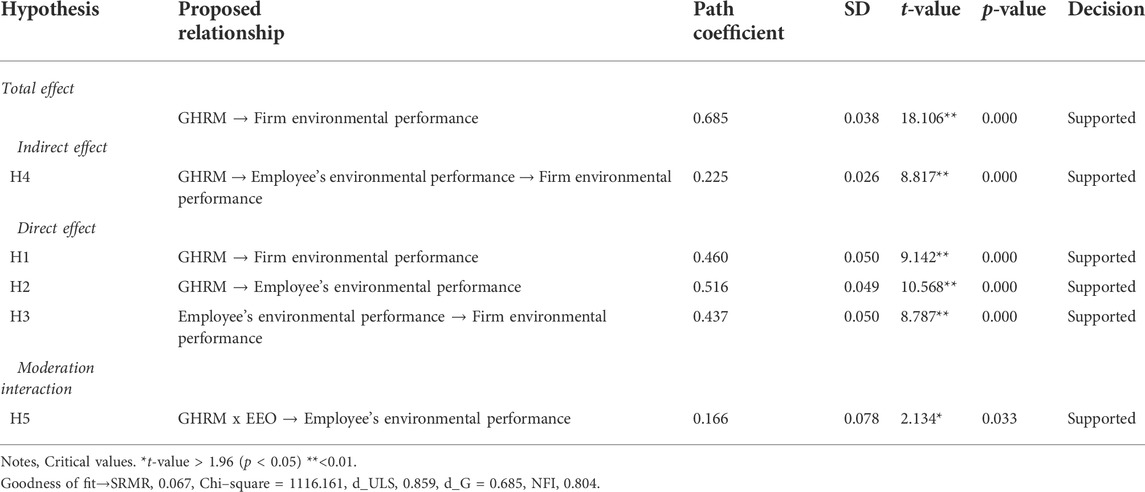
TABLE 4. Hypotheses testing and strength of the model.
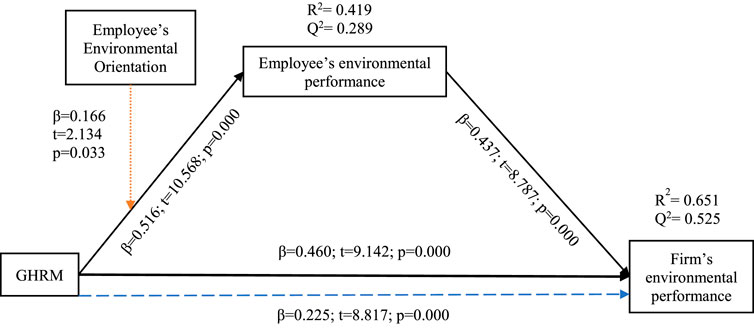
FIGURE 2. Result of PLS-SEM
4.3 Mediation analysis
Regarding the mediating analysis, we used the widely employed (Qalati et al., 2021) and suggested (Hair et al., 2016; Hair et al., 2019) test called variance accounted for (VAF) test. If the VAF value is retained <20, 20–80, and >80%, it is considered as no, partial, and full mediation, respectively (Hair et al., 2019). For the calculation, refer to Table 4.
Our study VAF value is 32.84%; thus, we conclude that an employee’s environmental performance partially mediates the relationship between GHRM and a firm’s overall environmental performance.
4.4 Moderation analysis
Regarding the moderation analysis, we used the f2 measure, and the particular formula is given by Cohen (1988). In addition, the formula given below has been suggested to measure the strength of moderation (Umrani et al., 2022). For the R2 values, refer to Figure 2.
Regarding the f2 values, Cohen (1988) stated that if the value is 0.02, 0.15, and 0.35, it is considered as weak, moderate, and strong, respectively. This research f2 value is 0.0636; thus, we conclude that an employee’s environmental orientation has a weak moderation effect on the link between GHRM and an employee’s environmental performance. In addition, we draft an interaction scope of employee’s environmental orientation on the GHRM–employee’s environmental performance link, which is stronger when employees have high environmental orientation relative to low (see Figure 3).
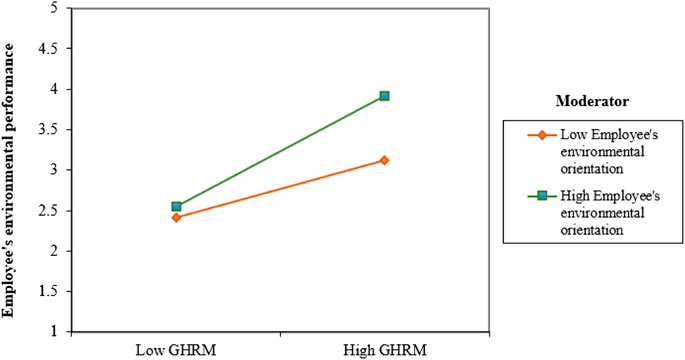
FIGURE 3. Moderation of employee’s environmental orientation.
5 Conclusion
To conclude, this research was conducted in the China’s manufacturing industry. This study has three-fold objectives. The study’s first objective is to explore the direct impact of GHRM on employee and environmental performance. This study evidenced the positive and significant effect of GHRM on employees’ and the firm’s environmental performance. However, it strongly influences employees’ environmental performance (β = 0.516) relative to a firm’s environmental performance (β = 0.460). The study’s second objective is to explore the mediation of employee environmental performance. This study noted that employees’ environmental performance positively and significantly mediated the relationship between GHRM and firms’ environmental performance. Finally, the third objective is to explore the moderating role of environmental orientation. This study showed that employees’ environmental orientation strengthens the link between GHRM and employees’ environmental performance.
5.1 Discussion
Regarding the first hypothesis and objective, this study evidenced a positive and significant effect of GHRM on a firm’s environmental performance (β = 0.460, t = 9.142, p = 0.000 < 0.001); thus, H1 was supported. This result infers that when manufacturing companies provide adequate environment-based training and promote environment-based practices, assess their performance and give rewards on practicing environmental behavior, as well as encourage suggestions related to environmental sustainability, it has a substantial effect on a firm’s overall performance. This finding of the study is consistent with prior work (Ren et al., 2018; Kim et al., 2019; Hameed et al., 2020; Al-Shammari et al., 2022; Umrani et al., 2022) who highlighted the importance of GHRM in different sectors including hospitality and manufacturing and reported the significant correlations.
Regarding the second hypothesis, we have evidenced a positive and significant effect of GHRM on employees’ environmental performance (β = 0.516, t = 10.568, p = 0.000 < 0.001); thus, H2 was supported. This result indicated that GHRM strongly influences employees’ environmental performance relative to a firm’s environmental performance because employees are a central part of the process and company. In addition, they are mainly in charge of executing environment-based practices effectively and efficiently. This finding is in line with the previous study of Pham et al. (2020); Ahmad et al. (2021), who recently endorsed GHRM in the context of employee environmental performance.
Regarding the third hypothesis, our study found a positive and significant effect of employee environmental performance on firm environmental performance (β = 0.437, t = 8.787, p = 0.000 < 0.001); thus, H3 was supported. This result implies that a single unit change in an individual performance led to a 43.7% change in firm overall performance. In addition, this finding state that when employees limit their environmental impact beyond compliance, preserve and mitigate environment-based crises, comply with regulation related to environmental sustainability, and educate their colleagues, peers, firms can reduce waste and emission, save energy, reduce purchases of non-renewable components, chemical, and materials, and reduce the risk of environment-based accidents. This finding supported the work of Hameed et al. (2020); Amjad et al. (2021), which highlighted the importance of employee environmental performance, and Sadikoglu and Zehir (2010) evidenced the significant impact of employee performance on firm performance.
Regarding the mediation hypothesis and second objective, this study evidenced a positive and significant partial mediation of employees’ environmental performance between GHRM and the firm’s environmental performance (β = 0.225, t = 8.817, p = 0.000 < 0.001); thus, H4 was supported. This result reveals that because employees are a central part of the processes and a center in charge of executing the suggested policies and practices if they implement effectively, companies can improve their performance; another case of their ineffectiveness would increase the cost of the company in terms of adopting and implementing practices. This finding evidences the mediating role of employee’s environmental performance, which became called and supported by Amjad et al. (2021).
Related to the final moderation hypothesis and objective, our study witnessed a positive and significant intersecting effect of employee’s environmental orientation on the GHRM–employee’s environmental performance relationship (β = 0.166, t = 2.134, p = 0.033 < 0.05); thus, H5 was supported. This result infers that the effect of GHRM on employee environmental performance will be stronger when there is more involvement of employee environmental orientation. In addition, it implies that if individuals have a low level of orientation, GHRM will have little impact on employee performance. Therefore, we proposed that environment-concern companies must engage employees’ orientation to enhance their performance. This finding is supported by Paillé et al. (2014); Chaudhary (2019) work.
5.2 Theoretical implication
This study had several theoretical implications. First, even though several studies evidenced the importance of GHRM activities and their impacts on firm environmental performance in the context of hospitality (Kim et al., 2019; Pham et al., 2020; Umrani et al., 2022), education (Gilal et al., 2019), supply chain (Agyabeng-Mensah et al., 2020), and textile sector (Ahmad et al., 2021). However, a few studies observed its effect on manufacturing companies’ performance (Roscoe et al., 2019; Muisyo et al., 2022). In addition, except for Amjad et al. (2021), no other study had simultaneously explored the effect of GHRM on employees and firm environmental performance. Thus, our research takes one step ahead to support the existing literature and investigate the GHRM effects on employee and firm environmental performance in the context of Chinese manufacturing companies.
Second, scholars explored evidence of the significant effect of GHRM on employee environmental performance (Amjad et al., 2021) and its effect on firm environmental performance (Ahmad et al., 2021). To the best of scholar knowledge, no study reported the mediation of employee environmental performance, especially between GHRM and firm environmental performance. In this way, our study filled this gap and contributed to the mediating role of employee environmental performance. This research witnessed the GHRM has a positive and significant influence on employee performance; when employee effectively implements environmental-concerns practices, it improves the firm environmental performance in the form of a decrease in the purchase of non-renewable products, reduce waste and carbon emission.
Last, many scholars highlighted the importance of individual orientations toward environmental sustainability (Banerjee et al., 2003; Paillé et al., 2014; Bustamante et al., 2020) and explored its moderation in the link between strategic human resource management and organizational citizenship behavior toward the environment and (Chaudhary, 2019) on the link between GHRM and job pursuit intention. To the best of our knowledge, no single study has explored the moderating role of employee environmental orientation in the link between GHRM and employee environmental performance. Our study evidenced that when the employee value is in line with the environmental-concerns organization, they will likely perform more in the form of incorporating GHRM practices. Following this assumption, we observed that the effect of GHRM on employee environmental performance would be stronger when there is more involvement in employee environmental orientation.
5.3 Practical implications
This research also has implications for practitioners.
First, the positive and significant impact of GHRM practices suggests that to improve the employees and firm environmental performance, managers, and companies operating in the manufacturing sector must incorporate GHRM practices, encourage employees to implement those practices, promote green behavior, and increase environmental awareness and knowledge so that employees engagement in environmental concerns activities can be improved leading to enhance firm overall performance and environmental sustainability. In addition, GHRM activities not only improve environmental performance but also lead to enhancing organizational reputation and attractiveness. Henceforth, we propose manufacturing companies establish policies and strategies that could improve the adoption and implementation of GHRM activities.
Second, the positive effect of employee environmental performance suggests that the successful implementation of the GHRM system, green practices, and their practical implementation and improvement of the firm environment are possible because of employees. Therefore, organizations must give importance to employees’ environmental performance, which directly and indirectly increases firms’ environmental performance. In addition, employees’ concerns about the environment could be a competitive advantage for the company, as it requires less training and cost to encourage them to adopt green practices relative to competitors. In addition, they will act as brand ambassadors for the company and spread positive word of mouth to potential applicants to the company.
Third, the employee environmental performance mediating role suggests that it mediated the direct link between GHRM and the firm environmental performance. This result indicates that practitioners emphasize employee performance as it improves overall firm environmental performance. Typically, it highlights to managers that employees are a central part of the processes and a center in charge of executing effective and ineffective GHRM practices. If they implement correctly company can improve its performance in the form of profits and increase its reputation and attractiveness. In the case of failure, it will increase costs and losses.
Finally, the significant moderating role of employee environmental orientation results suggests that organizations must respect and improve their understanding of environmental orientation, which enables organizations to enhance the effect of GHRM on their employees’ performance. It furthers that the managers must give importance to the values of current and protentional employees as when their values are consistent with the organizational values, they exert more effort.
5.4 Limitations and future research
Our research also had limitations that the upcoming scholar could cash to advance the green literature. First, this research is focused on the manufacturing companies operating in China; therefore, we invite scholars to test the proposed model in different industries such as hospitality, education, and telecommunication in China and other developed and developing countries. In addition, future studies could replicate the model to perform a comparative analysis. The quantitative approach and data collection via an online survey could be another study limitation. Thus, we suggest that future researchers employ qualitative, mixed-method, and field surveys to determine which green practices most significantly influence employees’ environmental performance. Testing moderation of employee environmental orientation only on the GHRM–employee environmental performance could be a third limitation of the study. Thus, we suggest the upcoming scholars investigate its moderation on both path GHRM–employee environmental and GHRM–firm environmental performance. Finally, this study has used a single mediator and moderator. However, there could be many constructs that play a mediating and moderation role. Thus, we suggest future studies on employee engagement, green innovation, psychological behaviors (as mediators) and green culture, subjective environmental norms, and individual employee factors (as moderators) between the proposed relationships.
Data availability statement
The raw data supporting the conclusion of this article will be made available by the authors, without undue reservation.
Ethics statement
The studies involving human participants were reviewed and approved by this study were carried out in accordance with the recommendation of the ethical principles of psychologists and code of conduct by the American Psychological Association (APA). All participants gave written informed consent in accordance with the Declaration of Helsinki. The employees’ councils approved the protocol of the participating organizations and the ethics committee of the Hubei University of Arts and Science, China. The patients/participants provided their written informed consent to participate in this study.
Author contributions
All authors listed have made a substantial, direct, and intellectual contribution to the work and approved it for publication.
Conflict of interest
The authors declare that the research was conducted in the absence of any commercial or financial relationships that could be construed as a potential conflict of interest.
Publisher’s note
All claims expressed in this article are solely those of the authors and do not necessarily represent those of their affiliated organizations, or those of the publisher, the editors, and the reviewers. Any product that may be evaluated in this article, or claim that may be made by its manufacturer, is not guaranteed or endorsed by the publisher.
References
Aboramadan, M. (2022). The effect of green HRM on employee green behaviors in higher education: The mediating mechanism of green work engagement. Int. J. Organ. Analysis 30 (1), 7–23. doi:10.1108/IJOA-05-2020-2190
Abutabenjeh, S., and Jaradat, R. (2018). Clarification of research design, research methods, and research methodology: A guide for public administration researchers and practitioners. Teach. Public Adm. 36 (3), 237–258. doi:10.1177/0144739418775787
Agyabeng-Mensah, Y., Ahenkorah, E., Afum, E., Nana Agyemang, A., Agnikpe, C., and Rogers, F. (2020). Examining the influence of internal green supply chain practices, green human resource management and supply chain environmental cooperation on firm performance. Supply Chain Manag. Int. J. 25 (5), 585–599. doi:10.1108/SCM-11-2019-0405
Ahmad, N., Ullah, Z., Arshad, M. Z., Kamran, H. w., Scholz, M., and Han, H. (2021). Relationship between corporate social responsibility at the micro-level and environmental performance: The mediating role of employee pro-environmental behavior and the moderating role of gender. Sustain. Prod. Consum. 27, 1138–1148. doi:10.1016/j.spc.2021.02.034
Al-Shammari, A. S., Alshammrei, S., Nawaz, N., and Tayyab, M. (2022). Green human resource management and sustainable performance with the mediating role of green innovation: A perspective of new technological era. Front. Environ. Sci. 10, 901235. doi:10.3389/fenvs.2022.901235
Amjad, F., Abbas, W., Zia-Ur-Rehman, M., Baig, S. A., Hashim, M., Khan, A., et al. (2021). Effect of green human resource management practices on organizational sustainability: The mediating role of environmental and employee performance. Environ. Sci. Pollut. Res. Int. 28 (22), 28191–28206. doi:10.1007/s11356-020-11307-9
Appelbaum, E., Bailey, T., Berg, P., and Kalleberg, A. L. (2000). Manufacturing advantage: Why high-performance work systems pay off. Cornell University Press.
Banerjee, S. B., Iyer, E. S., and Kashyap, R. K. (2003). Corporate environmentalism: Antecedents and influence of industry type. J. Mark. 67 (2), 106–122. doi:10.1509/jmkg.67.2.106.18604
Blumberg, M., and Pringle, C. D. (1982). The missing opportunity in organizational research: Some implications for a theory of work performance. Acad. Manage. Rev. 7 (4), 560–569. doi:10.5465/amr.1982.4285240
Bustamante, S., Ehlscheidt, R., Pelzeter, A., Deckmann, A., and Freudenberger, F. (2020). The effect of values on the attractiveness of responsible employers for young job seekers. J. Hum. Values 27 (1), 27–48. doi:10.1177/0971685820973522
Chaudhary, R. (2018). Can green human resource management attract young talent? An empirical analysis. Evidence-based HRM a Glob. Forum Empir. Scholarsh. 6 (3), 305–319. doi:10.1108/EBHRM-11-2017-0058
Chaudhary, R. (2019). Green human resource management and job pursuit intention: Examining the underlying processes. Corp. Soc. Responsib. Environ. Manag. 26 (4), csr.1732–937. doi:10.1002/csr.1732
Choe, J. Y., and Kim, S. (2018). Effects of tourists’ local food consumption value on attitude, food destination image, and behavioral intention. Int. J. Hosp. Manag. 71, 1–10. doi:10.1016/j.ijhm.2017.11.007
Cohen, J. (1988). Statistical power analysis for the behavioral sciences. Hillsdale, NJ: Lawrence Erlbaum Associates, 20–26.
Dumont, J., Shen, J., and Deng, X. (2017). Effects of green HRM practices on employee workplace green behavior: The role of psychological green climate and employee green values. Hum. Resour. Manage. 56 (4), 613–627. doi:10.1002/hrm.21792
Etheredge, J. M. (1999). The perceived role of ethics and social responsibility: An alternative scale structure. J. Bus. Ethics 18 (1), 51–64. doi:10.1023/A:1006077708197
Fan, M., Huang, Y., Qalati, S. A., Shah, S. M. M., Ostic, D., and Pu, Z. (2021). Effects of information overload, communication overload, and inequality on digital distrust: A cyber-violence behavior mechanism. Front. Psychol. 12, 643981. doi:10.3389/fpsyg.2021.643981
Fang, G. G., Qalati, S. A., Ostic, D., Shah, S. M. M., and Ali Mirani, M. (2021). Effects of entrepreneurial orientation, social media, and innovation capabilities on SME performance in emerging countries: A mediated–moderated model. Technol. Analysis Strategic Manag., 1–13. doi:10.1080/09537325.2021.1957816
Fornell, C., and Larcker, D. F. (1981). Structural equation models with unobservable variables and measurement error: Algebra and statistics. J. Mark. Res. 18 (3), 382–388. doi:10.1177/002224378101800313
Gilal, F. G., Ashraf, Z., Gilal, N. G., Gilal, R. G., and Chaana, N. A. (2019). Promoting environmental performance through green human resource management practices in higher education institutions: A moderated mediation model. Corp. Soc. Responsib. Environ. Manag. 26 (6), csr.1835–1590. doi:10.1002/csr.1835
Groening, C., Sarkis, J., and Zhu, Q. (2018). Green marketing consumer-level theory review: A compendium of applied theories and further research directions. J. Clean. Prod. 172, 1848–1866. doi:10.1016/j.jclepro.2017.12.002
Hair, J. F., Hult, G. T. M., Ringle, C. M., and Sarstedt, M. (2016). A primer on partial least squares structural equation modeling (PLS-SEM). Sage publications.
Hair, J. F., Risher, J. J., Sarstedt, M., and Ringle, C. M. (2019). When to use and how to report the results of PLS-SEM. Eur. Bus. Rev. 31 (1), 2–24. doi:10.1108/EBR-11-2018-0203
Haldorai, K., Kim, W. G., and Garcia, R. L. F. (2022). Top management green commitment and green intellectual capital as enablers of hotel environmental performance: The mediating role of green human resource management. Tour. Manag. 88, 104431. doi:10.1016/j.tourman.2021.104431
Hameed, Z., Khan, I. U., Islam, T., Sheikh, Z., and Naeem, R. M. (2020). Do green HRM practices influence employees' environmental performance? Int. J. Manpow. 41 (7), 1061–1079. doi:10.1108/IJM-08-2019-0407
Hansen, T., Sørensen, M. I., and Eriksen, M.-L. R. (2018). How the interplay between consumer motivations and values influences organic food identity and behavior. Food Policy 74, 39–52. doi:10.1016/j.foodpol.2017.11.003
Henseler, J., Ringle, C. M., and Sarstedt, M. (2015). A new criterion for assessing discriminant validity in variance-based structural equation modeling. J. Acad. Mark. Sci. 43 (1), 115–135. doi:10.1007/s11747-014-0403-8
Henseler, J., Ringle, C. M., and Sinkovics, R. R. (2009). “The use of partial least squares path modeling in international marketing,”. New challenges to international marketing. Editors R. R. Sinkovics, and P. N. Ghauri (Emerald Group Publishing Limited), 20, 277–319.
Ibrahim, R., Boerhannoeddin, A., and Kazeem Kayode, B. (2017). Organizational culture and development: Testing the structural path of factors affecting employees’ work performance in an organization. Asia Pac. Manag. Rev. 22 (2), 104–111. doi:10.1016/j.apmrv.2016.10.002
Jum'a, L., Zimon, D., Ikram, M., and Madzik, P. (2022). Towards a sustainability paradigm; the nexus between lean green practices, sustainability-oriented innovation and Triple Bottom Line. Int. J. Prod. Econ. 245, 108393. doi:10.1016/j.ijpe.2021.108393
Khan, K., Shams, M. S., Khan, Q., Akbar, S., and Masud Niazi, M. (2022). Relationship among green human resource management, green knowledge sharing, green commitment, and green behavior: A moderated mediation model. Front. Psychol. 13, 924492. doi:10.3389/fpsyg.2022.924492
Kim, Y. J., Kim, W. G., Choi, H.-M., and Phetvaroon, K. (2019). The effect of green human resource management on hotel employees’ eco-friendly behavior and environmental performance. Int. J. Hosp. Manag. 76, 83–93. doi:10.1016/j.ijhm.2018.04.007
Kramar, R. (2014). Beyond strategic human resource management: Is sustainable human resource management the next approach? Int. J. Hum. Resour. Manag. 25 (8), 1069–1089. doi:10.1080/09585192.2013.816863
Latan, H., Chiappetta Jabbour, C. J., Lopes de Sousa Jabbour, A. B., Wamba, S. F., and Shahbaz, M. (2018). Effects of environmental strategy, environmental uncertainty and top management's commitment on corporate environmental performance: The role of environmental management accounting. J. Clean. Prod. 180, 297–306. doi:10.1016/j.jclepro.2018.01.106
Li, W., Qalati, S. A., Khan, M. A. S., Kwabena, G. Y., Erusalkina, D., and Anwar, F. (2020). Value Co-creation and growth of social enterprises in developing countries: Moderating role of environmental dynamics. Entrepreneursh. Res. J. 0, 0359. doi:10.1515/erj-2019-0359
Masa'deh, R. e., Obeidat, B. Y., and Tarhini, A. (2016). A Jordanian empirical study of the associations among transformational leadership, transactional leadership, knowledge sharing, job performance, and firm performance. J. Manag. Dev. 35 (5), 681–705. doi:10.1108/JMD-09-2015-0134
Masri, H. A., and Jaaron, A. A. M. (2017). Assessing green human resources management practices in Palestinian manufacturing context: An empirical study. J. Clean. Prod. 143, 474–489. doi:10.1016/j.jclepro.2016.12.087
Mei, B., and Brown, G. T. L. (2017). Conducting online surveys in China. Soc. Sci. Comput. Rev. 36 (6), 721–734. doi:10.1177/0894439317729340
Muisyo, P. K., Qin, S., Ho, T. H., and Julius, M. M. (2022). The effect of green HRM practices on green competitive advantage of manufacturing firms. J. Manuf. Technol. Manag. 33 (1), 22–40. doi:10.1108/JMTM-10-2020-0388
Nisar, Q. A., Akbar, A., Naz, S., Haider, S. A., Poulova, P., and Hai, M. A. (2022). Greening the workforce: A strategic way to spur the environmental performance in the hotel industry. Front. Environ. Sci. 10, 841205. doi:10.3389/fenvs.2022.841205
Ostic, D., Qalati, S. A., Barbosa, B., Shah, S. M. M., Galvan Vela, E., Herzallah, A. M., et al. (2021). Effects of social media use on psychological well-being: A mediated model. Front. Psychol. 12, 678766. doi:10.3389/fpsyg.2021.678766
Paillé, P., Chen, Y., Boiral, O., and Jin, J. (2014). The impact of human resource management on environmental performance: An employee-level study. J. Bus. Ethics 121 (3), 451–466. doi:10.1007/s10551-013-1732-0
Paillé, P., and Meija-Morelos, J. H. (2019). Organisational support is not always enough to encourage employee environmental performance. The moderating role of exchange ideology. J. Clean. Prod. 220, 1061–1070. doi:10.1016/j.jclepro.2019.02.192
Pham, N. T., Tučková, Z., and Chiappetta Jabbour, C. J. (2019). Greening the hospitality industry: How do green human resource management practices influence organizational citizenship behavior in hotels? A mixed-methods study. Tour. Manag. 72, 386–399. doi:10.1016/j.tourman.2018.12.008
Pham, N. T., Vo Thanh, T., Tučková, Z., and Thuy, V. T. N. (2020). The role of green human resource management in driving hotel’s environmental performance: Interaction and mediation analysis. Int. J. Hosp. Manag. 88, 102392. doi:10.1016/j.ijhm.2019.102392
Podsakoff, P. M., MacKenzie, S. B., Lee, J.-Y., and Podsakoff, N. P. (2003). Common method biases in behavioral research: A critical review of the literature and recommended remedies. J. Appl. Psychol. 88 (5), 879–903. doi:10.1037/0021-9010.88.5.879
Qalati, S. A., Yuan, L. W., Khan, M. A. S., and Anwar, F. (2021). A mediated model on the adoption of social media and SMEs’ performance in developing countries. Technol. Soc. 64, 101513. doi:10.1016/j.techsoc.2020.101513
Qalati, S. A., Ostic, D., Shuibin, G., and Mingyue, F. (2022a). A mediated–moderated model for social media adoption and small and medium-sized enterprise performance in emerging countries. MDE. Manage. Decis. Econ. 43 (3), 846–861. doi:10.1002/mde.3422
Qalati, S. A., Ostic, D., Sulaiman, M. A. B. A., Gopang, A. A., and Khan, A. (2022b). Social media and SMEs’ performance in developing countries: Effects of technological-organizational-environmental factors on the adoption of social media. SAGE Open 12 (2), 215824402210945. doi:10.1177/21582440221094594
Rehman, M. A., Seth, D., and Shrivastava, R. L. (2016). Impact of green manufacturing practices on organisational performance in Indian context: An empirical study. J. Clean. Prod. 137, 427–448. doi:10.1016/j.jclepro.2016.07.106
Ren, S., Tang, G., and Jackson, S. E. (2018). Green human resource management research in emergence: A review and future directions. Asia Pac. J. Manag. 35 (3), 769–803. doi:10.1007/s10490-017-9532-1
Richard, E., and Emerson, R. (1976). Social exchange theory. Annu. Rev. Sociol. 2 (1), 335–362. doi:10.1146/annurev.so.02.080176.002003
Roscoe, S., Subramanian, N., Jabbour, C. J. C., and Chong, T. (2019). Green human resource management and the enablers of green organisational culture: Enhancing a firm's environmental performance for sustainable development. Bus. Strategy Environ. 28 (5), 737–749. doi:10.1002/bse.2277
Sadikoglu, E., and Zehir, C. (2010). Investigating the effects of innovation and employee performance on the relationship between total quality management practices and firm performance: An empirical study of Turkish firms. Int. J. Prod. Econ. 127 (1), 13–26. doi:10.1016/j.ijpe.2010.02.013
Schneider, B. (1987). The people make the place. Pers. Psychol. 40 (3), 437–453. doi:10.1111/j.1744-6570.1987.tb00609.x
Shafaei, A., Nejati, M., and Mohd Yusoff, Y. (2020). Green human resource management. Int. J. Manpow. 41 (7), 1041–1060. doi:10.1108/IJM-08-2019-0406
Shen, J., Dumont, J., and Deng, X. (2016). Employees’ perceptions of green HRM and non-green employee work outcomes: The social identity and stakeholder perspectives. Group & Organ. Manag. 43 (4), 594–622. doi:10.1177/1059601116664610
Singh, S. K., Chen, J., Del Giudice, M., and El-Kassar, A. N. (2019). Environmental ethics, environmental performance, and competitive advantage: Role of environmental training. Technol. Forecast. Soc. Change 146, 203–211. doi:10.1016/j.techfore.2019.05.032
Tanova, C., and Bayighomog, S. W. (2022). Green human resource management in service industries: The construct, antecedents, consequences, and outlook. Serv. Industries J. 42 (5-6), 412–452. doi:10.1080/02642069.2022.2045279
Tseng, S.-M., and Huang, J.-S. (2011). The correlation between Wikipedia and knowledge sharing on job performance. Expert Syst. Appl. 38 (5), 6118–6124. doi:10.1016/j.eswa.2010.11.009
Tung, A., Baird, K., and Schoch, H. (2014). The relationship between organisational factors and the effectiveness of environmental management. J. Environ. Manag. 144, 186–196. doi:10.1016/j.jenvman.2014.05.025
Keywords: GHRM, employee environmental performance, firm environmental performance, employee environmental orientation, PLS-SEM
Citation: Ren Z and Hussain RY (2022) A mediated–moderated model for green human resource management: An employee perspective. Front. Environ. Sci. 10:973692. doi: 10.3389/fenvs.2022.973692
Received: 20 June 2022; Accepted: 09 August 2022;
Published: 06 September 2022.
Edited by:
Alex Oriel Godoy, Universidad del Desarrollo, ChileReviewed by:
Muhammad Ikram, Al Akhawayn University, MoroccoMaosheng Yang, Renmin University of China, China
Copyright © 2022 Ren and Hussain. This is an open-access article distributed under the terms of the Creative Commons Attribution License (CC BY). The use, distribution or reproduction in other forums is permitted, provided the original author(s) and the copyright owner(s) are credited and that the original publication in this journal is cited, in accordance with accepted academic practice. No use, distribution or reproduction is permitted which does not comply with these terms.
*Correspondence: Rana Yassir Hussain, eWFzc2lyLmh1c3NhaW5AdWUuZWR1LnBr