 Zhi Zhang
 Wei Kang Fu1
- 1School of Economics and Management, Nantong University, Nantong, China
- 2College of Business, Nanjing University, Nanjing, China
With the huge dividends released by the vigorous development of the digital economy, China urgently demand a major strategic transformation from extensive development to green development. The 14th five-year plan period will require China’s green development to firmly create new advantages in the growth of the digital economy. In order to investigate the impact of the digital economy on the green economy, this paper has utilized a panel data model to analyze data from 30 Chinese provinces between 2015 and 2020. Findings from the research have suggested that the digital economy is helpful for advancing the green economy, with the Eastern region having a bigger influence than the central region and the center region having a greater influence than the Western region. Industrial structure and technological innovation are important channels for digital economy to promote green development. According to the aforementioned conclusion, we have proposed the following suggestion: China should actively advance the digital economy, encourage regional coordination in growth, continuously improve the industrial structure and boost technical innovation.
1 Introduction
Rapid industrialization and urbanization have increased social production significantly since China’s reform and opening up, but they have also shown a severe influence on the ecological environment, creating more serious ecological environmental issues in China. The digital economy is a crucial tool for easing present environmental and resource pressure (Meng and Zhao, 2022). The Chinese government made it very apparent that the country’s and its citizens’ way of life depends on the ecological environment. This research aims to support the need for and create a fresh scientific and methodological method for achieving the “green” development of the digital economy (Adarina et al., 2019).
Digital and green economies are still being studied in their infancy. For example, Liu et al. (2022b) suggested that the urban green economy will be impacted by the digital economy, which is essential for promoting long-term economic prosperity. We can also get some enlightening points from the related research on the relationship between the digital economy and carbon emissions, but this issue is still controversial: The first argument is that the digital economy encourages the reduction of emissions (Ben et al., 2021). China’s economic development is gradually changing from factor driven to efficiency driven. Taking the Internet as a bridge, the digital economy connects products from the whole process of production, distribution, exchange and consumption, reducing transaction costs and information search costs, and becoming a key driving force for improving the efficiency of the green economy (Li, 2019). Primarily because information technology’s substitution effect fosters technical advancement, enhances energy efficiency, and lowers carbon emissions (Ulucak and Khan, 2020). The second argument is that the digital economy will lead to higher carbon emissions (Avom et al., 2020). According to China’s National Energy Administration, the application of information technology necessitates significant equipment investment, and its operation will result in significant carbon emissions and disposal. Information technology is also thought to act as a key role in the environmental pollution rebound effect (range, etc., 2019). Based on the data of China’s national energy administration, the power consumption of China’s data centers exceeded 200 billion kWh in 2020, accounting for 2.7% of the country’s total power consumption, a record high. Additionally, a rise in carbon emissions has been brought on by the cost impact of information technology. The use of information technology has decreased manufacturing costs, causing a quick rise in commodities and demand as well as a worsening of carbon emissions (Liu et al., 2022a). The third argument is that there is not just one way that the digital economy is promoting (or inhibiting) carbon emissions (Khan et al., 2020). According to this theory, there are both favorable and unfavorable correlations between carbon emissions and the digital economy. For instance, Razzaq et al. (2021) discovered a strong correlation between a nation’s emission level and the caliber of its technological innovation to enhance carbon emissions. Information technology can only considerably reduce carbon emissions in BRICS nations at lower emission quantiles, according to Chien et al. (2021) and Chen et al. (2019).. The fourth argument that there is no definitive link between CO2 emissions and the digital economy (Amri et al., 2019). The rationale could be that numerous constraints limit the connection between carbon emissions and the digital economy and that these factors cooperate to produce a negligible relationship between the two.
At the same time, China’s 14th five-year plan aims to advance industrial digitalization and digital industrialization while fostering the growth of the digital economy, realizing the close fusion and growth of the real economy and the digital economy, and establishing a highly competitive digital industry cluster on a global scale. New information technologies have given rise to new goods, models, and industries, which not only have an impact on China’s economic development model but also on the quality of its ecological environment. Although big data and other information technologies have diverse effects on people’s production and daily lives, there are few research on the impact of the digital economy on China’s economic green transformation mechanism. Taking into account the good and negative effects of the digital economy on the green economy, can the green economy as a whole expand with the aid of the digital economy? If yes, how are the specific ways to promote it?
Firstly, this paper uses the entropy weight method to comprehensively select 11 indicators related to the digital economy and establishes a more comprehensive digital economy index system. In terms of green economic measurement, input-output variables are different from previous studies, and the measurement method is the SBM-ML index method. Secondly, this paper not only uses panel regression analysis to investigate the overall effect of the digital economy on the green economy, but also divides 30 provinces into Eastern, central, and Western regions, and discusses the heterogeneous impact of the digital economy on the green economy from the regional level. Finally, using the mediating effect model, the routes of the impact of the digital economy on the green economy are explored from the viewpoint of industrial design and technological innovation.
2 Literature review
2.1 Digital economy
In terms of how the digital economy is measured, many scholars have also given different studies. Fan and Wu (2021) select the data of each province from 2014 to 2017 and evaluate the comprehensive index of the digital economy in each province from four aspects: capital use, software profit, technology leading, and innovation. They find that the level of the digital economy in these provinces develops rapidly, but the development speed is quite different, and propose a three-stage method to promote the development of the digital economy. Wang and She (2021) selected the data of each province from 2015 to 2019 and selected three indicators to establish a system to study the digital economy. The conclusion is that China still focuses on the short-term development of the digital economy and does not realize the potential crisis. The level of the digital economy can be divided into three levels according to the level of cities. Liu et al. (2020) selected the provincial data from 2015 to 2018. Additionally, they conducted three assessments of the digital economy and came to the conclusion that it expanded quickly in general. But the development speed of the eastern region was not consistent with that of the Western region. The eastern region had a higher level of development than the Western region. The influencing factors include the economy, foreign capital, and government. Of course, not only the national level of digital economy research but there are also scholars specializing in local areas. Ge et al. (2020) selected data from 2011 to 2019, but selected provinces located in central China. The conclusion is that the digital economy in some provinces in central China has yet to be developed, and the development is inconsistent among localities. The influencing factors include technology and scale. Zhong and Mao (2020) chose just the 2016 data for analysis and Yangtze River cities as their study objects. The Yangtze River’s cities have a relatively low level of development, albeit levels vary between cities, according to the result. The influencing factors include facilities, industries, and policies. It can be seen that although scholars have chosen different years and adapt different evaluation methods, their conclusions are consistent, that is, whether local or overall, the development speed of digital economy is inconsistent, but the overall is improving.
2.2 Green economy
“Green economy” was first proposed by economists Pearce et al. (1989). It advocates that economy and environment are mutually affected, and an “affordable economy” should be constructed from both social and ecological aspects. In its official proposal, UNEP 2011 defined the term “green economy” as “a low-carbon, resource-efficient, and socially inclusive economy that may increase human well-being and social fairness, while considerably lowering environmental threats and ecological scarcity.” The growth of the green economy in China has also been extensively researched. Chai et al. (2021) selected the data of each province from 2007 to 2016 to measure GTFP and concluded that the factors affecting the green economy include foreign investment and institutions. Yin and Lv (2021) selected the data of provinces from 2005 to 2018 to evaluate the green economy and concluded that the overall green economy was developing, but the development speed of Eastern and Western regions was inconsistent, and the green economy level of Eastern regions was higher than that of Western regions. Zhang (2021) selected the provincial data from 2013 to 2017 and selected 20 indicators to evaluate the level of the green economy. The conclusion was that the level of each province fluctuated every year, but the overall development was upward, and the development speed among localities was also different. Xu et al. (2021) selected the data of provinces from 2013 to 2018 and used the index system method to assess the degree of the green economy. The conclusion was that the overall level of the green economy was improving, and the influencing factors included capital and education. And scholars research on the impact of environmental regulation on investment and development of enterprises. Some studies have conducted that strict environmental control would not only increase production costs, but also reduce the competitiveness of enterprises (Wang et al., 2021). Thus, environmental regulation has a negative impact on productivity and hinders the development of green economy. Wu and Zhang (2022) selected the data of provinces from 2008 to 2019 and used GTFP to represent the green economy. The conclusion was that while the overall level of the green economy was rising annually, the rates of development in the Eastern and Western regions varied, and the Eastern regions’ level of the green economy was higher than that of the Western regions. Wu et al. (2020) chose the data of each province from 2008 to 2017 for regional studies and used a new model, thus concluding that China’s green economy is still in the process of development with relatively slow speed and there is a significant disparity in development progress between regions. Tang et al. (2021) selected the data of coastal provinces from 2006 to 2016 to evaluate the Marine green economy. The findings demonstrate that China’s marine green economy is gradually rising with industry, science and technology as key determinants. Guo et al. (2022a) selected data from 2005 to 2019 and selected cities along the Yangtze River as objects. This study concludes that the development level of green economy in cities along the Yangtze River is low, and the development level of each city varies greatly, showing three levels: the lower middle level and the upper level. To sum up, like the digital economy, the green economy is also developing on the whole, but whether it is regional or overall, there are internal inconsistencies in the speed of development.
2.3 Digital economy and green economy
The focus of earlier studies was on the regional impacts of the digital economy on the green economy, and some academics regard GTFP as the standard for the green economy. Wu et al. (2022) chose data from each province between 2006 and 2019 and investigated how the digital economy affected GTFP. The conclusion is that the adoption of the digital economy can contribute to an increase in GTFP and will affect not only the local economic climate but also other regions with the impact increasing with the amount of digitalization. Xiao and Jiang (2021a) estimated the GTFP in the industry using data from each region from 2005 to 2018. The conclusion is that industrial GTFP can be increased by marketization, industrial upgrading and manpower augmentation and can be promoted by the digital economy. They also looked into how the regional GTFP was affected by the digital economy. Data from provinces between 2011 and 2017 were used by Xiao and Jiang (2021b) to investigate how the digital economy has affected GTFP. According to the report, the digital economy’s innovation and energy efficiency contribute to an increase in GTFP. The impact of the Eastern region is distinct from that of the western region, which is less distinct. More researchers are looking into how the internet economy affects the green economies of significant cities. Zhang et al. (2018) conducted an analysis from the viewpoint of cities. They investigated the connection between urban ecology and technological advancement with the conclusion that the eastern region has experienced a higher impact from technological advancement on urban ecology than the western region. Sun and Hu (2021) examined the effects of the digital economy on the environment using data collected from cities between 2011 and 2018. The development of the digital economy, specifically through modernizing industries, can greatly reduce environmental pollution, according to the findings. Additionally, there are regional variations; economically impoverished places have a higher impact than economically developed ones. To examine the connection between the digital economy and urban ecology, Liang et al. (2021) chose urban data from 2011 to 2018. The study’s findings suggest that by modernizing the industrial structure, the digital economy can enhance the cities environment. Additionally, the impact varies by location, with the eastern region having the greatest influence, the central region having a smaller impact, and the Western region has the least influence. Wei et al. (2022) chose city data from 2004 to 2016 to examine the connection between urban green innovation and the digital economy. The findings demonstrate that the promotion of green innovation in cities is aided by the digital economy. The study also discovers that green technology can lessen environmental pollution, specifically through the impacts of regional economic aggregation and financial structure. Wang et al. (2018) proper energy policies can effectively improve business profit ratios and stimulate green technological progress in enterprises. Guo et al. (2022b) chose urban data for the years 2011 through 2019 to study the connection between the urban industrial structure and the digital economy. The fundamental conclusion of the investigation is that, in the digital economy, green innovation specifically plays an optimal function for the urban industrial structure. Additionally, it varies across different geographical areas, with the east having the highest influence, the middle having the least influence, and the West having the least influence. Liu and Kong (2021) used data from 2011 to 2018 from cities along the Yangtze River to analyze the digital economy’s impact on greening and sustainability. The internet economy supports cities along the Yangtze River’ green growth. According to Bai (2021), the implicit control of product knowledge is the foundation for the digital economy’s influence on the green economy. Zheng et al. (2021) used data from 2015 to 2019 to examine the digital and green economies. Green and digital economy growth rates vary by areas. Green and digital economies are more coordinated in the East than in the West. Fan and Xu (2021) used data from 2013 to 2017 to study the digital and green economies. The green economy and digital economy have a U-shaped relationship, suggesting that over time the green economy is fostered by the digital economy.
When it comes to the digital economy, the majority of researchers still focus on its meaning and measuring techniques, small number researchers also look at its influencing aspects. Some academics have researched the connotation, calculation, and influencing elements of the green economy. Current research focuses on how the digital economy affects regional industrial upgrading or urban innovation, both of which are linked to the city’s green economy. Some researchers believe the digital and green economies interact, while others see a U-shaped relationship. Few scholars have discussed the channels of the impact of the digital economy on the green economy. It is necessary to further discuss the impact of the digital economy on the green economy. This paper also discusses the channels through which the digital economy affects the green economy, so as to increase the reliability and persuasion of the article.
3 Mechanism analysis and theoretical hypothesis
3.1 The impact of digital economy on green economy
The influence of the digital economy on the green economy is as follows: in terms of enterprise production, traditional industrial development is highly dependent on energy and the environment, and this development model cannot be sustained. The new industries created by the digital economy use data as their primary production factor, which drastically reduces the number of resources and energy needed by conventional industries. At the same time, the efficient use of the Internet platform enables more convenient communication between the supply side and the demand side, and solves the contradiction between supply and demand, thus saving enterprise costs and enhancing the sustainable development of the green economy. In the light of people’s lives, the development of e-commerce and the express delivery industry enables people to buy what they need without leaving home, reducing travel pressure. Even if they want to travel, people are more inclined to choose affordable, convenient, and fast shared bikes, which not only reduce carbon emissions and improve environmental quality but also promote to further develop the green economy. The digital economy may support the growth of the green economy from a variety of perspectives in both production and daily living. The hypothesis is as follows:
H1. Digital economy can promote the green economy.
3.2 Heterogeneous effects of digital economy on green economy
Regional disparities in the digital economy’s growth stage also translate into regional variations in the digital economy’s rate of development. Especially in the aspect of digital infrastructure construction, the infrastructure in western China is relatively simple, and the application and innovation of digital technology are relatively backward; The central region possesses the digital infrastructure to a high degree, but the application and innovation level of digital technology is still developing; The Eastern region has the relatively complete digital infrastructure, and continues to lead in the application and innovation of digital technologies. Meanwhile, the level of the green economy is also different among regions, regional resource endowment, environmental conditions, and economic development degree are the main influencing factors of the green economy. The Eastern region has a better natural environment and a greater economic level, which has led to a higher level of the green economy. The economic development level of the central region is not as high as that of the Eastern region, but due to the influence of the Eastern region and the support of the government, the development level of the green economy remains in the middle. Although the Western region is relatively rich in resources, its ecological environment is relatively poor, so it is still in a low position in terms of the green economy. The consequences of the digital economy should be different from those of the green economy because both have geographical variations. Therefore, the hypothesis is as follows:
H2. The growth of the green economy can be promoted by the digital economy. And the Eastern part is larger than the central part, and the central part is larger than the Western part.
3.3 Digital economy on the role of green economy channels
At the same time that the digital economy is rapidly growing, attention should be paid to the development of conventional industries as well, rather than just high-tech ones, the traditional industry for the benefit of the eyes, blind increases productivity, thus causing the excess capacity, they also can’t meet the high-end market demand, the industry is an urgent need to make a change, the development of the digital economy just meet this demand. The digital economy can help traditional industries build intelligent platforms. It can not only integrate intelligent systems into supply chains to address the supply/demand imbalance but also continue to extend the value of industrial chains and promote industrial upgrading. Not only can the old technology be gradually eliminated and replaced, but also can use new technology and new technology to promote the birth of new industries, so as to make improvements to the industrial structure and encouragements to the growth of the green economy. Therefore, the hypothesis is as follows:
H3a. Through industrial structure optimization and modernization, the digital economy supports the growth of the green economy.The general degree of innovation in society can be raised by using digital technologies. The digital economy provides low-cost advantages for data-based innovation. Enterprises use big data to analyze customer information, formulate differentiation strategies according to customers’ preferences and consumption habits, and make targeted innovations, so as to increase customer stickiness and reduce enterprise costs. Then, as the internet economy grows, the speed of information dissemination is getting faster and faster, and there are more and more channels for acquiring knowledge. The market environment is becoming more and more open and transparent, which is conducive to the technological innovation of enterprises. Wang et al. (2022b) empirically found that the inhibitory effect of natural resources on green economic growth is mainly achieved through transmissions of squeezing out technology spillovers from technological innovation. At the same time, barriers to the flow of information, data, and talents among different regions are also greatly reduced, and spillover and demonstration functions are used as the driving force to promote technological innovation, reduce production costs and improve resource utilization, thus advancing the creation of green economy. Therefore, the following hypotheses are put forward:
H3b. Through technical innovation, the digital economy supports the green economy.
4 Methodology and data
4.1 Model specification
According to the aforesaid theoretical mechanism, this paper finds a linear link between digital and green economies. This study draws on past studies to establish a benchmark model to examine digital economy’s impact on green economy:
Among them, the subscript i and t, in turn, on behalf of the province and year, GE is explained variable, said green economic development level, DE is the core explanation variable, said digital economy development level, Z for the control variables, including openness level (OL), education level (EL), government spending (GI), population size (PS), foreign investment (FI); μ and γ are provincial and time-fixed effects, respectively. ε refers to the potential random error term.
In order to investigate the channels through which digital economy influences green economy, this paper adopts the mediation effect model to analyze:
Here, M refers mediation variables composed of industrial structure (IS) and technological innovation (TI).
4.2 Variables description
4.2.1 Explained variable
Referring to the index selection method of previous research, this paper selects green total factor productivity to represent green economy (GE). The SBM-ML index method was used to calculate the green total factor productivity for 30 provinces between 2015 and 2019. Input variables are labor input, capital input and energy input, which are represented by the number of employees in each of the 30 provinces at the end of the year, the real capital stock in each province, and the total energy consumed by each area, respectively. The GDP of each province at constant price is chosen as the expected output for the output variable; the annual carbon emissions, industrial sulfur dioxide emissions, wastewater emissions, and general industrial waste emissions of each province are selected as the undesired output. For details, see Table 1 below.
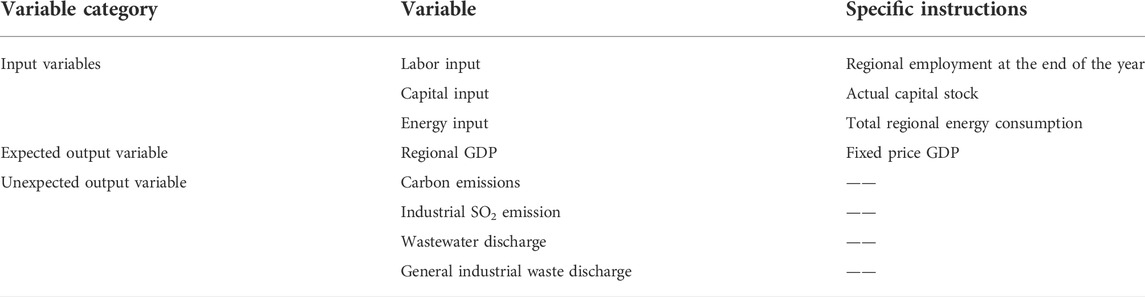
TABLE 1. Green total factor productivity evaluation system.
4.2.2 Explanatory variable
This paper measures the overall level of the digital economy’s development from four perspectives: digital infrastructure, internet development, development of the digital economy as an industry, and development of the digital economy as a transactional medium, using indicators from the body of existing literature. The measurement of digital infrastructure uses two indicators: the number of mobile phone base stations and the length of optical cable lines. The measurement of Internet development uses two indicators: mobile Internet access traffic and the total number of Internet broadband access users. The size of the electronic information manufacturing sector, the revenue of the software and information technology service sector, the total amount of the telecommunications business, and the number of employees in the computer service and software sector are the four indicators used to measure the development of the digital industry. The measurement of digital transaction development adopts three indicators: the proportion of e-commerce transaction enterprises, e-commerce sales, and online retail sales. First standardize the data of the above 11 indicators, and then get the comprehensive digital economy development index through the entropy weight method, denoted as DE. The construction of the above index system and the specific conversion weight distribution data have been displayed in Table 2.
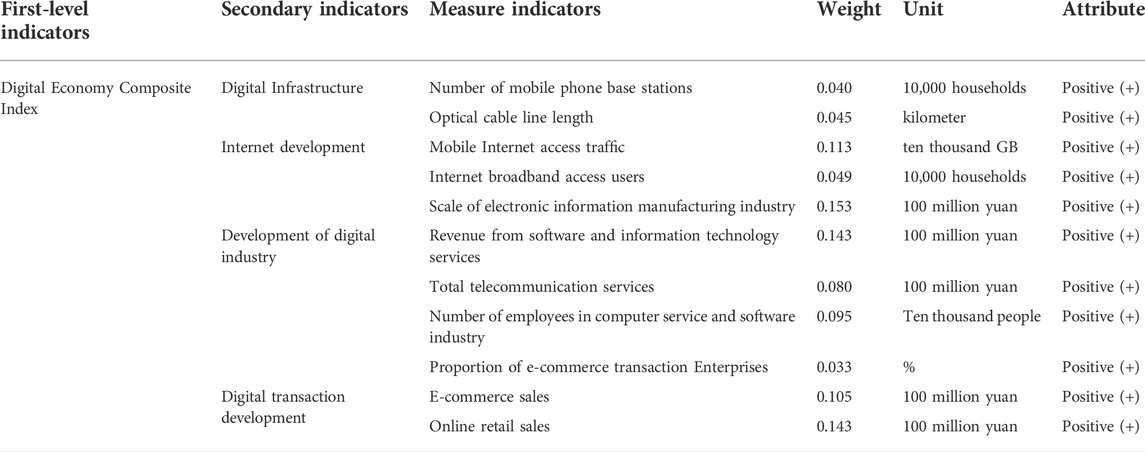
TABLE 2. Composition and weight distribution of comprehensive index system for digital economic development.
4.2.3 Mediating variables
This paper refers to the variable selection of Xiao and Jiang (2021a), determines the industrial structure (IS) based on the proportion of tertiary to secondary sectors in each province, and refers to the variable selection of Shang and Xu (2022), selects the number of patent authorizations of each province as the technological innovation (TI).
4.2.4 Control variables
For assuring correctness and dependability and to lower the error brought on by omission, this paper controls the following variables depending on the research of Wang and Wang. (2020): openness level (OL), which is expressed through the ratio of total import and export volume in RMB to GDP; Education level (EL): select the number of students in Colleges and universities as the education level; Government expenditure (GI), expressed as the proportion of government fiscal expenditure in GDP of each province; Population size (PS), expressed by the total population of each province (10,000 people); Foreign investment (FI) is expressed in the amount of foreign capital actually used in each province (RMB 100 million); Environmental regulation (ER) in this paper refers to the intensity of environmental regulation. Expressed as proportion of industrial pollution control investment in the secondary industry (unit: %).
4.3 Data sources
Due to too much data missing in Hong Kong, Macao, Taiwan, Tibet, and other regions, it is not included in the research scope. This article uses 30 provinces, municipalities, and autonomous regions as its research subject. The concept and measurement of digital economy emerged around 2015. If the time span is too large, the magnitude gap in data may be too large. Meanwhile, the statistical data of green economic indicators only ends in 2020, so the research interval of this paper is 2015–2020. Data from Guotai an and China Statistical Yearbook. In order to improve data reliability and fitting accuracy, all variables are logarithmically processed. For details of variables and statistical indicators, see Table 3. For illustration purposes, the definitions and descriptive statistics of variables are presented in Table 3.
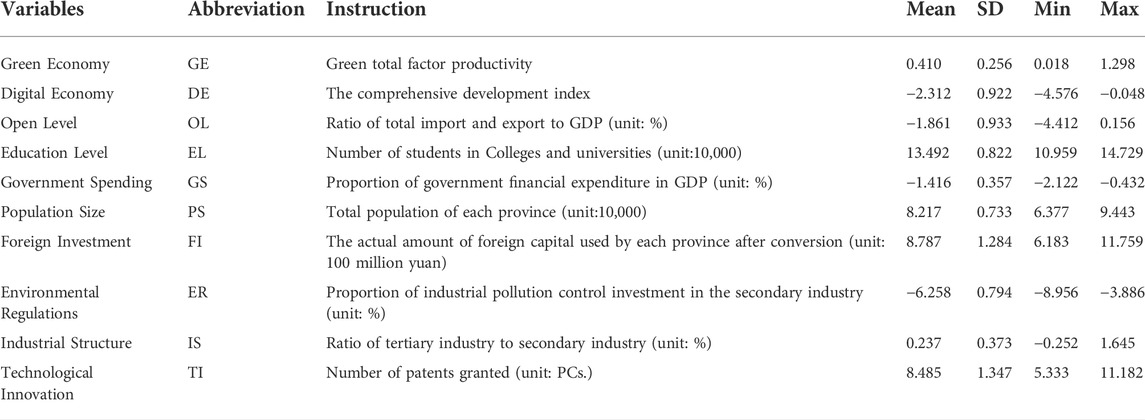
TABLE 3. Statistical description.
5 Results and discussion
5.1 Benchmark regression results
According to the researched model, this study employs stata16 for econometric analysis. Table 4 shows the digital economy’s green regression results. Columns 1) and 2) are fixed-effect and random-effect models without controls variables. The results suggest that the effect of digital economy on the green economy is promoted and significant at the 1% level. Column 3) has fixed-effect and random-effect models with controls variables. The data reveal that the digital economy promoted and significant at the 1% level. Then, according to the results of the Hausman test, a fixed effect model with better fitting effect and more robust results was selected to explain the results.
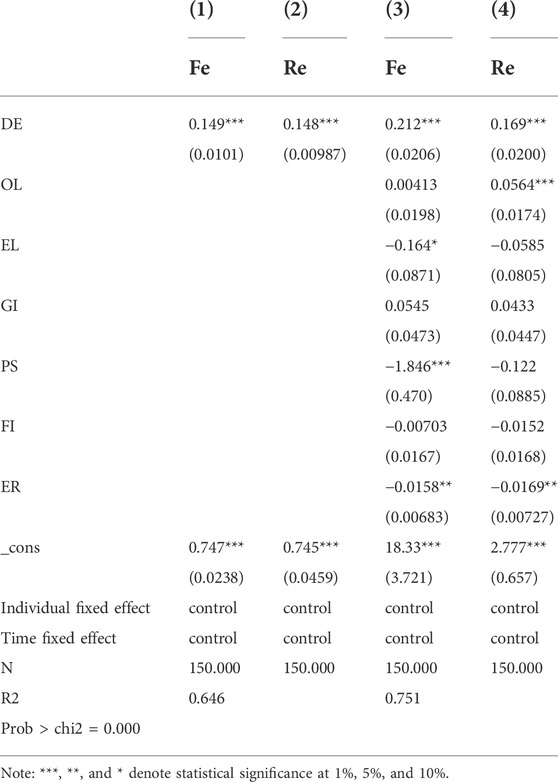
TABLE 4. Benchmark regression results.
According to column (3), the digital economy (DE) coefficient is positive and significant at 1%, which means it can improve the green economy. Existing studies have confirmed that the digital economy has multiple impacts. For example, Sun and Hu. (2021) concluded that the digital economy can improve environmental quality, and Liang et al. (2021) concluded that the digital economy can improve urban ecological efficiency. Through the research on the digital economy and the green economy, this paper further finds that the digital economy can also promote the development of the green economy, which is consistent with the conclusion of Zhou et al. (2021) that “the digital economy has green value”. H1 was verified.
In terms of control variables, the impact of opening level (OL) on green economy is not significant, which may be because China’s opening level is high, and the green economy is not as sensitive to the opening level as it was in the early stage. Education level (EL) inhibits the development of the green economy. It may be that places with rich educational resources tend to gather a large number of people. With a large population, environmental pollution will inevitably increase, thus inhibiting the development of the green economy. The effect of government investment (GI) on the green economy is not important, which can be ascribed to the focus of the government is still on rural infrastructure construction. Population Size (PS) inhibits the development of a green economy, which is consistent with the conclusion drawn by Zhou et al. (2021). This may be because the population agglomeration will produce industrial clusters. Although it drives economic development, it will also produce a large number of resource consumption and pollution emissions, which will seriously affect the protection of the ecological environment and become an obstacle to the growth of the green economy. The influence of foreign investment (FI) on green economy is not significant, which may be ascribed to that with further developing China’s economy, the dependence on foreign investment is becoming less and less, so the influence is not so big. Environmental regulation (ER) inhibits the development of the green economy. It may be that Through the crowding out effect of crowding out investment, environmental regulation will lead to the rise of enterprise costs and the decline of profits, forming a negative external effect of the environment, which will directly inhibit the development of green economy.
5.2 Heterogeneous effect analysis
Due to the vast territory of China, the environmental and economic levels vary from province to province. Existing study has also confirmed that the levels of digital economy and green economy are different in regions, and the differences in the impact of research regions are also meaningful for the overall future economic development. According to the development level of economy, this paper divides 30 provinces into eastern, central and western regions for testing. As shown in Table 5, it can be seen that the digital economy in the Eastern, central and Western regions has a vital impact on the green economy. The coefficient of the Eastern region is significantly higher than that of the central and Western regions, which can be ascribed to the fact that the Eastern region has a high capital stock, relatively advanced technology, a favorable market environment, digital economy development with a higher level and a stronger role in promoting the green economy. Because the central region relies on the Eastern part, the level of digital economy has been developed. Although the coefficient is lower than that of the Eastern area, it still shows a considerable effect on the growth of the green economy. Western China has a lot of energy, but industries with high energy consumption, high pollution, and high emissions account for a large proportion, which leads to a slow process of green development, so the coefficient is the smallest, but the role of the digital economy is still significant. So, H2 was verified. As green development is getting more and more attention, it is necessary to coordinate various regions and promote each other, so as to promote the overall green economic development.
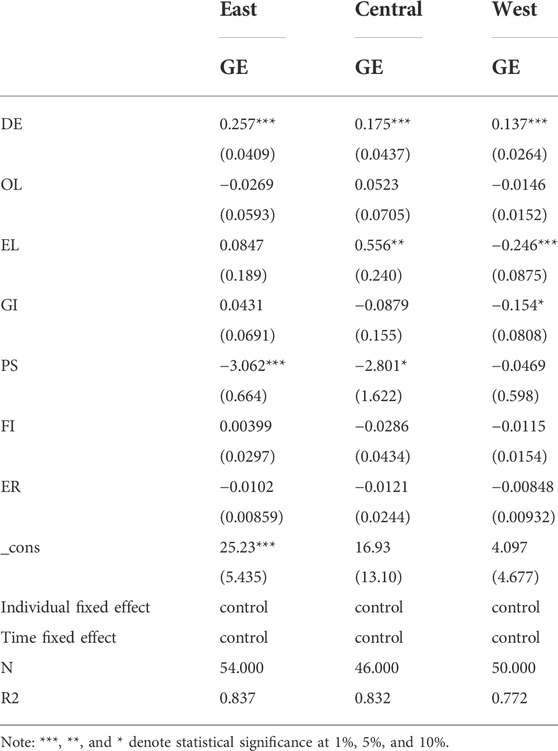
TABLE 5. Regional heterogeneity results.
5.3 Mechanism analysis
According to the previous theoretical mechanism analysis, this paper puts the digital economy, industrial structure, technological innovation and green economy together for mechanism research, and employs the mediation effect model to examine the way of the digital economy influencing the green economy. Table 6 shows the mechanism analysis regression and Bootstrap test on the industrial structure. The coefficient of the digital economy on the industrial structure in column 1) is significant and positive at the level of 1%, indicating that the digital economy has injected new vitality into the industry. It encourages the improvement of the industrial structure, which is consistent with the conclusion drawn by Guo et al. (2022a). The effects of the industrial structure in column 2) on the green economy is not significant, and further testing of the mediating effect is needed. In this paper, the Bootstrap test is used. The results show that the indirect effect coefficient is 0.047, and the confidence interval and bias correction confidence interval of the indirect effect coefficient do not contain 0, indicating that the effect is significant, so there is a mediating effect. The confidence interval and bias correction of the direct effect coefficient also did not contain 0, the direct effect coefficient was 0.132, and the ratio of the direct effect coefficient to the indirect effect coefficient was greater than 1, indicating that the total effect was obvious. It displays that the growth of digital economy could optimize industrial structure, thereby promoting the development of green economy. H3a was verified.
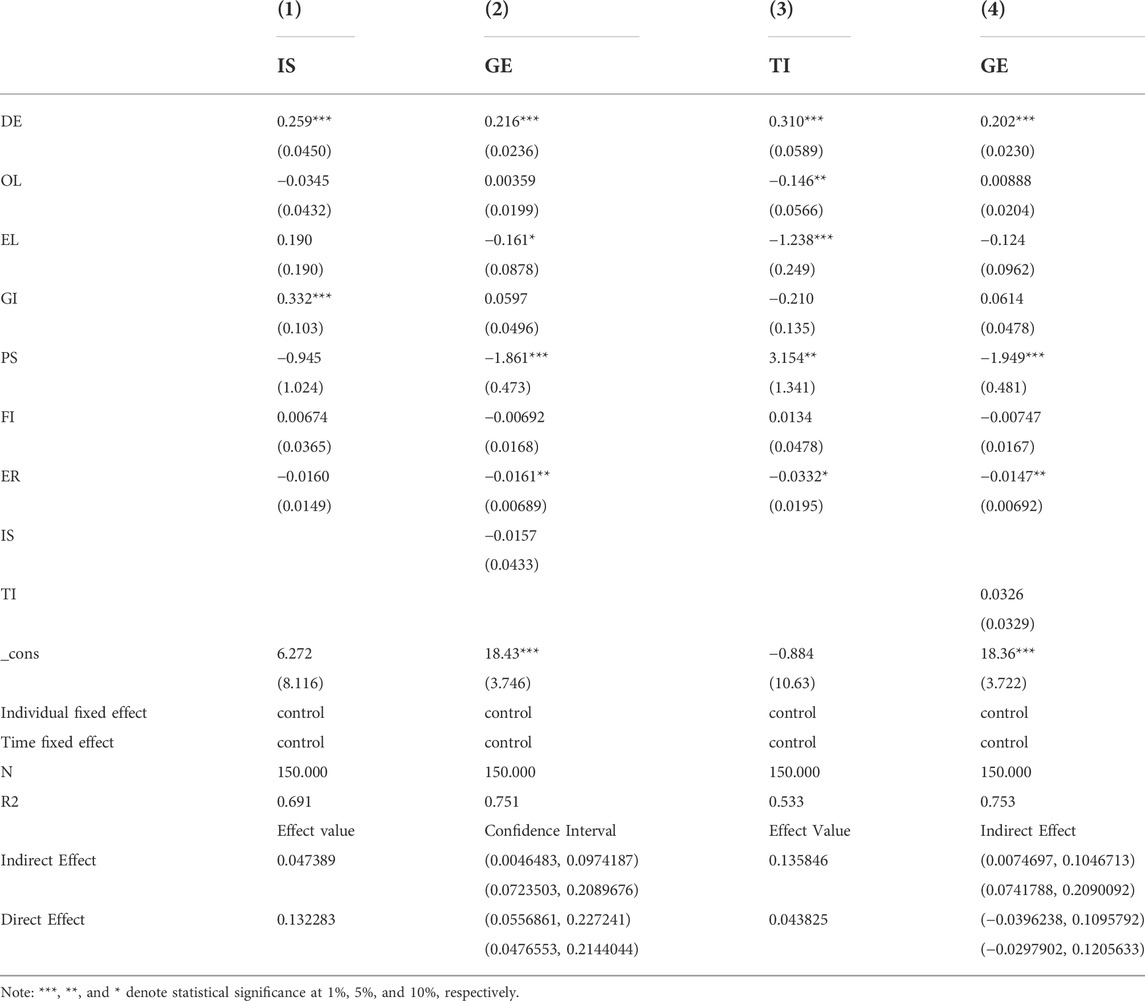
TABLE 6. Industrial structure significance level.
Table 6 also reports the results of mechanism analysis regression and Bootstrap test on technological innovation. In column (1), at a level of 1%, the digital economy’s impact on technical innovation is positive and significant, indicating that digital economy cleared the barriers of knowledge transmission, made knowledge acquisition and sharing more convenient and conducive to technological innovation. The results are consistent with those of Wei et al. (2022). The effect of technological innovation on green economy in column 2) is not significant, and the mediation effect needs to be further tested. The Bootstrap method is also used for testing, and the results show that the indirect effect coefficient is 0.136, and the confidence interval of the indirect effect coefficient and deviation correction confidence interval do not contain 0, so there is a mediation effect. Both of the two intervals of the direct effect coefficient contain 0, so the direct effect is not significant, so it is a partial intermediary effect. It demonstrates how the growth of the digital economy fosters technical innovation, which supports the growth of the green economy. H3b is verified.
5.4 Robustness test
This paper use the instrumental variable method to examine the robustness in order to guarantee the validity and reliability of the aforementioned empirical conclusions. The lag period of digital economic development index (DE) is used as an instrumental variable to test. Table 7 presents the outcomes. In the test results with the lag period of the digital economy development index as the tool variable, the impact effect of the digital economy on the green economy is still valid, the coefficient is significant at the level of 1%, and the LM statistic p value of kleibergen PAAP rk is 0.000, indicating that the original assumption “insufficient identification of tool variables” is rejected; The Wald F statistic of kleibergen PAAP rk is greater than the critical value of the weak identification test at the level of 10%, which shows that it is reasonable to select the lagging term of the digital economic development index as the instrumental variable.
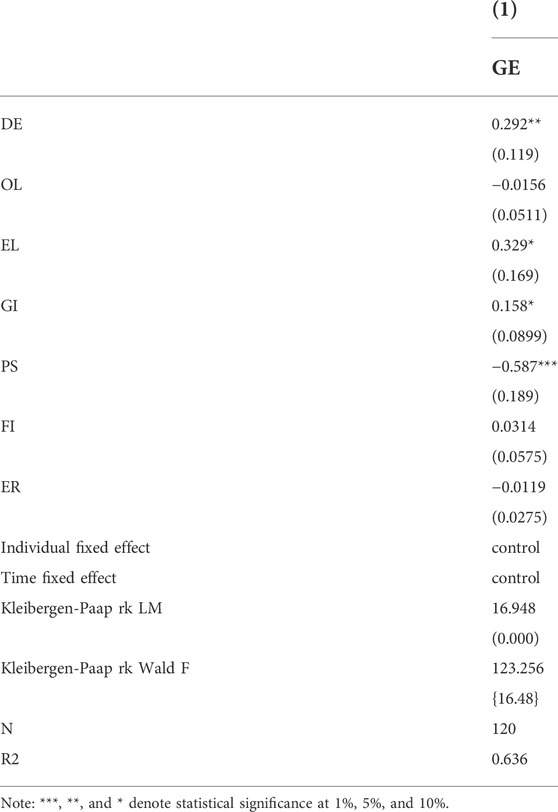
TABLE 7. Robustness test results.
6 Conclusion and policy implications
This paper empirically tests the impact of digital economy on green economy by using the panel data of various provinces in China from 2015 to 2020. These findings indicate that: firstly, the correlation between the digital economy and the green economy is favorable and significant at the level of 1% from the results of the regression, indicating that the development of the green economy can be encouraged with further development of the digital economy. Secondly, from the point of view of regional heterogeneity, under 1%, digital economy in Eastern, central and Western regions has a positive and considerable impact on the green economy. However, the coefficients in descending order are that the East is greater than the middle and the West is greater than the West, indicating that the impact of the digital economy on the green economy shows that the east is greater than the middle and the middle is greater than the West. Thirdly, from an action-path perspective, the test findings show that technological innovation and industrial structure both have mediated impacts, which suggests that the digital economy can both optimize the industrial structure and promote technological innovation, thus enhancing the development of the green economy.
The following suggestions are raised in light of the study’s findings: 1) Digital economy in promoting the green economy is essential in the economic development. Efforts should be spent to persuade all kinds of investors to strengthen the investment in digital economy, the construction of the necessary infrastructure for communications information and the research investment in digital technology, and actively implement the actual use of emerging technologies for changing the waste of resources in traditional technology, thus accelerating the green development of China’s economy. 2) All regions should combine their own characteristics, play up their advantages in full, actively develop local digital economy and form a digital economy with regional characteristics. The government should build network platforms around representative industries and actively promote digital and intelligent technology transformation to cultivate and support local enterprises, thus enriching the green industry chain and accelerating the development of green economy. Meanwile the construction of a national data network of “Eastern data and Western data” can not only alleviate the excessive energy consumption in the Eastern region, but also drive the growth of digital economy in the Western region, thus accelerating the overall growth of the green economy at a high level. 3) The synergy of digital economy and market-oriented reform, talent training, institutional governance and other elements should be strengthened; Traditional industries should be actively integrated. And emerging technologies, such as 5G, internet of things and blockchain should be used to change the traditional business model and enhance the standard of goods and services; Relying on advanced technology, the offline economic activities are gradually transformed into online activities to reduce costs and realize coordinated development and mutual promotion between multiple industrial chains. The Internet smart platform should be actively developed to realize the desired state of equilibrium between consumption/production and supply/demand, thus promoting the integration of industrial chain and the extension of value chain, and constantly optimizing the industrial structure. 4) Enhancing technological innovation capacity is a systematic project requiring long-term planning. We should not only promote the quantity and quality of national high-tech enterprises, but also speed up the construction of innovation carriers and build technology enterprise clusters. We should pay attention to not only the basic technological innovation, but also the technological innovation in application. We will also integrate digital technology innovation into production and application to achieve new breakthroughs. From efficiency improvement to technological progress, green total factor production should be comprehensively promoted, thereby achieving the goal of green development.
Data availability statement
The original contributions presented in the study are included in the article/Supplementary Material, further inquiries can be directed to the corresponding author.
Author contributions
ZZ: Software, methodology, writing original draft, and project administration. WF: Data curation, writing—review and editing. LM: Conceptualization, investigation, supervision.
Funding
This study was supported by the Social Science Research General Project Foundation of Jiangsu Universities Philosophy (No. 2020SJA1585).
Conflict of interest
The authors declare that the research was conducted in the absence of any commercial or financial relationships that could be construed as a potential conflict of interest.
Publisher’s note
All claims expressed in this article are solely those of the authors and do not necessarily represent those of their affiliated organizations, or those of the publisher, the editors and the reviewers. Any product that may be evaluated in this article, or claim that may be made by its manufacturer, is not guaranteed or endorsed by the publisher.
References
Adarina, R. T., Kuttubaev, A. A., and Melekhova, K. A. (2019). “The “green” scenario of development of the digital economy: Strategic priorities and subjects of management,” in Lecture notes in networks and systems (Springer, Cham: Institute of Scientific Communications), 387–394. doi:10.1007/978-3-030-47945-9_43
Amri, F., Zaied, Y. B., and Lahouel, B. B. (2019). ICT, total factor productivity, and carbon dioxide emissions in Tunisia. Technol. Forecast. Soc. Change 146, 212–217. doi:10.1016/j.techfore.2019.05.028
Avom, D., Nkengfack, H., Fotio, H. K., and Totouom, A. (2020). ICT and environmental quality in Sub-Saharan Africa: Effects and transmission channels. Technol. Forecast. Soc. Change 155, 120028. doi:10.1016/j.techfore.2020.120028
Bai, H. R. (2021). Role of digital technology in transforming organizational competencies influencing green economy: Moderating role of product knowledge hiding. Front. Psychol. 12, 33–49. doi:10.3389/fpsyg.2021.792550
Ben Lahouel, L. B., Taleb, L., Ben Zaied, Z. Y., and Managi, S. (2021). Does ICT change the relationship between total factor productivity and CO2 emissions? Evidence based on a nonlinear model. Energy Econ. 101, 105406. doi:10.1016/j.eneco.2021.105406
Chai, B. H., Gao, J. W., Pan, L. Y., and Chen, Y. S. (2021). Research on the impact factors of green economy of China-from the perspective of system and foreign direct investment. Sustainability 13 (16), 8741–8758. doi:10.3390/su13168741
Chen, J., Shi, Q., Shen, L., Huang, Y., and Wu, Y. (2019). What makes the difference in construction carbon emissions between China and USA? Sustain. Cities Soc. 44, 604–613. doi:10.1016/j.scs.2018.10.017
Chien, F., Anwar, A., Hsu, C. C., Sharif, A., Razzaq, A., and Sinha, A. (2021). The role of information and communication technology in encountering environmental degradation: Proposing an SDG framework for the BRICS countries. Technol. Soc. 65, 101587. doi:10.1016/j.techsoc.2021.101587
Fan, H. J., and Wu, T. (2021). Regional digitalization capability measurement and improvement strategy path. J. Technoeconomics Manag. Res. 11, 8–14. doi:10.3969/j.issn.1004-292X.2021.11.002
Fan, Y. X., and Xu, H. (2021). Can the development of China's digital economy achieve economic greening? ———empirical evidence from China's inter — provincial panel data. J. Inq. Into Econ. Issues 9, 15–29.
Ge, W. T., Qi, J., and Xu, H. W. (2020). Empirical analysis of the digital economy efficiency in central China based on DEA-malmquist model. J. Sci. Technol. Industry 20 (9), 68–73+110. doi:10.3969/j.issn.1671-1807.2020.09.012
Guo, B. N., Tang, Y., and Zhang, H. (2022a). Regional difference and stochastic convergence of green economic efficiency in Yangtze River economic belt. J. Ecol. Econ. 37 (11), 46–53. doi:10.3390/ijerph19031703
Guo, B. N., Wang, Y., and Zhang, H. (2022b). Digital economy, green technology innovation and industrial structure upgrading ——empirical evidence from 282 cities in China. J. Lanzhou Acad. J. 2, 58–73. doi:10.3969/j.issn.1005-3492.2022.02.006
Khan, F. N., Sana, A., and Arif, U. (2020). Information and communication technology (ICT) and environmental sustainability: A panel data analysis. Environ. Sci. Pollut. Res. 27 (29), 36718–36731. doi:10.1007/s11356-020-09704-1
Li, X. H. (2019). New features and the formation mechanism of new growth drivers of digital economy. J. Reform. 11, 40–51.
Liang, Q., Xiao, S. P., and Li, M. X. (2021). Has the development of digital economy improved urban ecological efficiency? ——based on the perspective of industrial structure upgrading. J. Inq. into Econ. Issues 6, 82–92.
Liu, J., Yang, Y. J., and Zhang, S. F. (2020). Research on the measurement and driving factors of China's digital economy. J. Shanghai Econ. Rev. 6, 81–96. doi:10.19626/j.cnki.cn31-1163/f.2020.06.008
Liu, X. Z., and Kong, F. X. (2021). Research on the impact of digital economy development on urban green transformation in the Yangtze River economic belt: Based on the perspective of production-living-ecological. J. Space Contemp. Econ. Manag. 43 (9), 64–74. doi:10.13253/j.cnki.ddjjgl.2021.09.008
Liu, Y., Yang, Y. L., Li, H. H., and Zhong, K. Y. (2022b). Digital economy development, industrial structure upgrading and green total factor productivity: Empirical evidence from China's cities. Ijerph 19 (4), 2414. doi:10.3390/ijerph19042414
Meng, F., and Zhao, Y. (2022). How does digital economy affect green total factor productivity at the industry level in China: From a perspective of global value chain. Environ. Sci. Pollut. Res. 1, 19. doi:10.1007/s11356-022-21434-0
Pearce, D., Markandya, A., and Barbier, E. (1989). Blueprint for a green economy[M]. Earthscan 5, 436–439.
Razzaq, A., Wang, Y., Chupradit, S., Suksatan, W., and Shahzad, F. (2021). Asymmetric inter-linkages between green technology innovation and consumption-based carbon emissions in BRICS countries using quantile-on-quantile framework. Technol. Soc. 66, 101656. doi:10.1016/j.techsoc.2021.101656
Shang, S. Z., and Xu, D. Q. (2022). Measurement and influencing factors of green economy in China. J. J. Commer. Econ. 8, 160–165. doi:10.3969/j.issn.1002-5863.2022.08.041
Sun, Y. W., and Hu, Z. H. (2021). Digital economy, industrial upgrading and improvement of urban environmental quality. J. Statistics Decis. 23, 91–95.
Tang, J. H., Wu, S. J., and Xiao, J. H. (2021). Evaluation of marine green economy efficiency and its influencing factors in China. J. Iop Conf. Ser. Earth Environ. Sci. 865 (1), 256–278. doi:10.1088/1755-1315/865/1/012029
Ulucak, R., Danish, S. U. D., and Khan, S. U. D. (2020). Does information and communication technology affect CO 2 mitigation under the pathway of sustainable development during the mode of globalization? Sustain. Dev. 28 (4), 857–867. doi:10.1002/sd.2041
UNEP (2011). Towards a green economy: Pathways to sustainable development and poverty eradication. J. Low. Carbon Econ. 11, 414–451.
Wang, J. J., and She, G, J. (2021). Measurement and regional comparison of digital economy development level in China. J. China Bus. Mark. 35 (8), 3–17. doi:10.14089/j.cnki.cn11-3664/f.2021.08.001
Wang, S., Chen, M., and Song, M. (2018). Energy constraints, green technological progress and business profit ratios: Evidence from big data of Chinese enterprises. Int. J. Prod. Res. 56 (8), 2963–2974. doi:10.1080/1540496X.2018.152956010.1080/00207543.2018.1454613
Wang, S., Sun, X., and Song, M. (2021). Environmental regulation, resource misallocation, and ecological efficiency. Emerg. Mark. Finance Trade 57 (3), 410–429. doi:10.1080/1540496X.2018.1529560
Wang, S., Wang, X., and Lu, B. (2022b). Is resource abundance a curse for green economic growth? Evidence from developing countries. Resour. Policy 75, 102533. doi:10.1016/j.resourpol.2021.102533
Wang, S. X., and Wang, Y. (2020). Foreign direct investment, system quality and GTFP: An empirical study based on malmquist luenberger index. J. J. Shandong Agric. Administrators' Coll. 37 (9), 69–76. doi:10.3969/j.issn.1008-7540.2020.09.013
Wei, S. W., Du, J. M., and Pan, S. (2022). How does digital economy promote green innovation : empirical evidence from Chinese cities. J. Collect. essays finance Econ. 1, 1–14. doi:10.13762/j.cnki.cjlc.20220308.001
Weili, W. L., Khan, H., khan, I., and Han, L. (2022a). The impact of information and communication technology, financial development, and energy consumption on carbon dioxide emission: Evidence from the belt and road countries. Environ. Sci. Pollut. Res. 29 (19), 27703–27718. doi:10.1007/s11356-021-18448-5
Wu, D. D., Wang, Y. H., and Qian, W. Y. (2020). Efficiency evaluation and dynamic evolution of China's regional green economy: A method based on the super-PEBM model and dea window analysis. J. Clean. Prod. 264, 121630–122201. doi:10.1016/j.jclepro.2020.121630
Wu, J., Xiao, H. B., and Chen, B. (2022). Research on the impact of digital economy on green total factor productivity. J. Finance Econ. 1, 55–63. doi:10.19622/j.cnki.cn36-1005/f.2022.01.006
Wu, Y., and Zhang, Xu. (2022). Evaluation on the green development of provincial economy in China ——Based on the perspective of green total factor productivity. J. J. Hebei Univ. Econ. Trade 43 (1), 67–81. doi:10.14178/j.cnki.issn1007-2101.20220105.005
Xiao, Y. F., and Jiang, Y. (2021a). Research on the influence of digital economy on industrial green production efficiency. J. Mod. Manag. Sci. 8, 100–109. doi:10.3969/j.issn.1007-368X.2021.08.011
Xiao, Y. F., and Jiang, Y. (2021b). The influence of digital economy on regional green total factor productivity. J. Sci. Technol. Industry 12, 21–25. doi:10.3969/j.issn.1671-1807.2021.12.003
Xu, X. G., Fan, H., Su, Y, S., and Zheng, Z. X. (2021). Research on the driving factors of China's green economy development level. J. J. Quantitative Tech. Econ. 38 (7), 65–82. doi:10.13653/j.cnki.jqte.2021.07.004
Yin, A-na, and Lv, J. f. (2021). Evaluation on green economy development in China and the influencing factors. J. Finance Theory Teach. 5, 58–63. doi:10.3969/j.issn.1004-9487.2021.05.013
Zhang, J. X., Chang, Y., Zhang, L. X., and Li, D. (2018a). Do technological innovations promote urban green development?-A spatial econometric analysis of 105 cities in China. J. Clean. Prod. 182 (1), 395–403. doi:10.1016/j.jclepro.2018.02.067
Zhang, W. (2021). Construction and demonstration of green economy evaluation index system in China. J. Statistics Decis. 37 (16), 126–129. doi:10.13546/j.cnki.tjyjc.2021.16.028
Zheng, X. Y., Chen, J. Y., and Su, Y. K. (2021). Research on green economics and digital economic synergy—empirical analysis based on correction coupling model. J. Price Theory & Pract. 8, 1–4. doi:10.19851/j.cnki.CN11-1010/F.2021.08.263
Zhong, Y. X., and Mao, W. S. (2020). Spatial differentitation of digital economy and its influencing factors in the Yangtze River Ecomomic Belt. J. J. Chongqing Univ. 26 (1), 19–30. doi:10.11835/j.issn.1008-5831.jg.2019.05.002
Keywords: digital economy, green economy, green total factor productivity, mediating effect, heterogeneous effect
Citation: Zhang Z, Fu WK and Ma L (2022) The impact of digital economy on green development in China. Front. Environ. Sci. 10:991278. doi: 10.3389/fenvs.2022.991278
Received: 11 July 2022; Accepted: 01 August 2022;
Published: 29 August 2022.
Edited by:
Shuhong Wang, Shandong University of Finance and Economics, ChinaReviewed by:
Mathew Abraham, Flame University, IndiaYuanxiang Zhou, Anhui University of Finance and Economics, China
Hanxue Chen, Ocean University of China, China
Copyright © 2022 Zhang, Fu and Ma. This is an open-access article distributed under the terms of the Creative Commons Attribution License (CC BY). The use, distribution or reproduction in other forums is permitted, provided the original author(s) and the copyright owner(s) are credited and that the original publication in this journal is cited, in accordance with accepted academic practice. No use, distribution or reproduction is permitted which does not comply with these terms.
*Correspondence: Li Ma, bWFsaW50QG50dS5lZHUuY24=