 Annelise Aila Gomes Lobo1*
 Mariana Campana1Augusto Hauber Gameiro2Jozivaldo Prudêncio Gomes de Morais1
- 1Studies Group and Work in Agriculture and Livestock Farming, Federal University of Sao Carlos, Department of Biotechnology and Plant and Animal Production, Sao Paulo, Brazil
- 2School of Veterinary Medicine and Animal Sciences, Department of Animal Nutrition and Production, University of Sao Paulo, Sao Paulo, Brazil
Integrated systems allow the redesign of productive landscapes due to the insertion of different species of trees and shrubs. A diversified pasture provides the animal with a wider range and a greater amount of phytonutrients than animals fed on grains, and beyond that, tree legumes have great potential for producing biomass with excellent levels of crude protein, as well as the capacity for symbiotic nitrogen fixation. Assuming that modeling can be a relevant tool to address systemic changes, we sought to answer the following question: “how can ruminant husbandry systems be modeled to help farmers, considering the combination of pasture and crop production?” Thus, this work aims to create a modeling framework to guide the redesign of productive landscapes for ruminants in tropical conditions at the farm level. The activities to be carried out will be divided into four stages: a) bibliographical research on existing indicators and/or models for ruminant livestock farming; b) writing opinion articles (already published) and review articles (this article); c) indicating parameters for modeling the redesign of ruminant production landscapes with the use of multifunctional forage plants; and d) demonstrating the novelty by building a decision-making model for rural properties. The hypothesis of this work is that the redesign of multifunctional production landscapes can be guided by modeling obtained from experimental variables that already exist and/or are under construction, as well as from published literature.
Introduction
The ancestors of today’s ruminants evolved within environments that contained a diversity of plant species (Provenza et al., 2007; Gregorini, 2015). Currently, integrated systems allow the redesign of productive landscapes due to the insertion of different tree and shrub species, where many experiences and analyses point to biodiversity as a precursor to the biological stability found in these diversified productive agroecosystems (Lopes, 2014).
A diverse pasture provides the animal with a wider range and greater quantity of phytonutrients, such as terpenoids, phenols, carotenoids, and antioxidants, than animals fed on grains. In addition, the various phytochemical compounds and their management improve animal health, and these nutrients also benefit human health (Viet et al., 2004; Kuhnen et al., 2022).
Tree legumes have great potential for producing biomass with excellent levels of crude protein, as well as the capacity for symbiotic nitrogen fixation (Mochiutti and Meirelles, 1999). The use of these forages can achieve meat production levels similar to those of animals supplemented with commercial concentrates (Setchell et al., 1987), given the prices of protein supplements, which are beyond feasibility in the context of ruminant production, emphasizing the scientific density of this project.
Based on the above overview, modeling tools can be seen as a decision support system (Keen and Morton, 1978). They produce important results for strategic decision-making in activities related to the preservation and conservation of biodiversity because they can be applied to analyze the influence of different environmental and biological variables.
Subsections relevant for the subject
Argumentation concerns for the practical conduct of the project
Assuming that modeling can be a relevant tool for dealing with such systemic changes, we will seek to answer the following question: "how can ruminant husbandry systems be modeled to help farmers, considering the combination of pasture and crop production?” To this end, a bibliographic review of existing models for livestock systems involving ruminants that have been published is being carried out. Parameters mentioned in these models will be taken into account when proposing the model or when pointing out the need for other data that need to be considered so that producers can make their decisions more easily.
In this way, a modeling tool can be used to propose the redesign of productive landscapes, increasing the assertiveness of the model to be implemented. The work team involved in this proposal has the knowledge and expertise needed to provide answers on the subject for tropical conditions.
At the same time, the massive acquisition of data has led to the revival of an old topic: simulations of biological systems. Simulations are being used successfully and routinely to understand and predict the quantitative behavior of complex systems, opening the door to their permanent adoption in everyday research. They are capable of creating a maximum-precision replica of a system, the “in silico” simulation (Di Ventura et al., 2006), harking to the Silicon Valley, in this case, with the computer as the main research tool.
For this proposal, the postdoctoral researcher, who is the first author of this manuscript, proposes modeling landscape redesigns using data from the literature and knowledge of technical experts and local livestock farmers, as well as pointing out the new scientific challenges in redesign studies. The project was approved by the largest research funding body in Brazil, FAPESP (FAPESP n.2022/14349-4).
Purposes and suppositions
Create a modeling framework to guide the redesign of productive landscapes for ruminants under tropical conditions, using alternative forage in the diet that will contribute to the development of sustainable management strategies; and through a prediction model, consider what the redesign of a rural farm would look like with productive, ecosystemic, and environmental impact mitigation characteristics and new inserted species. The model can be used in any region or biome by changing only the parameter values.
Thus, the hypothesis of this work is that it is possible for the redesign of multifunctional productive landscapes to be guided by modeling obtained from experimental variables that already exist and/or are under construction, as well as from published literature.
Method of carrying out
The project will be carried out at the Agricultural Studies and Work Group (GETAP) at the Agricultural Sciences Center of the Federal University of São Carlos (UFSCar), Araras Campus, under the supervision of Prof. Dr. Jozivaldo Prudêncio Gomes de Morais.
The activities to be carried out will be divided into four stages for the purposes of understanding: a) a literature search will be carried out on existing indicators and/or models for ruminant livestock farming; b) writing opinion articles (already published) and review articles (this article); c) indication of parameters for modeling the redesign of productive landscapes for ruminants using multifunctional forage; and d) showing the novelty through the construction of a decision-making model for rural farms.
Bibliographic survey of existing models
An extensive literature review of published national and international journals will be undertaken to answer the question “How can the variables of ruminant production systems be modeled to help farmers make decisions to redesign their farms?”
An analysis grid based on three considerations will be used as a system definition: the intended use of the model and how farmers’ decision-making processes are represented, and how researchers and farmers are involved in the modeling processes. The focus is on concluding what the specific requirements for modeling should be if farmers were to be supported in redesigning their whole livestock systems using models.
Writing scientific articles on all the stages proposed
An opinion article has recently been accepted by the impactful and innovative journal Frontiers in Environmental Science, in the Environmental Economics and Management section. The title of the article is Opinion Paper: Indicators for Modeling Redesign from Conventional to Sustainable Silvopastoral Systems: An Expert’s Opinion.
In addition to this review article, a comparative methodology article will be written, as well as an article describing the model created using indicators and parameters.
Developing modeling parameters for redesign
To answer the research question, we will use an analysis grid based on three considerations: system definition, the intended use of the model and how farmers’ decision-making processes are represented, and how researchers and farmers are involved in the modeling processes. The focus will be on concluding what the specific requirements for modeling should be if farmers were to be supported in redesigning their whole livestock systems using models.
It is important to highlight the parameters and emphasize that they were chosen through gaps left by the current literature. The parameters include dry matter consumption, greenhouse gas balance as an environmental aspect, metabolic profile (urea, albumin, and total protein for protein assessment; and glucose, beta-hydroxybutyrate (BHB), free fatty acids (FFAs), and cholesterol for energy assessment), stocking rate, amount of manure, total digestible nutrients, protein and metabolizable energy content, average daily gain, wood produced in the cycle, supplements, and nitrogen, phosphorus, potassium, calcium, and magnesium as fertilizer. The input data will address information such as plant and animal production at a given time of year, the area available for cultivation, greenhouse gas emissions and sequestration, and animal and plant nutritional requirements.
Discussion
To build the model, indicators will be selected on the basis of starts literature (Table 1) in conjunction with researchers who are experts in the field. The parameters will be entered into the model. Consequently, this present research will contribute to constructing model indicators and parameters. The model itself will be a deterministic model, where the input data are known, and the research technique is linear programming in an objective function, where the objective is the evaluation of environmental impacts (Gameiro et al., 2010; Marins, 2011).
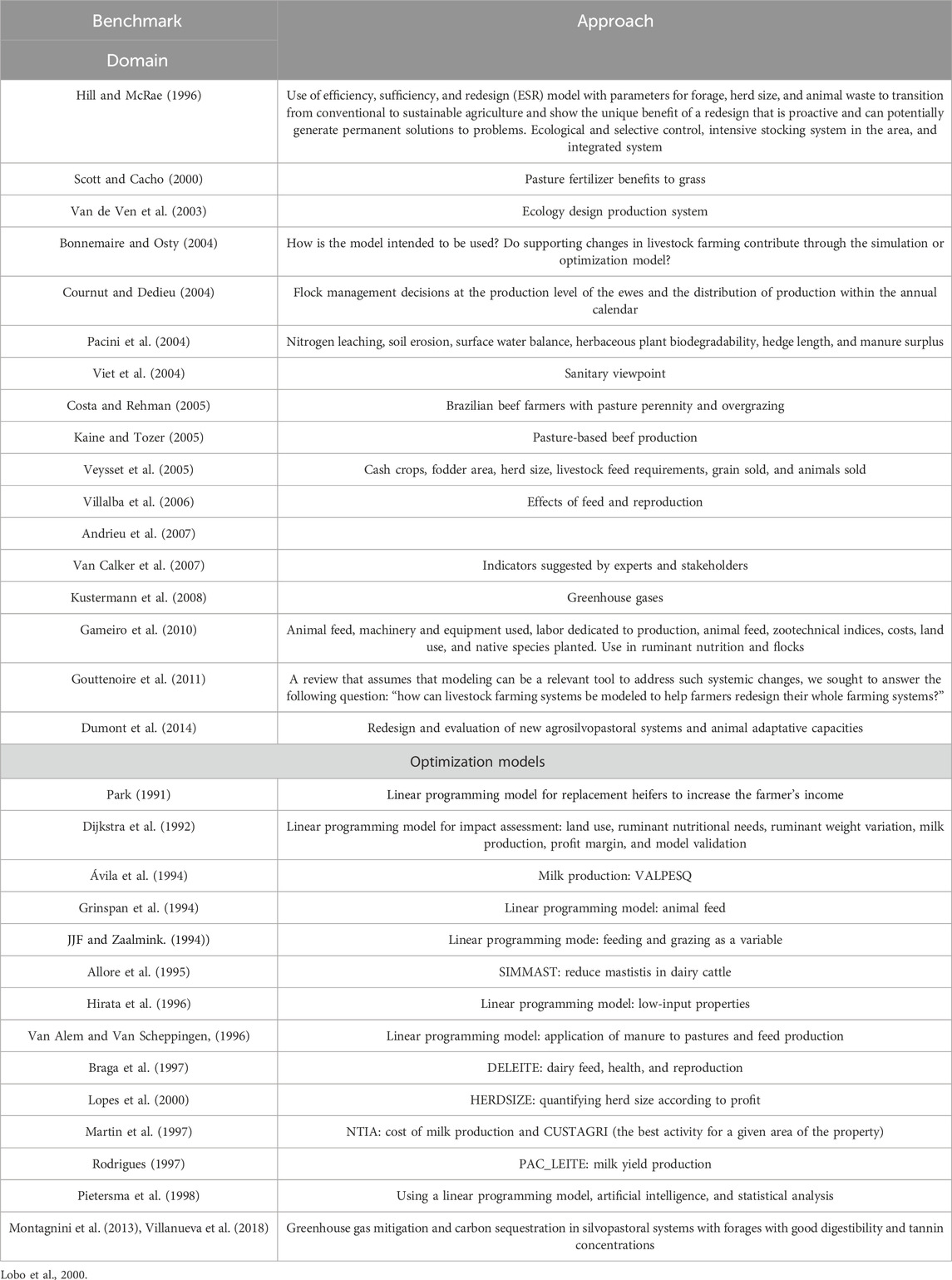
Table 1. State-of-art, based on starts literature, of models to redesign activities.
It is important to emphasize the lack of robust silvopastoral system models for the whole farm (Gómez et al., 2020) since Barbosa et al. (2002) published the main revisions to their work. Some references are shown in the table below.
It is important to make the possible challenges and restrictions that could affect the generalizability and applicability of the results, such as unanimously reaching the interested public, clear here in the discussion. We do not foresee any issues that specialized technical assistance cannot solve. Thus, deterministic linear programming was chosen as a way of making the most appropriate decision for each design, which makes the model more robust than others, such as stochastic or Bayesian models. In this way, the model contributes to the scientific understanding of ruminant production systems.
Conclusion
Therefore, our research group firmly believes that it will be able to answer the question and solve the proposed problem by creating the decision-making model outlined in the article.
Data availability statement
The original contributions presented in the study are included in the article/Supplementary Material; further inquiries can be directed to the corresponding author.
Author contributions
AL: data curation, investigation, methodology, writing–original draft, and writing–review and editing. MC: writing–review and editing. AG: writing–review and editing. JM: supervision and writing–review and editing.
Funding
The author(s) declare that no financial support was received for the research, authorship, and/or publication of this article. This research was funded by a grant from the Sao Paulo Research Foundation (FAPESP) under process number 2022/14349-4.
Acknowledgments
The authors acknowledge and thank the editor and reviewers, as well as the funding body FAPESP (#2022/14349-4) and the host institution, the Federal University of Sao Carlos.
Conflict of interest
The authors declare that the research was conducted in the absence of any commercial or financial relationships that could be construed as a potential conflict of interest.
Publisher’s note
All claims expressed in this article are solely those of the authors and do not necessarily represent those of their affiliated organizations, or those of the publisher, the editors, and the reviewers. Any product that may be evaluated in this article, or claim that may be made by its manufacturer, is not guaranteed or endorsed by the publisher.
Supplementary material
The Supplementary Material for this article can be found online at: https://www.frontiersin.org/articles/10.3389/fenvs.2024.1345313/full#supplementary-material
References
Allore, H. G., Jones, L. R., Merrill, W. G., and Oltenacu, P. A. (1995). A decision support system for evaluating mastitis information. J. Dairy Sci. 78 (6), 1382–1398. doi:10.3168/jds.s0022-0302(95)76761-3
Andrieu, N., Poix, C., Josien, E., and Duru, M. (2007). Simulation of forage management strategies considering farm-level land diversity: example of dairy farms in the Auvergne. Comput. Electron. Agric. 55, 36–48. doi:10.1016/j.compag.2006.11.004
Ávila, A. F. D., da Cruz, E. R., and Vieira, J. L. G. (1994). Avalpesq - software aplicativo para avaliação benefício/custo da pesquisa agropecuária. Embrapa, 46.
Barbosa, P. F., Assis, A. D., da Costa, M. A. B., and Barbosa, P. F. (2002). Modelagem e simulação de sistemas de produção animal. Embrapa, 193.
Bonnemaire, J., and Osty, P. L. (2004). Approche systéme´ique des syste`mes d’e´ levage: quelques avance´ es et enjeux de recherche. Cah. Rech. l’Acade´mie d’Agriculture Fr. 90, 1–29.
Braga, J. L., Sousa, E. M., Nascif, C., and Pereira, N. V. L. (1997). DELEITE - diagnóstico inicial de problemas relacionados ao rebanho leiteiro. AGROSOFT CTSOFT SBI-AGRO 1, 117–124.
Costa, F. P., and Rehman, T. (2005). Unraveling the rationale of ‘overgrazing’ and stocking rates in the beef production systems of central Brazil using a bi-criteria compromise programming model. Agric. Syst. 83, 77–295.
Cournut, S., and Dedieu, B. (2004). A discrete events simulation of flock dynamics: a management application to three lambings in two years. Animal Res. 53, 383–403. doi:10.1051/animres:2004025
Dijkstra, J., Neal, DSTCH, Beever, D. E., and France, J. (1992). Simulation of nutrient digestion, absorption and outflow in the rumen: model description. J. Nutr. 122, 2239–2256. doi:10.1093/jn/122.11.2239
Di Ventura, B., Lemerle, C., Michalodimitrakis, K., and Serrano, L. (2006). From in vivo to in silico biology and back. Nature 443, 527–533. doi:10.1038/nature05127
Dumont, B., González-García, E., Thomas, M., Fortun-Lamothe, L., Ducrot, C., Dourmad, J., et al. (2014). Forty research issues for the redesign of animal production systems in the 21st century. Animal 8, 1382–1393. doi:10.1017/s1751731114001281
Gameiro, A. H., Caixeta Filho, J. V., and Barros, C. S. D. (2010). “Modelagem matemática para o planejamento, otimização e avaliação da produção agropecuária,” in Novos desafios da pesquisa em nutrição e produção animal (Brazil: Editora D).
Gómez, C., Fuentes, E., Pizarro, D., Castillo, M., and León-Velarde, C. (2020). Agrosilvopastoril v 19.1: modeling cattle production and environment contribution of silvopastoral systems in the Peruvian tropics. HAICTA 1, 344–349.
Gouttenoire, L., Cournut, S., and Ingrand, S. (2011). Modelling as a tool to redesign livestock farming systems: a literature review. Animal 5, 1957–1971. doi:10.1017/s175173111100111x
Gregorini, P. (2015). Foreword to ‘the meal dynamics of grazing herbivores’. *Animal Production Science 55, 55. doi:10.1071/anv55n3_fo
Grinspan, P., Edan, Y., Kahn, H. E., and Maltz, E. (1994). A fuzzy logic expert system for dairy cow transfer between feeding groups. Trans. ASAE 37, 1647–1654. doi:10.13031/2013.28252
Hill, S. B., and McRae, R. J. (1996). Conceptual framework for the transition from conventional to sustainable agriculture. Journal of Sustainable Agriculture 7, 81–87. doi:10.1300/j064v07n01_07
Hirata, M., Kariya, H., Fukuyama, K., and Higashiyama, M. (1996). A preliminary simulation approach for evaluating the effects of land use, animal number and target liveweight gain on the dairy heifer system at the Sumiyoshi Livestock Farm. Bulletin of the Faculty of Agriculture 42, 63–76.
Jjf, W., and Zaalmink, B. W. (1994). TACT systems – applying simulation models to feed and grassland management as support for dairy farmers in their tactical planning. The Hague, Netherlands: Landbouw Economisch Instituut, 83.
Kaine, G. W., and Tozer, P. R. (2005). Stability, resilience and sustainability in pasture-based grazing systems. Agricultural Systems 83, 27–48. doi:10.1016/j.agsy.2004.03.001
Keen, P. G. W., and Morton, M. S. (1978). Decision support systems - an organizational perspective. Reading, Massachusetts, USA: Addison-Wesley Pub. Co.
Kuhnen, S., Holz, D. T., Moacyr, J. R., Piccinin, I. N., and Pinheiro Machado Filho, L. C. (2022). Effect of pasture management on bioactive compounds of Lolium multiflorum and Avena strigosa for dairy cows and its effect on milk quality. Agroecology Sustainable Food System 46, 3–22. doi:10.1080/21683565.2021.1964672
Kustermann, B., Kainz, M., and Hulsbergen, K. J. (2008). Modeling carbon cycles and estimation of greenhouse gas emissions from organic and conventional farming systems. Renewable Agriculture and Food Systems 23, 38–52. doi:10.1017/s1742170507002062
Lopes, M. A., Vieira, P. F., Castro Neto, P., and Malheiros, E. B. (2000). Desenvolvimento de um sistema computacional para dimensionamento e evolução de rebanhos bovinos. Revista Brasileira de Zootecnia 29, 1511–1519. doi:10.1590/s1516-35982000000500033
Lopes, P. R. (2014). “A biodiversidade como fator preponderante para a produção agrícola em agroecossistemas cafeeiros sombreados no Pontal do Paranapanema,” in Tese (doutorado em ecologia aplicada) - ecologia de Agroecossistemas (Piracicaba: University of São Paulo), 173.
Marins, F. A. S. (2011). Introdução à pesquisa operacional. Piracicaba: São Paulo - Cultura Acadêmica: Universidade Estadual Paulista.
Martin, N. B., Oliveira, M. D. M., Ângelo, J. A., Okawa, H., and Serra, R. (1997). “Sistema integrado de custos agropecuários: CUSTAGRI,” in Congresso da SBI-agro, agrosoft: ctsoft (SBI-AGRO), 1, 269–276.
Mochiutti, S., and Meirelles, P. R. L. (1999). Produção de pequenos ruminantes em sistemas agroflorestais. Embrapa, 19.
Montagnini, F., Ibrahim, M., and Murgueitio, E. (2013). Systèmes silvopastoraux et atténuation du changement climatique en Amérique latine. Bois et Forêts des Tropiques 316, 3–16. doi:10.19182/bft2013.316.a20528
Pacini, C., Wossink, A., Giesen, G., and Huirne, R. (2004). Ecological-economic modelling to support multi-objective policy making: a farming systems approach implemented for Tuscany. Agriculture, Ecosystems and Environment 102, 349–364. doi:10.1016/j.agee.2003.08.010
Park, M. S. (1991). The rational management improvement of roughage production and dairy farming in Korea - selection of optimal dairy farming by cropping patterns of forage crop and dairy farming types. Research Reports of the Rural Development Administration – Livestock 33, 22–30.
Pietersma, D., Lacroix, R., and Wade, K. M. (1998). A framework for the development of computerized management and control systems for use in dairy farming. Journal of Dairy Science 81, 2962–2972. doi:10.3168/jds.s0022-0302(98)75859-x
Provenza, F. D., Villalba, J. J., Haskell, J., Macadam, J. W., Griggs, T. C., and Wiedmeier, R. D. (2007). The value to herbivores of plant physical and chemical diversity in time and space. Cropy Science 47, 382–398. doi:10.2135/cropsci2006.02.0083
Rodrigues, L. H. A. (1997). “Planejamento estratégico de uma propriedade de leite através da utilização de um modelo de programação linear,” in Congresso da SBI-agro (Belo Horizonte: AGROSOFT: CTSOFT: SBI-AGRO), 125–131.
Scott, J. M., and Cacho, O. (2000). Modelling the long-term effects on farm net worth of investments in pasture fertilizer under constraints of family expenditure. Agricultural Systems 63, 195–209. doi:10.1016/s0308-521x(00)00008-1
Setchell, K. D. R., Gosselin, S. J., Welch, M. B., Johnston, J. O., Balistreri, W. F., Kramer, L. W., et al. (1987). Dietary estrogens: a probable cause of infertility and liver disease in captive cheetahs. Gastroenterology 93, 225–233. doi:10.1016/0016-5085(87)91006-7
Van Alem, G. A. A., and Van Scheppingen, A. T. J. (1996). “Development and use of a simulation model for tactical and strategic management on dairy farms,” in Proceedings of the Third International Symposium, Aberdeen, Scotland, September, 1996, 327–336.
Van Calker, K. J., Berentsen, P. B. M., de Boer, I. J. M., Giesen, G. W. J., and Huirne, R. B. M. (2007). Modelling worker physical health and societal sustainability at farm level: an application to conventional and organic dairy farming. Agricultural Systems 94, 205–219. doi:10.1016/j.agsy.2006.08.006
Van de Ven, G. W. J., de Ridder, N., Van Keulen, H., and Van Ittersum, M. K. (2003). Concepts in production ecology for analysis and design of animal and plant-animal production systems. Agricultural Systems 76, 507–525. doi:10.1016/s0308-521x(02)00110-5
Veysset, P., Bebin, D., and Lherm, M. (2005). Adaptation to Agenda 2000 (CAP reform) and optimisation of the farming system of French suckler cattle farms in the Charolais area: a model-based study. Agricultural Systems 83, 179–202. doi:10.1016/j.agsy.2004.03.006
Viet, A. F., Fourichon, C., Seegers, H., Jacob, C., and Guihenneuc-Jouyaux, C. (2004). A model of the spread of the bovine viral-diarrhoea virus within a dairy herd. Preventive Veterinary Medicine 63, 211–236. doi:10.1016/s0167-5877(04)00055-8
Villalba, D., Casasus, I., Sanz, A., Bernues, A., Estany, J., and Revilla, R. (2006). Stochastic simulation of mountain beef cattle systems. Agricultural Systems 89, 414–434. doi:10.1016/j.agsy.2005.10.005
Villanueva, C., Casasola, F., and Detlefsen, G. (2018). “Potencial de los sistemas silvopastoriles en la mitigación al cambio climático y en la generación de multiplex beneficios en fincas ganaderas de Costa Rica,” in Boletín técnico 87 (Turrialba: Centro Agronómico Tropical de Investigación y Enseñanza CATIE.
Keywords: animal welfare, biodiversity, digestibility, ecosystem, environmental impacts, sustainability
Citation: Lobo AAG, Campana M, Gameiro AH and Morais JPGd (2024) Modeling approaches to redesign ruminant production toward sustainability—the state of the art from a literature perspective. Front. Environ. Sci. 12:1345313. doi: 10.3389/fenvs.2024.1345313
Received: 27 November 2023; Accepted: 26 February 2024;
Published: 31 May 2024.
Edited by:
Sérgio António Neves Lousada, University of Madeira, PortugalReviewed by:
Raul Manuel Costa Alves, Camra Municipal de Machico, PortugalSvitlana Delehan, Uzhhorod National University, Ukraine
Copyright © 2024 Lobo, Campana, Gameiro and Morais. This is an open-access article distributed under the terms of the Creative Commons Attribution License (CC BY). The use, distribution or reproduction in other forums is permitted, provided the original author(s) and the copyright owner(s) are credited and that the original publication in this journal is cited, in accordance with accepted academic practice. No use, distribution or reproduction is permitted which does not comply with these terms.
*Correspondence: Annelise Aila Gomes Lobo, YW5uZWxpc2Vsb2JvQHVmc2Nhci5icg==