 Rong Lili
 Duan Yanlei
 Duan Shurong
- School of Business, Jinan University, Jinan, China
Purpose: Low water resource utilization rate, water environment pollution, and water ecology deterioration are unfavorable factors restricting the high-quality development of the Yellow River basin and the coordinated development of the region, and industrial linkage is an important mechanism to promote the regional “pole-diffusion” effect. Currently, the water resource constraints of the Yellow River basin are close to the upper limit; in this context, how to enhance the industrial linkage between regions, promote the coordinated development of resources and economy in the Yellow River basin, and construct new “growth poles” of high-quality development has become an important proposition.
Methods: By analyzing the mechanism of water resource constraints affecting industrial linkage and constructing a mediation effect model, we investigate the transmission mechanism of water resource constraints affecting industrial linkage through virtual water trade and optimization of industrial structure.
Results: The results show that water resource constraints significantly inhibit the development of industrial linkage in the whole basin, but enhance the development of industrial linkage through the promotion of virtual water trade and optimization of industrial structure; in terms of subregions, there are differences in the mediation effect in the Yellow River basin in the regions with advantages in agriculture and animal husbandry, in the regions with advantages in the energy industry, and in the regions with advantages in the emerging industry and advanced manufacturing industry.
Inspiration: This study has several aims: first, the rational use of the virtual water trade model of the Yellow River basin; second, use of the basin as a whole to promote the upgrading of industrial structure; third, the development of water resource rigid constraints in accordance with local conditions to promote the sustainable development of the economy; and fourth, promotion of the construction of the industrial community of the whole basin to realize the synergistic high-quality development of the Yellow River basin.
Marginal contribution: In the study of high-quality development in the Yellow River basin, the existing literature focuses on the optimization of the industrial layout and industrial structure based on the theory of resource advantage and industrial division of labor. Based on this, this article analyzes the impact of water resource constraints on the industrial linkage of regions with advantages in agriculture and animal husbandry, energy industry, and emerging industry and advanced manufacturing industry from the perspective of the adaptability of water resources to the layout of productive forces and puts forward the proposal of coordinating the linkage development of industries in the whole river basin, which promotes the research on the relationship between water resources and industries.
1 Introduction
Local growth resulting from industrial linkages has received widespread attention. In 2019, General Secretary Xi Jinping during a symposium on ecological environmental protection and high-quality development in the Yellow River basin pointed out that the Yellow River basin should vigorously develop advantaged industries, achieve industrial specialization and division of labor, and promote coordinated development in the basin by realizing a complementary, synergistic, and coupled developmental trend of industries through industrial linkages in the basin. In 2022, the “Opinions on Accelerating the Construction of a National Unified Opinions on Big Market” pointed out that regions should promote inter-regional industrial coordination and cooperation based on factors such as comparative advantages and industrial foundations and form a domestic big cycle of mutual promotion of supply and demand and industrial linkage development. In the same year, as per the report of the 20th National Congress, it was proposed to promote the integrated and coordinated development of regions and to build a regional economic layout with complementary advantages. From this, it can be seen that regional industrial linkage is the path to realize the integrated and coordinated development of the basin (Ye et al., 2023), and it is also an important way to realize the national strategy of high-quality development in the Yellow River basin. However, with the development of economy and population growth, the water resources in the Yellow River basin are facing increasing pressure. First, the problem of low quality and low efficiency of industrial development in the Yellow River basin is prominent. The development of emerging industries and advanced manufacturing industries is insufficient, the industrial structure is single, and high-quality development is inadequate. Second, the development of the upper, middle, and lower reaches of the Yellow River basin is unbalanced and uncoordinated. Restricted by geographic and spatial conditions, the degree of industrial linkage between various regions in the basin is low, the sense of regional division of labor and collaboration is not strong, and the mechanism of efficient and coordinated development is not perfect. Third, water resource constraints limit industrial development in the basin. The Yellow River is scarce in water resources. The utilization rate of water resource development had reached 80% in 2020, far beyond the ecological red line of 40% of the basin. The contradiction between the supply and demand of water resources is becoming increasingly prominent, and the phenomenon of overloading the carrying capacity of water resources is becoming increasingly common (Zhang et al., 2019). The upstream area is dominated by agriculture, forestry, and animal husbandry, and irrigation water accounts for a relatively large proportion, resulting in a serious waste of water resources. The middle reaches of the region are rich in coal and other mineral resources, the heavy chemical industry, high energy consumption, high water consumption, high sewage discharge, and other industries on the regional ecological environment, hence placing heavy pressure on the industrial water consumption of residents living in regions of high-quality water resources as water relations are extremely tense. At the same time, the problem of soil erosion is serious in the middle reaches of the Yellow River basin of the region, and water shortages coexist with seasonal flooding, which is a significant constraint on local agricultural development. Sediment deposition in the downstream area causes “hanging river on the ground.” The surface water resources mainly depend on the water recharge from the middle reaches, and the water resources are extremely scarce. Taken together, the development of industries in the upper, middle, and lower reaches of the Yellow River basin is constrained by water resources. In March 2022, the Yellow River Basin Water Conservancy Commission of the Ministry of Water Resources pointed out that water shortage is the biggest obstacle to the realization of ecological protection and high-quality development of the Yellow River basin. Therefore, it is of great significance to study how to realize the industrial linkage of the nine provinces and regions along the Yellow River under the constraint of water resources, which is not only in line with the major national strategic deployment objectives but also to meet the practical needs.
Regional industrial linkage refers to strengthening the division of labor and cooperation between regional industries, carrying out regional industrial transfer and docking, and promoting the extension of the industrial chain so as to realize complementary advantages, linkage development, and industrial structure optimization and upgrading. It is a benign development process with mutual needs, mutual benefit, and a two-way interaction (Liu et al., 2018). “Industry linkage leads to coordinated regional development” refers to taking industrial division of labor as the basis, taking leading industries and leading enterprises as the main body, strengthening industrial advantages, extending the industrial chain, forming complementary industrial advantages, and achieving overall coordinated development between regions (Xu and Na, 2018). Industrial linkage mainly drives the coordinated development of the region from two aspects: first, industrial linkage optimizes resource allocation by deepening the regional industrial division of labor, giving full play to the advantages of resource endowment, and then obtaining the comparative advantages of location, which is conducive to the regional industrial agglomeration and development (Zhang, 2014). The generation process and differences in industrial space enable the resource advantages of each region to be given full play so as to achieve “optimal distribution” (Yi and Chen, 2022); therefore, the industrial concentration formed by the spatial distribution pattern of the industry can greatly promote the coordinated development of the region (Jungyul, 2014); second, industrial linkage can promote inter-regional economic cooperation and enhance the competitiveness of the regional economy (Zhang, 2018). Regional industrial linkage can promote the upgrading of the industrial chain, improve regional competitiveness, and promote regional economic integration (Schmitz, 1999), which can effectively drive the integrated development of regional economy (Jiang, 2012). Therefore, industrial linkage is a process of enhancing industrial competitiveness through industrial division of labor.
Energy depletion (Chai, 2018) is an important reason for the implementation of industrial linkages. The basis of industrial linkage is industrial association (Lv and Nie, 2007), the driving force is industrial structure difference (Jiang et al., 2017), and the necessary condition is a solid foundation of economic development. Furthermore, the factors affecting industrial linkages are mainly categorized into three major groups: economic development level (Yan, 2020), industrial linkages (Yong and Yi, 2022), and factor endowment (Dong et al., 2019). First, the difference in the level of economic development determines the type of industrial linkage. Horizontal industrial linkage mostly occurs in regions with small differences in economic development level; whereas vertical industrial linkage based on the industrial chain mostly occurs in regions with large differences in economic development level and is the main direction of linkage (Ye, 2019). Second, the degree of industrial linkage affects the effect of industrial linkage (Qiu and Gong, 2021). The higher the degree of industrial linkage, the more favorable the inter-regional industrial linkage is to promote regional economic cooperation and improve the comprehensive competitiveness of the region (Zhang, 2018). Industries integrate with other industries through forward and backward linkages (Yoon, 2018), and the diversification of linked industries (Fitjar and Timmermans, 2019) is also conducive to the development of industry linkages. Third, the pace of industrial upgrading is faster in resource-endowed regions (Jiang, 2018). The scarcity of natural resources will limit the development of industrial linkage, but the irrational utilization of resources in areas with a strong resource base will also lead to the lack of industrial development and the problem of low quality of economic growth (Cheng et al., 2021). Ma and Wang (2021) and other studies found that factor resources constrain the current construction of the national food security industrial belt. Pan et al. (2016) pointed out that the current resource constraints are one of the main factors restricting the development of emerging industries in the Northeast China region, hindering the process of industrial structural adjustment, which in turn inhibits the coordinated development of regional industries.
With the increasing scarcity of water resources, studies on water resource constraints have been gradually enriched. First, water resource as an important production factor has been widely concerned. Theoretical studies have concluded that resource and environmental regulatory factors have different degrees of influence on industrial development (Cai et al., 2020; Zuo and Fu, 2021) and can promote the rational flow and optimal allocation of natural resources (Yang et al., 2018). A large number of empirical studies have confirmed that water resource rigidity constraints have a positive impact on the rationalization and advancement of industrial structures (Wu et al., 2022) and that improving water use efficiency is an important way to achieve the upgrading of industrial structure in the river basin and the region (Wang et al., 2020a). The second is the research on water resource constraint policies. A series of policies on water resource constraints have been gradually put forward since 2011, and the connotations and objectives of policies and water resource constraints have varied in different periods, such as the introduction of the Opinions on the Implementation of the Strictest Water Resource Management System in 2012, the Action Program for Dual Control of Total Water Consumption and Intensity of Water Resource Consumption of the 13th Five-Year Plan in 2016, the National Water Conservation and Conservation Program in 2019, the National Action Program for Water Conservation, and the Four Waters and Four Definitions in 2019, the Establishment of a Rigid Binding System for Water Resources in 2020, and the Opinions on Further Strengthening the Conservation and Intensive Utilization of Water Resources in 2023, which have an important impact on the regional industrial layout, identification of advantageous industries, and industrial structure adjustment. Changes in water resources will also bring about shifts in industrial structure and adjustments within industries, which in turn will affect regional economic development (Xie et al., 2023). The third is the research on the connotation of water resource constraints. Originally, water resource constraints mainly refer to the constraint of total water resources, that is, water resource shortage (Huang, 2006). With the deepening of the research, the water environment constraint (Liu et al, 2021) is also included in the research category of the water resource constraint. Since the implementation of the strictest water resource management system, water use efficiency (Xue and Chen, 2022) has been paid more attention to, and more research has been conducted from the comprehensive perspective of the absolute quantity and relative level of water resource utilization (Feng and Shi, 2018).
The water resources in the Yellow River basin have strong constraints, severe shortage of water resources, excessive exploitation and extensive utilization, and the carrying load is large (Liu T. K. et al, 2021). Water constraints limit the industrial structure adjustment and optimization in the Yellow River basin zone and agricultural structure development, dominated by the agricultural low-level industrial structure to industrial evolution process, and the upstream, middle, and downstream water consumption-type large industrial structure is not conducive to effective allocation of water resources to the whole basin (Wang et al., 2023). Water resource constraints also affect the development and layout of coal and other energy industries in the Yellow River basin (Yin et al., 2012). Water resource carrying capacity is the core constraint of ecological protection and high-quality development in the Yellow River basin. Wu (2018), through studying the change of industrial structure and the optimal allocation of water resources, pointed out that the Beijing–Tianjin–Hebei region should develop advanced industrial structure and an intensive water use mode, and Ding et al. (2020) also clarified that the rigid constraints of water resources have an impact on economic growth and industrial structure. In March 2022, the Yellow River Basin Water Resource Committee of the Ministry of Water Resources pointed out that water resource shortages are the biggest obstacle to realizing ecological protection and high-quality development in the Yellow River basin. Water resources are an important factor affecting regional economic development (Ding et al., 2020), which also affects regional virtual water trade and industrial structure optimization. Due to the constraints of water resources, water-scarce regions will reduce the production of water-intensive commodities and can only import relevant substitutes from other regions when the demand remains unchanged, thus promoting inter-regional virtual water trade (Zhang, 2017). Virtual water trade can optimize the allocation of water resources through merchandise trade. Water-scarce regions can increase imports of water-rich products to develop related industries in water-rich regions, while water-scarce regions not only alleviate the problem of water scarcity but also produce and export water-scarce products to develop the economy (Li and Duan, 2021). Under water resource constraints, the irrational industrial layout will exacerbate the decline of the water resource carrying capacity level (Fu et al., 2021). Easing the water resource constraint and improving the utilization rate of water resources is an inevitable choice for optimizing the industrial structure of the Yellow River basin (Wang et al., 2020b). Therefore, under the constraint of water resources, the direction of industrial structure optimization and transformation and upgrading is to minimize the water consumption and reduce the water intensity (Zhang and Anadon, 2013) and to develop toward the advanced industrial structure and intensive water consumption (WU, 2018). In order to implement water resources as the biggest rigid constraint, in 2020, the Yellow River Commission compiled and implemented the Action Plan for Water Resource Regulation in the Yellow River Basin by Measuring Water by Water. With the in-depth promotion of the national strategy of ecological environmental protection and high-quality development of the Yellow River as well as the increase in the speed of provincial development along the Yellow River, the contradiction between the supply and demand of water resources will become more prominent.
To summarize, in the research on the relationship between water resources and industrial development, scholars mostly focus on the relationship between water resource constraints and industrial layout, industrial structure, etc., and there are fewer research studies on the impact of water resource constraints on industrial linkage and the transmission mechanism. In addition, there is a lack of research studies that clearly portray the transmission path of water resource constraints driving industrial linkage. At present, the current situation of insufficient water resource-carrying capacity in the Yellow River basin has not been fundamentally changed. In order to solve this problem, there are two ways: first, from the perspective of increasing water resource endowment and increasing the water resource carrying capacity, it is believed that a water diversion project should be constructed and the maximum constraint (Wang and Zhao, 2019; Zhang, 2019) of water resources should be solved from the water diversion of external basins; second, (Jin, 2019; Chen and Jin, 2021) overall coordination of system governance, promoting industrial upgrading, promoting green development, and strengthening the construction of a water-centered infrastructure system should be realized. For the first time, this paper proposes the planning of the realization of high-quality development from the industrial linkage path. In the study on the high-quality development of the Yellow River basin, the existing literature is based on resource advantages and the industrial division of labor theory, and more attention should be paid to the optimization of the industrial layout and industrial structure. On this basis, from the perspective of adapting the distribution of water resources and productivity, the impact of water resource constraints on the linkage between agriculture and animal husbandry, energy industry, emerging industries, and advanced manufacturing industries should be analyzed, and suggestions for coordinating the industrial development of the whole basin should be put forward to promote the research of the relationship between water resources and the industry. On the path of water resource constraints affecting the regional industrial linkage level, in addition to the path of industrial structure optimization, this study innovatively proposes that water resource constraints affect the regional industrial linkage level through virtual water trade. In order to clarify the different mechanisms and paths of water resource constraints affecting industrial linkage, the differences between the advantages of agriculture and animal husbandry, energy industry, and the intermediary effect model are selected for in-depth analysis. There are many methods to study this problem, such as the multiple regression model, pathway analysis, and the structural equation model, but the mediation effect model is chosen because it can better improve the research explanatory power. By analyzing the mediation variables, the influence paths and processes of the independent variables on the dependent variables are revealed so as to explain the phenomena more accurately. In addition, under certain conditions, the mediation effect model can also be used to identify and estimate causality so as to provide a more practical basis for policy making and practice. Based on this, this paper chooses virtual water trade and industrial structure optimization as intermediary variables and constructs an intermediary effect model to clarify the transmission path of water resource constraints on industrial linkages so as to provide theoretical and empirical support for promoting the coordinated development of water resources and regional economy in the Yellow River basin.
2 Mechanisms of water resource constraints on industrial linkages in the basin
2.1 Water resource constraints limit the development of industrial linkages
Water resources are important production factors, and water resource input and output will affect industrial development and economic development (LI et al., 2020). First, water resources are one among the important basic resources to support industrial development. Water resource constraints limit the scale and speed of industrial development (Wang and Jiang, 2023) and affect product quality and competitiveness. Due to water resource constraints, enterprises may not be able to ensure sufficient water supply in the production process and may face the problems of increasing production costs and declining product quality, which reduces the competitiveness of products and industries. Second, water resource constraints affect the backward and forward linkages of related industries (Huang et al., 2021). Water resource shortage restricts the development of industries, which in turn restricts the development of backward industries on the relevant industrial chain, impedes the integrity and extension of the industrial chain, and is not conducive to the ecologization and diversification of the industrial chain. Reduced industrial linkage is not conducive to the development of industrial linkage.
As a result, hypothesis H1 is formulated: water resource constraints will limit the development of industrial linkages.
2.2 Water constraints affect industry linkages through virtual water trade
Inter-regional virtual water trade is an effective way of utilizing commodity exchanges to achieve water reallocation (Deng et al., 2021). Based on the theory of comparative advantage, a region or country should import products with relative advantages and export products with relative disadvantages. Virtual water trade can drive the flow of virtual water through inter-regional or inter-country trade so that water from regions or countries with abundant water resources can flow to regions or countries with relatively scarce water resources, thus playing the role of water resource equalization (Turton, 1997). A specific virtual water trade strategy involves promoting the export of products with high water use efficiency and low water use coefficient and the import of products with high water consumption (Gao et al., 2019). Water resource constraints are transmitted to the virtual water trade level through the scarcity of total water resources, water resource constraints are used to measure water scarcity, and the difference in production costs between water-intensive and water-scarce products is used as a driving force to adjust the regional industrial layout and production of commodities and their trading and promote the occurrence of the virtual water trade, which can achieve the goal of water resource saving and intensive utilization. Therefore, according to the regional water resource constraints, the comparatively advantageous industries are divided, and the suitable virtual water trade model is selected (Wang et al., 2023). Through the two-way interaction of virtual water trade, it can promote the development of linkages of the advantageous and disadvantageous industries across regions under the constraints of water resources, form the complementary industries, and promote the coordinated development of the region while meeting the people’s demand for water for production and living. To summarize, the water constraints formed by water scarcity will lead to the formation of virtual water trade, and virtual water trade under water constraints will promote the linkage development of regional industries.
As a result, hypothesis H2 is formulated: water resource constraints enhance industry linkages by promoting virtual water trade.
2.3 Water resource constraints affect industrial linkages through industrial structure optimization
Reasonable water resource allocation is of great significance for regulating industrial structure and developing ecological economy (Nullse and Prudencio, 2016). First, industries with a lower marginal cost of water resources are relatively less restricted by water resource constraints, and more resources such as labor can be transferred to these industries to give full play to their comparative advantages and make them gradually develop into leading industries in the region, leading to the green development of the regional economy (Zhou, 2010). Water resource constraints will not only force the strengthening of water resource allocation and management, promote water resource market-oriented reform, and improve the efficiency of water resource utilization but also make high-water-consuming and high-polluting industries bear higher “ecological costs,” promote the transformation of traditional high-water-consuming industries into low-water-consuming and energy-efficient industries, and promote the development of water-conserving agriculture, water-conserving industries, and water-conserving cities, as well as promote the development of new and emerging water-conserving industries and realize the optimization and upgrading of industrial structure (Zhang et al., 2021). Optimization of industrial structure will further promote cooperation and synergy between enterprises upstream and downstream of the industrial chain, realize resource sharing and complementary advantages, improve the efficiency and competitiveness of the whole industrial chain, and realize industrial linkage[41]. Second, the implementation of water resource constraints and industrial planning policies can guide industrial water conservation and efficiency, promote the development of green industries and green transformation of existing industries, support the development of supporting services, and drive the optimization of industrial structure. At the same time, the optimization of industrial structure can promote efficient allocation of resources, enhance the backward and forward linkages between industries, promote the development of industries to high-value-added, high-technology, high-intensive, and high-processing degree, further enhance the inter-regional industrial linkage, promote the upgrading of the industrial chain and industrial ecology, and improve the competitiveness of the region (Fan et al., 2023).
As a result, hypothesis H3 is formulated: water resource constraints promote industrial linkage development through optimizing industrial structure.
3 Materials and methods
3.1 Selection of variables
3.1.1 Explained variables
Industrial linkages (IL): With the economic development from the stage of high-speed growth to the stage of high-quality development, the export-oriented economy has been unable to meet the requirements of the times. In the decision-making process of economic development, Ma and Zhou (2023) proposed that micro entities with increased production efficiency can be introduced through industrial cooperation, and the industrial competitiveness of the open sector in the region can be further enhanced by the introduction of these subjects, thus having a positive spillover effect on the upstream and downstream areas of the industry. Therefore, future industrial development should focus on the industry with great development potential to strengthen industrial cooperation. According to the current research in the theoretical field, the definition of potential industries often adopts two indicators: industrial docking capacity and industrial spillover capacity. The former is measured by the industrial gradient coefficient, and the latter is evaluated by the industrial correlation coefficient. Industrial linkage is a main form of industrial cooperation, which can be conceptually equivalent to industrial cooperation (Shu and Hui, 2023). Therefore, this paper selects the degree of industrial connection to measure the degree of industrial linkage (e.g., formula 1)
where
3.1.2 Core explanatory variables
Water resource constraints (WC): The 14th Five-Year Plan proposes the establishment of a rigid water resource constraint system and puts forward some related evaluation indicators. On the basis of combining the rigid water resource constraint system, the water resource constraints are divided into three aspects: the upper limit of resource constraints, the lower limit of efficiency constraints, and the ecological red line constraints. Then, it is used as the evaluation guideline layer of water resource constraints. The constraint of the upper limit of resources mainly reflects the constraint on the total amount of water resources, so the five measurement indexes of water production mode, water supply mode, annual average precipitation, water resources per capita, and the proportion of surface water are selected to reflect the change in the total amount of water resources in the Yellow River basin. The water production model represents the proportional relationship between the decline in groundwater level and the groundwater yield per unit area and is an important index to describe the utilization effect and exploitation intensity of groundwater resources. Generally, the larger the water production mode, the lower the utilization effect of groundwater resources, and the greater the constraint of water resources. The mode of water supply represents the water supply capacity per unit area. The stronger the water supply capacity, the more water supply, and the smaller the water resource constraint. The more the annual average precipitation, per capita water resources, and surface water ratio, the higher the maximum limit of the total available water resources, and the smaller the level of water resource constraints. The lower limit of efficiency is mainly reflected in the utilization rate of water resources, so the utilization rate of water resources, water consumption per ten thousand yuan of industrial added value, water consumption per ten thousand yuan of GDP, per capita domestic water consumption, and agricultural water consumption rate are selected. Ten thousand yuan of GDP water consumption measure of economic growth of water consumption, farmland irrigation water effective utilization coefficient, and ten thousand yuan of industrial added value and per capita living water consumption, respectively, measured the agriculture, industry, and service water resource utilization. Water resource development utilization measured the level of the Yellow River. The greater the value, the lower the water resource utilization rate, and the greater the water resource constraints. The ecological bottom line constraint is mainly reflected in the water ecological environment, so the urban sewage treatment rate, per capita park green space area, ecological water use rate, and wetland area rate are selected. The urban sewage treatment rate measures the sewage treatment capacity and measures the water resource constraint from the “end” of water ecological destruction, while the per capita park green area, ecological water use rate, and wetland area rate are protected from the “beginning” of water ecology. The higher the value, the lower the water resource constraint. Then, we used the entropy weighting method to calculate the weight of indicators. We constructed a water resource constraint evaluation index system, and weights are shown in Table 1.
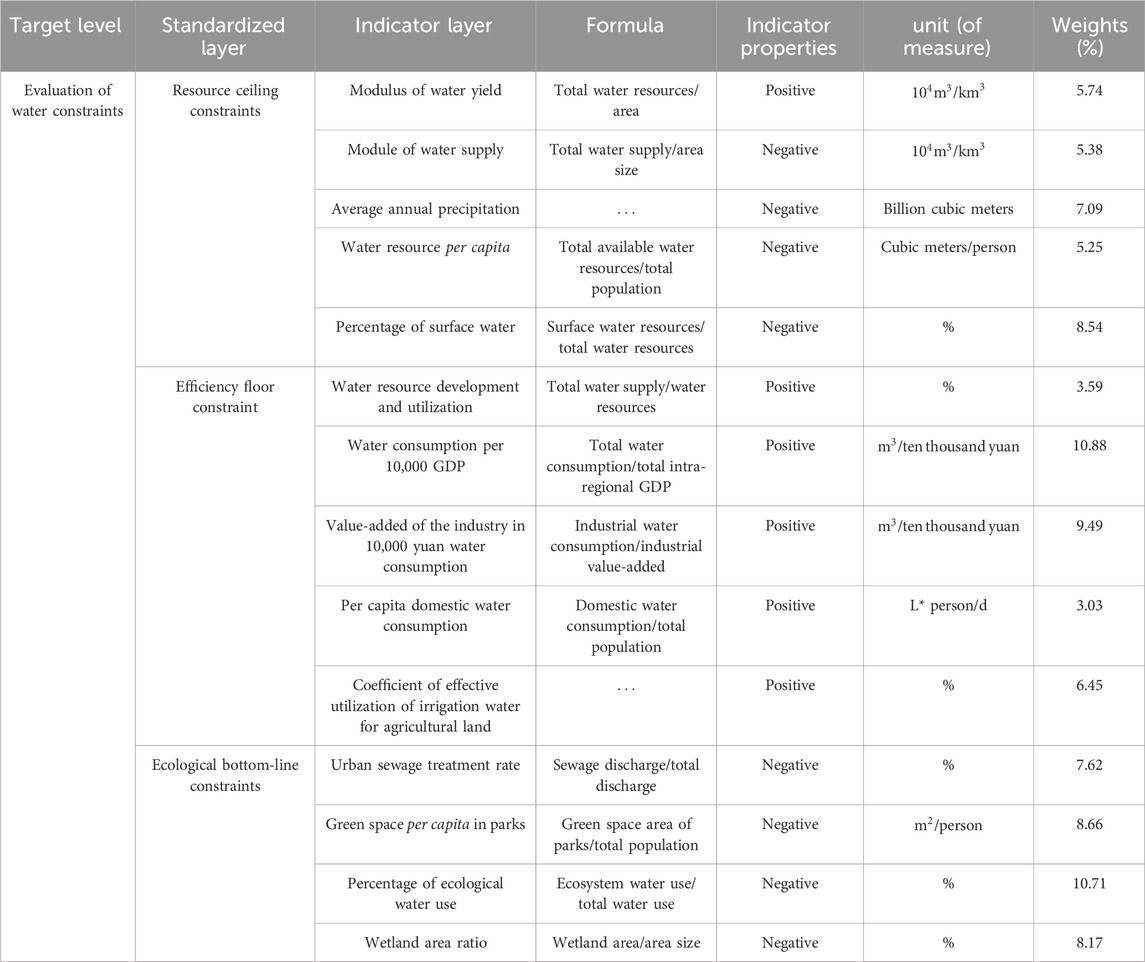
Table 1. Water resource constraint evaluation index system.
3.1.3 Mediating variables
(1) Industrial structure optimization (IH)
Optimization of industrial structure refers to the process of rationalization and advancement of the industrial structure of each industry in the economic transformation, which is compatible with the social demand and achieves the coordinated development of the region. To achieve the goal of high-quality development in the Yellow River basin, optimizing resource allocation and accelerating industrial technology upgrading are important links. In the process of industrial structure optimization, rationalization of industrial structure is a prerequisite for achieving advanced industrial structure. Therefore, the level of advanced industrial structure is chosen to measure the level of industrial structure optimization (Zhu and Xiong, 2023). Based on the exploration of the geometric perspective of spatial analysis by Fu (2010), the index of industrial structure advancedization is the embodiment of the degree of industrial structure upgrading, and the calculation method is as follows (as shown in Eq. 2–3):
First, the GDP is divided into three industries, and the share of each industry’s output value to the GDP is a space vector so that a three-dimensional set of vectors can be formed. Then, in the order of industries from low to high, the vectors are
(2) Virtual water trade (VWT)
The import and export of virtual water trade will not only coordinate the allocation of water resources but also promote the linkage development of industries with comparative advantages among regions (Zhang et al., 2021). The virtual water trade within the Yellow River basin can drive the linkage development of industries within the basin and the green and efficient development of the regional economy. The calculation of virtual water trade (VWT) is obtained by constructing a multiregional input–output model of the Yellow River basin with the help of regional input–output table data of 31 provinces and cities in 2007, 2010, 2012, 2015, and 2017. The 42 sectors (30 sectors) were merged into 13 sectors (agriculture, forestry, livestock, and fishery products and services; extractive industries; food and tobacco; textile and clothing; wood-processed products and furniture; paper, printing, and stationery and educational supplies; petrochemicals; metal and non-metal manufacturing; equipment manufacturing; other manufacturing; production and supply of gas and water; construction; and services) to simulate and analyze the virtual water trade situation among the provinces along the Yellow River. Referring to the related study of Tian et al. (2019), the specific calculations are as follows (Equation 4–10):
According to the input–output table for the nine provinces in the Yellow River basin, the balance of productive activities in region r is
where
The transformation matrix is of the form
Equation 5 is shifted and deformed to obtain a multiregional input–output model:
where
Add the water demand of each sector and construct an extended I-O table for water resources based on the input–output model. Take the direct water use coefficient of the production chain
where
The direct water use vector for region
The elements within the matrix
Virtual water trade flows from region r to region s within the Yellow River basin, as measured by the water resource expansion model:
3.1.4 Control variables
Regional division (YBY): Cross-regional industrial linkages cannot be supported by industrial and regional policies. Regional division and territorial protection increase the transaction costs of regional industries, which is not conducive to the development of industrial linkage and inhibits the process of regional integration. Referring to Liu (2019), regional division is measured by the ratio of the local general budget revenue to the GDP.
Industrial resource-attracting ability (ISA): The higher the ISA is, the more it can fully utilize the advantages of resource endowment, which is conducive to the optimization and upgrading of industries and high-quality regional development. Industrial resource-attracting ability is mainly manifested in the cooperation among enterprises, scientific research institutions, and colleges and universities within the industry. Due to the difficulty of data retrieval, referring to the processing method of the existing literature, we select the expenditure on scientific research institutions and domestic colleges and universities/external expenditure on R&D funding of industrial enterprises above designated size as a substitute (He et al., 2020).
Industrial resource allocation capacity (ISP): Good industrial resource allocation capacity can promote industrial division of labor and is conducive to industrial linkage for healthy and sustainable development of the region, which is measured by the amount of investment in fixed assets according to the study by He et al. (2020) and others.
Degree of industrial coordination (IC): coordinated development of industries plays a driving role in improving regional competitiveness and maintaining sustainable development capability. Drawing on the research of He et al. (2020), the proportion of the added value of the tertiary industry to the added value of the secondary industry is used to measure the degree of coordinated industrial development.
Economic level (UES): A good foundation for economic development is a necessary condition for industrial linkages. The higher the regional economic level, the better the conditions and foundation for industrial development, which is conducive to industrial linkages, as measured by the GDP per capita.
Infrastructure (MCL): Infrastructure development plays a pivotal role in industrial development and is an important support for industrial linkages, expressed in terms of the road area per capita in the municipal jurisdiction.
The level of opening up to the outside world (TO): Opening up to the outside world makes the import and export trade increase. It can not only stimulate economic growth but also adjust the industrial layout and accelerate the transformation and upgrading of the industrial structure, measured by the “total import and export and the GDP ratio”.
3.2 Data sources and data processing
In recent years, the Yellow River basin economy has developed rapidly, especially in agriculture, industry, energy, and other aspects that have made remarkable achievements. The study of the development of this period can reveal the laws and characteristics of China’s economic development and provide a reference for future development. However, the rapid development also faces many challenges, such as water resource shortage, environmental pollution, ecological degradation, and so on. Studying the formation mechanism and solution strategy of these problems is of great significance for the realization of the national strategy of ecological protection and high-quality development in the Yellow River basin. Therefore, we chose the development data of the Yellow River basin in the past 15 years. Industry and population data were mainly obtained from the 2006–2021 National and Yellow River Provinces Statistical Yearbook, the National Bulletin of Science and Technology Inputs, and the China Urban Statistical Yearbook. The 2007, 2010, and 2012 inter-regional input–output tables of China’s 31 provinces, regions, and municipalities and 42 sectors prepared by Liu Weidong and the 2015 and 2017 inter-regional input–output tables of China’s 31 provinces, regions, and municipalities and 42 sectors prepared by CEADs are the main bases for the compilation of the Yellow River basin input–output tables. The water resource data were obtained from the Water Resource Bulletin of the provinces along the Yellow River from 2006 to 2021 and the China Environmental Statistics Yearbook. In order to ensure the scientificity and accuracy of the calculation, the received data were processed by interpolation, unified statistical caliber, and elimination of outliers. Before making the model, the data were standardized, truncated, and reduced.
3.3 Model selection settings
(1) Baseline regression model
In order to verify whether water resource constraints have a negative inhibitory effect on industrial linkages, the following model is constructed:
In Equation 11, i denotes the region, t denotes the year,
(2) Mediating effects model
Drawing on the method of Wen and Ye. (2014), the stepwise test of regression coefficients combined with the bootstrap test was used to verify hypotheses H2 and H3, and the model was constructed as follows:
The meaning of the variables in Eqs (12) and (13) is consistent with that in Eq. 11. Among them,
4 Measurement results and analysis
4.1 Variable descriptive statistics
Descriptive statistics were used to study the basic characteristics of the variables. Table 2 describes the various variables used for the period 2006–2021.
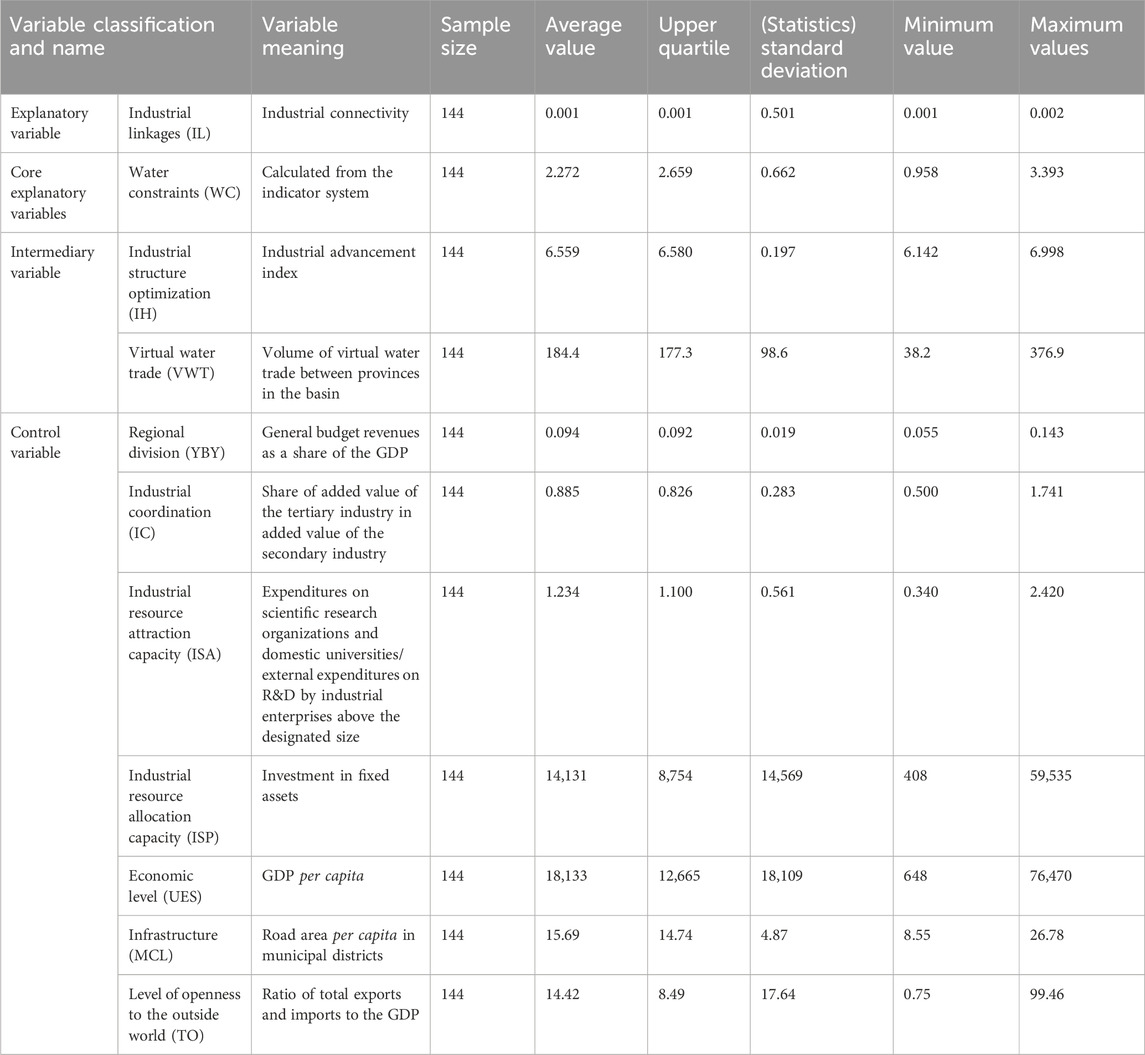
Table 2. Descriptive statistics of variables.
4.2 Benchmark regression analysis
Using the statistical software Stata 17, according to the results of the Hausman test, it was determined that the regression analysis selected the fixed-effect model to examine the impact of water resource constraints on industrial linkages in the Yellow River basin, and the regression results of models (11)–(13) corresponded to regressions (1)–(5) in Table 3, respectively.
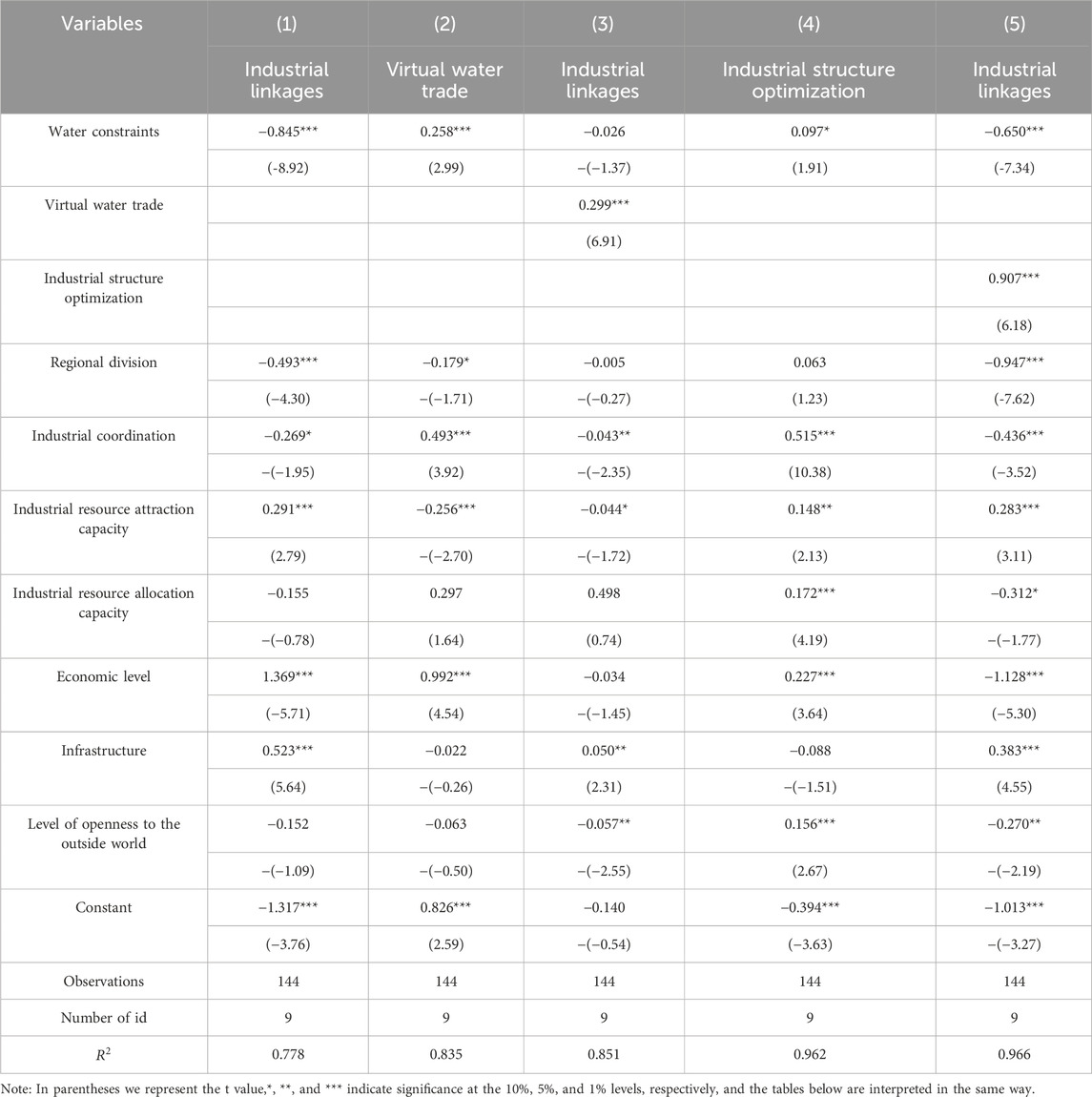
Table 3. Intermediation effect regression results.
In regression (1), the coefficient of water resource constraints on industry linkage, i.e., the total effect, is significant at the 1% level −0.845, indicating that water resource constraints significantly inhibit the development of industry linkage. It is consistent with the relevant existing findings (Wang et al., 2023). The constraints on the production and development of the watershed industry are reflected in two aspects. First, it increases the production and operation costs of enterprises. In the context of water resource constraints, enterprises invest more funds to adopt water-saving equipment, water-saving technology, construction and maintenance of water conservancy facilities, ensure the supply of water resources, or use other production factors to replace water resources, which directly leads to the increase in the production costs of enterprises and affects the profitability of enterprises. Second, it affects product quality and industrial competitiveness. Water constraints lead to enterprises being unable to guarantee enough water supply and will affect the quality and performance of products, which will lead to consumers’ distrust of products, reduce the market competitiveness, cause the risk of interruption in enterprises’ production, affect the stability of the whole industry chain and competitiveness, and further hinder the development of basin interval industry linkage.
On the control variables, regional fragmentation and local protection are unfavorable to industrial linkages, mainly because local protection increases the transaction costs of inter-regional cooperation, which in turn is unfavorable to inter-regional industrial linkages. The degree of industrial coordination is not conducive to industrial linkage, and the higher homogenization of industries with fully coordinated development is not conducive to industrial linkage. The stronger the ability to attract and allocate industrial resources, the more conducive it is to industrial linkage. Strong resource attraction helps enterprises obtain the required raw materials, technology, talents, etc., thus reducing production costs, improving the overall efficiency of the industrial chain, promoting technological innovation, enhancing market competitiveness, and improving the potential of industrial linkage. The higher the level of economic development and the better the infrastructure, the more favorable it is for industrial linkage. A good economic level makes it easier for enterprises to obtain financial support and thus have more opportunities for industrial linkage. A perfect infrastructure can provide better conditions and environments for each industry and promote collaboration and integration among them, thus realizing more efficient industrial development. The higher level of opening up to the outside world is not favorable to industrial linkage in the Yellow River basin. The higher the level of opening up to the outside world, the more foreign investment and technology can be attracted to promote economic development and industrial upgrading. Of course, if the opening up to the outside world is too blind and unrestricted, it may lead to some negative impacts, such as environmental pollution, over-exploitation of resources, and other problems. These problems may adversely affect the ecological environment and sustainable development of the Yellow River basin, thus affecting the industrial linkage and development of the whole region.
In summary, water resource constraints significantly and negatively affect industrial linkage in the Yellow River basin, and hypothesis 1 is verified.
4.3 Mechanism analysis
This paper adopts the stepwise regression method to test the mechanism of water resource constraints on industrial linkages, and the results are shown in Table 3. According to the test steps of the stepwise regression method (Turton, 1997), first, we test the impact of water resource constraints on industrial linkages and get the coefficient
From the path of virtual water trade, the coefficients c, a, b, and c’ are −0.845, 0.258, 0.299, and −0.026, respectively, and only c’ does not pass the significance test. This means that there is no direct effect of water resource constraints on industrial linkages, virtual water trade is fully mediated, and the mediation effect is 7.71% (0.258*0.299); that is, under this path, there is no direct effect of water resource constraint on industrial linkage, and water resource constraints only have a facilitating effect on industrial linkages through virtual water trade. Water resource constraints force enterprises to strengthen water resource conservation and management, reduce water waste and loss through technical means and management measures, and improve the efficiency of water resource utilization, which provides a sufficient resource base for virtual water trade (Zhang, 2019). The uneven water resource distribution, the abundant upstream region, agriculture and animal husbandry, the serious soil and water loss in the middle reaches, and industrial wastewater lead to the deterioration of water quality in the main stream and tributaries of the Yellow River; the downstream local water resources are very dependent on the passenger water supply in the middle reaches. Based on the unbalanced distribution of water resources, water resource constraints will drive the occurrence of virtual water trade along the nine provinces and regions and realize the transfer of water resources. By increasing the virtual water trade, deepening the industrial division of labor, and optimizing the effective allocation and efficient utilization of water resources, the linkage development of cross-regional comparative advantage industries under the constraint of water resources can be promoted, supposing that H2 is certified.
From the optimization path of industrial structure, the coefficients c, a, b, and c’ are −0.845, 0.097, 0.907, and −0.650, respectively, and all the coefficients pass the significance test. It can be obtained that the direct effect of water resource constraints on industrial linkage is −0.650, and water resource constraints directly limit the development of industrial linkage. In addition, the mediating effect of industrial structure optimization is 8.79% (0.097*0.907), which indicates that water resource constraints promote industrial linkage through industrial structure optimization. The reason for this is that water resource constraints increase the production costs of polluting enterprises, and in order to maintain profits, enterprises have two choices of production decisions: downsizing production capacity to reduce costs or upgrading through industrial structure to realize green transformation. For small and micro-enterprises, they can only continue to reduce production until they finally withdraw from the market by themselves; however, large enterprises have relatively abundant talent and capital and huge sunk costs, so in order to pursue long-term development, they tend to abandon “end-of-pipe management” and turn to “source management” by promoting the transformation and upgradation of industries in the direction of green and clean production, which realizes the optimization of the industrial structure (Wang et al., 2023). In turn, it promotes cooperation and synergy between enterprises upstream and downstream of the industrial chain, realizes resource sharing and complementary advantages, and improves the efficiency and competitiveness of the whole industrial chain. The development of industrial linkage strengthens the collaboration and coordinated development of industries between different regions and realizes the mutual benefit and win–win situation of regional economy. The assumption H3 is hence proven.
The above analysis of the mediating effect shows that water resource constraints can not only directly limit the development of industrial linkages in the Yellow River basin but also drive the development of industrial linkages among the provinces in the Yellow River basin through the two major pathways of virtual water trade and industrial structure optimization. Among them, the mediating effect of industrial structure optimization is particularly significant.
4.4 Heterogeneity analysis
According to the “Yellow River basin ecological protection and high-quality development plan outline” in the proposed characteristics of the advantages of the modern industrial system, the nine provinces and regions along the Yellow River will be divided into three groups: to support Inner Mongolia, Ningxia, and Qinghai to strengthen the agricultural and animal husbandry industry; Shanxi, Shaanxi, and Gansu to build an important energy industry base; and Shandong, Henan, and Sichuan to accelerate the development of emerging industries and advanced manufacturing industry. Among them, the overlapping provinces in the three major industrial systems are selected to be grouped according to the proportion of industrial output value to the GDP and the pillar industries of each province. Then, the mediation effect regression test is carried out.
4.4.1 Mediating effects of areas of agricultural and pastoral advantage
Table 4 presents the regression results for the regions of Inner Mongolia, Ningxia, and Qinghai provinces with agricultural and animal husbandry advantages. The total effect of water resource constraints on industrial linkages in regions with agricultural and animal husbandry advantages is −0.222, which is significantly suppressed and consistent with the benchmark regression results.
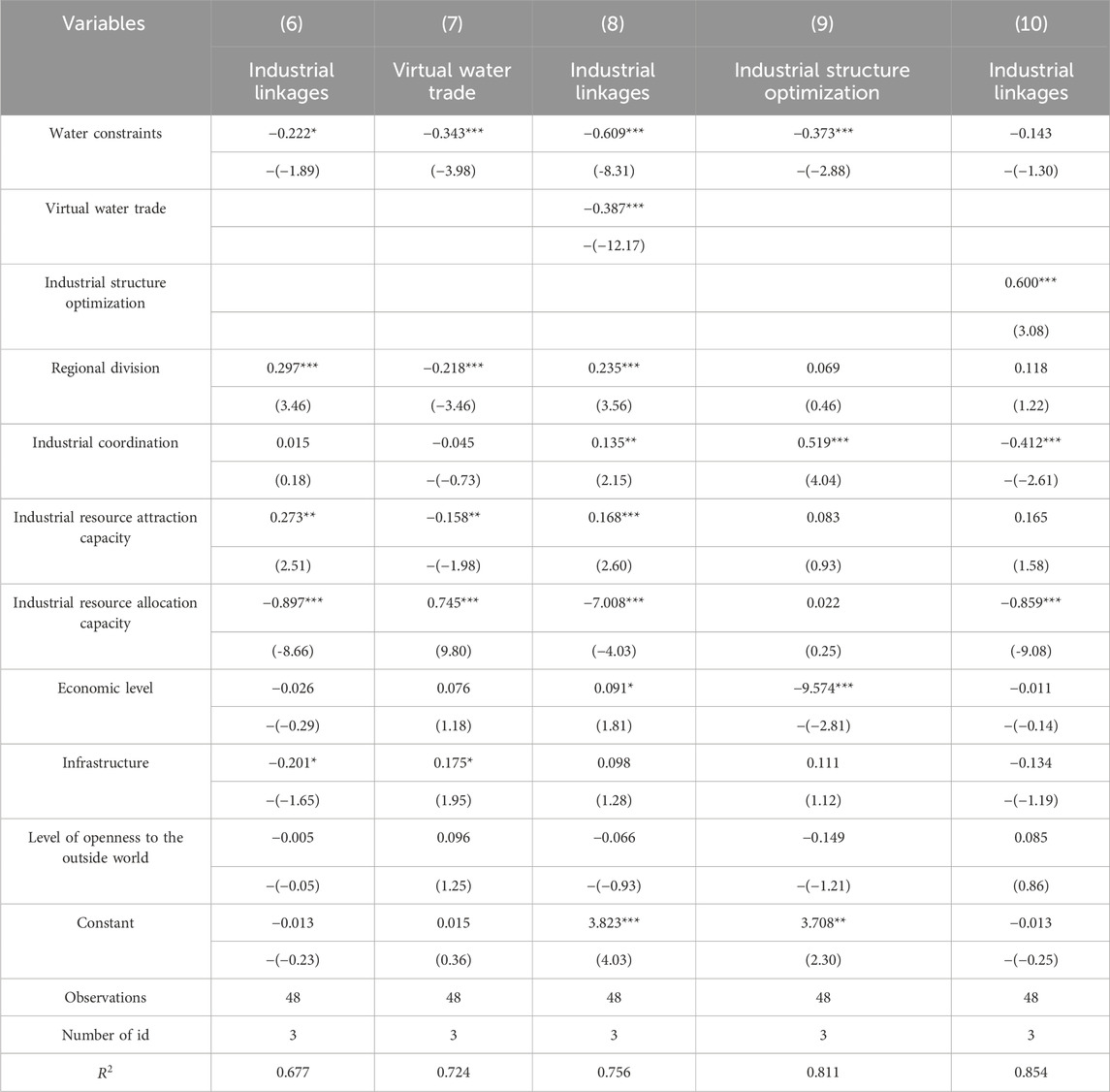
Table 4. Regression results of mediating effects in agriculturally advantaged areas.
The mediation effect of virtual water trade (VWT) is significant at the 1% level of 13.3% (−0.343 × (−0.387)), which suggests that water resource constraints positively affect industrial linkages by suppressing virtual water trade. The Agriculture and animal husbandry of Yellow River basin consume significant amounts of water resources. The high water consumption and low output efficiency of agricultural and animal husbandry production, consuming a large amount of scarce water resources on low-value-added production, hinders the full realization of the economic benefits of water resources (Xie and Ma, 2022a). In the virtual water trade within the nine provinces along the Yellow River, Qinghai and Ningxia belong to the virtual water net outflow area; Inner Mongolia belongs to the virtual water net inflow area, but the net inflow is small (Xie and Ma, 2022b). The water constraints formed by the waste of water resources, such as flood irrigation, limit the production and development of agriculture and animal husbandry. On one hand, drought and water shortage cause the obstruction of crop growth cycle and yield fluctuation; on the other hand, uneven water distribution and intensified water contradiction in rural areas further affect the agricultural production efficiency. The reduction of agricultural and animal husbandry production output inhibits the virtual water trade and thus reduces the outflow of virtual water. Forcing water resources to strengthen the management and improve the efficiency of water resource utilization is conducive to the sustainable and coordinated development of the industry, which has a positive impact on the industrial linkage.
The mediating effect of industrial structure optimization (IH) is significant at the 1% level of −22.38% (−0.373 × 0.600), and water resource constraints negatively affect industrial linkages by inhibiting industrial structure optimization. Water resource constraints make it difficult to adjust the structure of the agricultural and animal husbandry industry in the Yellow River basin. On one hand, it is difficult to change the traditional agricultural production mode, and the development of high-quality and efficient agriculture is limited; on the other hand, the development of characteristic industries is restricted, the extension of the agricultural industrial chain is blocked, the allocation of agricultural and animal husbandry production factors is unreasonable, and the development of various links in the industrial chain is unbalanced, thus reducing the overall benefit of the industry. Agricultural and animal husbandry irrigation water use is crude, and water use efficiency is low, water resource constraints limit the production and development of agriculture and animal husbandry as it is a high-water-consuming industry, and the output and quality of agricultural and animal husbandry products decline, thus affecting the market competitiveness of the products. The evolution of the low-level industrial structure dominated by agriculture and animal husbandry toward industrialization will aggravate the contradiction between the supply and demand of water resources (Wang et al., 2023). Severe water resource constraints limit the transformation and upgradation of agriculture and animal husbandry to a certain extent, which is not conducive to the development of high-tech agriculture and animal husbandry and new types of agriculture and animal husbandry in the direction of green industries and cannot provide favorable conditions for industrial linkage, thus limiting the development of industrial linkage.
4.4.2 Mediating effects of regions with energy industry advantages
Table 5 presents the regression results of the mediating effects for the energy industry-dominant regions of Shanxi, Shaanxi, and Gansu provinces. The total effect of water resource constraints on industrial linkages in the energy industry-dominant regions is −0.529, which is significantly suppressed and consistent with the benchmark regression results.
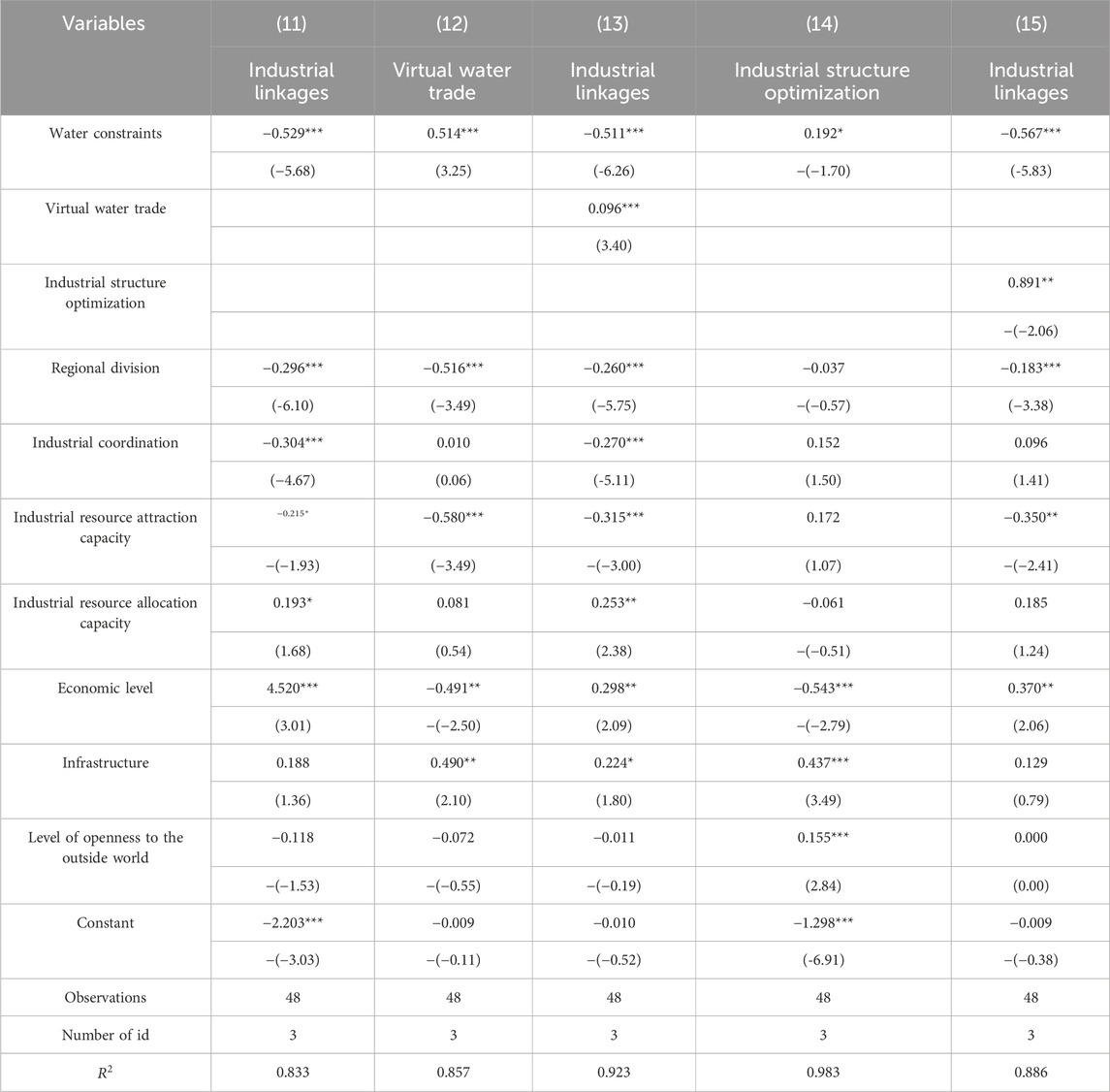
Table 5. Regression results of mediating effects in regions with energy industry advantages.
The mediation effect of virtual water trade (VWT) is significant at the 1% level of 4.93% (0.514 × 0.096), which suggests that water resource constraints positively affect industrial linkages by promoting virtual water trade. In the virtual water trade within the nine provinces along the Yellow River, Shaanxi and Shanxi mainly assume the role of virtual water product consumers (Xie and Ma, 2022a). Shanxi, Shaanxi, and Gansu provinces are rich in coal, natural gas, and other energy sources, but the industrial development of the energy industry-advantageous regions results in high water consumption and pollution, coupled with serious soil erosion and relative scarcity of water resources. Water resource constraints alleviate water scarcity by promoting virtual water trade. Through virtual water trade, sufficient water resources are introduced to relieve the water resource pressure in the Yellow River basin. To guide enterprises to transform into water-saving and efficient industries, incentivizing enterprises to carry out water recycling and recovery and maximizing the use and value of water resources through technological innovation and management innovation should be carried out. Water constraints can also promote the development and innovation of virtual water trade, strengthen intra-basin cooperation and exchanges, develop the water resource market, and thus promote the diversification of industrial linkages.
The mediating effect of industrial structure optimization (IH) is significant at the 1% level of 17.11% (0.192 × 0.891), which indicates that water resource constraints positively affect industrial linkages by promoting industrial structure optimization. The dominant industries in the energy-dominant regions are mostly coal mining, and the utilization of water resources is rough and inefficient. Water resource constraints make energy industries bear higher production costs. If these industries achieve inter-regional relocation or exit from the market and gradually choose to develop in the direction of water conservation and cleanliness, it will promote the optimization of the regional industrial structure, which will be conducive to deepening the industrial division of labor and promoting regional industrial cooperation and linkage development. On one hand, the migration of the energy industry helps optimize the regional industrial structure. Through industrial transfer, high-water consumption industries can be moved from water-scarce areas to water-rich areas, thus reducing production costs and increasing production capacity. At the same time, this migration will help ease the pressure on water resources and promote industrial transformation and upgrading. On the other hand, the application of water-saving and clean production technology contributes to the green and sustainable development of the energy industry. Through technological innovation, enterprises can reduce the consumption of water resources and improve the efficiency of resource utilization so as to have an advantage in the market competition. In addition, industrial migration and withdrawal are also conducive to deepening industrial division of labor and promoting regional industrial cooperation and linkage development. In the process of industrial transfer, local regions can develop characteristic industries according to their own advantages, realize industrial complementarity, and further promote the coordinated development of regional economy. At the same time, the industrial cooperation between regions can drive the sharing of infrastructure, talents, technology, and other resources and improve the overall competitiveness.
4.4.3 Intermediation effects in regions with advantages in emerging industries and advanced manufacturing industries
Table 6 shows the regression results of the mediating effects of emerging industries and advanced manufacturing regions in Shandong, Henan, and Sichuan provinces. The total effect of water resource constraints on the industrial linkage of emerging industries and advanced manufacturing regions is −0.431, which is significantly inhibited and consistent with the benchmark regression results.
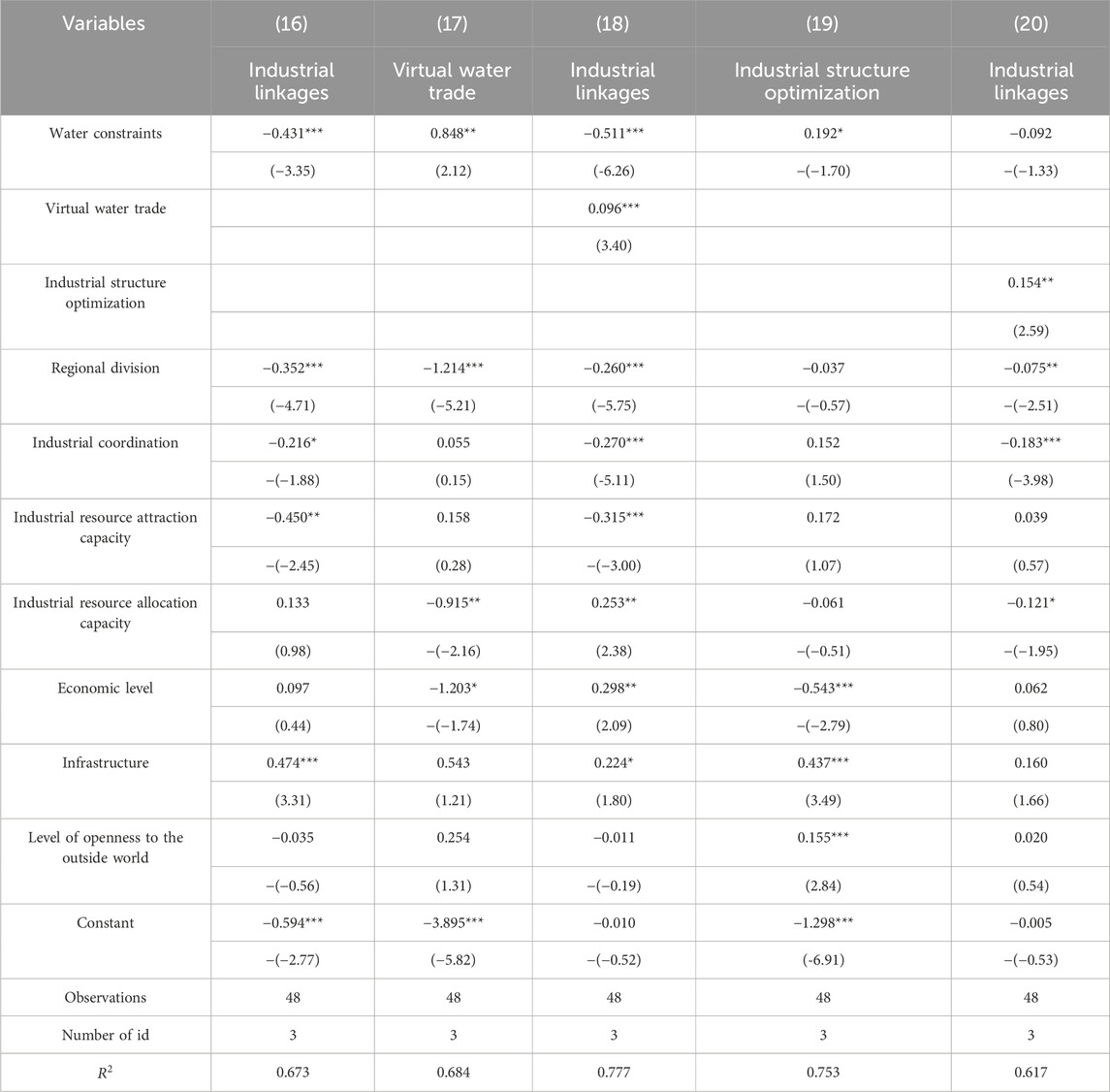
Table 6. Regression results of mediating effects in regions with advantages in emerging industries and advanced manufacturing industries.
The mediating effect of virtual water trade (VWT) is significant at the 5% level of 8.14% (0.848 × 0.096), and water resource constraints positively affect industrial linkages by promoting the path of virtual water trade. In the virtual water trade within the nine provinces along the Yellow River, the downstream regions of Shandong and Henan are always the net virtual water inflow areas, and Sichuan is also gradually transformed into a net virtual water inflow area (Xie and Ma, 2022b). Shandong and Henan, as the downstream areas of the Yellow River basin, have little precipitation, and their surface water resources mainly rely on the recharge of water from the middle reaches of the river, so their water resources are extremely scarce, and they need to be regulated and supported by the virtual water trade. Water resource constraint realizes the optimal allocation of water resources by promoting the import of water resource-intensive products and exporting the poor commodities of virtual water resource trade, which alleviates the water resource restrictions caused by the normal development of some industries and is conducive to industrial linkage. Virtual water trade promotes resource sharing and division of labor cooperation among regions. Areas rich in water resources can focus on the development of water-intensive industries, while areas with water resource shortage can meet the demand by importing virtual aquatic products and realize complementary advantages between regions. Through virtual water trade, the pressure on local water resources can be reduced to protect the ecological environment and achieve sustainable development. In addition, virtual water trade also drives the development of logistics, transportation, and other related industries, creating more employment opportunities and economic growth points for regional development and greatly promoting the regional linkage development.
The mediating effect of industrial structure optimization (IH) is significant at the 1% level of 2.96% (0.192 × 0.154), and water resource constraints positively affect industrial linkages by encouraging the path of industrial structure optimization. This is because water resource constraints promote the transformation of old and new kinetic energy in the downstream region, which promotes the development of new technologies, new business forms, and new modes to achieve the optimization and upgrading of industrial structure. Emerging industries and advanced manufacturing industries improve the efficiency of water resource utilization and industrial competitiveness, providing favorable conditions and a solid foundation for industrial linkage. In addition, the economic development level of regions with advantages owing to emerging industries and advanced manufacturing industries is relatively high, and the industrial structure is relatively reasonable, which is conducive to the development of industries in the direction of high-value-added, high-technology, and high-intensification production. The optimization of industrial structure promotes industrial linkage not only through strengthening the cooperation of enterprises upstream and downstream of the industrial chain to achieve resource sharing and complementary advantages but also through strengthening the construction of industrial clusters to achieve synergistic development of industries and strengthening technological innovation and talent cultivation to improve the core competitiveness of enterprises, thus promoting industrial linkage.
Comprehensive analysis of all the results, as shown in Table 7, reveals that there is significant heterogeneity in the mediating effects across the basin and subregions. The mediating effect of industrial structure optimization is the largest in the regions with advantages in agriculture and animal husbandry and energy industries, which may be due to the fact that both agriculture and animal husbandry and energy industries are water-consuming industries, and the water resource constraints seriously limit the daily production and development of water-consuming industries. In order to alleviate the contradiction between the supply and demand of water resources and to realize the improvement of industrial water use efficiency, the water resource constraints force the transformation and upgrading of the industrial structure, which makes the industries develop in the direction of green, healthy, and sustainable production, thus promoting the development of industrial linkage. Therefore, for high-water-consuming industries, the mediating effect of industrial structure optimization is higher than that of virtual water trade. The intermediary effect of virtual water trade is the largest in regions with advantages in emerging industries and advanced manufacturing industries, probably because these regions have higher levels of economic development, higher levels of industrial servicing, and higher industrial water use efficiency, so the effect of virtual water trade in alleviating water resource constraints is stronger than that of industrial structure optimization.
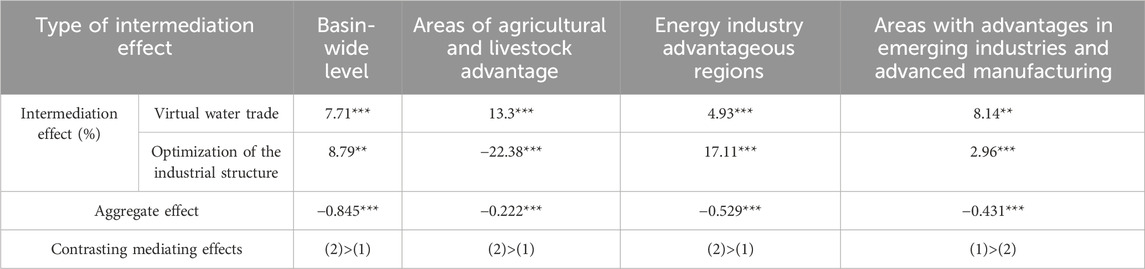
Table 7. Basin-wide and subregional mediated effect regression results.
4.5 Robustness tests
In order to verify the robustness of the benchmark regression results, this paper conducts a robustness test by replacing the explanatory variables, bootstrap transforming the number of samples to test the mediating effect, and differential generalized moment estimation to deal with the endogeneity problem, as follows.
(1) Replacement of explanatory variables
In order to confirm the reliability of the results, this paper replaces the explanatory variable industrial linkage (IL) with the industrial synergistic agglomeration index (CO). In the calculation process, the industrial synergistic agglomeration index (Jiang and Xi, 2014) between the productive service industry and the manufacturing industry is used because the synergy between the two can promote regional economic growth, employment increase, and pollution improvement through deepening the division of labor and generating economies of scale. Industrial agglomeration will contribute to the reduction of transaction costs and the deepening of industrial specialization and division of labor because of the concentration of industries in space and geographic location. In the progress of regional industrial linkage, industrial division of labor is often an important basis, and industrial agglomeration is usually an important carrier. Therefore, the level of cooperative industrial agglomeration is chosen to reflect the level of industrial linkage. Drawing on the method of Cui et al. (2019) to calculate the index of industrial synergistic agglomeration, the formula is CO = 1-|MA-PA|/(MA + PA) + (MA + PA). Location entropy is used to measure the degree of industrial agglomeration, so MA and PA are the location entropy indices of manufacturing and productive service industries, respectively, calculated as
Table 8 shows the results of the fixed-effect estimation of the equation after replacing the explanatory variables, and it can be seen that the sign of the coefficient of the visible water resource constraint (WC) is significantly−0.140 at the 1% confidence level, consistent with the sign and significance of the water resource constraint before the replacement of the explained variable, verifying that the results are robust and reliable.
(2) Bootstrap test
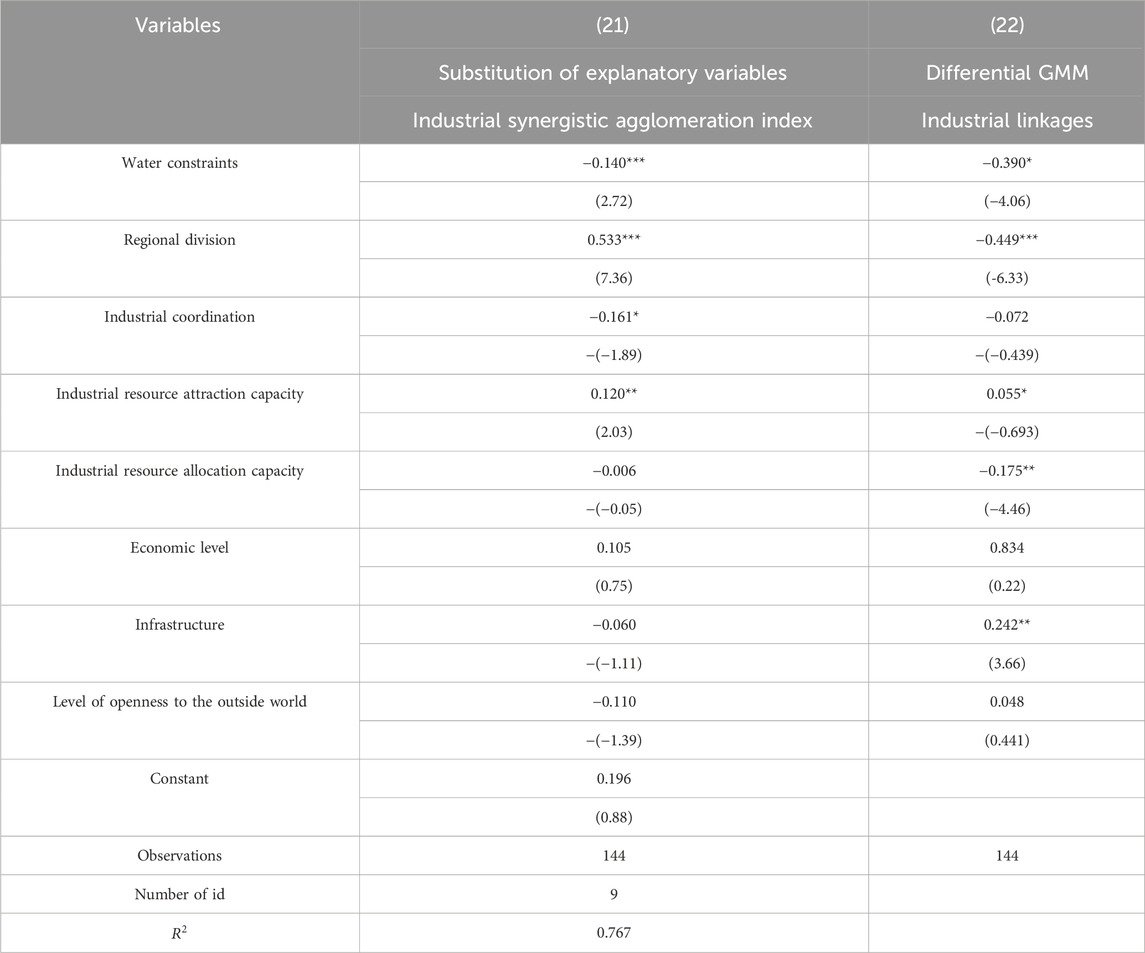
Table 8. Robustness test results.
In order to verify the stability of the mediating effect, the bootstrap test was conducted in this paper, and 500 and 1,000 samples were taken to verify the reliability of the conclusion. The results are shown in Table 9. It can be seen that the confidence intervals of all mediating effect values do not contain 0, indicating that the mediating effects are all significant. In addition, as the number of sampling samples increases, the confidence interval is shortened, which verifies that the mediation path is robust and reliable.
(3) Endogeneity test
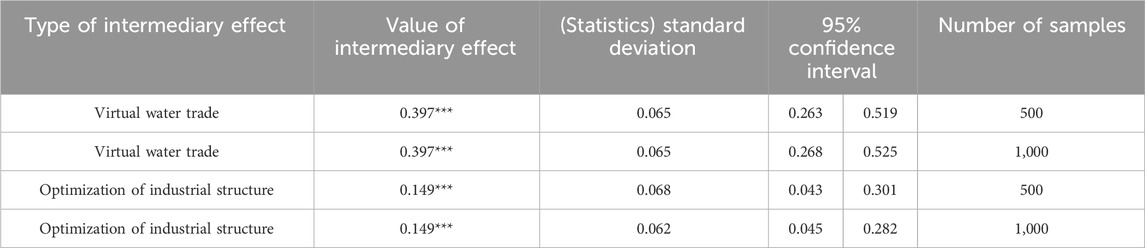
Table 9. Bootstrap (500 and 1,000 samples) mediation effect test results.
In order to overcome the endogeneity caused by the bidirectional causality between variables and the possible omission of variables in the model setting process, this paper draws on related research (Guan et al., 2023), where the instrumental variable method is used for the robustness test. The water constraint level (WC) lagged one period (L.WC) and industry linkage (IL) lagged one period (L.IL) in the model are used as instrumental variables, and the baseline model Eq. 11 is evaluated using the differential generalized moment estimation method (DIF-GMM). The test results are shown in column (22) in Table 8. Among them, the p-value of AR (2) is greater than 0.05, which indicates that the model passes the serial correlation test. The p-value of Hansen is greater than 0.05, which indicates that the model passes the over-identification test, and the instrumental variables are all exogenous and valid. Therefore, the differential generalized moment estimation method (DIF-GMM) estimation is valid. In addition, the regression coefficient of the water constraint level (WC) is significantly negative at the 1% level, indicating that water constraints have a negative inhibitory effect on industrial linkages, which is consistent with the findings of the benchmark regression, suggesting that the results are robust.
5 Conclusions and implications
5.1 Conclusion
For the first time, the paper constructs the evaluation index system of water resource constraint from the constraints of water resources at the upper limit, the lower limit of efficiency, and the ecological bottom line and includes the policy indicators. For the first time, the influence mechanism of water resource constraints on industrial linkage is explored, and two paths of virtual water trade and industrial structure optimization are proposed. Through mechanism analysis, three hypotheses are proposed, and the mediation effect model was constructed to verify the existence of the two pathways and the effect size. Finally, according to the analysis of empirical results, all regions in the Yellow River basin, such as advantageous areas of agriculture and animal husbandry, energy industry, and emerging industries and advanced manufacturing industry, are guided to realize industrial linkage directly or indirectly through the path of virtual water trade and industrial structure optimization. Using the provincial panel data from 2006 to 2021, with the nine provinces and regions along the Yellow River, the impact of water resource constraints on industrial linkage is empirically analyzed. The main conclusions are summarized as follows:
First, from the basin-wide aspect, the total effect of water resource constraints on inter-basin industry linkage development is significantly inhibited. From the perspective of the impact path, first, water constraints promote inter-industry linkage development by promoting virtual water trade, and the mediating effect of virtual water trade is 7.71%. Second, water constraints increase the intensity of industrial linkages through optimizing industrial structure, and the mediating effect of industrial structure optimization is 8.79%. Taken together, water resource constraints directly inhibit the development of industrial linkages, but they promote the development of industrial linkages through two intermediary paths. Among them, the mediating effect of industrial structure optimization > the mediating effect of virtual water trade.
Second, from the subregional level, the impact of water resource constraints on industrial linkages shows significant regional heterogeneity. In regions with advantages in agriculture and animal husbandry, water constraints positively affect industrial linkages by inhibiting virtual water trade and hinder industrial linkages by inhibiting industrial structure optimization, and the mediating effect of industrial structure optimization is larger. In regions with advantages in the energy industry and regions with advantages in the emerging industry and advanced manufacturing industry, water resource constraints positively affect industrial linkages by stimulating virtual water trade and promoting industrial structure optimization, in which the mediating effect of industrial structure optimization is larger in regions with advantages in the energy industries, and the mediating effect of virtual water trade is larger in regions with advantages in the emerging industries and advanced manufacturing industries.
5.2 Revelations
Scarcity of water resources, pollution of the water environment, destruction of water ecology, and low utilization of water resources are important factors restricting the sustainable, stable, and efficient development of China’s economy. Especially in the context of the Yellow River basin’s implementation of strategies such as high-quality development and coordinated regional development, how to realize industrial linkage under water resource constraints has become a major issue of common concern to governments at all levels and even to society as a whole. It is found that water resource constraints promote industrial linkage development by stimulating virtual water trade, forcing industrial structure optimization, and optimizing industrial structure by promoting virtual water trade. Therefore, combining the research results of this thesis and according to the current economic situation of the Yellow River basin, the following insights are obtained.
5.2.1 Rationalization of the virtual water trade model in the Yellow River basin
In order to solve the problem of water resource constraints in the Yellow River basin, a “virtual water trade” strategy based on the overall planning of the Yellow River Basin is proposed. The strategy takes into full consideration the regional and contemporary characteristics of each region and analyzes other social factors to make it more valuable for sustainable development. In the process of implementation, the focus should be on promoting water-saving awareness and social governance and strengthening engineering technology water transfer and industrial structure optimization in advantageous areas of agriculture and animal husbandry and energy industries so as to realize the optimal distribution of water resources. Although virtual water trade has a good regulating effect on alleviating the water constraints in water-scarce regions, for a region that imports a large amount of virtual water, especially in the areas where agricultural products are imported, such as emerging industries and advanced manufacturing advantages, it will not only lead to the restriction of the price of agricultural products in the region but also cause drastic changes in the production costs; and for a region that increases the export volume of virtual water, such as agriculture and animal husbandry advantage areas, there will be over-exploitation of water resources, leading to the deterioration of the water environment and ecological damage. Therefore, it is necessary to give full consideration to other issues arising from virtual water trade and to formulate a rational virtual water trade policy. First, strengthening the management and supervision of water resources to ensure the rational development and utilization of water resources and prevent the excessive exploitation and pollution of water resources are the premise and guarantee of virtual water trade. Second, focus should be placed on improving the utilization efficiency of water resources, promoting water-saving technology and management modes, reducing the consumption of water resources, and providing favorable conditions for virtual water trade. In addition, cooperation within the river basin needs to be strengthened to jointly address the water resource challenges in the Yellow River basin and promote sustainable development.
5.2.2 Promoting industrial structure upgrading with the basin as a whole
The linked development of industries on the basis of optimizing industrial structure should be promoted. The essential requirements for high-quality industrial development are synergy, greenness, innovation, openness, and sharing. The regional industrial structure of the nine provinces and regions along the Yellow River has large differences, and polarization has gradually come to the fore. From the perspective of the whole basin, to realize the high-quality development of the Yellow River basin, it is necessary for the provinces and regions to break the local protection, break the administrative barriers, adjust the spatial structure of the industry, grasp the industrial layout at the level of the whole basin, and deepen the specialized division of labor in order to achieve the complementary advantages of the basin industry and synergistic development. The advantageous areas in agriculture and animal husbandry, energy industry, and emerging industries and advanced manufacturing industry should cooperate according to the comparative advantage industries of various regions so as to form a joint force of 1 + 1 > 2 and promote the linkage development of industries. First, regions with advantages in agriculture and animal husbandry can cooperate with regions with energy industry advantages to promote the modernization of agriculture and animal husbandry and improve energy utilization efficiency; for example, to promote the application of clean energy in agriculture and animal husbandry, such as solar energy and wind energy, and to provide green energy for agricultural production and aquaculture. At the same time, areas with advantages in the energy industry can export advanced technology and management experience to agricultural and animal husbandry areas to help agriculture and animal husbandry reduce costs and increase output value. Second, emerging industries and advanced manufacturing regions should work together to promote industrial upgrading, further promote technological exchanges within the river basin, and help the transformation and technology of industrial structure upgrading. For example, emerging industries, such as big data, artificial intelligence, and other technologies, can be combined with the advanced manufacturing industry to promote the development of intelligent and green manufacturing industries. The advantageous enterprises of the advanced manufacturing industry can cooperate with enterprises in emerging industries to jointly research and develop innovative products, explore the market, and realize the complementarity and optimization of the industrial chain. In addition, the cooperation between the upstream and downstream enterprises of the industrial chain should be strengthened, the forward and backward linkage between industries should be increased, the degree of economic linkage should be improved, and the coordinated development of the region driven by industrial linkage should be encouraged. In the process of promoting the high-quality development of the Yellow River basin, emphasis should be placed on green and sustainable development. Ecological protection should be considered as a prerequisite for the high-quality development of the Yellow River basin, and industrial development methods at the cost of over-exploitation, resource waste, and ecological damage should be avoided. Innovation is the internal driving force for the high-quality development of the Yellow River basin, and the innovation-driven development strategy should be persistently carried out to complete the energy conservation and efficiency of traditional industries through the research and development of new technologies so as to realize the strategic objectives of ecological environmental protection and high-quality development of the Yellow River basin.
5.2.3 Formulating rigid water resource constraints according to local conditions to promote sustainable economic development
The Yellow River basin is a vast area, and resource endowment, geographic location, industrial structure, and policy orientation determine the significant heterogeneity of the provinces and regions along the Yellow River. Agricultural and animal husbandry advantageous areas and energy industry advantageous areas of water consumption, supply, and demand contradiction are prominent, and coordination of economic development and water resource constraints will have certain difficulties. In addition, because of the implementation of the old and new kinetic energy conversion, emerging industries and advanced manufacturing industry gradually replace the traditional industry to green, environmentally friendly, clean industry transformation, which can be faster to change the production mode to meet the consumer demand for environmental protection and green products. However, Shandong and Henan are relatively sensitive to water resource constraints due to their more severe water shortage. Considering the differences between regions, governments at all levels should take into account local conditions when formulating water resource rigidity constraint policies and strengthening water resource rigidity constraint measures so as to prevent water security problems while maintaining the sustainable development of the region’s industries as well as promoting the linked development of the basin’s industries. First of all, the government should formulate the corresponding rigid water resource constraint policies according to the situation of water resources in each region. In areas with abundant water resources, such as agricultural and animal husbandry advantages, the government can strengthen the supervision of the development and utilization of water resources to ensure that water resources are not overexploited, while in areas with scarce water resources, such as energy industry advantages, the government should adopt more stringent water resource management measures to limit the development of high-water-consumption industries and ensure the reasonable distribution of water resources. Second, encouraging the research and promotion of water-saving technology can improve the efficiency of water resource utilization, guide enterprises to adjust industrial structure, develop water-saving industries, increase the investment in water resource protection, guarantee the sustainable development of the water ecological environment, and promote the sustainable development of emerging industries and advanced manufacturing industries. In addition, the government also needs to pay attention to the linkage development of industries in the river basin. By strengthening the cooperation among various regions in the basin, the rational allocation of water resources can be realized to ensure that the industrial development of various regions in the basin is not restricted by water resource shortage. At the same time, the government can also promote the optimization and upgrading of the industrial structure in the basin, guide the industry to concentrate in the areas with obvious water resource advantages, and realize the efficient development of the industry in the basin.
5.2.4 Vigorously promoting the construction of a basin-wide industrial community to realize the synergistic high-quality development of the Yellow River basin
The development of industrial clusters based on division of labor and cooperation and the development of cross-regional industrial linkages are important directions for China’s economic and social development. The core of the industrial community based on industrial clusters is the integration of the industrial chain. The development of the industrial community in the Yellow River basin can start from the following aspects: first, it is necessary to establish industrial clusters and industrial chains with global influence. By guiding industrial agglomeration according to the resources and industrial development of the Yellow River basin, an industrial spatial layout that meets the requirements of water resource constraints will be formed, and industrial clusters and industrial chains of leading international level will be cultivated. Second, enterprise alliances between different river basins should be promoted. Establishing alliances can provide a bridge and platform for interactive development between industries to cope with external shocks. At the same time, regional alliances for production, technology, innovation, and sales should be established to realize the goal of linked development. Third, intra-regional division of labor and cooperation mechanisms should be established to avoid homogenized competition within the industry. The industrial division of labor among the provinces along the Yellow River should be clarified so that each region can play its own functions and roles in the division of labor and avoid generating low-end and ineffective supply. By integrating regional resources and technologies, the refinement of industrial development in the Yellow River basin will be realized, and the goal of coordinated regional development will be achieved through the linked development of regional industries. In addition, all regions can also strengthen policy support to provide a strong guarantee for cooperation in competitive industries. For example, improve preferential tax policies to reduce the cost of enterprise cooperation; set up special funds for industrial cooperation to support the construction of key projects; strengthen personnel training and exchange, and enhance the ability of industrial collaborative innovation. Through building a cooperation platform, organizing industrial matchmaking meetings, and talks and other activities, exchanges and cooperation among enterprises can be promoted in various regions. At the same time, the introduction of advanced technology and management experience can enhance the overall competitiveness of the industrial chain.
Data availability statement
The original contributions presented in the study are included in the article/Supplementary Material; further inquiries can be directed to the corresponding author.
Author contributions
RL: writing–review and editing. DY: writing–review and editing and writing–original draft. DS: validation and writing–review and editing.
Funding
The author(s) declare financial support was received for the research, authorship, and/or publication of this article. This research was supported by the National Social Science Foundation of China under the project of “Scale trading of agricultural water rights and its effect under the confirmation of rights to households” (18BJJY075) and the project of “Construction of peak disciplines of applied economics” under the project of Jinan City University Integration Strategy (JNSX2021011).
Conflict of interest
The authors declare that the research was conducted in the absence of any commercial or financial relationships that could be construed as a potential conflict of interest.
Publisher’s note
All claims expressed in this article are solely those of the authors and do not necessarily represent those of their affiliated organizations, or those of the publisher, the editors, and the reviewers. Any product that may be evaluated in this article, or claim that may be made by its manufacturer, is not guaranteed or endorsed by the publisher.
References
Cai, X., Zhu, B., Zhang, H., and Xie, M. (2020). Can direct environmental regulation promote green technology innovation in heavily polluting industries? Evidence from Chinese listed companies. Sci. TOTAL Environ. 746 (11), 140810–141104. doi:10.1016/j.scitotenv.2020.140810
Chai, Q. X. (2018). Research on the optimization and upgrading of industries in Northeast China based on the perspective of industrial linkage. Bus. Econ., 41–42. Available at: https://m.fx361.cc/news/2018/0226/3013237.html.
Chen, X. D., and Jin, B. (2021). The focus of high-quality development in the Yellow River Basin. Reform 11 (11), 25–32. Available at: https://xueshu.baidu.com/usercenter/paper/show?paperid=171g02k0222w0t80xh4q0pb0ah031992&site=xueshu_se&hitarticle=1.
Cheng, Y. Q., Zhang, J. P., and Chen, Y. (2021). Resource endowment, economic foundation, and the construction of hainan free trade port. Resour. Sci. 43 (02), 229–240. doi:10.18402/resci.2021.02.03
Cui, S. H., Li, G. Q., and Dou, J. M. (2019). Research on the resource mismatch effect of collaborative industrial agglomeration. Stat. Res. 36 (2), 76–87. doi:10.19343/j.cnki.11-1302/c.2019.02.007
Deng, J., Li, C., Wang, L., Yu, S., Zhang, X., and Wang, Z. (2021). The impact of water scarcity on Chinese inter-provincial virtual water trade. Sustain. Prod. Consu mption 28 (28), 16 99–1707. doi:10.1016/j.spc.2021.09.006
Ding, C., Hu, Y. J., Wang, Z. H., Zhao, N., and Wang, L. M. (2020). Study on industrial structure adjustment and water resources optimization in Baotou City under water resources constraints. J. Northwest Univ. Nat. Sci. Ed. 50 (04), 674–684. doi:10.16152/j.cnki.xdxbzr.2020-04-019
Dong, X. F., Han, Z. L., and Wang, R. C. (2019). Linkage development between coastal economic zone and hinterland sea and land industries in Northeast China. Econ. Geogr.‒ 29 (01), 31–35+44. CNKI:SUN:JJDL.0.2009-01-011. https://kns.cnki.net/kcms2/article/abstract?v=XEQRgWHfXDFaDPX_i_OhWsYlaouJMOa2bVu2-kK22OihN5h_RDvo--c9ViFxbsjN3QrPnZywWpPVmIzJBPhaIBfxP9mgGDbMpWhFDd1hhsVuwV5XvpX18F3NBQldG0T_zWXN1mbp0Dg=&uniplatform=NZKPT&language=CHS.
Fan, H. J., Wu, T., and He, S. J. (2023). Research on industry chain linkage effect of enterprise digitalization. China Ind. Econ. 420 (03), 115–132. doi:10.19581/j.cnki.ciejournal.2023.03.005
Feng, H. Y., Shi, P. J., et al. (2018). Threshold analysis of urbanization level under the constraint of "three red lines" in water resources management —— take Zhangye City as an example. J. Nat. Resour. 33 (2), 287–301. doi:10.11849/zrzyxb.20161408
Fitjar, R. D., and Timmermans, B. (2019). Relatedness and the resource curse: is there a liability of relatedness? Econ. Geogr. 95 (3), 231–255. doi:10.1080/00130095.2018.1544460
Fu, L. H. (2010). An empirical study on the relationship between the advanced industrial structure and economic growth in China. Stat. Res. 27 (8), 79–80. doi:10.19343/j.cnki.11-1302/c.2010.08.011
Fu, Y. J., Jin, Q., Zhang, Z. B., Zhang, X. D., and Bai, W. H. (2021). Relationship between industrial structure and water utilization structure of old industry base in northeastern China: A case study of Benxi, Liaoning Province. Acta Ecologica Sinica 41 (22), 9029–9029. doi:10.5846/stxb202101050042
Gao, X., Sun, M., Zhao, Y., Wu, P., Jiang, S., and Zhuo, L. (2019). The cognitive frame work of the interaction between the physical and virtual water and the strategies for sustainable coupling management. Sustainability 11 (9), 2567. doi:10.3390/su11092567
Guan, W. Q., Li, H. J., and Wang, X. (2023). Digital trade, technological progress and industrial structure upgrading-a test based on the mediation effect model. Manag. Adm. ation, 1–12. doi:10.16517/j.cnki.cn12-1034/f.20230505.015
He, Z. C., Cao, D., Pan, H. Y., et al. (2020). Evaluation index system of the development status of the whole industrial chain. Manag. Decis. 18 (558), 163–166. doi:10.13546/j.cnki.tjyjc.2020.18.037
Huang, W. B. (2006). Research on industrial structure adjustment in guangdong province under the constraint of water resource shortage. Guangdong: Jinan University, 22–30. CNKI:CDMD:2.2007.043997.
Huang, X. R., Jia, L., and Chen, D. (2021). Analysis of the coordinated relationship between water resources and industrial development in Ningxia. Yellow River 43 (05), 74–79. doi:10.3969/j.Issn.1000-1379.2021.05.014
Jiang, L. (2018). Analysis of the development of sea-land industry linkage--Taking Liaoning Province as an example. Empirical-Practical, 102–106. Available at: https://xueshu.baidu.com/usercenter/paper/show?paperid=1g5p0eh06v7w0ps09u1f08h0nr047009.
Jiang, M. Q., and Xi, Q. M. (2014). Industrial association and synergistic agglomeration of productive service industry and manufacturing industry. Nankai J. Philosophy, Literature Soc. Sci. Ed. (01), 153–160. CNKI:SUN:LK XB. 0. 20 14-01-018. https://kns.cnki.net/kcms2/article/abstract?v=XEQRgWHfXDFd_Y_p48RA28kamIlaij7NpG6yxsu2w8zP4ukaY8rsRHXprKkKtIXAk1UNlU3ayf31mY92I8l9-izayRrhpyGNNwWqpILEL85YiXMSEbuPj9YI4htgC5_8GtCY84llUP0=&uniplatform=NZKPT&language=CHS.
Jiang, X. (2012). On the industrial linkage mode of city circle development and realistic judgment and choice. Seeker (10), 14–16. doi:10.16059/j.cnki.cn43-1008/c.2012.10.077
Jiang, X. G., Zhou, H. W., and Jia, X. M. (2017). Research on industrial linkage between the Wanjiang city belt and the Yangtze River Delta region - based on spatial gravity model. Rev. Econ. Manag. (1), 148–153. doi:10.13962/j.cnki.37-1486/f.2017.01.018
Jin, F. J. (2019). Coordinating the promotion strategy of ecological protection and high-quality development in the Yellow River Basin. Reform 11, 33–39. Available at: https://kns.cnki.net/kcms2/article/abstract?v=A4c134OkBY_TyOqmsxsndofr8elapUao7ePiQ7y9l8R52GCXrI-z0beU79v0SS_RhPMWKBKSKTaKmQBxAT3zMAvCmQ3pzTU-SjvUPMRj-1-HpsAE_vABmNUTLaq7QQKSVCqdkvIrA4OLlfmXttBSRQ==&uniplatform=NZKPT&language=CHS.
Jungyul, S. (2014). Industry classification considering spatial distribution of manufacturing activities. Area 46 (1), 101–110. doi:10.1111/area.12064
Li, G. J., and Duan, X. Y. (2021). Analysis of the impact of trade policy on the structure of virtual water trade in China. Econ. Manag. Rev. 37 (06), 76–88. doi:10.13962/j.cnki.37-1486/f.2021.06.007
Li, Y. J., Zhang, Z. Y., and Shi, M. J. (2020). Economic impacts of Xiongan New Area construction on the Beijing-Tianjin-Hebei region under water resource constraints-an analysis based on an inter-city input-output optimization mode. Urban Environ. Res. 25 (03), 50–68. Available at: http://www.csyhjyj.com/Magazine/Show?id=76770.
Liu, J. L. (2019). New China’s 70 years of utilizing foreign investment: course, effect and main experience. Manag. World 35 (11), 19–37. doi:10.19744/j.cnki.11-1235/f.2019.0145
Liu, L., Zhao, H. X., Ma, L. L., Wang, S., and Huang, H. (2021a). Study on industrial and spatial collaborative governance mode of lake basin in Wuhan under water environment constraint zone. Planner 37 (14), 2–6. CNKI:SUN:ZGHJ.0.2012 -08-033. https://kns.cnki.net/kcms2/article/abstract?v=XEQRgWHfXDH87NhuMszJeFNkO7CVZnmVQYLS7r9jYs4SL28D4l68M9SB3stgpkEtjNj8BZZZhSJXZlwqHOO26QHqnQsj-UiYhIAPOv7YDpg7iR4nOAAWDgxAoLn8SxyFqjVooOoX_YUIkNohqyfC_w==&uniplatform=NZKPT&language=CHS.
Liu, N. N., Shen, Z. P., and Jian, X. B. (2018). Research on the main mechanism of regional industrial linkage. Age Bus. (31), 91–92. doi:10.3969/j.issn.1002-5863.2008.31.045
Liu, T. K., Jia, M. M., and Ma, P. Z. (2021b). Research on strengthening the conservation and intensive utilization and management of water resources in the Yellow River under rigid constraints. People Yellow River 43 (08), 70–73 + 121. doi:10.3969/j.issn.1000-1379.2021.08.013
Lv, T., and Nie, R. (2007). Connotation theoretical basis and expression of industrial linkage. Industrial Technol. Econ. (5), 2–4. Available at: https://qikan.cqvip.com/Qikan/Article/Detail?id=24518607.
Ma, L., and Wang, Y. N. (2021). Construction of food security industrial belt in China: practical significance, constraints and implementation countermeasures. J. Northwest A&F Univ. Soc. Sci. Ed. 21 (04), 105–113. doi:10.13968/j.cnki.1009-9107.2021.04.13
Ma, Y., and Zhou, Q. (2023). Research on the construction and value co-creation of ecological tourism industry ecosystem under the perspective of Chinese modernization. Tour. Forum 16 (02), 1–11. doi:10.15962/j.cnki.tourismforum.202302013
Nullse, P., and Prudencio, L. (2016). Climate change effects on water allocations with season dependent water rights. Sci. Total Environ. 571, 943–954. doi:10.1016/j.scitotenv.2016.07.081
Pan, Y., Zhou, Z., and Zhang, Q. Z. (2016). Upgrading and reform measures of emerging industries in Northeast China under resource constraints. Econ. Rev. J. (10), 49–59. doi:10.16528/j.cnki.22-1054/f.201610049
Qiu, Y., and Gong, Y. S. (2021). Industrial linkage effects of RCEP economies’ imports of producer services on manufacturing advantages. PloS one 16 (7), 02538233–e254120. doi:10.1371/journal.pone.0253823
Schmitz, H. (1999). Global competition and local cooperation: success and failure in the sinos valley, Brazil. World Dev. 27 (9), 1627–1650. doi:10.1016/S0305-750X(99)00075-3
Shu, H., and Hu, Y. (2023). The theoretical system of agricultural logistics ecosystem driven by industrial Internet. China’s Circ. Econ. 35 (04), 26–37. doi:10.14089/j.cnki.cn11-3664/f.2021.04.003
Tian, G. L., Li, J. J., and Li, L. L. (2019). Research on the virtual water flow pattern of the Yangtze River Economic Belt based on a multi-regional input-output model. Chin. J. Popul. Resour. Environ. 29 (03), 81–88. doi:10.12062/cpre.20180920
Turton, A. (1997). Southern african hydropolitics: development trajectories of zambezi basin states and South Africa. London: School of Oriental and African Studies. Available at: https://www.researchgate.net/publication/237465866.
Wang, H., and Zhao, Y. (2019). Discussion on the strategy of treating control in the new period. J. Water Resour. 50 (11), 1291–1298. doi:10.13243/j.cnki.slxb.20190728
Wang, H. Y., Dong, L. C., and You, F. (2023). Optimization and adjustment of industrial structure under water resource constraints in the Yellow River coastal zone. China Population-Resources Environ. (02), 82–86. doi:10.3969/j.issn.1002-2104.2023.02.016
Wang, W. B., Wang, Y. R., and Xu, R. (2020a). Industrial structure change law of the Yellow River Basin under the constraint of water resources. Industrial Technol. Econ. 39 (06), 138–145. doi:10.3969/j.issn.1004-910X.2020.06.018
Wang, W. B., Wang, Y. R., and Xu, R. (2020b). Law of industrial structure change and its influencing factors in the Yellow River Basin under water resource constraint. Industrial Technol. Econ. 39 (06), 138–145. Available at: http://journal03.magtech.org.cn/Jweb_gyjsjj/CN/10.3969/j.issn.1004-910X.2020.06.018.
Wang, X. F., and Jiang, C. H. (2023). Progress of research on high-quality development of the Yellow River Basin under the rigid constraint of water resources. J. Water Resour. Econ. 41 (02), 18–94. doi:10.3880/J.ISSN.10039511.2023.02004
Wen, Z. L., and Ye, B. J. (2014). Analyses of mediating effects: the development of methods and models. Adv. Psychol. Sci. 22 (5), 731–745. doi:10.3724/SP.J.1042.2014.00731
Wu, Z. Q., Liu, X. C., Liu, Q., Qiao, L., Zhiyu, L., Ting, Y., et al. (2022). Urban development strategies in China based on water resource constraints. Eng. Sci. China 24 (05), 75–88. doi:10.15302/J-SSCAE-2022.05.010
Wu, D. (2018). Analysis of correlation between industrial structure and water resources in Beijing-Tianjin-Hebei region and construction of two-way optimization model. China Popul. Resour. Environ. 28 (09), 55–73. doi:10.12062/cpre.20180311
Xia, G. H., and Ma, Z. (2022a). Analysis of virtual water trade in five provinces and regions in the middle and lower reaches of the Yellow River based on near- and long-range perspectives. J. Anhui Agric. Sci. 50 (06), 178–185. doi:10.3969/j.issn.0517-6611.2022.06.042
Xie, W. W., and Ma, Z. (2022b). Study on the pattern and trend of virtual water flow in nine provinces (districts) of the Yellow River Basin. People’s Yellow River. 44 (10), 78–83. doi:10.3969/j.issn.1000-1379.2022.10.015
Xie, Z. Y., Jing, Z., and Yang, M. (2023). Water resource constraint mitigation and regional economic growth —— empirical evidence from the "South-to-North Water Diversion" project. Quantitative, Econ. Tech. Econ. Res. 40 (09), 93–115. doi:10.13653/j.cnki.jqte.20230725.007
Xu, P. L., and Na, Z. F. (2018). The industrial chain layout of China’s manufacturing industry in the "Belt and Road" - complementary competitive advantages and the perspective of trade in intermediate goods. Northeast Asia Forum 27 (03), 88–109+128. doi:10.13654/j.cnki.naf.2018.03.007
Xue, X. D., and Chen, H. J. (2022). Spatiotemporal differentiation and driving factors of the green efficiency of agricultural water use in the Yellow River Basin. Agric. Resour. regionalization China 41 (06), 6–10. doi:10.7621/cjarrp.1005-9121.20230507
Yan, H. Y. (2020). A new perspective on western economic research based on differentiation of regional industrial chain--A review of research on industrial linkage development and policy optimization in western region. Inq. Econ. Issues 2+191 (09). Available at: https://kns.cnki.net/kcms2/article/abstract?v=hqt_j-uEELEAhQV3dtvEUVH-UMYkrViW74iSZTf1lXuQgJi5tlQcODYmCQ2uCIkg8-dDOqWR_U031v3nb3BprUyw4eqmgU-2NHRdlUewu-jjJJHQPJa3CJYw8GwSIZEWrbSz9E2y3qqTVu6Y4bCyEw==&uniplatform=NZKPT&language=CHS.
Yang, Z., Xu, Q. Q., and Xu, B. C. (2018). Environmental regulation intensity and green transformation of industrial structure — empirical evidence from industrial enterprises in Shandong Province. J. Shandong Univ. Philosophy Soc. Sci. Ed. 1 (06), 112–120. doi:10.3969/j.issn.1001-9839.2018.06.013
Ye, L. G., He, X. L., and Deng, J. Q. (2023). Research on the effect of industrial linkage network to promote regional high-quality integrated development--The case of city clusters in the Yangtze River Economic Belt. Econ. Rev. J. 446 (01), 102–111. doi:10.16528/j.cnki.22-1054/f.202301102
Ye, S. (2019). Regional industrial linkage research. East China Normal University. CNKI:CDMD:1.2009.186262.
Yin, J., Wang, J. H., He, F., et al. (2012). Study on water Resources constraint of large coal bases in the upper and middle reaches of the Yellow River. Hydropower Energy Sci. 30 (10), 12–15. CNKI:SUN:SDNY.0.2012-10-005. https://kns.cnki.net/kcms2/article/abstract?v=XEQRgWHfXDH8ZUtYwntTpkTPjDuJalaw93u6RaoE1saZQfZ_H6RaSl2oI-3n4y2n7IgQczjs7E101VkSWnFu06umZ9g2H9FF_75IHD_1yDg_oxH-Q_rO8x7FxZyj6Z1mmOtJdlhUfRo=&uniplatform=NZKPT&language=CHS
Yi, Y., and Chen, X. (2022). Current situation and optimization and upgrading of China’s manufacturing layout. Macroecon. Manag. (09), 8–13. doi:10.19709/j.cnki.11-3199/f.2022.09.014
Yong, J. K., and Yi, P. S. (2022). Industrial linkage structure between land transport industry and distribution industry in korea. Glob. Bus. Finance Rev. 27 (1), 95–107. doi:10.17549/gbfr.2022.27.1.95
Yoon, G. (2018). Analysis of the industrial linkage between manufacturing and service industries and its implications: comparison of seoul and busan. J. Econ. Geogr. Soc. Korea 21 (2), 77–89. doi:10.23841/egsk.2018.21.2.77
Zhang, B. B. (2017). Research on optimization of water use structure in China. Zhejiang University. Available at: https://kns.cnki.net/kcms2/article/abstract?v=hqt_j-uEELHl3kRd_ispKDylBPl-eCSumqoZkXNQH3VXc80qaw18R2awONaE5wsVWA8iHExBRxOlak81OiKGOgDUacjekCMP_JPyaQ98WwuXyA7GUgyA4r7UUcMyaSWl-7HffhO-gOKhm-rSlf88Zw==uniplatform=NZKPTlanguage=CHS.
Zhang, c., and Anadon, L. D. (2013). Life cycle water use of energy production and it’s environmental impacts in China. Environ. Sci. Technol. 47 (2 4), 14459–15144 67. doi:10.1021/es402556x
Zhang, H. M. (2014). Research on industrial relation and group effect of pearl river west city circle. Int. Conf. Glob. Econ. Commer. Serv. Sci., 48–50. doi:10.2991/GECSS-14.2014.13
Zhang, L. N., Xu, J., Pang, Q. H., Wang, T., Zhang, C. j., and Shi, C. f. (2021). Spatio-temporal differences and dynamic evolution of the adaptabilities between water resources and advanced industrial structure. J. Geogr. Sci. 36 (8), 2113–2124. doi:10.31497/zrzyxb.20210815
Zhang, P. (2019). Study of socio-ecological-water resource system coupling in Tarim River Basin. Beijing: China Water Resources and Hydropower Research Institute. Available at: https://kns.cnki.net/kcms2/article/abstract?v=A4c134OkBY-C3uzM2qLVANxCleZkmbFPh9aplFQ7oCnq3OgqrGo2CP32YHRJtSITOANodXsmg4XyTRwf1Vg5CoVumjW13zG7TN4iRw7FTWNyjh7GlUj83HkXrBjKU5NqCVXio-98xanrMs458CfU7Q==uniplatform=NZKPTlanguage=CHS.
Zhang, Z. Y. (2018). Empirical analysis of industrial linkage within regional economy--taking Jin, Shaanxi and henan "Yellow River golden triangle" region as an example. Econ. Problems (11), 80–83. doi:10.16011/j.cnki.jjwt.2018.11.014
Zhou, J. (2010). Analysis of factors affecting virtual water trade among regions in China. Econ. Res. Guide (36), 172–174. Available at: https://wenku.baidu.com/view/ed31b471f5335a8102d22030.html?wkts=1702657540797.
Zhu, C. B., and Xiong, X. M. (2023). Research on carbon finance to support industrial structure upgrading in Yangtze River Delta. J. Commer. Econ. (13), 180–183. Available at: https://kns.cnki.net/kcms2/article/abstract?v=XEQRgWHfXDH355IEGwSNaM8IhFxNwweP5Lezfks66y7oU2qWCWIKclc2a3kUU67XnCDtBYScRYbQvOCt65QjpF66q5C3XJwM_LluNrzyjnl-_ThY6Xd5QXcK6YHlLv1KmfRHjkJMHrvtuzVGKja1hg==&uniplatform=NZKPT&language=CHS.
Zuo, Z. Y., and Fu, Z. H. (2021). Environmental effect and economic effect of green agricultural subsidy policy — based on the breakpoint regression design of agricultural non-point source pollution control project of the World Bank loan. China’s Rural. Econ. 1 (02), 106–121. https://kns.cnki.net/kcms2/article/abstract?v=XEQRgWHfXDERykpou6naRF17tQuHrFATFTXwmgqh_NtpdzAPmQ74SuXzjNLCUagIXVBytmfIWptBRKWqAhGfMRpEvSMlOiVKp6cxuDO3gWtY7LOq5q0U-q01WuVpZrQVa8k-LYHzSa-ljxAv2wRyZg==&uniplatform=NZKPT&language=CHS
Keywords: water resource constraints, virtual water trade, industrial structure optimization, industry linkages, mediation effects
Citation: Lili R, Yanlei D and Shurong D (2024) The impact of water resource constraints on industrial linkages in the Yellow River basin. Front. Environ. Sci. 12:1360451. doi: 10.3389/fenvs.2024.1360451
Received: 23 December 2023; Accepted: 18 June 2024;
Published: 11 July 2024.
Edited by:
Jaime Moll de Alba, United Nations Industrial Development Organization, AustriaReviewed by:
Weijun He, China Three Gorges University, ChinaYueling Yang, University of Liege, Belgium
Luo Dang, North China University of Water Conservancy and Electric Power, China
Copyright © 2024 Lili, Yanlei and Shurong. This is an open-access article distributed under the terms of the Creative Commons Attribution License (CC BY). The use, distribution or reproduction in other forums is permitted, provided the original author(s) and the copyright owner(s) are credited and that the original publication in this journal is cited, in accordance with accepted academic practice. No use, distribution or reproduction is permitted which does not comply with these terms.
*Correspondence: Duan Yanlei, ZHlsMjAyMTAyMjZAMTYzLmNvbQ==