 Guanghao Li
 Dong Lin
- 1Department of Basic Teaching and Research, Party School of the Fujian Committee of C.P.C (Fujian Administrative College), Fuzhou, China
- 2School of International Economics and Trade, Fujian Business University, Fuzhou, China
Digital transformation plays an important role in promoting green development. As a key tool for digital transformation, the intra-industry impacts and inter-industry spillover effects of digital inputs on industrial green transformation are topics worthy of further study. Based on a unique Chinese enterprise panel data set, this paper employs a high-dimensional fixed effects model to empirically analyze both the intra-industry impacts and the inter-industry spillovers effect of digital inputs on industrial green transformation. The results show that, digital inputs exert a significant intra-industry impact, it can effectively drive industrial enterprises to achieve green transformation, and this driving effect exhibits heterogeneity across different enterprise sizes, ownership structures, and pollution emission intensities. At the same time, enterprise entry and enterprise exit are the mechanisms that generate intra-industry impacts, digital inputs are conducive to the entry of new enterprises with high efficiency and low pollution into the market, and force inefficient and highly polluting enterprises to exit the market, thereby effectively optimizing the market structure and promoting the green transformation within the industry. In terms of inter-industry spillover effects, there are obvious differences between forward and backward inter-industry spillover effects of digital inputs driving industrial green transformation. It cannot effectively promote the green transformation of downstream related industries through a “supply-led” approach, but it can spillover the promotional effect of digital inputs on green transformation to upstream industries through a “demand-driven” approach. The mechanism analysis results of the inter-industry spillover effects further show that, in a “demand-driven” scenario, capital renewal and technological progress in upstream related industries are the key mechanisms for realizing the inter-industry spillover effects of digital inputs on industrial green transformation. These conclusions provide empirical evidence and policy references for developing countries to use digital inputs for reducing industrial pollution emissions and promoting industrial green transformation.
1 Introduction
Promoting digital transformation is an important way to reduce environmental pollution emissions and promote industrial green transformation. In many developing countries, industrialization has historically been accompanied by significant environmental costs. Taking China as an example, since the reform and opening-up, its industrial sector has experienced rapid growth largely driven by an extensive development model characterized by massive inputs of labor and capital. While this model has contributed markedly to economic expansion, it also inevitably leads to environmental shortcoming, such as industrial pollution (Chen, 2010). However, traditional environmental governance approaches exhibiting path dependence on command-based environmental regulations struggle to achieve a win-win outcome for both industrial production performance and environmental performance in the short term. Therefore, in the process of promoting the industrial green transformation, finding the green transformation power beyond regulation has become a realistic issue to be solved urgently.
At the same time, with the continuous progress of digital technology, digital transformation provides opportunity to promote industrial green transformation and achieve a win-win situation for economic and environmental benefits in developing countries. Particularly in China, the Chinese government has proposed to accelerate the industrial green transformation through digitalization. As a crucial tool for digital transformation, digital inputs that include digital hardware equipment and digital software services are recognized as having significant impacts on driving industrial upgrading (Bai et al., 2023), promoting technological innovation (Qiao, 2025), and enhancing TFP (Liang and Zhang, 2024). Concurrently, these factors have been identified in existing literature as key drivers of China’s industrial development (Yuan and Zhang, 2020; Ji, 2020).
Against this background, in addition to its economic benefits such as promoting industrial upgrading and technological innovation, whether digital inputs can drive green industrial transformation has also become a focus of academic attention. Overall, existing literature on digital inputs driving industrial green transformation has followed a clear evolutionary trajectory. It has progressed from examining specific cases like digital finance to focusing on the overall dimension of digital economy, and subsequently focusing on digital inputs. This evolutionary trajectory is closely linked to the continuous improvement of digital economy measurement methods.
Since the publication of China’s Digital Inclusive Financial Development Index (CDIFDI) compiled by Guo et al. (2020), some scholars have begun to recognize that the digital economy, represented by digital finance, plays a crucial driving role in the industrial green transformation. And they believe that digital finance can drive China’s industrial sector toward a green transformation by promoting technological innovation and the development of technology-intensive manufacturing (Fang et al., 2023; Zhong et al., 2023). However, as a typical case in digital economy, empirical research on digital finance cannot effectively reflect the entire environmental effects of the total digital economy. In this context, some scholars based on the research results of Wu and Wang (2021) and Liu et al. (2021) regarding the statistical definition, industrial classification, and production accounting of the digital economy, aimed to examine its specific impact on industrial green transformation from a total digital economy perspective. They basically formed a consensus that digital economy can reduce pollution emissions such as industrial sulfur dioxide and industrial wastewater, which is conducive to promoting the green transformation of China’s economy, especially China’s industrial sector (Qi et al., 2022; Han et al., 2022; Zhang X. et al., 2023). The above literature has explored the impact of digital finance or the digital economy on industrial green transformation, without directly addressing the driving effect of digital inputs on industrial green transformation.
With the deepening of industrial digital transformation, as a crucial tool for digital transformation, academia has begun shifting its research focus toward digital inputs and analyzing their role in industrial green transformation. In particular, some scholars have begun to pay attention to the unique role of input-output tables in measuring the utilization of digital economy sectors by other sectors (Yang and Fan, 2020; Zhang and Yu, 2021; Chen and Yang, 2022). They began using input-output tables to measure the level of digital inputs, and further explore the specific impact of digital inputs on industrial green transformation. Yin et al. (2022), Li et al. (2023), Tang et al. (2023), Zhang W. et al. (2023) and Lin and Teng (2024) used input-output tables at different levels to reveal the effect of digital inputs in promoting green technology innovation and carbon emission reduction. On this basis, recent empirical studies further show that digital inputs can not only effectively reduce the embodied carbon emissions of China’s industrial sector, but also significantly reduce the main pollutant emissions of China’s manufacturing sector (Dai and Yang, 2022).
In addition to the above literature focusing on Chinese practices, from a global perspective, most countries have also recognized the critical role of information and communications technology (ICT), particularly digital technologies, in driving sustainable growth (OECD, 2024a; OECD, 2024b). As early as 2010, an OECD report had already highlighted the significant environmental impact of information and communication technologies (ICT) (OECD, 2010). With the rapid development of the digital economy, academia has further analyzed the green effects of digital technologies. Gale et al. (2017) emphasized the crucial role of digital hardware technologies in promoting sustainable development in agriculture and industry. The reason is that digital technology can accelerate industrial upgrading, particularly by driving the manufacturing sector’s shift from an extensive development model characterized by “high pollution, high emissions, and high energy consumption” to an intensive model, thereby reducing environmental pollution (Arik, 2009). Recent empirical research has also confirmed the above points. Mangina et al. (2020) examined the role of new digital technologies—particularly the Internet of Things—in advancing the sustainability of global supply chains using EU data. Ramona et al. (2025) systematically estimated the synergistic effects of digitalization and green transformation across different developmental stages. Compared to research focused on China, the research that focus on other economies primarily examines the effects of specific digital technologies—such as the Internet of Things and digital hardware—on driving economic green transformation. In contrast, China-focused studies increasingly analyze the role of digital inputs in China’s economic transformation, particularly in industrial green transformation. On one hand, this may be because the industrial sector continues to hold a pivotal position within China’s industrial structure, which makes the industrial green transformation as a key focus field in China’s industrial policy. On the other hand, the Chinese government is actively advancing the development of a “digital power” and has introduced a series of national-level digital economy development plans, such as the “14th Five-Year Plan for Digital Economy Development.” These policy frameworks establish clear quantitative targets for digital infrastructure development and digital inputs. Consequently, guided by these targets, Chinese industrial enterprises—particularly state-owned enterprises—are more likely to increase the intensity of their digital inputs. Although research focuses differently, both Chinese-focused researches and studies on other economies generally agree that digital technologies or digital inputs play a crucial role in driving industrial green transformation.
The above literature has begun to discuss the driving effect of digital inputs on industrial green transformation. But in fact, as an intermediate input represented by digital hardware equipment and digital software services, digital inputs contain rich digital technologies, and the spillover characteristics of digital technologies mean that digital inputs not only strengthen the economic links between regions in the spatial dimension, but also help to enhance the correlation between industries in the industry dimension. Therefore, in addition to examining the intra-industry impacts of digital inputs on industrial green transformation, it is also necessary to further introduce industrial correlation factors to discuss the inter-industry spillover effect in the digital inputs driving industry green transformation.
The significance of this research is that, on the one hand, resolving the conflict between economic growth and environmental pollution, and promoting the industrial sector to achieve a win-win outcome in both economic and environmental performance, is a critical issue that developing countries must address. For a long time, developing countries such as China have tended to rely on command-based environmental regulations to reduce pollution emissions. However, this approach is difficult to improve both economic and environmental performance simultaneously in the short term. Against the background of accelerating digital transformation, identifying the specific impact of digital inputs on industrial green transformation can help developing countries discover green transformation tools that transcend regulation, that is, using digital inputs to achieve a win-win situation for both economic and environmental performance. This holds significant importance for developing countries. On the other hand, under the goal of industrial green transformation, this paper’s analysis of inter-industry spillover effects not only complements existing research on the environmental impacts of digital inputs but also provides important policy implications for assisting developing countries in formulating appropriate digital input strategies based on their industrial structures and development stages.
In view of this, this paper discusses the driving effect of digital inputs on industrial green transformation based on the dual perspectives of intra-industry impacts and inter-industry spillover effects. Specifically, in terms of intra-industry impacts, based on a unique micro enterprise panel data set, that combining “Chinese Industrial Enterprise Database—China’s Input-output Table—Chinese Industrial Enterprise Pollution Emissions Database”, this paper uses a high-dimensional fixed effects model to empirically test the intra-industry impacts and mechanisms of digital inputs on industrial green transformation. The results show that digital inputs can effectively drive the industrial green transformation of the intra-industry. At the same time, this driving effect exhibits heterogeneity across different enterprise sizes, ownership structures, and pollution emission intensities. The driving effects of digital inputs on industrial green transformation are more obvious in large enterprises, non-foreign-invested enterprises, and high-pollution-emission industries. The enterprise entry and enterprise exit are the mechanisms that generate intra-industry impacts of digital inputs driving industrial green transformation, digital inputs is conducive to the entry of new enterprises with high efficiency and low pollution into the market, and force inefficient and highly polluting enterprises to exit the market, thereby effectively optimizing the market structure and promoting the green transformation within the industry. In terms of inter-industry spillover effects, based on a relatively robust construction of forward and backward industrial correlation coefficients, this paper further empirically tests the inter-industry spillover effects of digital inputs on industrial green transformation. The results show that, there are obvious differences between forward and backward inter-industry spillover effects of digital inputs driving industrial green transformation. The use of digital inputs in this industry cannot effectively promote the green transformation of downstream related industries through a “supply-led” approach, but it can spillover the promotional effect of digital inputs on green transformation to upstream industries through a “demand-driven” approach. On this basis, this paper further identifies the mechanism of inter-industry spillover effects, in a “demand-driven” scenario, capital renewal and technological progress in upstream related industries are the key mechanisms for realizing the inter-industry spillover effects of digital inputs on industrial green transformation. From the perspective of capital renewal, the use of digital inputs in this industry can force upstream related industries to renew their capital, thereby realizing the driving force of digital inputs for industrial green transformation to spillover to upstream related industries. From the perspective of technological progress, the use of digital inputs in this industry can force upstream related industries to achieve technological progress. On the one hand, digital inputs, including digital hardware and software inputs, has a significant driving effect on neutral technological progress in upstream related industries. On the other hand, digital inputs, especially digital software inputs, can effectively reduce the proportion of industrial pollution and capital inputs in upstream related industries, which means that it can drive upstream related industries to achieve biased technological progress in replacing industrial pollution with capital. These conclusions provide empirical evidence and policy references for using digital inputs to reduce industrial pollution emissions and promote industrial green transformation.
The contributions of this paper to the existing literature are as follows: (1) In terms of marginal contribution from the research perspective, this paper breaks through the single perspective of existing literature focusing on intra-industry impacts. Most of the existing literature on digital input driving industrial green transformation focuses on intra-industry effects (Zhang and Yu, 2023; Hu and Yang, 2024), but fails to fully consider the inter-industry spillover effects caused by enhanced industrial correlation factors in the context of digital economic development. This paper not only examines the intra-industry impact of digital inputs on industrial green transformation but also introduces industrial correlation factors to explore and test the inter-industry spillover effects of digital inputs on the upstream and downstream industries’ green transformation. Therefore, this paper complements existing literature in its research perspective. (2) In terms of the marginal contribution of the research content, this paper deepens the academia’s understanding of the mechanisms and heterogeneous effects in digital inputs driving industrial green transformation. On the one hand, existing literature often focuses on mechanisms such as technological innovation to explain intra-industry impacts (Hu and She, 2022; Xiao et al., 2023). This paper focuses on market mechanisms involving enterprise entry and exit to explain the mechanisms of intra-industry impacts of digital inputs, which deepens the existing literature’s understanding of the mechanisms of digital inputs in driving industrial green transformation. Meanwhile, the results of the heterogeneity analysis in this paper also reveal the asymmetric driving effect of digital inputs on industrial green transformation, which also enriches the findings of existing literature. On the other hand, regarding inter-industry spillover effects, this paper first identifies the heterogeneity between the forward and backward spillover effects of digital inputs driving industrial green transformation, and then, focusing on the capital renewal and technological progress, discusses the transmission paths of inter-industry spillover effects. This provides a new explanation for the generation of environmental effects in the digital economy. (3) In terms of marginal contribution to policy reference, the findings on inter-industry spillover effects in this paper provide a basis for developing countries to formulate rational digital input strategies. Under the analysis framework of industrial connection, this paper identifies the difference between the forward and backward spillover effects of digital inputs driving industrial green transformation. It was found that the use of digital inputs in this industry cannot effectively promote the green transformation of downstream related industries through a “supply-led” approach, but it can spillover the promotional effect of digital inputs on green transformation to upstream industries through a “demand-driven” approach. This finding provides a basis for developing countries to formulate differentiated digital input strategies and digital transformation approaches according to their own industrial structures under the goal of industrial green transformation.
The remainder of this study is organized as follows: Section 2 provides a theory analysis, and Section 3 details the research design, including the model design, the core variable selection, and the data and sample selection. Section 4 presents the empirical analysis results and discussion. Finally, Section 5 summarizes the main conclusions and proposes policy recommendations for using digital inputs to promoting industrial green transformation.
2 Theoretical analysis
Digital inputs is a specialized concept derived from the digital economy, how to define the concept of digital input has received extensive attention from the academia. The existing literature generally defines digital inputs as the aggregate of digital intermediate products utilized by the industrial sector in production, encompassing both digital hardware equipment and digital software services (CAICT, 2017; Zhang and Yu, 2020; Zheng, 2020). Specifically, it covers digital hardware equipment such as communication devices, computers, and servers, while also including digital software services like information technology services and computer software (Wang et al., 2020; Chen and Yang, 2021). Therefore, this paper follows the representative approach adopted in existing literature and defines digital inputs as: digital intermediate products used in industrial production, including digital hardware such as communication equipment, computers, and servers, as well as digital software services such as information technology services and computer software.
This paper aims to examine the impact of digital inputs on industrial green transformation from two perspectives: intra-industry impacts and inter-industry spillover effects. Figure 1 illustrates the analytical framework of this study. Based on this framework, five hypotheses are proposed.

Figure 1. Analytical framework.
2.1 The intra-industry impact of digital inputs on industrial green transformation
As a digital intermediate product represented by digitized production equipment and technical services used in industrial production, digital inputs are rich in digital technologies, which are characterized by high technology content and low environmental costs (Lyu et al., 2024). This implies that digital inputs generate relatively limited pollution emissions during the production process, thereby enabling increased productivity while reducing environmental impact.
From the viewpoint of the connotative requirements of industrial green transformation and the characteristics of digital inputs, the theoretical logic of intra-industry impact of digital inputs driving industrial green transformation can be explained from the perspectives of enterprise inputs and enterprise outputs. On the one hand, in terms of enterprise inputs, the increased utilization of digital inputs by micro enterprises within the industrial sector will change the allocation structure of primary and advanced factors in the production process. This implies a relative increase in the proportion of advanced factors, which is undoubtedly in line with the overall logic of industrial transformation and upgrading. At the same time, the information-intensive and technology-intensive characteristics of digital inputs their ability to drive the transformation of the industrial sector from the traditional production mode of high input, high energy consumption and high pollution to the low pollution, low energy consumption and high efficiency production mode (Dai and Yang, 2022). On the other hand, in terms of enterprise output, the information-intensive and technology-intensive characteristics of digital inputs mean that they can effectively improve the efficiency of information collection and integration in industrial enterprises, thereby facilitating the development of new products with higher technological complexity (Zhang et al., 2018). At the same time, traditional industrial production methods mainly rely on engineers to manually control and coordinate various subsystems, which cannot avoid problems such as slow response and control delays, thus resulting in energy wastage and pollution emissions during scheduling intervals. The use of the digital inputs represented by digital hardware equipment and digital software can reverse the traditional manually control mode into standardized and precise control, while the improvement of data transmission and data processing capability means faster response speed and shorter control interval, which ultimately realizes efficiency enhancement, energy saving and pollution control.
The mechanism of intra-industry impact in digital inputs driving industrial green transformation is also a key focus of this paper. In a competitive market, enterprise entry and enterprise exit are important feature of the market mechanism (Hopenhayn, 1992). Under intense market competition, the turnover of old and new enterprises enabled efficient enterprises to survive, while inefficient enterprises are eliminated, and this enterprises entry and exit mechanism provides the source and power for economic growth (Jaef, 2018; Asturias et al., 2023). In fact, in addition to the above growth mechanisms, the entry and exit of enterprises are also the key reasons for the changes in the level of green development of enterprises and even the total industry (Cherniwchan, 2017). Logically, the entry-exit mechanism can force high polluting enterprises, high energy-consuming enterprises, and low productivity enterprises to leave the market through the “low-pollution screening effect”, while allowing new enterprises with higher productivity and lower energy-consumption and pollution to enter the market, thus increasing the proportion of high productivity, low energy-consuming and low polluting enterprises in the market.
In terms of the enterprises entry and exit mechanism of intra-industry impacts of digital inputs driving industrial green transformation. On the one hand, digital inputs can provide entrepreneurial opportunities through knowledge spillovers and optimize the allocation of factors, and enrich entrepreneurial resources by accelerating the dissemination of information and ideas, which in turn is conducive to new enterprises’ innovative entrepreneurship and entry into the market (Zhao et al., 2020). Specifically, based on big data and other digital technologies, digital inputs provide a convenient information exchange platform for start-up enterprises, which is conducive to the collection of market demand information before enterprises start their businesses (Jensen, 2007), and thus provides a source and basis of information for decision-making in entrepreneurial activities. At the same time, the traditional production and management model face challenges in matching market supply and demand due to factors such as information redundancy. Digital inputs relying on emerging digital technologies such as cloud computing and big data provide an optimization path for the matching market supply and demand (Wang et al., 2024). Therefore, from the perspective of information search and supply-demand matching in entrepreneurship, digital inputs reduce the threshold of new enterprises entering the market, which is conducive to promoting entrepreneurial activities and enabling enterprises to accelerate their entry into the market.
On the other hand, the use of digital inputs will also lead to inefficient enterprises exit market (Zhao et al., 2023). When industrial enterprises increase the utilization of digital inputs, the knowledge spillover and information communication channels of digital inputs will increase the internal management efficiency of enterprises, which will give them an advantage in the market competition, and this process will put industrial enterprises that do not utilize digital inputs at a competitive disadvantage. At the same time, the utilization of digital inputs by enterprises makes the marginal cost lower (Peng and Tao, 2022), and industrial enterprises tend to expand the production scale to continuously reduce the long-term average cost and realize the increasing returns to scale (Chen et al., 2022), which further squeezes the survival space of inefficient enterprises and forces them to exit market. Therefore, in the era of digital economy, digital inputs can promote high productivity, low energy-consuming and low polluting enterprises entry market and force low productivity enterprises to exit market through the “selection effect” of the entry and exit mechanism, so as to optimize the market structure and drive industrial green transformation.
Based on the above analysis, this paper puts forward the following theoretical hypotheses.
Hypothesis 1. In terms of intra-industry impacts, digital inputs can promote intra-industry green transformation.
Hypothesis 2. In terms of intra-industry impacts, enterprise entry and exit is the mechanism that digital inputs drive the industrial green transformation.
2.2 The inter-industry spillover effect of digital inputs on industrial green transformation
From the perspective of industrial correlation theory, with the gradual development of social division of labor, economic and technical links between different industrial sectors are becoming increasingly close. Each industrial sector needs to use the output of other sectors as intermediate inputs for production, while providing its own output as intermediate inputs to other sectors. This input-output relationship undoubtedly strengthens the economic and technical links between various industrial sectors, thereby leading to inter-industry spillover effects. The existence of inter-industry spillover effects also means that changes in the production methods and processes of a particular industrial sector will have an impact on other industrial sectors (Dai and Yang, 2022). Therefore, digital input not only improves the production processes of the industry itself, but also affects the production processes of enterprises in other upstream and downstream industries through inter-industry spillover effects, thereby promoting the green transformation of upstream and downstream industries.
Depending on the direction of spillover, inter-industry spillover effects can be categorized into forward inter-industry spillover effects and backward inter-industry spillover effects. Specifically, on the one hand, from the perspective of forward inter-industry spillover effects, upstream industrial sectors utilize digital inputs to improve production processes, greatly improving their own production efficiency. At this time, the intermediate products and services it provides to downstream industries will incorporate richer digital technologies. This “supply-led” approach will further encourage downstream industries to enhance their production processes, thereby advancing their own green transformation while simultaneously promoting the green transformation of downstream industries. Meanwhile, it is important to note that from the analytical framework of technology spillovers and technology absorption, when upstream industries use digital inputs to improve production processes, the intermediate products they supply to downstream industries will be rich in digital technologies. This creates direct digital technology and knowledge spillovers to downstream industries (Gao et al., 2022), thereby empowering their digital transformation and energy conservation and pollution reduction efforts (Gu, 2022). However, this “supply-led” process may be disrupted by the technological absorption capacity of downstream industries (Wang and Li, 2024). When downstream industries have low technological absorption capacity, even if they utilize intermediate products rich in digital technology from upstream industries, they will be unable to effectively transform digital technology into enterprise productivity due to their own lack of technological absorption capacity and thereby achieve a green transformation. Therefore, whether digital inputs can generate forward inter-industry spillover effects for industrial green transformation remains to be empirically verified.
On the other hand, from the perspective of backward inter-industry spillover effects, downstream industrial sectors may also spill over the green transformation effects of digital inputs to upstream industries through “demand-driven” means. If downstream industries make full use of digital inputs to transform their production processes and achieve a green transformation, their demand for green intermediate products and services should increase accordingly. At this point, upstream industries that supply intermediate products and services will be forced to renew their capital and innovate their technologies in order to meet the demand for green intermediate inputs and services from downstream industries, thereby improving production processes and achieving a green transformation. Therefore, the impact of digital inputs on industrial green transformation may spillover to upstream industries through “demand-driven” forces.
Based on the above analysis, this paper proposes the following theoretical hypothesis.
Hypothesis 3. In terms of inter-industry spillover effects, the impact of digital inputs on industrial green transformation may spillover to downstream and upstream industries through “supply-led” and “demand-driven” approaches.
Meanwhile, as mentioned in the earlier analysis of backward industrial spillover effects, under a “demand-driven” scenario, upstream industries that supply intermediate inputs and services will be forced to renew their capital and innovate their technologies in order to meet the new demand for intermediate products and services from downstream industries, thereby improving their own production processes and achieving a green transformation. Therefore, digital input drives capital renewal and technological innovation in upstream related industries, which may constitute the mechanism for generating backward industrial spillover effects.
Specifically, from the perspective of digital inputs driving capital renewal in upstream industries, digital inputs are rich in digital technologies. When an industry increases its digital inputs, it inevitably optimizes its production processes, that is replacing traditional production methods with more advanced technologies to make production processes greener and more sustainable. In this process, the industry’s demand for intermediate products from upstream related industries should also change accordingly. At this point, if upstream related industries still fail to upgrade their machinery and equipment, their product upgrade speed may be affected by outdated production equipment, making them unable to meet the new demands for digitalization and greening of intermediate products from downstream related industries that have already used digital inputs to transform their production processes. Therefore, upstream related industries will be forced by “demand pressure” to continuously update their production equipment, which will not only meet the new demand for intermediate products from downstream related industries, but also help them improve production efficiency and reduce energy consumption and emissions, thereby spillover the promotional effect of digital inputs on industrial green transformation to upstream related industries.
Based on the above analysis, this paper proposes the following theoretical hypothesis.
Hypothesis 4. In the context of “demand-driven”, the capital renewal in upstream industry is one of the mechanisms that generates backward industrial spillover effects.
At the same time, from the perspective of digital input promoting technological progress in upstream related industries, when an industry increases its digital inputs, its production processes will change accordingly, and at this point, the demand for intermediate products supplied by upstream related industries will also change. In this “demand-driven” scenario, upstream related industries will be forced to develop new products to meet the new demand for intermediate products from downstream industries, and this process will be accompanied by technological progress in upstream related industries. Therefore, technological progress may also be one of the mechanisms by which digital input achieves inter-industry spillover effects.
Based on the above analysis, this paper proposes the following theoretical hypothesis.
Hypothesis 5. In the context of “demand-driven,” the technological progress in upstream industry is one of the mechanisms that generates backward industrial spillover effects.
3 Research design
3.1 Model design
3.1.1 Regression model for the intra-industry impacts
In order to identify the intra-industry impacts of digital inputs on industrial green transformation, this paper draws on Chen (2020) to construct the following high-dimensional fixed effects model (as shown in Equation 1):
In Equation 1, the subscript
It should be specifically noted that these fixed effects at different levels include: individual fixed effects, year fixed effects, industry category fixed effects, province fixed effects, industry subcategory fixed effects, and their interaction fixed effects. We included the province fixed effect because extensive research indicates that regional endowment characteristics influence enterprise production and operations (Zhou and Fang, 2019; Liu and Tao, 2021). Additionally, we observed instances where some enterprises changed their registered locations during the sample period. Therefore, introducing the province fixed effect is needed to eliminate the potential interference of these factors on the regression results (Zhao et al., 2021; Yuan et al., 2021). From the difference between industry category fixed effects and industry subcategory fixed effects, under China’s industry classification standards, industry categories generally refer to two-digit industries, while industry subcategories typically denote three-digit industries under two-digit industries. Industry category fixed effects and industry subcategory fixed effects correspond to the fixed effects of two-digit industries and three-digit industries, respectively.
3.1.2 Regression model for the inter-industry spillover effects
Referring to Wang and Dong (2020), this paper designs the following regression model to identify the inter-industry spillover effect of digital inputs on industrial green transformation (as shown in Equations 2, 3).
Equation 2 is used to estimate the forward inter-industry spillover effect of digital inputs on industrial green transformation; Equation 3 is used to verify the backward inter-industry spillover effect of digital inputs on industrial green transformation.
In Equations 2, 3,
3.2 Core variable selection
3.2.1 Core explanatory variable: digital inputs
Existing literature mostly measures the level of digital inputs from two perspectives: the overall industry in each region and the two-digit industries in China’s industry. These measures only reflect the average level of digital inputs in a particular region or industry, and cannot reflect the heterogeneous characteristics of micro enterprises in terms of digital inputs utilization. In view of this, this paper draws on the approach of Dai and Yang (2022) to estimate the level of digital inputs at the micro enterprise level.
Specifically, first, we follow the representative approach in existing literature by using China’s input-output tables and their extended tables as the basic data to calculate the complete consumption coefficient of digital inputs for each two-digit industry in China (Yang and Fan, 2020; Wang and Cheng, 2023; Li and Zhang, 2024; Yang and Jiang, 2025). It is important to note that, how to accurately define the digital industry is the basis for calculating the complete consumption coefficient of digital inputs. However, China’s input-output tables do not explicitly identify the digital industry. By reviewing the literature on digital inputs, it can be found that, existing literature generally defines the concept of digital inputs as: digital intermediate products used in industrial production (CAICT, 2017; Zhang and Yu, 2020; Zheng, 2020), including digital hardware such as communication equipment, computers, and servers, as well as digital software services such as information technology services and computer software (Wang et al., 2020; Chen and Yang, 2021). Meanwhile, existing literature argues that under Chinese industry classification standards (GB/T 4754-2002), digital hardware equipment such as communication devices, computers, and servers typically come from the “manufacturing of communication equipment, computers, and other electronic equipment”, while digital software services like information technology services and computer software come from the “information transmission, software, and information technology services” (Wang et al., 2020). Therefore, following the general approach in existing literature, this paper defines the digital industry as encompassing “manufacturing of communication equipment, computers, and other electronic devices” and “information transmission, software, and information technology services.” Based on this, the complete consumption coefficient for digital inputs for each industry can be calculated. In addition, missing values for intermediate years are filled in using the “equalization assumption”. The “equalization assumption” is a widely adopted assumption in industrial economics. Chen et al. (2017) and Wang and Dong (2020) argue that the input-output relationships between industries are relatively fixed in the short term, so it is reasonable to use the “equalization assumption” to fill in the gaps in the intermediate years for which China’s Input-output Table have not been published.
On this basis, we match the calculated complete consumption coefficient data with micro enterprise data according to the industry code, and refer to the representative practices of Zhang and Yu (2021) and Dai and Yang (2022) to approximately measure the heterogeneity of digital input levels among enterprises based on the per capita capital level of enterprises (as shown in Equation 4), thereby obtaining the digital input data at the enterprise level. The logic behind this approach is that digital transformation requires significant upfront investment. Zhang and Yu (2021) argue that for enterprises in the same industry, the larger the per capita capital stock, the stronger the foundation for digital transformation, which is more conducive to increasing digital inputs.
In Equation 4,
3.2.2 Explained variable: industrial green transformation
In order to characterize the industrial green transformation at the enterprise level, this paper draws on Chen (2020) and uses the SO2 emission intensity of industrial enterprises to measure industrial green transformation at the enterprise level. The reason is that the industrial green transformation emphasizes balancing industrial output and pollution emissions in the production process, that is, emphasizing the reduction of undesirable outputs such as SO2 emissions while increasing desired outputs. Therefore, it is logically consistent with the SO2 emission intensity of industrial enterprises.
At the same time, micro enterprise data contains relatively rich data relevant to calculating the SO2 emission intensity of industrial enterprises, which is conducive to empirical research. Therefore, this paper calculates the SO2 emission intensity of industrial enterprises based on Equation 5 and uses it as a proxy variable for the industrial green transformation at the enterprise level.
In Equation 5,
3.2.3 Forward and backward industrial correlation coefficients
How to clearly characterize industrial correlation coefficients is the basis and difficulty of identifying the inter-industry spillover effects of digital inputs on industrial green transformation.
Existing literature argues that, based on the direction of transmission to downstream and upstream industries, inter-industry spillovers can be further divided into forward inter-industry spillovers and backward inter-industry spillovers (Yang and Fan, 2020).
Forward inter-industry spillovers refer to the digital transformation of an industry, which can lead to changes in the production behavior of downstream industries by providing intermediate products. Backward inter-industry spillovers refer to the digital transformation of an industry, which can lead to changes in the production behavior of upstream industries by increasing the demand for intermediate products.
Drawing on the methods of Acemoglu et al. (2016) and Autor and Salomons (2018), this paper separately sets the forward industrial correlation coefficient
Equations 6, 7 respectively describe the calculation methods for the forward industrial correlation coefficient
It should be specifically noted that the time span of the research sample in this paper covers the period from 2001 to 2013, encompassing five annual Chinese input-output tables from 2002, 2005, 2007, 2010, and 2012. Since China’s input-output tables are not published annually, this paper follows the common practice in existing literature by employing the “equalization assumption” to fill in the industrial correlation coefficients for missing years. Specifically, following the methodology of Chen and Liu (2014), 2001–2002 data were supplemented using industrial interconnection coefficients calculated based on China’s 2002 input-output tables, while 2003–2005 data were supplemented using coefficients calculated based on China’s 2005 input-output tables. for 2006–2007, the industrial correlation coefficients were supplemented using calculations based on the 2007 China Input-Output Table; for 2008–2010, the industrial correlation coefficients were supplemented using calculations based on the 2010 China Input-Output Table; and for 2011–2013, the industrial correlation coefficients were supplemented using calculations based on the 2012 China Input-Output Table.
Admittedly, during the sample period, input-output relationships between industries may undergo changes, and the “equalization assumption” cannot fully capture such variations. However, it is worth noting that this paper only uses the “equalization assumption” to fill in the industrial correlation coefficients during the short-term interval when China’s input-output tables are unavailable. Moreover, based on existing literature, on the one hand, Ping (2005), Chen and Liu (2014), and Chen et al. (2017) argue that input-output relationships between industries remain relatively fixed in the short term. Therefore, the “equalization assumption” can be used to approximate and supplement short-term data gaps. On the other hand, Acemoglu et al. (2016), Wang and Dong (2020), and Zhao and Gu (2023) proposed in their inter-industry spillover analyses that, in the short term, fixed industrial correlation coefficients are more conducive to clearly identifying the impact of economic variable’s intra-industry fluctuations on upstream and downstream sectors. Applied to this paper, this means it is more conducive to identifying the impact of changes in digital inputs within the industry on the industrial green transformation of upstream and downstream sectors. Therefore, the “equalization assumption” is acceptable for this paper, and it is also a widely accepted practice in academia.
Based on this, this paper adopts the methodology of the above literature, employing the “equalization assumption” in the analysis of inter-industry spillover effects.
3.3 Data and sample
The enterprise-level production and operation data used in the empirical analysis in this paper are from the Chinese Industrial Enterprise Database from 2001 to 2013. At the same time, we refer to the approach of Brandt et al. (2012) to clean up the Chinese Industrial Enterprise Database: ① Remove observation samples with industrial sales output value less than 10 million yuan and fewer than 30 employees at the end of the year; ② Observation samples with fixed assets less than 0, total assets less than current assets, and total assets less than fixed assets were excluded; ③ Observation samples with accumulated depreciation less than current depreciation were excluded; ④ Observation samples of enterprises established before 1949 and after 2013 were excluded.
On this basis, based on China’s two-digit industry codes, the digital inputs data calculated from China’s Input-output Table for 2002, 2005, 2007, 2010, and 2012 was matched with the Chinese Industrial Enterprise Database to obtain the “Chinese Industrial Enterprise Database—China’s Input-output Table” panel dataset.
Furthermore, in order to observe the industrial green transformation at the enterprise level, this paper further introduces the Chinese Industrial Enterprise Pollution Emission Database, match with “Chinese Industrial Enterprise Database—China’s Input-output Table” panel data set. The Chinese Industrial Enterprise Pollution Emission Database covers industrial enterprises that account for more than 85% of the total pollution emissions in various regions of China. It records basic information on each enterprise, including the enterprise legal person code and enterprise name, as well as detailed pollutant emission indicators, and is considered to be the most comprehensive and reliable micro environmental data in China at present (Chen and Chen, 2019).
Specifically, this paper draws on the approach of Chen (2020) and combines the “Chinese Industrial Enterprise Database—China’s Input-output Table” panel data with the Chinese Industrial Enterprise Pollution Emission Database based on the unique identification code formed by the enterprise identity information, thereby obtaining a micro enterprise panel data set of “Chinese Industrial Enterprise Database—China’s Input-output Table—Chinese Industrial Enterprise Pollution Emissions Database”,that can empirically test the intra-industry impacts and inter-industry spillover effects of digital inputs on industrial green transformation.
4 Empirical analysis
4.1 Empirical analysis of intra-industry impacts
To examine the intra-industry impacts of digital inputs on industrial green transformation, this paper uses the “Chinese Industrial Enterprise Database—China’s Input-output Table—Chinese Industrial Enterprise Pollution Emissions Database” micro enterprise panel data set for empirical testing.
4.1.1 Basic results
Table 1 reports the basic regression results based on Equation 1, which are used to identify the intra-industry impacts of digital inputs on industrial green transformation. Columns (1) to (4) in Table 1 report the regression results of digital inputs and SO2 emission intensity, the SO2 emission intensity here is calculated based on industrial output value. First, following the approach of Dai and Yang (2022), we added only industry fixed effects and year fixed effects to the regression equation [as shown in Column (1)] to more directly examine the intra-industry impacts. It can be found that, the estimated coefficient of digital inputs (DIG) is significantly negative at the 1% statistical significance level, indicating that the use of digital inputs by industrial enterprises effectively reduces the SO2 emission intensity of industrial enterprises, that is, digital inputs will drive enterprises within the industry to achieve industrial green transformation. After that, to further control for potential unobserved factors associated with changes in year, region, and industry, column (2) to (3) retains the above fixed effects and introduces individual fixed effects, provincial fixed effects and industry subcategory fixed effects. At this point, the estimated coefficient of digital inputs (DIG) is significantly negative, and its statistical significance is not reduced. Column (4) introduces interaction fixed effects between year and province, province and industry category, and year and industry category. Under these stricter controls, the estimated coefficient of digital inputs (DIG) did not change significantly, further indicating that the intra-industry impact of digital inputs driving industrial green transformation is clearly significant.

Table 1. Basic regression results of intra-industry impacts.
To enhance the robustness of the basic results, we re-estimated by recalculating the explained variable, which uses industrial added value to calculate SO2 emission intensity, columns (5) to (8) in Table 1 further report the regression results. The results show that under the introduction of fixed effects at different levels, the estimated coefficient of digital inputs (DIG) is still significantly negative, which further illustrates that digital inputs have a real effect on reducing the SO2 emission intensity of industrial enterprises, indicating that digital inputs can effectively drive industrial enterprises to achieve green transformation.
4.1.2 Robustness test
To further enhance the robustness of the basic results, this paper conducts robustness tests in the following aspects: sensitivity analysis, re-estimation of industry-level data, endogeneity treatment, exclude outliers, and sample selection bias treatment.
4.1.2.1 Sensitivity analysis: replacing the explained variable
Energy utilization efficiency improvement and technology innovation are important evaluation dimensions for industrial green transformation. To enhance the robustness of empirical results, this paper conducts sensitivity analysis by regressing energy utilization efficiency and technological innovation as new explained variables.
In terms of energy utilization efficiency, the scarcity of indicators measuring energy utilization in the Chinese Industrial Enterprise Pollution Emissions Database poses a challenge for characterizing enterprise-level energy utilization efficiency in the robustness test. From the perspective of China’s industrial development, the dependency and consumption of fossil fuels—particularly coal resources—have been major contributors to industrial pollution emissions. Industrial green transformation, which takes energy efficiency improvement as a key evaluation dimension, requires industrial enterprises to efficiently utilize coal and other fossil fuels in their production processes. Based on the above logic, this paper employs coal consumption per unit of industrial output as the explained variable to conduct sensitivity analysis, thereby enhancing the robustness of the empirical results. Column (1) to Column (3) in Table 2 report the sensitivity analysis results with energy utilization efficiency as the explained variable. It can be observed that, under the condition of adding fixed effects at different levels, digital inputs significantly reduce coal consumption per unit of industrial output in industrial enterprises. This indicates that digital inputs can effectively enhance the energy utilization efficiency of industrial enterprises.
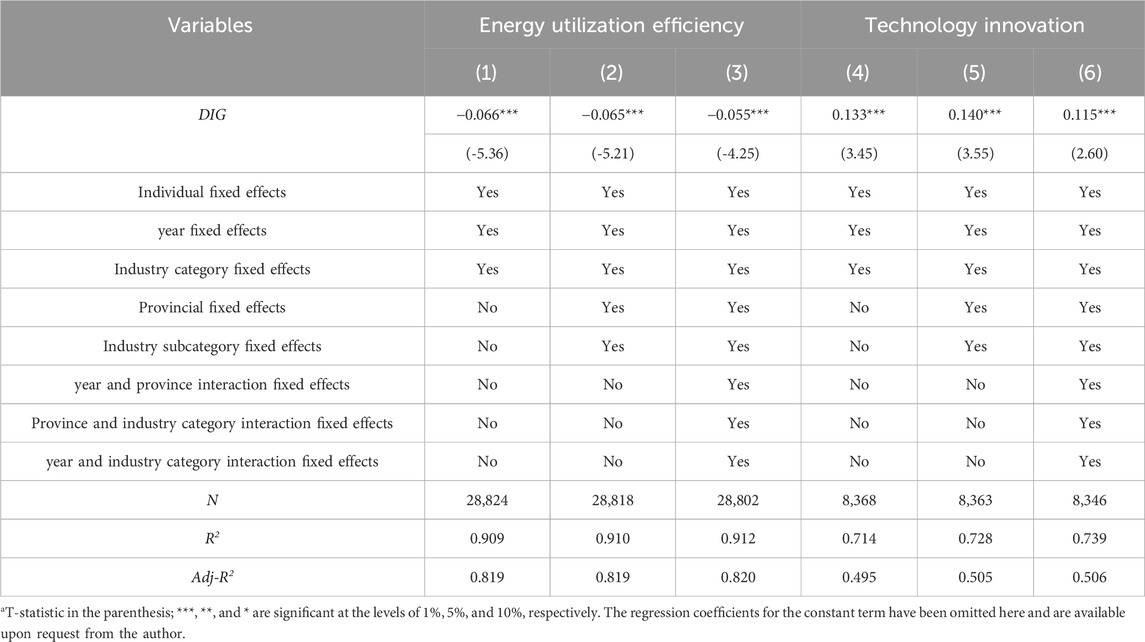
Table 2. Sensitivity analysis results.
In terms of technology innovation, since Panayotou’s (1993) pioneering research, the existing literature has fully affirmed the positive role of technology innovation in industrial green transformation. On this basis, Acemoglu et al. (2012) further distinguished the heterogeneous effects of technology progress on environmental quality. The results indicate that both neutral technology innovations and environmentally friendly technology innovations play a significant role in industrial green transformation (Dong et al., 2014). Therefore, to verify the intra-industry impacts of digital inputs on industrial green transformation from multiple dimensions, this paper conducts a sensitivity analysis using technology innovation as a new dependent variable. Considering the limitations of available indicators in the Chinese Industrial Enterprise Database, this paper uses the proportion of new product output value to total output value as a proxy variable for technology innovation and regresses it against digital input. Columns (4) to (6) in Table 2 report regression results with technology innovation as the explained variable. It can be observed that digital inputs significantly increase the proportion of new product output value in the total output value of industrial enterprises. This indicates that digital inputs significantly promote technology innovation in industrial enterprises, further reflecting the robustness of the basic results.
4.1.2.2 Extending the sample time span: re-estimation of industry-level data
The previous empirical analysis primarily relied on the “Chinese Industrial Enterprise Database—China’s Input-Output Table—Chinese Industrial Enterprise Pollution Emissions Database” micro enterprise panel dataset. However, because of the Chinese Industrial Enterprise Database and Chinese Industrial Enterprise Pollution Emissions Database have not released relevant enterprise-level data beyond 2014, and the quality of 2014 enterprise data has been questioned by scholars. Therefore, the empirical analysis in this paper primarily focuses on the period from 2001 to 2013, following China’s accession to the WTO. This approach aims to ensure the highest possible data quality while minimizing the impact of significant external shocks. It is worth noting that China’s digital economy entered a period of rapid development after 2014, and the impact of digital inputs on industrial green transformation may also have significantly changed. Therefore, extending the sample time span is necessary to enhance the timeliness and robustness of the empirical results in this paper.
Due to the lack of enterprise-level data after 2014, this paper constructs an industry-level panel dataset to compensate for the problem of sample time span shortage. Considering the matching degree and completeness of industry-level data for each indicator, and excluding the overall impact of COVID-19 on industrial production after 2019, this study selects panel data from 22 two-digit industrial sectors in China from 2006 to 2019 as the research sample. Here, industry-level digital input indicators are measured by the complete consumption coefficient of digital inputs across various two-digit industries. The basic data is sourced from China’s Input-Output Tables for the years 2007, 2010, 2012, 2015, 2017, and 2018. In terms of industrial green transformation, this paper selects SO2 emission intensity as a proxy variable for industrial green transformation at the sector level. The basic data are sourced from the China Environmental Statistics Yearbook and the China Emissions Accounting Database (CEADs). To mitigate the interference of omitted variables on empirical results, this study incorporates the following control variables: (1) Per capita output, measured by dividing the value added of each industrial sector by the average annual number of employees in that sector. (2) Factor structure, measured by the ratio of capital to labor factors. (3) Industry scale, measured by the ratio of the industry’s main business income to the number of enterprises within the industry. (4) Ownership structure, measured by the proportion of main business income from state-owned enterprises within the industry relative to the industry’s total main business income. (5) Foreign capital entry, measured by the proportion of main business income from foreign-funded enterprises within the industry relative to the industry’s total main business income. (6) R&D intensity, measured by the ratio of R&D equivalent to the number of enterprises within the industry. The foundational data for relevant control variables is sourced from the Chinese Industrial Economic Statistical Yearbook and the Chinese Labor Statistical Yearbook.
On this basis, this paper constructs a “industry-time” two-way fixed effects model for empirical testing. In Equation 8, the subscript
Table 3 reports the re-estimation results for industry-level data. It can be observed that the estimated coefficient for digital inputs (DIG) in Column (1) is significantly negative, indicating that digital inputs still significantly promote industrial green transformation even when extending the sample time span.
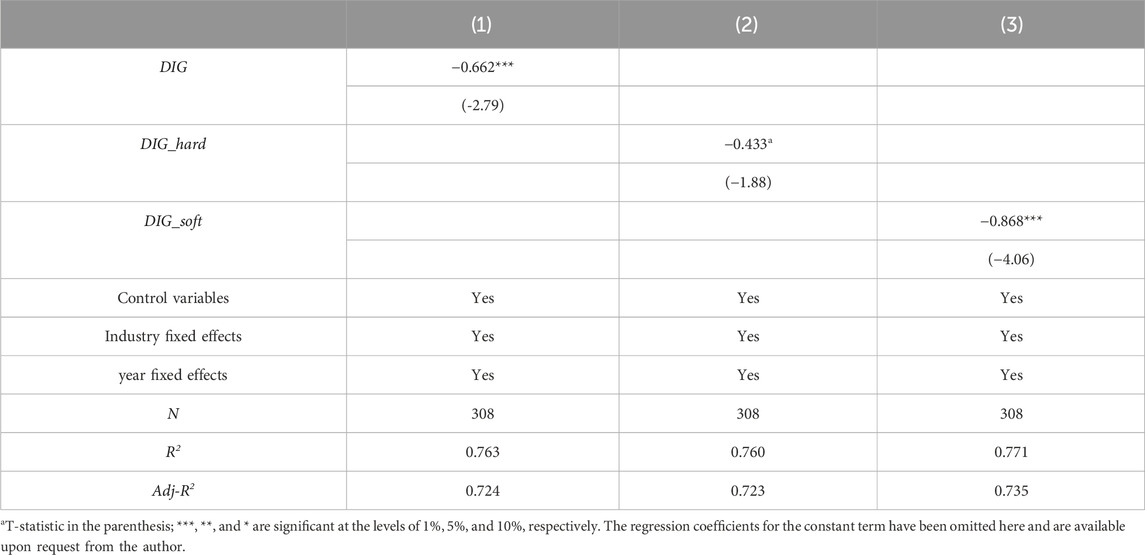
Table 3. Re-estimation results for industry-level data.
To further enhance the robustness of these results, this paper decomposes digital inputs into digital hardware inputs (DIG_hard) and digital software inputs (DIG_soft), conducting separate regressions for each. According to the definition of the digital industry outlined earlier, digital hardware inputs are measured by the complete consumption coefficient of each industry for “manufacturing of communication equipment, computers, and other electronic devices.” Digital software inputs are measured by the complete consumption coefficient of each industry for “information transmission, software, and information technology services.”
Column (2) and Column (3) report the regression results. It can be observed that both digital hardware inputs (DIG_hard) and digital software inputs (DIG_soft) contribute to promoting industrial green transformation. Moreover, compared to digital hardware inputs, digital software inputs exert a stronger driving effect on industrial green transformation. This finding may indicate that following China’s rapid development in the digital economy, the traditional input model of industrial enterprises—which prioritizes hardware over software—is undergoing a change (Pang and Liu, 2022). This is because, compared to digital hardware input, digital software input is more conducive to enhancing corporate value. On one hand, it can provide digital technology application support by mining and analyzing data; on the other hand, it can also enhance hardware functionality and expand the scope of hardware usage, thereby releasing digital dividends (Xu and Zhou, 2024).
4.1.2.3 Endogeneity treatment: instrumental variable methods
The above analysis has enhanced the robustness of the empirical results through sensitivity analysis and extending the sample time span, but it still cannot completely exclude the negative impact of endogeneity issues on the regression results. Therefore, this paper employs the instrumental variables method to further treat the endogeneity issue. However, selecting suitable instrumental variables is fundamental to treating endogeneity, and existing literature often constructs instrumental variables based on geographic characteristics, weather data, and historical data. Generally speaking, geographic characteristics, as observable variables independent of economic systems, do not change with economic development and exhibit strong exogenous properties. In line with the focus of this paper, we follow the approach of Bo and Zhang (2021) by selecting relief degree of land surface (RDLS) as an instrumental variable, which can measure regional geographic characteristics, and using a 2SLS model for estimation.
Here, the relief degree of land surface (RDLS) for each province was calculated using the measurement method provided by Feng et al. (2007). It should be noted that the relief degree of land surface (RDLS) for each province is the cross-sectional data that does not change over time, whereas the empirical research in this paper utilizes panel data that varies both across regions and over time. Consequently, there exists a challenge in matching these two types of data. To overcome this issue, Nunn and Qian (2014) proposed further constructing interactions term between time-series variables and cross-sectional instrumental variables, enabling the instrumental variables to capture dynamic characteristics across time and regions. Based on this, this paper adopts the indicator selection method proposed by Yang and Jiang (2021), interacting the relief degree of land surface (RDLS) with the time-series data of the previous year’s total fixed-asset investment in the national “information transmission, computer services, and software industry.” This approach compensates for the time-varying characteristics of cross-sectional instrumental variables. After the above processing, this paper matches and merges the instrumental variable data with the “Chinese Industrial Enterprise Database—China’s Input-Output Table—Chinese Industrial Enterprise Pollution Emissions Database” micro enterprise panel dataset based on the province where the enterprises are registered.
At the same time, it is important to note that an appropriate instrumental variable must be strictly exogenous to the explained variable while also being correlated with the core explanatory variable. Based on the theme of this paper, under strictly exogenous conditions, relief degree of land surface (RDLS) as a naturally occurring geographical characteristic, it just varies only across regions and not over time. Therefore, logically, it is unlikely to exert a direct impact on the current level of industrial green transformation. From the perspective of correlation conditions, relief degree of land surface (RDLS) will impact the cost of constructing digital infrastructure such as network base stations (Zhang and Fu, 2021). The lower the relief degree of land surface (RDLS) in a region, the more conducive it is to digital infrastructure development and digital economic growth (Bo and Zhang, 2021). In particular, this paper further introduced time-series data on total fixed-asset investment in the national “information transmission, computer services, and software industry,” which further enhances the correlation characteristics of the instrumental variables. Based on this, the relief degree of land surface (RDLS) instrumental variable constructed in this paper should satisfy the requirements for instrumental variable selection.
Table 4 reports the estimation results obtained using the 2SLS model with relief degree of land surface (RDLS) as the instrumental variable. It can be observed that, after controlling for fixed effects at different levels, the estimated coefficient for digital inputs (DIG) remains significantly negative. Furthermore, the validity test for the instrumental variable indicates that it meets the requirements. It indicates that after controlling for endogeneity issues such as reverse causality and omitted variables, digital inputs still exert a significant driving effect on the industrial green transformation.
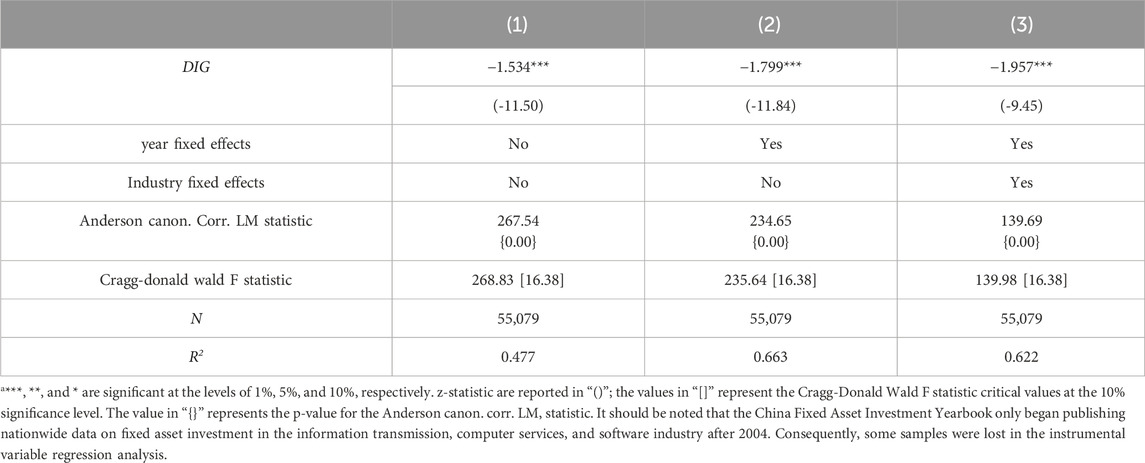
Table 4. Regression results of the instrumental variables method.
4.1.2.4 Exclude outliers: 1% and 99% quantile trimming methods
To exclude the interference of outliers on the empirical results of this paper, the quantile trimming method was employed to remove the top and bottom 1% of outliers in both the explained variable and the core explanatory variables. Columns (1) to (3) in Table 5 report the re-estimation results. It can be observed that after excluding outliers, the estimation results are not significantly changed. Digital inputs still significantly reduce the SO2 emission intensity of industrial enterprises, indicating that digital inputs contribute to achieving industrial green transformation.
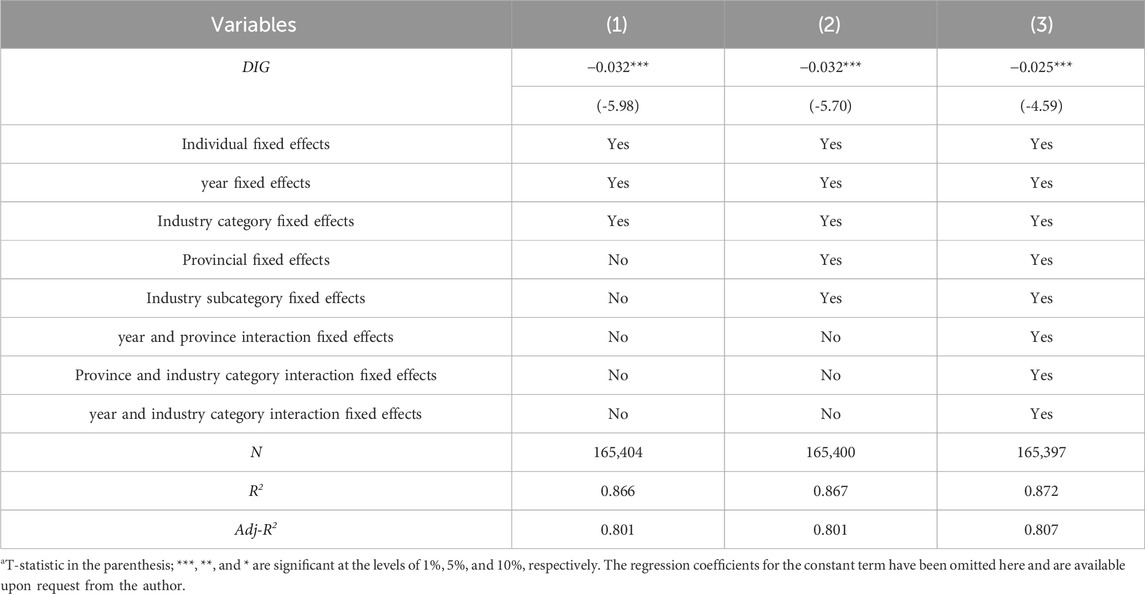
Table 5. Regression results of the exclude outliers.
4.1.2.5 Treatment of sample selection bias: heckman two-step model
Sample selection bias may lead to endogeneity issues, causing biased model estimates, particularly when the pollution dataset may only cover large enterprises. To address this, this paper adopts the approach of He et al. (2022) to generate dummy variables Treat1 and Treat2. Based on the indicators that can measure enterprise size—the number of employees and the stock of fixed assets—the top 50% of enterprises in terms of employees and fixed assets are assigned to the treatment group (Treat1 = 1, Treat2 = 1), while the bottom 50% form the control group (Treat1 = 0, Treat2 = 0). The Heckman two-stage model is used for adjustment, with the results shown in columns (1) of Table 6. The inverse Mills ratio (IMR) is found to be significant at the 1% level, indicating the existence of sample selection bias. After controlling for this bias, the core explanatory variable digital inputs (DIG) are significantly negative. To further enhance robustness, this paper directly selects the number of employees and fixed asset stock as matching variables, which can measure enterprise size.

Table 6. Regression results of the Heckman two-step model.
The Heckman two-stage model is again employed for adjustment. Column (2) in Table 6 reports the estimation results, and it can be observed that the results are not significantly changed. This indicates that after addressing sample selection bias, the driving effect of digital inputs on industrial green transformation remains significant.
Based on the analysis of the above basic results and robustness tests, Hypothesis 1 is proved.
4.1.3 Heterogeneity analysis of intra-industry impacts
To further examine the heterogeneity of the driving effect of digital inputs on industrial green transformation across different enterprise characteristics and industry characteristics, this paper conducts a heterogeneity analysis based on four dimensions: enterprise size, industry pollution intensity, enterprise ownership, and whether the enterprise is capital-intensive.
4.1.3.1 Heterogeneity in enterprise size
Considering that the green effects of digital inputs may have differences across enterprises of different sizes, this paper uses the median number of employees as the grouping criterion, dividing the sample into “Larger enterprises” and “Smaller enterprises” for separate regression analyses. Columns (1) and (2) in Table 7 report the regression results. It can be observed that the estimated coefficients for digital inputs (DIG) are significantly negative in both groups, indicating that digital inputs significantly promote industrial green transformation regardless of whether the enterprise is larger or smaller in size. At the same time, through comparison, it was found that the green effects of digital inputs are more obvious in larger enterprises than in smaller ones. This may be due to two reasons: on the one hand, in larger enterprises, digital inputs are more likely to achieve scale effects, thereby realizing a stronger green transformation effect. On the other hand, from the perspective of China’s digital transformation practices, large enterprises often lead smaller ones in digital transformation progress due to their advantages in capital and talent, which facilitates the release of the green effects of their digital inputs.
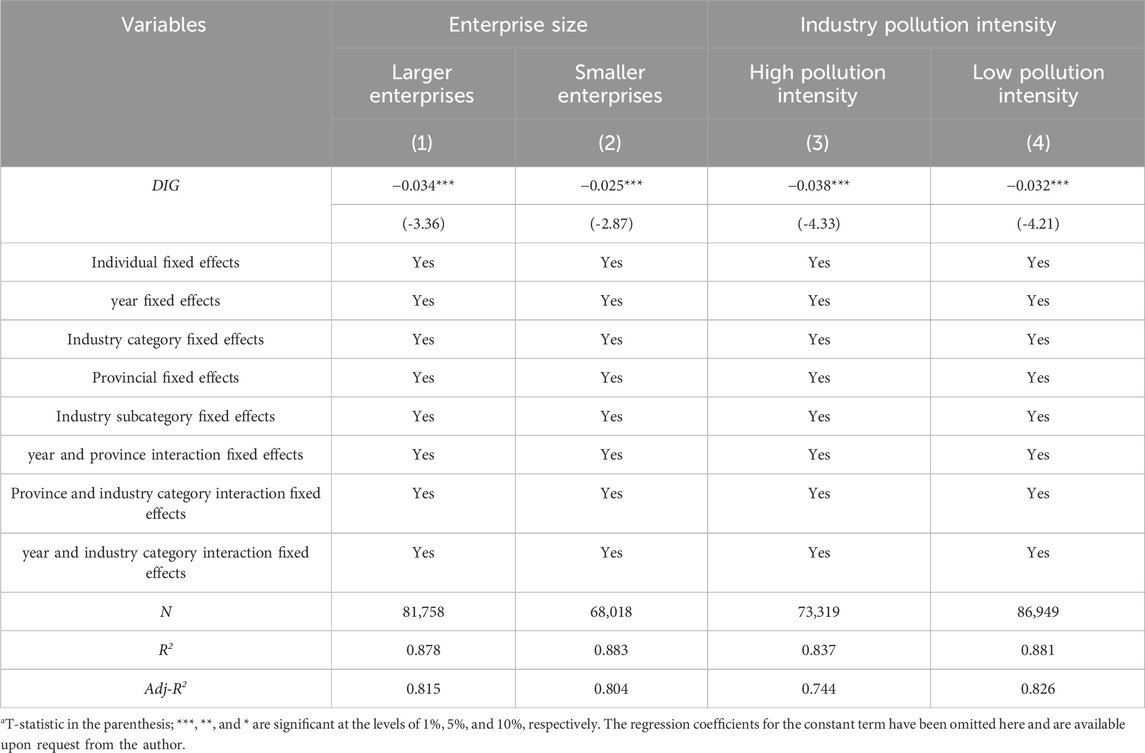
Table 7. Regression results of the heterogeneity in enterprise size and industry pollution intensity.
4.1.3.2 Heterogeneity in industry pollution intensity
To examine the difference in the driving effect of digital inputs across industries with different pollution intensities, this paper calculates the average pollution emission intensity for each industry, and using the median of each industry’s average pollution emission intensity as the grouping basis, the sample is divided into two groups: “High pollution intensity” and “Low pollution intensity”. Columns (3) and (4) in Table 7 report the regression results, respectively. The results indicate that the green effect of digital inputs is more obvious in high pollution intensity industries compared to low pollution intensity industries. This finding may indicate that highly polluting industries are more inclined to utilize digital inputs to achieve pollution reduction in order to meet the environmental protection requirements set by the Chinese government. At the same time, this result also suggests that digital inputs serve as an effective tool for promoting the green transformation of highly polluting industries.
4.1.3.3 Heterogeneity in enterprise ownership
For a long time, the environmental effects of foreign investment have received significant attention from scholars (Chichilnisky, 1994; Cherniwchan, 2017). To examine differences in the green effects of digital inputs under different enterprise ownership, this paper based on whether foreign capital is involved, divides the total sample into two groups: “Foreign-invested enterprises” and “Non-foreign-invested enterprises”, and conducts separate regressions for each group. Column (1) and Column (2) in Table 8 report the regression results. It is found that compared to foreign-invested enterprises, the green effect of digital inputs is more obvious in non-foreign-invested enterprises. This finding may provide new evidence for the “pollution havens” hypothesis. This hypothesis argues that while FDI effectively increases capital endowment in host countries, it may also lead to a decline in environmental quality (Copeland and Scott, 1994). Therefore, when enterprises introduce foreign capital, it may weaken the green effect of digital inputs.
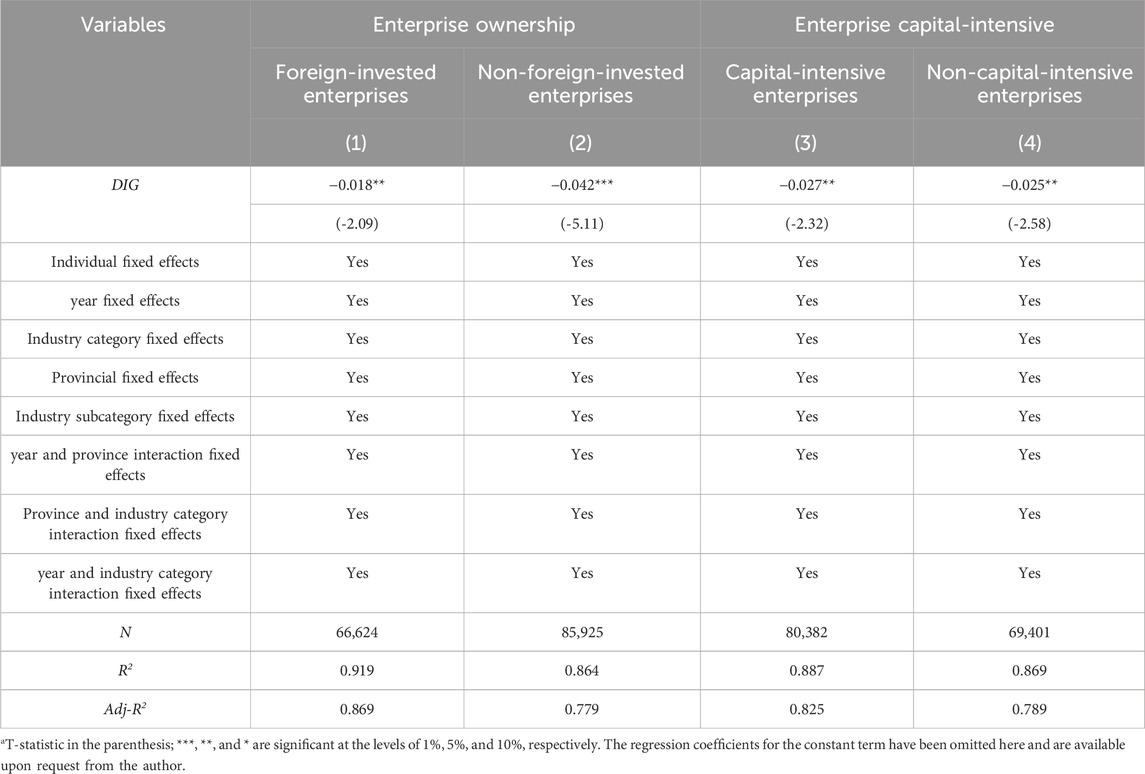
Table 8. Regression results of the heterogeneity in enterprise ownership and capital-intensive.
4.1.3.4 Heterogeneity in enterprise capital-intensive
For enterprises with different capital intensities, the driving effect of digital inputs on industrial green transformation may also be different. To address this question, this paper uses the median per capita capital as the grouping criterion, dividing the sample into two groups: “Capital-intensive enterprises” and “Non-capital-intensive enterprises”, and conducting separate regressions for each. Columns (3) and (4) in Table 8 report the regression results. It can be observed that the estimated coefficients for digital inputs (DIG) are both significantly negative and exhibit relatively small differences. This indicates that digital inputs exert a significant impact on industrial green development regardless of whether the enterprise is capital-intensive or non-capital-intensive.
4.1.4 Mechanism analysis of intra-industry impacts
The previous theoretical analysis proposes that, in terms of intra-industry impacts, digital inputs can promote the industrial green transformation through the enterprises entry and exit mechanism. In order to verify this hypothesis, this paper based on the panel data set of “Chinese Industrial Enterprise Database—China’s Input-output Table—Chinese Industrial Enterprise Pollution Emissions Database”, further examines whether the enterprises entry and exit is an important mechanism for intra-industry impact of digital inputs on industrial green transformation.
For the characterization of enterprise entry and enterprise exit, this paper refers to the setting of Zhou et al. (2016), defines the new entry enterprise as the enterprise that did not appear in the sample in the previous year but appeared in the next year, and defines the exit enterprise as the enterprise that appeared in the sample in the previous year but no longer appeared in the next year, and thus generates the enterprise entry dummy variable (Entry) and the enterprise exit dummy variable (Exit). On this basis, the following mechanism test model is constructed by referring to Brandt et al. (2017):
Equation 9 is used to capture the enterprise entry effect in the intra-industry impacts of digital inputs on industrial green transformation, where
Table 9 reports the regression results of the mechanism of intra-industry impacts. Columns (1) and (2) show that under the condition of introducing fixed effects at different levels, the estimated coefficient of the enterprise entry dummy variable (Entry) is significantly negative, indicating that compared with other enterprises, the pollution emission intensity of new enterprises entering the market is relatively low. At the same time, the estimated coefficients of the interaction term (DIG × Entry) between digital inputs and enterprise entry dummy variables are significantly negative, indicating that when the level of digital inputs utilization is high, the average pollution emission intensity of new entrants is relatively low, which indicates that the enterprise entry mechanism of digital inputs can effectively drive industrial green transformation. Correspondingly, columns (3) and (4) report the regression results of the enterprise exit mechanism in the intra-industry impact of digital inputs on industrial green transformation. It can be found that the estimation coefficient of the enterprise exit dummy variable (Exit) is significantly positive, indicating that the pollution emission intensity of the exit enterprise is relatively high compared with other enterprises. In the regression of adding industry fixed effect, province fixed effect and province-industry interaction fixed effect, the estimation coefficient of the interaction term (DIG × Exit) between digital inputs and enterprise exit dummy variable is significantly negative, indicating that the enterprise exit mechanism of digital inputs effectively reduces the average pollution emission intensity of industrial enterprises.
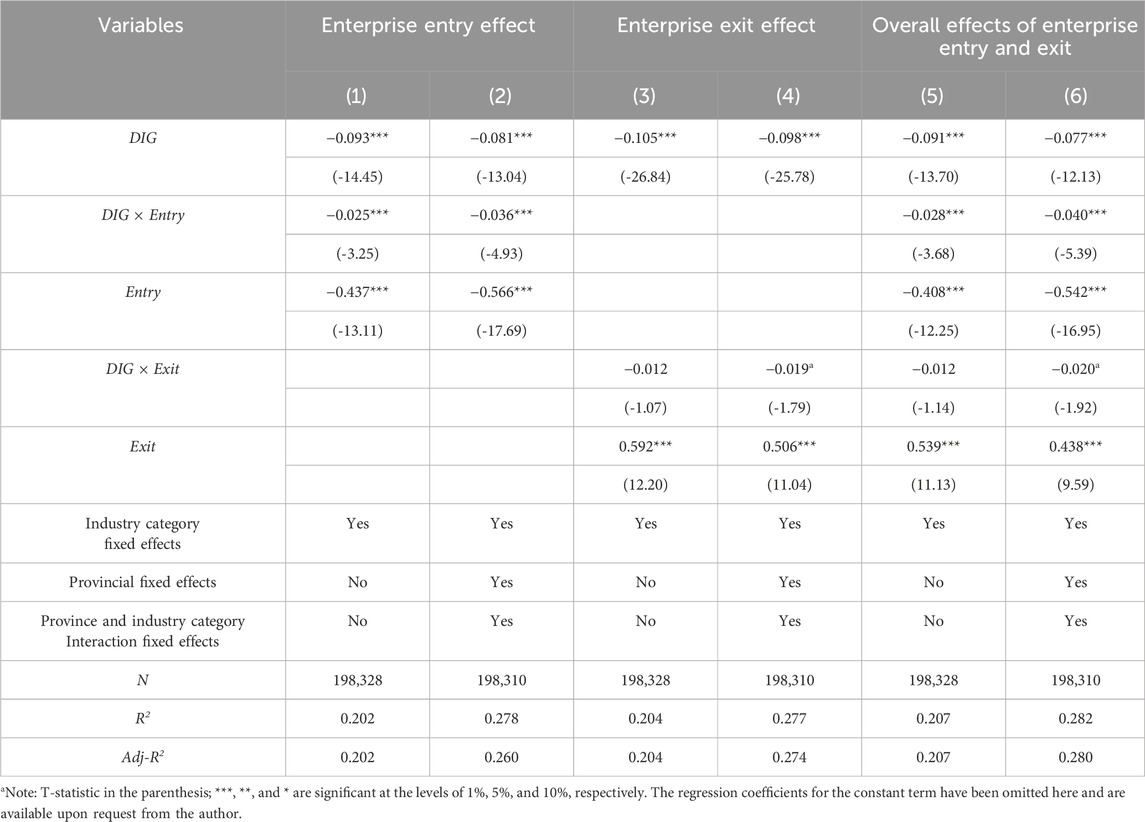
Table 9. Empirical regression results of enterprise entry and exit mechanisms.
On this basis, Column (5) and Column (6) introduce the interaction term of digital inputs and enterprise entry dummy variable (DIG × Entry), and the interaction term of digital inputs and enterprise exit dummy variable (DIG × Exit), which are used to jointly reflect the total effect of enterprise entry and exit mechanism in the intra-industry impacts of digital inputs on industrial green development. The results show that under the condition of controlling industry, province and their interaction fixed effects, the interaction terms (DIG × Entry, DIG × Exit) of digital inputs, enterprise entry and enterprise exit are significantly negative, which further indicates that the enterprise entry and exit mechanism of digital inputs can effectively reduce the pollution emission intensity of industrial enterprises, that is, effectively drive industrial enterprises to achieve green transformation.
Based on the above empirical analysis, it can be inferred that digital inputs can effectively optimize the market structure. On the one hand, it is conducive to the entry of high-efficiency and low-pollution new enterprises into the market. On the other hand, it can also force low-efficiency and high-pollution enterprises to withdraw from the market. The enterprise entry and exit mechanism of digital inputs can further drive the industrial green transformation.
Based on this, Hypothesis 2 is proved.
4.2 Empirical analysis of inter-industry spillover effects
The above empirical analysis has robustly identified the intra-industry impact of digital inputs on industrial green transformation and the mechanism of intra-industry impacts. It is found that digital inputs can promote the industrial green transformation by promoting the high-efficiency and low-pollution new enterprises entry market and forcing low-efficiency and high-pollution enterprises to exit market.
The theoretical analysis of this paper proposes that in addition to the intra-industry impacts, digital inputs may also have inter-industry spillover effects on industrial green transformation. That is, in terms of inter-industry spillover effects, the impact of digital inputs on industrial green transformation can spillover to downstream and upstream industries through “supply-led” and “demand-driven” approaches. In order to verify the theoretical hypothesis, this paper further uses the micro enterprise panel data set of “Chinese Industrial Enterprise Database—China’s Input-output Table—Chinese Industrial Enterprise Pollution Emissions Database” for empirical test.
4.2.1 Basic results of inter-industry spillover effects
This paper is based on the “Chinese Industrial Enterprise Database—China’s Input-Output Table—Chinese Industrial Enterprise Pollution Emissions Database” micro enterprise panel data and uses Equations 2, 3 to regression estimation. Table 10 reports the regression results.
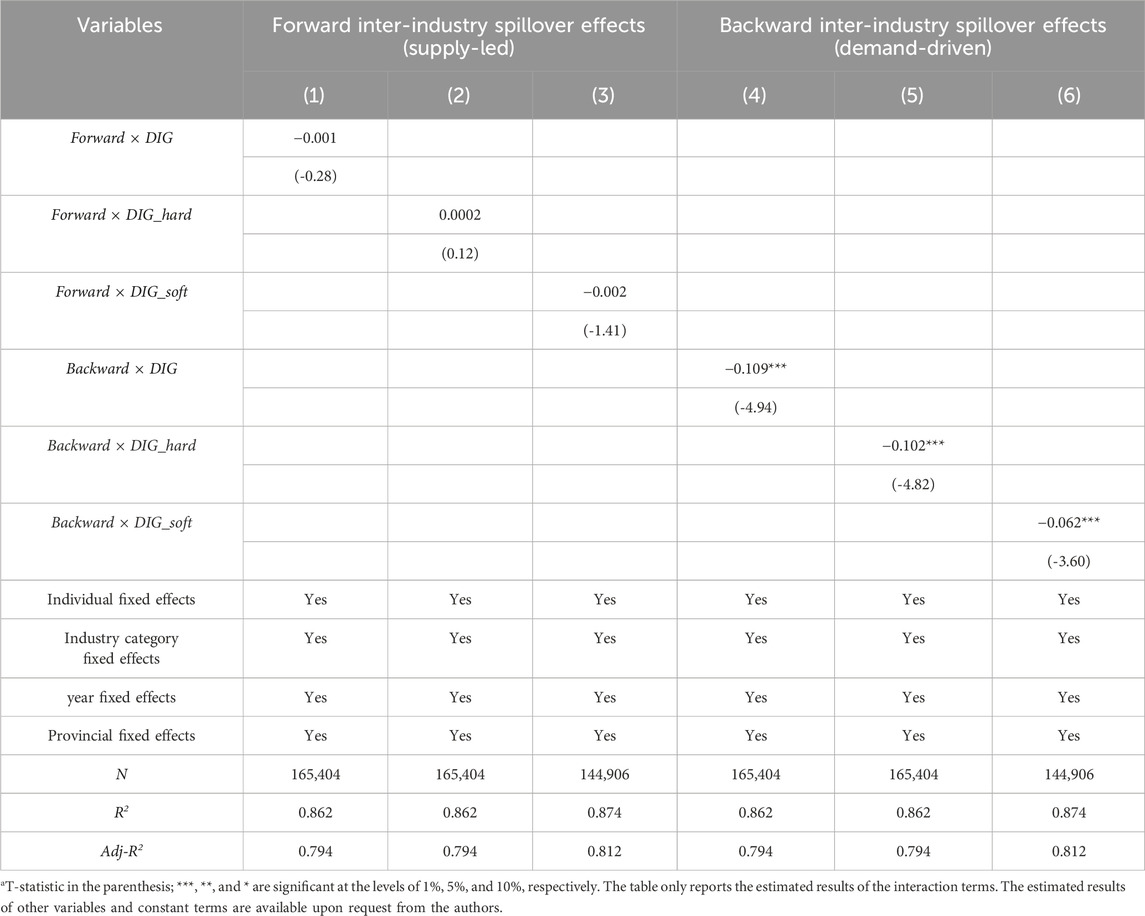
Table 10. Basic regression results of inter-industry spillover effects.
Overall, the inter-industry spillover effect of digital inputs on industrial green transformation are significant difference between the forward and backward.
From the forward inter-industry spillover effects perspective, the results in column (1) of Table 10 show that the estimated coefficient of the interaction term between the core explanatory variable digital inputs and the forward industrial correlation coefficient (Forward × DIG) is not statistically significant, indicating that the industry’s use of digital inputs has not been able to drive the green transformation of downstream industries through supply-led approaches.
At the same time, in order to enhance the robustness of the empirical results, columns (2) and (3) decompose digital inputs into “digital hardware inputs (DIG_hard)” and “digital software inputs (DIG_soft)” and interact them with the forward industrial correlation coefficient as new explanatory variables. Here, the calculation methods for digital hardware inputs and digital software inputs are consistent with those described earlier. It can be seen that the estimated coefficients of the interaction terms between digital hardware inputs and forward industrial correlation coefficient (Forward × DIG_hard) and the interaction between digital software inputs and forward industrial correlation coefficient (Forward × DIG_soft) are still insignificant, which means that digital inputs does not have a forward inter-industry spillover effects, that is, the use of digital inputs in this industry has failed to effectively promote the green transformation of downstream related industries through a “supply-led” approach.
From the backward inter-industry spillover effects perspective, columns (4) to (6) in Table 10 further report on the backward inter-industry spillover effect of digital inputs on industrial green transformation. The results in column (4) show that the estimated coefficient of the interaction term between digital inputs and the backward industrial correlation coefficient (Backward × DIG) is significantly negative at the 1% statistical significance level, indicating that digital inputs can effectively reduce the SO2 emission intensity of industrial enterprises in upstream related industries, thereby helping upstream industries achieve green transformation.
At the same time, in order to enhance the robustness of the empirical results, in the regression analysis that further decomposes digital inputs into digital hardware inputs and digital software inputs, the interaction terms between digital hardware inputs and backward industrial correlation coefficient (Backward × DIG_hard) and the interaction terms between digital software inputs and backward industrial correlation coefficient (Backward × DIG_soft) are still negative at a statistical significance level of 1%. This result further indicates that digital inputs have a relatively obvious backward inter-industry spillover effects, that is, the use of digital inputs in this industry can effectively drive the green transformation of upstream related industries.
The above results collectively indicate that the spillover effects of digital inputs on industrial green transformation exhibit heterogeneity across forward and backward directions. The use of digital inputs in this industry cannot effectively promote the green transformation of downstream related industries through a “supply-led” approach, but it can spillover the promotional effect of digital inputs on green transformation to upstream industries through a “demand-driven” approach.
The reason for this result may lie in that, on the one hand, from the perspective of insignificant forward spillover effects, it is possible that, as indicated by the theoretical analysis above, when downstream industries lack sufficient technological absorption capacity, intermediate inputs rich in digital technology from upstream industries cannot effectively play a role in improving downstream industries’ production processes. Consequently, the spillover effects of upstream industries’ digital inputs on the industrial green transformation of downstream industries cannot be realized under the “supply-led” scenario. On the other hand, from the perspective of significant backward spillover effects, the increased digital inputs in downstream industries impacts upstream industries not only through technological spillovers but more importantly through demand-side incentives (Dai and Yang, 2022). When an industry fully leverages digital inputs to transform its production processes and achieve a green transformation, the demand for intermediate products should also change accordingly. At this time, upstream industries will be compelled by demand pressures to upgrade production equipment and optimize manufacturing processes. This not only meets the demands of downstream industries but also creates favorable conditions for their own green transformation.
Based on the above empirical analysis, it can be concluded that, it can be concluded that digital inputs have significant inter-industry spillover effects in driving industrial green transformation. Specifically, there are obvious differences between forward and backward inter-industry spillover effects of digital inputs driving industrial green transformation. The use of digital inputs in this industry cannot effectively promote the green transformation of downstream related industries through a “supply-led” approach, but it can spillover the promotional effect of digital inputs on green transformation to upstream industries through a “demand-driven” approach.
Based on this, Hypothesis 3 is proved.
4.2.2 Mechanism analysis of inter-industry spillover effects
The above empirical analysis has revealed the inter-industry spillover effects of digital inputs on industrial green transformation, and found that the use of digital inputs in this industry can spillover the promotional effect of digital inputs on green transformation to upstream industries through a “demand-driven” approach. That is, digital inputs have significant backward inter-industry spillover effects in driving industrial green transformation. So, what is the mechanism behind this backward inter-industry spillover effects? This is worth further discussion in this paper. Answering this question will help to further deepen our understanding of the positive externalities of the digital economy and digital inputs.
The above theoretical analysis points out that the use of digital inputs in this industry may through “demand-driven” means force upstream industries to update their capital and advance their technology in order to meet the demand for green intermediate inputs and services from downstream industries, thereby causing the driving force of digital inputs on industrial green transformation to spillover to upstream related industries. This paper further tests this mechanism of the backward inter-industry spillover effects.
4.2.2.1 Digital input promotes capital renewal in upstream related industries
In order to examine the mechanism of the inter-industry spillover effects, this paper draws on the approach taken by Jiang (2022) to construct the following mechanism analysis model to test the impact of digital inputs on capital renewal in upstream related industries. Specifically, this is shown in Equation 12.
In Equation 12,
This paper is based on micro enterprise panel data set of “Chinese Industrial Enterprise Database—China’s Input-output Table—Chinese Industrial Enterprise Pollution Emissions Database” and uses Equation 12 for regression estimation. Table 11 reports the regression results. The results show that in column (1), the estimated coefficient of the interaction term (Backward × DIG) between the core explanatory variable digital inputs and the backward industrial correlation coefficient is significantly positive at the 1% statistical significance level, indicating that the use of digital inputs in this industry can significantly increases the amount of depreciation in upstream related industries. At the same time, columns (2) and column (3) show that in the regression analysis after further decomposition of digital inputs, the interaction terms of digital hardware inputs and backward industrial correlation coefficient (Backward × DIG_hard) and the interaction terms of digital software inputs and backward industrial correlation coefficient (Backward × DIG_soft) are still positive at the 5% and 10% statistical significance levels, respectively. This result further indicates that digital input effectively drives the increase of capital renewal in upstream related industries.
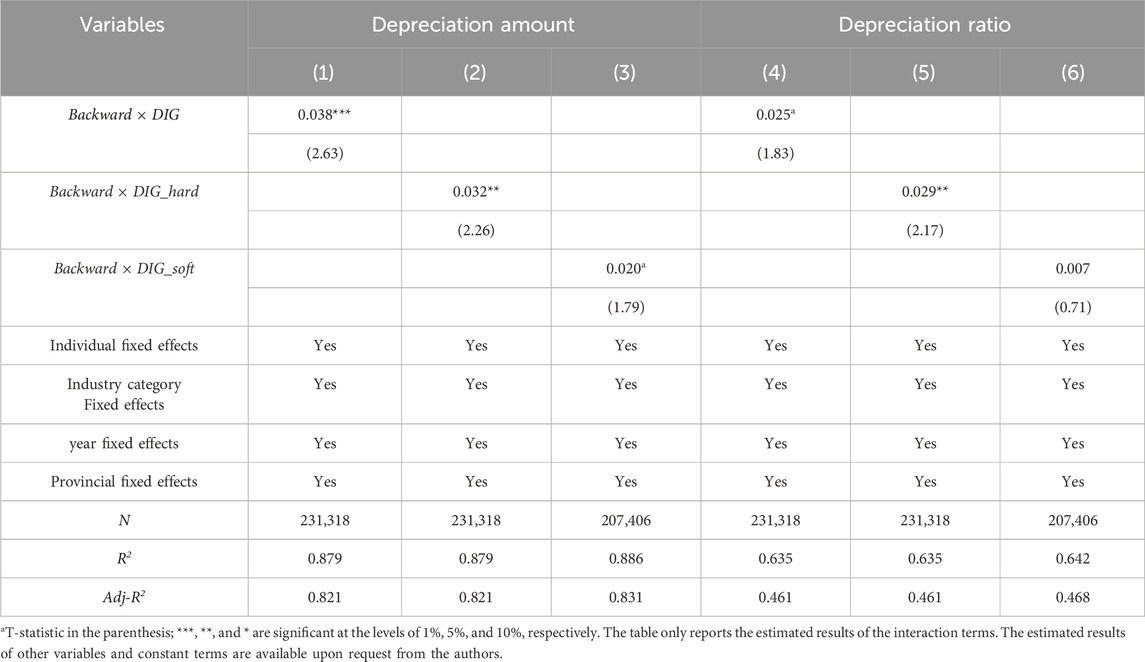
Table 11. Regression results of digital input promoting capital renewal in upstream related industries.
Furthermore, to enhance the robustness of the empirical results, this paper replaces the proxy variable for capital renewal with the depreciation ratio. The estimation results are further reported in columns (4) to (6) of Table 11. It can be seen that the interaction term between digital inputs and backward industrial correlation coefficient (Backward × DIG) and the interaction term between digital hardware inputs and backward industrial correlation coefficient (Backward × DIG_hard) are positive at the 10% and 5% statistical significance levels, respectively, which to a certain extent enhances the robustness of the empirical results in this paper.
The above results reflect that the use of digital inputs in this industry can force upstream related industries to renew their capital, thereby realizing the driving force of digital inputs for industrial green transformation to spillover to upstream related industries. Therefore, capital renewal is one of the mechanisms of generate inter-industry spillover effects.
Based on this, Hypothesis 4 is proven.
4.2.2.2 Digital input promotes technological progress in upstream related industries
In order to verify the technological progress mechanism in the backward inter-industry spillover effect of digital inputs on industrial green transformation, this paper uses the “Chinese Industrial Enterprise Database—China’s Input-output Table—Chinese Industrial Enterprise Pollution Emissions Database” micro enterprise panel data set and constructs the following regression equation for empirical testing. Specifically, as shown in Equation 13:
In Equation 13,
Table 12 reports the regression results based on Equation 13. It can be seen that in terms of neutral technological progress, in column (1), the estimated coefficient of the interaction term between digital inputs and backward industrial correlation coefficient (Backward × DIG) is significantly positive at the 1% statistical significance level, indicating that the use of digital inputs in this industry significantly promotes neutral technological progress in upstream related industries. At the same time, columns (2) and (3) replace the core explanatory variables with the interaction term between digital hardware inputs and backward industrial correlation coefficient (Backward × DIG_hard) and the interaction term between digital software inputs and backward industrial correlation coefficient (Backward × DIG_soft). The estimated results did not change significantly, and the estimated coefficients of the interaction terms were positive at the 1% and 10% statistical significance levels, respectively, further reflecting that digital inputs have a significant driving effect on neutral technological progress in upstream related industries.
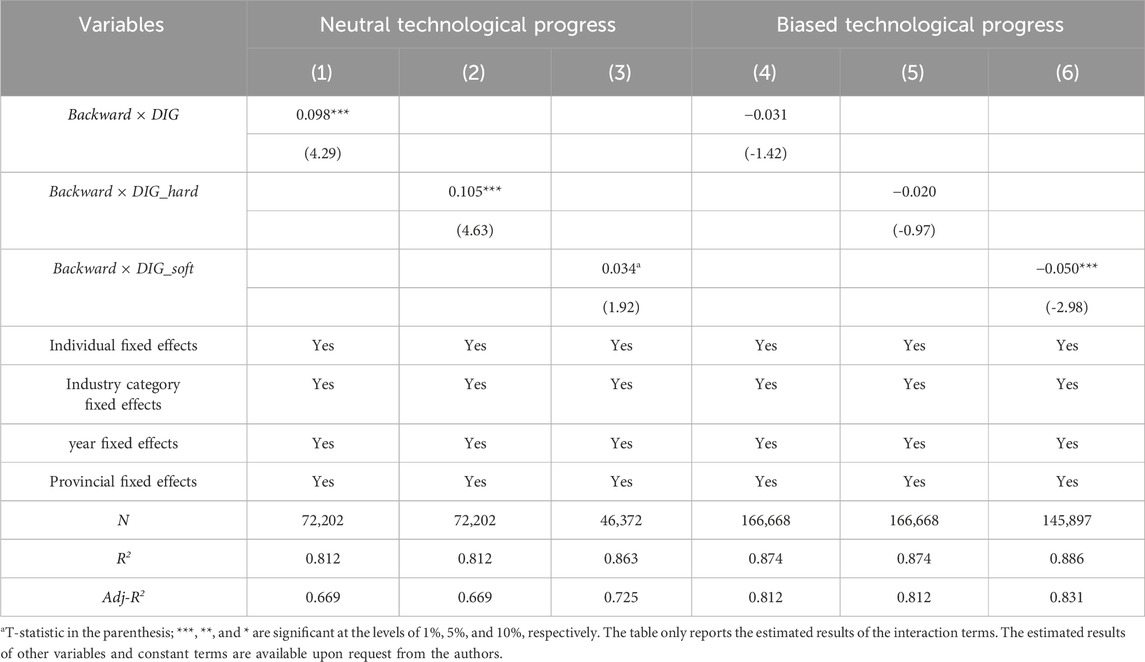
Table 12. Regression results of digital input promoting technological progress in upstream related industries.
In terms of biased technological progress, columns (4) to (6) in Table 12 show that the estimated coefficients of the interaction term between digital inputs and backward industrial correlation coefficient (Backward × DIG) and the interaction term between digital hardware inputs and backward industrial correlation coefficient (Backward × DIG_hard) are not statistically significant, indicating that digital inputs, especially digital hardware inputs, has not effectively driven upstream related industries to achieve biased technological progress. However, in the results in column (6), the interaction term between digital software inputs and backward industrial correlation coefficient (Backward × DIG_soft) is significantly negative at the 1% statistical significance level, indicating that digital software inputs have effectively reduced the proportion of industrial pollution and capital factor inputs in upstream related industries, which means that capital factors have replaced industrial pollution, thereby achieving biased technological progress.
Accordingly, it can be seen that the use of digital inputs in this industry can force upstream related industries to achieve technological progress. On the one hand, digital inputs, including digital hardware and software inputs, has a significant driving effect on neutral technological progress in upstream related industries. On the other hand, digital inputs, especially digital software inputs, can effectively reduce the proportion of industrial pollution and capital input in upstream related industries, which means that it can drive upstream related industries to achieve biased technological progress in replacing industrial pollution with capital.
In view of this, Hypothesis 5 is proven.
Based on the above mechanism analysis results of the inter-industry spillover effects, it can be concluded that, in a “demand-driven” scenario, capital renewal and technological progress in upstream related industries are the key mechanisms for generating the inter-industry spillover effect of digital inputs on industrial green transformation.
5 Conclusions and policy recommendations
5.1 Conclusion
Digital transformation is an important way to promote industrial green transformation. This paper examines how digital inputs drive industrial green transformation from the dual perspectives of intra-industry impacts and inter-industry spillover effects. Based on a unique micro enterprise panel dataset, that combining “Chinese Industrial Enterprise Database—China’s Input-output Table—Chinese Industrial Enterprise Pollution Emissions Database”, this paper employs a high-dimensional fixed effects model to empirically analyze both the intra-industry impacts and the inter-industry spillover effect of digital inputs on industrial green transformation. The results show that:
1. In terms of intra-industry impacts, digital inputs can effectively drive the industrial green transformation. At the same time, this driving effect exhibits heterogeneity across different enterprise sizes, ownership structures, and pollution emission intensities. The driving effects of digital inputs on industrial green transformation are more obvious in large enterprises, non-foreign-invested enterprises, and high-pollution-emission industries.
2. The enterprise entry and exit are the mechanisms that generate intra-industry impacts of digital inputs driving industrial green transformation. On the one hand, digital input is conducive to the entry of new enterprises with high efficiency and low pollution into the market, and on the other hand, it can force inefficient and highly polluting enterprises to exit the market, thereby effectively optimizing the market structure and promoting the industrial green transformation.
3. In terms of inter-industry spillover effects, there are obvious differences between forward and backward inter-industry spillover effects of digital input driving industrial green transformation. The use of digital inputs in this industry cannot effectively promote the green transformation of downstream related industries through a “supply-led” approach, but it can spillover the driving effect of digital inputs on green transformation to upstream industries through a “demand-driven” approach.
4. The mechanism analysis results of the inter-industry spillover effects further show that, in a “demand-driven” scenario, capital renewal and technological progress in upstream related industries are the key mechanisms for generating the inter-industry spillover effects of digital input on industrial green transformation. From the perspective of capital renewal, the use of digital inputs in this industry can force upstream related industries to renew their capital, thereby realizing the driving force of digital inputs on industrial green transformation to spillover to upstream related industries. From the perspective of technological progress, the use of digital inputs in this industry can force upstream related industries to achieve technological progress. On the one hand, digital inputs have a significant driving effect on neutral technological progress in upstream related industries. On the other hand, digital inputs, especially digital software inputs, can effectively reduce the proportion of industrial pollution and capital input in upstream related industries, which means that it can drive upstream related industries to achieve biased technological progress in replacing industrial pollution with capital.
5.2 Policy recommendations
Based on the main conclusions of this paper, the following policy implications are put forward.
From a macro perspective, the Developing country governments should focus on promoting the development of the digital economy and accelerate the utilization of digital inputs in the industrial sector. The existing literature shows that digital inputs are conducive to improving the production efficiency of the industrial sector (Liang and Zhang, 2024). In addition to this economic effect, the conclusions of this paper further show that digital inputs can effectively drive the intra-industry green transformation. This means that strengthening the utilization of digital inputs in the industrial sector can increase expected output while reducing unexpected output emissions, which also provides a way to achieve a win-win situation for economic performance and environmental performance. In terms of macroeconomic policy, on the one hand, it is necessary to focus on supporting the development of advanced digital industry clusters such as communications equipment, computers, software, and information services, and to concentrate efforts on strengthening key digital technology research and innovation, thereby providing high-quality digital products for traditional industries to use digital inputs for digital transformation. On the other hand, it should guide and support the digital transformation of traditional industrial enterprises to expand the scale of digital input demand. Furthermore, the analysis of the mechanism of intra-industry effects in this paper reveals that digital inputs can optimize market structure through the enterprise entry and exit mechanism, thereby achieving industrial green transformation. This means that market mechanisms should be fully leveraged, while cautiously employing interventions such as subsidies and regulations that may distort the market, to ensure smooth pathways for the exit of backward enterprises and the entry of emerging enterprises.
From an industry perspective, it should fully leverage digital technologies such as big data, industrial internet, and artificial intelligence to advance “digital + green manufacturing,” build green factories, and drive the entire industrial chain toward green transformation. At the same time, this paper finds that digital inputs have significant inter-industry spillover effects. Therefore, when promoting industrial green transformation, it is essential to emphasize the inter-industry spillover effects of digital inputs on industrial green transformation. Based on a scientific definition of the status of upstream and downstream industries, downstream industries should first be supported in utilizing digital inputs and promoting digital transformation, and build it into a leader in the industry’s digital transformation, thereby effectively leveraging the inter-industry spillover effects of digital inputs. At the same time, it should further enhance information and technology communication between upstream and downstream industries, strengthen coordination and linkage across the entire industrial chain, and enhance the positive externalities of digital inputs by increasing industrial interconnectivity. Furthermore, spillover effect analysis indicates that the use of digital inputs in this industry cannot effectively promote the green transformation of downstream related industries through a “supply-led” approach, but it can spillover the promotional effect of digital inputs on green transformation to upstream industries through a “demand-driven” approach. Simultaneously, capital renewal and technological progress in upstream related industries are the key mechanisms for realizing the inter-industry spillover effects of digital input on industrial green transformation. Therefore, for upstream industries, on one hand, it should be combined with the “trade-in” policy currently advocated by the Chinese government to encourage upstream industries to strengthen production equipment renewal, providing preferential subsidies for urgently needed replacement equipment in upstream industries, thereby enhancing backward inter-industry spillover effects. On the other hand, downstream industries should intensify digital skills training for employees. For instance, establishing training workshops and providing financial subsidies for employee digital training programs. Enhance the digital technology absorption capacity of downstream industries by strengthening digital technology training to address the issue of insignificant forward inter-industry spillover effects.
From an enterprise perspective, it should be encouraged for industrial enterprises to pursue digital transformation based on their own characteristics, increase the proportion of digital inputs in production processes, and release the green transformation dividends of digital transformation. Reviewing the practices of China’s enterprise digital transformation reveals that, traditional industrial enterprises in China, especially large state-owned enterprises in the manufacturing sector, have made good progress in digital transformation, but small and medium-sized industrial enterprises may be reluctant or unable to transform due to constraints such as a lack of talent, weak equipment infrastructure, and high transformation costs. Therefore, the government should collaborate with large enterprises such as state-owned enterprises and Chinese central state-owned enterprises to enhance support for the digital transformation of small and medium-sized industrial enterprises in terms of both funding and talent. In terms of funding, a government special fund for the digital transformation of small and medium-sized enterprises should be established to effectively guarantee the funding demands of small and medium-sized industrial enterprises during the digital transformation process. In terms of talent, state-owned enterprises and central state-owned enterprises need to enhance categorized guidance and follow-up services for small and medium-sized industrial enterprises, provide digital training for SMEs, strengthen collaboration between research institutions of large enterprises and SMEs, and offer intellectual support for the digital transformation of SMEs. At the same time, it is particularly noted that the robustness analysis in this paper reveals that digital software inputs exert a stronger driving force on industrial green transformation compared to digital hardware inputs. This provides a practical pathway for traditional industrial enterprises to implement digital transformation. Compared to digital hardware equipment, digital software inputs involve relatively lower costs and are conducive to enhancing corporate value. Therefore, small and medium-sized enterprises should be encouraged to prioritize enhanced digital software inputs during their digital transformation, and should be supported in establishing information networks for digital management, digital logistics, and digital finance to improve their production and operational efficiency.
5.3 Limitations and future research
Due to the scarcity of micro enterprise data, the sample time span of the “Chinese Industrial Enterprise Database—China’s Input-Output Table—Chinese Industrial Enterprise Pollution Emissions Database” micro enterprise panel data used in this paper is concentrated between 2001 and 2013. This sample suffers from a relatively short time span and outdated data. Although this paper re-estimates the impact of digital inputs on industrial green transformation using China’s industry-level panel data in its robustness analysis, thereby mitigating to some extent the adverse effects of sample time issues on empirical findings, its conclusions should still be extrapolated with caution. As the digital transformation process continues to advance, the role of digital inputs in industrial green transformation may become increasingly diverse. At the same time, due to the current scarcity of enterprise-level data on digital inputs, it is challenging to identify the heterogeneous effects of different types of digital inputs on industrial green transformation with greater precision. Therefore, future research should further explore enterprise-level data on digital inputs to identify the specific impacts of different types of digital inputs on industrial green transformation.
Data availability statement
The datasets presented in this article are not readily available because The Chinese Industrial Enterprise Database and Chinese Industrial Enterprise Pollution Emissions Database are not available for public download. China’s Input-Output Table can be obtained from the website of the National Bureau of Statistics of China (https://data.stats.gov.cn/files/html/quickSearch/trcc/trcc01.html). The datasets supporting the findings of this study are available upon reasonable request. Requests to access the datasets should be directed to Li Guanghao, bGlndWFuZ2hhb2Z6dUAxNjMuY29t.
Author contributions
GL: Conceptualization, Data curation, Formal Analysis, Funding acquisition, Investigation, Methodology, Project administration, Resources, Supervision, Writing – original draft, Writing – review and editing. DL: Methodology, Software, Validation, Visualization, Writing – original draft, Writing – review and editing.
Funding
The authors declare that financial support was received for the research and/or publication of this article. This work was also supported by the Innovation Strategy Research Project of Fujian Province (2024R0088), National Social Science Fund Incubation Project of School (2024FH13), and Major Project of Fujian Provincial Social Science Research Base (FJ2024JDZ081).
Conflict of interest
The authors declare that the research was conducted in the absence of any commercial or financial relationships that could be construed as a potential conflict of interest.
Generative AI statement
The authors declare that no Generative AI was used in the creation of this manuscript.
Any alternative text (alt text) provided alongside figures in this article has been generated by Frontiers with the support of artificial intelligence and reasonable efforts have been made to ensure accuracy, including review by the authors wherever possible. If you identify any issues, please contact us.
Publisher’s note
All claims expressed in this article are solely those of the authors and do not necessarily represent those of their affiliated organizations, or those of the publisher, the editors and the reviewers. Any product that may be evaluated in this article, or claim that may be made by its manufacturer, is not guaranteed or endorsed by the publisher.
References
Acemoglu, D., Aghion, P., Bursztyn, L., and Hemous, D. (2012). The environment and directed technical change. Am. Econ. Rev. 102 (1), 131–166. doi:10.1257/aer.102.1.131
Acemoglu, D., Akcigit, U., and Kerr, W. (2016). Networks and the macroeconomy: an empirical exploration. NBER Macroecon. Annu. 30 (1), 273–335. doi:10.1086/685961
Arik, L. (2009). Technology, international trade, and pollution from U.S. manufacturing. Am. Econ. Rev. 99 (5), 2177–2192. doi:10.1257/aer.99.5.2177
Asturias, J., Hur, S., Kehoe, T., and Kim, J. (2023). Firm entry and exit and aggregate growth. Am. Econ. J. Macroecon. 15 (1), 48–105. doi:10.1257/mac.20200376
Autor, D., and Salomons, A. (2018). Is automation labor-displacing? Productivity growth, employment, and the labor share. NBER Work. Pap. doi:10.3386/w24871
Bai, T., Qi, Y., Li, Z., and Xu, D. (2023). Digital economy, industrial transformation and upgrading, and spatial transfer of carbon emissions: the paths for low-carbon transformation of Chinese cities. J. Environ. Manag. 344, 118528. doi:10.1016/j.jenvman.2023.118528
Bo, P., and Zhang, Y. (2021). Digital economy, declining demographic dividends and the rights and interests of low-and medium-skilled labor. Econ. Res. J. 56 (05), 91–108.
Brandt, L., Biesebroeck, J., and Zhang, Y. (2012). Creative accounting or creative destruction? Firm-level productivity growth in Chinese manufacturing. J. Dev. Econ. 97 (2), 339–351. doi:10.1016/j.jdeveco.2011.02.002
Brandt, L., Johannes, V., Luhang, W., and Zhang, Y. (2017). WTO accession and performance of Chinese manufacturing firms. Am. Econ. Rev. 107 (9), 2784–2820. doi:10.1257/aer.20121266
CAICT. (2017). “White paper on China's digital economy development (2017). China academy of information and communications technology”. Available online at: https://www.caict.ac.cn/kxyj/qwfb/bps/201804/t20180426_158452.htm.
Chen, S. (2010). Energy-save and emission-abate activity with its impact on industrial win-win development in China: 2009-2049. Econ. Res. J. 45 (03), 129–143.
Chen, D. (2020). Trade barrier reduction and environmental pollution improvement: new evidence from firm—level pollution data in China. Econ. Res. J. 55 (12), 98–114.
Chen, Z., and Chen, Q. (2019). Energy efficiency of Chinese firms: heterogeneity, influencing factors and policy implications. China Ind. Econ. 12, 78–95. doi:10.19581/j.cnki.ciejournal.2019.12.005
Chen, Q., and Liu, Z. (2014). Empirical analysis for the impact of import producer service on China's manufacturing industries' total factor productivity. J. Quantitative and Technol. Econ. 31 (03), 74–88. doi:10.13653/j.cnki.jqte.2014.03.005
Chen, X., and Yang, X. (2021). Can the digital economy achieve the optimal strength of the industrial chain. Nanjing J. Soc. Sci. 2, 17–26. doi:10.15937/j.cnki.issn1001-8263.2021.02.002
Chen, X., and Yang, X. (2022). Does the digital transformation improve the independent and controllable ability of industrial chain? Bus. Manag. J. 44 (08), 23–39. doi:10.19616/j.cnki.bmj.2022.08.002
Chen, Q., Zhang, W., and Tang, B. (2017). The supply of local service factor and exports in high technology industry——based on provincial data from China's high technology industries. China Ind. Econ. 9, 81–99. doi:10.19581/j.cnki.ciejournal.2017.09.005
Chen, X., Li, Y., Song, L., and Wang, Y. (2022). Theoretical framework and research prospect of digital economy. J. Manag. World 38 (02), 208–224. doi:10.19744/j.cnki.11-1235/f.2022.0020
Cherniwchan, J. (2017). Trade liberalization and the environment: evidence from NAFTA and US manufacturing. J. Int. Econ. 105, 130–149. doi:10.1016/j.jinteco.2017.01.005
Chichilnisky, G. (1994). North-south trade and the global environment. Am. Econ. Rev. 84 (4), 95–118. doi:10.1201/9781420032628.ch7
Copeland, B. R., and Scott, T. M. (1994). North-south trade and the environment. Q. J. Econ. 3, 755–787. doi:10.2307/2118421
Dai, X., and Yang, S. (2022). Digital empowerment, source of digital input and green manufacturing. China industrial economics, 22(09), 83–101.
Dong, Z., Cai, X., and Wang, L. (2014). The direction of technical change, urban land size and environment quality. Econ. Res. J. 49 (10), 111–124.
Fang, L., Zhao, B., Li, W., Tao, L., He, L., Zhang, J., et al. (2023). Impact of digital finance on industrial green transformation: evidence from the yangtze river economic belt. Sustainability 15, 12799. doi:10.3390/su151712799
Feng, Z., Tang, Y., Yang, Y., and Zhang, D. (2007). The relief degree of land surface in China and its correlation with population distribution. Acta Geogr. Sin. 10, 1073–1082.
Gale, F., Ascui, F., and Lovell, H. (2017). Sensing reality? New monitoring technologies for global sustainability standards. Glob. Environ. Polit. 17 (2), 65–83. doi:10.1162/GLEP_a_00401
Gao, D., Li, G., Yu, J., Lund, H., and Kaiser, M. (2022). Does digitization improve green total factor energy efficiency? Evidence from Chinese 213 cities. Energy 247, 123395. doi:10.1016/j.energy.2022.123395
Gu, J. (2022). Sharing economy, technological innovation and carbon emissions: evidence from Chinese cities. J. Innovation and Knowl. 7 (3), 100228. doi:10.1016/j.jik.2022.100228
Guo, F., Wang, J., Wang, F., Cheng, Z., Kong, T., and Zhang, X. (2020). Measuring China's digital financial inclusion: index compilation and spatial characteristics. China Econ. Q. 19 (04), 1401–1418. doi:10.13821/j.cnki.ceq.2020.03.12
Han, J., Chen, X., and Feng, X. (2022). The real challenge and path of enabling green development of digital economy. Reform 09, 11–23.
He, F., Yan, Y., Hao, J., and Wu, J. (2022). Retail investor attention and corporate green innovation: evidence from China. Energy Econ. 115, 106308. doi:10.1016/j.eneco.2022.106308
Hopenhayn, H. (1992). Entry, exit, and firm dynamics in long run equilibrium. Econometrica 60 (5), 1127–1150. doi:10.2307/2951541
Hu, H., and She, Q. (2022). Does digital transformation of manufacturing reduce the embodied carbon intensity on exports. J. Int. Trade 7, 36–52. doi:10.13510/j.cnki.jit.2022.07.002
Hu, Y., and Yang, D. (2024). The impact of digitalization inputs on China’s industrial carbon emissions under the “dual carbon” goals. Price Theory and Pract. 1, 203–208. doi:10.19851/j.cnki.CN11-1010/F.2024.01.008
Jaef, R. (2018). Entry and exit, multiproduct firms, and allocative distortions. Am. Econ. J. Macroecon. 10 (2), 86–112. doi:10.1257/mac.20140075
Jensen, R. (2007). The digital provide: information (technology), market performance, and welfare in the south indian fisheries sector. Q. J. Econ. 122 (3), 879–924. doi:10.1162/qjec.122.3.879
Ji, Z. (2020). Does factor market distortion affect industrial pollution intensity? Evidence from China. J. Clean. Prod. 267, 122136. doi:10.1016/j.jclepro.2020.122136
Jiang, T. (2022). Mediating effects and moderating effects in causal inference. China Ind. Econ. 5, 100–120. doi:10.19581/j.cnki.ciejournal.2022.05.005
Li, H., and Zhang, W. (2024). Digital input and climbing global value chain networks: evidence from Chinese manufacturing sectors. Econ. Surv. 41 (1), 70–82. doi:10.15931/j.cnki.1006-1096.2024.01.008
Li, H., Zhang, Y., and Li, Y. (2023). The impact of digital inputs on pollution reduction in Chinese manufacturing enterprises. J. Clean. Prod. 428 (20), 139393. doi:10.1016/j.jclepro.2023.139393
Liang, Y., and Zhang, C. (2024). Digital transformation and total factor productivity of enterprises: evidence from China. Econ. Change Restruct. 57, 7. doi:10.1007/s10644-024-09587-z
Lin, B., and Teng, Y. (2024). Industrial chain division and carbon emission intensity: the moderating effect of digitization. Energy 286, 129573. doi:10.1016/j.energy.2023.129573
Liu, X., and Tao, Z. (2021). Regional policies, environmental regulations, and heterogeneity in firm productivity: a quasi-natural experiment based on the western development initiative. Macroeconomics 10, 139–152. doi:10.16304/j.cnki.11-3952/f.2021.10.010
Liu, W., Xu, X., and Xiong, Z. (2021). Research on international progress in the classification of digital economy and China's exploration. Finance & Trade Econ. 42 (07), 32–48. doi:10.19795/j.cnki.cn11-1166/f.20210705.007
Lyu, Y., Xiang, Y., and Wang, D. (2024). Digital service input, industry competition, and labor factor misallocation. Econ. Perspect. 5, 19–36.
Mangina, E., Narasimhan, P. K., Saffari, M., and Vlachos, I. (2020). Data analytics for sustainable global supply chains. J. Clean. Prod. 255, 120300. doi:10.1016/j.jclepro.2020.120300
Nunn, N., and Qian, N. (2014). US food aid and civil conflict. Am. Econ. Rev. 104 (6), 1630–1666. doi:10.1257/aer.104.6.1630
OECD (2010). Recommendation of the council on information and communication technologies and the environment. OECD Legal/0380, compendium of legal instruments, OECD. Available online at: https://legalinstruments.oecd.org/en/instruments/OECD-LEGAL-0380.
OECD (2024a). Embracing the technology frontier. OECD Digital Economy Outlook 2024 (Vol. 1). doi:10.1787/a1689dc5-en
OECD (2024b). Strengthening connectivity, innovation and trust. OECD Digital Economy Outlook 2024 (Vol. 2). doi:10.1787/3adf705b-en
Panayotou, T. (1993). Empirical tests and policy analysis of environmental degradation at different stages of economic development. ILO, Technol. Employ. doi:10.1007/978-1-349-24245-0
Pang, R., and Liu, D. (2022). The paradox of digitalization and innovation: does digitalization promote enterprise innovation? An explanation based on open innovation theory. South China J. Econ. 9, 97–117. doi:10.19592/j.cnki.scje.391844
Peng, Y., and Tao, C. (2022). Can digital transformation promote enterprise performance? —From the perspective of public policy and innovation. J. Innovation and Knowl. 7, 100198. doi:10.1016/j.jik.2022.100198
Ping, X. (2005). Vertical specialization, intra-industry trade, and China-U.S. trade relations. Peking university China center for economic research working paper, c2005005. Available online at: https://www.nsd.pku.edu.cn/pub/chnsd/attachments/0451e05d88274a1e8862638a57cca23a.pdf.
Qi, G., Wang, Z., Wang, Z., and Wei, L. (2022). Has industrial upgrading improved air pollution? — evidence from China's digital economy. Sustainability 14, 8967. doi:10.3390/su14148967
Qiao, C., and Qiao, C. (2025). Digital economy and high-quality agricultural development: mechanisms of technological innovation and spatial spillover effects. Sustainability 17, 3639. doi:10.3390/su17083639
Ramona, T., Alexandru, B., and Wong, P. (2025). Catalyzing digital and environmental transformations by institutions in a diverse socio-economic world. World Dev. 193, 107052. doi:10.1016/j.worlddev.2025.107052
Tang, L., Lu, B., and Tian, T. (2023). The effect of input digitalization on carbon emission intensity: an empirical analysis based on China's manufacturing. Int. J. Environ. Res. and Public Health 20, 3174. doi:10.3390/ijerph20043174
Wang, L., and Cheng, Z. (2023). Digital investment, local market size, and the complexity of service industry value chain. J. Int. Trade 8, 71–87. doi:10.13510/j.cnki.jit.2023.08.007
Wang, Y., and Dong, W. (2020). How the rise of robots has affected China's labor market: evidence from China's listed manufacturing firms. Econ. Res. J. 55 (10), 159–175.
Wang, L., and Li, N. (2024). Digital economy, technology absorption capacity, and green innovation performance. Mod. Manag. Sci. 3, 167–176.
Wang, K., Wu, G., and Zhang, G. (2020). Has the development of the digital economy improved production efficiency? Economist 10, 24–34. doi:10.16158/j.cnki.51-1312/f.2020.10.004
Wang, C., Liu, Y., Liu, X., and Xia, H. (2024). How does the digital economy impact green manufacturing: a new perspective from the construction of a unified large market in China. Humanit. and Soc. Sci. Commun. 11 (1), 1705–1713. doi:10.1057/s41599-024-04258-w
Wu, Y., and Wang, T. (2021). Research on the statistical definition and industrial classification of digital economy. Stat. Res. 38 (06), 18–29. doi:10.19343/j.cnki.11-1302/c.2021.06.002
Xiao, J., Zeng, P., and Zhang, L. (2023). Regional digital level, green technology innovation, and green transformation of manufacturing industry. East China Econ. Manag. 37 (4), 1–12. doi:10.19629/j.cnki.34-1014/f.220720004
Xu, Z., and Zhou, X. (2024). Manufacturing digitalization input, different types of digital industries and the promotion of global value chain division status: an empirical test based on global input-output data. Sci. and Technol. Prog. Policy 41 (13), 67–78. doi:10.6049/kjjbydc.2023030491
Yang, F., and Fan, C. (2020). Is industrial intelligence beneficial to China's pro-poor development? Economic research journal 55 (05), 150–165.
Yang, H., and Jiang, L. (2021). Digital economy, spatial effects and total factor productivity. Stat. Res. 38 (04), 3–15. doi:10.19343/j.cnki.11-1302/c.2021.04.001
Yang, M., and Jiang, J. (2025). Can digitalization input serve as a “solidifier” factor — from the perspective of the level of industrial chain security. Reform Econ. Syst. 4, 38–47.
Yin, C., Cui, Y., and Liu, Y. (2022). Effect and mechanism of economic circulation in the middle and lower reaches of the yellow river: multiregional input–output model and industrial complex network approaches. Sustainability 14, 12922. doi:10.3390/su141912922
Yuan, B., and Zhang, Y. (2020). Flexible environmental policy, technological innovation and sustainable development of China's industry: the moderating effect of environment regulatory enforcement. J. Clean. Prod. 243, 118543. doi:10.1016/j.jclepro.2019.118543
Yuan, C., Xiao, T., Geng, C., and Sheng, Y. (2021). Digital transformation and division of labor between enterprises: vertical specialization or vertical integration. China Ind. Econ. 9, 137–155. doi:10.19581/j.cnki.ciejournal.2021.09.007
Zhang, J., and Fu, K. (2021). Can the construction of information network infrastructure drive the level of urban innovation? A quasi-natural experiment of “Broadband China” pilot policy. Industrial Econ. Res. 5, 1–14. doi:10.13269/j.cnki.ier.2021.05.001
Zhang, Q., and Yu, J. (2020). Input digitization and climbing global value chain: micro evidence from Chinese manufacturing enterprises. Econ. Rev. 6, 72–89. doi:10.19361/j.er.2020.06.07
Zhang, Q., and Yu, J. (2021). Input digitization of manufacturing industry and upgrading in GVC: reexamination based on the difference of input source. J. Finance Econ. 47 (09), 93–107. doi:10.16538/j.cnki.jfe.20210616.203
Zhang, Q., and Yu, J. (2023). Emission reduction and efficiency enhancement effect of input digitization — an empirical study of manufacturing enterprises in China. Stud. Sci. Sci. 41 (8), 1422–1432. doi:10.16192/j.cnki.1003-2053.20230331.002
Zhang, Y., Ma, S., Yang, H., Lu, J., and Liu, Y. (2018). A big data driven analytical framework for energy-intensive manufacturing industries. J. Clean. Prod. 197 (1), 57–72. doi:10.1016/j.jclepro.2018.06.170
Zhang, W., Xu, N., Chen, Z., Cui, X., Zhang, H., and Chen, W. (2023). Impact of digital input on enterprise green productivity: micro evidence from the Chinese manufacturing industry. J. Clean. Prod. 414 (15), 137272. doi:10.1016/j.jclepro.2023.137272
Zhang, X., Zhong, J., and Wang, H. (2023). Does the development of digital economy affect environmental pollution? Sustainability 15, 9162. doi:10.3390/su15129162
Zhao, C., and Gu, J. (2023). Industrial robot applications, input-output relationship and the quality of export products. J. Nanchang Univ. Humanit. Soc. Sci. 54 (01), 41–55. doi:10.13764/j.cnki.ncds.2023.01.010
Zhao, T., Zhang, Z., and Liang, S. (2020). Digital economy, entrepreneurship, and high-quality economic development: empirical evidence from urban China. J. Manag. World 36 (10), 65–76. doi:10.19744/j.cnki.11-1235/f.2020.0154
Zhao, C., Wang, W., and Li, X. (2021). How does digital transformation affect the total factor productivity of enterprises. Finance and Trade Econ. 42 (07), 114–129. doi:10.19795/j.cnki.cn11-1166/f.20210705.001
Zhao, C., Liu, Z., and Yan, X. (2023). Does the digital economy increase green TFP in cities? Int. J. Environ. Res. Public Health 20, 1442. doi:10.3390/ijerph20021442
Zheng, L. (2020). Pathways to realizing the tokenized digital economy: industrial digitization and data monetization. Res. Financial Econ. Issues 5, 48–55. doi:10.19654/j.cnki.cjwtyj.2020.05.006
Zhong, S., Peng, L., Li, J., and Ma, C. (2023). Digital finance and the two-dimensional logic of industrial green transformation: evidence from green transformation of efficiency and structure. J. Clean. Prod. 406, 137078. doi:10.1016/j.jclepro.2023.137078
Zhou, Q., and Fang, S. (2019). Regional energy endowment, firm heterogeneity, and energy efficiency: an empirical analysis based on micro-level cross-industry firm sample data. Econ. Sci. 2, 66–78. doi:10.12088/PKU.jjkx.2019.02.06
Keywords: digital inputs, industrial green transformation, intra-industry impacts, industrial correlation, inter-industry spillover effects
Citation: Li G and Lin D (2025) Digital inputs and industrial green transformation: perspectives on intra-industry impacts and inter-industry spillover effects. Front. Environ. Sci. 13:1689916. doi: 10.3389/fenvs.2025.1689916
Received: 21 August 2025; Accepted: 13 November 2025;
Published: 05 December 2025.
Edited by:
Lianbiao Cui, Anhui University of Finance and Economics, ChinaReviewed by:
Hongguang Nie, Liaoning University, ChinaHuanjie Li, Fujian Agriculture and Forestry University, China
Bowen Xiao, Northeastern University, China
Copyright © 2025 Li and Lin. This is an open-access article distributed under the terms of the Creative Commons Attribution License (CC BY). The use, distribution or reproduction in other forums is permitted, provided the original author(s) and the copyright owner(s) are credited and that the original publication in this journal is cited, in accordance with accepted academic practice. No use, distribution or reproduction is permitted which does not comply with these terms.
*Correspondence: Guanghao Li, MzUxNjY2MTIwQHFxLmNvbQ==