 Laura Fillistorf1,†
 Giorgia Carra2,3,†Raphaël Matusiak2,4
 Varvara Dimopoulou1Jérémie Despraz2
 Sylvain Meylan3,†
 Eric Giannoni1*†
- 1Clinic of Neonatology, Department Woman-Mother-Child, Lausanne University Hospital and University of Lausanne, Lausanne, Switzerland
- 2Biomedical Data Science Center, Department of Innovation and Clinical Research, Lausanne University Hospital and University of Lausanne, Lausanne, Switzerland
- 3Infectious Diseases Service, Department of Medicine, Lausanne University Hospital and University of Lausanne, Lausanne, Switzerland
- 4Swiss Data Science Center, Swiss Federal Institute of Technology in Lausanne, Lausanne, Switzerland
Background: Antibiotics save lives but also carry significant risks, including increased antimicrobial resistance, higher healthcare costs, and disruption of the microbiome. However, the association between antibiotic exposure and short-term adverse outcomes remains uncertain. Our study aimed to evaluate whether early unnecessary antibiotic exposure in the first 7 days of life of very preterm infants is linked to short-term adverse outcomes.
Methods: This retrospective study included infants born below 32 weeks of gestation and hospitalized at the University Hospital of Lausanne between January 1, 2007 and December 31, 2022. Antibiotic exposure was quantified during the first seven postnatal days by the median number of days of antibiotics. Multilinear regressions and mixed effect models analyzed the association between the number of days of antibiotics and death, late-onset sepsis, necrotizing enterocolitis, severe bronchopulmonary dysplasia, severe retinopathy of prematurity and cystic periventricular leukomalacia. The primary outcome was a composite of at least one of the listed adverse outcomes, while the secondary outcomes consisted of each adverse outcome individually. Adjusted odds ratio (aOR) and p-value were calculated.
Results: We included 1,398 preterm infants. The median gestational age was 29 weeks (IQR: 27–30) and the median birthweight was 1,144 grams (895–1,420). The median number of days of antibiotics declined by 53%, from 4 days in 2007 to 1.9 days in 2022 (p < 0.0001). The number of days of antibiotics was not associated with the composite outcome [aOR: 0.97 (0.82–1.17), p = 0.80, adjusted p = 0.80] or any of the following adverse outcomes: mortality [aOR: 1.10 (0.78–1.55), p = 0.58, adjusted p = 0.69], late-onset sepsis [aOR: 0.74 (0.59–0.93), p = 0.01, adjusted p = 0.07], necrotizing enterocolitis [aOR: 1.22 (0.86–1.74), p = 0.26, adjusted p = 0.65], severe bronchopulmonary dysplasia [aOR: 1.12 (0.88–1.42), p = 0.36, adjusted p = 0.65], severe retinopathy of prematurity [aOR: 1.34 (0.65–2.78), p = 0.43, adjusted p = 0.65], and cystic periventricular leukomalacia [aOR: 1.02 (0.69–1.99), p = 0.91, adjusted p = 0.91].
Conclusion: We found no association between early antibiotic exposure and short-term adverse outcomes.
1 Introduction
Antibiotics are the most commonly prescribed drugs in neonatology units (1). Half of hospitalized neonates receive antibiotics (2), with rates above 70% in very preterm infants (3–7). This high proportion is attributed to the non-specific clinical signs of infection, the low diagnostic accuracy of biomarkers, the vulnerability of neonates to infections, and the physicians' fear of missing a case of sepsis (8). The burden of neonatal sepsis is high, with substantial mortality and morbidity (9, 10). While prompt initiation of antibiotics can save lives, antibiotic prescription is often disproportionate (11). In fact, the majority of neonates treated for suspected sepsis do not have a proven infection (12). This overexposure to antibiotics has significant consequences. It not only contributes to antibiotic resistance—growing threat prompting urgent action by the World Health Organization (13)—but also disrupts the microbiome, potentially contributing to the development of inflammatory diseases later in life, such as gastrointestinal disorders and asthma (11, 14–16). In response to these concerns, neonatal units are implementing antimicrobial stewardship efforts to reduce antibiotic exposure (17, 18).
The association between antibiotic exposure and short-term adverse outcomes remains unclear. While numerous studies have reported associations between antibiotic exposure and death, necrotizing enterocolitis, sepsis, and bronchopulmonary dysplasia (3, 19–24), other studies did not find such associations (4, 25, 26).
Given the ongoing controversy surrounding this topic, our study aimed to rigorously evaluate a potential association between potentially unnecessary early antibiotic exposure and major short-term adverse outcomes in very preterm infants. Additionally, we examined the evolution of early antibiotic exposure over a 15-year period.
2 Materials and methods
2.1 Study population
This retrospective study included infants born before 32 weeks of gestation and hospitalized at the neonatal unit of the University Hospital of Lausanne between January 1, 2007 and December 31, 2022. Neonates whose parents or legal guardians refused general consent for research were excluded from the analysis. This study was approved by the ethics committee of Canton de Vaud (CER 2022-00528). Neonates born outside of the University Hospital of Lausanne, as well as neonates who died or were transferred to another hospital during the first 7 days of life (DOL), were excluded from this analysis, as adverse outcomes occurring after this period could not be assessed for these patients. Since our study focused on unnecessary exposure to antibiotics, neonates with a diagnosis of culture-proven sepsis within the first seven DOL or necrotizing enterocolitis (NEC) Bell stage ≥2 in the first seven DOL were also excluded. Data on demographics and antibiotic treatments were extracted from the electronic health record system.
2.2 Definition of adverse outcomes
The primary outcome was a combination of the following major short-term adverse outcomes occurring after 7 DOL: death, culture-proven late-onset sepsis (LOS), NEC, severe bronchopulmonary dysplasia (BPD), severe retinopathy of prematurity (ROP) and cystic periventricular leukomalacia (PVL). Culture-proven LOS was defined as bacteremia occurring after 72 h of life (9, 27). NEC was defined as Bell stage ≥2 (27, 28). BPD was defined as >28 days of oxygen and requirement for ≥30% of oxygen and/or positive pressure ventilation at 36 weeks postmenstrual age (27, 29). ROP was defined as stage 3 or more or any stage with laser treatment (27, 30). Intraventricular hemorrhage (IVH) was not included as a measured outcome since it mostly occurs within the first 7 DOL. Secondary outcomes included each of these adverse outcomes assessed individually.
2.3 Metrics of antibiotic exposure
Throughout the study period, amoxicillin and gentamicin were administered as empirical therapy for suspected early-onset sepsis, while vancomycin and gentamicin were used for suspected late-onset sepsis. Continuous quality improvement interventions were implemented to promote the rational use of antibiotics and minimize the prescription of broad-spectrum agents. All antibiotics administered by intravenous, enteral, intramuscular, or intraosseous routes were recorded. Antibiotic exposure in the neonatal unit was calculated with three metrics: (1) the percentage of patients receiving antibiotics at least once during the first 7 DOL; (2) the days of antibiotics (DoA) received the first postnatal week, measured as the median number of days with at least one antibiotic administration; (3) the days of therapy (DOT), measured as the number of treatment days (dependent on the number of treatments) during the first 7 DOL per 1,000 patient-days (31).
2.4 Statistical analysis
Baseline clinical characteristics were described using the median and the interquartile range (IQR) for continuous variables, and absolute and relative frequencies for categorical variables. We used the Mann Kendall test to assess statistical changes in antibiotic exposure and changes in adverse outcomes over the years.
We stratified preterm infants in four groups, according to DoA: no antibiotics, 1–2 days, 2–5 days, and 5–7 days. Descriptive univariate analyses were performed to compare the four groups using Chi-square test for categorical data, analysis of variance (ANOVA) for normally distributed continuous variables and Kruskal–Wallis for non-normally distributed continuous variables. We performed pairwise comparisons to assess differences between groups, with a focus on comparing those who received antibiotics with those who did not.
We optimized multilinear regression models to assess the association between DoA and adverse outcomes, first by categorizing DoA into the four predefined groups and then by treating DoA as a continuous variable. The model was adjusted for the following confounders: complete course of antenatal steroids, multiple pregnancies, delivery mode, gestational age, birthweight, gender, Apgar score at 5 min, and ventilation during the first 7 DOL. The adjusted odds ratio (aOR) for a 10% increase in DoA was calculated, along with the corresponding 95% confidence interval (CI). Additionally, mixed-effects models were performed, incorporating both fixed effects, using the same confounders as in the model, and random effects to account for variability in outcomes across different study years. A Benjamini-Hochberg correction was applied to all analyses to adjust for multiple comparisons and reduce the likelihood of falsely identifying significant differences. Analyses were performed using R Studio 2023.06.0-421.
3 Results
3.1 Demographics
A total of 1,398 very preterm infants were included in the study (Figure 1). The median gestational age of the cohort was 29 weeks (IQR: 27–30) and the median birthweight was 1,144 grams (IQR: 895−1,420). Preterm infants with higher DoA had a lower gestational age (p < 0.001), a lower birthweight (p < 0.001) and the higher rate of mechanical ventilation within the first 7 DOL (p < 0.001) (Table 1).
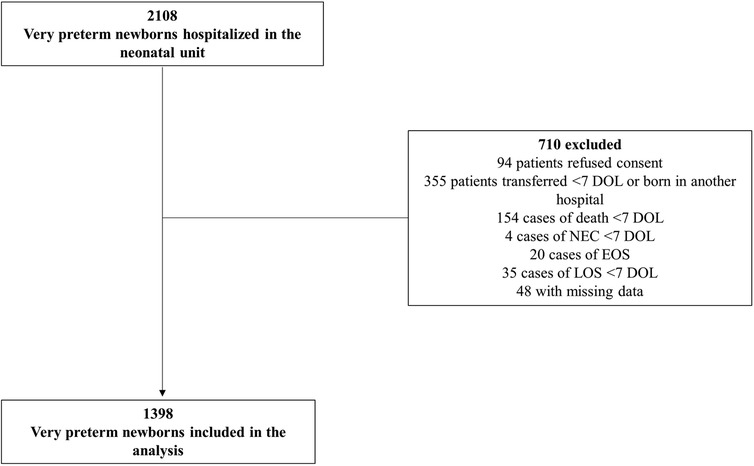
Figure 1. Flowchart of patient inclusion and exclusion criteria. DOL, days of life; NEC, necrotizing enterocolitis; EOS, early-onset sepsis; LOS, late-onset sepsis.
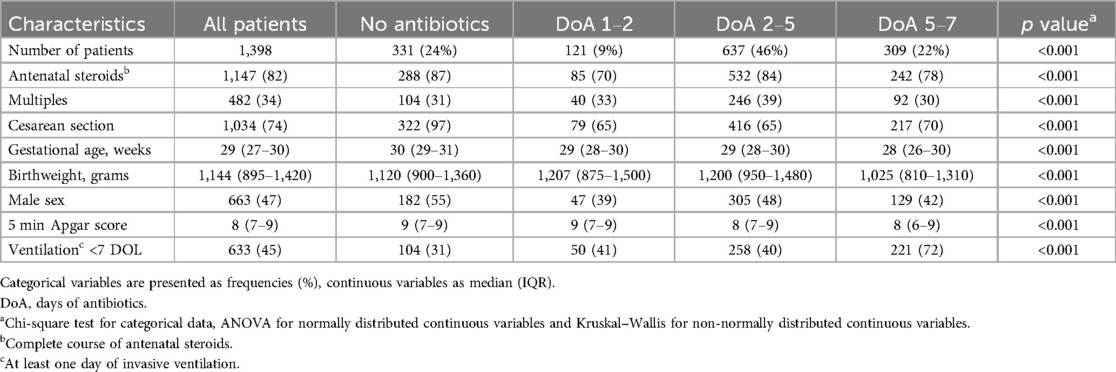
Table 1. Demographic and clinical characteristics of very preterm infants according to days of antibiotics.
3.2 Early unnecessary antibiotic exposure
Between January 1, 2007 and December 31, 2022, DoA declined by 53% (from 4 to 1.9 days, p < 0.001), DOT decreased by 60% (from 132 to 53, p < 0.001), and the percentage of patients treated with antibiotics decreased by 28% (from 81% to 59%, p = 0.032) in those who survived beyond 7 DOL and did not develop EOS, LOS and/or NEC in the first week of life (Figure 2).
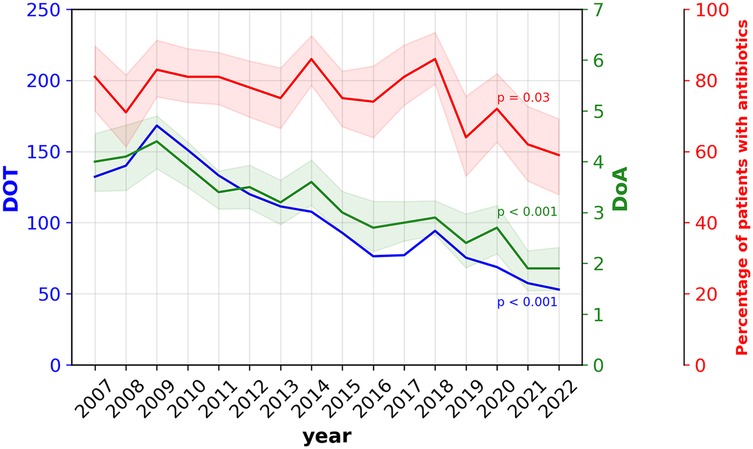
Figure 2. Evolution of early antibiotic exposure the first 7 postnatal days. DoA, days of antibiotics; DOT, days of therapy; Percentage of patients, percentage of very preterm infants who received at least once antibiotics during their first 7 postnatal days.
3.3 Association with adverse outcomes
The occurrence of adverse outcomes remained stable over the years (Supplementary Figure S1). In univariate analysis, the group with more than 5 days of antibiotics had a significantly higher rate of the composite outcome (p < 0.001), severe BPD (p < 0.001), NEC (p = 0.047) and mortality (p = 0.001) than the group without antibiotic exposure (Table 2). However, when correcting for confounders in a multilinear regression, there was no association between DoA groups and adverse outcomes (Supplementary Table S1).
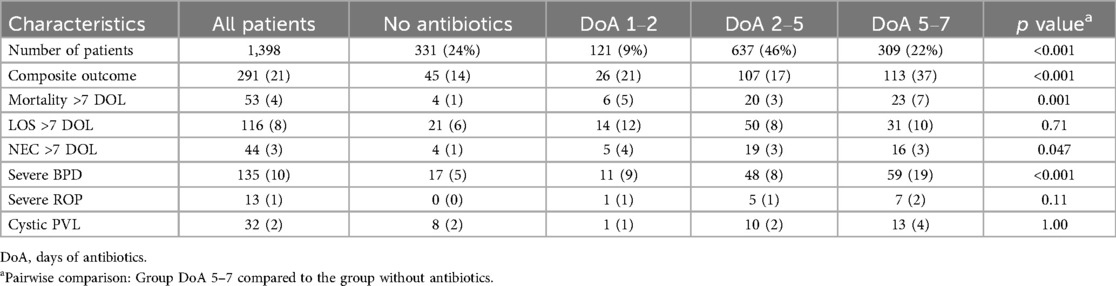
Table 2. Univariate analysis of short-term outcomes in very preterm infants according to days of antibiotics.
A multilinear regression model analyzing DoA as a continuous variable and correcting for cofounders showed no association with the primary composite outcome (p = 0.80) or individual major short-term adverse outcomes (Supplementary Table S2). A generalized mixed model adjusting for random effects (year of birth) indicated that DoA was not significantly associated with the composite outcome [aOR: 0.97 (0.82–1.17), p = 0.80, adjusted p = 0.80] or any short-term adverse outcomes; mortality [aOR: 1.10 (0.78–1.55), p = 0.58, adjusted p = 0.69]; LOS [aOR: 0.74 (0.59–0.93), p = 0.01, adjusted p = 0.07]; NEC [aOR: 1.22 (0.86–1.74), p = 0.26, adjusted p = 0.65]; severe BPD [aOR: 1.12 (0.88–1.42), p = 0.36, adjusted p = 0.65]; severe ROP [aOR: 1.34 (0.65–2.78), p = 0.43, adjusted p = 0.65]; cystic PVL [aOR: 1.02 (0.69–1.99), p = 0.91, adjusted p = 0.91] (Table 3).
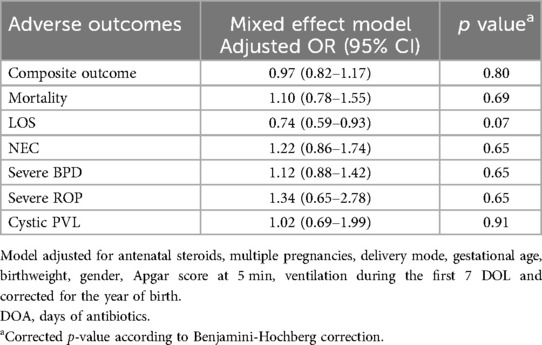
Table 3. Multivariate analysis (mixed effect model) of short-term outcomes in very preterm infants according to days of antibiotics.
4 Discussion
In this 15-year study, potentially unnecessary antibiotic exposure during the first postnatal week was not associated with adverse short-term adverse outcomes in very preterm infants. While our descriptive analysis indicates a higher occurrence of the composite outcome, and single outcomes of mortality, NEC and BPD across DoA groups of preterm infants most exposed to antibiotics, an analysis of DoA as a continuous variable adjusting for key co-factors shows no association between antibiotic exposure and adverse outcomes.
Prior studies investigating association between antibiotic exposure and adverse outcomes have shown contradictory findings. Even among studies showing an association, there is substantial heterogeneity in the type and number of adverse outcomes associated with antibiotic exposure. Several studies found an association with mortality (3, 20, 22–24), others report associations with individual outcomes, such as BPD (21), or with multiple outcomes, such as BPD and death (22), NEC and death (20), or LOS and the composite outcome of death, LOS and NEC (19). Other studies found associations between antibiotic exposure and NEC, death, and BPD (3), BPD and cerebral lesions (24), or ROP, death and the composite outcome of death, severe ROP, BPD and anomalies on neuroimaging (23). This heterogeneity, both among studies reporting an association and those that do not, can be attributed to different inclusion and exclusion criteria, the use of different metrics of antibiotic exposure, different methods for adjustment for confounding factors, and differences between institutions in antibiotic prescription practices and incidence of adverse outcomes. For instance, the co-factors included in analyses differ between studies. There is substantial heterogeneity regarding adjustment for illness severity as some studies adjusted for CRIB or SNAPPE scores (3, 23, 24), others adjusted based on mechanical ventilation (19, 20, 22, 25, 32). This aspect is important, as multiple variables influence the risk of developing adverse outcomes in preterm infants. In previous reports, results are not always corrected for the years of inclusion (19–22, 24, 26, 32), which can lead to bias as clinical practices and standards of care change over time. Additionally, some studies analyzed the impact of antibiotic exposure, often calculated with the metric Antibiotic Use Ratio (AUR), over the entire hospital stay (23), while most focused on early exposure (3, 19–21). The decision to calculate AUR over the entire hospitalization period can be questioned, as adverse outcomes may develop prior to antibiotic exposure, thereby challenging the cause-and-effect relationship. Furthermore, some studies consider the duration of treatment, represented by different metrics such as days of treatment or AUR, whereas others focus on the timing of antibiotic initiation (e.g., whether antibiotics were started on day 1, day 3 or after day 7) (21, 24). In most studies, patients are grouped into categories of antibiotic exposure rather than treating the variable as continuous, which can introduce bias (3, 19, 20, 22, 25, 26). Another factor that may explain discrepant findings is local practices of antibiotic use, such as the types of antibiotics prescribed, the proportion of patients started on antibiotics, and the duration of treatment. Broad-spectrum antibiotics, for instance, are more commonly associated with adverse outcomes (22). Potentially relevant differences in local practices also include the implementation of LOS prevention bundles, and the use of probiotics, maternal milk and donor milk which can reduce the rates of adverse outcomes.
Antibiotic use during the first seven postnatal days has decreased over time in our neonatal unit, with rates now falling within the lower end of what is reported in the literature (3, 23). This reduction in antibiotic use could partially explain the lack of a significant association between antibiotic exposure and short-term adverse outcomes in our study.
This study has several limitations. As it was conducted at a single hospital site, the results may not be generalizable. Despite our large cohort, the number of preterm infants who developed major short-term adverse outcomes was relatively limited, which may have reduced our capacity to detect significant associations. We did not analyze the association between antibiotics and adverse outcomes according to the class of antibiotics. While we aimed to focus on the potential impact of potentially unnecessary antibiotics by excluding patients with proven LOS or NEC, we may still have included in our analysis infants with potential infections, such as meningitis, pneumonia, urinary tract infection, and culture-negative sepsis. Finally, by excluding patients affected by LOS and NEC during the first week of life, we could not evaluate the impact of very early antibiotics on the occurrence of these outcomes within the first 7 DOL.
5 Conclusion
When adjusting for demographics, severity of illness and years, unnecessary antibiotic exposure during the first week of life does not appear to increase the risk of major short-term adverse outcomes in very preterm infants. In addition, our results show that unnecessary antibiotic exposure can be decreased. While our findings do not support an independent association between early antibiotic use and short-term adverse outcomes of prematurity, it is crucial to use antibiotics judiciously to reduce the risk of emergence and spread of antimicrobial resistance and prevent long-term adverse outcomes associated with antibiotic overuse.
Data availability statement
Requests to access these datasets should be directed to bGF1cmEuZmlsbGlzdG9yZkBjaHV2LmNo
Ethics statement
The study was approved by the Ethics committee of Canton de Vaud (CER 2022-00528). The study was conducted in accordance with the local legislation and institutional requirements.
Author contributions
LF: Conceptualization, Formal analysis, Investigation, Methodology, Writing – original draft, Data curation, Writing – review & editing. GC: Methodology, Software, Supervision, Validation, Writing – review & editing, Formal analysis, Writing – original draft. RM: Software, Writing – review & editing, Formal analysis. VD: Writing – review & editing, Data curation. JD: Writing – review & editing, Funding acquisition, Project administration, Software, Supervision. SM: Writing – review & editing, Conceptualization, Funding acquisition, Project administration, Supervision. EG: Writing – review & editing, Conceptualization, Funding acquisition, Project administration, Resources, Supervision, Validation.
Funding
The author(s) declare that financial support was received for the research and/or publication of this article. This work was supported by the Swiss Personalized Health Network (DEM-2022-11), the Lucien Picard Pediatric Foundation, and the Santos Suarez Foundation.
Conflict of interest
The authors declare that the research was conducted in the absence of any commercial or financial relationships that could be construed as a potential conflict of interest.
Generative AI statement
The author(s) declare that no Generative AI was used in the creation of this manuscript.
Publisher's note
All claims expressed in this article are solely those of the authors and do not necessarily represent those of their affiliated organizations, or those of the publisher, the editors and the reviewers. Any product that may be evaluated in this article, or claim that may be made by its manufacturer, is not guaranteed or endorsed by the publisher.
Supplementary material
The Supplementary Material for this article can be found online at: https://www.frontiersin.org/articles/10.3389/fped.2025.1563979/full#supplementary-material
References
1. Hsieh EM, Hornik CP, Clark RH, Laughon MM, Benjamin DK, Smith PB. Medication use in the neonatal intensive care unit. Am J Perinatol. (2014) 31(9):811–22. doi: 10.1055/s-0033-1361933
2. Flannery DD, Zevallos Barboza A, Mukhopadhyay S, Wade KC, Gerber JS, Shu D, et al. Antibiotic use among infants admitted to neonatal intensive care units. JAMA Pediatr. (2023) 177(12):e233664. doi: 10.1001/jamapediatrics.2023.3664
3. Vatne A, Hapnes N, Stensvold HJ, Dalen I, Guthe HJ, Støen R, et al. Early empirical antibiotics and adverse clinical outcomes in infants born very preterm: a population-based cohort. J Pediatr. (2023) 253:107–114.e5. doi: 10.1016/j.jpeds.2022.09.029
4. Flannery DD, Ross RK, Mukhopadhyay S, Tribble AC, Puopolo KM, Gerber JS. Temporal trends and center variation in early antibiotic use among premature infants. JAMA Netw Open. (2018) 1(1):e180164. doi: 10.1001/jamanetworkopen.2018.0164
5. Kramer TS, Salm F, Schwab F, Geffers C, Behnke M, Gastmeier P, et al. Reduction of antibacterial use in patients with very low birth weight on German NICUs after implementation of a mandatory surveillance system. A longitudinal study with national data from 2013 to 2019. J Infect. (2022) 85(1):8–16. doi: 10.1016/j.jinf.2022.05.009
6. Huncikova Z, Stensvold HJ, Øymar KAA, Vatne A, Lang AM, Støen R, et al. Variation in antibiotic consumption in very preterm infants-a 10 year population-based study. J Antimicrob Chemother. (2024) 79(1):143–50. doi: 10.1093/jac/dkad358
7. Martin-Mons S, Lorrain S, Iacobelli S, Gouyon B, Gouyon JB, B-PEN Study Group. Antibiotics prescription over three years in a French benchmarking network of 23 level 3 neonatal wards. Front Pharmacol. (2020) 11:585018. doi: 10.3389/fphar.2020.585018
8. Teixeira Rodrigues A, Roque F, Falcão A, Figueiras A, Herdeiro MT. Understanding physician antibiotic prescribing behaviour: a systematic review of qualitative studies. Int J Antimicrob Agents. (2013) 41(3):203–12. doi: 10.1016/j.ijantimicag.2012.09.003
9. Giannoni E, Agyeman PKA, Stocker M, Posfay-Barbe KM, Heininger U, Spycher BD, et al. Neonatal sepsis of early onset, and hospital-acquired and community-acquired late onset: a prospective population-based cohort study. J Pediatr. (2018) 201:106–114.e4. doi: 10.1016/j.jpeds.2018.05.048
10. Fleischmann-Struzek C, Goldfarb DM, Schlattmann P, Schlapbach LJ, Reinhart K, Kissoon N. The global burden of paediatric and neonatal sepsis: a systematic review. Lancet Respir Med. (2018) 6(3):223–30. doi: 10.1016/S2213-2600(18)30063-8
11. Stocker M, Klingenberg C, Navér L, Nordberg V, Berardi A, el Helou S, et al. Less is more: antibiotics at the beginning of life. Nat Commun. (2023) 14:2423. doi: 10.1038/s41467-023-38156-7
12. Giannoni E, Dimopoulou V, Klingenberg C, Navér L, Nordberg V, Berardi A, et al. Analysis of antibiotic exposure and early-onset neonatal sepsis in Europe, North America, and Australia. JAMA Netw Open. (2022) 5(11):e2243691. doi: 10.1001/jamanetworkopen.2022.43691
13. World Health Assembly 69. Global action plan on antimicrobial resistance: options for establishing a global development and stewardship framework to support the development, control, distribution and appropriate use of new antimicrobial medicines, diagnostic tools, vaccines and other interventions: report by the Secretariat. (2016). Available online at: https://iris.who.int/handle/10665/252682 (Accessed May 8, 2024).
14. Kamphorst K, Van Daele E, Vlieger AM, Daams JG, Knol J, van Elburg RM. Early life antibiotics and childhood gastrointestinal disorders: a systematic review. BMJ Paediatr Open. (2021) 5(1):e001028. doi: 10.1136/bmjpo-2021-001028
15. Zhang Z, Wang J, Wang H, Li Y, Jia Y, Yi M, et al. Association of infant antibiotic exposure and risk of childhood asthma: a meta-analysis. World Allergy Organ J. (2021) 14(11):100607. doi: 10.1016/j.waojou.2021.100607
16. Fjalstad JW, Esaiassen E, Juvet LK, van den Anker JN, Klingenberg C. Antibiotic therapy in neonates and impact on gut microbiota and antibiotic resistance development: a systematic review. J Antimicrob Chemother. (2018) 73(3):569–80. doi: 10.1093/jac/dkx426
17. Redfield RR, Khabbaz R. Centers for Disease Control and Prevention. Core elements of hospital antibiotic stewardship programs (2019). Available online at: https://www.cdc.gov/antibiotic-use/healthcare/pdfs/hospital-core-elements-H.pdf (Accessed May 8, 2024).
18. Cantey JB, Wozniak PS, Pruszynski JE, Sánchez PJ. Reducing unnecessary antibiotic use in the neonatal intensive care unit (SCOUT): a prospective interrupted time-series study. Lancet Infect Dis. (2016) 16(10):1178–84. doi: 10.1016/S1473-3099(16)30205-5
19. Kuppala VS, Meinzen-Derr J, Morrow AL, Schibler KR. Prolonged initial empirical antibiotic treatment is associated with adverse outcomes in premature infants. J Pediatr. (2011) 159(5):720–5. doi: 10.1016/j.jpeds.2011.05.033
20. Cotten CM, Taylor S, Stoll B, Goldberg RN, Hansen NI, Sánchez PJ, et al. Prolonged duration of initial empirical antibiotic treatment is associated with increased rates of necrotizing enterocolitis and death for extremely low birth weight infants. Pediatrics. (2009) 123(1):58–66. doi: 10.1542/peds.2007-3423
21. Köstlin-Gille N, Serna-Higuita LM, Bubser C, Arand J, Haag L, Schwarz CE, et al. Early initiation of antibiotic therapy and short-term outcomes in preterm infants: a single-centre retrospective cohort analysis. Arch Dis Child Fetal Neonatal Ed. (2023) 108(6):623–30. doi: 10.1136/archdischild-2022-325113
22. Shi W, Chen Z, Shi L, Jiang S, Zhou J, Gu X, et al. Early antibiotic exposure and bronchopulmonary dysplasia in very preterm infants at low risk of early-onset sepsis. JAMA Netw Open. (2024) 7(6):e2418831. doi: 10.1001/jamanetworkopen.2024.18831
23. Ting JY, Synnes A, Roberts A, Deshpandey A, Dow K, Yoon EW, et al. Association between antibiotic use and neonatal mortality and morbidities in very low-birth-weight infants without culture-proven sepsis or necrotizing enterocolitis. JAMA Pediatr. (2016) 170(12):1181–7. doi: 10.1001/jamapediatrics.2016.2132
24. Letouzey M, Lorthe E, Marchand-Martin L, Kayem G, Charlier C, Butin M, et al. Early antibiotic exposure and adverse outcomes in very preterm infants at low risk of early-onset sepsis: the EPIPAGE-2 cohort study. J Pediatr. (2022) 243:91–98.e4. doi: 10.1016/j.jpeds.2021.11.075
25. Greenberg RG, Chowdhury D, Hansen NI, Smith PB, Stoll BJ, Sánchez PJ, et al. Prolonged duration of early antibiotic therapy in extremely premature infants. Pediatr Res. (2019) 85(7):994–1000. doi: 10.1038/s41390-019-0300-4
26. Li Y, Shen RL, Ayede AI, Berrington J, Bloomfield FH, Busari OO, et al. Early use of antibiotics is associated with a lower incidence of necrotizing enterocolitis in preterm, very low birth weight infants: the NEOMUNE-NeoNutriNet cohort study. J Pediatr. (2020) 227:128–34.e2. doi: 10.1016/j.jpeds.2020.06.032
27. Adams M, Hoehre TC, Bucher HU, the Swiss Neonatal Network. The Swiss neonatal quality cycle, a monitor for clinical performance and tool for quality improvement. BMC Pediatr. (2013) 13(1):152. doi: 10.1186/1471-2431-13-152
28. Neu J. Necrotizing enterocolitis: the search for a unifying pathogenic theory leading to prevention. Pediatr Clin North Am. (1996) 43(2):409–32. doi: 10.1016/S0031-3955(05)70413-2
29. Jobe AH, Bancalari E. Bronchopulmonary dysplasia. Am J Respir Crit Care Med. (2001) 163(7):1723–9. doi: 10.1164/ajrccm.163.7.2011060
30. Classification of Retinopathy of Prematurity*. The international classification of retinopathy of prematurity revisited. Arch Ophthalmol. (2005) 123(7):991–9. doi: 10.1001/archopht.123.7.991
31. Flannery DD, Horbar JD. Metrics of neonatal antibiotic use. Semin Perinatol. (2020) 44(8):151329. doi: 10.1016/j.semperi.2020.151329
Keywords: antimicrobial stewardship, neonatal sepsis, neonatology, antibiotic use metrics, neonatal morbidities
Citation: Fillistorf L, Carra G, Matusiak R, Dimopoulou V, Despraz J, Meylan S and Giannoni E (2025) Absence of association between early antibiotic exposure and short-term adverse outcomes in very preterm infants: a single-center retrospective study. Front. Pediatr. 13:1563979. doi: 10.3389/fped.2025.1563979
Received: 20 January 2025; Accepted: 3 March 2025;
Published: 17 March 2025.
Edited by:
Christoph Bührer, Charité University Medicine Berlin, GermanyReviewed by:
Hercília Guimarães, University of Porto, PortugalKirsten Glaser, University Hospital Leipzig, Germany
Copyright: © 2025 Fillistorf, Carra, Matusiak, Dimopoulou, Despraz, Meylan and Giannoni. This is an open-access article distributed under the terms of the Creative Commons Attribution License (CC BY). The use, distribution or reproduction in other forums is permitted, provided the original author(s) and the copyright owner(s) are credited and that the original publication in this journal is cited, in accordance with accepted academic practice. No use, distribution or reproduction is permitted which does not comply with these terms.
*Correspondence: Eric Giannoni, ZXJpYy5naWFubm9uaUBjaHV2LmNo
†These authors have contributed equally to this work