 Dorothea M. I. Schönbach
 Palma Chillón
 Adilson Marques
 Miguel Peralta
 Yolanda Demetriou
- 1Department of Sport and Health Sciences, Technical University of Munich, Munich, Germany
- 2PROFITH “PROmoting FITness and Health Through Physical Activity” Research Group, Sport and Health University Research Institute (iMUDS), Department of Physical Education and Sports, Faculty of Sport Sciences, University of Granada, Granada, Spain
- 3CIPER, Faculty of Human Kinetics, University of Lisbon, Lisbon, Portugal
Background: Despite a high rate of bicycle ownership, the prevalence of cycling to school among children and adolescents in Germany has been constantly low. Cycling to school can contribute to meeting the physical activity recommendations, which the majority of children and adolescents in Germany do not meet.
Methods: By using intervention mapping, this study protocol describes the systematic planning process of a school-based intervention in Germany aimed to increase the number of days on which students cycle to school and to increase their physical activity levels. To make sure that the intervention will match the needs of students, we conducted a concept mapping study investigating what students need to cycle to school, as perceived by students, parents, and teachers. The logic model of change was based on an integration of the self–determination theory and the social–ecological model. We structured our intervention as two phases, a preparatory phase with weekly components for and a practical phase with a daily repeated component of the targeted behavior. In the 8-week preparatory phase, teachers, parents, and peers will be involved. The content of the 12-week practical phase will involve peers only and was considered promising based on the findings from a systematic review that we conducted to identify the effective strategies of school-based interventions to promote cycling to school among children and adolescents. Overall, our intervention includes 27 behavior change techniques. A researcher, student assistants, teachers, and other collaborators will implement the intervention; a whole-of-school approach with components performed before, during, and after school was chosen. As a study design, we decided to draft a two-arm three-level cluster randomized controlled trial. Both the effect and process evaluation were prepared. In the first instance, approximately 250 students of 12–15 years of age from grade 7 or 8, who attend a secondary school of intermediate or high educational level located in (sub)urban regions in Southern Germany, will pilot the intervention.
Discussion: We expect to provide an effective and sustainable intervention for students, which gives insights into the mechanisms of change concerning the behavior of cycling to school and its influence on physical activity levels.
Introduction
In Germany, up to 98% of children and adolescents until 17 years own a bicycle (1). However, cycling is the rarest mode used by girls and boys overall for commuting to school (2). Additionally, the prevalence of cycling to school in the years from 2003 to 2017 was constantly lower in girls (20.6 vs. 21.5%) compared with boys (23.8 vs. 25.2%) aged 11–17 years (2, 3). Living in a small town (5,000–19,999 inhabitants) and a city (>100,000 inhabitants) or attending an intermediate educational level providing a general education school leaving certificate lowered the chance of cycling to school among children and adolescents in Germany compared with those living in a medium-sized town (20,000–99,999 inhabitants) or attending a high educational level providing a general higher education entrance qualification (3, 4). These associations may vary based on the context (i.e., sampled regions of residential or school area) (5).
In Germany, only 26% of the children and adolescents (girls: 22.4%, boys: 29.4%) aged up to 17 years achieve the physical activity (PA) recommendations proposed by the World Health Organization (6). As the stability of PA patterns among girls and boys is lower in transitional phases (e.g., from childhood to adolescence) (7), the PA prevalence declines with age in Germany (6), which makes it important to counteract this negative trend in this phase of life. According to previous research from England, it is noteworthy that 36% of children and adolescents aged 5–15 years who cycle to school meet the weekly PA recommendations (8). In comparison, only 25% of walkers to school and 22% of neither cyclists nor walkers to school meet these recommendations. Following this, the promotion of cycling to school could be a promising strategy to increase PA levels among children and adolescents.
However, interventions in this research field are not well established (9) and especially interventions implemented in secondary schools (10) involving two grade levels from grade 7 upward (11) are lacking. Previous research recommended the stepwise structured intervention mapping protocol (IM) when planning interventions to change behavior (12). According to this conceptual review, the IM protocol uses theories and evidence, follows a social–ecological approach to intervene at multiple levels, and is characterized by involving the target group and all relevant stakeholders using a participatory approach. The authors concluded that the best possible intervention with the best chance of effectiveness can be expected when following this detailed and systematic protocol.
Therefore, this study protocol used IM to document the systematic planning process of a school-based intervention based on a combination of the social–ecological model and the self–determination theory. It is designed as a two-arm three-level cluster randomized controlled trial (RCT) with a pre- and post-measurement for the effect evaluation before and after the 5-month period of implementation. As the primary aim, the planned intervention should increase the number of cycling days to school and as a secondary aim, should increase the total moderate-to-vigorous physical activity (MVPA) among children and adolescents aged 12–15 years from grade 7 or 8 attending secondary schools of intermediate or high educational levels located in (sub)urban regions (small town, medium-sized town, city) in Southern Germany.
Methods and Analysis
In this study protocol, IM was used. IM describes an iterative process, which consists of six steps (i.e., logic model of the problem, logic model of change, program design, program production, program implementation plan, and evaluation plan) divided into several tasks described in Figure 1 (13).
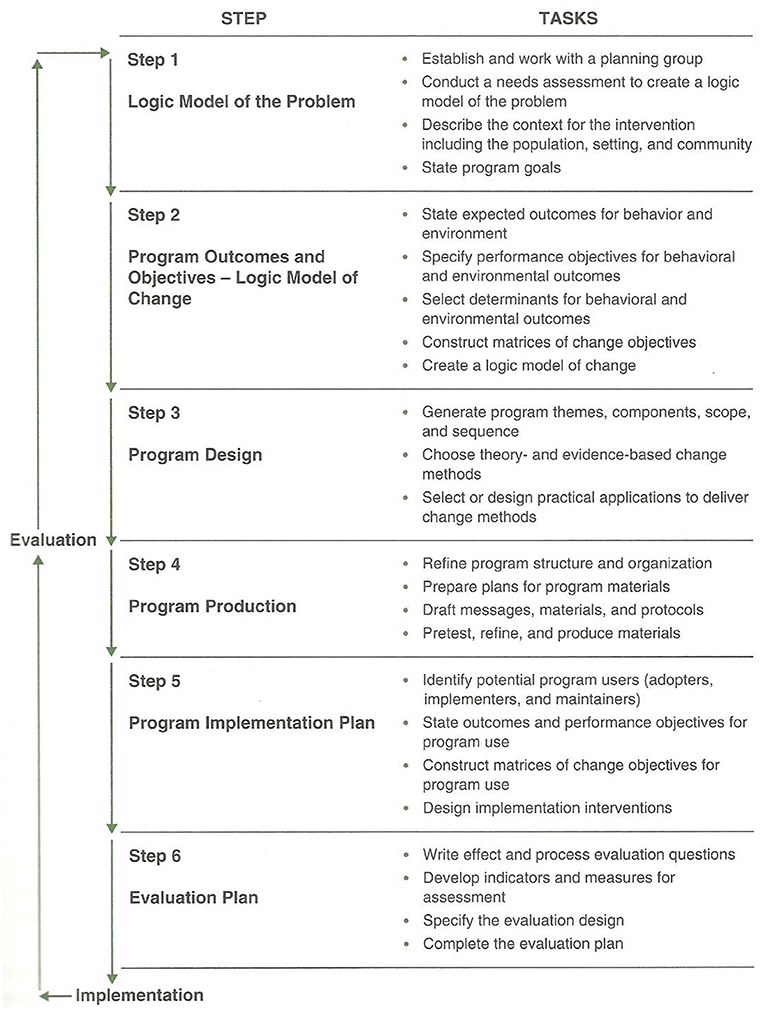
Figure 1. Steps and tasks of the intervention mapping protocol (13) (p. 13).
This study protocol includes the following terms, which explain the most crucial tasks allocated to steps one to three of the IM protocol. In step one, we defined the needs assessment as “the collection and analysis of information that relates to the needs” (14) (p. 314) of our identified high-risk population of cyclists to school, which help determine the facilitators and barriers of their behavior. For the construction of the matrix in step two, we used the following definitions of “performance objectives” and “change objectives.” Performance objectives are observable and specific behaviors, which are judged necessary to meet the desired aims of our intervention (i.e., who needs to do what) (13) and were allocated to modules (A, B, C, etc.) in the study matrix. The combination of determinants for behavioral outcomes and performance objectives lead to change objectives (13). In step three, intervention components were defined as different packages of contents (15), which were allocated to the different modules in order to address the changes needed according to the identified performance objectives. The composition of components will define the success of our intervention due to their direct relatedness to change methods (16). A change method (also technique) “provides evidence for how change may occur” (13) (p. 17).
Logic Model of the Problem
In 2019, the ACTS project was initiated. It was aimed at promoting active commuting to school (ACTS) with a particular focus on cycling to school in Europe. To plan interventions is part of this project. This project involves six research institutes from Poland, Czech Republic, Portugal, the Netherlands, and Germany, which were set as the planning group. For each country, an intervention adapted to the needs of the local context is planned. The intervention described here aims to address students aged 12–15 years attending grade 7 or 8 at secondary schools of intermediate or high educational levels located in sub(urban) regions (small town, medium-sized town, city) in Southern Germany. We involved teachers in the planning process of the intervention to ensure that the implementation will be feasible in their community, at their school, and with their students. Therefore, we sent teachers the draft of our planned intervention and asked for their feedback, which we considered in this study protocol.
In step one of the IM protocol, the logic model of the problem was created (see Figure 2). Here, the needs of students to cycle to school daily were assessed using a concept mapping study (17). In total, 136 students aged 12–15 years attending grade 7 or 8 at three different secondary schools of different educational levels located in different sub(urban) regions in Southern Germany participated in the study. For a more comprehensive understanding of the behavior of the students, concept mapping was also performed among students' parents (n = 58) and teachers (n = 29) of both genders female and male, whereby the low retention rate of fathers did not permit a separate gender analysis. As needs to cycle to school daily, a “bicycle and related equipment,” the “way to school,” and “personal factors” were mentioned by all three analyzed samples of students, mothers, and teachers. Additionally, students mentioned “cycle training,” mothers mentioned the “role of the school,” and the teachers mentioned “storage and changing room,” “financial aspects,” as well as “information and services.” Furthermore, “social behavior in road traffic” was mentioned by girls only, “role of parents” by mothers and female teachers, and “sense of safety” by female teachers. As none of these mentioned needs stood out as particularly (un)important and/or (un)feasible, we treated all of them as equally relevant. In this study, almost all students owned a bicycle (girls: 87.8%, boys: 100%) and all were able to cycle (5). When examining the habits of the students in cycling to school, we found that approximately two-thirds of students stated to sometimes cycle to school (girls: 44.4%, boys: 72.9%), of whom approximately one-third cycled to school daily (girls: 31.6%, boys: 37.3%). On average, students generally cycled to school on 2.3 ± 2.0 days per week (girls: 1.6 ± 2.0, boys: 2.7 ± 2.0). Moreover, the following correlates were identified to be negatively associated with cycling to school habits of students: (a) being a girl, (b) increasing age (mainly in girls), (c) attending an intermediate educational level in combination with a suburban region of the school, (d) attending a school located in a small town (mainly in girls) or a medium-sized town, (e) living further away from school, and (f) having parents not using a bicycle to commute to work.
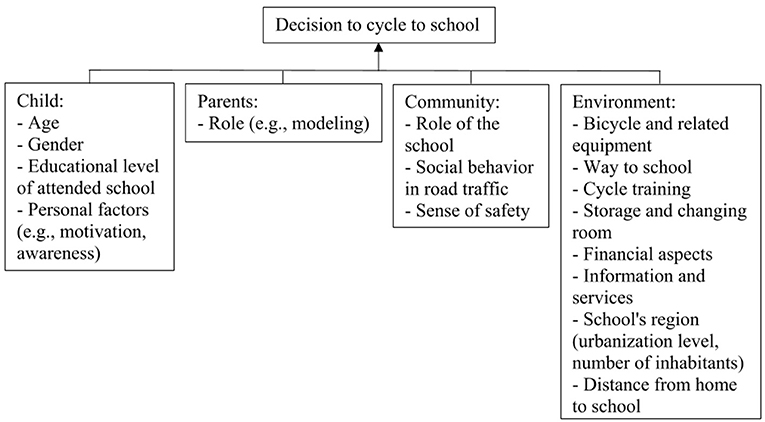
Figure 2. Logic model of the problem: Factors that influence cycling to school based on concept mapping (5, 17).
The primary aim of the planned intervention is to increase the number of days on which students cycle to school. As a secondary aim, the planned intervention should increase the total MVPA in students due to positive changes in their cycling to school behavior.
Logic Model of Change
According to the previous IM step, complementary and stimulating impulses of behavioral (including personal factors) and situational (including social and physical environment) approaches are relevant for the successful promotion of cycling to school. All circumstances of the external reality of the students embody the environment (18). We defined the term “social environment” as all political–social–cultural factors (including parents, teachers, peers, school and its policies, and social norms), in which the student lives in, is educated, and interacts (19, 20). The term “physical environment” includes all factors related to the structural conditions, such as the (functional) quality of equipment, financial aspects, transportation system, design of the infrastructure, services, and the distance from home to school (20–22).
In step two of the IM protocol, a theoretical model has to be chosen to create the logic model of change. Therefore, two theoretical models were integrated as already described in a previous study protocol (23). This integration illustrates why the situational approach influences the behavior of the students and how the behavioral and situational approaches interrelate and interact (21) (see Figure 3): (a) The social–ecological model of the correlates of active transportation shows “the complex interaction of multiple levels of factors [i.e., individual, interpersonal, community, built environment, policy (19)] affecting decisions to be active” (21) (p. 57). This theoretical model was chosen as we identified multiple levels in our concept mapping study at which we need to intervene (i.e., individual, interpersonal, community, environment) (see Figure 2). (b) A sub-theory of the self–determination theory, the basic psychological needs (BPNs), emphasizes that the support and satisfaction of autonomy, competence, and relatedness lead to a more self-determined form of motivation toward a specific behavior (21, 24). This theoretical model was chosen as motivation (personal factors) of students was identified in our concept mapping study to play a role in their decision to cycle to school (see Figure 2).
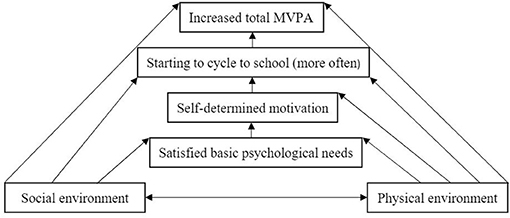
Figure 3. Logic model of change [modified according to (21) (p. 67)]. MVPA, moderate-to-vigorous physical activity.
Based on the social and physical environment, BPNs can be either satisfied or frustrated leading to a certain degree of motivation, which is crucial for the decision process of the students to cycle to school and the influence on total MVPA. Following this logic model of change, Table 1 illustrates the matrix of performance objectives and determinants targeting the promotion of cycling to school.
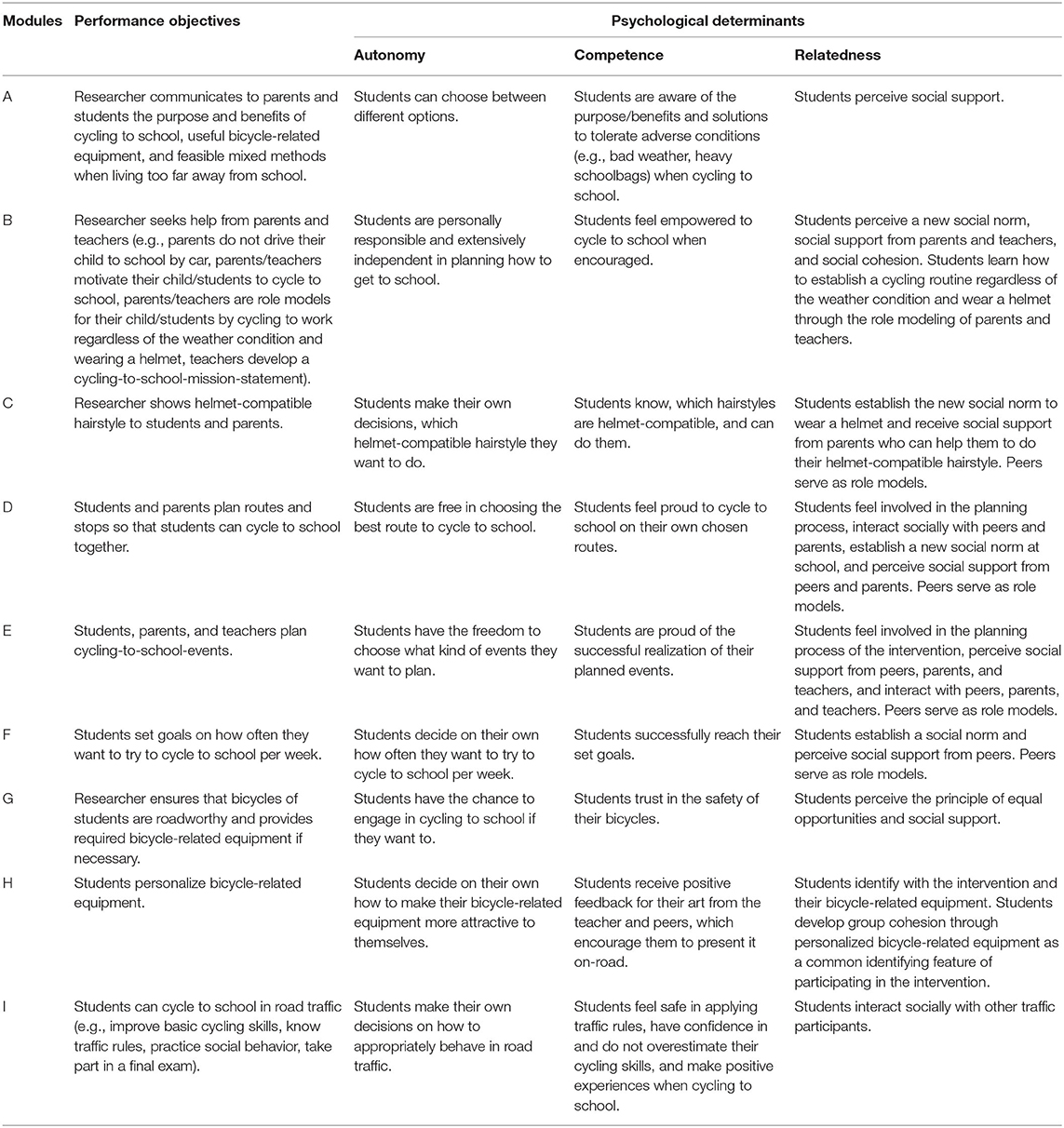
Table 1. Matrix of performance objectives and determinants targeting the promotion of cycling to school.
Program Design and Production
As illustrated in Table 2, the intervention will be structured in two phases: (a) preparation for and (b) practice of the targeted behavior. All chosen components and some of their descriptions were based on the findings and conclusions from our concept mapping study (5, 17) and our systematic review (11), which was conducted to identify effective strategies of school-based interventions to promote ACTS by bicycle among children and adolescents. We also used the following documents to design the mobility and traffic education components in the preparatory phase: (a) The content of the three-cycle training sessions off-road was based on a German research report on road safety education concepts for children and adolescents in secondary schools (25). (b) For the session in which theoretical knowledge about traffic rules will be transferred, two guidebooks published by the German Automobile Club (ADAC) (26, 27) were the basis. (c) The content of the cycle training session on-road to practice social behavior in road traffic was also based on these two guidebooks (26, 27). (d) To finally certify the basic cycling skills of students in a final exam, another guidebook of the ADAC was the basis (28). All students will obtain a certificate regardless of their scoring to allow for self-monitoring of their basic cycling skills.
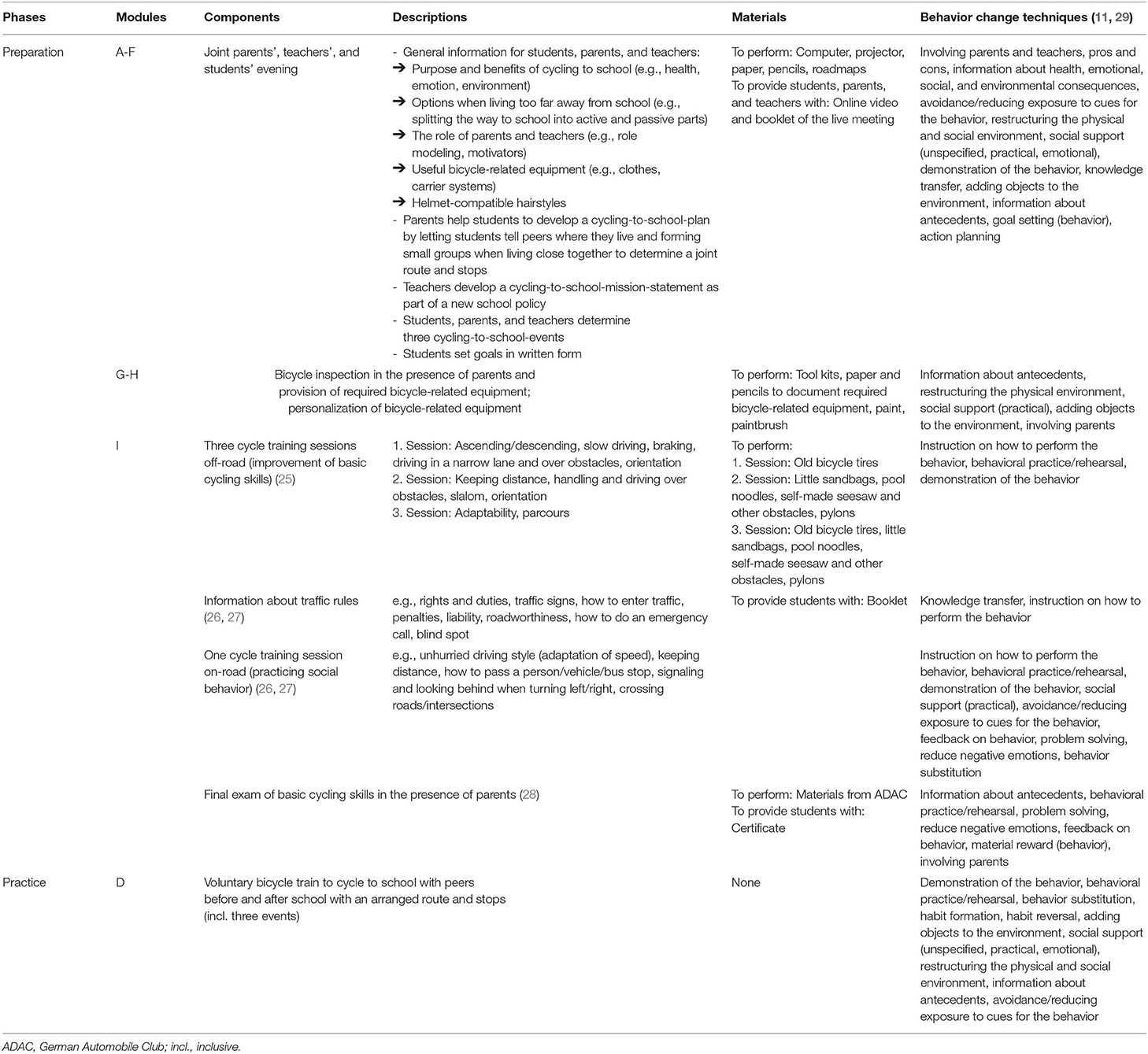
Table 2. Program design.
Each component could be linked to at least one behavior change technique as proposed in the taxonomy v1 (29) and supplemented by our systematic review (11). Overall, 27 different techniques were applied to the components of our intervention.
Program Implementation Plan
For convenience, the three secondary schools included in our concept mapping study were asked to pilot the intervention. Two more secondary schools, each characterized by similar features as the already recruited ones, that is, in terms of regions, educational levels, and grades, will be searched by sending random invitation letters. Similar random invitation letters will also be sent to recruit secondary schools in the main study.
The school year in Germany starts in fall and ends in summer, whereby the first term ends in spring. In previous research from Norway, seasonal differences in cycling to school were observed between fall (52%), winter (3%), and spring (51%) (30) as well as between winter (12%) and summer (22%) (31). Also in Germany, cycling to school decreases in winter (32). Therefore, the implementation of the intervention should start in fall and end in spring (i.e., during the first term of the school year). According to the preparatory and practical phases, individual components will be implemented one after another at the participating secondary schools over a period of 5 months (see Table 3). As implemented components will prepare students for the possibly more difficult (weather) conditions in winter, we do not expect a negative seasonal influence on the effectiveness of the intervention. For example, information about appropriate clothes will be provided during the joint parents', teachers', and students' evening. Furthermore, parents and teachers will be reminded of serving as role models so that the 12- to 15-year-olds learn how to establish a cycling routine regardless of (weather) conditions in winter. Students will feel safer and more confident in dealing with difficult road conditions after participating in the cycle training, which will improve their basic cycling skills and practice them on-road (e.g., handling obstacles and appropriate driving style). The bicycle train will increase the motivation and safety of students through positive experiences when accompanied by and interacting socially with peers instead of cycling to school alone in the darkness. Furthermore, the bicycle train will establish a new social norm (i.e., cycling to school as an activity throughout the whole year, including winter and not only in summer). The intervention will follow a whole-of-school approach as we designed components that will take place before, during (i.e., in art and physical education (PE) lesson), and after school. At each participating secondary school, a person of contact will be defined who will act as a coordinator for implementing the intervention. Furthermore, the person of contact will interact with the responsible implementers at their school (i.e., PE and art teacher) and a researcher as well as the project manager at the Technical University of Munich (TUM) who can be called or e-mailed any time in case of occurring questions or problems. The researcher from TUM will be in touch with the person of contact to organize data collections and the implementation of components, which will be led by the researcher and student assistants from TUM. As our aim was to draft a sustainable intervention, we will provide secondary schools with all materials needed for the replication of the intervention and initiate several collaborations with government facilities (i.e., police) and nongovernmental organizations (e.g., ADAC) free of charge that can be continued after we will have left schools.
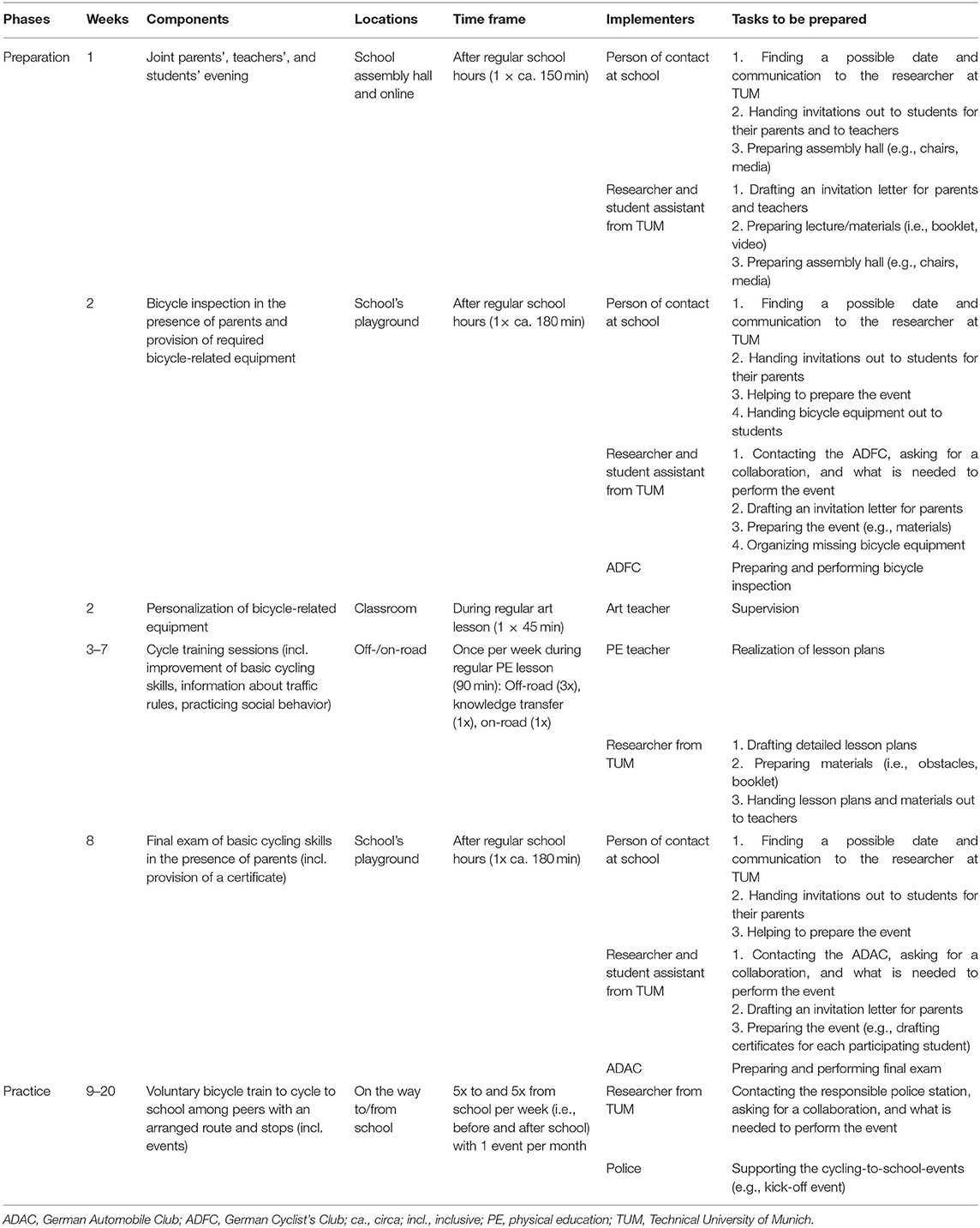
Table 3. Program implementation plan.
Evaluation Plan
To report the findings of our planned evaluation, the “CONSORT 2010 statement: extension to cluster randomized trials” (33) will be followed.
Study Design
The main study is planned as a two-arm (i.e., intervention and control group (IG; CG)) three-level cluster (i.e., students in classrooms in schools) RCT (see Figure 4), whereby a simple randomization technique (i.e., flipping a coin) on school-level was chosen. For convenience, the pilot study will follow a quasi-experimental study design as a non-RCT. Directly before and after the implementation of the intervention, a pre- and post-measurement will take place as part of the effect evaluation. Furthermore, the process evaluation will take place during and after the implementation of the intervention. Based on the intraclass correlation coefficient (ICC) of 0.2 calculated for the variance of days per week students cycled to school between the three secondary schools in our concept mapping study (17), we assigned more than one secondary school to the IG and CG. No treatment will be delivered to the CG. In the main study, approximately 255 students belonging to five schools with two classes in grade(s) 7 and/or 8 will be in the IG and CG, respectively. However, approximately 150 students belonging to three schools will be in the IG and 100 students belonging to two schools in the CG when piloting the intervention.
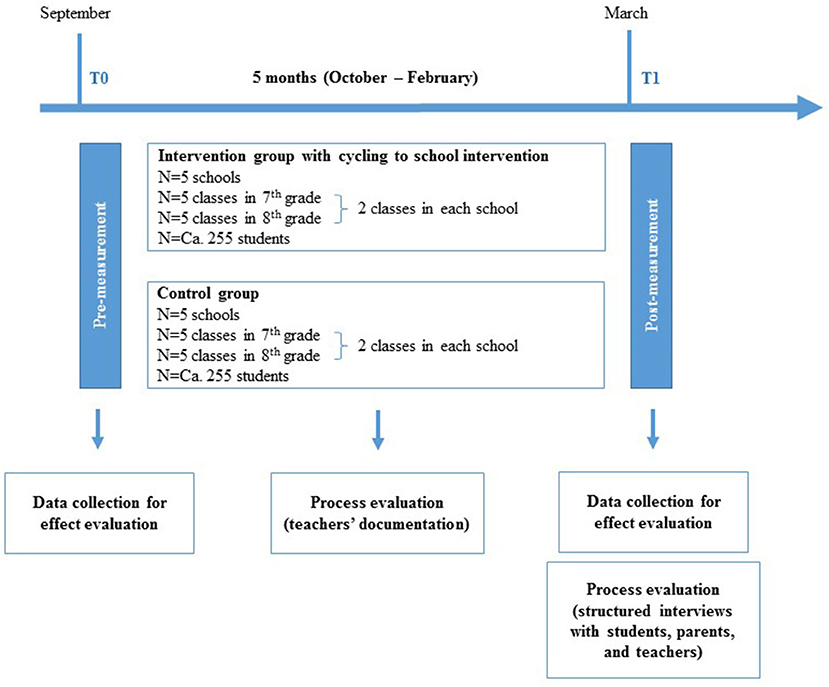
Figure 4. Study design of the planned cycling to school intervention. N, sample size.
Sample Size Determination
The optimal sample size for our chosen study design in the main study was calculated based on a formula by Rutterford et al. (34). This formula considers the confidence level (97.5%), power (80%), variance of days per week in cycling to school at the individual level [4.1 days (5)], our estimated clinically important difference in treatment means of days per week in cycling to school at the individual level (1.75 days), number of students per secondary school (based on the mean value in our concept mapping study: 51 students), and ICC of days per week students cycled to school at school level [0.2 days (17)]. According to this formula, the required number of students per intervention condition is 231. For the planned pilot study in the first instance, 10% of the main study's calculated sample size is recommended (35, 36) (i.e., 23 students per arm).
Measuring Instruments
To perform the effect evaluation of the planned intervention, several measuring instruments were chosen (see Table 4). Furthermore, the content of the process evaluation was defined.

Table 4. Measuring instruments for the effect evaluation.
To perform the pre- and post-measurement for the effect evaluation before and after the implementation of the intervention, participating classes will be divided into two small groups by the researcher and student assistants from TUM during two regular consecutive PE lessons with a total duration of 90 min. One group will answer the self-report questions in paper/pencil questionnaires, while the other group will perform a practical cycling skills exam off-road. Students who completed the questionnaire will be sent to the other group to complete the cycling skills exam and the other way around. At the end of the two regular consecutive PE lessons, accelerometers will be handed out and their handling will be explained to students (see Table 4). While wearing the accelerometers, weather conditions will be documented daily by a student assistant from TUM.
For the process evaluation during the implementation of the intervention, each art and PE teacher from each class that received the intervention will be asked to document in written form the dosage of their own intervention delivery (i.e., was the content of components implemented correctly), fidelity (i.e., what content of components was not implemented correctly and why), and any adaptions (i.e., what changes were made to the content of components during implementation). Thus, the dimension of the implementation of the intervention can be determined. Additionally, four willing students (two girls and two boys), four parents (two mothers and two fathers), and each art and PE teacher from each class that received the intervention will be asked in a structured online interview individually scheduled after the implementation of the intervention how they perceived the organization and content of the delivered intervention. They will also be asked to give feedback on their (dis)satisfaction regarding the intervention and to think about how it can be improved.
Data Handling, Storage, and Monitoring
Data will be collected using pseudonyms. Therefore, students will be instructed to create a six-digit ID code themselves to connect data throughout data collections and to ensure anonymity. Data collected for the effect evaluation will be entered in SPSS. Over a period of at least 10 years, data sets will be stored on central servers of TUM administered by the Leibniz–Rechenzentrum meeting the high standards of data safety in Germany. Only the researcher and manager of the ACTS project at TUM will get access to data sets, which means that anonymous data will not be made available for open access after the end of the study.
Statistical Analysis
To analyze the effectiveness of our intervention, a multiple group analysis considering the treatment factor (IG vs. CG) will be performed in a structural equation modeling using R. In this analysis, variances in the number of cycling days to school and MVPA due to belonging to different secondary schools will be considered in the following four levels: (a) repeated measurements for each student, (b) students, in which the repeated measurements are nested, (c) the class, to which each student belongs, and (d) the school, in which classes are nested. Subsequently, potential moderators (e.g., sociodemographic characteristics of the students) will be added to the model, and cycling to school will be regressed onto potential mediators (i.e., autonomy, competence, and relatedness) in levels (b–d). Furthermore, gender will be considered as a covariate in the analysis.
Discussion
This study protocol describes the systematic planning process and design of the 5-month school-based ACTS intervention in Germany aiming to promote cycling to school among 12- to 15-year-olds. It used IM and a combination of the social–ecological model and the self–determination theory.
The decision to publish the detailed process of how our intervention was planned can be seen as a major strength as we demonstrate transparency of our structured procedure for other intervention planners. To the best of our knowledge, this is the first time that IM was used to plan an intervention aimed at the promotion of cycling to school. Our planned intervention has also several strengths: We chose the school setting for our intervention because it is regarded as ideal (50–53). According to the “Standing Conference of the Ministers of Education and Cultural Affairs” in Germany (54), the task to provide mobility and traffic education is assigned to schools, which we support with our planned intervention. Our intervention will contribute to closing the currently existing research gap by focusing on secondary schools where ACTS, especially cycling to school, is currently the least implemented activity (10) and generally, in an early development stage (9) with a lack of evidence for effectiveness in the majority of existing school-based interventions (11). We decided to focus on the promotion of cycling to school in winter (32) among the high-risk ACTS group of 12- to 15-year-olds (55) attending grade 7 or 8 (11) to expand the current state of research. As recommended, we chose a whole-of-school approach (56), a multi-level approach (21, 57), and a combination of objective as well as subjective measuring instruments to accurately assess the PA level during cycling (58). To prevent negative experiences on-road (e.g., accidents), we will first provide some theoretical and practical components off-road. Instead of choosing a top-down approach, we partly chose a participative approach to consider the opinion of the target group (i.e., students) and relevant stakeholders (i.e., parents and teachers), to address the local context appropriately, and to ensure the feasibility of the implementation of the intervention. The success of this approach will be controlled in the process evaluation. Furthermore, we will initiate collaborations (e.g., with the ADAC and police) free of charge and provide all necessary materials so that schools could continue the work beyond the duration of the intervention, which will ensure sustainability. Finally, we determined the appropriate sample size for an adequately powered effect evaluation, will control for potential mediators and moderators in our analysis (57) and will pilot the intervention. The purpose of piloting is to pre-test the effectiveness, acceptance, and feasibility of the intervention, as it will later be performed in the main study, in accordance with the planned organizational procedure and chosen measuring instruments for data collection described in this study protocol but by using a smaller sample size and a weaker, that is, quasi-experimental, study design.
However, the following limitations have to be considered. In general, following the IM protocol was a time-consuming process making it difficult to fulfill each of its sub-steps (59). The time factor is also why the opinion of the target group could not be considered in every step (e.g., how students would design the intervention) but the IM protocol is normally only followed by researchers anyway (60). Besides, one demand mentioned in the needs assessment, that is, storage and changing room, could not be considered in the planned intervention. Moreover, this intervention was designed as an RCT providing a high evidence level (61) but without a follow-up. It will be characterized by a selective sample, that is, recruiting students of intermediate or high educational levels and regional restriction to (sub)urban areas in Southern Germany, and a moderate-term duration so that findings will not be generalizable.
Altogether, using the IM protocol to systematically plan an intervention is a time-consuming and complex procedure for researchers (59, 62, 63) but recommendable as it increases the chance to achieve the defined aim(s) of a planned intervention (12, 63). We suppose that the planned intervention adequately matches the needs of students aged 12–15 years grade 7 or 8 at secondary schools in Southern Germany, covering different educational levels (i.e., intermediate and high) and located in different municipalities urbanized to different levels. Thus, we expect that our effect evaluation will show increasing numbers of days on which students cycle to school and increasing total MVPA. As we considered the opinion from the target group and all relevant stakeholders in the planning process to a certain extent, we expect that the process evaluation will show satisfaction concerning components and the implementation of the intervention as intended.
Ethics and Dissemination
Before the implementation of the intervention, we will apply for the intervention's approval by the Ethics Commission from TUM and the Bavarian State Ministry for Education and Cultural Affairs. Prior to participating in the intervention, schools, parents, and their 12- to 15-year-old children will have to provide signed consent forms, which will be collected from the person of contact at the participating secondary schools and forwarded to the researcher from TUM.
Any changes made to the methodological procedure described in this study protocol will be reported when publishing the findings of the pilot and main study in international peer-reviewed journals. In addition, the findings will be disseminated through formal presentations at conferences and informal meetings.
Author Contributions
DS designed the concept of the intervention and drafted the manuscript. YD acquired funding for the project, supervised DS, and commented on the manuscript. PC, AM, and MP commented on the manuscript. All authors read, approved, and agreed to be accountable for the final manuscript.
Funding
This article was supported by a grant (2018–3291/001–001) from the Education, Audiovisual and Culture Executive Agency (EACEA) ERASMUS+ Sport Program. Additionally, this article received funds for open access publications fees from the Technical University of Munich. The funders had no role in preparing, deciding to publish, or in drafting this manuscript.
Conflict of Interest
The authors declare that the research was conducted in the absence of any commercial or financial relationships that could be construed as a potential conflict of interest.
Publisher's Note
All claims expressed in this article are solely those of the authors and do not necessarily represent those of their affiliated organizations, or those of the publisher, the editors and the reviewers. Any product that may be evaluated in this article, or claim that may be made by its manufacturer, is not guaranteed or endorsed by the publisher.
Acknowledgments
We are thankful for the support of the ACTS Consortium. Furthermore, we thank Dr. Wolfgang Wagner from the Eberhard Karls University of Tübingen for his advice on the study design and statistical analysis of the planned intervention.
Abbreviations
ACTS, active commuting to school; ADAC, German Automobile Club; BPNs, basic psychological needs; CG, control group; e.g., for example; etc., et cetera; ICC, intraclass correlation coefficient; i.e., that is; IG, intervention group; IM, intervention mapping; min, minutes; MVPA, moderate-to-vigorous physical activity; n, sample size; PA, physical activity; PE, physical education; RCT, randomized controlled trial; TUM, Technical University of Munich; vs., versus.
References
1. Federal Ministry of Transport and Digitial Infrastructure (BMVI). Radverkehr in Zahlen. Zahlen, Daten, Fakten. (2014). Available online at: https://www.bmvi.de/SharedDocs/DE/Publikationen/K/radverkehr-in-zahlen.pdf?__blob=publicationFile (accessed Jan 22, 2021).
2. Reimers AK, Marzi I, Schmidt SCE, Niessner C, Oriwol D, Worth A, et al. Trends in active commuting to school from 2003 to 2017 among children and adolescents from Germany: the MoMo Study. Eur J Public Health. (2020) 31:2. doi: 10.1093/eurpub/ckaa141
3. Reimers AK, Jekauc D, Peterhans E, Wagner MO, Woll A. Prevalence and socio-demographic correlates of active commuting to school in a nationwide representative sample of German adolescents. Prev Med. (2013) 56:1. doi: 10.1016/j.ypmed.2012.11.011
4. Schöb A. Fahrradnutzung bei Stuttgarter Schülern. Erste ergebnisse einer schülerinnen- und schülerbefragung an stuttgarter schulen 2005. Statistik Informationsmanag. (2006) 11:294–317.
5. Schönbach DMI, Brindley C, Reimers AK, Marques A, Demetriou Y. Socio-demographic correlates of cycling to school among 12-to 15-year olds in Southern Germany. Int J Environ Res Public Health. (2020) 17:24. doi: 10.3390/ijerph17249269
6. Finger JD, Varnaccia G, Borrmann A, Lange C, Mensink GBM. Körperliche Aktivität von Kindern und Jugendlichen in Deutschland–Querschnittergebnisse aus KiGGS Welle 2 und Trends. J Health Monit. (2018) 3:1. doi: 10.17886/RKI-GBE-2018-006
7. Telama R. Tracking of physical activity from childhood to adulthood: a review. Obes Facts. (2009) 2:3. doi: 10.1159/000222244
8. Roth MA, Millett CJ, Mindell JS. The contribution of active travel (walking and cycling) in children to overall physical activity levels: a national cross sectional study. Prev Med. (2012) 54:2. doi: 10.1016/j.ypmed.2011.12.004
9. Yang Y, Diez-Roux AV. Using an agent-based model to simulate children's active travel to school. Int J Behav Nutr Phys Act. (2013) 10. doi: 10.1186/1479-5868-10-67
10. Cardon GM, Van Acker R, Seghers J, De Martelaer K, Haerens LL, De Bourdeaudhuij IMM. Physical activity promotion in schools: which strategies do schools (not) implement and which socioecological factors are associated with implementation?. Health Educ Res. (2012) 27:3. doi: 10.1093/her/cys043
11. Schönbach DMI, Altenburg TM, Marques A, Chinapaw MJM, et al. Strategies and effects of school-based interventions to promote active school transportation by bicycle among children and adolescents: a systematic review. Int J Behav Nutr Phys Act. (2020) 17:1 doi: 10.1186/s12966-020-01035-1
12. Kok G, Peters LWH, Ruiter RAC. Planning theory- and evidence-based behavior change interventions: a conceptual review of the intervention mapping protocol. Psicol Reflex Crit. (2017) 30:1. doi: 10.1186/s41155-017-0072-x
13. Bartholomew Eldredge LK, Markham CM, Ruiter RAC, Fernández ME, Kok G, Parcel GS. Planning Health Promotion Programs. An Intervention Mapping Approach. San Francisco, CA: Jossey-Bass (2016).
14. World Health Organization (WHO). Needs Assessment. (2021). Available online at: https://www.who.int/health-cluster/resources/publications/hc-guide/HC-Guide-chapter-10.pdf?ua=1 (accessed Jan 22, 2021).
15. Collins LM, Trail JB, Kugler KC, Baker TB, Piper ME, Mermelstein RJ. Evaluating individual intervention components: making decisions based on the results of a factorial screening experiment. Transl Behav Med. (2014) 4:3. doi: 10.1007/s13142-013-0239-7
16. Assistant Secretary for Planning and Evaluation (ASPE). Core Intervention Components: Identifying and Operationalizing What Makes Programs Work. What do we Mean by “Core Components”? (2013). Available online at: https://aspe.hhs.gov/report/core-intervention-components-identifying-and-operationalizing-what-makes-programs-work/what-do-we-mean-core-components (accessed Jan 22, 2021).
17. Schönbach DMI, Vondung C, Hidding LM, Altenburg TM, Chinapaw MJM, Demetriou Y. Gender influence on students, parents, and teachers' perceptions of what children and adolescents in Germany need to cycle to school: a concept mapping study. Int J Environ Res Public Health. (2020) 17:18. doi: 10.3390/ijerph17186872
18. Hurrelmann K. Jugendliche als produktive realitätsverarbeiter: zur neuausgabe des buches “lebensphase jugend”. Diskurs Kindheits Jugendforschung. (2012) 1:89–100.
19. Larouche R, Ghekiere A. An ecological model of active transportation. In: Larouche R, editor. Children's Active Transportation. Amsterdam: Elsevier. (2018) p. 93–103.
20. Pont K, Ziviani J, Wadley D, Abbott R. The model of children's active travel (M-CAT): a conceptual framework for examining factors influencing children's active travel. Aust Occup Ther J. (2011) 58:3. doi: 10.1111/j.1440-1630.2010.00865.x
21. Zhang T, Solmon M. Integrating self-determination theory with the social ecological model to understand students' physical activity behaviors. Int Rev Sport Exerc Psychol. (2013) 6:1. doi: 10.1080/1750984X.2012.723727
22. Institute of Medicine (IOM). Does the Built Environment Influence Physical Activity?. Examining the Evidence. (2005). Available online at: http://onlinepubs.trb.org/onlinepubs/sr/sr282.pdf (accessed Jan 22, 2021).
23. Chillón P, Gálvez-Fernández P, Huertas-Delgado FJ, Herrador-Colmenero M, Barranco-Ruiz Y, Villa-González E, et al. A school-based randomized controlled trial to promote cycling to school in adolescents: the PACO Study. Int J Environ Res Public Health. (2021) 18:4. doi: 10.3390/ijerph18042066
24. Ryan RM, Deci EL. Self-determination Theory. Basic Psychological Needs in Motivation, Development, and Wellness. New York, NY: The Guilford Press (2017).
25. Voll S, Moritzer L, Gehlert T. Ganzheitliche Verkehrserziehung für Kinder und Jugendliche Teil 5: Konzept Radfahrausbildung (Sekundarstufe I). (2020). Available online at: https://repository.difu.de/jspui/bitstream/difu/578176/2/fb_69_mob_teil_5_web.pdf (accessed Jan 22, 2021).
26. Allgemeiner Deutscher Automobil-Club e,.V. (ADAC). Fahrradfahren – Aber Richtig!. Regeln, INFORMATIONEN und Tipps. (2018). Available online at: https://www.adac.de/-/media/pdf/rechtsberatung/fahrradfahren.pdf (accessed Jan 22, 2021).
27. Allgemeiner Deutscher Automobil-Club e,.V. (ADAC). Das Fahrrad-Heft. Tipps und Infos für alle, die Gerne mit Dem Rad Unterwegs Sind. (2018). Available online at: https://www.adac.de/-/media/pdf/vek/verkehrserziehung/das-fahrrad-heft.pdf (accessed Jan 22, 2021).
28. Allgemeiner Deutscher Automobil-Club e,.V. (ADAC). Jugend-Fahrradturnier. Wer wird Fahrrad-Champion?. Aufgaben, Wertung und Bauanleitung. (2017). Available online at: https://www.adac.de/-/media/pdf/adac-regionalclubs/nordrhein-westfalen/verkehr-und-sicherheit/jugend-fahrradturnier-bauanleitung.pdf (accessed Jan 22, 2021).
29. Michie S, Richardson M, Johnston M, Abraham C, Francis J, Hardeman W, et al. The behavior change technique taxonomy (v1) of 93 hierarchically clustered techniques: building an international consensus for the reporting of behavior change interventions. Ann Behav Med. (2013) 46:1. doi: 10.1007/s12160-013-9486-6
30. Børrestad LAB, Andersen LB, Bere E. Seasonal and socio-demographic determinants of school commuting. Prev Med. (2011) 52:2. doi: 10.1016/j.ypmed.2010.12.006
31. Fyhri A, Hjorthol R. Children's independent mobility to school, friends and leisure activities. J Transp Geogr. (2009) 17:5. doi: 10.1016/j.jtrangeo.2008.10.010
32. Müller S, Mejia-Dorantes L, Kersten E. Analysis of active school transportation in hilly urban environments: a case study of Dresden. J Transp Geogr. (2020) 88:102872. doi: 10.1016/j.jtrangeo.2020.102872
33. Campbell MK, Piaggio G, Elbourne DR, Altman DG. Consort 2010 statement: extension to cluster randomised trials. BMJ. (2012) 345:e5661. doi: 10.1136/bmj.e5661
34. Rutterford C, Copas A, Eldridge S. Methods for sample size determination in cluster randomized trials. Int J Epidemiol. (2015) 44:3. doi: 10.1093/ije/dyv113
37. Chillón P, Herrador-Colmenero M, Migueles JH, Cabanas-Sánchez V, Fernández-Santos JR, Veiga ÓL, et al. Convergent validation of a questionnaire to assess the mode and frequency of commuting to and from school. Scand J Public Health. (2017) 45:6. doi: 10.1177/1403494817718905
38. Bachner J, Sturm DJ, García-Massó X, Molina-García J, Demetriou Y. Physical activity-related profiles of female sixth-graders regarding motivational pychosocial variables: a cluster analysis within the CReActivity Project. Front Psychol. (2020) 11:580563. doi: 10.3389/fpsyg.2020.580563
39. Bachner J, Sturm DJ, Demetriou Y. Accelerometer-measured physical activity and sedentary behavior levels and patterns in female sixth graders: the CReActivity Project. Int J Environ Res Public Health. (2021) 18:1. doi: 10.3390/ijerph18010032
40. Brønd JC, Grøntved A, Andersen LB, Arvidsson D, Olesen LG. Simple method for the objective activity type assessment with preschoolers, children and adolescents. Children. (2020) 7:7. doi: 10.3390/children7070072
41. Choi L, Liu Z, Matthews CE, Buchowski MS. Validation of accelerometer wear and nonwear time classification algorithm. Med Sci Sports Exerc. (2011) 43:2. doi: 10.1249/MSS.0b013e3181ed61a3
42. Hänggi JM, Phillips LRS, Rowlands AV. Validation of the GT3X ActiGraph in children and comparison with the GT1M ActiGraph. J Sci Med Sport. (2013) 16:1. doi: 10.1016/j.jsams.2012.05.012
43. Dessing D, de Vries SI, Hegeman G, Verhagen E, van Mechelen W, Pierik FH. Children's route choice during active transportation to school: difference between shortest and actual route. Int J Behav Nutr Phys Act. (2016) 13:48. doi: 10.1186/s12966-016-0373-y
44. Goodman E, Adler NE, Kawachi I, Frazier AL, Huang B, Colditz GA. Adolescents' perceptions of social status: development and evaluation of a new indicator. Pediatrics. (2001) 108:2. doi: 10.1542/peds.108.2.e31
45. Wen LM, Fry D, Rissel C, Dirkis H, Balafas A, Merom D. Factors associated with children being driven to school: implications for walk to school programs. Health Educ Res. (2008) 23:2. doi: 10.1093/her/cym043
46. Mendoza JA, Cowan D, Liu Y. Predictors of children's active commuting to school: an observational evaluation in five US communities. J Phys Act Health. (2014) 11:4. doi: 10.1123/jpah.2012-0322
47. Burgueño R, González-Cutre D, Sevil-Serrano J, Herrador-Colmenero M, Segura-Díaz JM, Medina-Casaubón J, et al. Understanding the motivational processes involved in adolescents' active commuting behaviour: development and validation of the behavioural regulation in active commuting to and from school (BR-ACS) questionnaire. Transp Res Part F. (2019) 62:615–25. doi: 10.1016/j.trf.2019.02.016
48. Burgueño R, González-Cutre D, Sevil-Serrano J, Herrador-Colmenero M, Segura-Díaz JM, Medina-Casaubón J, et al. Validation of the basic psychological need satisfaction in active commuting to and from school (BPNS-ACS) scale in Spanish young people. J Transp Health. (2020) 16:100825. doi: 10.1016/j.jth.2020.100825
49. Heidemann K, Hufgard V, Sindern E-M, Riek S, Rudinger G. Das Verkehrsquiz. Evaluationsinstrument zur Erreichung von Standards in der Verkehrs-/Mobilitätserziehung der Sekundarstufe. Mensch und Sicherheit. (2009) M205.
50. Wartha O, Lämmle C, Kobel S, Wirt T, Steinacker JM. Aufbau des Bewegungsmoduls des schulbasierten Gesundheitsförderprogramms “Komm mit in das gesunde Boot”. Dtsch Z Sportmed. (2017) 68:20–6. doi: 10.5960/dzsm.2016.265
51. Watson A, Timperio A, Brown H, Best K, Hesketh KD. Effect of classroom-based physical activity interventions on academic and physical activity outcomes: a systematic review and meta-analysis. Int J Behav Nutr Phys Act. (2017) 14:1. doi: 10.1186/s12966-017-0569-9
52. Morton KL, Atkin AJ, Corder K, Suhrcke M, van Sluijs EMF. The school environment and adolescent physical activity and sedentary behaviour: a mixed-studies systematic review. Obes Rev. (2016) 17:2. doi: 10.1111/obr.12352
53. Heath GW, Parra DC, Sarmiento OL, Andersen LB, Owen N, Goenka S, et al. Evidence-based intervention in physical activity: lessons from around the world. Lancet. (2012) 380:9838. doi: 10.1016/S0140-6736(12)60816-2
54. Standing Conference of the Ministers of Education and Cultural Affairs (KMK). Empfehlung zur Mobilitäts- und Verkehrserziehung in der Schule. (2012). Available online at: https://www.kmk.org/fileadmin/Dateien/veroeffentlichungen_beschluesse/1972/1972_07_07-Mobilitaets-Verkehrserziehung.pdf (accessed Jan 22, 2021).
55. Yang X, Telama R, Hirvensalo M, Tammelin T, Viikari JSA, Raitakari OT. Active commuting from youth to adulthood and as a predictor of physical activity in early midlife: the young Finns study. Prev Med. (2014) 59:5–11. doi: 10.1016/j.ypmed.2013.10.019
56. Institute of Medicine (IOM). Educating the Student Body: Taking Physical Activity and Physical Education to School. Washington, DC: The National Academies Press (2013).
57. Larouche R, Mammen G, Rowe DA, Faulkner G. Effectiveness of active school transport interventions: a systematic review and update. BMC Public Health. (2018) 18:1. doi: 10.1186/s12889-017-5005-1
58. Bjørkelund Børrestad LA, Østergaard L, Andersen LB, Bere E. Associations between active commuting to school and objectively measured physical activity. J Phys Act Health. (2013) 10:6. doi: 10.1123/jpah.10.6.826
59. Collard DCM, Chinapaw MJM, van Mechelen Mechelen W, Verhagen EALM. Design of the iPlay study. Systematic development of a physical activity injury prevention programme for primary school children. Sports Med. (2009) 39:11. doi: 10.2165/11317880-000000000-00000
60. Anselma M, Altenburg TM, Emke H, van Nassau F, Jurg M, Ruiter RAC, et al. Co-designing obesity prevention interventions together with children: intervention mapping meets youth-led participatory action research. Int J Behav Nutr Phys Act. (2019) 16:1. doi: 10.1186/s12966-019-0891-5
61. Blümle A, Meerpohl JJ, Wolff R, Antes G. Evidenzbasierte medizin und systematische übersichtsarbeiten. Die Rolle der Cochrane Collaboration. MKG-Chirurg. (2009) 2:86–92. doi: 10.1007/s12285-009-0081-6
62. Kobel S, Wartha O, Wirt T, Dreyhaupt J, Lämmle C, Friedemann E-M, et al. Design, implementation, and study protocol of a kindergarten-based health promotion intervention. Biomed Res Int. (2017) 2017:4347675. doi: 10.1155/2017/4347675
Keywords: bicycle, active travel to school, program, children, adolescents, intervention mapping
Citation: Schönbach DMI, Chillón P, Marques A, Peralta M and Demetriou Y (2021) Study Protocol of a School-Based Randomized Controlled Trial to Promote Cycling to School Among Students in Germany Using Intervention Mapping: The ACTS Project. Front. Public Health 9:661119. doi: 10.3389/fpubh.2021.661119
Received: 14 April 2021; Accepted: 28 June 2021;
Published: 09 August 2021.
Edited by:
Hazreen Abdul Majid, University of Malaya, MalaysiaReviewed by:
Byron Tibbitts, University of Bristol, United KingdomPradeep Nair, Central University of Himachal Pradesh, India
Copyright © 2021 Schönbach, Chillón, Marques, Peralta and Demetriou. This is an open-access article distributed under the terms of the Creative Commons Attribution License (CC BY). The use, distribution or reproduction in other forums is permitted, provided the original author(s) and the copyright owner(s) are credited and that the original publication in this journal is cited, in accordance with accepted academic practice. No use, distribution or reproduction is permitted which does not comply with these terms.
*Correspondence: Dorothea M. I. Schönbach, ZG9yb3RoZWEuc2Nob2VuYmFjaEB0dW0uZGU=
†These authors have contributed equally to this work