 Xuxin Peng
 Hisae Nakatani1
- 1Department of Community and Public Health Nursing, Graduate School of Biomedical and Health Sciences, Hiroshima University, Hiroshima, Japan
- 2School of Nursing, Guangzhou Medical University, Guangzhou, Guangdong, China
Introduction: Due to declining birthrates and aging populations, parental care is going to place a greater burden on younger generations in the future, especially in East Asia where it is more common for children to provide care regardless of whether there is a national long-term care insurance program. Therefore, it has become important to understand the younger generation's views on parental care.
Methods: An explorative, metathematic qualitative study design was used. Data collection relied on semi-structured interviews, of which 19 Chinese and 19 Japanese university students were conducted from December 2021 to July 2022 using a snowball sampling method. Metatheme analysis was then used to identify broad cross-cultural metathemes and inter-relationships on parental care.
Results: Three parental care metathemes were identified for the perspectives of parental care: distrust of leaving parental care to others, responsibility to care for their parents, and importance of parent-child interactions about parental care.
Conclusion: To improve social support for care, both countries must improve long-term care service delivery and healthcare systems and ensure that there is a trusting relationship between healthcare professionals and the public. Governments should also ensure that adult children receive assistance to balance their work, life, and parental care responsibilities. The findings provide several practical suggestions for improving healthcare systems in China and Japan through the younger generations' views.
1. Introduction
Japan has an aging population and a declining birthrate. Currently, Japan has the highest global percentage of people over 65 years old (28.4%), which is expected to rise to 38.3% by 2055 (1). Japan's total fertility rate has also fallen from 2.14 in 1970 to only 1.42 in 2018 and has continued to decline (2). Meanwhile, China has a rapidly aging society and a declining birthrate, the latter of which is falling faster than in Japan. In 2022, over 13.7% of China's population was over 65, which is expected to rise to 30.1% by 2050 (3). China's 1979 one-child policy has led to the 4-2-1 family, that is, single-child couples must care for four older adults and their child (4). As China's birth rate is now at a historic low (5), the government has introduced a three-child policy to encourage families to have more children; however, many young parents find that the cost of having children is too high and tend to only have one or two children. Consequently, parental care for this generation will be a serious social problem in the coming decades (6).
A strong sense of filial piety continues to exist in Asian countries (7). In Japan, a highly developed country, traditional norms of filial piety coexist with new independence norms. Because of Japan's significant demographic changes, that is, a rapidly aging population and declining birth rates, many children are expected to have difficulty caring for their parents, meaning that the public service need will continue to increase (8). In China, traditional Chinese norms of filial piety mean that to ensure continued happiness, children must respect their parents, live with them, and care for them, all of which involve sacrifice (9). However, due to rapid socioeconomic development, modernization, and globalization, Chinese perceptions and values regarding filial piety are changing and more social resources and cultural support for older adults are now being provided (10, 11).
Japan's long-term care insurance system, which was established in 2000, was implemented under the slogan “from care by the family to care by society,” (12); and China's “Guidelines for promoting the development of national undertakings for the older adults and improving the long-term care service system during the 14th Five-Year Plan period (2021–2025),” which was submitted by the State Council of China in 2021, advocates both family and societal support for the older adults by strengthening community care service capacity and establishing a long-term care insurance system similar to the system in Japan (13).
The centering of the parent-child relationship in Japanese society means that children have obligations and responsibilities to their parents, which means the Japanese need to take care of their parents (14). Also, in China, because of the previous lack of a functioning long-term care system, young Chinese have been the main caregivers for older adults, and, even today, 90% of older adults are still dependent on familial care (15).
Therefore, this study examined the views of Japanese and Chinese university students to identify the commonalities and differences in family care and social culture values, the results from which could guide future healthcare system needs. These days, university students are less influenced by parental and secular influences and more by their peers. Therefore, it was expected that they may have different perspectives regarding parental care to their parents and would be more likely to be more hesitant in following traditional parental care norms (16).
Previous studies have found that parental care perspectives have changed rapidly over the past few decades, which has raised concerns about the future of parental care by the generation born under the one-child policy (17). For example, Bifarin et al. found that the single-child Chinese student perspective of parental care in the UK was related to family obligations and filial piety expectations, which emphasized the importance of cross-border and cross-cultural exchanges (18). Although filial piety remains rooted in the Chinese psyche, further studies are needed to compare China with other Confucian-influenced Asian countries undergoing social, demographic, and economic changes (19). On the other hand, despite demographic changes, socio-economic development, and Long-Term Care reforms in Japan influencing traditional caregiving values, parental care is an important but unresolved issue (20). Tanaka et al. found that caregiving sons experience psychological distress, leading to high rates of abuse of their parents (21). Studies highlight the importance of adult children, particularly the oldest son, as caregivers for their parents in Japan (22). Conversely, the declining trend of bequests for altruism in Japan resulted in the increasing use of care services (23), and parental caregiving behavior of Japanese adult children is also heavily influenced by both the strength of altruism and the strategic bequest motive (24). However, there are relatively few historical studies that focus on the comparison of the younger generation's perspectives between different countries. Therefore, this study integrated the parental care perspectives of adult Japanese and Chinese university students to reveal the steps necessary to allow similar societies to examine their care practices.
Declining birthrates, aging populations, and conflicts between traditional norms and public parental care policies have become major social issues in China and Japan. Therefore, this study sought to identify the parental care perspectives of Chinese and Japanese university students to guide the development of possible healthcare programs that could provide better future parental care.
2. Methods
2.1. Design and participants
This exploratory study adopted a metatheme approach using semi-structured interviews. Metatheme is a qualitative method for cross-cultural research, which provide an analytically significant pattern to describe those patterns in rich, contextually appropriate ways within cross-cultural data sets (25).
Participants were recruited from University A in Japan and university B in China. Inclusion criteria comprised enrolled Japanese and Chinese adult university students. The potential subjects were approached from the referral of the teachers in University A and B, who only introduced the purpose of the study and were blind to the study procedure for diminishing possible conflicts of interest. A snowball sampling method was used, whereby eligible participants were asked to link the researchers to other potential participants. Students who expressed an interest to participate received an information sheet. Students had at least 2 weeks to consider the participant after receiving the information sheet and being informed that their participation was entirely voluntary.
Twenty-one Japanese potential participants and 19 Chinese potential participants expressed interest. Two Japanese students declined for time constraints. As a result, 19 adult Japanese university students at University A in Japan and 19 adult Chinese university students from University B in China were recruited, which exceeded the minimum number needed for metathematic qualitative research saturation (26). The number of participants in each school year was also balanced to ensure accurate data representation. The participants were divided into four Japanese focus groups and two Chinese focus groups according to the participant's willingness and schedules.
2.2. Data collection
Data were collected from December 2021 to July 2022. Before the interviews, the study participants were informed that their participation was entirely voluntary again. Two interviewers then conducted 80-min focus group interviews (FGI) that followed the consolidated criteria for reporting qualitative research (COREQ) guidelines (27). The interviews were digitally recorded. During the FGIs, two researchers participated in Japanese focus groups and three researchers participated in Chinese focus groups as observers. The observers record the data and non-verbal communication such as facial expressions and raising hands to maintain a heightened level of perspective (28). To identify and compare their perspectives, it isn't allowed researchers' beliefs and assumptions to shape the process of data collection (29). Interviewers and observers were fully trained in interview methods before the FGIs (30). During the FGIs, interviewers and observers paid attention to participants' wellbeing, if anyone shows or expressed signs of discomfort, the FGI would be paused immediately.
The FGIs, which were conducted at the participants' respective universities, focused on several main questions, namely, how do you feel about taking care of your parents? What is important to you when caring for your parents? Finally, what are your perceptions and opinions regarding the use of care services to care for your parents vs. taking care of them yourself?
2.3. Analysis
All FGIs were recorded with the written informed consent of the participants, from which transcriptions were made. Metatheme analysis was then used to identify the broad cross-cultural metathemes and inter-relationships (25).
The data analysis was conducted as follows. First, each transcript was repeatedly read to ensure familiarization and gain an overall sense of the data. The materials were then categorized and separated into fundamental units for each country that were relevant to the study goals. After the thematic analysis was completed, a list of themes for each country was developed and the metathemes were identified. To ensure that the culturally situated meanings of the site-specific themes were not lost, all themes were translated into Japanese by researchers who could speak both Chinese and Japanese. After further comparison of the similarities and differences, sub-metathemes were then developed for the related or comparable codes, the classifications for which were developed by comparing and grouping the subcategories. After that, the metathemes were compared and distilled into a smaller set of metathemes. After multiple review rounds, further convergent metathemes and sub-metathemes were developed.
To ensure analytical rigor, Lincoln and Guba's four-dimensional criteria were used: (1) credibility, that is, checking the study participants who cooperated; (2) transferability, that is, describing in detail the phenomena obtained from the analysis; (3) dependability, that is, specifying the entire data collection and results acquisition process in a report; and, (4) confirmability, that is, conducting continuing discussions between the co-researchers and the research team to decide on the final themes with the assistance of two public health and qualitative research experts (31).
2.4. Ethics
Approval from the Ethics Committee of the epidemiology research department at our university was obtained. All procedures were conducted in line with the Helsinki Declaration. An information sheet explaining the study's goals, procedures, and ethical considerations was given to each participant, which also explained that they could discontinue or withdraw from the study at any time, that the interview would be recorded and their anonymity would be preserved, and that the study may be published in journals or presented at conferences. Participant agreement was obtained by signature. On the day of the FGIs, the researchers repeated this information before the interview and received verbal agreement again from the participants.
3. Results
3.1. Participant characteristics
Interview data were obtained from 19 Japanese university students and 19 Chinese university students. The participants were divided into four Japanese groups and two Chinese groups. The mean age of the Japanese students was 20.94 (SD = 3.05), and the mean age of the Chinese students was 20.84 (SD = 1.68). Table 1 gives the basic participant attributes.
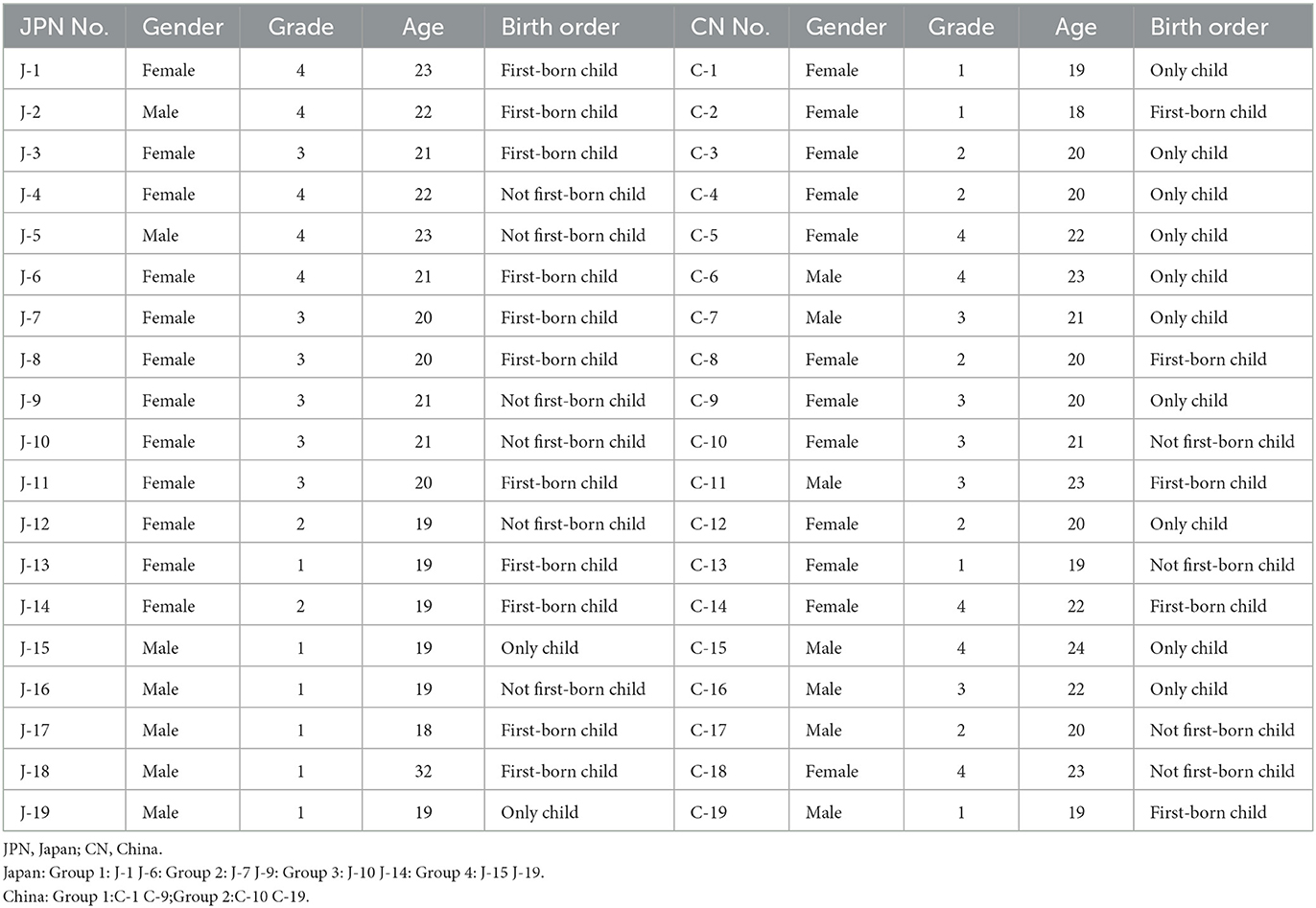
Table 1. Participant characteristics.
3.2. Parental care
Three metathemes were identified for parental care: distrust of leaving parental care to others, responsibility to care for parents, and the importance of parent-child interactions about parental care.
3.2.1. Distrust of leaving parental care to others
This metatheme comprised four sub-metathemes (Table 2).
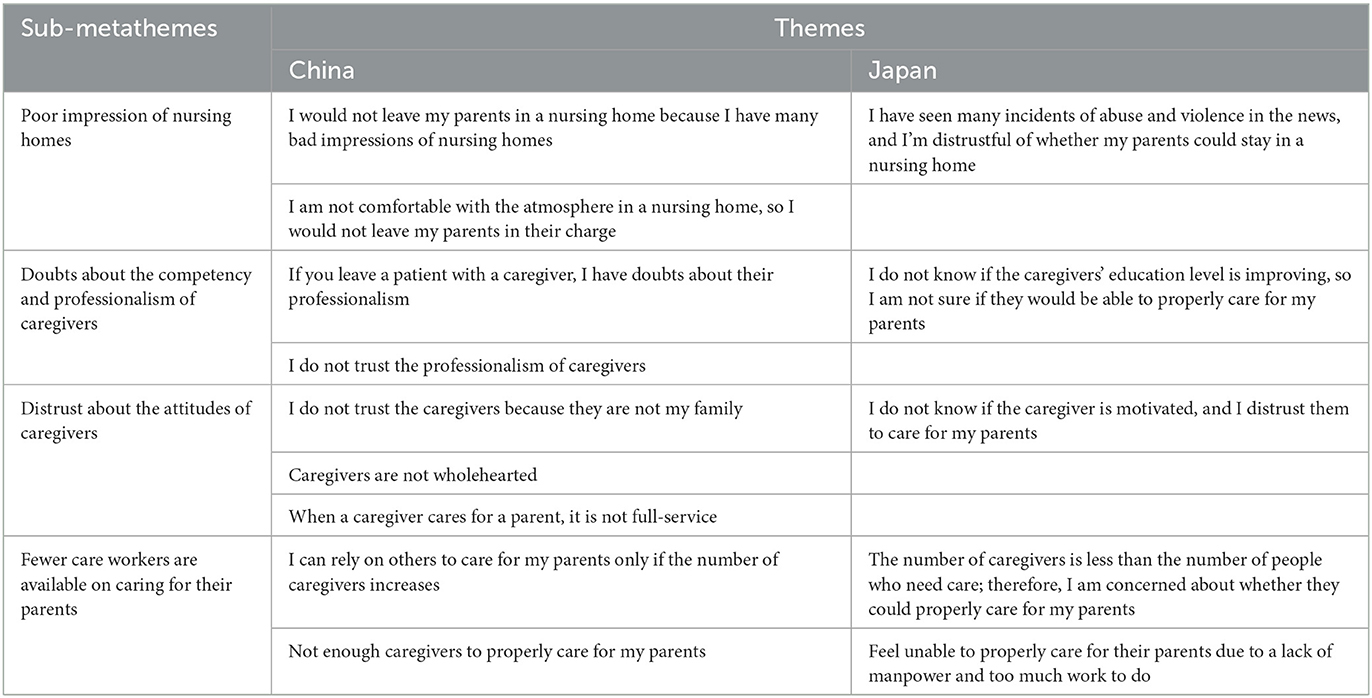
Table 2. Metatheme 1: distrust of leaving parental care to others.
Because both the Chinese and Japanese participants had poor impressions of nursing homes, they had a distrust of leaving parental care to nursing homes.
The atmosphere in the nursing home is not particularly good, and I don't think my parents would be properly cared for if they lived there. If children are forced to leave their parents in a nursing home, the parents will feel as if they have been abandoned by their children. (C-2)
I have seen the daily news about nursing homes, about the abuse and neglect by caregivers. After I heard about such a tough situation, I could hardly believe that my mother would be properly cared for in a facility. (J-9)
Participants from both China and Japan had doubts about the competency and professionalism of nursing home caregivers to take care of their parents.
I doubt the expertise of the caregiver. I want to care for my parents by myself as much as possible, as being cared for by a caregiver who lacks expertise may cause irreversible aftereffects. And they cannot grasp the psychological needs of my parents. (C-4)
I don't know if the education level of the caregivers is getting better, but as long as it's left to those people, I'd be somehow worried......So, I think I'm a little distrustful that they will be able to properly care for my parents. (J-10)
Both the Chinese and Japanese participants distrusted the attitudes of the caregivers. The Chinese participants felt that the caregivers were not part of the family, and thought that caregivers might have negative thoughts, which would lead to distrust. The Japanese participants were doubtful and distrustful because they wondered whether the caregivers were motivated to be caregivers as this work was not an elite job.
As caregivers are not family members, I do not feel secure that they could provide fully comprehensive care for my parents... I want to care for my parents by myself because if I leave them in a nursing home, I am afraid they might be abused, and that the caregivers would not be as caring as I would like them to be. (C-7)
The caregivers entrusted to do the job should be highly motivated, but the fact is, those people have various problems (pay, stress) …For situations like this, I am not sure whether they would be motivated to care for my parents. So, I guess I'm a little distrustful at this stage. (J-10)
the Chinese or Japanese participants trusted the caregivers because there were few caregivers and they had a lot of work to do. As there were not enough caregivers for all the people who needed care, they felt anxious about the caregivers' abilities to care for their parents.
Because a large number of older adults need to be cared for by a single caregiver, if my parents were left in the care of a facility, no one could ensure that they would be properly cared for. If the number of caregivers was increased, it would be feasible for me to leave my parents in a nursing home. (C-14)
The number of caregivers is not enough for the people who will need care in the future. I am worried that my parents would not be cared for properly in this situation. (J-6)
In addition, this metatheme reflected the participants' distrust of leaving parental care to others. Even though caregivers and nursing homes exist, the Chinese and Japanese participants expressed their distrust of them, highlighting that there were several barriers to caregivers and nursing homes gaining their trust.
3.2.2. Responsibility to care for their parents
This metatheme comprised four sub-metathemes (Table 3).
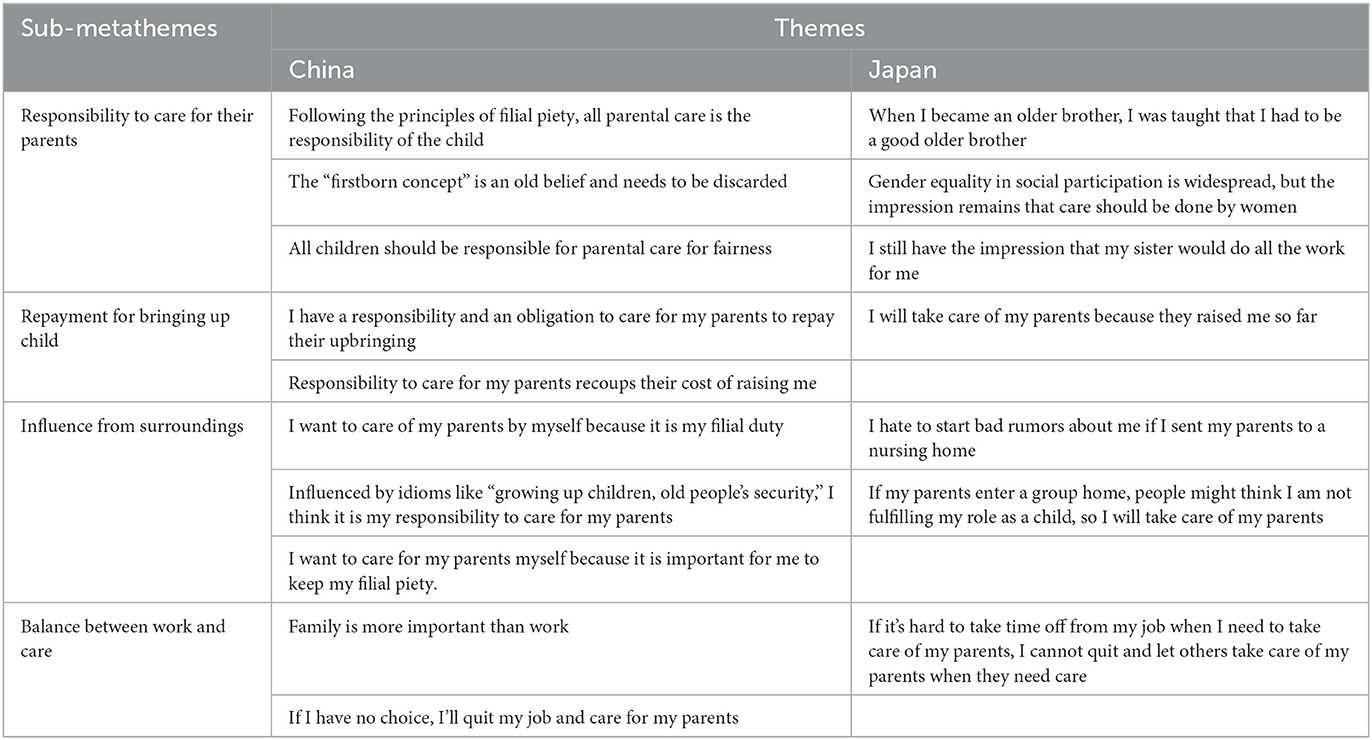
Table 3. Metatheme 2: responsibility to care for parents as their child.
Both the Chinese and Japanese participants believed that children should take responsibility for parental care. The Japanese participants believed that the eldest child should be more responsible and stressed that although gender equality is widely recognized in Japanese society, the impression remained that females should do the care. They also felt that it was socially recognized that more women than men should quit their jobs to care for their parents and that women must take responsibility. However, all Chinese participants believed that regardless of gender or birth order, all children should be equally responsible for parental care.
I think it is the responsibility of every child to fulfill his or her filial duty... I think children have a responsibility and duty to look after the parents who raised them, but this should not be the sole responsibility of one person. (C-3)
When I became an older brother, I was told that I had to do things well, or something like that....After all, I am the older brother, so I think on my own involuntarily that I have to do everything right, that I have to support the family, and that I have to take care of my parents.... (J-2)
Even in terms of work, when it comes to the choice of quitting a job and caring for the family, I cannot really imagine the man quitting, but I think someone would say that I (a woman) should quit my job and care for the family. (J-10)
The participants from both China and Japan stated that they wanted to care for their parents to repay them for raising them.
My parents raised me and put in so much effort and went through so much suffering, so I think as a child I need to reward them. (C-8)
I owe my parents a favor for raising me, and I don't think forcing them into a nursing home would be a good filial duty. Of course, I think parents want their children to take care of them as a way of repaying the favor they have done for us, too. (J-17)
The participants from both China and Japan stated that they were influenced by their surroundings to care for their parents. The Chinese participants explained that they were stressed by traditional norms and the Japanese participants emphasized the influence on their reputation and others' expectations of their role as a child.
From the perspective of traditional norms, it is unfilial to leave my parents in a nursing home, so if I leave my parents to others, my parents would be very resistant, so I want to take care of them by myself. (C-18)
If I decide to leave my parents at a nursing home,...rumors or some bad impressions (like the impressions imposed by society) would be spread by the people around me, which would make me feel uncomfortable. (J-19)
The Chinese participants stated that family was more important than work. If they could not balance parental care and their work, they would quit their jobs. The Japanese participants stated that if they were unable to balance caring for their parents with their work, they would keep their jobs and leave care to others.
I am related to my parents by blood, so if there is a conflict (between work and caring for my parents), I think I would have to compromise and devote myself to caring for my parents. (C-16)
I think my parents' opinion is important, I will try my best to take care of them, but when I cannot afford it or they need to be taken care of by others because of some of my personal issues, I would try my best to persuade them to move to a nursing home. (J-10)
In addition, this metatheme showed the responsibility of parental care for both Chinese and Japanese participants due to the repayment of parents' upbringing and influences from their surroundings. However, when comparing jobs and parental care, Chinese participants tended to take care of their parents, while Japanese would like to keep their job. On the other hand, Chinese participants emphasized equal responsibility for all children, and Japanese participants tended to believe women and first-born children should take up the responsibility.
3.2.3. Importance of parent-child interactions about parental care
This metatheme comprised two sub-metathemes (Table 4).
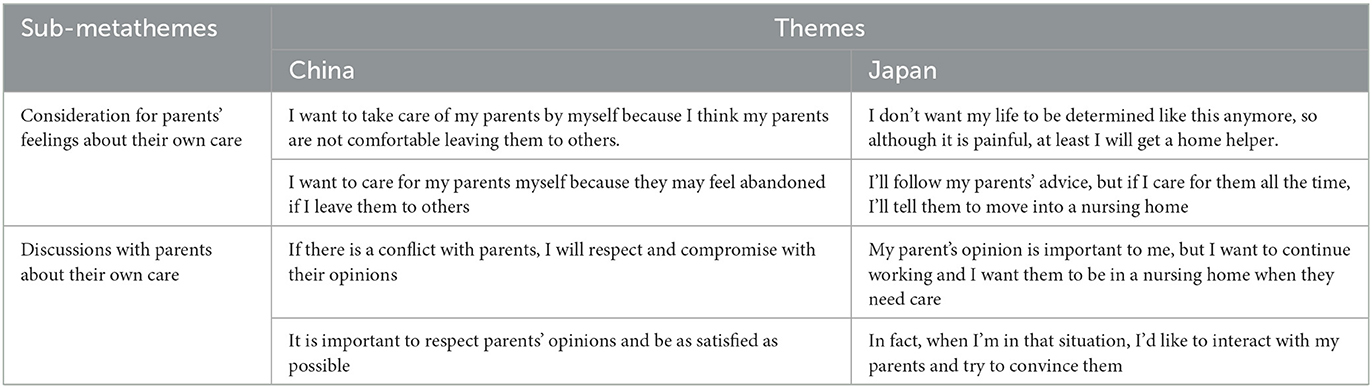
Table 4. Metatheme 3: importance of parent-child interactions about parental care.
Both Chinese and Japanese participants stated that their parents' feelings were important. The Chinese participants stated that if they left the parental care to others, both their parents and themselves would feel resistance and loneliness, so they preferred to care for their parents by themselves as much as possible. The Japanese participants stated that although the parents' feelings were important, they also had their own lives and careers; therefore, even though it would be heartbreaking, they'd leave their parents to others.
I would like to care for my parents myself as much as possible because if I care for my parents myself, it would provide psychological comfort, and if they were cared for by a caregiver, I believe my parents would feel alone. (C-2)
No matter how much the parents hope for their children's care, absolutely their children still have their own lives. Although it is a little bit painful, at least, I think I would get a home helper or other services. (J-14)
Both the Chinese and Japanese participants emphasized the importance of seeking their parents' opinions about their care. If there was a conflict with the parents, the Chinese participants stated that they would compromise and the Japanese participants stated that they would seek to convince their parents.
I would respect my parent's opinions if my thoughts on care diverged from theirs. Anyway, parents' feelings are the priority in care, and I want to satisfy their wishes as much as possible as a child. If we cannot work it out, I think I would do what they want. (C-13)
I want to respect my parents' feelings and opinions, of course, but I don't want to force myself to cater to them, so I'd persuade them until they agreed with my opinions. (J-8)
In addition, this metatheme highlighted the importance of interactions between generations. Both Chinese and Japanese participants emphasized communication with parents, however, Chinese participants were more parent-centered, which means they would follow them as far as possible; whereas Japanese participants were more self-centered to convince their parents to agree with their ideas.
In summary, there were both similarities and differences in perspectives on parental care between Chinese and Japanese participants (Figure 1). Both Chinese and Japanese participants shared a similar perspective of distrust toward leaving parental care to others and taking care of their parents for repayment for upbringing and surroundings' influence. However, there were also some differences between Chinese and Japanese participants. Japanese participants tended to insist on their own ideas and convince their parents in continue their work and communicate with their parents, while Chinese participants tended to follow their parents' opinions. Furthermore, Japanese participants emphasized the importance of the first-born child and believed that women should take on more responsibility for parental care due to cultural background. In contrast, Chinese participants considered gender and birth order inequalities to be outdated and emphasized equality for all children.
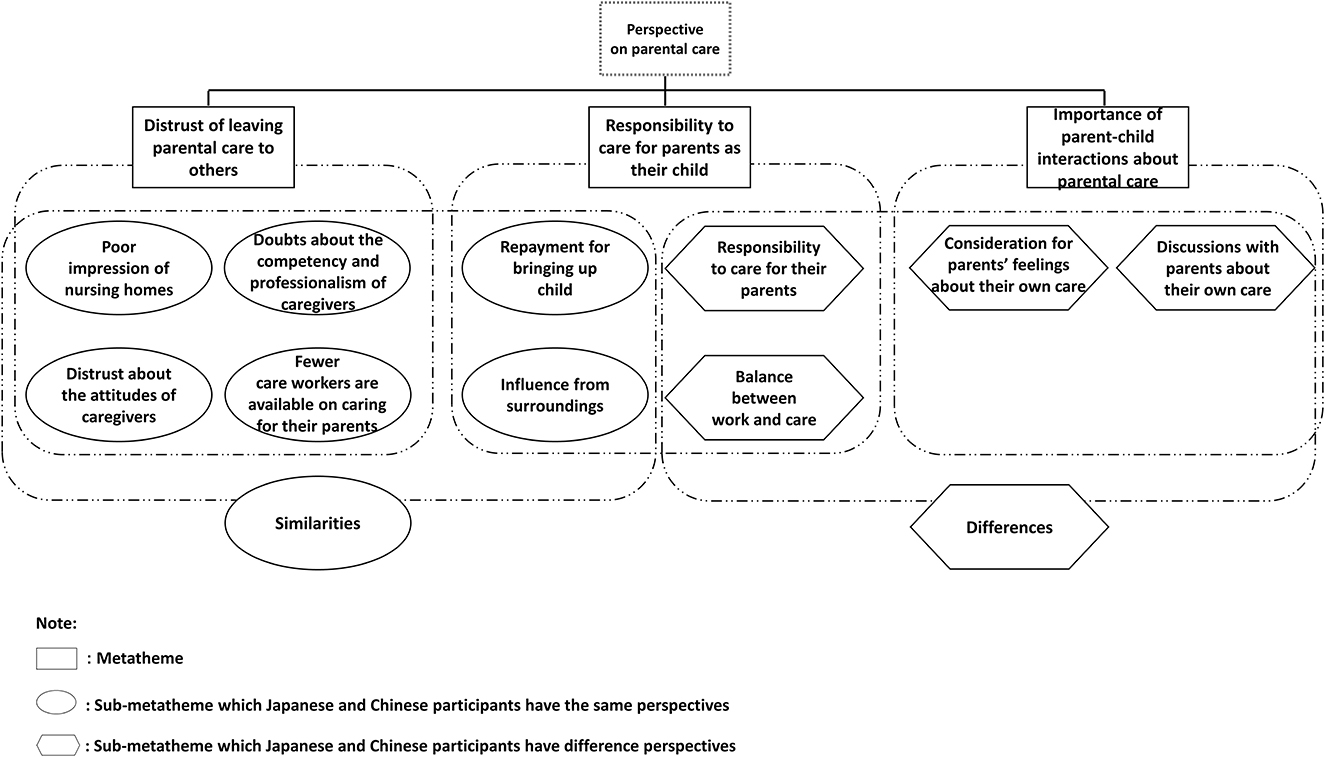
Figure 1. Perspectives on parental care between Chinese and Japanese university students.
4. Discussion
To provide some guidance on the future needs of the healthcare society, Chinese and Japanese university students were asked to give their perspectives on parental care in focus groups, from which three metathemes were identified: distrust of leaving parental care to others, responsibility to care for parents, and importance of parent-child interactions about parental care.
4.1. Similarities and differences on perspective of parental care
Both the Chinese and Japanese student groups had a mistrust of nursing homes because of news about the mistreatment of older adults. A Japanese Ministry of Health, Labor and Welfare (MHLW) publication, the “Act on the prevention of abuse on older adults and support for caregivers of older adults,” reported that in 2020, 2,097 abuse cases on older adults had been referred and 595 judgments had been made (32). Because of the public distrust in nursing homes, a system is being developed in Japan to prevent abuse on older adults in nursing care facilities, which is hoped will ease resistance to the system and improve how the public views nursing homes (33). In China, attitudes toward nursing homes have shifted from it being a stigma to recognizing that nursing homes can provide high-cost professional care; nonetheless, some negative attitudes remain (34). It has also been reported that Chinese nursing homes are of low quality and have a low capacity to accommodate the older adults in China (35). For these reasons, putting parents in a nursing home is seen as unfilial, and many parents resist moving there.
The results from this study indicated that increasing the number and professionalism of nursing home caregivers were required, which agreed with a previous study that found nursing home caregivers in China are often poorly educated older adults who lack expertise (36). Although great efforts have been made to improve care services in nursing homes and require that healthcare workers have formal occupational training, there is a shortage of healthcare workers in China (37). As a result, the lack of care skills and the poor quality of medical care have received widespread attention (38). Even though the Chinese government has published “basic specifications of service quality in senior care organization,” careworker in nursing homes was found underqualified for care work than other Western countries (35). Careworker job vacancies by prefecture in Japan are on average 3.97 times higher than the number of care workers employed in nursing homes (39). The MHLW estimated that 2.43 million care workers would be needed by 2025; however, the expected number is estimated at only 2.11 million, a potential shortage of 320,000 (40), which could lead to increased careworker workloads, which in turn could reduce the quality and safety of care.
In East Asian cultures, the firstborn is expected to live with their parents after marriage, and the firstborn and their partner are expected to take care of their parents (41). This study found that this was still the belief of most Japanese university students; however, the Chinese students felt that the responsibilities lay with all children regardless of their birth order. As Chinese caregivers are suffering from emotional and financial stress, sharing the care responsibilities would be easier (42). Nonetheless, although female work opportunities have increased in Japan and the expectations of care by the family have weakened, females were seen as being more likely to be the primary caregivers (43). However, the responsibilities are more equal in China because of its socialist system and legislation specifying (44). Further, because females have gained greater access to higher education in China, they are less likely to abandon their careers to take care of their aging parents and more likely to insist upon shared sibling responsibility (43).
Filial piety emphasizes dependence, obligation, and reciprocity in intergenerational relationships, all of which should strengthen intergenerational bonds (45). This study found that the Chinese participants were more likely to leave their jobs if they were unable to balance work and parental care, whereas the Japanese participants were more likely to place their parents in a nursing home. China has strengthened the social obligations of children to care for their aging parents (46); and in many Chinese families, older people continue to have strong bonds with their children and are involved in their daily lives, such as taking care of grandchildren and providing financial support, while they can also receive necessary care from their children as an exchange (47). Since the promulgation of Japan's long-term care insurance system, the family role has shifted from the direct provision of care to an organizational and administrative role and emotional support when using the available resources, which had led to a lower tendency for children to quit their jobs to take up parental care (48).
The Japanese and Chinese university student groups both stated that parent-child interactions were essential to strengthen parent-child connections and parental health. In China, Confucian filial piety was the guiding principle, which required children to ensure the emotional and physical wellbeing of their aging parents (49). Confucian culture means that older Chinese and their children have close emotional ties and high mutual emotional dependence (50). If their parents were resistant to entering a nursing home, both groups claimed that they would respect their parent's wishes (51). In Japan, however, because of the healthcare insurance scheme and economic growth, older parents tend to be more independent and less in need of their children's support; therefore, the participants said that they would seek to persuade their parents to enter a nursing home rather than compromise (52).
4.2. Practical implications
Based on the study's findings, several practical suggestions are given for improving healthcare systems in China and Japan. First, studies in Japan and the US found that the quality of long-caregiver services at nursing homes was poor (32, 53). Therefore, care service delivery and healthcare systems must be improved to build trust between healthcare professionals and the public. Second, because of cultural contexts such as filial piety, aging policies can have profound implications for both older adults and their children. Therefore, services and interventions must be developed to ensure the wellbeing and livelihoods of both the children and the parents. Third, caregiver gender equality, especially in Japan needs to be promoted (54). Fourth, similar to Japan, China needs formal policies such as nursing care leave in place to provide a better work and life balance for Chinese caregivers, and supports to mitigate the dissonance between their parental caregiver roles and their own lives.
4.3. Limitations
This study had some limitations. First, because only university students were included in the study, it was difficult to extrapolate the results to all people in the younger generations. Further, as none of the participants had yet experienced the difficulties of balancing parental care and work obligations, the findings were related to the potential worries they may have in the future. Therefore, more studies are required to determine the reactions to these problems in the coming decades. While it was found that the university students were willing to help with parental care, more quantitative research is needed because of the small sample size and the qualitative research frame. Future research should explore the perspectives of all younger generations on parental care. It could also be useful to examine the attitudes of other generations to explore generational differences. On the other hand, exploring the socio-cultural reasons influencing parental care perspectives, or comparing the differences in institutional systems for older adults across different nations is important. Such research can assist policymakers in alleviating potential concerns.
4.4. Conclusions
This study examined the attitudes of Chinese and Japanese university students toward parental care. The findings suggested that both countries needed to improve their care service delivery and healthcare systems and build trust between healthcare professionals and the public. Support will also be needed to assist children to balance their care responsibilities with their work and family life. Culturally, it was found that healthcare policies had significant social implications for older adults and their children; therefore, future service delivery policies need to consider the wellbeing of both the children and the parents.
Data availability statement
The raw data supporting the conclusions of this article will be made available by the authors, without undue reservation.
Ethics statement
The studies involving humans were approved by the Ethics Committee of Epidemiology Research at Hiroshima University (E-2633-2). The studies were conducted in accordance with the local legislation and institutional requirements. The participants provided their written informed consent to participate in this study. Written informed consent was obtained from the individual(s) for the publication of any potentially identifiable images or data included in this article.
Author contributions
XP played a central role in the research, planning the research, collecting data, analyzing and interpreting it, and writing the manuscript. HN carried out research planning, analysis, and interpretation and contributed significantly to the writing of the manuscript. YI interviewed the participants and analyzed and reviewed the manuscript. HC contributed to the analysis, interpretation, and writing of the manuscript and critically reviewed the manuscript. FS contributed to the analysis and interpretation and writing of the manuscript. MY contributed to the writing of the manuscript and critically reviewed the manuscript. RL contributed to the writing and the editing of the manuscript. All authors read and approved the final manuscript.
Funding
This work was supported by JST, the establishment of university fellowships toward the creation of science technology innovation, Grant Number JPMJFS2129.
Acknowledgments
We would like to show our greatest appreciation to the students who participated in the interviews.
Conflict of interest
The authors declare that the research was conducted in the absence of any commercial or financial relationships that could be construed as a potential conflict of interest.
Publisher's note
All claims expressed in this article are solely those of the authors and do not necessarily represent those of their affiliated organizations, or those of the publisher, the editors and the reviewers. Any product that may be evaluated in this article, or claim that may be made by its manufacturer, is not guaranteed or endorsed by the publisher.
References
1. UN Population Division,. Revision of World Population Prospects. (2019). Available online at: https://population.un.org/wpp/Download/Standard/Population/ (accessed May 3, 2023).
2. The World Bank. Fertility Rate Total (Births Per Woman). (2023). Available online at: https://data.worldbank.org/indicator/SP.DYN.TFRT.IN (accessed May 3, 2023).
3. United Nations. Department of Economic and Social Affairs, Population Division World Population Prospects 2022, Online Edition. (2022).
4. You J, Fung H, Vitaliano P. The pattern of social support seeking and its socio-demographic variations among older adults in China. Eur J Ageing. (2020) 17:341–8. doi: 10.1007/s10433-019-00550-w
5. Su-Russell C, Sanner C. Chinese childbearing decision-making in mainland China in the post-one-child-policy era. Fam Process. (2023) 62:302–18. doi: 10.1111/famp.12772
6. Li H, Wu G. Implications of China's filial piety culture for contemporary Elderly Care. Trans/Form/Ação. (2022) 45:69–86. doi: 10.1590/0101-3173.2022.v45esp2.p69
7. Tan SA, Nainee S, Tan CS. The mediating role of reciprocal filial piety in the relationship between parental autonomy support and life satisfaction among adolescents in Malaysia. Curr Psychol. (2021) 40:804–12. doi: 10.1007/s12144-018-0004-7
8. Fukuda S, Lal S, Katauke T, Khan MSR, Kadoya Y. Impact of Changing socioeconomic conditions on family caregiving norms: evidence from Japan. Behavioral Sciences. (2022) 12:471. doi: 10.3390/bs12120471
9. Zhang M, Lin T, Wang D, Jiao W. Filial piety dilemma solutions in Chinese adult children: the role of contextual theme, filial piety beliefs, and generation. Asian J Soc Psychol. (2020) 23:227–37. doi: 10.1111/ajsp.12395
10. Sun P, Fan X, Sun Y, Jiang H, Wang L. Relations between dual filial piety and life satisfaction: the mediating roles of individuating autonomy and relating autonomy. Fron Psychol. (2019) 10:2549. doi: 10.3389/fpsyg.2019.02549
11. Liu X, Bai S. Mediating effect of filial piety between the elderly's family resource contribution and their family power: evidence from China. Front Psychol. (2022) 13:829678. doi: 10.3389/fpsyg.2022.829678
12. Peng X, Nakatani H, Kakehashi M, Matsumoto M. A Study of the structure of Japanese University students' awareness of long-term care socialization. Healthcare. (2021) 9:1106. doi: 10.3390/healthcare9091106
13. The State Council of the People's Republic of China. Guidelines for Promoting the Development of National Undertakings for the Aged and Improving the Elderly Care Service System during the 14th five-year Plan period. (2021). Available online at: http://www.gov.cn/zhengce/content/2022-02/21/content_5674844.htm (accessed May 3, 2023).
14. Nishioka H. Parent-adult child relationships in Japan-determinants of parent-adult child coresidence. J Popul Prob. (2000) 56:34–55.
15. Zhang Y, Wang J, Zu Y, Hu Q. Attitudes of Chinese college students toward aging and living independently in the context of China's modernization: a qualitative study. Front Psychol. (2021) 12:609736. doi: 10.3389/fpsyg.2021.609736
16. Sung K. Elder respect among young adults: a cross-cultural study of Americans and Koreans. J Aging Stud. (2004) 18:215–30. doi: 10.1016/j.jaging.2004.01.002
17. Warmenhoven H, Hoebink PRJ, Janssens JMAM. The Chinese postreform generation as caregivers: The caregiving intentions toward parents and parents-in-law of the one-child generation. J Fam Issues. (2018) 39:3690–712. doi: 10.1177/0192513X18789208
18. Bifarin O, Quinn C, Breen L, Zhang B, Oyebode J. Intersections between the culture of Xiao and caring for older relatives in China: perspectives of United Kingdom-based Chinese students on future care for their parents. Ageing Soc. (2022) 1–21. doi: 10.1017/S0144686X22001118
19. Yang Y, Wen M. Filial piety and parental depressive symptoms: all children matter—Evidence from rural Northern China. J Cross Cult Gerontol. (2021) 36:155–67. doi: 10.1007/s10823-021-09430-2
20. Ibuka Y, Ohtsu Y. Socioeconomic status and the likelihood of informal care provision in Japan: an analysis considering survival probability of care recipients. PLoS One. (2021) 16:e0256107. doi: 10.1371/journal.pone.0256107
21. Tanaka H, Greiner C. Psychological distress in sons as resident carers of older mothers in Japan. Ageing Soc. (2022) 1–25. doi: 10.1017/S0144686X22000721
22. Oshio T, Usui E. How does informal caregiving affect daughters' employment and mental health in Japan? J Jpn Int Econ. (2018) 49:1–7. doi: 10.1016/j.jjie.2018.01.001
23. Horioka CY. Is the selfish life-cycle model more applicable in Japan and, if so, why? A literature survey. Rev Econ Househ. (2021) 19:157–87. doi: 10.1007/s11150-020-09511-0
24. Horioka CY, Gahramanov E, Hayat A, Tang, X. Why do children take care of their elderly parents? are the japanese any different? Int Econ Rev. (2018) 59:113–36. doi: 10.1111/iere.12264
25. Wutich A, Beresford M, SturtzSreetharan C, Brewis A, Trainer S, Hardin J. Metatheme analysis: a qualitative method for cross-cultural research. Int J Qual Methods. (2021) 20:7. doi: 10.1177/16094069211019907
26. Guest G, Bunce A, Johnson L. How many interviews are enough? An experiment with data saturation and variability. Field methods. (2006) 18:59–82. doi: 10.1177/1525822X05279903
27. Tong A, Sainsbury P, Craig J. Consolidated criteria for reporting qualitative research (COREQ): a 32-item checklist for interviews and focus groups. Int J Qual Health Care. (2007) 19:349–57. doi: 10.1093/intqhc/mzm042
28. Drew N. The interviewer's experience as data in phenomenological research. West J Nurs Res. (1989) 11:431–9. doi: 10.1177/019394598901100405
29. Hu F, Ma J, Ding X, Li J, Zeng J, Xu D, et al. Nurses' experiences of providing care to patients with COVID-19 in the ICU in Wuhan: a descriptive phenomenological research. BMJ Open. (2021) 11:e045454. doi: 10.1136/bmjopen-2020-045454
30. Goodell LS, Stage VC, Cooke NK. Practical qualitative research strategies: Training interviewers and coders. J Nutr Educ Behav. (2016) 48:578–85. doi: 10.1016/j.jneb.2016.06.001
32. The The Ministry of Health Labor Welfare (MHLW). Results of the Survey on the Status of Responses Based on “Act on the Prevention of elder Abuse, Support for Caregivers of Elderly Persons, and Other Related Matters” in 2020. (2022). Available online at: https://www.mhlw.go.jp/stf/houdou/0000196989_00008.html (accessed May 3, 2023).
33. The The Ministry of Health Labor Welfare (MHLW). Strengthening of Response Based on the Results of the Survey on the Status of Responses Based on “Act on the prevention of elder abuse, support for caregivers of elderly persons, and other related matters” in 2020. (2022). Available online at: https://www.mhlw.go.jp/content/12304250/000910573.pdf (accessed May 3, 2023).
34. Zhan HJ, Feng X, Luo B. Placing elderly parents in institutions in urban China: a reinterpretation of filial piety. Res Aging. (2008) 30:543–71. doi: 10.1177/0164027508319471
35. Yan Z. “I tried to control my emotions”: nursing home care workers' experiences of emotional labor in China. J Cross Cult Gerontol. (2022) 37:1–22. doi: 10.1007/s10823-022-09452-4
36. Chen W, Fang F, Chen Y, Wang J, Gao Y, Xiao J. The relationship between personality traits, caring characteristics, and abuse tendency among professional caregivers of older people with dementia in long-term care facilities. J Clin Nurs. (2020) 29:3425–34. doi: 10.1111/jocn.15380
37. Yang Y, Li H, Xiao LD, et al. Resident and staff perspectives of person-centered climate in nursing homes: a cross-sectional study. BMC Geriatr. (2019) 19:292. doi: 10.1186/s12877-019-1313-x
38. Hao Q, Wu S, Ying L, Luo L, Dong D, Dong B. Current dilemmas of nursing homes in Chengdu: a cross-sectional survey. J Am Med Dir Assoc. (2012) 13:406.e9–12. doi: 10.1016/j.jamda.2011.08.002
39. The The Ministry of Health Labor Welfare (MHLW). Improving the Treatment of Care Workers. (2018). Available online at: https://www.mhlw.go.jp/content/12601000/000406512.pdf (accessed May 3, 2023).
40. The The Ministry of Health Labor Welfare (MHLW). Initiatives to Secure Care Personnel. (2021). Available online at: https://www.mhlw.go.jp/stf/newpage_02977.html (accessed August 9, 2023).
41. Yu WH, Hertog E. Family characteristics and mate selection: evidence from computer-assisted dating in Japan. Journal of Marriage and Family. (2018) 80:589–606. doi: 10.1111/jomf.12473
42. Zhang L, Ding Z, Qiu L. Old age care preferences among Chinese middle-aged single-child parents and the related policy implications. J Aging Soc Policy. (2019) 31:393–414. doi: 10.1080/08959420.2019.1578606
43. Lee WK, Hong-Kin K. Differences in expectations and patterns of informal support for older persons in Hong Kong: modification to filial piety. Ageing Int. (2005) 30:188–206. doi: 10.1007/s12126-005-1011-1
44. Bedford O, Yeh KH. The history and the future of the psychology of filial piety: Chinese norms to contextualized personality construct. Front Psychol. (2019) 10:100. doi: 10.3389/fpsyg.2019.00100
45. Izuhara M. Aging and Intergenerational Relations: Family Reciprocity From a Global Perspective. Bristol: Policy Press. (2010).
46. Wu X. Negotiating filial care in transitions: an ethnographic study of family involvement in China's nursing homes. J Chin Sociol. (2023) 10:9. doi: 10.1186/s40711-023-00187-4
47. Luo J, Cui M. For children or grandchildren? —The motivation of intergenerational care for the elderly in China. Int J Environ Res Public Health. (2023) 20:1441. doi: 10.3390/ijerph20021441
48. Hiraoka K. Kironi tatsu Nihon no Kaigo hoken [Long-term care insurance in Japan at a turning point]. In:Takegawa S, Lee HK, , editors. Fukushi Reji-mu no Nikkan hikaku: Shakai Hosho, Jyenda, Rodo Sijyo [comparing Japanese and Korean welfare regimes] (in Japanese). Bunkyo: Tokyo University Press, pp. (2006) p. 123–45.
49. Ho Y. Filial piety and its psychological consequences. In:Bond MH, , editor. Handbook of Chinese Psychology. Oxford: Oxford University Press (1996) p. 155–65.
50. Wu Y, Zhang Q, Huang Y, Qiu S. Seeking medical services among rural empty-nest elderly in China: a qualitative study. BMC Geriatr. (2022) 22:202. doi: 10.1186/s12877-022-02911-0
51. Ma S, Shi J, Li L. Dilemmas in caring for older adults in Zhejiang Province, China: a qualitative study. BMC Public Health. (2019) 19:311. doi: 10.1186/s12889-019-6637-0
52. Izuhara M, Forrest R. “Active Families:” familization, housing and welfare across generations in East Asia. Soc Policy Admin. (2013) 47:520–41. doi: 10.1111/spol.12002
53. Chao YY, Li M, Lu SE, Dong X. Elder mistreatment and psychological distress among U.S. Chinese older adults. J Elder Abuse Negl. (2020) 32: 434–52. doi: 10.1080/08946566.2020.1814180
Keywords: parental care, health policy, cross-cultural study, China, Japan
Citation: Peng X, Nakatani H, Chen H, Inoue Y, Song F, Yoshihara M and Lei R (2023) Cross-cultural metathemes of Chinese and Japanese university students' perspective on parental care. Front. Public Health 11:1216831. doi: 10.3389/fpubh.2023.1216831
Received: 05 May 2023; Accepted: 22 August 2023;
Published: 04 September 2023.
Edited by:
María Dolores Ruiz Fernández, University of Almeria, SpainReviewed by:
Maria Isabel Ventura-Miranda, University of Almeria, SpainRocío Ortiz Amo, University of Almeria, Spain
Copyright © 2023 Peng, Nakatani, Chen, Inoue, Song, Yoshihara and Lei. This is an open-access article distributed under the terms of the Creative Commons Attribution License (CC BY). The use, distribution or reproduction in other forums is permitted, provided the original author(s) and the copyright owner(s) are credited and that the original publication in this journal is cited, in accordance with accepted academic practice. No use, distribution or reproduction is permitted which does not comply with these terms.
*Correspondence: Xuxin Peng, YW5ndXNfcHh4QG91dGxvb2suY29t