 Jie Chen1
 Xi Wang
- 1The Experimental School, The Open University of China, Beijing, China
- 2Jilin Land Planning Research Office, Changchun, China
- 3School of Management, Changchun Guanghua College, Changchun, China
- 4Institute of Economic Research, Jilin Academy of Social Sciences, Changchun, China
Background: The fertility level has declined to below replacement level in many countries. Hence, evaluating the fertility policies is crucial for policy intervention to achieve sustainable development. However, research on assessing fertility policies remains limited.
Objective/methodology: This study introduces a Policy Maturity and Consistency (PMC) index model based on text mining techniques to analyze 22 fertility policy documents. The analysis model aims to identify policy deficiencies and provide actionable insights for improving future policy frameworks.
Results: Our study shows that, despite a comprehensive design and high consistency, significant gaps remain in areas such as policy objectives and thematic focus. Specific recommendations are proposed to enhance policy effectiveness, including fostering multi-stakeholder collaboration, integrating economic and policy-based support mechanisms, and promoting a shift in reproductive culture.
1 Introduction
The global fertility has significantly declined, leading the world toward a low-fertility future (1). Currently, more than half of the world’s countries are below the fertility replacement level (2). Most regions are in transition toward natural population decline, and it is anticipated that by 2,100, only six countries will have above replacement fertility replacement level fertility (3). This demographic shift, characterized by low or negative growth, presents serious challenges to society, the economy, and sustainable development (4). Therefore, it is urgent to address the current fertility situation and promote more balanced population development. Scholars primarily examine fertility from two perspectives: macro and micro. In macro-level research, future fertility rates and birth rates are predominantly predicted using series data (5–7). Conversely, at the micro level, greater emphasis is placed on individuals’ fertility intentions and behaviors (8–10). Nevertheless, the aforementioned perspectives primarily examine future scenarios without considering the influential role of fertility policy. Proactive adjustments to fertility policy serve as an effective strategy to enhance fertility intentions (11, 12). However, some research indicates that population easing policies (QEPP) alone are insufficient to reverse the trend of population decline, highlighting the need for additional focus on public health services (13). Our study employed the PMC quantitative evaluation model, utilizing text mining (TM) techniques, to assess existing fertility policies. This approach holds significant importance for fostering balanced population development. Additionally, it offers a novel research perspective on female fertility.
The PMC quantitative assessment model was proposed by Estrada based on the “Omnia Mobilis” hypothesis (14, 15). The construction of the model involves six key steps: (1) selecting policy texts; (2) constructing multiple input–output tables; (3) calculating PMC indexes; (4) establishing consistency evaluation criteria; (5) plotting PMC surfaces; and (6) evaluating the policy texts against the established criteria, as illustrated in Figure 1. PMC models have gained prominence as evaluation tools in various fields, including energy (16, 17), environment (18, 19), and security (20, 21), particularly in recent years. However, it is important to note that PMC models often suffer from a limited number of evaluations and an excessive reliance on subjective indicators (22).
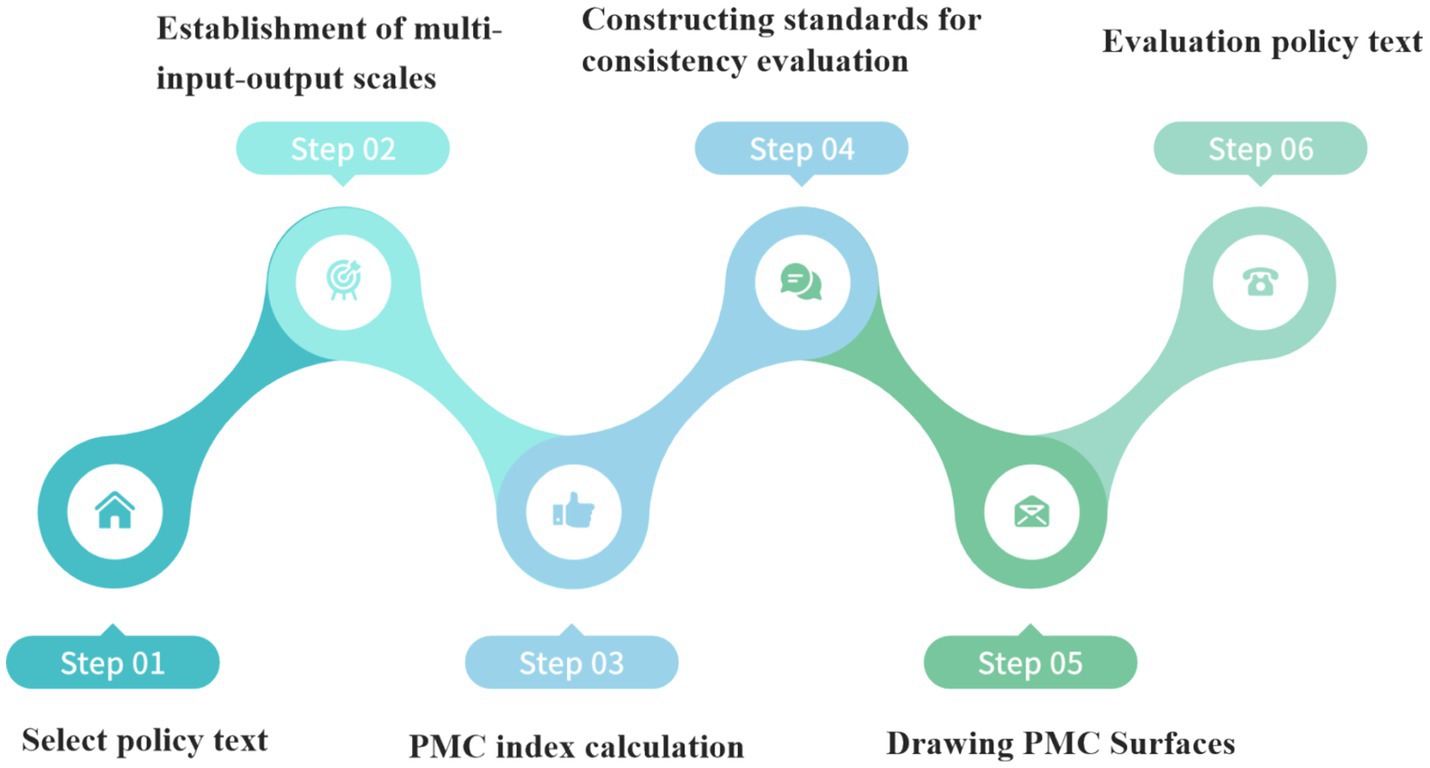
Figure 1. PMC quantitative assessment flowchart.
Based on this analysis, our research identified the shortcomings of fertility policy research and proposed an innovative PMC fertility policy assessment model utilizing text mining techniques. This model constructs a semantic network of policy text keywords through the quantitative assessment of PMC, leveraging the capabilities of text mining. This study provides an in-depth analysis of the relationship between keywords to summarize the core points within the policy text. Additionally, we construct a multi-input–output scale based on these core points to address the excessive subjectivity inherent in the PMC model indicators. Concurrently, we selected 22 policy texts to conduct a comprehensive evaluation of research policies, with the aim of identifying deficiencies in the current fertility policy. This analysis seeks to offer decision-making references for the enhancement of fertility policy texts in the future.
2 Research methods
2.1 Objects
The study has chosen the Chinese government as the subject for several reasons. First, the Chinese government has experienced a continuous decline in fertility since the introduction of family planning (23), with the total fertility rate consistently remaining below replacement level (24). Second, the Chinese government has recently issued documents pertaining to fertility policy (25, 26). Finally, as one of the few countries in the world with a population exceeding 1 billion, examining and enhancing China’s fertility policy holds significant implications for improving global fertility trends. In June 2021, the Chinese government issued the “Decision on Optimizing Fertility Policies to Promote the Long-term Balanced Development of Population,” with the objective of encouraging women’s fertility intentions and facilitating the balanced development of the population (27). Following this, various provincial governments in China implemented a range of programs. National-level documents were excluded from the selected policy texts because they are guideline-type materials that influence the evaluation of policy coherence. Additionally, since the assessment focuses on the shortcomings of the policy texts, it is essential to select the most recent policy documents. Based on this, our investigation identified the “three-child policy” and the initiative for “promoting long-term balanced development of population” on websites such as “china.gov.cn,” “Beida Faber,” and “Baidu.” We conducted searches using keywords such as “three-child policy,” “promoting long-term balanced population development,” and “optimizing fertility policy,” ultimately selecting 22 publicly available policy texts from Chinese provincial governments, as detailed in Table 1.
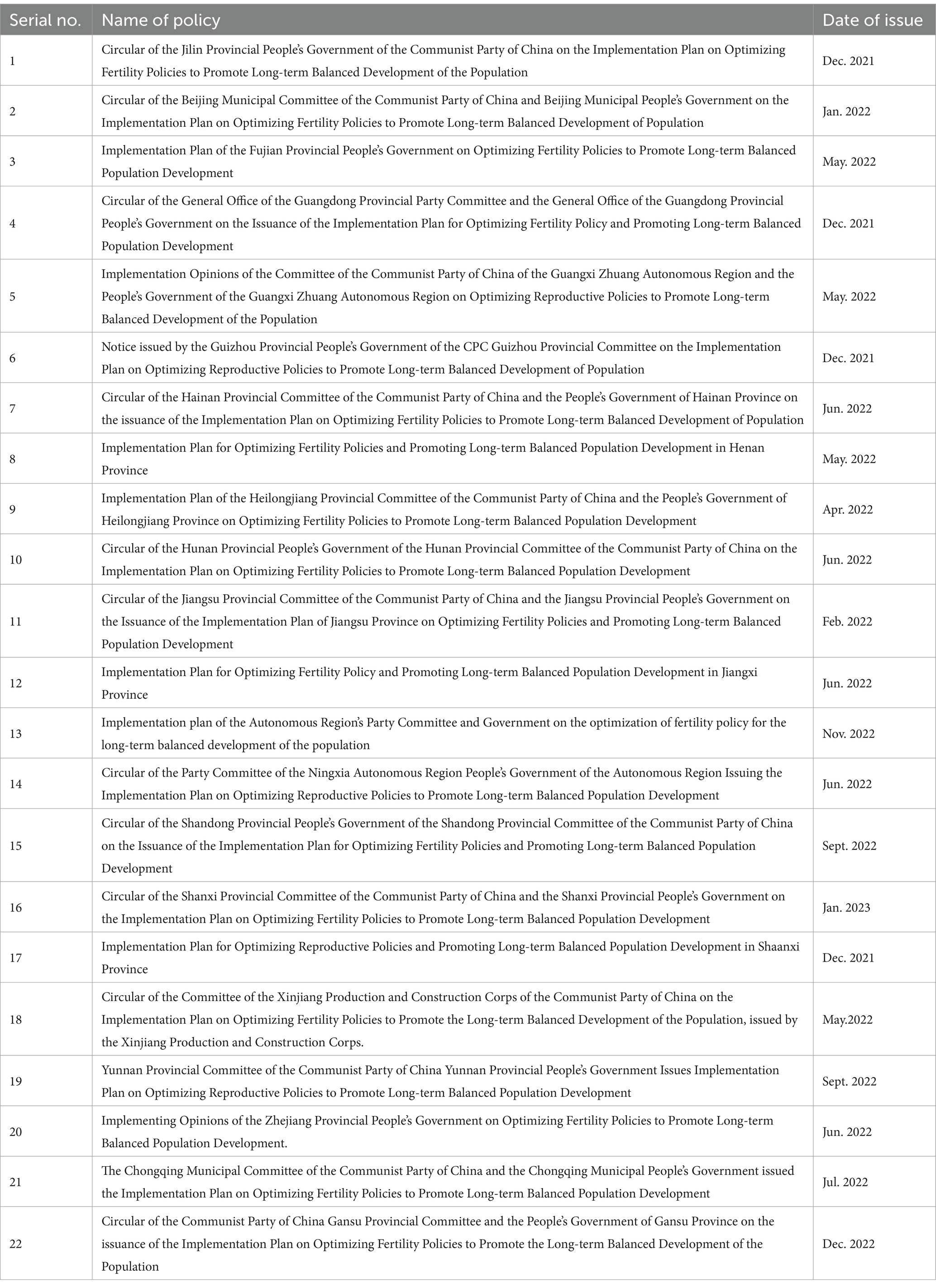
Table 1. Selection of policy texts.
2.2 Model building
2.2.1 Keyword semantic network construction
In accordance with the aforementioned policy text, the initial screening of the research object involved the removal of irrelevant information, such as “document number,” “title,” and “time of issuance.” Subsequently, the policy texts of the 22 selected policies were compiled into TXT files, and text mining was conducted using the ROSTCM6 software (28, 29). Among them, the high-frequency keywords are based on the following three cleaning principles. Firstly, the top 100 high-frequency keywords are selected, and highly relevant terms such as “birth” and “policy” are filtered out. Secondly, we filtered out meaningless verbs such as “enhance,” “strengthen,” “carry out,” etc. Finally, we filtered out auxiliary words such as “of” and “on.” A list of the top 20 high-frequency keywords is formed, as shown in Table 2.
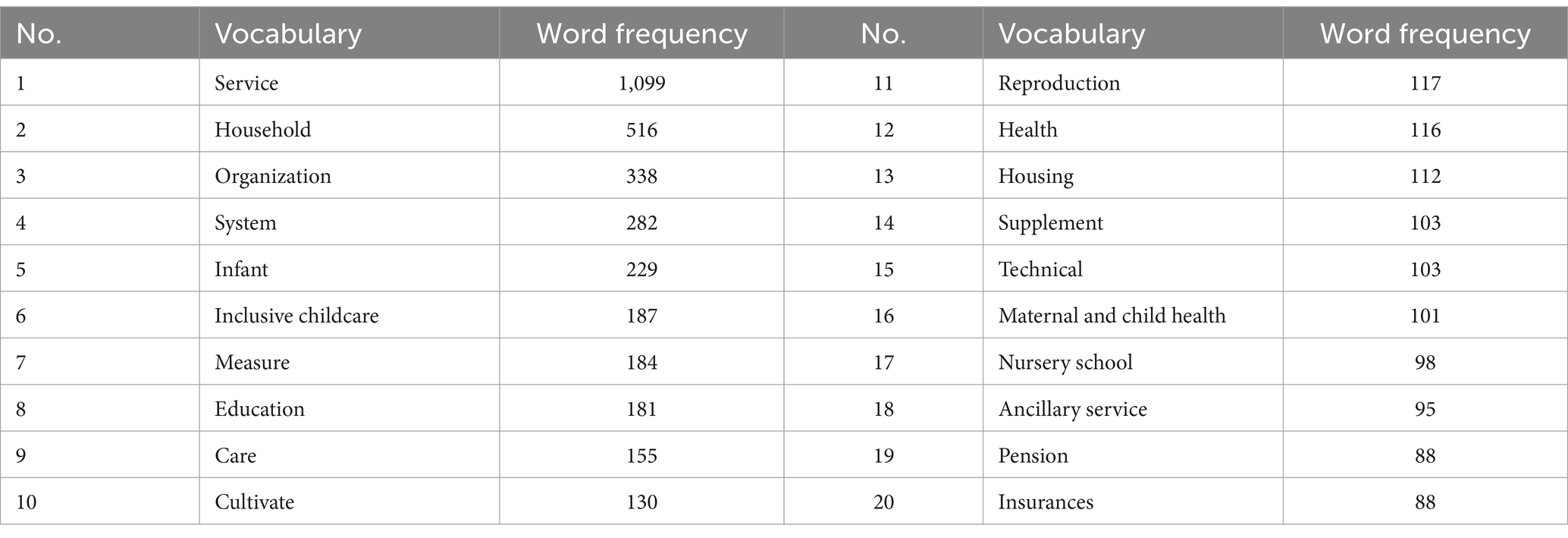
Table 2. Table of high-frequency keywords.
Subsequently, we constructed a semantic network diagram of core keywords based on the high-frequency keyword list (30), as illustrated in Figure 2. In this semantic network, the core keywords situated in the upper left of the diagram are “fertility policy” and “population balance,” while the remaining keywords are organized around these core terms. The size of each keyword’s circle indicates its closeness to other keywords, and the length of the connecting lines reflects the degree of association between subwords; shorter lines signify a closer connection. Notably, the keywords “family,” “service,” “education,” and “measures” represent areas where connections should be strengthened within the policy framework. Therefore, these aspects should be prioritized in the establishment of the multi-input scale.
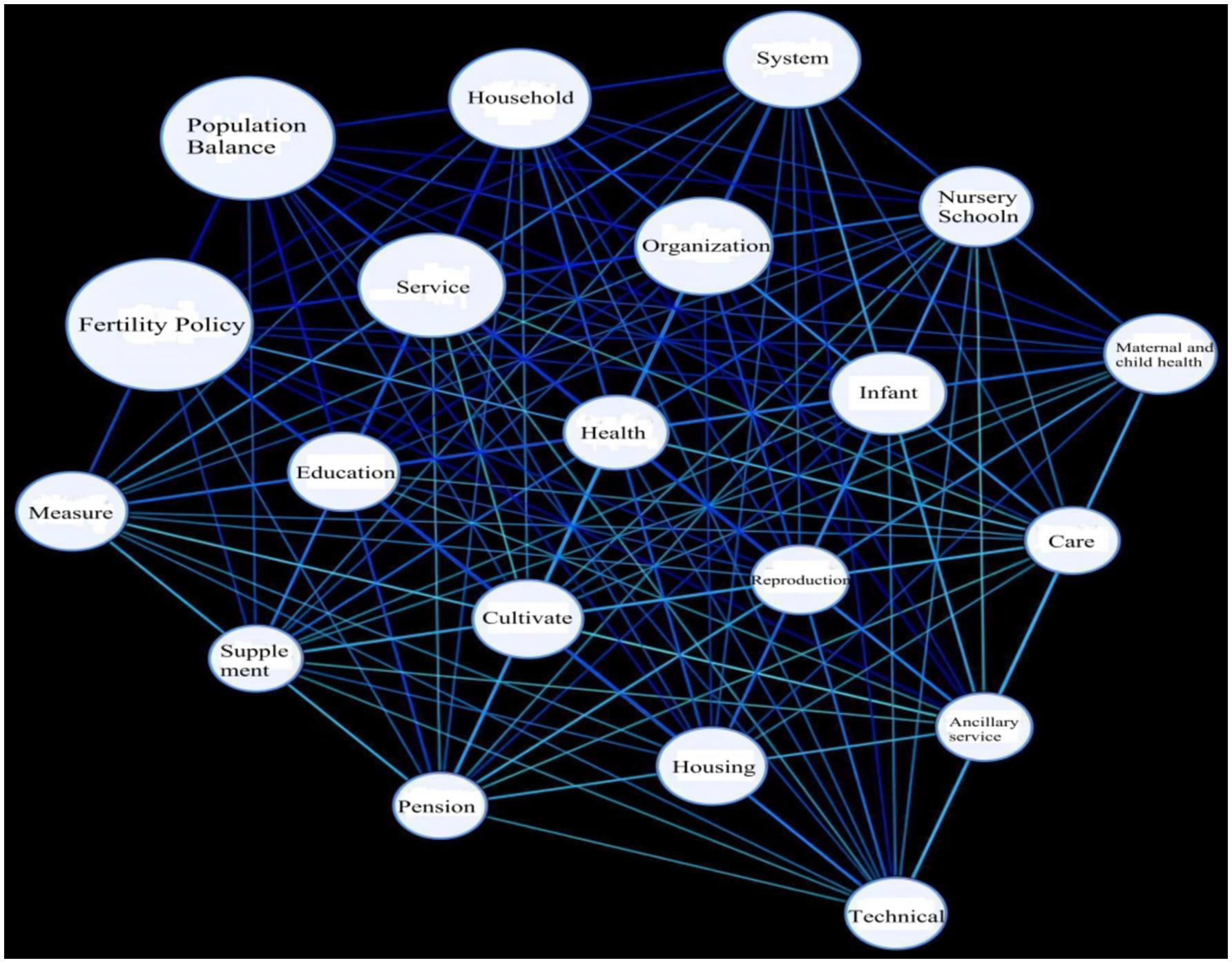
Figure 2. Semantic network diagram of high-frequency words.
2.2.2 Multi-input–output scale construction
Based on an analysis of keywords derived from high-frequency words and the mapping of social network relationships, and in accordance with Estrada’s policy evaluation criteria (15, 31), we developed a PMC fertility policy evaluation model that utilizes text mining techniques. This model comprises nine primary variables and 41 secondary variables, as detailed in Table 3.
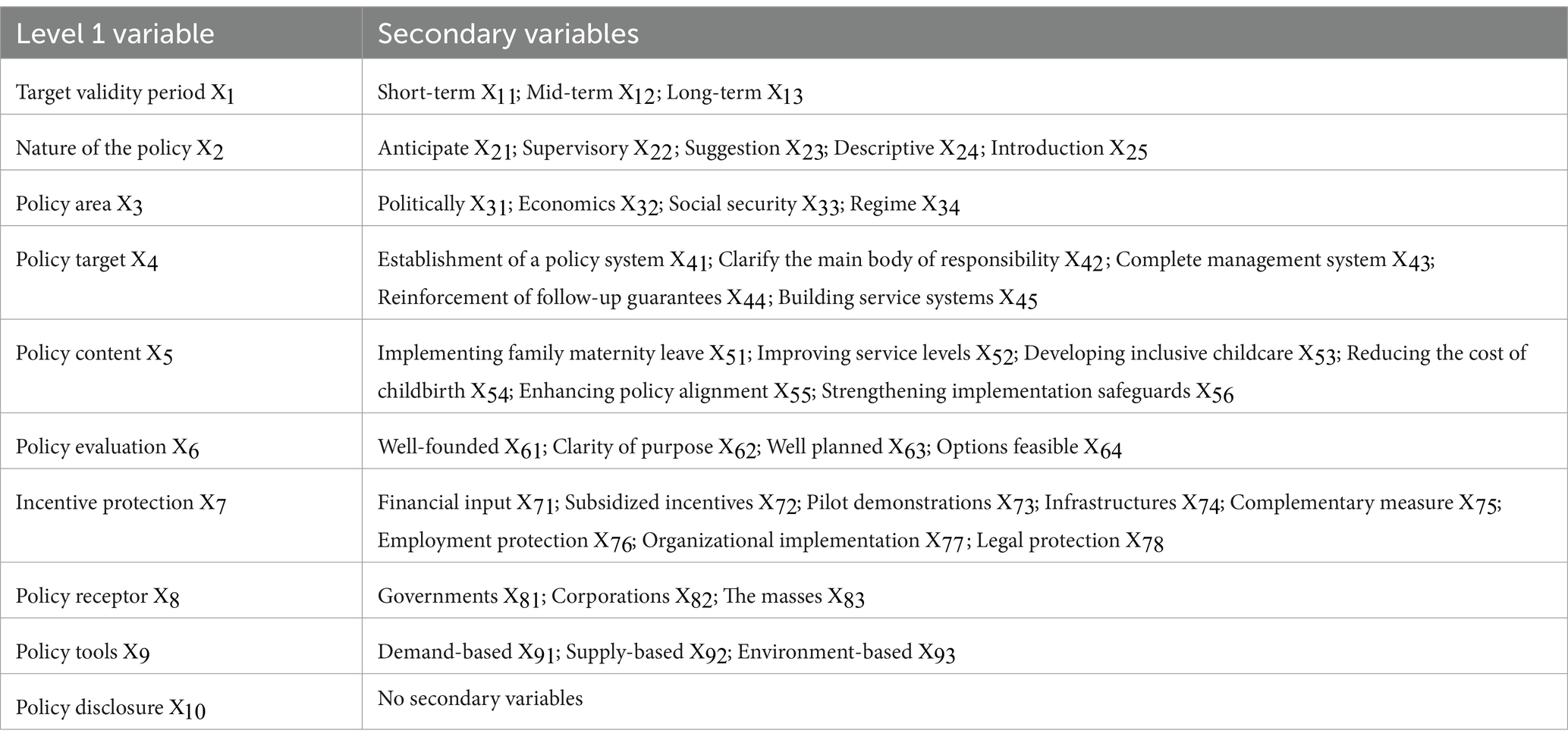
Table 3. Indicators of policy evaluation variables.
Multi-input–output scales are constructed based on the above indicators of policy evaluation variables, as shown in Table 4.
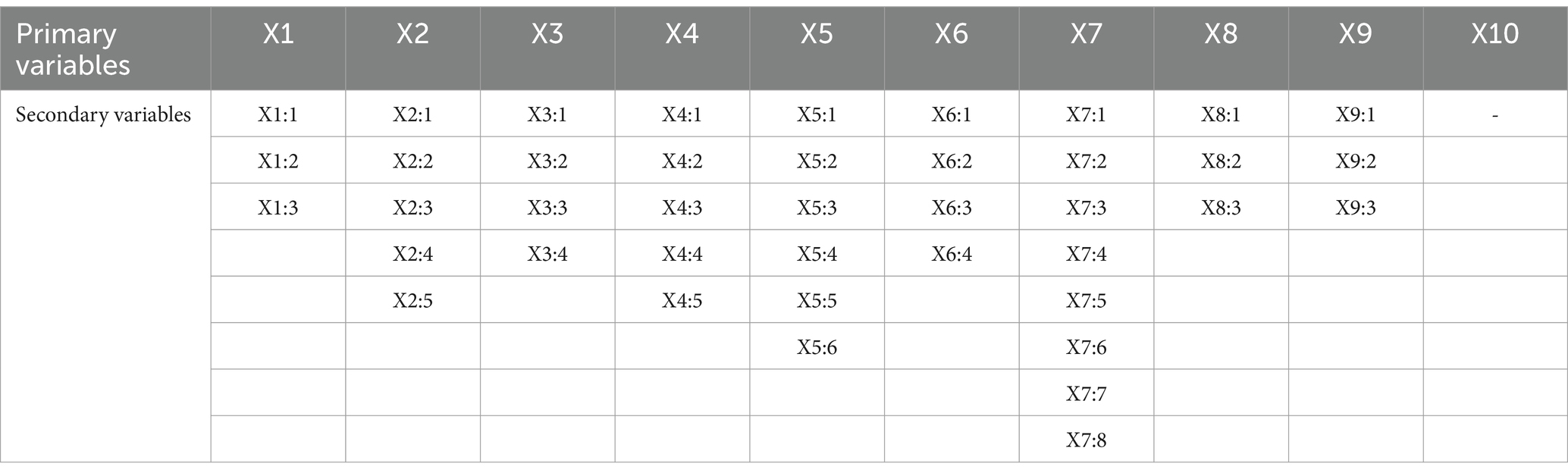
Table 4. Multiple input–output scale.
3 Results
3.1 PMC index calculation
The PMC index is calculated by assessing the evaluation indicators established above using a multi-input scale. Initially, values of 0 and 1 are assigned to each index. Subsequently, the values of secondary variables are computed, and based on their summation along with the primary variables, a 3×3 PMC matrix is constructed (32, 33). The formula is shown in Equations 1–3:
And based on the PMC rating criteria indicated by Estrada, the policies were categorized into perfect, excellent, acceptable, and bad policies (15, 30) as shown in Table 5.

Table 5. Policy evaluation ratings.
To calculate the PMC index for 22 policies, we first discriminate the secondary variable based on the policy text. If the policy text includes the conditions of the secondary variable, it is assigned a value of 1; otherwise, it is assigned a value of 0. Subsequently, we calculate the primary variable, leading to the determination of the PMC index for each policy. The specific results of these calculations are presented in Tables 6, 7.
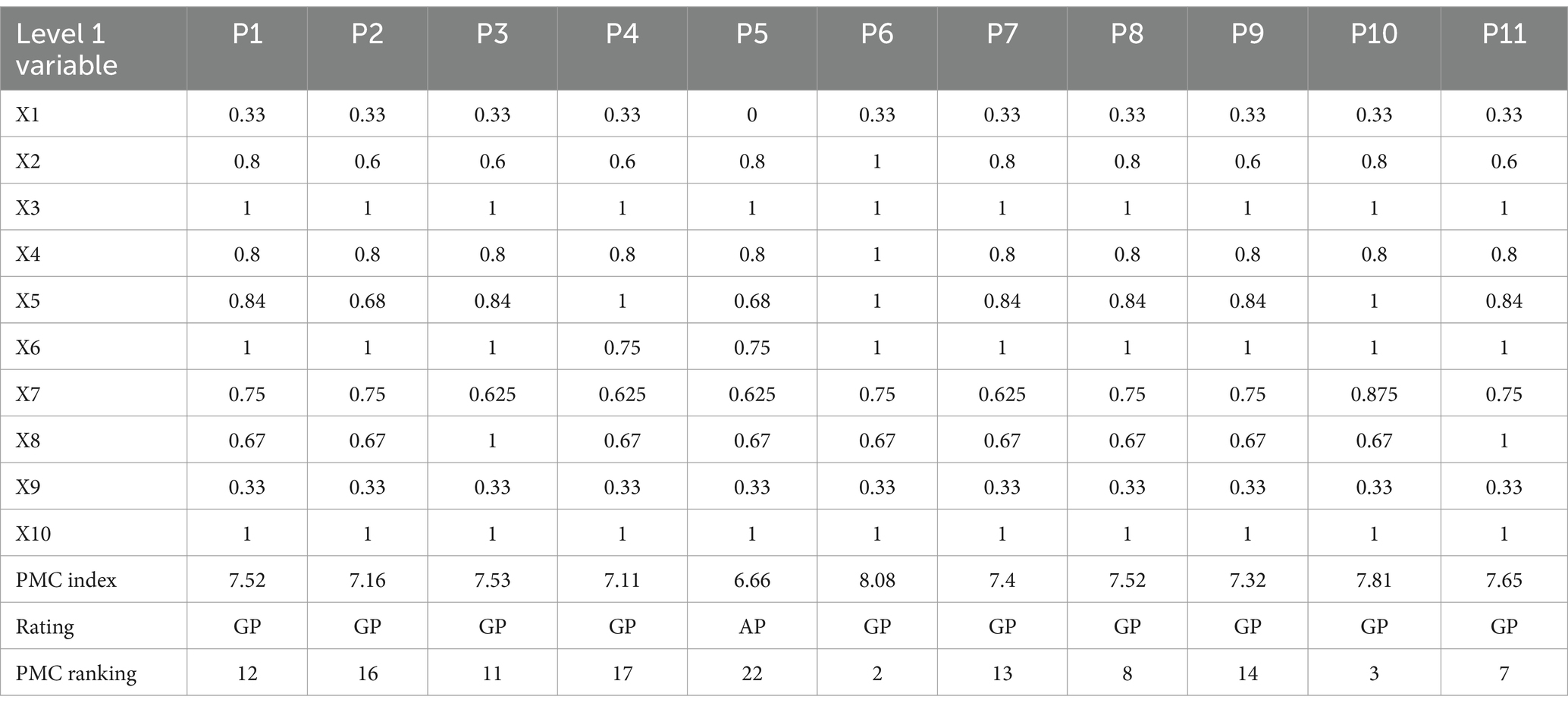
Table 6. Calculation of PMC index.
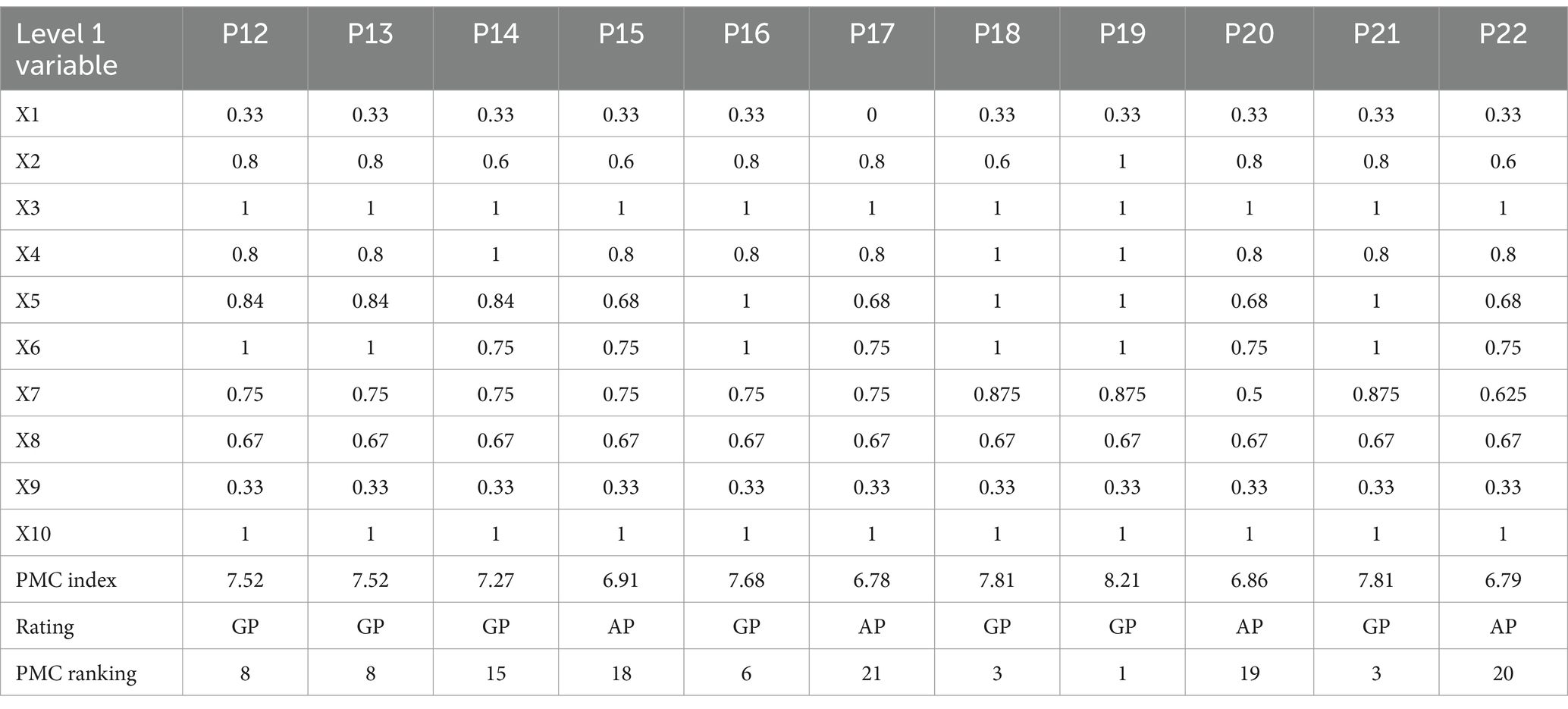
Table 7. Calculation of PMC index.
3.2 PMC surface drawing
The PMC surface map serves as a three-dimensional visual assessment tool that facilitates a more intuitive visualization of the strengths and weaknesses of each policy, guided by the PMC concavity index. The PMC surface diagram is represented as a 3×3 matrix. Instead of a 10×10 matrix, we introduce a first-level variable; all documents considered are public policies, rendering the inclusion of a larger matrix impractical. Consequently, in constructing the PMC surface diagram, we eliminate this larger matrix, ultimately resulting in a three-dimensional surface diagram. The transition from yellow to blue indicates varying scores for each item, with darker colors representing lower scores. The specific scores correspond to the surface diagram side legend, as illustrated in Figure 3.

Figure 3. 22 Policy PMC Surfaces.
An analysis of the PMC surfaces of the 22 policies reveals both their weaknesses and strengths. Overall, the performance of these policies is subpar in the X1, X8, and X9 indicators, indicating a lack of foresight regarding the target period. The policies appear to be primarily designed based on recent conditions, without a thorough examination and assessment of medium- and long-term demographic changes. Furthermore, the indicators related to policy recipients and instruments suggest that the fertility policy documentation inadequately addresses the full spectrum of methodologies and requires further enhancement.
In this discussion, we have selected representative policies for in-depth analysis. The first policy under consideration is Policy19, which is ranked No. 1. According to the calculation of the PMC index, Policy19 boasts a value of 8.21, categorizing it as an excellent policy text. The first-level indicators reveal that Policy19 excels in indicators X2, X3, X4, X5, and X6, suggesting it offers comprehensive coverage and rich content regarding policy areas, objectives, content, and evaluation. Conversely, the indicators influencing its index are X1, X8, and X9. The three key elements are target duration, policy receptors, and policy instruments. Regarding performance, the duration indicator is absent because Policy 19 does not specify an expectation for achieving the target. Additionally, the indicator for policy receptors is lacking, as Policy 19 fails to consider the risks faced by enterprises. Relevant studies indicate that enterprises may incur higher fertility costs due to the influence of the three-child policy (34). This underscores the importance of including enterprises in the policy framework. Lastly, concerning the indicators for policy instruments, Policy 19 does not adequately address public demand or the overall fertility environment, highlighting a need for further refinement in the policy text. In light of these observations, we propose a policy enhancement pathway of X1 → X9 → X8 for Policy 19.
For the second analysis, we selected the lowest-ranked Policy5. According to the PMC index calculation, Policy5 has a PMC index value of 6.66, indicating that it is an acceptable policy text. However, at the first level, Policy5 performs poorly on indicators X1, X5, X6, X7, X8, and X9, necessitating further enhancement. Specifically, regarding X1, Policy5 lacks a temporal plan for implementation. Additionally, in relation to X5, X6, and X7, Policy5 contains relatively few policy texts and does not comprehensively address various aspects of fertility policy, particularly in the areas of “family” and “services,” as identified through our text mining analysis. The concept of “family” plays a significant role in influencing maternity hospitals (35). A study published in Nature indicates that the UK’s maternity leave policy should be designed to benefit the entire family (36), highlighting that Policy 5 lacks comprehensive coverage and requires supplementation. Additionally, the X8 and X9 indicators are relatively weak among the 22 policy texts and warrant further strengthening. Consequently, we propose a policy enhancement pathway of X1 → X9 → X7 → X8 → X5 → X6 for Policy 5.
Thirdly, we have selected Policy3, which is ranked 11 th. According to the PMC index calculation, the PMC index value of Policy3 is 7.53, indicating that it is an excellent policy text. Analyzing the specific scores reveals that Policy3 exemplifies a typical policy document, primarily relying on the macro-indicators mandated by the state, while neglecting to explore deeper aspects. This limitation is particularly evident in indicators X2 and X7, where Policy3 offers policy guidance in key areas of national concern but lacks relevant guidelines and expectations, and the safeguards for the policy are insufficient and require further strengthening. In light of this, we propose a policy enhancement pathway of X1 → X9 → X2 → X8 → X7 → X5 for Policy3.
4 Conclusion and policy implications
4.1 Conclusion
This study investigated a total of 22 Chinese government fertility policy texts and conducted policy evaluation based on a quantitative fertility policy assessment model for text mining, and drew the following conclusions:
(1) China’s fertility policy texts are relatively comprehensive in design, with an overall PMC index ranging from 6.66 to 8.21, which contains 17 excellent policy texts, 5 acceptable policy texts, and a relatively high overall policy text consistency.
(2) There is still much room for improvement in the current fertility policy texts. Based on the above PMC surfaces of the 22 Chinese fertility policies, the overall degree of policy concavity is large, especially in the medium- and long-term expectations of the policies as well as the coverage of the policies. Therefore, it is necessary to focus on the expectations of the policies, strengthen the duration of the policies, and comprehensively consider all factors affecting the fertility policies, so as to promote the high-quality development of the fertility policies.
(3) The degree of refinement of the policy still needs to be increased. In the text of the policy, only intuitive factors such as costs and childcare are taken into account, and the indirect factors that increase fertility intentions are not comprehensively considered, whereas the essence of promoting balanced development of the population is to promote women’s fertility intentions. Therefore, relevant policies should take more account of factors such as “family,” “subsidies,” and “occupation” (37–39). For example, the implementation of paid parental leave (40), to increase the status of women’s occupation (41), etc., only better protection of women’s rights, make families happier, and only in a real sense to achieve the enhancement of fertility intentions.
4.2 Policy impact
China’s current fertility policy is still insufficient in terms of segmentation. In order to promote the balanced development of China’s population, prevent labor shortages, food security and other social-economic problems caused by population shortages (42), and solve the problems of insufficient coverage and lack of balance in the text of the current fertility policy, the following countermeasures are proposed:
(1) Strengthening cooperation among multiple subjects
Based on the current policy texts issued by governments at all levels, we find that the government is still planning from a macro perspective, but micro situations such as promoting women’s fertility intentions are difficult to cover comprehensively from a macro perspective alone. Therefore, policy issuers should co-operate with social and grass-roots organizations to jointly plan appropriate promotion measures, and if necessary, set up a multi-dimensional linkage mechanism to strengthen the co-operation between the government and social capital organizations to jointly evaluate the policy texts.
(2) Promoting multi-objective development
Based on the dynamic assessment of the current policy text, we find that the balance of the policy text is weak, and there are flaws in some key elements of public concern. In the process of the government’s promotion of balanced population development, it should synergize multi-objective development, with incentives as the main means to seek benefits and treatment for families of childbearing age. From the economic aspect, it should protect the future costs of education, life, childbirth and childcare for families of childbearing age; from the policy aspect, it should increase maternity and paternity leave for families of childbearing age; and from the aspect of future careers, it should raise the rank or treatment of both parents who have children, so as to achieve the purpose of promoting the development of fertility intentions.
(3) Changing the concept of reproductive culture
The effective promotion of fertility is never something that can be fully resolved by a single policy, but should be promoted from a fundamental perspective, which is what the current text of the fertility policy needs to be improved. The fundamental promotion of fertility intentions is actually a change in cultural concepts, the current social development of the fast era, the pursuit of profit among families, so as to achieve the maximization of the economy, and the birth of children is contrary to this, therefore, the dissemination of traditional culture, the concept of child-rearing to change is the key to the realization of the high quality of the development of fertility intentions.
In summary, this paper presents an empirical study of China’s 22 fertility policies, which holds significant importance for guiding the revision of fertility policy texts and plays a crucial role in promoting the long-term equilibrium of the population. However, several issues within this paper warrant further investigation:
1. Fertility policy is a newly introduced policy framework in China, yet it is widely recognized that fertility policies exert long-term effects. Consequently, ongoing research is essential to monitor these policies, and future studies will be conducted to better inform the development of effective measures that influence fertility trends.
2. Fertility policy is largely shaped by women’s preferences, and while the policy text can facilitate these preferences, it cannot dictate them. Therefore, future research should consider integrating both subjective and objective approaches to enhance relevance to the social context.
Data availability statement
The raw data supporting the conclusions of this article will be made available by the authors, without undue reservation.
Author contributions
JC: Supervision, Writing – review & editing, Data curation, Investigation, Writing – original draft, Conceptualization, Project administration. YG: Investigation, Supervision, Writing – review & editing. XW: Supervision, Writing – review & editing, Formal analysis.
Funding
The author(s) declare that financial support was received for the research, authorship, and/or publication of this article. This work was supported by the National Open University Youth Research Programme “Investment in Education and Personal Income Distribution” (Q22A0021).
Conflict of interest
The authors declare that the research was conducted in the absence of any commercial or financial relationships that could be construed as a potential conflict of interest.
Generative AI statement
The authors declare that no Gen AI was used in the creation of this manuscript.
Publisher’s note
All claims expressed in this article are solely those of the authors and do not necessarily represent those of their affiliated organizations, or those of the publisher, the editors and the reviewers. Any product that may be evaluated in this article, or claim that may be made by its manufacturer, is not guaranteed or endorsed by the publisher.
References
1. Vollset, SE, Goren, E, Yuan, CW, Cao, J, Smith, AE, Hsiao, T, et al. Fertility, mortality, migration, and population scenarios for 195 countries and territories from 2017 to 2100: a forecasting analysis for the global burden of disease study. Lancet. (2020) 396:1285–306. doi: 10.1016/S0140-6736(20)30677-2
2. Fause, BCJM, Adamson, GD, Boivin, J, Chambers, GM, de Geyter, C, Dyer, S, et al. Declining global fertility rates and the implications for family planning and family building: an IFFS consensus document based on a narrative review of the literature. Hum Reprod Update. (2024) 30:153–73. doi: 10.1093/humupd/dmad028
3. Bhattacharjee, NV, Schumacher, AE, Aali, A, Abate, YH, Abbas-gholizadeh, R, Abbasian, M, et al. Global fertility in 204 countries and territories, 1950-2021,with forecasts to 2100: a comprehensive demographic analysis for the global burden of disease study 2021. Lancet. (2024) 403:2057–99. doi: 10.1016/S0140-6736(24)00550-6
4. Ezeh, AC, Bongaarts, J, and Mberu, B. Global population trends and policy options. Lancet. (2012) 380:142–8. doi: 10.1016/S0140-6736(12)60696-5
5. Agbaglo, E, Agbadi, P, Tetteh, JK, Ameyaw, EK, Adu, C, and Nutor, JJ. Trends in total fertility rate in Ghana by different inequality dimensions from 1993 to 2014. BMC Womens Health. (2022) 22:49. doi: 10.1186/s12905-022-01629-w
6. Kozlova, OA, and Arkhangel'skii, VN. Russian fertility forecast: approaches, hypotheses, and results. Her Russ Acad Sci. (2021) 91:548–56. doi: 10.1134/S1019331621050051
7. Yang, Y., Shang, H.L., and Raymer, J. Forecasting Australian fertility by age, region, and birthplace. Int J Forecast (2022) 40(2):532–548. doi: 10.1016/j.ijforecast.2022.08.001
8. Yang, X, and Xie, L. Fertility and self-rated health of migrant women of childbearing age-an analysis of moderating effects based on socioeconomic status. BMC Womens Health. (2024) 24:238. doi: 10.1186/s12905-024-03043-w
9. Bernardi, L, Keim, S, and von der Lippe, H. Social influences on fertility: a comparative mixed methods study in eastern and Western Germany. J Mixed Methods Res. (2007) 1:23–47. doi: 10.1177/2345678906292238
10. Muluneh, MW, and Moyehodie, YA. Determinants of desire for more children among women in Ethiopia. BMC Womens Health. (2021) 21:408. doi: 10.1186/s12905-021-01563-3
11. Meng, T, and Lyu, SB. The impact of the selective two-child policy on residents’ fertility intentions in China. Appl Econ Lett. (2021) 29:1455–9. doi: 10.1080/13504851.2021.1937492
12. Son, YL. Do childbirth grants increase the fertility rate? Policy impacts in South Korea. Rev Econ Househ. (2018) 16:713–35. doi: 10.1007/s11150-017-9383-z
13. Chen, XH, Peng, WB, Liao, L, Nakamura, D, and Zhao, FF. Can quantitative easing population policy rescue China's sinking fertility rate? A comparative examination between Jiangsu and Zhejiang. Cybergeo. (2020):933. doi: 10.4000/cybergeo.34066
14. Estrada, M, Yap, SF, and Nagraj, S. Beyond theceteris paribus assumption: modeling demand and supply assuming omnia mobilis. Int J Econ Res. (2008) 2:185–94.
15. Estrada, M. Policy modeling: definition, classification, and evaluation. J Policy Model. (2011) 33:523–36. doi: 10.1016/j.jpolmod.2011.02.003
16. Yang, T, Xing, C, and Li, XY. Evaluation and analysis of new-energy vehicle industry policies in the context of technical innovation in China. J Clean Prod. (2021) 281:125126. doi: 10.1016/j.jclepro.2020.125126
17. Zhang, X, Cheng, X, Qi, X, Yang, K, and Zhao, Z. Evaluation of China's double-carbon energy policy based on the policy modeling consistency index. Util Policy. (2024) 90:101783. doi: 10.1016/j.jup.2024.101783
18. Xu, JT, Zhang, ZS, Xu, YQ, Liu, L, and Pei, T. Quantitative evaluation of waste sorting management policies in China's major cities based on the PMC index model. Front Environ Sci. (2023) 11:1065900. doi: 10.3389/fenvs.2023.1065900
19. Qi, LW, Chen, WJ, Li, CY, Song, LQ, and Ge, LQ. Quantitative evaluation of China's biogenetic resources conservation policies based on the policy Modeling consistency index model. Sustain For. (2024) 16:5158. doi: 10.3390/su16125158
20. Zhao, XC, Jiang, M, Wu, ZJ, and Zhou, Y. Quantitative evaluation of China's energy security policy under the background of intensifying geopolitical conflicts: based on PMC model. Resour Policy. (2023) 85:104032. doi: 10.1016/j.resourpol.2023.104032
21. Xiong, YC, Zhang, CL, and Qi, H. How effective is the fire safety education policy in China? A quantitative evaluation based on the PMC-index model. Saf Sci. (2023) 161:106070. doi: 10.1016/j.ssci.2023.106070
22. Liu, Q, Jia, MT, and Xia, D. Dynamic evaluation of new energy vehicle policy based on text mining of PMC knowledge framework. J Clean Prod. (2023) 392:136237. doi: 10.1016/j.jclepro.2023.136237
23. Anonymous. Population ageing in China: crisis or opportunity? Lancet. (2022) 400:1967–2006. doi: 10.1016/S0140-6736(22)01546-X
24. Yin, YK. China's demographic transition: a quantitative analysis. Eur Econ Rev. (2023) 160:104591. doi: 10.1016/j.euroecorev.2023.104591
25. Tatum, M. China's three-child policy. Lancet. (2021) 397:2238. doi: 10.1016/s0140-6736(21)01295-2
26. Jing, WZ, Liu, J, Ma, QY, Zhang, SK, Li, YY, and Liu, M. Fertility intentions to have a second or third child under China’s three-child policy: a national cross-sectional study. Hum Reprod. (2022) 37:1907–18. doi: 10.1093/humrep/deac101
27. Zhao, XF. Strategic significance and realization of the three-child policy. Soc Sci Hunan. (2022) 1:120–6.
28. Yu, JK, and Ma, XY. Exploring the management policy of marine microplastic litter in China: overview, challenges and prospects. Sustain Prod Consump. (2022) 32:607–18. doi: 10.1016/j.spc.2022.05.018
29. Li, G, Lv, LJ, and Wang, YC. Quantitative evaluation of science education policies in primary and secondary schools in China during the "14th five-year plan" period. J Northeast Norm Univ. (2024) 4:59–72. doi: 10.16164/j.cnki.22-1062/c.2024.04.007
30. Zhai, YK, Guo, LY, Zhao, DX, and Lu, W. Evaluation of telemedicine policies based on PMC index model. J Inform Resourc Manag. (2022) 12:112–122,137. doi: 10.13365/j.jirm.2022.02.112
31. Estrada, M, and Park, D. The past, present and future of policy modeling. J Policy Model. (2018) 40:1–15. doi: 10.1016/j.jpolmod.2018.01.003
32. Yimsuk, A, and Thammaboosadee, S. Evaluation of Thailand's COVID-19-related policies and their impact on the stock market using a PMC index model approach. Cogent Soc Sci. (2023) 10:2285252. doi: 10.1080/23311886.2023.2285252
33. Liu, F, Tang, J, Rustam, A, and Liu, Z. Evaluation of the central and local power batteries recycling policies in China: a PMC-index model approach. J Clean Prod. (2023) 427:139073. doi: 10.1016/j.jclepro.2023.139073
34. Yang, H. Research on the burden of childbirth costs paid by enterprises and its countermeasures under the three-child policy: an analysis based on the extension of maternity leave. Popul Econ. (2022) 6:17–31. doi: 10.3969/j.issn.1000-4149.2022.00.045
35. Ren, Y, and Jin, Y. Family factors and People's desired fertility: implications to improving family policies in the context of low ferity society. J Shandong Wome Univ. (2024) 4:120–32.
36. Bunnefeld, L. Shared parental leave: making it work for the whole family. Nature. (2019) 574:587–8. doi: 10.1038/d41586-019-03019-z
37. Pan, JS, and Deng, ZK. A study of the impact of household consumption structure and housing situation on residents' willingness to have three children. Theory Observe. (2023) 4:93–100. doi: 10.3969/j.issn.1009-2234.2023.04.020
38. Li, CA, and Li, Y. Gender differences of the impact of education on fertility intentions and its mechanisms. Popul Econ. (2024) 3:1–18. doi: 10.3969/j.issn.1000-4149.2024.00.020
39. Zhu, WT, and Wang, M. A study of the effect of fertility support on young working women's willingness to have three children. J China Youth Univ Polit Sci. (2022) 41:78–85. doi: 10.16034/j.cnki.10-1318/c.2022.06.017
40. Bassford, M, and Fisher, H. The impact of paid parental leave on fertility intentions. Econ Rec. (2020) 96:402–30. doi: 10.1111/1475-4932.12561
41. Sun, HF. The impact of marital status and fertility status on female employment in China. Commun Huma Res. (2023) 8:108–14. doi: 10.54254/2753-7064/8/20230977
Keywords: fertility policy, text mining, PMC index, policy evaluation, policy optimization
Citation: Chen J, Gao Y and Wang X (2025) Evaluation of China’s fertility policy based on PMC modeling. Front. Public Health. 13:1533307. doi: 10.3389/fpubh.2025.1533307
Edited by:
Sushma Jaiswal, Guru Ghasidas Vishwavidyalaya, IndiaReviewed by:
Nai Peng Tey, University of Malaya, MalaysiaYounas Khan, Kohat University of Science and Technology, Pakistan
Copyright © 2025 Chen, Gao and Wang. This is an open-access article distributed under the terms of the Creative Commons Attribution License (CC BY). The use, distribution or reproduction in other forums is permitted, provided the original author(s) and the copyright owner(s) are credited and that the original publication in this journal is cited, in accordance with accepted academic practice. No use, distribution or reproduction is permitted which does not comply with these terms.
*Correspondence: Xi Wang, d2FuZ3hpQGdodS5lZHUuY24=