TF
takema fukatsu
National Institute of Advanced Industrial Science and Technology (AIST)
Tokyo, Japan
4,027
Total downloads
25k
Total views and downloads
Submit your idea
You will be redirected to our submission process.
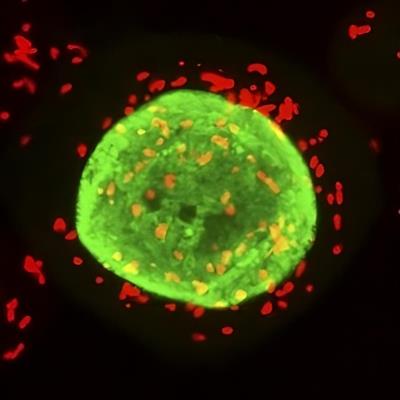
The endosymbiotic bacteria of the genus Wolbachia are the most widespread bacterial associates among diverse insects and other arthropods, and some groups of nematodes. Recently, our understanding of the biology of Wolbachia has shown remarkable advancement, which includes the identification of causative genes for remarkable reproductive phenotypes such as cytoplasmic incompatibility and male-killing; the discovery of obligatory and conditional beneficial fitness consequences such as nutrient provisioning and resistance to parasites, pathogens and viruses; essentiality for host growth, development and survival; and others. Now the biology of Wolbachia is not only an emerging basic research area that encompasses the host-microbe interactions ranging from cell-biology through physiology to ecology and evolution, but it constitutes a promising applied research field that contributes to Wolbachia-mediated control of vector-borne infectious diseases and pests, and Wolbachia-targeted prevention and curing of filariasis.
Following the previous research topic “Frontiers in Wolbachia Biology 2023” in success, here we propose the new research topic “New Frontiers in Wolbachia Biology 2025” to provide a forum to compile and overview the exciting achievements recently emerging in this research field with an extended coverage. Any scientifically sound, solid and competent submissions of high quality on Wolbachia biology are very welcome, including:
• Reproductive manipulation
• Molecular and cellular biology
• Omics and biological functions
• Ecology and evolution
• Pest and disease control
• Wolbachia in nematodes
• Incompatible insect techniques
• Extended phenotypes
• Experimental symbiosis
• Other symbionts
The 12th Wolbachia Conference will be held in April 2025 (https://web.tuat.ac.jp/~insect/wolbachia2025/). The scientific committee members of the Wolbachia Conference serve for the Research Topic as editors. Therefore, it is guaranteed that the papers submitted to the Research Topic will be handled by the leading experts in the field of Wolbachia biology.
Notes:
- Submission to the Research Topic is not restricted to participants of the Wolbachia Conference but open to everybody, as long as the manuscript constitutes a scientifically solid and high-quality contribution to the field of Wolbachia biology.
- Papers on symbiotic microorganisms other than Wolbachia will be regarded as out of scope and not considered for the Research Topic, except for the following cases.
- Papers on symbiotic microorganisms other than Wolbachia will be considered for the Research Topic, if the contents of the papers are presented at the Wolbachia Conference.
Topic Editor Zhiyong Xi founded, own shares in and is affiliated with Guangzhou Wolbaki Biotech Co., ltd. All other topic editors declare no competing interests with regard to the Research Topic subject.
This Research Topic accepts the following article types, unless otherwise specified in the Research Topic description:
Articles that are accepted for publication by our external editors following rigorous peer review incur a publishing fee charged to Authors, institutions, or funders.
Keywords: Reproductive manipulation, Wolbachia cell biology, Pests and disease control, Multitrophic interactions, Wolbachia in nematodes, Ecology and Evolution
Important note: All contributions to this Research Topic must be within the scope of the section and journal to which they are submitted, as defined in their mission statements. Frontiers reserves the right to guide an out-of-scope manuscript to a more suitable section or journal at any stage of peer review.
National Institute of Advanced Industrial Science and Technology (AIST)
Tokyo, Japan
Liverpool School of Tropical Medicine
Liverpool, United Kingdom
University of Tsukuba
Tsukuba, Japan
Hebrew University of Jerusalem
Jerusalem, Israel
University of Victoria
Victoria, Canada
Michigan State University
East Lansing, United States
University of Minnesota Twin Cities
St. Paul, United States
The University of Tokyo
Bunkyo, Japan
Manuscripts can be submitted to this Research Topic via the main journal or any other participating journal.
Submit your idea
You will be redirected to our submission process.
