MK
michael kunz
Karlsruhe Institute of Technology (KIT)
Karlsruhe, Germany
1,396
Total downloads
16k
Total views and downloads
Submit your idea
You will be redirected to our submission process.
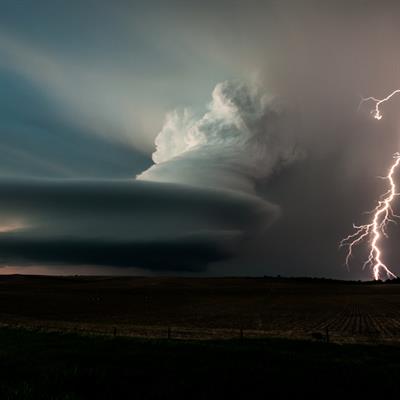
Large hail has become a major loss driver in several regions around the globe. In 2023, for instance, severe convective storms, accompanied by large hail, caused economic losses of US$ 76 billion, which is about one-third of all damage by natural hazards. Despite the large damage, hail is still under-researched, mainly because of the lack of comprehensive, long-term observations. Pressing questions concern the impact of climate change on the intensity and frequency of hailstorms, the most effective methods for estimating hail hazard and risk, enhancements of hail detection and forecasting techniques, and optimal strategies for mitigating hail damage and hail risk.
Hail research endeavours have yielded important advancements in recent years, leveraging dedicated field campaigns, improved numerical weather prediction models, and the burgeoning domain of machine learning techniques. Despite these strides forward, our understanding of the underlying drivers of hailstorms, hail growth processes, regional probabilities of hail occurrence, and the associated risks remains incomplete. This knowledge gap underscores the importance of continued collaborative research efforts to enhance our ability to anticipate and mitigate the impacts of hailstorms.
This Research Topic aims to foster the exchange of information on the current state of hail research, discuss existing deficits, and suggest possible solutions in hail modelling and analysis to better understand various processes related to hail. It also seeks to promote networking among scientists and experts in the fields of atmospheric research, weather services, insurance, economics, and agriculture.
The Research Topic is launched as a consolidated outcome of the European Hail Workshop, held in March 2024 at Karlsruhe, Germany.
However, it invites contributions from all interested researchers on relevant topics that advance our current understanding of hail formation, hail forecasting, and hail hazards and risk. Contributions are welcome on the following topics:
• Convection and hail in a changing climate (changes and trends for past and future periods)
• Hail damage and damage prevention (e.g., damage assessment, forensic analysis, hail-resistant materials)
• Hail climatology, risk, and loss (e.g., hail frequency or risk assessments, hail damage or risk models, insurance)
• Hail detection and forecasting (e.g., detection by remote sensing instruments, numerical weather prediction models on different time scales, nowcasting, hailpad instruments, crowdsourcing)
• Microphysics and dynamics of hailstorms (e.g., initial condition and cloud physics perturbations, wind tunnel experiments, model experiments, isotopic analysis, hail trajectories)
• Hail research and AI/ML (all aspects of hail modelling)
• Field campaigns (investigation of processes related to hail, ambient conditions, and hail growth, hailstone analysis)
This Research Topic accepts the following article types, unless otherwise specified in the Research Topic description:
Articles that are accepted for publication by our external editors following rigorous peer review incur a publishing fee charged to Authors, institutions, or funders.
Keywords: hail damage, hail forecasting, climate change, AI/ML, field campaigns
Important note: All contributions to this Research Topic must be within the scope of the section and journal to which they are submitted, as defined in their mission statements. Frontiers reserves the right to guide an out-of-scope manuscript to a more suitable section or journal at any stage of peer review.
Karlsruhe Institute of Technology (KIT)
Karlsruhe, Germany
Karlsruhe Institute of Technology (KIT)
Karlsruhe, Germany
University of Bern
Bern, Switzerland
Federal Office of Meteorology and Climatology
Zurich, Switzerland
University of Freiburg
Freiburg, Germany
Manuscripts can be submitted to this Research Topic via the main journal or any other participating journal.
Submit your idea
You will be redirected to our submission process.