AK
alexander kokhanovsky
University of Marburg
Marburg, Germany
353
Total downloads
2,777
Total views and downloads
Submit your idea
Select the journal/section where you want your idea to be submitted:
Manuscript Submission Deadline 30 June 2026
This Research Topic is currently accepting articles.
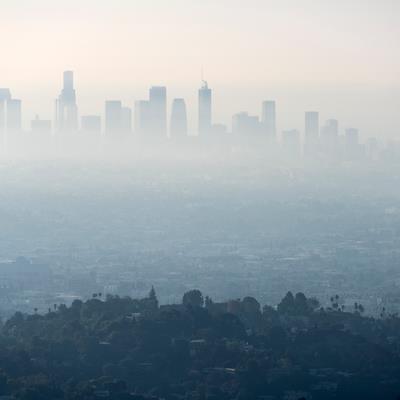
Atmospheric aerosol is composed of liquid and solid particles (dust, soot, oceanic spray, etc) suspended in air. Atmospheric aerosol can be considered as a veil, which covers the entire planet and has profound influences on the climate, cloud properties, air quality, weather atmospheric thermodynamics, dynamics and chemistry. The chemical composition, particle size distribution and microstructure of aerosols (particle size/shape distributions) are studied using a wide variety of ground-based and spaceborne instruments. Although there is great progress with respect to understanding the spatial distribution of aerosols and their physical and optical properties, many important processes involving aerosols are not completely understood. This is related, for example, to understanding the impact of atmospheric aerosols on climate, including aerosol-cloud interactions and their effect on rain, as well as the relation between aerosol formation and trace gas concentrations.
The studies of local optical properties of aerosols using spaceborne observations began 50 years ago (Griggs et al., 1975) using ERTS-1 data. Currently, aerosol optical depth and other aerosol properties are retrieved using multiple spaceborne platforms with optical instrumentation performing spectral, angular, and polarimetric observations of solar light backscattered from the atmosphere-underlying surface system. The first and most important step for aerosol retrieval is screening any cloud effects on the upwelling radiation. Next, the effective separation of the radiance from the atmosphere and that from the underlying surface is of paramount importance. For the actual aerosol retrieval, the choice of aerosol models in the forward model has a large influence on the final result. The measurements can be performed only during daytime (except for spaceborne lidars). Therefore, the properties of atmospheric aerosols at night remain under-represented. The daily cycles of aerosol properties can be derived using geostationary observations. For the full daily cycle, atmospheric dynamics strongly influences the results. Ground-based remote sensing is crucial for the validation and evaluation of the results. This Research Topic will highlight recent advances in the area of aerosol remote sensing from space including results from recent satellite missions, advances in the retrieval algorithms and aerosol-cloud interaction studies. Review Articles on the subjects listed above and also on the influence of aerosol on clouds and climate are welcome as well.
The specific topics to be addressed include:
• Satellite observations of atmospheric aerosols using various combinations of spectral, angular and polarimetric measurements;
• Recent advances in retrieval algorithms (e.g., retrievals over bright surfaces such as deserts, snow and ice);
• Aerosol impact on climate;
• Aerosol -cloud interactions and their impact on cloud properties and radiative forcing;
• Simultaneous retrievals of aerosol (optical thickness, single scattering albedo) and underlying surface properties;
• Impact of aerosol on rain occurrence;
• Atmospheric correction;
• Cloud screening procedures.
This Research Topic accepts the following article types, unless otherwise specified in the Research Topic description:
Articles that are accepted for publication by our external editors following rigorous peer review incur a publishing fee charged to Authors, institutions, or funders.
Keywords: Aerosol remote sensing, Radiative transfer, Light scattering, Light absorption, Mie theory, Aerosol optical thickness, Aerosol single scattering albedo
Important note: All contributions to this Research Topic must be within the scope of the section and journal to which they are submitted, as defined in their mission statements. Frontiers reserves the right to guide an out-of-scope manuscript to a more suitable section or journal at any stage of peer review.

Manuscripts can be submitted to this Research Topic via the main journal or any other participating journal.
Submit your idea
Select the journal/section where you want your idea to be submitted: