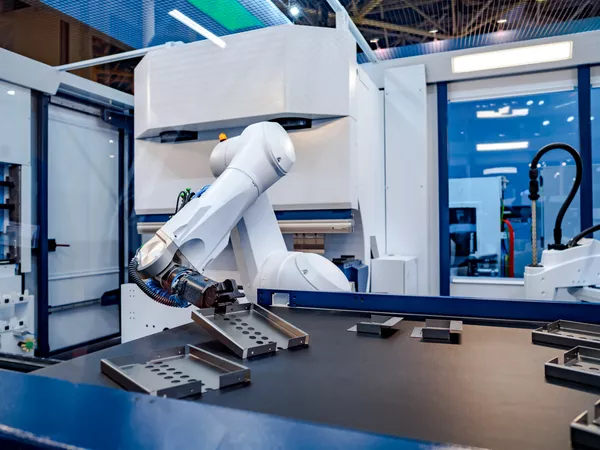
Physical Artificial Intelligence (AI) is an emerging interdisciplinary field that not only integrates AI and robotics but also considers dynamic interactions with the environment. It seeks to develop intelligent systems capable of adapting and interacting with complex and dynamic environments. Central to this field is the integration and interaction of three fundamental components: the brain, the physical body, and the environment. The "brain" encompasses advanced computational systems, including sensory signal processing, motor control, and learning. These systems process sensory data, translate it into proper motor commands, and even make predictions and decisions. The "physical body" refers to structures, actuation systems, and materials that generate actions and enable physical interaction with the real world. The environment, in turn, provides challenges and opportunities that drive the system’s adaptability and performance, and can also be exploited to produce complex emergent behaviors.
Drawing inspiration from biological systems, which excel at navigating and adapting to their surroundings, this field aims to create artificial systems that can behave, learn, adapt, and even improve over time. By bridging advances in artificial intelligence, biomechanics, material science, and robotics, Physical AI has the potential to transform industries by enabling robots with advanced computing to operate efficiently in unpredictable and unstructured environments.
This Research Topic “Physical AI and Robotics” aims to tackle the challenge of creating intelligent systems capable of functioning in highly dynamic and uncertain environments. The key objectives of this collection are to: 1. Strengthen the fundamentals of developing advanced algorithms for real-time decision-making and continuous learning, enabling (physical) systems to adjust their behavior and decisions based on environmental changes. 2. Gather creativity in designing flexible, durable robotic structures using biomimetic materials that can withstand unpredictable conditions, ensuring consistent performance in diverse settings. 3. Explore the key function of creating sensory systems and actuators that allow robots to perceive their environment accurately and respond with adaptive, proactive, precise actions.
Submissions should explore innovative methods to improve the adaptability, intelligence, and physical interaction of systems in complex, real-world environments. Topics of interest include, but are not limited to:
Physical Artificial Intelligence & Robotics • Adaptive control algorithms for dynamic environments • Methods for continuous learning and real-time decision-making • Collaborative behaviors in multi-agent systems • Development of self-learning systems for improved long-term performance • Reinforcement learning approaches for task optimization in uncertain environments • Cognitive models for decision-making under uncertainty • Integration of perception-action loops for real-time system adaptation • Multi-level hierarchical learning systems for complex problem-solving • Trust and risk management in autonomous system decision-making
Biomimetic Materials, Sensors, & Actuators • Development of biomimetic materials for enhanced flexibility and resilience • Integration of sensory systems to improve environmental perception • Actuators and artificial muscles for dynamic and efficient movement • Smart materials capable of self-healing and adapting to environmental conditions • Magnetic soft matter for robotics • Nano-engineered materials for improved sensitivity and mechanical properties • Environmental feedback for bio-inspired sensors • Energy-efficient actuators for lightweight and agile robotic movement • Integration of soft robotics techniques for human-robot interaction • Wearable sensors for health-monitoring and rehabilitation applications
This Research Topic is partnered with the 1st International Symposium on Physical Artificial Intelligence and Robotics (IS-PAIR), taking place at Vidyasirimedhi Institute of Science and Technology in Rayong, Thailand, 28th-29th January 2025. This collection welcomes contributions from the conference, but also other relevant contributions from non-attendees.
Article types and fees
This Research Topic accepts the following article types, unless otherwise specified in the Research Topic description:
Brief Research Report
Data Report
Editorial
FAIR² Data
FAIR² DATA Direct Submission
General Commentary
Hypothesis and Theory
Methods
Mini Review
Articles that are accepted for publication by our external editors following rigorous peer review incur a publishing fee charged to Authors, institutions, or funders.
Article types
This Research Topic accepts the following article types, unless otherwise specified in the Research Topic description:
Important note: All contributions to this Research Topic must be within the scope of the section and journal to which they are submitted, as defined in their mission statements. Frontiers reserves the right to guide an out-of-scope manuscript to a more suitable section or journal at any stage of peer review.