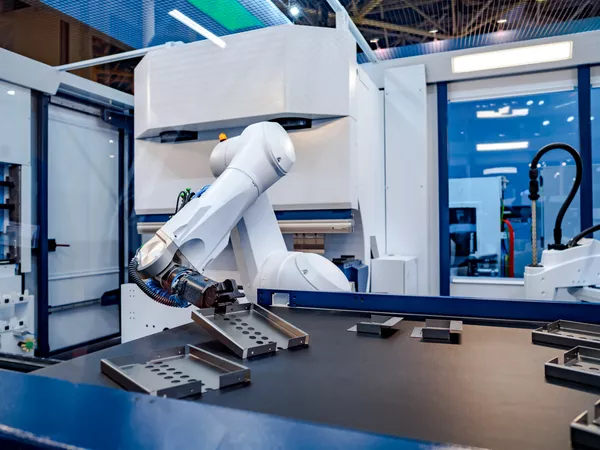
Robotic perception is advancing rapidly, driven by improvements in object recognition, spatial understanding, and contextual awareness. These enhancements allow robots to operate in dynamic, unstructured environments across industries like healthcare, agriculture, logistics, and disaster response. Multi-robot systems are unlocking new collaborative potential, leveraging real-time mapping, decentralized coordination, and cooperative SLAM to tackle large-scale challenges such as search-and-rescue and planetary exploration. Vision AI is revolutionizing mapping and navigation through 3D reconstruction, semantic scene understanding, and predictive path planning, enabling robots to function autonomously in complex settings—from dense forests to urban areas. Key focus areas include multi-robot cooperation, human-robot teaming, sensor fusion, and context-aware decision-making. However, challenges remain, including communication constraints, safety, and ethical considerations. Together, these advancements are ushering in an era of intelligent, interconnected robotics capable of solving real-world problems at scale.
The increasing intricacy of robotic applications in dynamic and unstructured contexts underscores substantial obstacles in sensing, coordinating, mapping, and autonomous decision-making. Current systems frequently encounter difficulties in adjusting to fluctuating external conditions, including occlusion, inadequate lighting, and swiftly evolving situations. Furthermore, scalable and real-time mapping methodologies are crucial for efficient navigation in expansive or dynamic environments, whilst multi-robot systems necessitate enhanced coordination mechanisms for collaborative mapping and exploration. Moreover, enhancements in edge computing are essential to provide real-time processing on resource-limited hardware. Recent advances provide potential solutions to these difficulties. Lightweight AI models for edge devices, multi-agent reinforcement learning (MARL), semantic scene understanding, and resilient deep learning frameworks are advancing robotic perception, collaboration, and autonomy. This study topic seeks to investigate these improvements, tackle existing limits, and propel the evolution of intelligent robotic systems that can function efficiently in intricate, real-world settings.
This Research Topic focuses on examining innovative breakthroughs in technologies that improve robotic perception, multi-robot exploration, mapping, and autonomous computation. We solicit submissions that tackle the challenges and innovations in these areas, encompassing resilient perception systems for intricate and dynamic environments, collaborative strategies for multi-robot coordination, scalable and real-time mapping methodologies, and lightweight AI models optimized for edge computing. By promoting research in these domains, we seek to advance intelligent robotics and facilitate the development of more efficient, adaptive, and autonomous systems for practical applications.
Specific themes include: - Enhanced object recognition, scene understanding, and environmental modeling for robotic perception. - Multi-robot collaboration, exploration, and communication leveraging AI-driven perception systems. - Advances in Simultaneous Localization and Mapping (SLAM), 3D mapping, and semantic understanding of dynamic environments. - Edge and distributed computing solutions for enabling real-time autonomous decision-making and navigation.
We welcome original research, review articles, case studies, and technical advancements demonstrating practical applications or theoretical insights. Submissions should emphasize innovative methodologies, real-world applications, or future directions for robotics. Join this effort to shape the next generation of intelligent robotic systems.
Article types and fees
This Research Topic accepts the following article types, unless otherwise specified in the Research Topic description:
Brief Research Report
Data Report
Editorial
FAIR² Data
FAIR² DATA Direct Submission
General Commentary
Hypothesis and Theory
Methods
Mini Review
Articles that are accepted for publication by our external editors following rigorous peer review incur a publishing fee charged to Authors, institutions, or funders.
Article types
This Research Topic accepts the following article types, unless otherwise specified in the Research Topic description:
Brief Research Report
Data Report
Editorial
FAIR² Data
FAIR² DATA Direct Submission
General Commentary
Hypothesis and Theory
Methods
Mini Review
Opinion
Original Research
Perspective
Policy and Practice Reviews
Review
Systematic Review
Technology and Code
Keywords: Multi-robot, Optimization, Space Exploration, Local and Global Path Planning, Obstacle Avoidance
Important note: All contributions to this Research Topic must be within the scope of the section and journal to which they are submitted, as defined in their mission statements. Frontiers reserves the right to guide an out-of-scope manuscript to a more suitable section or journal at any stage of peer review.