KK
kumaragurubaran karthik
Tamil Nadu Veterinary and Animal Sciences University
Chennai, India
1,325
Total views and downloads
Submit your idea
Select the journal/section where you want your idea to be submitted:
Manuscript Submission Deadline 31 January 2026
This Research Topic is currently accepting articles.
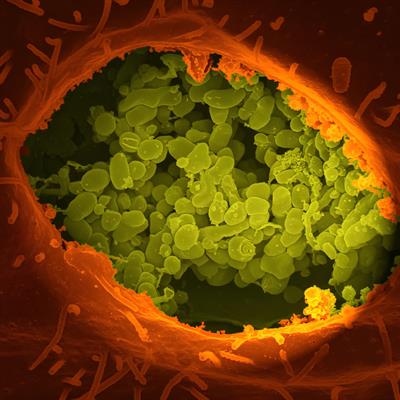
Intracellular bacterial pathogens like Brucella spp., Listeria spp., Mycobacterium spp., Burkholderia spp., Coxiella spp., etc., possess the capacity to survive inside the cells, creating a significant hurdle for the treatment of the infections. Once bacteria causing diseases are correctly diagnosed, antimicrobial drugs are used to control the infection. The recent increase in antimicrobial resistance among various pathogens, including intracellular pathogens, has led to treatment failure. Hence, understanding the mechanism of resistance development and its preventive measures is essential. Recent studies show how genetic mutations and zoonotic transmission contribute to AMR, yet comprehensive historical insights are still scarce. The evolution of resistance genes and the diversification processes among various species provide a pivotal ground for examining the longstanding battle between these pathogens and therapeutic efforts.
This research topic aims to trace the historical development of antimicrobial resistance in intracellular pathogens during animal or human infection, such as intracellular Brucella species (e.g. B. melitensis), Listeria species (L. monocytogenes), Mycobacterium species (M. bovis, M. orygis), Burkholderia species (B. mallei, B. pseudomallei). Antibiotic classes concerned are especially those that can penetrate within macrophages where intracellular pathogens replicate and persist. The study will utilize comparative genomics and phylogenetic analysis to delve into the evolution of resistance genes and the genetic diversity among different species. Key concepts will include the historical emergence of resistance mechanisms, the role of genetic mutations, and the impact of zoonotic transmission. By understanding the historical context, this research topic will provide a comprehensive review of how antimicrobial resistance in intracellular pathogens has evolved, offering insights for future therapeutic strategies.
This Research Topic covers, but is not limited to, the following sub-topics:
• Timeline and progression of antimicrobial resistance, examining historical usage of antibiotics, treatment failures, and evolutionary responses in bacterial populations
• Antimicrobial resistance among intracellular pathogens
• Mechanisms behind resistance development, integrating findings from molecular biology, evolutionary theory, and public health
• Comparative genomics approaches to studying AMR in intracellular pathogens
• Identification of novel genes involved in resistance development among intracellular pathogens, using next-generation sequencing technologies
• Mechanisms driving resistance development among intracellular pathogens
• Transfer of antimicrobial resistance genes among intracellular pathogens
• Impact of zoonotic transmission on the spread and evolution of antimicrobial resistance
• Methods to combat the development of AMR among intracellular pathogens
• Antimicrobial alternatives to control the intracellular pathogens
In this Research Topic we welcome the following article types: Original Research, Review, Mini Review, Systematic Review.
This collection will help consolidate current knowledge and foster further research into mitigating antimicrobial resistance in intracellular pathogens.
This Research Topic accepts the following article types, unless otherwise specified in the Research Topic description:
Articles that are accepted for publication by our external editors following rigorous peer review incur a publishing fee charged to Authors, institutions, or funders.
Keywords: intracellular pathogens, Antimicrobial resistance, genomics, antimicrobial alternatives, novel genes
Important note: All contributions to this Research Topic must be within the scope of the section and journal to which they are submitted, as defined in their mission statements. Frontiers reserves the right to guide an out-of-scope manuscript to a more suitable section or journal at any stage of peer review.

Manuscripts can be submitted to this Research Topic via the main journal or any other participating journal.
Submit your idea
Select the journal/section where you want your idea to be submitted: