DM
domenico mallardo
Unit of Melanoma, Cancer Immunotherapy and Development Therapeutics, G. Pascale National Cancer Institute Foundation (IRCCS)
Naples, Italy
3,713
Total downloads
29k
Total views and downloads
Skin cancer and breast cancer represent significant global health challenges, with steadily increasing incidence rates. Despite advancements in conventional therapies, a substantial portion of patients develop resistance or experience recurrence, highlighting the need for innovative therapeutic approaches. Recently, immunotherapy has revolutionized the treatment of various cancers, harnessing the ability of the immune system to recognize and destroy cancer cells. In this context, the identification and validation of immune-related biomarkers are emerging as crucial tools for early diagnosis, patient stratification, and prediction of response to immunotherapies in both skin and breast cancer. This editorial focuses on recent innovations in immunological diagnostics and immunity-based therapies for these two neoplasms, exploring the potential of biomarkers to personalize therapeutic strategies and improve clinical outcomes.
The increasing incidence and challenges in treating skin and breast cancer, including therapy resistance and recurrence, necessitate innovative approaches. This Research Topic addresses the critical need for improved diagnostics and therapies by focusing on immune-related biomarkers. The problem lies in the lack of sufficiently sensitive and specific tools for early detection, accurate prediction of treatment response, and effective personalized therapies.
To achieve this, research will focus on identifying novel biomarkers for early detection and prognosis. Studies will investigate the role of immunomodulation in treatment response. Advanced technologies like omics sciences and artificial intelligence will be employed to analyze complex biological data. This comprehensive approach aims to develop personalized therapeutic strategies and improve clinical outcomes for patients with skin and breast cancer.
The areas to be covered in this Research Topic should focus on Breast and Skin cancer. They may include, but are not limited to:
• Identification of Novel Biomarkers for Early Cancer Detection.
• Prognostic and/or Predictive Biomarkers for Treatment Response.
• Clinical Significance of Immunosistem in Guiding Personalized therapy in predicting patient response.
• Spatial Evaluation of Immunomodulatory Molecules on Tumor Tissue.
• Drug Repurposing: Investigating the potential of existing drugs for new immunotherapeutic uses.
• Application of Artificial Intelligence and machine learning in Basic Omics Sciences for Cancer Research to analyze large-scale data for biomarker discovery, disease classification, and prediction of treatment outcomes.
• Ancestry-Based Genomic and Genetic Studies for Tailoring Cancer Treatment Plans.
• Emerging Roles of Non-coding RNAs as Cancer Biomarkers and Therapeutic Targets in Precision Medicine.
• Genetic and Epigenetic Mechanisms of Drug Resistance.
• Impact of Risk Factors (Lifestyle, Environmental Exposures, and Co-morbidities) on Cancer Development and Biomarker Profiles.
• Functional Omics Studies in Patient-Derived Models for Personalized Cancer Therapy: Utilizing patient-derived models (e.g., cell lines, organoids, xenografts) to conduct functional studies.
Topic Editor Margaret Ottaviano is on the advisory board and acts as a consultant role for Regeneron. All other Topic Editors declare no competing interests with regards to the Research Topic subject.
This Research Topic is focused on both melanoma and breast cancer but we welcome manuscripts focusing solely on breast cancer or solely on melanoma.
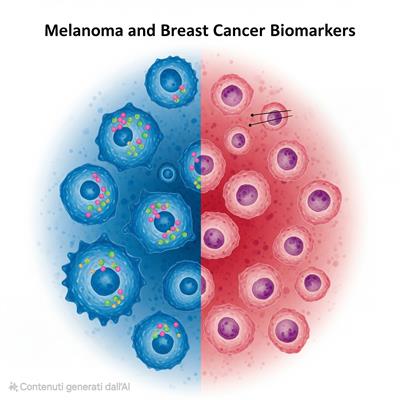
Keywords: Melanoma, Breast, biomarkers, cancer, ctDNA, proteomic, transcriptomic, genomic, Metabolomic, miRNA, CTC, organic compounds, non-melanoma skin cancer
Important note: All contributions to this Research Topic must be within the scope of the section and journal to which they are submitted, as defined in their mission statements. Frontiers reserves the right to guide an out-of-scope manuscript to a more suitable section or journal at any stage of peer review.
Unit of Melanoma, Cancer Immunotherapy and Development Therapeutics, G. Pascale National Cancer Institute Foundation (IRCCS)
Naples, Italy
Unit of Melanoma, Cancer Immunotherapy and Development Therapeutics, G. Pascale National Cancer Institute Foundation (IRCCS)
Naples, Italy
University of Sassari
Sassari, Italy
G. Pascale National Cancer Institute Foundation (IRCCS)
Naples, Italy