AA
akbar adjie pratama
Friedrich Schiller University Jena
Jena, Germany
1,571
Total views and downloads
Submit your idea
Select the journal/section where you want your idea to be submitted:
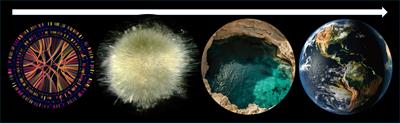
Microorganisms play a foundational role in maintaining Earth's ecosystems by driving biogeochemical cycles, supporting plant and animal health, and regulating climate processes. As the planet undergoes rapid and multifaceted global changes, including climate warming, altered precipitation regimes, ocean acidification, pollution, land-use shifts, and increased nutrient loading, microbial communities are both responders to and drivers of these changes. Their responses span multiple scales, from molecular-level shifts in gene expression and metabolism, to community restructuring, to altered ecosystem-level functions such as carbon sequestration and nutrient cycling.
Understanding microbial adaptation to global change across biomes is essential for predicting ecosystem resilience and guiding sustainable management strategies. However, integrating processes across multiple scales, ranging from genetic and physiological mechanisms to population dynamics, community interactions, and ecosystem-level outcomes, remains a major challenge in contemporary environmental science. This Research Topic seeks to bring together diverse methodological approaches, including molecular biology, ecology, systems biology, and computational modeling, to elucidate how microorganisms adapt to and shape global environmental changes across spatial and temporal scales.
The goal of this Research Topic is to address the urgent need to understand how microbial communities adapt to the rapidly changing global environment and how these adaptations influence ecosystem processes. Despite their central role in regulating carbon and nutrient cycling, climate feedbacks, and ecosystem resilience, microbial responses to environmental stressors remain poorly understood across spatial and temporal scales. One major challenge is linking molecular and physiological changes in microbes to broader community shifts and ecological outcomes. This knowledge gap limits our ability to predict ecosystem trajectories and inform mitigation strategies.
This Research Topic invites contributions that explore how microbial communities adapt to global environmental change across molecular, physiological, community, and ecosystem levels. We welcome studies addressing microbial responses to climate change, pollution, nutrient enrichment, land-use transformation, and other anthropogenic pressures. Themes of interest include microbial functional traits, evolutionary and genetic adaptation, community assembly and resilience, host-microbe interactions, and implications for biogeochemical cycles and ecosystem services. Interdisciplinary and multi-scale approaches such as genomics, metagenomics, transcriptomics, stable isotope tracing, cultivation, modeling, and long-term field experiments are particularly encouraged.
We welcome a range of manuscript types, including original research, reviews, mini-reviews, methods papers, perspectives, and data reports. Submissions should aim to advance mechanistic understanding and/or predictive capabilities regarding microbial roles in the Earth system under changing environmental conditions.
This Research Topic accepts the following article types, unless otherwise specified in the Research Topic description:
Articles that are accepted for publication by our external editors following rigorous peer review incur a publishing fee charged to Authors, institutions, or funders.
Keywords: microbiome, virome, global environmental change, microbial ecology, system biology
Important note: All contributions to this Research Topic must be within the scope of the section and journal to which they are submitted, as defined in their mission statements. Frontiers reserves the right to guide an out-of-scope manuscript to a more suitable section or journal at any stage of peer review.
Manuscripts can be submitted to this Research Topic via the main journal or any other participating journal.
Submit your idea
Select the journal/section where you want your idea to be submitted:
