XF
xueshang feng
State Key Laboratory of Space Weather, National Space Science Center, Chinese Academy of Sciences (CAS)
Beijing, China
557
Total views and downloads
Submit your idea
You will be redirected to our submission process.
Manuscript Submission Deadline 26 April 2026
This Research Topic is currently accepting articles.
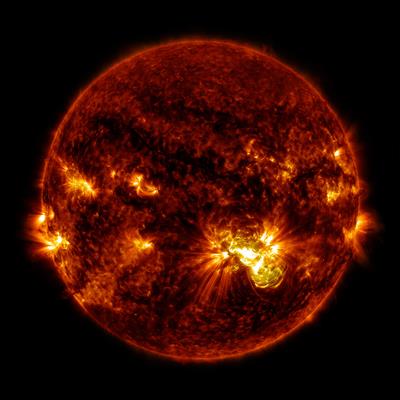
Recent advances in solar physics are increasingly focusing on the intricacies of solar active regions (ARs) due to their profound impact on space weather. These regions host the most energetic phenomenon on the Sun, like flares and coronal mass ejections, that can disrupt satellite operations, communications, and power grids on Earth. However, despite extensive research using magnetohydrodynamics (MHD) simulations, the complexity of these ARs poses substantial challenges. Traditional models, limited by idealized conditions and initial assumptions, often fall short in capturing the full dynamism of ARs. As high-resolution and high-cadence solar observations become more accessible, there lies a critical opportunity in integrating this observational data directly into simulation frameworks. The integration seeks to enhance prediction accuracy and advance our understanding of AR phenomena.
This Research Topic aims to foster the integration of observational data into simulations of solar active regions to refine their predictive accuracy and understanding of solar eruptions. Central goals include addressing challenges in solar eruption forecasting through the incorporation of vector magnetograms, Doppler velocity fields, and coronal imaging into dynamic models. Contributions are sought that develop or apply data-driven methodologies, such as electric field reconstruction, data-constrained MHD, and hybrid machine learning approaches to advance simulations of the time-dependent solar coronal dynamics. These initiatives aim to not only expand our theoretical and practical grasp of solar ARs but also bridge the gap between observational data and computational modeling.
To gather further insights into the dynamic modeling of solar active regions, we welcome articles addressing, but not limited to, the following themes:
• Data-driven MHD simulations of solar active regions.
• Assimilation of photospheric and coronal observations into numerical models.
• Coupling of different solar layers in AR models (e.g., from the photosphere to the corona).
• Coupling of data-driven MHD simulations and particle models.
• Hybrid approaches combining machine learning and physics-based models.
• Validation and benchmarking of data-driven models against observed AR events.
Article Types welcomed include Original Research, Review, Mini Review, Hypothesis and Theory, Technology and Code, and Methods papers.
This Research Topic accepts the following article types, unless otherwise specified in the Research Topic description:
Articles that are accepted for publication by our external editors following rigorous peer review incur a publishing fee charged to Authors, institutions, or funders.
Keywords: Data-Driven Simulations, Magnetohydrodynamics (MHD), Electric Field Inversion, Solar Active Regions (ARs), Machine Learning
Important note: All contributions to this Research Topic must be within the scope of the section and journal to which they are submitted, as defined in their mission statements. Frontiers reserves the right to guide an out-of-scope manuscript to a more suitable section or journal at any stage of peer review.

Manuscripts can be submitted to this Research Topic via the main journal or any other participating journal.
Submit your idea
You will be redirected to our submission process.