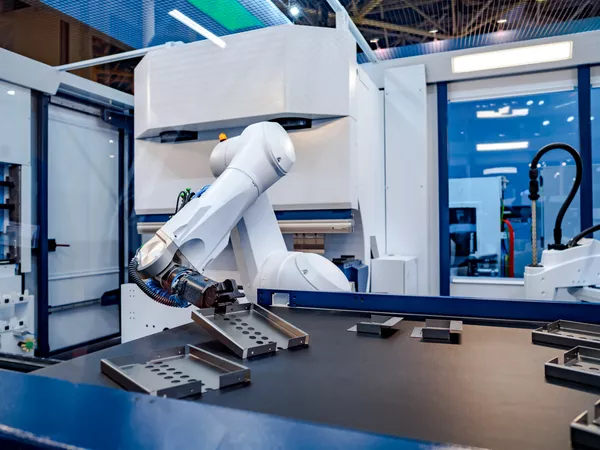
As robotic systems are increasingly deployed in dynamic and unpredictable environments, traditional task-specific and offline-designed control paradigms are often insufficient to ensure robustness, flexibility, and generalization. Inspired by the remarkable adaptability of biological organisms, the concept of embodied intelligence has emerged as a promising paradigm, where a robot’s body, brain, and environment co-evolve to enable adaptive and context-aware behavior. However, achieving lifelong learning in robotics presents significant challenges. Robots must not only acquire new skills and knowledge but also retain previously learned behaviors, operate with limited onboard data and computational resources, and adapt to changing environments—all while ensuring safety and real-time responsiveness.
This Research Topic invites original research and review articles on the themes of embodied intelligence, online adaptation, and lifelong learning in robotics. We seek contributions that explore how robots can leverage online learning, physical embodiment, and real-world feedback to continuously acquire and refine behaviors in real-world settings. The Topic aims to advance the theoretical foundations, computational methods, and practical applications of embodied intelligence, with the goal of enabling robots to function autonomously and adaptively over extended periods, across diverse, unstructured, and multi-task environments.
Submissions are encouraged in, but not limited to, the following areas: - Embodied perception, cognition, and control - Lifelong learning and continual adaptation in physical robots - Task transfer, skill reuse, and generalization across environments and tasks - Offline and online reinforcement learning in robotics - Adaptive and fast learning and control in real-world systems - Multi-agent embodied coordination and learning - Integration of sensing and decision-making for physical interaction - Cross-domain learning, sim-to-real transfer, and policy robustness - Applications in dynamic, human-in-the-loop, or safety-critical environments
Article types and fees
This Research Topic accepts the following article types, unless otherwise specified in the Research Topic description:
Brief Research Report
Data Report
Editorial
FAIR² Data
FAIR² DATA Direct Submission
General Commentary
Hypothesis and Theory
Methods
Mini Review
Articles that are accepted for publication by our external editors following rigorous peer review incur a publishing fee charged to Authors, institutions, or funders.
Article types
This Research Topic accepts the following article types, unless otherwise specified in the Research Topic description:
Brief Research Report
Data Report
Editorial
FAIR² Data
FAIR² DATA Direct Submission
General Commentary
Hypothesis and Theory
Methods
Mini Review
Opinion
Original Research
Perspective
Policy and Practice Reviews
Review
Systematic Review
Technology and Code
Keywords: Embodied Intelligence, Lifelong Learning, Transfer Learning, Adaptive and fast learning, Robotic Systems
Important note: All contributions to this Research Topic must be within the scope of the section and journal to which they are submitted, as defined in their mission statements. Frontiers reserves the right to guide an out-of-scope manuscript to a more suitable section or journal at any stage of peer review.