LB
lorenzo brognara
University of Bologna
Bologna, Italy
479
Total views and downloads
Submit your idea
You will be redirected to our submission process.
Manuscript Submission Deadline 28 February 2026
This Research Topic is currently accepting articles.
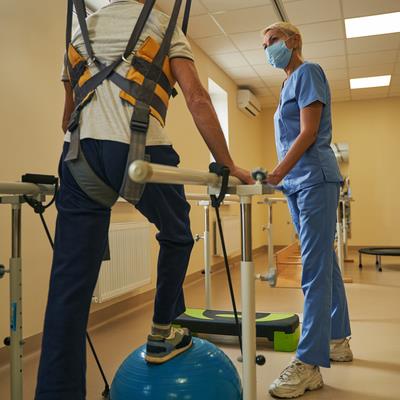
Movement disorders are increasingly prevalent in older adults with neurological impairments such as Parkinson’s disease and stroke, significantly impacting mobility and quality of life. These disorders lead to a progressive loss of motor autonomy, a primary concern for patients seeking to maintain independence. Current knowledge underscores the need for effective therapies, with recent advancements in orthotics and neuromotor rehabilitation offering promising non-pharmacological and non-invasive solutions. These innovations are poised to improve intervention outcomes and minimize adverse effects. Despite significant strides, existing research indicates further exploration is needed into advanced orthotic designs and rehabilitation techniques to address unresolved challenges, particularly those affecting older populations. Enhancing functionality and autonomy for these individuals remains a priority.
This Research Topic aims to deepen the understanding of innovations in prosthetic and orthotic design, and neuromotor rehabilitation, focusing on enhancing patient outcomes for older adults with movement disorders. The objective is to evaluate the latest advancements in orthotic technologies, including wearable robotic devices and 3D printing applications, alongside innovative neuromotor therapies. Emphasizing personalization and precision in treatment, this research seeks to address fundamental questions concerning efficacy, adaptability, and patient-centered care. The aim is to implement solutions that promote healthful and successful aging, align with public health goals, and support quality of life improvements for older populations.
To gather further insights into these advancements, we welcome articles exploring developments in orthotic design, 3D printing, and neuromotor rehabilitation, particularly as they pertain to older populations. Articles are encouraged in, but not limited to, the following themes:
- Development and impact of custom orthoses for personalized care among older adults
- Role of plantar stimulation in enhancing balance and gait in aging populations
- Innovations in gait retraining techniques for improved mobility among older individuals
- Integration of neurofeedback in rehabilitation to boost neuromotor outcomes
- Utilization of wearable sensors for movement pattern analysis in older adults
- Development of robotic prosthetic, orthotic, and exoskeletal systems suitable for aging populations
- The role of Artificial Intelligence (AI) and machine learning in enhancing rehabilitation therapies
Contributions should offer novel insights, validate emerging methodologies, and discuss practical implications for improving patient care, health outcomes, and quality of life among older adults, in line with public health objectives.
This Research Topic accepts the following article types, unless otherwise specified in the Research Topic description:
Articles that are accepted for publication by our external editors following rigorous peer review incur a publishing fee charged to Authors, institutions, or funders.
Keywords: Movement Disorders, Orthotic Innovations, Neuromotor Rehabilitation, Wearable Robotics, Artificial Intelligence in Rehabilitation
Important note: All contributions to this Research Topic must be within the scope of the section and journal to which they are submitted, as defined in their mission statements. Frontiers reserves the right to guide an out-of-scope manuscript to a more suitable section or journal at any stage of peer review.
Manuscripts can be submitted to this Research Topic via the main journal or any other participating journal.
Submit your idea
You will be redirected to our submission process.
