SZ
sohaib z khan
Islamic University of Madinah
Medina, Saudi Arabia
1,038
Total views and downloads
Submit your idea
Select the journal/section where you want your idea to be submitted:
Manuscript Submission Deadline 30 April 2026
This Research Topic is currently accepting articles.
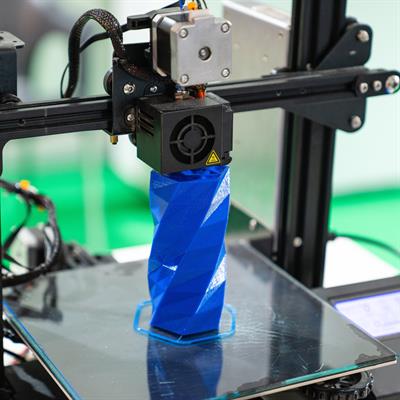
Composite 3D printing represents a transformative advancement in additive manufacturing, enabling the production of high-performance components by combining the design flexibility of 3D printing with the enhanced material properties of composites. This technology allows for the integration of reinforcement materials such as carbon fibers, glass fibers, or nanoparticles into polymer, metal, or ceramic matrices, resulting in structures with superior strength, durability, and functionality. The evolution of hardware, software, and feedstock materials has significantly broadened the scope of applications, from aerospace and automotive engineering to biomedical devices and consumer products. As industries strive for lightweight, custom, and sustainable solutions, composite 3D printing offers a promising pathway to meet these demands through optimized material utilization and design-driven innovation.
The aim of this Research Topic is to address the critical challenges and unlock the full potential of composite 3D printing in real-world applications. Despite its promising advantages—such as improved strength-to-weight ratios, customizability, and reduced material waste—the technology still faces significant hurdles. These include limited understanding of process-material-property relationships, anisotropic behavior of printed parts, interfacial bonding issues between matrix and reinforcement, and the need for multi-material integration. Furthermore, the lack of standardized testing and design methodologies hampers broader industrial adoption. To overcome these challenges, recent advances have focused on process optimization, hybrid manufacturing approaches, in-situ monitoring, and machine learning-assisted design. Innovations in material development, such as continuous fiber-reinforced filaments and self-healing composites, are also expanding the capabilities of additive manufacturing. This Research Topic invites contributions that explore theoretical modeling, experimental techniques, application-specific case studies, and novel material systems. The goal is to consolidate current knowledge, stimulate interdisciplinary collaboration, and accelerate the deployment of composite 3D printing technologies in sectors like aerospace, healthcare, construction, and electronics.
This Research Topic aims to encompass the latest developments, challenges, and applications of composite 3D printing technologies. We invite original research, reviews, and case studies that focus on a broad range of themes, including but not limited to:
• Design, modeling, and simulation of composite 3D printed structures
• Development of novel composite materials, including fiber-reinforced polymers and nanocomposites
• Process optimization and hybrid manufacturing techniques
• Mechanical, thermal, and functional characterization of printed composites
• Applications in aerospace, biomedical engineering, automotive, and consumer products
• Environmental and sustainability aspects of composite 3D printing
• AI and data-driven approaches in design and quality control
We encourage submissions that highlight interdisciplinary innovation, propose new methodologies, or provide critical insights into practical implementation and scalability. Both fundamental studies and industry-relevant developments are welcome.
This Research Topic accepts the following article types, unless otherwise specified in the Research Topic description:
Articles that are accepted for publication by our external editors following rigorous peer review incur a publishing fee charged to Authors, institutions, or funders.
Keywords: Additive Manufacturing, 3D Printing Technologies, Composite Materials, Fiber-Reinforced Polymers, Smart Materials, Mechanical Properties, Advanced Manufacturing Applications, Sustainable Manufacturing
Important note: All contributions to this Research Topic must be within the scope of the section and journal to which they are submitted, as defined in their mission statements. Frontiers reserves the right to guide an out-of-scope manuscript to a more suitable section or journal at any stage of peer review.
Islamic University of Madinah
Medina, Saudi Arabia
College of Science and Engineering, Hamad Bin Khalifa University
Doha, Qatar
Islamic University of Madinah Department of Mechanical Engineering
Medina, Saudi Arabia
RMIT University
Melbourne, Australia
National University of Sciences and Technology (NUST)
Islamabad, Pakistan

Manuscripts can be submitted to this Research Topic via the main journal or any other participating journal.
Submit your idea
Select the journal/section where you want your idea to be submitted: