ML
marcos lopez-juarez
Universitat Politècnica de València
Valencia, Spain
590
Total views and downloads
Submit your idea
Select the journal/section where you want your idea to be submitted:
Manuscript Summary Submission Deadline 22 February 2026 | Manuscript Submission Deadline 14 June 2026
This Research Topic is currently accepting articles.
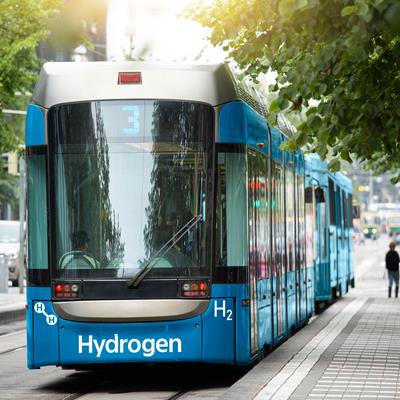
Hydrogen is increasingly recognized as a key energy carrier in the transport sector, offering pathways to decarbonization through both fuel cells and internal combustion engines (ICEs). Fuel cell vehicles (FCEVs) generate electricity by combining hydrogen with oxygen, producing only water as a byproduct, making them well-suited for applications that demand long range and fast refueling, such as heavy-duty trucks, buses, and trains. Hydrogen ICEs, though less efficient, present a transitional solution by adapting existing engine technologies while significantly reducing emissions when fueled with low-carbon hydrogen. Growing global investments in hydrogen production, storage, and refueling infrastructure highlight its relevance in current mobility strategies. While challenges remain in cost, efficiency, and scalability, hydrogen is currently viewed as a complementary solution to battery-electric technologies, particularly for transport sectors where electrification is difficult.
This special issue aims at presenting to the industry and the scientific community the potential of hydrogen powertrains for future transport applications. Nowadays, hydrogen internal combustion engine and fuel cell technology are still under development since there are improvements in efficiency, durability, cost and environmental impact optimization. In order to showcase the potential of these technologies against other propulsion systems, extensive work in the development of efficiency and durability improvement methodologies and cost/environmental impact evaluation is required. Therefore, the scientific community should push forward to develop such methodologies and provide meaningful insight in how to improve and evaluate the potential of hydrogen propulsion systems for the future transport applications at the powertrain, vehicle and fleet levels. Given the variety of transport applications (road, aerospace, maritime, railway...) the different research lines should aim at defining the critical challenges for each application and generate realistic scenarios to evaluate the proposed propulsion systems. Therefore, the outcomes of the work of this special issue should be applied to a specific transportation application and provide meaningful conclusions at the vehicle or fleet level.
Authors are encouraged to share the latest advacements in both hydrogen fuel cell and internal combustion engine powertrains related to:
1) Propulsion system architecture optimization
2) Powertrain hybridization
3) Control strategy improvement
4) Combustion/electrochemical processes improvement
5) Fuel cell or internal combustion engine durability
6) Advanced modeling approaches
7) Tailpipe emission measurement and mitigation strategies
8) Hydrogen fleet modeling, cost assessment and environmental impact evaluation in transportation applications.
This Research Topic accepts the following article types, unless otherwise specified in the Research Topic description:
Articles that are accepted for publication by our external editors following rigorous peer review incur a publishing fee charged to Authors, institutions, or funders.
Keywords: Hydrogen, Internal combustion engine, Fuel cell, Automotive, Road Transportation, Sustainability, Powertrain, Life Cycle Assessment, Electrification, Total cost of ownership, Railway, Aerospace, Environmental Impact
Important note: All contributions to this Research Topic must be within the scope of the section and journal to which they are submitted, as defined in their mission statements. Frontiers reserves the right to guide an out-of-scope manuscript to a more suitable section or journal at any stage of peer review.
Manuscripts can be submitted to this Research Topic via the main journal or any other participating journal.
Submit your idea
Select the journal/section where you want your idea to be submitted:
