AE
aspasia eleni paltoglou
Manchester Metropolitan University
Manchester, United Kingdom
3,908
Total views and downloads
Submit your idea
Select the journal/section where you want your idea to be submitted:
Manuscript Submission Deadline 1 September 2026
This Research Topic is currently accepting articles
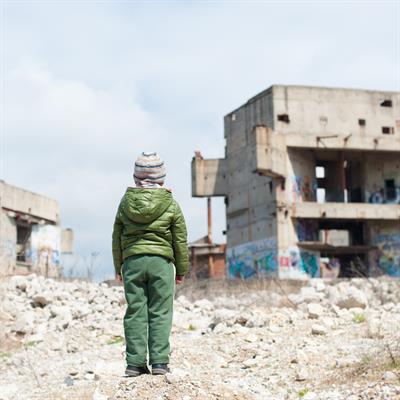
Since October 2023, higher education in Gaza has been in prolonged crisis. Universities have been damaged or destroyed, hundreds of students and staff have been killed, and teaching has largely been suspended (Office of the United Nations High Commissioner for Human Rights, 2024; United Nations Human Rights Council, 2025, September 16). Study and research are further disrupted by displacement, bereavement and the loss of basic infrastructure, including power, connectivity and academic records (Office of the United Nations High Commissioner for Human Rights, 2025, July 8; European Training Foundation. 2025, July 7). Many students and staff are experiencing acute psychological distress (Aldabbour et al., 2024; ACAPS, 2024; Aqtam, 2025). Some remote, digital and psychosocial initiatives are emerging (UNESCO, 2025, October 13), but major barriers remain around access, accreditation, data protection and rebuilding (ACAPS, 2024). Because universities are engines of social good, restoring and strengthening them is an urgent priority (UNESCO, 2025, November 8).
This Research Topic asks, very practically: how should universities and the people who work in them and with them respond, within and beyond crisis zones? What does meaningful support look like, and how can institutions avoid paternalism while enabling protection, solidarity and rebuilding? We are also inviting careful self-reflection and collective accountability from better resourced institutions: how might decolonial and sustainable-development commitments translate into action that prevents harm and supports fair access to higher education?
We aim to publish a select set of high-quality papers that either:
• present empirical evidence or evaluations of concrete responses (for example, keeping teaching and assessment going, safeguarding credential integrity, restoring records and archives, enabling digital access under constraint, providing trauma-informed support for students and staff, or strengthening governance and partnerships), or
• advance theoretical or conceptual arguments with clear operational implications for safeguarding and rebuilding higher education in Gaza and comparable settings.
We will prioritise work rooted in higher-education practice that specifies context and mechanisms and offers actionable recommendations for universities, ministries and partners. Theoretical pieces are welcome where they move beyond critique to provide usable frameworks or testable propositions for policy and implementation. Descriptive commentary without evidence, broad advocacy without concrete proposals, and work not anchored in higher education will usually be out of scope. Wherever possible, we centre leadership by colleagues most directly affected.
Who should submit:
We particularly encourage submissions led by Palestinian scholars and by colleagues working in crisis-affected settings. We also welcome reflective, evidence-based contributions from individuals and institutions with greater resources, whether based in universities or working alongside them, who are prepared to examine and improve policies, partnerships and risk frameworks.
Article types:
We welcome a range of article types including Original Research, Reviews, Case Studies, Brief Research Reports and Opinion pieces (see section ‘Article Types and fees’ at the bottom of the page). Please upload to the most appropriate Frontiers in Education specialty section; your manuscript will be handled within that section’s editorial workflow while remaining part of this Research Topic.
References:
• Office of the United Nations High Commissioner for Human Rights. (2024, April 18). UN experts deeply concerned over “scholasticide” in Gaza [Press release]. https://www.ohchr.org/en/press-releases/2024/04/un-experts-deeply-concerned-over-scholasticide-gaza
• ACAPS. (2024, October 4). Palestine: One year of hostilities-Impact on education in Gaza (Thematic report). https://www.acaps.org/en/countries/archives/detail/palestine-one-year-of-hostilities-impact-on-education-in-gaza
• United Nations Human Rights Council, Independent International Commission of Inquiry on the Occupied Palestinian Territory, including East Jerusalem, and Israel. (2025, July 8). Report of the Independent International Commission of Inquiry on the Occupied Palestinian Territory, including East Jerusalem, and Israel (A/HRC/59/26). https://www.un.org/unispal/document/report-of-the-independent-international-commission-of-inquiry-on-the-occupied-palestinian-territory-including-east-jerusalem-and-israel-a-hrc-59-26/
• United Nations Human Rights Council, Independent International Commission of Inquiry on the Occupied Palestinian Territory, including East Jerusalem, and Israel. (2025, September 16). Legal analysis of the conduct of Israel in Gaza pursuant to international law (Advance version A/HRC/60/CRP.3). https://www.ohchr.org/sites/default/files/documents/hrbodies/hrcouncil/sessions-regular/session60/advance-version/a-hrc-60-crp-3.pdf
• European Training Foundation. (2025, July 7). Education and training in West Bank and Gaza-Gaza update 2025. https://www.etf.europa.eu/sites/default/files/2025-07/Gaza%20update%202025%20final%20072025.pdf
• Aldabbour, B., Abuabada, A., Lahlouh, A. et al. Psychological impacts of the Gaza war on Palestinian young adults: a cross-sectional study of depression, anxiety, stress, and PTSD symptoms. BMC Psychol 12, 696 (2024). https://doi.org/10.1186/s40359-024-02188-5
• Aqtam, I. (2025). A narrative review of mental health and psychosocial impact of the war in Gaza. Eastern Mediterranean Health Journal, 31(2), 89–96. https://doi.org/10.26719/2025.31.2.89
• UNESCO. (2025, October 13). In Gaza, UNESCO supports students amid a devastated education landscape. https://www.unesco.org/en/articles/gaza-unesco-supports-students-amid-devastated-education-landscape
• UNESCO. (2025, November 8). Global leaders call for inclusion of higher education in crisis settings. https://www.unesco.org/en/articles/global-leaders-call-inclusion-higher-education-crisis-settings
This Research Topic accepts the following article types, unless otherwise specified in the Research Topic description:
Articles that are accepted for publication by our external editors following rigorous peer review incur a publishing fee charged to Authors, institutions, or funders.
Keywords: Palestine, Scholasticide, Higher Education, Mental health, Decolonization
Important note: All contributions to this Research Topic must be within the scope of the section and journal to which they are submitted, as defined in their mission statements. Frontiers reserves the right to guide an out-of-scope manuscript to a more suitable section or journal at any stage of peer review.
Manchester Metropolitan University
Manchester, United Kingdom
Islamic University of Gaza
Gaza City, Palestine
Tampere University
Tampere, Finland
University of Westminster
London, United Kingdom
Clare Hall, University of Cambridge
Cambridge, United Kingdom
Manuscripts can be submitted to this Research Topic via the main journal or any other participating journal.
Submit your idea
Select the journal/section where you want your idea to be submitted:
