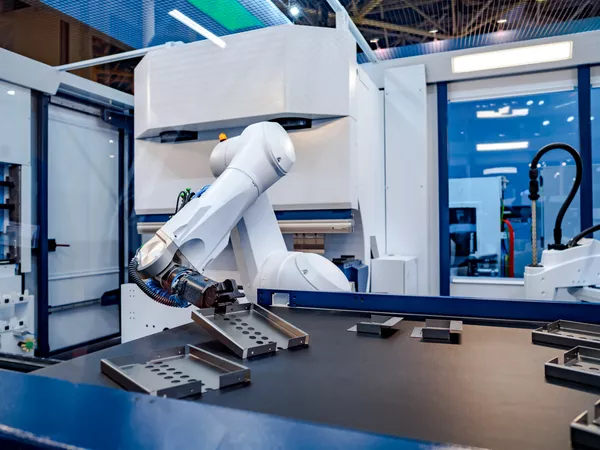
The increasing integration of artificial intelligence and distributed computing into robotics is reshaping how autonomous systems operate, collaborate, and adapt to complex environments. Multi-robot systems (MRS) are emerging as powerful enablers for applications such as environmental monitoring, disaster response, precision agriculture, and smart manufacturing. These systems rely on the ability to learn, share knowledge, and coordinate in real time, often under resource-constrained conditions.
A key challenge in deploying such systems lies in the trade-off between performance and energy efficiency. Robots, especially when battery-powered, must allocate limited energy not only for locomotion and sensing but also for computation and communication. Distributed learning approaches—including federated learning, distributed reinforcement learning, and cooperative optimization—offer promising pathways to reduce reliance on centralized resources, mitigate communication bottlenecks, and adaptively balance computational load. However, the overhead of distributed training and inter-robot communication can itself become a major source of energy consumption if not carefully designed.
Recent advances in communication-aware protocols, lightweight learning algorithms, and edge intelligence highlight opportunities to design multi-robot systems that are not only scalable but also sustainable. At the same time, open questions remain on how to best manage heterogeneous resources, dynamic environments, and uncertain network conditions while ensuring robust performance.
This Research Topic aims to bring together contributions that address these pressing challenges by exploring innovative distributed learning frameworks, energy-aware algorithms, and system-level strategies for multi-robot systems. By fostering dialogue across robotics, machine learning, edge computing, and control communities, the issue seeks to advance both theoretical foundations and practical applications in this rapidly evolving field.
This Research Topic seeks original research articles, surveys, and visionary perspectives that advance the state of the art in distributed learning and energy-aware multi-robot systems. Contributions may span theoretical foundations, algorithmic developments, system architectures, and experimental validations. Areas of interest include, but are not limited to: - Federated and distributed learning for multi-robot systems - Energy-aware algorithms and resource optimization - Communication-efficient and adaptive protocols - Edge intelligence and system architectures for collaborative robotics - Event-triggered and opportunistic communication - Model update compression, quantization, and sparsification - Lightweight learning techniques: model pruning, knowledge distillation, and low-rank factorization - Applications and case studies in real-world multi-robot domains - Theoretical foundations and performance trade-offs
Article types and fees
This Research Topic accepts the following article types, unless otherwise specified in the Research Topic description:
Brief Research Report
Data Report
Editorial
FAIR² Data
FAIR² DATA Direct Submission
General Commentary
Hypothesis and Theory
Methods
Mini Review
Articles that are accepted for publication by our external editors following rigorous peer review incur a publishing fee charged to Authors, institutions, or funders.
Article types
This Research Topic accepts the following article types, unless otherwise specified in the Research Topic description:
Important note: All contributions to this Research Topic must be within the scope of the section and journal to which they are submitted, as defined in their mission statements. Frontiers reserves the right to guide an out-of-scope manuscript to a more suitable section or journal at any stage of peer review.