VM
víctor m. carrasco
University of Extremadura
Badajoz, Spain
705
Total views and downloads
Submit your idea
You will be redirected to our submission process.
Manuscript Summary Submission Deadline 18 March 2026 | Manuscript Submission Deadline 6 July 2026
This Research Topic is currently accepting articles.
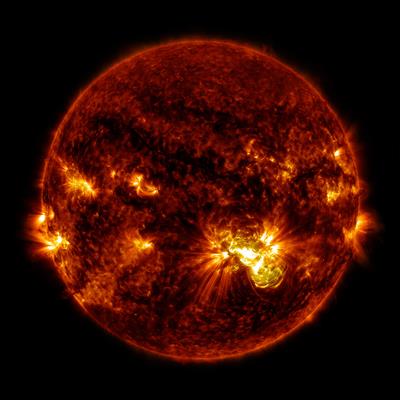
Predicting solar activity is crucial for understanding and mitigating its effects on the heliosphere, particularly with regard to Earth and its surrounding environment. Since the discovery of the solar cycle in the 19th century, numerous methods have been developed to predict its amplitude and timing. These include empirical and statistical correlations, spectral analysis and physics-based dynamo models, as well as, more recently, machine learning techniques. In recent years, the increasing technological dependence of modern society has further increased the demand for accurate solar cycle predictions, given that disruptions caused by intense solar activity can affect our society. This renewed interest has resulted in various forecasting methods being published for the last two solar cycles, thereby contributing to a deeper understanding of long-term solar activity behavior.
The aim of this Research Topic is to provide an updated and comprehensive overview of current capabilities in solar cycle forecasting by bringing together both new predictions and critical reassessments of existing models. A key objective is to encourage submissions of new forecasts for Solar Cycle 26, including estimates of its amplitude and timing obtained using any prediction method. At the same time, this collection seeks to promote rigorous evaluations of the predictions published for Solar Cycle 25, examining their performance and identifying the factors that contributed to their success or limitations. By comparing results obtained using different methodologies, we aim to improve our understanding of predictive skill, model robustness, and the physics underlying each approach. Through this combined effort of new forecasts and retrospective analyses, the Research Topic intends to enhance the reliability of solar activity prediction and to stimulate methodological innovation across the solar physics and space weather and climate communities.
This Research Topic welcomes original research and perspective articles addressing all aspects of solar cycle prediction and forecasting of solar activity indices. Submissions may include studies based on, but not limited to, the following themes:
• Advances in classical empirical and dynamo-based models.
• Statistical and spectral approaches for solar cycle prediction.
• Application of modern machine learning and neural network techniques.
• Hybrid methods integrating physics-informed and AI-driven components.
• Curation of historical datasets that enrich the training data for solar cycle prediction with AI.
Comparative analyses, uncertainty quantification, and long-term evaluations of predictive performance are particularly encouraged. Contributions should aim to enhance understanding of solar activity and improve forecasting capability across methodologies. Interdisciplinary work connecting solar physics, data science, and space weather and climate applications is especially welcome.
This Research Topic accepts the following article types, unless otherwise specified in the Research Topic description:
Articles that are accepted for publication by our external editors following rigorous peer review incur a publishing fee charged to Authors, institutions, or funders.
Keywords: Sunspots, Solar activity, Space climate, Solar Cycle Prediction, Solar dynamo, Forecasting time series
Important note: All contributions to this Research Topic must be within the scope of the section and journal to which they are submitted, as defined in their mission statements. Frontiers reserves the right to guide an out-of-scope manuscript to a more suitable section or journal at any stage of peer review.

Manuscripts can be submitted to this Research Topic via the main journal or any other participating journal.
Submit your idea
You will be redirected to our submission process.