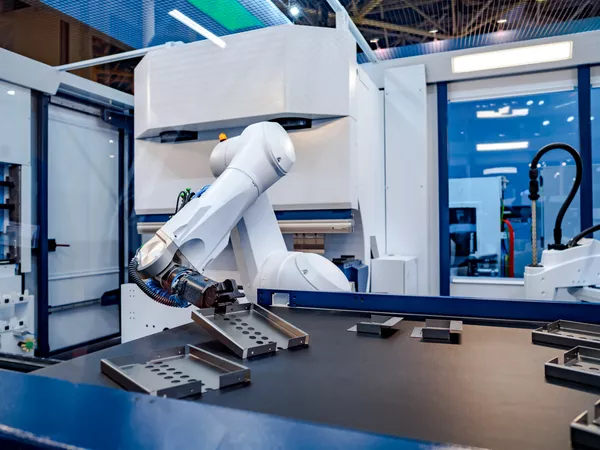
As robots and AI systems increasingly enter shared workspaces, domestic environments, and assistive contexts, understanding and predicting human behavior becomes critical for safe, intuitive, and efficient collaboration. Traditional control systems rely on predetermined rules and reactive mechanisms that limit productivity and naturalness of interaction. Recent advances in computational behavioral analytics—including multimodal machine learning and large language models—offer unprecedented opportunities to model human actions, intentions, preferences, and communicative behaviors in real-time. The integration of LLMs into robotic systems introduces new paradigms for natural interaction while raising fundamental questions about how humans perceive, trust, and collaborate with AI-driven agents. By grounding these computational approaches in psychological theories of action, perception, and communication, robots and conversational AI can become proactive, transparent partners. The integration of behavioral analytics with adaptive and shared control strategies transforms human-robot and human-AI collaboration from rigid systems to fluid, user-responsive interactions that enhance productivity, safety, and acceptance across industrial, healthcare, assistive, and service applications.
This Research Topic aims to advance human-centered collaborative robotics and AI by showcasing cutting-edge computational methods for analyzing, predicting, and responding to human behavior in physical and conversational interactions. Our primary objective is to bridge computational psychology, robotics, and AI by demonstrating how behavioral models can enhance perception, decision-making, and adaptation in collaborative scenarios—whether involving embodied robots, LLM-based dialogue systems, or their combination. We seek contributions presenting novel algorithms for intent recognition, predictive models of human motion and spatial behavior, computational analyses of human-LLM interaction patterns, and adaptive or shared control strategies driven by user feedback. The collection will emphasize practical implementations showing measurable improvements in collaboration fluency, intuitiveness, safety, and user experience. By bringing together researchers from robotics, computer science, NLP, cognitive science, and behavioral sciences, we aim to establish standardized frameworks and metrics for evaluating human-robot and human-AI collaboration, validate psychological models through computational implementations, and accelerate deployment of intelligent collaborative systems. Ultimately, this Research Topic will provide foundations for developing robots and AI agents that understand, adapt to, and collaborate with human partners naturally and transparently.
We welcome empirical studies, methodological papers, and system demonstrations focusing on computational approaches to human behavior analysis in robotic and AI applications. Suitable topics include: - Multimodal machine learning for human motion and intention prediction - Computational studies of human-LLM interaction: behavioral patterns, trust dynamics, and adaptation - LLM-enhanced robot communication, planning, and collaborative reasoning - Psychological and cognitive models validated through robotic or AI implementations - Spatial human-robot interaction and proxemics modeling - Adaptive and shared control strategies integrating user feedback and preferences - Metrics and frameworks for evaluating collaboration fluency, intuitiveness, and user experience - Human-in-the-loop validation studies in real-world experimental settings
We encourage submissions featuring validated implementations in collaborative robots, assistive systems, teleoperated platforms, or conversational AI with robotic integration. Papers should emphasize reproducibility and provide quantitative metrics demonstrating improved collaboration outcomes. We particularly value comparative studies of behavioral models and contributions connecting computational methods to established psychological or cognitive theories. Purely theoretical works without application or studies focused solely on human factors without computational modeling fall outside our scope. All submissions should provide quantitative evaluation in human-robot or human-AI interaction scenarios.
Article types and fees
This Research Topic accepts the following article types, unless otherwise specified in the Research Topic description:
Brief Research Report
Data Report
Editorial
FAIR² Data
FAIR² DATA Direct Submission
General Commentary
Hypothesis and Theory
Methods
Mini Review
Articles that are accepted for publication by our external editors following rigorous peer review incur a publishing fee charged to Authors, institutions, or funders.
Article types
This Research Topic accepts the following article types, unless otherwise specified in the Research Topic description:
Important note: All contributions to this Research Topic must be within the scope of the section and journal to which they are submitted, as defined in their mission statements. Frontiers reserves the right to guide an out-of-scope manuscript to a more suitable section or journal at any stage of peer review.