BK
bharat kumar chigilipalli
Vignan's Institute of Information Technology (VIIT)
Visakhapatnam, India
1,082
Total views and downloads
Submit your idea
Select the journal/section where you want your idea to be submitted:
Manuscript Summary Submission Deadline 31 May 2026 | Manuscript Submission Deadline 30 September 2026
This Research Topic is currently accepting articles.
This Research Topic brings together high-quality research demonstrating the transformative role of Artificial Intelligence and Machine Learning (AI/ML), advanced materials, and advanced manufacturing technologies in mechanical engineering. It promotes interdisciplinary research that enhances system performance and strengthens sustainability engineering.
Against the growing demand for intelligent, efficient, and sustainable engineering solutions, the field of Intelligent Engineering Systems is rapidly evolving through the convergence of AI/ML, advanced materials, and next-generation manufacturing technologies. Modern mechanical engineering systems face critical challenges, including complex biomedical data interpretation, high process variability, escalating energy consumption, material performance constraints, and the need for rapid, customized production. Data-driven algorithms are now advancing and creating a large impact in additive and hybrid manufacturing, energy-efficient thermal systems, smart and multifunctional materials, and digitally enabled electrical machinery, offering prevailing opportunities to overcome these limitations.
We aim to showcase cutting-edge technologies and advances across intelligent manufacturing, biomedical AI/ML applications, sustainable refrigeration systems, composite materials, electrical technologies, and 3D printing. It highlights methodological improvements, interdisciplinary innovations, and real-world applications that push the boundaries of traditional engineering.
Contributions are welcome that address existing challenges, propose novel solutions, and lay the foundation for future research directions. By bringing together diverse but complementary domains, this Research Topic seeks to strengthen cross-disciplinary collaboration and offer insights that support the next generation of technologies and engineering systems.
This Research Topic welcomes interdisciplinary contributions integrating intelligent modeling, predictive analytics, multi-physics simulations, and material innovation to enhance system performance across manufacturing, biomedical engineering, thermal and energy systems, and structural applications. By highlighting state-of-the-art developments in AI-enabled process optimization, automation, advanced composites, and 3D printing, it seeks to advance fundamental research and deliver scalable, impactful solutions for real-world industrial and healthcare challenges.
Authors are encouraged to submit high-level research and extensive review articles.
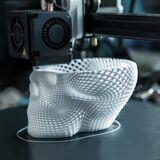
This Research Topic accepts the following article types, unless otherwise specified in the Research Topic description:
Articles that are accepted for publication by our external editors following rigorous peer review incur a publishing fee charged to Authors, institutions, or funders.
Keywords: Biomedical Data Analysis using AI/ML, Advanced Manufacturing, • Thermal & Refrigeration Systems, Electrical & Electromechanical Systems, Composite Materials, Additive Manufacturing
Important note: All contributions to this Research Topic must be within the scope of the section and journal to which they are submitted, as defined in their mission statements. Frontiers reserves the right to guide an out-of-scope manuscript to a more suitable section or journal at any stage of peer review.
Vignan's Institute of Information Technology (VIIT)
Visakhapatnam, India
Pukyong National University
Busan, Republic of Korea
Sardar Vallabhbhai National Institute of Technology Surat
Surat, India
Motilal Nehru National Institute of Technology Allahabad
Allahabad, India

Manuscripts can be submitted to this Research Topic via the main journal or any other participating journal.
Submit your idea
Select the journal/section where you want your idea to be submitted: