The scarcity of human data, the limitation of time and resources for experimental testing, and societal pressure to develop animal-free testing strategies are driving the field of toxicology toward new methods to generate and interpret data for chemical risk assessment (1). Computational toxicology is an emerging multi-disciplinary research field that incorporates diverse disciplines such as computational sciences, bioinformatics, machine learning, chemo-informatics, systems biology, toxicogenomics, and toxicokinetics (2,3).The ability to rapidly screen chemicals for biological activity and reduce the use of animals in toxicity testing has been the goal of regulatory toxicology for several decades. With current technological and scientific advances, scientists seek to apply high throughput screening assays and computational toxicology techniques to evaluate and screen large numbers of chemicals and drug data sets for biological activity (3)(4)(5).The availability of in vitro toxicokinetic data is essential to meet the growing regulatory need to improve chemical safety assessments (6,7). With the availability of a growing number of commercial and opensource computational tools and databases for quantitative structure-activity relationship (QSAR) and physiologically-based pharmacokinetic (PBPK) modeling, scientists are developing workflows that integrate new approach methodologies (NAMs), in silico techniques and in vitro data to predict biological activity in humans (8,9). This research topic on applying computational tools to health and environmental sciences brings together exemplars of current modeling efforts that seek to play an important role in next-generation risk assessment, such as:• Understanding toxicokinetics of xenobiotics based on omics approaches • Development and acceptance of high-throughput computational tools • Building data-driven models to identify chemicals associated with adverse outcome pathways (AOPs) and toxicity• Development and application of a computational workflow for probabilistic quantitative in vitro to in vivo extrapolation (QIVIVE) in environmental risk assessment
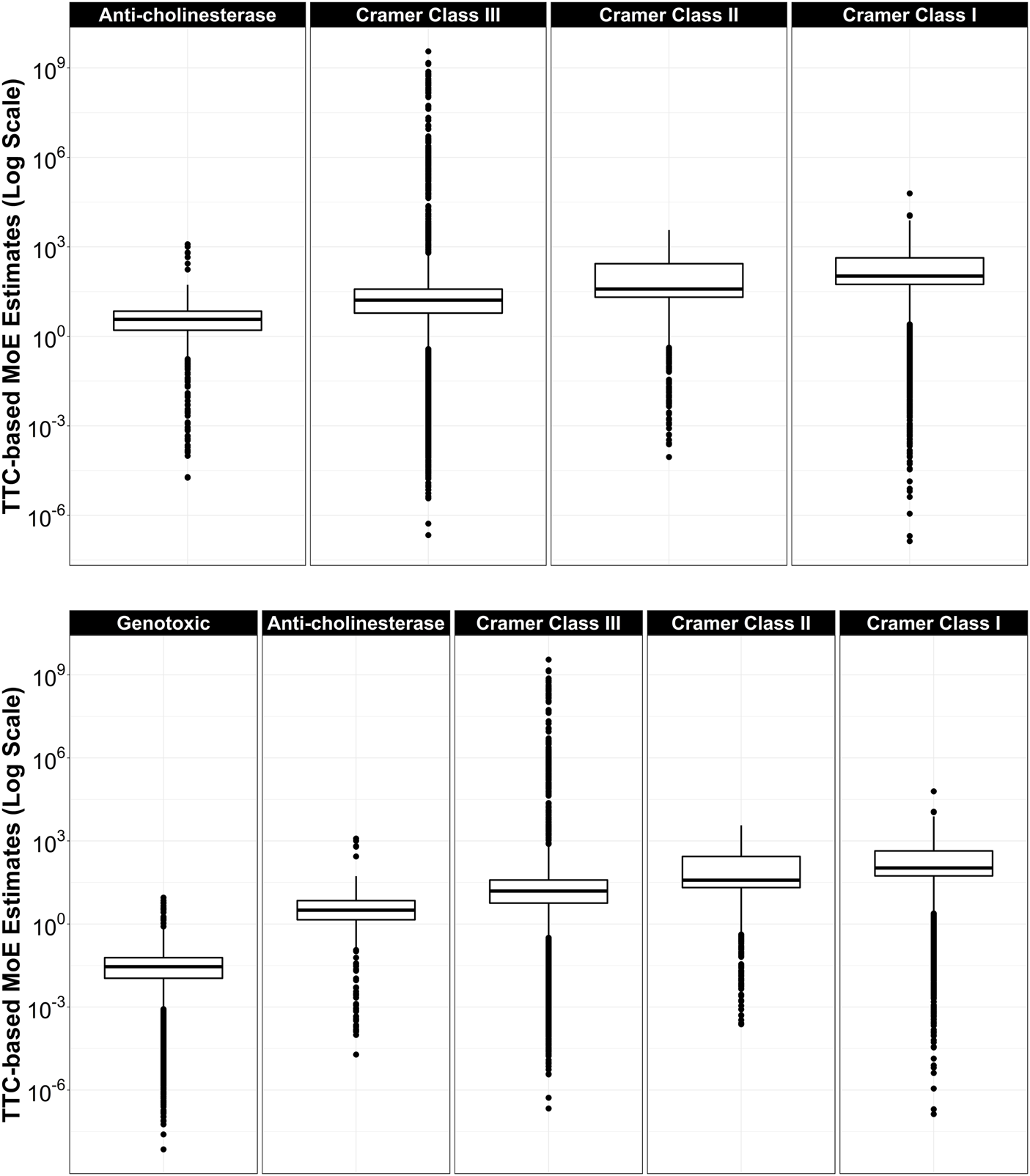
The overall aim is to develop and engage model developers and users to promote and maximize benefits from basic and applied research that is being undertaken to protect public and environmental health.Nicolas et al. presented a case study demonstrating the utility of exploiting existing computational methods (ratio of surrogate hazard and exposure data, called margins of exposure) at the preassessment phase of a tiered risk-based approach to prioritize thousands of untested chemicals quickly and conservatively for further research. In summary, this research topic presents some recent developments and perspectives on the challenges in computational toxicological modeling, their applications, integration of data and tools, and their potential to meet different case scenarios within environmental and human health risk assessment. The development of computational toxicology tools and approaches should accelerate with the availability of open-source toxicological databases to provide a more quantitative, biologically based assessment of the risk of chemicals in the environment.