Life sciences
Pandemic ‘beneath the surface’ has been quietly wiping out sea urchins around the world
Canary Islands as the ‘missing link’ in a global sea urchin killer pandemic


Life sciences
Canary Islands as the ‘missing link’ in a global sea urchin killer pandemic

Featured news
Women who suffer from anxiety symptoms may have fewer circulatory natural killer cells, while those reporting insomnia had fewer total natural killer cells, showing that these disorders could decrease immune response

Featured news
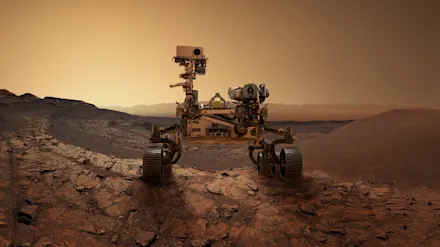
In this guest editorial, Dr Shiva Khoshtinat and co-authors present a bold approach for construction on Mars, harnessing microbial partnerships to transform Martian regolith into structural materials

Featured news
With less than one month before the holidays, many of us are gearing up for the annual Christmas shopping extravaganza. We’re highlighting five articles you won’t want to miss before hitting the shops.


Health
Women who suffer from anxiety symptoms may have fewer circulatory natural killer cells, while those reporting insomnia had fewer total natural killer cells, showing that these disorders could decrease immune response

Health
Scientists find a simple, automated way of making lung organoids, which could help find new lung disease drugs and personalize patients’ treatments

Health
Infants of mothers with high levels of stress hormone age faster and typically have more teeth by six months of age

Health
Vegan diet cuts carbon emissions by 46% and land use by 33%, while delivering nearly all essential nutrients

Neuroscience
Dr Maria Santacà describes how not only how fish and birds perceive their worlds, but also how ecological pressures shape the evolution of perception.

Neuroscience
Scientists find that words you’ve been told to recall are better remembered than words with negative emotional connotations — but surprisingly, sleeping doesn’t help.

Neuroscience
Listening to joyful music helped study participants with motion sickness recover better than other participants — while sad music helped less than doing nothing.

Neuroscience
In well-designed gardens, our gaze shifts quicker and more often. Researchers believe this could be key to understanding the relaxing effects gardens can have on viewers.

Environment
Scientists studying the devastating Lāhainā, Maui fires of August 2023 found that deaths were two-thirds higher than expected that month — and 367% higher during the most intense week of the blaze.

Environment
Stable isotope analysis can tell apart ivory from mammoths dug up from the permafrost and modern elephants, closing a loophole for selling elephant ivory

Environment
Scientists studying the impact of solar power on local neighborhoods find that most people living close to large-scale solar plants wouldn’t mind if a new plant was built nearby.

Environment
First video footage shows impacts of anchor and chain damage caused by cruise, research, fishing, and private vessels on Antarctic sea floor and animals, highlighting critically understudied conservation issue.

Psychology
With less than one month before the holidays, many of us are gearing up for the annual Christmas shopping extravaganza. We’re highlighting five articles you won’t want to miss before hitting the shops.

Psychology
Scientists find that people mostly avoid social media ads when they see them, but many ads blend in seamlessly.

Psychology
Physiological rhythms could explain why Italian university students were more likely to fail exams early or late in the day.

Psychology
Study participants asked to choose whether to empathize with or describe people preferred to empathize with groups, despite finding it difficult and distressing.

Space sciences and astronomy
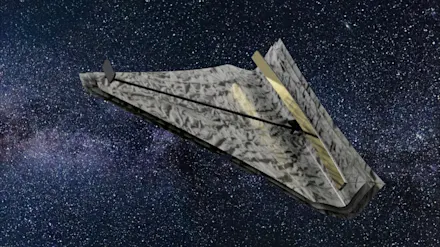
Guest editorial by Prof Heidi Newberg, an astrophysicist at Rensselaer Polytechnic Institute and author of a new Frontiers in Astronomy and Space Sciences article

Space sciences and astronomy
Scientists successfully identify microbe fossils in terrestrial rocks like those found on Mars, opening up the possibility of searching for fossils on the Red Planet.

Space sciences and astronomy
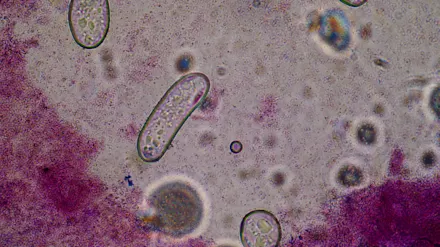
Scientists explored microbial movement as a possible biosignature to detect life on Mars and beyond, cheaper and faster than ever before.

Space sciences and astronomy
Space belongs to no-one, yet many nations and private entities now plan to lay their claim on its resources. In a recent Frontiers in Space Technologies article, Nishith Mishra, Martina Elia Vitoloni and Dr Joseph Pelton shared their thoughts about how plans to exploit the ocean floors could impact the way resources from space are used and managed.
Get the latest research updates, subscribe to our newsletter