 Ruihong Li
 Xueqiu Wang1*
- 1Key Laboratory of Geochemical Exploration, Institute of Geophysical and Geochemical Exploration, Chinese Academy of Geological Sciences, Langfang, China
- 2Langfang Natural Resources Comprehensive Survey Center, China Geological Survey, Langfang, China
- 3Shandong Institute of Geological Sciences, Jinan, China
The gold particles induced geochemical anomaly shows good potential for the prospecting of gold deposits all around world. Most of the discovered gold resources are located at geochemical related anomaly area in Jiaodong, which are associated with Micro-to nanoscale particle matter. However, it has been known little about the relationship between the occurrence of gold nanoparticles and their geochemical anomaly in multimedia accommodating to the detailed process of gold mineralization system and geochemical exploration. Micro-to nanoscale gold as nanoparticles are related to the hydrothermal fluid flows and precipitation among elemental migration. This paper presents gold nanoparticles in ore, constructed the fundamental link to geochemical anomaly distribution maps of gold in drainage sediments, wall rocks, and ore, aimed to identify the source of primary and secondary geochemical anomalies according to careful observation at nanoscale gold and revealed the genesis of gold mineralization and their potential in Jiaodong. A potential model of migration pathway of gold nanoparticle was built to understand the process of massive gold accumulation and the further prospecting in the Jiaodong Peninsula.
Introduction
Nanoparticles in the ore-forming fluids control the gold mineralization of fault zones and form enormous portions of the geochemical anomalies (Cohen et al., 2010; Hough et al., 2011; Wang et al., 2020; Hastie et al., 2021), ranging from regional reconnaissance to in-situ mineral mapping. Thus, geochemical anomalies are considered to be major contributors to gold exploration. Regional mineralization of hydrothermal deposits involves the formation of large-scale geochemical anomalies (Wang et al., 2007), which can be divided into primary geochemical anomalies and secondary geochemical anomalies according to their genesis. Recognizing primary geochemical anomalies, so-called hydrothermal alteration primary halos (Mackenzie et al., 2007; Qiu et al., 2021), could increase targeted mineralized zones and the potential volume associated with regional fault zones. Primary halos of hydrothermal mineralization are produced during the geochemical process of mineralization (Carranza and Sadeghi, 2012), which is strictly controlled by structural deformation, fluid flow, and fluid-rock interactions (Li et al., 2016). Accordingly, large-scale hydrothermal alteration halos depend on the development and maintenance of an efficient porosity-permeability system during fluid-rock interactions, emphasizing the importance of the mineral-assemblage replacement reactions during ore formation accompanied by elemental gains and losses (Jonas et al., 2014). Primary halos are the usual indicators of shallow ore bodies, which can be used to detect deep ore bodies, especially for products from the same hydrothermal mineralization system (de Palomera et al., 2012). Field evidence based on numerous experimental observations have indicated that more than 80% of the discovered gold resources are in geochemical anomalies in the Jiaodong Peninsula (Li et al., 2019a), emphasizing the importance of tracking the sources and influencing factors of geochemical anomalies for gold exploration.
Geochemical anomalies pattern are dominantly associated with mineral particles assemblage and structural control of orebodies, which are obscured by overburden ranging in thickness from decameters to hectometers in the Jiaodong Peninsula. Low-density, regional-scale geochemical prospecting has shown that the anomalies have obviously led to vast elementary migration, including geochemical blocks and geochemical provinces (Wang et al., 2007; Wang et al., 2015). However, it has been difficult to establish the relationships between regional geochemical anomalies and potential mineral deposits using traditional analytical methods and data processing. Thus, method for enhancing and detecting the composition of geochemical anomalies haves been debated over the years (Wang et al., 2021). In terms of concealed ore deposits, the development of analytical methods has led to the selective geochemical extractions (Zhang et al., 2019; Lu et al., 2022), and the implementation of large-scale geochemical surveys that in terms of concealed ore deposits have been conducted all around the world, such as Betze-Post-Screamer, Svetlinskoe, Tykotlov, Vaigul (Palenik et al., 2004; Osovetsky, 2016). The Mobile Metal ions (MMI) in Australia (Mann et al., 1998) and leaching of mobile forms of metals in overburden (MOMEO) in China (Wang, 1998). The gold nanoparticles of ore rock have been reported in the Xincheng gold deposit in the Jiaodong Peninsula (Yang et al., 2016). Meanwhile, the detailed relationship between regional geochemical anomalies and metal nanoparticles of host rocks, especially Precambrian metamorphic rock, and Mesozoic magmatic rock in the Jiaodong Peninsula gold deposits, have rarely been described. Therefore, careful examination of the relationships between the metal nanoparticles and geochemical anomalies (Wang et al., 2017), it has become a promising method to reveal the nature of orebodies.
In this paper, we present the gold distribution characteristic of drainage sediment, geological rock, and gold-bearing pyrite by comparing the occurrence of gold nanoparticles in multimedia and their genetic relationships, which could be helpful for the further deep mining exploration.
Regional geological background
The Jiaodong Peninsula is currently recognized as one of the largest gold provinces in the far-field of Pacific plate subduction zone (Li et al., 2015; Deng and Wang, 2016; Groves and Santosh, 2016; Deng et al., 2020a; Yang et al., 2020), where the majority of gold resources were formed at 120 Ma among Mesozoic granitoids (Deng et al., 2020b), which are prominently controlled by regional-scale NE-to NNE-trending fault zones (Figure 1). These gold deposits have been traditionally classified as disseminated-/stockwork-type (Jiaojia-type) and auriferous quartz-vein-type (Linglong-type) deposits, which are both enveloped with significant alteration halos from centimeters to decameters in width (Li et al., 2015). Chinese geologists have classified all these gold deposits are assigned to a special deposit type, namely, the “Jiaodong type” (Yang et al., 2014a; Goldfarb and Santosh, 2014; Deng et al., 2015; Groves et al., 2020; Qiu et al., 2020; Goldfarb et al., 2021).
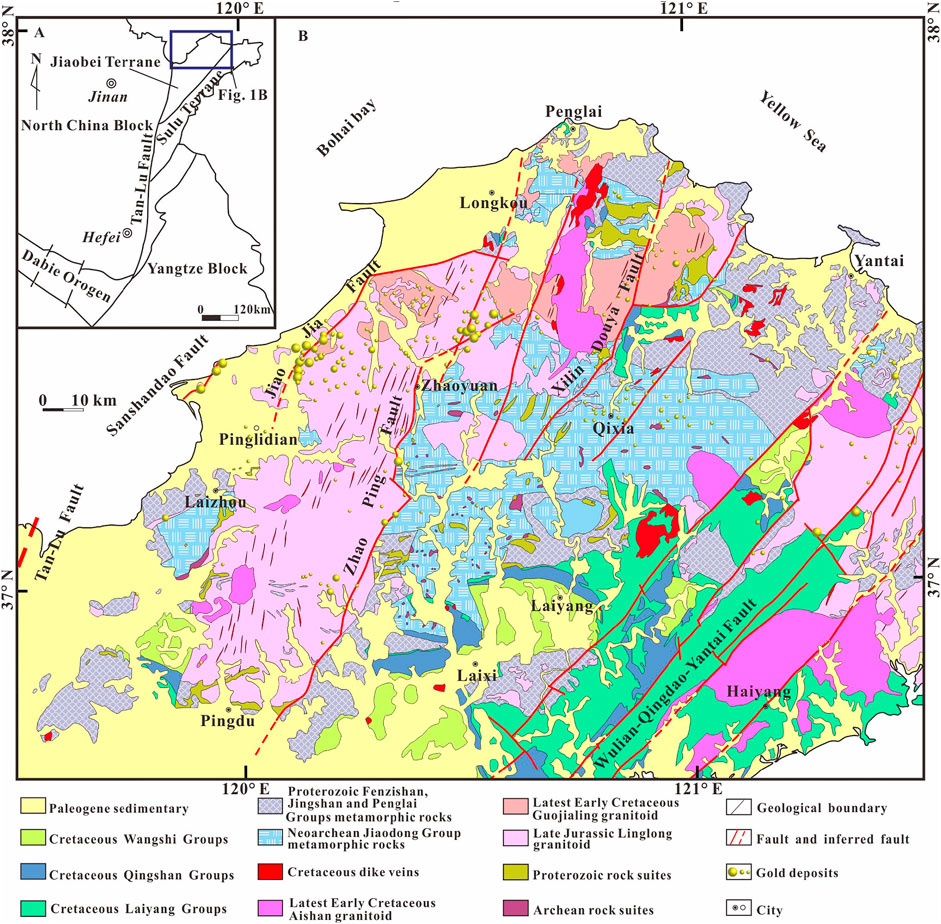
FIGURE 1. Sketch map of the Jiaodong Peninsula (A) and a regional geological map of the Jiaodong gold province showing the gold deposit locations (B) (modified from Yang et al., 2019; Li et al., 2020; Song et al., 2020).
Within these highly gold-mineralized terrane, the Precambrian metamorphic basement is dominated by Neoarchean to Neoproterozoic gneiss (Jahn et al., 2008), which occupys approximately half of the area. Neoarchean Jiaodong group metamorphic rocks and mafic granulites underwent regional deformation, with intrusion by Proterozoic mafic - ultramafic rocks and A-type granites (Wan et al., 2012). The Neoarchean Jiaodong group is mainly composed of biotite plagiogneiss, biotite granulite, amphibolite, and biotite-hornblende-plagioclase gneiss, etc. The subsequent Neoproterozoic Fenzishan group, Jinshan group, and Penglai group consist of a sequence of calc-silicate rocks, garnet-biotite schist, dolomitic marble, biotite-amphibole schist, and minor amphibolite.
The Paleozoic strata is absent from the region. Meanwhile, the Mesozoic Laiyang group, Qingshan group, and Wangshi group are mainly distributed in the Jiaolai basin (Figure 1). The Early Cretaceous Laiyang group consists of conglomerate, siltstone, gritstone and litharenite, which are unconformity contact relationships with the Neo-proterozoic Jinshan group (Yang et al., 2014a). The Qingshan group is a suite of volcanic rocks, consisting of rhyolite, tuff, basaltic andesite, dacite, etc (Zhang et al., 2008). The Wangshi group is dominated by glutenite with marlstone. The Cenozoic sediments are widely distributed, including sandy clay, silty clay, clay, sand and gravel.
There were three periods of large-scale Mesozoic magmatic activities from the late Jurassic to middle early Cretaceous (Yang et al., 2020), and these intrusions have been associated with gold mineralization in close spatial and temporal relationships (Figures 2, 3), which are widely exposed in the Jiaodong Pensinsula (Santosh and Pirajno, 2015; Deng et al., 2018; Song et al., 2020). The Late Jurassic Linglong granitoids mainly consist of biotite granite, monzogranite, quartz-diorite, and granodiorite. The Early Cretaceous Guojialing granitoids consist of porphyritic quartz monzonite, granodiorite, and monzogranite potassic feldspar. The Aishan granitoids mainly consist of monzonite and a small amount of granodiorite.
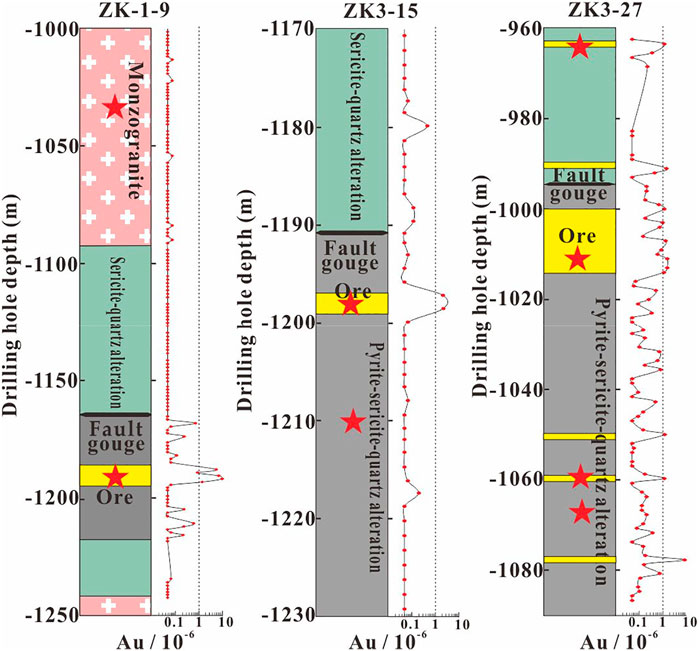
FIGURE 2. Comparison of Au distribution from three typical drilling hole (zk-1-9, zk3-15, and zk3-27) in Jiaodong area (Data from Shandong gold company).
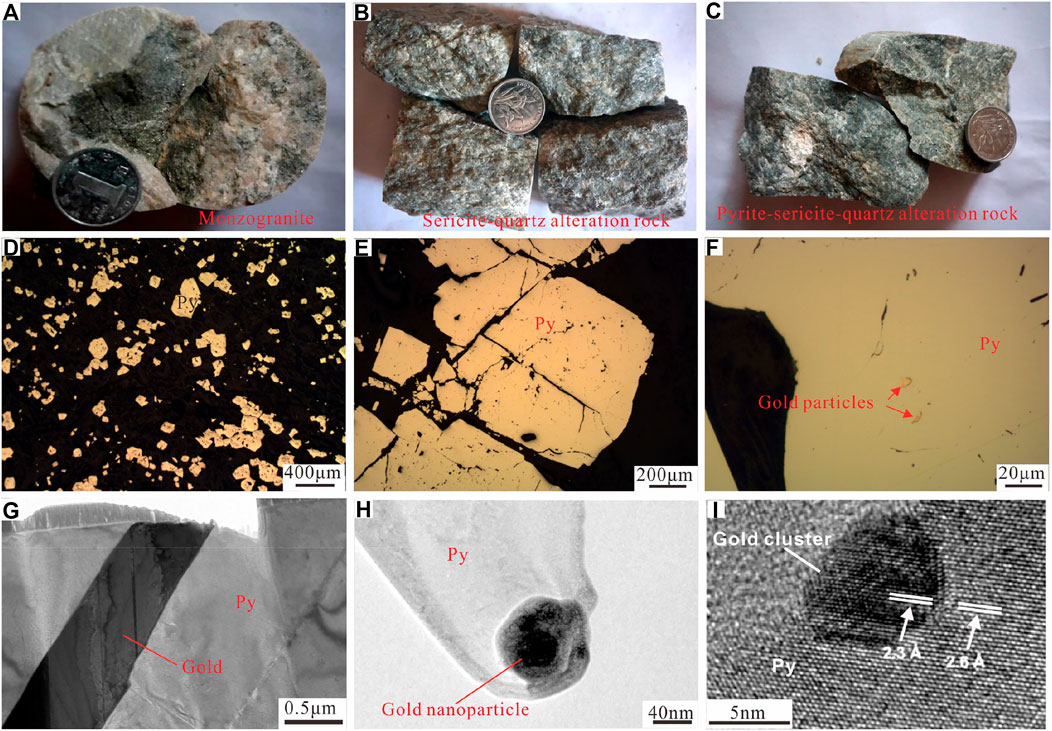
FIGURE 3. The handspecies of typical ore (A–C); Gold bearing pyrite (D–G); Nanogold particulate (H) (Yang et al., 2016) and gold cluster (I) (Palenik et al., 2004).
Geochemical anomalies of gold
The characteristics of geochemical anomalies reveal the complex geological processes during the Earth’s evolution (Cohen et al., 2010). The spatial distribution of Au throughout the study area is shown on the contoured geochemical maps. It can be observed that there are four different geochemical anomaly areas based on the statistical summaries for Au concentrations of China’s Geochemical Baselines (CGB, sampling rock), the 1: 200,000 regional geochemistry national reconnaissance (RGNR, sampling stream sediments), and leaching of mobile forms of metals in overburden (MOMEO, sampling soil), which in general, have identified many gold deposits in the Jiaodong Peninsula (Li et al., 2019a; Wang et al., 2020). Most of the discovered gold resources have been in geochemical anomaly areas the Jiaodong Peninsula, which are dominantly controlled by the NE-to NNE-striking structures in greenfield. Chi and Yan (2007) calculated the median value (1.32 ppb) and the arithmetic mean value (2.03 ppb) of gold in the national drainage sediments based on 44,422 geochemical data of RGNR in China. It is quite clear that the median and arithmetic mean values of the Jiaodong gold province are higher than those of national drainage sediments (Table 1).
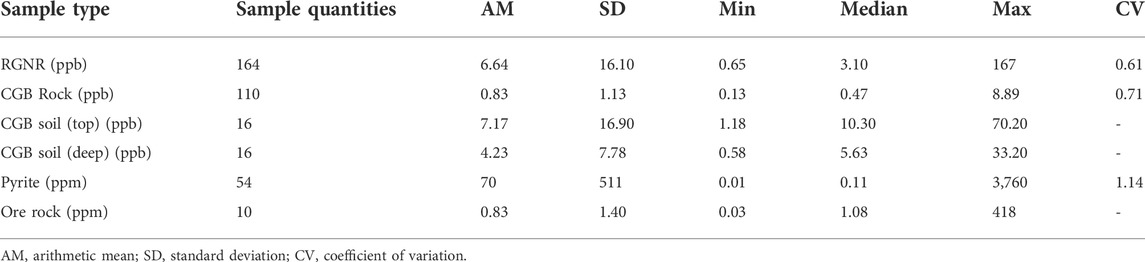
TABLE 1. Statistical parameters of gold content of multimedium in Jiaodong.
The most noticeable Au distribution pattern shown on the maps of MOMEO and CGB samples are closely associated with the density of regional faults to some degree (Figures 4, 5). The trend of increasing Au concentrations coincides with the primary halos within the hydrothermal alteration zones in this regional gold metallogenic system. Thus, Au anomalous centers are exactly correlated with gold mineralization and the regional fault zones in the Jiaodong gold province (Figure 5).
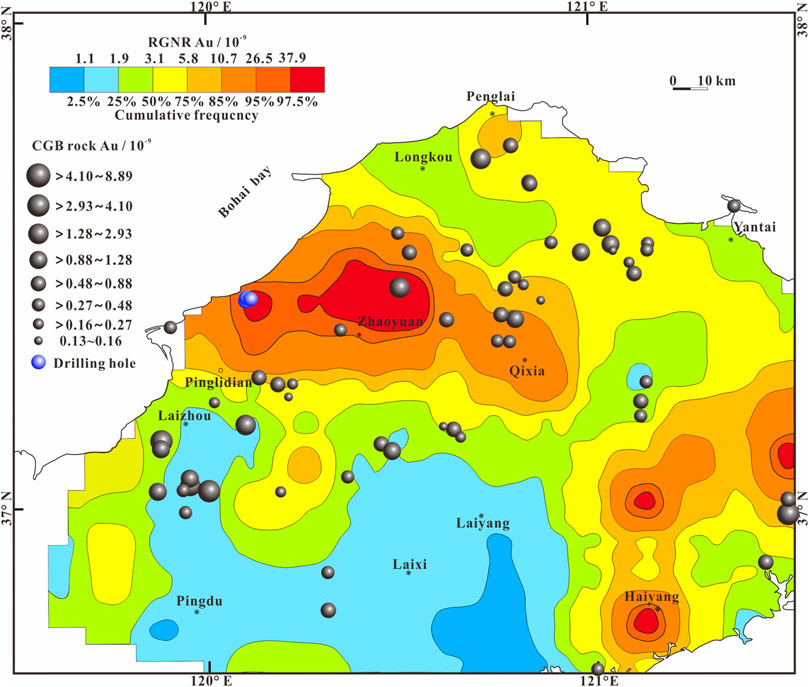
FIGURE 4. Geochemical map of gold of RGNR and CGB rock in Jiaodong gold province.
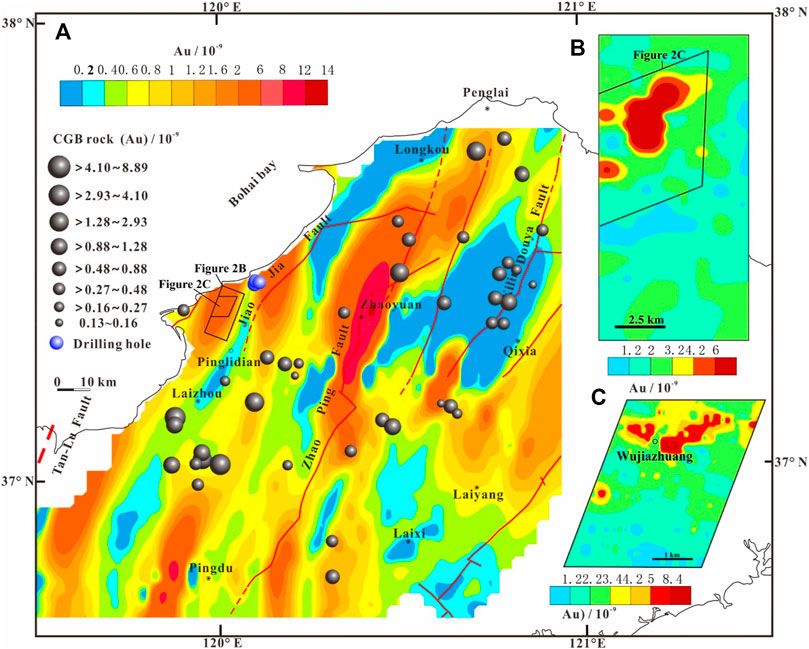
FIGURE 5. Geochemical map of gold by MOMEO and CGB in the Jiaodong gold province (modified from Wang et al., 2020).
These distribution patterns are also related to geological bodies, including the Precambrian metamorphic basement, Late Jurassic Linglong granitoid, Latest Early Cretaceous Guojialing, and Aishan granitoid and Mesozoic strata, especially in the Archean Jiaodong Group metamorphic rocks (Yang et al., 2014b). However, the gold content of these CGB rocks is not strictly consistent with the geochemical anomaly patterns. Meanwhile, Low Au concentrations of drainage sediments are distributed in the Jiaolai basin, where the majority of geologic rocks belong to the comprised of Laiyang group (0.22–0.38 ppb) and the Qingshan group (0.13–0.88 ppb) containing comparatively low contents of Au. The Mesozoic intrusions especially for Late Jurassic Linglong granitoids (0.16–3.97 ppb) occur as the derived source of gold in the hydrothermal alteration zones in gold deposits, which are controlled by the lithospheric faults and regional EW-trending structure of metamorphic basement. The Jiaodong group has also been considered to be the original source of the Jiaodong gold deposit, which played an important role in the reconcentration of the Jiaodong Peninsula (Yang et al., 2016).
Sampling and methods
Eight ore samples were collected from three drilling holes in the study area (Figure 2), including two samples from ZK-1-9 (−596 m ∼ −1,193 m level), two samples from ZK3-15 (−639 ∼ −1,212 m level) and four samples from ZK3-27 (−964 ∼ −1,071 m level). An optical microscope and scanning electron microscope were used to count the number of gold particles in gold-bearing pyrite (Figure 3). The transmission electron microscopy was conducted at the Institute of Geology and Geophysics, Chinese Academy of Sciences (IGGCAS), for counting gold nanoparticles in multimedia.
The regional geochemical data of gold in rocks were collected and provided by the China Geochemical Baselines (CGB) project. The sampling methods of the CGB project are described in detail in Wang et al. (2013, 2015), and 110 samples of CGB rock were analyzed using the MapGIS 6.7 and Geochemical Studio 3.0 software (Figure 4).
Results
The gold enrichment can be divided into two types, one is the gold complex enrichment in ore rock (30%–90%) during the process of ore-forming fluid migration and the other is ultra-scale enrichment of nanogold or ultrafine particle accumulation in soil (56%–85%), sediments (79%–90%) and wall rock (27%–86%) (Table 2; Figure 3) (Wang et al., 2013). The geochemical mapping of gold shows that it has been distributed in a 164.3 km2 geochemical anomaly area that, controls over 60% of the gold deposit in the Jiaodong Peninsula. The arithmetic mean values of RGNR, CGB rock, and soil (top and deep) are 6.64, 0.83, 7.17, and 4.23 ppb, (Table 1; Figure 4), respectively. As compared with the Clark value of Au (1.0 ppb), the geochemical anomalies of RGNR and CGB topsoil are similar; their enrichment coefficients are both close to 7. These areas are the main secondary concentration center, and the primary gold mineralization center of the Jiaodong Peninsula. There is no clear geochemical relationship between RGNR and CGB rocks. During gold mineralization of the Jiaodong gold deposit, visible gold clusters experienced an enrichment process from nano/micron-to macro-scale mineral concentrator, including geochemical variation from primary anomalies of gold complex in ore forming fluid to invisible gold enrichment in wall rock and surface sediments. The 3D model for nonpoint source of geochemical anomalies has been used to explain the enrichment process of macro- and nanoscale gold in the local environment by nanogold and gold nanoparticle through multimedia the Jiaodong Peninsula (Wang et al., 2020).
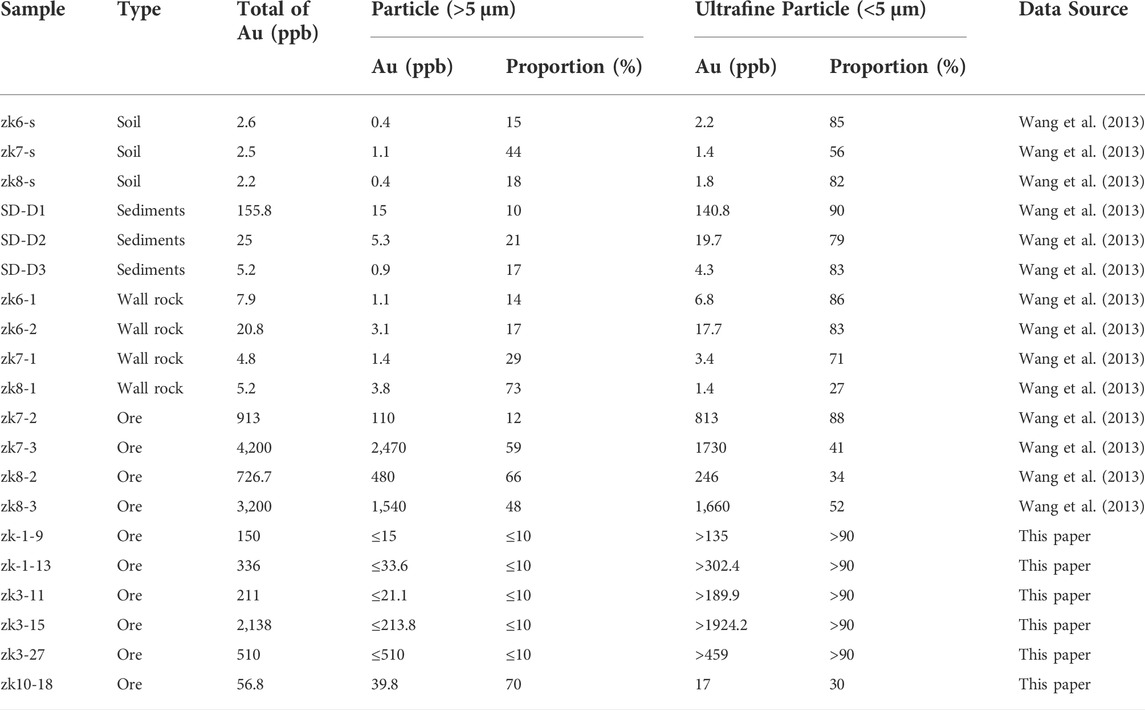
TABLE 2. Proportion of gold particle and ultrafine gold in Jiaodong gold deposit.
A comparison of the content changes of Au among regional CGB rocks, gold bearing pyrite and ore rock in the Jiaodong Peninsula shows that the geochemical anomaly patterns result from gold particles. The Au content (proportion of gold particles) in different types of media is a significant reference for tracking massive gold deposits in deep prospecting targets accumulated by regional tectonic events.
Discussion
The occurrence of gold in a metallogenic system
Systematic gold geochemical anomaly patterns of the Jiaodong Peninsula are related to substances recycled by various geological agents within the metallogenic system of the Jiaodong gold province (Carranza and Sadeghi, 2012). These patterns are induced by multimedia including gold bearing-pyrite of ore bodies, high background value of different geological rock and secondary dispersion of drainage sediments. Micro- and nanoscale particles of gold have been widely reported in several sampling media in a metallogenic system (Osovetsky, 2016; Yang et al., 2016; Wang et al., 2020). Wang et al. (2013) proved that the proportion of gold (<5 um) in the Dayingezhuang gold deposit was as high as 88% in ore, 86% in wall rock, 85% in soil, and 90% in sediments (Table 2). These occurrences of gold all play an important role in the ore-forming process and geochemical exploration.
According to three drilling holes (ZK-1-9, ZK3-15, and ZK3-27) from wall rock (monzogranite) to orebodies (pyrite-sericite-quartz alteration rock) in the deep (below 1,000 m), the Au content is as low as 0.08 ppm in the wall rock (Figure 2), which is quite close to the detection limit (0.01 ppm), and the wall rock mainly consists particles gold (<5 um) similar to the Dayingezhuang gold deposit (Table 2) (Wang et al., 2013). The ore bodies, as shown in Figure 2, prove that the Au content is high, especially in the footwall of the ore-controlling fault. However, the majority of visible gold occurs in the microfracture or healed fractures of pyrite in hydrothermal alteration rocks (pyrite-sericite-quartz alteration rock and sericite-quartz alteration rock) in the Jiaodong Peninsula (Figures 3A–E). Irregular native particle gold usually occurs as inclusions (Figure 3F), suggesting the mobilization or precipitation of gold nanoparticles within pyrite grains during the hydrothermal process in the gold metallogenic system. Additionally, pyrite is the main source of invisible gold in the multimedia (Figure 3G). The distribution of gold content in pyrite is extremely inhomogeneous. The minimum value of gold is 10 ppb in pyrite, which is close to the abnormal threshold of 10.7 ppb in drainage sediments. The gold background value (median) in pyrite is 33.9 times that of RGNR drainage sediments and 223 times that of CGB rocks (Table 1).
Micro-to nanoscale gold particle clusters in ore are not new to science (Figures 3H,I), and neither are the resultant nanoparticles in soil or sediment samples that form from the weathering of original ore bodies. With the development of nanotechnology (Hochella et al., 2019), in-situ testing techniques such as focused ion beam-scanning electron microscope (FIB-SEM), high resolution transmission electron microscopy (HTEM), and atom probe microscope (APT) (Fougerouse et al., 2016; Dubosq et al., 2018) have made it possible to determine the size, shape, and intrastructure of nanoparticles cluster in rocks, soils, and sediments over gold deposits (Figures 4, 5, 6A–C). The most obvious intra characteristics among nanoparticles observed in the samples of multimedia showed good uniformity with the different stages during the ore-forming process in the deposits. In addition, the elemental composition of nanoparticles is also an important indicator for different types of gold deposits.
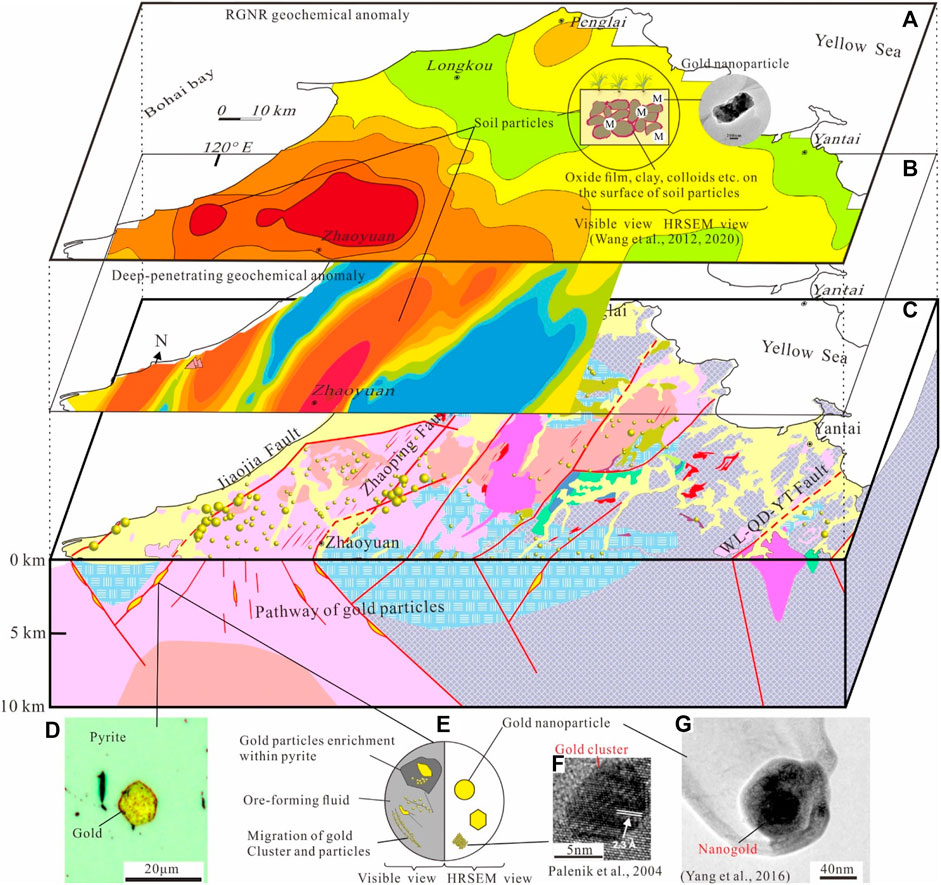
FIGURE 6. The occurrence of gold nanoparticle in the Jiaodong gold province related to the Deep-penetrating geochemical anomaly and the RGNR geochemical anomaly.
The formation model of geochemical anomalies
The formation model of regional gold geochemical anomalies in the Jiaodong Peninsula has been built with comprehensive natural factors, superposing all the information related to large-scale gold mineralization, high value of Au content of different geological rocks, and secondary dispersion of drainage sediments (Li et al., 2019a). High background values of CGB rock are the initial source of ore-forming material source (Table 1; Figure 5).
The formation of large-scale regional Au geochemical anomalies in multimedium is a complicated process involving Au mobilization and migration from the different phases of the parent materials (Figures 6D–G). The different occurrences from micro-to nanoscale gold could be used for identifying the genesis of a geochemical anomaly (Palenik et al., 2004; Figure 6F). The gold enrichment of the Jiaodong Peninsula can be divided into two types: one type is the Au(HS)2- complex enrichment in the process of ore-forming fluid migration and the other type is ultrastructural deformation enrichment of nanogold and gold-bearing nanoparticles in the solid phase (Figures 3H,I; Figure 6E) (Li et al., 2019b). The gold particles or aggregations experienced an enrichment process from nano-to macroscale mineral concentrator, including chemical-structural variation from a gold complex in ore-forming fluid to micro- and ultrastructure of gold nanoparticles in pyrite and ore rock (Wang et al., 1995; Wang et al., 1999; Fougerouse et al., 2016). Triangles and hexagons of gold particles direct indicators of a natural reduction in the precipitation mechanisms. It has been proposed that the mobile phase is the transport of nanogold through the pathway within a fault (Deng et al., 2018). Gold nanoparticles have been absorbed to clay minerals in the laboratory (Wang et al., 2013), which is preferred for transport within the fault zones in a natural environment. The nanoscale Au–Cu alloy has also been observed for vertical transport from the concealed ore body in the depth to surface soil from the Jinwozi gold deposit in the Xinjiang provinces (Wang and Ye, 2011). Transport of gold among fault zones includes various of mechanisms in the form of a solution or mobilized as nanoparticles with subhedral to anhedral crystal shapes (Figures 5, 6D–G). The utilization of clay and bacteria instead of gold nanoparticles in the soil could also be useful for gold exploration in other areas of the world (Hough et al., 2008; Noble et al., 2009; Osovetsky, 2016).
Therefore, micro-to nanoscale particle clusters are critical for geochemical exploration in samples of multimedia sample, as mentioned above, which could effectively define a target area for potential deep mining of metal resources.
Conclusion
Ultrafine gold particles as micro-to nanoscale clusters have been increasingly reported in different types of gold deposits all around world. Ultrafine gold particles have been widely observed in ores in the Jiaodong gold deposits. More than 80% of the discovered gold resources have been discovered in the geochemical anomaly area in the Jiaodong Peninsula.
1 As an open metallogenic system in the Jiaodong Peninsula, the occurrence of micro-to nanoscale gold particles are the most important indicators for geochemical anomaly patterns among a metallogenic system. The characteristics of micro-to nanoscale gold are strongly associated with nanogeochemisty, which is related to the elemental migration as nanoparticles beyond traditional methods, using chemical hydrothermal fluid flows, and then precipitation. Thus, the gold particles also have a close relationship with the evolution of Mesozoic structural-controlled gold mineralization related to the subduction of Paleo-Pacific plate. Therefore, these could be used to interpret the geochemical anomaly of multimedia showing good potential for the prospecting of gold deposits in the Jiaodong Peninsula, Eastern China.
2 The occurrence of gold could be recognized as gene expression or a fingerprint of the detailed processes of gold mineralization and weathering. Thus, multiscale gold particles could be effectively used to interpret diverse geochemical anomaly patterns and for mineral exploration with the goal of refining and prioritizing known gold deposits and identifying new targets.
3 A potential model of migration pathway was built to construct the fundamental link between gold particles and geochemical anomalies according to careful observations at the nanoscale. The large-scale regional Au geochemical anomalies revealed the genesis of widely gold nanoparticles and their potential occurrence location of in the Jiaodong Peninsula. It is a complicated process that involves mobilizing the Au-bearing fluid, and transporting from chemical compound to nanoscale gold particle clusters in the fault zone.
Data availability statement
The raw data supporting the conclusion of this article will be made available by the authors, without undue reservation.
Author contributions
Conceptualization, XW; methodology, RL and YM; software, QL and QC; review and editing, BZ and YX.
Funding
This research was funded by the National Natural Science Foundation of China (Grant No. 42002108), the National Key R&D Program (Grant No. 2016YFC0600600), China Geological Survey Project (Grant No. ZD20220109), National Nonprofit Institute Research Grant of IGGE (Grant No. AS 2017J12).
Acknowledgments
Sincerely thanks to the help with professor Liqiang Yang from China university of geoscience (Beijing) and Deping Yang from Shandong Academy of Geosciences. Many thanks to the geochemists for their fieldwork at the RGNR and CGB program.
Conflict of interest
The authors declare that the research was conducted in the absence of any commercial or financial relationships that could be construed as a potential conflict of interest.
Publisher’s note
All claims expressed in this article are solely those of the authors and do not necessarily represent those of their affiliated organizations, or those of the publisher, the editors and the reviewers. Any product that may be evaluated in this article, or claim that may be made by its manufacturer, is not guaranteed or endorsed by the publisher.
References
Carranza, E. J. M., and Sadeghi, M. (2012). Primary geochemical characteristics of mineral deposits — implications for exploration. Ore Geol. Rev. 45, 1–4. doi:10.1016/j.oregeorev.2012.02.002
Chi, Q. H., and Yan, M. C. (2007). Handbook of elemental abundance for applied geochemistry.. Beijing: Geological Publishing House, 1–148 [in Chinese].
Cohen, D. R., Kelley, D. L., Anand, R., and Coker, W. B. (2010). Major advances in exploration geochemistry, 1998–2007. Geochem. Explor. Environ. Anal. 10 (1), 3–16. doi:10.1144/1467-7873/09-215
de Palomera, P. A., van Ruitenbeek, F. J. A., van der Meer, F. D., and Fernández, R. (2012). Geochemical indicators of gold-rich zones in the La Josefina epithermal deposit, Deseado Massif, Argentina. Ore Geol. Rev. 45 (6), 61–80, doi:10.1016/j.oregeorev.2012.01.001
Deng, J., Qiu, K. F., Wang, Q. F., Goldfarb, R. J., Yang, L. Q., Zi, J. W., et al. (2020b). In situ dating of hydrothermal monazite and implications for the geodynamic controls on ore formation in the Jiaodong gold province, eastern China. Econ. Geol. 115 (3), 671–685. doi:10.5382/econgeo.4711
Deng, J., Wang, C. M., Bagas, L., Carranza, E. J. M., and Lu, Y. J. (2015). Cretaceous–cenozoic tectonic history of the jiaojia fault and gold mineralization in the Jiaodong peninsula, China: Constraints from zircon U–Pb, illite K–Ar, and apatite fission track thermochronometry. Min. Depos. 50 (8), 987–1006. doi:10.1007/s00126-015-0584-1
Deng, J., and Wang, Q. F. (2016). Gold mineralization in china: Metallogenic provinces, deposit types and tectonic framework. Gondwana Res. 36, 219–274. doi:10.1016/j.gr.2015.10.003
Deng, J., Yang, L. Q., Groves, D. I., Zhang, L., Qiu, K. F., and Wang, Q. F. (2020a). An integrated mineral system model for the gold deposits of the giant Jiaodong province, eastern China. Earth. Sci. Rev. 208, 103274. doi:10.1016/j.earscirev.2020.103274
Deng, J., Yang, L. Q., Li, R. H., Groves, D. I., Santosh, M., Wang, Z. L., et al. (2018). Regional structural control on the distribution of world-class gold deposits: An overview from the Giant Jiaodong Gold Province, China. Geol. J. 54 (1), 378–391. doi:10.1002/gj.3186
Dubosq, R., Lawley, C. J. M., Rogowitz, A., Schneider, D. A., and Jackson, S. (2018). Pyrite deformation and connections to gold mobility: Insight from micro-structural analysis and trace element mapping. Lithos 310–311, 86–104. doi:10.1016/j.lithos.2018.03.024
Fougerouse, D., Reddy, S. M., Saxey, D. W., Rickard, W. D. A., van Riessen, A., and Micklethwaite, S. (2016). Nanoscale gold clusters in arsenopyrite controlled by growth rate not concentration: Evidence from atom probe microscopy. Am. Mineralogist 101 (8), 1916–1919. doi:10.2138/am-2016-5781ccbyncnd
Goldfarb, R. J., Mao, J. W., Qiu, K. F., and Goryachev, N. (2021). The great Yanshanian metallogenic event of eastern Asia: Consequences from one hundred million years of plate margin geodynamics. Gondwana Res. 100, 223–250. doi:10.1016/j.gr.2021.02.020
Goldfarb, R. J., and Santosh, M. (2014). The dilemma of the Jiaodong gold deposits: Are they unique? Geosci. Front. 5, 139–153. doi:10.1016/j.gsf.2013.11.001
Groves, D. I., Santosh, M., Deng, J., Wang, Q. F., Yang, L. Q., and Zhang, L. (2020). A holistic model for the origin of orogenic gold deposits and its implications for exploration. Min. Depos. 55 (2), 275–292. doi:10.1007/s00126-019-00877-5
Groves, D. I., and Santosh, M. (2016). The giant Jiaodong gold province: The key to a unified model for orogenic gold deposits? Geosci. Front. 7 (3), 409–417. doi:10.1016/j.gsf.2015.08.002
Hastie, E. C. G., Schindler, M., Kontak, D. J., and Lafrance, B. (2021). Transport and coarsening of gold nanoparticles in an orogenic deposit by dissolution–reprecipitation and Ostwald ripening. Commun. Earth Environ. 2 (1), 57. doi:10.1038/s43247-021-00126-6
Hochella, M. F., Mogk, D. W., Ranville, J., Allen, I. C., Luther, G. W., Marr, L. C., et al. (2019). Natural, incidental, and engineered nanomaterials and their impacts on the Earth system. Science 363 (6434), eaau8299. doi:10.1126/science.aau8299
Hough, R. M., Noble, R., Hitchen, G. J., Hart, R., Reddy, S. M., Saunders, M., et al. (2008). Naturally occurring gold nanoparticles and nanoplates. Geol. 36 (7), 571–574. doi:10.1130/g24749a.1
Hough, R. M., Noble, R. R. P., and Reich, M. (2011). Natural gold nanoparticles. Ore Geol. Rev. 42 (1), 55–61. doi:10.1016/j.oregeorev.2011.07.003
Jahn, B. M., Liu, D. H., Wan, Y. S., Song, B., and Wu, J. J. (2008). Archean crustal evolution of the Jiaodong Peninsula, China, as revealed by zircon SHRIMP geochronology, elemental and Nd-isotope geochemistry. Am. J. Sci. 308 (3), 232–269. doi:10.2475/03.2008.03
Jonas, L., John, T., King, H. E., Geisler, T., and Putnis, A. (2014). The role of grain boundaries and transient porosity in rocks as fluid pathways for reaction front propagation. Earth Planet. Sci. Lett. 386 (1), 64–74. doi:10.1016/j.epsl.2013.10.050
Li, L., Santosh, M., and Li, S. R. (2015). The ‘Jiaodong type’ gold deposits: Characteristics, origin and prospecting. Ore Geol. Rev. 65, 589–611. doi:10.1016/j.oregeorev.2014.06.021
Li, R. H., Albert, N., Yun, M. H., Meng, Y. S., and Du, H. (2019b). Geological and geochemical characteristics of the Archean basement-hosted gold deposit in Pinglidian, Jiaodong peninsula, eastern China: Constraints on auriferous quartz-vein exploration. Minerals 9 (1), 62. doi:10.3390/min9010062
Li, R. H., Wang, X. Q., Chi, Q. H., Zhang, B. M., Liu, Q. Q., and Liu, H. H. (2019a). Distribution of geochemical anomaly of gold in drainage sediment in the Jiaodong Peninsula, China and its significance. Earth Sci. Front. 26 (4), 221–230. doi:10.13745/j.esf.sf.2019.5.15
Li, R. H., Wang, X. Q., Yang, L. Q., Zhang, B. M., Liu, Q. Q., and Liu, D. S. (2020). The characteristic of microstructural defor-mation of gold bearing pyrite in Jiaodong: The links between nanoscale gold enrichment and crystal distortion. Ore Geol. Rev. 122, 103495. doi:10.1016/j.oregeorev.2020.103495
Li, Y. Q., Zhang, D. H., Li, D., Wan, G. L., and Hou, B. J. (2016). Characteristics of structurally superimposed geochemical haloes at the polymetallic Xiasai silver-lead-zinc ore deposit in Sichuan Province, SW China. J. Geochem. Explor. 169, 100–122. doi:10.1016/j.gexplo.2016.07.007
Lu, Y. X., Zhang, B. M., Wang, X. Q., Liu, H. L., Yan, T. T., Wang, Q., et al. (2022). Application of the fine-grained soil prospecting method in a loess-covered area of central China. Appl. Geochem. 143, 105377. doi:10.1016/j.apgeochem.2022.105377
Mackenzie, D. J., Craw, D., and Begbie, M. (2007). Mineralogy, geochemistry, and structural controls of a disseminated gold-bearing alteration halo around the schist-hosted Bullendale orogenic gold deposit, New Zealand. J. Geochem. Explor. 93 (3), 160–176. doi:10.1016/j.gexplo.2007.04.001
Mann, A. W., Birrell, R. D., Mann, A. T., Humphreys, D. B., and Perdrix, J. L. (1998). Application of the mobile metal ion technique to routine geochemical exploration. J. Geochem. Explor. 61 (1–3), 87–102. doi:10.1016/s0375-6742(97)00037-x
Noble, R. P., Hough, R. M., and Grenik, E. M. (2009). Natural and experimental clues to understand the transport and deposition of supergene gold in Western Australia. Explore Newsl. Assoc. Appl. Geochem. 142, 1.
Osovetsky, B. M. (2016). Aggregation of nanogold particles in the environment. Nat. Resour. Res. 25 (2), 241–253. doi:10.1007/s11053-015-9277-9
Palenik, C. S., Utsunomiya, S., Reich, M., Kesler, S. E., Wang, L., and Ewing, R. C. (2004). Invisible” gold revealed: Direct imaging of gold nanoparticles in a carlin-type deposit. Am. Mineralogist 89 (10), 1359–1366. doi:10.2138/am-2004-1002
Qiu, K. F., Goldfarb, R. J., Deng, J., Yu, H. C., Gou, Z. Y., Ding, Z. J., et al. (2020). Gold deposits of the Jiaodong peninsula, eastern China. Seg. Spec. Publ. 23, 753–773, doi:10.5382/SP.23.35
Qiu, K. F., Yu, H. C., Hetherington, C., Huang, Y. Q., Yang, T., and Deng, J. (2021). Tourmaline composition and boron isotope signature as a tracer of magmatic-hydrothermal processes. Am. Mineralogist 106, 1033–1044. doi:10.2138/am-2021-7495
Santosh, M., and Pirajno, F. (2015). The Jiaodong-type gold deposits: Introduction. Ore Geol. Rev. 65, 565–567. doi:10.1016/j.oregeorev.2014.09.018
Song, M. C., Lin, S. Y., Yang, L. Q., Song, Y. X., Ding, Z. J., Li, J., et al. (2020). Metallogenic model of Jiaodong Peninsula gold deposits. Mineral. Deposits 39 (2), 215. doi:10.16111/j.0258-7106.2020.02.002
Wan, Y. S., Dong, C. Y., Xie, H. Q., Wang, S. J., Song, M. C., Xu, Z. Y., et al. (2012). Formation ages of early precambrian BIFs in the north China craton: SHRIMP zircon U-Pb dating. Acta Geol. Sin. 86 (9), 1447–1478 [in Chinese].
Wang, Q., Wang, X. Q., Liu, H. L., Tian, M., Zhang, B. Y., Li, R. H., et al. (2021). Targeting deep-seated gold deposits: A study from the qujia gold deposit, Shandong province, China. Appl. Geochem. 130, 104982. doi:10.1016/j.apgeochem.2021.104982
Wang, X. Q. (1998). Leaching of mobile forms of metals in overburden: Development and application. J. Geochem. Explor. 61 (1), 39–55. doi:10.1016/s0375-6742(97)00039-3
Wang, X. Q., Liu, X. M., Han, Z. X., Zhou, J., Xu, S. F., Zhang, Q., et al. (2015). Concentration and distribution of mercury in drainage catchment sediment and alluvial soil of China. J. Geochem. Explor. 154, 32–48. doi:10.1016/j.gexplo.2015.01.008
Wang, X. Q., Shen, W. J., Zhang, B. M., Nie, L. S., Chi, Q. H., and Xu, S. F. (2007). Relationship of geochemical blocks and ore districts: Examples from the eastern Tianshan metallogenic belt, Xinjiang, China. Earth Sci. Front. 14 (5), 116–120. doi:10.1016/s1872-5791(07)60040-2
Wang, X. Q., Xie, X. J., Cheng, Z. Z., and Liu, D. W. (1999). Delineation of regional geochemical anomalies penetrating through thick cover in concealed terrains — A case history from the olympic dam deposit, Australia. J. Geochem. Explor. 66 (1), 85–97. doi:10.1016/s0375-6742(99)00036-9
Wang, X. Q., Xie, X. J., and Ye, S. Y. (1995). Concepts for geochemical gold exploration based on the abundance and distribution of ultrafine gold. J. Geochem. Explor. 55 (1), 93–101. doi:10.1016/0375-6742(95)00026-7
Wang, X. Q., Xu, S. F., Chi, Q. H., and Liu, X. M. (2013). Gold geochemical provinces formation mechanism micro-and nanoparticles. Acta Geol. Sin. 87 (01), 1–8 [in Chinese].
Wang, X. Q., and Ye, R. (2011). Findings of nanoscale metal particles: Evidence for deep-penetrating geochemistry. Acta Geosci. Sin. 32 (01), 7–12. doi:10.3975/cagsb.2011.01.02
Wang, X. Q., Zhang, B. M., and Ye, R. (2017). Nanoparticles observed by TEM from gold, copper-nickel and silver deposits and implications for mineral exploration in covered terrains. J. Nanosci. Nanotechnol. 17 (9), 6014–6025. doi:10.1166/jnn.2017.14496
Wang, X. Q., Zhang, B. M., Yu, X. F., Yang, D. P., Xia, Y., Tan, Q. P., et al. (2020). Three-dimension geochemical patterns of gold deposits: Implications for the discovery of deep-seated orebodies, China. Acta Geosci. Sin. 41 (6), 869–885. doi:10.3975/cagsb.2020.102901
Yang, F., Santosh, M., Glorie, S., Jepson, G., Xue, F., and Kim, S. W. (2020). Meso-cenozoic multiple exhumation in the Shandong peninsula, eastern north China craton: Implications for lithospheric destruction. Lithos 370-371, 105597. doi:10.1016/j.lithos.2020.105597
Yang, L. Q., Deng, J., Goldfarb, R. J., Zhang, J., Gao, B. F., and Wang, Z. L. (2014b). 40Ar/39Ar geochronological constraints on the formation of the dayingezhuang gold deposit: New implications for timing and duration of hydrothermal activity in the Jiaodong gold province, China. Gondwana Res. 25 (4), 1469–1483. doi:10.1016/j.gr.2013.07.001
Yang, L. Q., Deng, J., Song, M. C., Yu, X. F., Wang, Z. L., Li, R. H., et al. (2019). Transition of tectonic regime reactivation of basement structures detachment fault metamorphic core complex Jiaodong gold deposit. Geotect. Metallogenia 43 (03), 431–446. doi:10.16539/j.ddgzyckx.2019.03.005
Yang, L. Q., Deng, J., Wang, Z. L., Guo, L. N., Li, R. H., Groves, D. I., et al. (2016). Relationships between gold and pyrite at the Xincheng gold deposit, Jiaodong peninsula, China: Implications for gold source and deposition in a brittle epizonal environment. Econ. Geol. 111 (1), 105–126. doi:10.2113/econgeo.111.1.105
Yang, L. Q., Deng, J., Wang, Z. L., Zhang, L., Guo, L. N., Song, M. C., et al. (2014a). Mesozoic gold metallogenic system of the Jiaodong gold province, eastern China. Acta Petrol. Sin. 30 (09), 2447–2467 [in Chinese].
Zhang, B. M., Wang, X. Q., Han, Z. X., Liu, H. L., Liu, D. S., Lu, Y. X., et al. (2019). Evidence of metal migration over concealed gold deposit in loess terrain and its prospecting significance. Appl. Geochem. 145, 105422. doi:10.1016/j.apgeochem.2022.105422
Keywords: geochemical anomalies, gold nanoparticles, multimedia, gold deposit, Jiaodong
Citation: Li R, Wang X, Zhang B, Liu Q, Chi Q, Meng Y and Xiong Y (2022) Identifying the source of gold geochemical anomalies in Jiaodong, eastern China: Tracking the occurrence of gold nanoparticles in a metallogenic system. Front. Earth Sci. 10:1008133. doi: 10.3389/feart.2022.1008133
Received: 31 July 2022; Accepted: 12 September 2022;
Published: 27 September 2022.
Edited by:
Fan Yang, Lanzhou University, ChinaReviewed by:
Qingjie Gong, China University of Geosciences, ChinaFuchuan Chen, Kunming University of Science and Technology, China
Cun Zhang, Qilu University of Technology, China
Copyright © 2022 Li, Wang, Zhang, Liu, Chi, Meng and Xiong. This is an open-access article distributed under the terms of the Creative Commons Attribution License (CC BY). The use, distribution or reproduction in other forums is permitted, provided the original author(s) and the copyright owner(s) are credited and that the original publication in this journal is cited, in accordance with accepted academic practice. No use, distribution or reproduction is permitted which does not comply with these terms.
*Correspondence: Xueqiu Wang, d3h1ZXFpdUBtYWlsLmNncy5nb3YuY24=; Yinsheng Meng, bWVuZ3lpbnNoZW5nQG1haWwuY2dzLmdvdi5jbg==
†These authors have contributed equally to this work and share first authorship