 Xun Zhong
 Guanglong Sheng
 Xingyu Chen1
- 1College of Petroleum Engineering, Yangtze University, Wuhan, China
- 2Key Laboratory of Drilling and Production Engineering for Oil and Gas, Wuhan, China
1 Introduction
Though renewable energy is developing rapidly, fossil energy remains to be the most important source of energy and global oil consumption would keep rising to meet the needs of social development by 2040 (Sagala et al., 2019). Confronted with the situation that “easy oil” is depleting and new oilfield exploration is plummeting, increasing attention has been paid to the high-efficient exploitation and development of unconventional oil resources. Tight oil mainly occurs in tight sandstone, carbonate, or other reservoirs with overlaid matrix permeability less than 0.2 mD or air permeability less than 2 mD (Standard SY/T 6943-2013). The preliminarily proved tight oil geological reserves in China are about 125 × 108 tons (Wang et al., 2016; Sun et al., 2019) and about 40% of the national recoverable reserves are tight oil. The effective development of tight oil is vital to improving China’s energy structure and ensuring national energy security.
Natural microfractures are ubiquitous in tight oil reservoirs, but the pores/throats are narrow, connectivity is poor, and the formation energy is low, thus, the primary oil recovery of tight reservoirs is generally below 10% (Wang et al., 2015; Bidhendi et al., 2019). And the advancements in multi-stage horizontal well fracturing technologies have offered some new opportunities to partially relieve these problems (Wang et al., 2018; Yu et al., 2021). In matrix-fracture dual-permeability media, spontaneous imbibition through which a non-wetting phase is displaced by a wetting phase is regarded as the most probable matrix-fracture transfer mechanism that plays a key role in unlocking the tight oil potentials (Harimi et al., 2019). In general, original tight rocks are water-wet, but can be changed to oil-wet after a long time contacting with crude oil when asphaltenes deposit, calcite, and dolomite adsorb organic acids or resin acids and quartz and clay adsorb organic bases and aromatics (Liang T. et al., 2021). To ensure the occurrence of effective spontaneous imbibition in mix-wet or oil-wet tight reservoirs, the wettability of porous media should always be altered water-wet, and adding chemical agents is indispensable. Surfactants, nanomaterials, and inorganic salts are extensively used to enhance the imbibition rate and boost the oil recovery factor. However, challenges usually coexist with opportunities. In this paper, the potential risks associated with surfactants, nanomaterials, and inorganic salts usage in tight formations are highlighted, and the possible directions for future studies were discussed to guide the effective design of EOR scenarios in tight oil reservoirs.
2 Surfactants
Surfactants with different structures can alter wettability through different means, including ion-pairing, hydrophobic interactions, solubilization, polarization of electrons, etc., (Hou et al., 2015; Patil et al., 2018) Numerous studies have been conducted, and the potentials of different types of surfactants to promote spontaneous imbibition in tight formations were verified. For example, cationic surfactant CTAB could extract additional 2.5% OOIP and 7.5% OOIP after brine imbibition from 0.11 mD (water-wet) and 0.018 mD (mix-wet) tight cores, respectively (Wang et al., 2019). Anionic surfactant petroleum sulfonate could yield an oil recovery of 35.9% from 1 mD tight cores, which was 21.7% higher than brine (Zhou et al., 2022). Nonionic surfactant APG could recover 27.02% OOIP from 0.26–0.31 mD tight sandstone cores, which was 21.02% higher than brine (Sun et al., 2021). However, there are still many problems to be solved before extending to field tests, such as.
1) Tight formations are abundant in narrow pores and throats, and the clay content can be higher than 15%. The large specific surface area will result in a significant surfactant retention density of 10–30 mg/g (Zhang et al., 2016; Zhong et al., 2019), which greatly limits surfactant penetration depth and efficiency. However, the contribution of surfactant adsorption to wettability alteration is also substantial, therefore, the economic and optimal adsorption density, as well as adsorption rate should be better clarified. Moreover, dynamic adsorption tests instead of static adsorption tests based on intact tight cores rather than rock powders should be conducted to mimic the real situations.
2) Surfactant penetration speed and depth are key parameters necessary for surfactant EOR modeling and are important to guide the scaling up of laboratory findings for field operation design (Liang T. et al., 2021; Wang et al., 2021). But there is scarce information on the direct measurements of surfactant dispersion coefficient in tight rocks, and the accuracy of numerical models can hardly be verified. Therefore, more laboratory evidence is necessary to increase the robustness and reliability of numerical simulations.
3) Normal surfactants usually undergo either phase change or separation in high temperature and high salinity (HTHS) conditions (Liu et al., 2021; Yao et al., 2021). Anionic-nonionic, zwitterionic and Gemini surfactants show high salt and thermal tolerance, but their functional mechanisms to induce wettability alteration remain elusive and further research is desperately needed.
4) The cost of surfactants especially novel surfactants is still relatively high. Though the advances in natural surfactants may help to relieve this problem, the industrialization production of natural surfactants still faces many challenges.
5) The current method to screen surfactants for tight formations mainly borrows from conventional reservoirs, without fully considering the specificity of tight formations and the discrepancies in reservoir physical properties. Thus, designing a systematic screening method especially for tight formations is urgent, in which surfactant micelle size, the optimal rock wettability, the adsorption density should be comprehensively considered.
3 Nanomaterials
3.1 Nanoparticles
Nanoparticles (NPs) induce wettability change mainly by forming microstructure formation or imposing structural disjoining pressure, and it is believed that NP adsorption on liquid-liquid/liquid-solid interfaces can increase the stability of water film adsorbed on rocks (Yuan et al., 2021). A summary of the recent progress of NPs applications in tight reservoirs was provided in Table 1 (Part I). Most research showed that nanofluids with or without surfactants were capable to enhance the oil recovery of spontaneous imbibition by over 10% through wettability alteration. However, there is also still more work that needs to be done, for instance.
1) The optimal NP concentration highly depends on NP type, rock properties, solution environment, etc. Zhou et al. (2022) reported that the highest efficiency of 38.1% could be obtained with 0.1 wt% SiDots in 1 mD tight cores and a further increase in SiDot concentration to 0.5 wt% would decrease the rate to 22.27% due to intense particle aggregation. They also indicated that the optimal SiO2 NP (15 nm) concentration to be in 0.5 mD tight cores was also around 0.1 wt% (Zhou et al., 2019). However, Lu et al. (2017) held a different view. They highlighted that though viscosity and asphaltene content of the produced oil would decrease with increasing NP concentration, the silica concentration to be used should be around 10 mg/L in 0.68–0.95 mD tight cores to eliminate pore plugging. Authors tried to use pore plugging in most cases to explain the decrease in recovery when NP concentration increased without even knowing whether the nanofluid can seep into the tight cores or not. Therefore, a comprehensive study on NP transport and retention behaviors in tight porous media should be implemented and the permeability damage caused by NPs should better be quantified.
2) The optimal oil/water interfacial tension of nanofluids for tight formation remains bewilderment. Zhang et al. (2022a) systematically appraised the synergistic effects between surfactants and silica NP and highlighted that the IFT and contact angle should be tailored to higher than 1 mn/m and 140°, respectively to maximize the recovery factor of nanofluid spontaneous imbibition. Similarly, both numerical simulations and experimental studies indicated that the optimal IFT to generate satisfying oil recovery in water-wet tight porous media by surfactant imbibition is between 10–20 mn/m (Wang et al., 2019). However, Zhao M. et al. (2022) proposed that by further decreasing IFT to 3.5 × 10⁻³ mn/m and water contact angle to 48°, AOS-based silica nanofluid could recover 28.5% OOIP from 0.1 mD tight cores, comparing to those of 8.9 and 14.33% OOIP by brine and surfactant, respectively. To clear the confusion, further microscopic mechanism study on how IFT will affect the spontaneous imbibition by increasing the capillary number and/or capillary force is necessary and urgent.
3) The stability of nanofluid is preliminary for its applications and surfactants are generally used to disperse the NP. However, the applications of nanofluids in HTHS conditions are still limited and nanofluids with higher thermal and salt resistance should be developed. To improve the stability of NPs, ligands with dendritic structure or copolymers can be used (Zuniga et al., 2016; Zhong et al., 2020), but particle size should be carefully screened, and smaller particles are better preferred.
4) Structural disjoining pressure is proposed as the underlying mechanism in most studies to explain the wettability alteration by nanofluids by simply drawing a schematic diagram without compelling substantial evidence. Further study on the microscopic pore-scale wettability alteration mechanisms is required, and dynamic imbibition and pilot field tests should be conducted to convince the efficiency of NPs.
5) The cost of NPs is relatively high and industrial methods to produce functional NPs should be developed. Also, NP toxicity and its adverse impacts should be clearly defined.
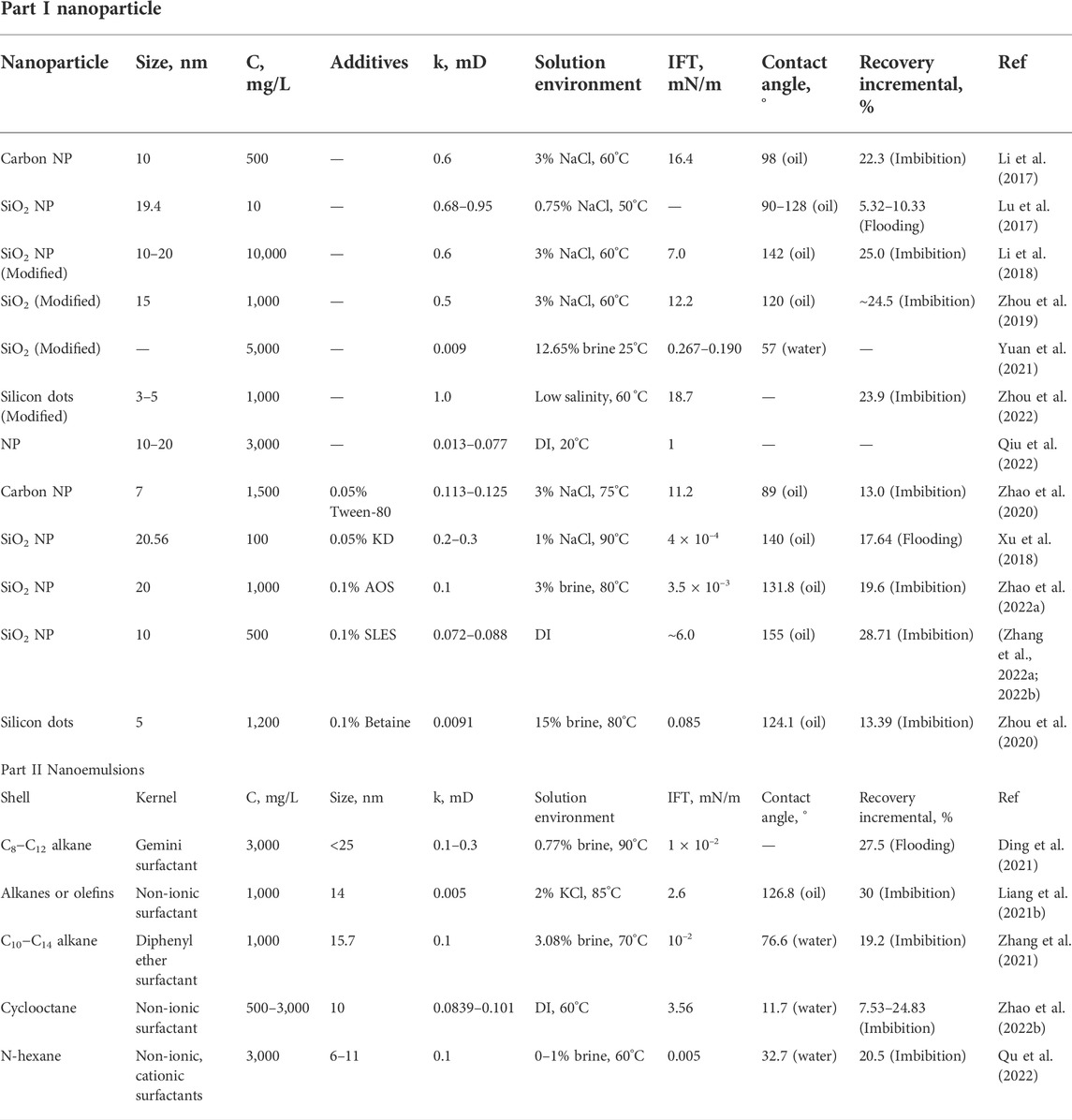
TABLE 1. Nanomaterials for tight formation EOR.
3.2 Nano-emulsions
Broadly speaking, nanodroplets such as nanoemulsions with sizes between 10–100 nm can also be identified as nanomaterials (Shen et al., 2012). Nanoemulsions are generally characterized by a “shell-kernel” structure, in which surfactant functions as an external “shell” and disassociation agents (i.e., alkanes, cycloalkanes, etc.,) form the kernel (Ding et al., 2021). Compared to NPs mentioned in Section 3.1, nanoemulsions are kinetically stable and may be deformable (Aljabri et al., 2021). By splitting the crude oil into “nanosized oil droplets”, reducing IFT, alternating wettability, and increasing sweep efficiency, the average recovery incremental by nano emulsions over brine imbibition was higher than 20% (Table 1, Part II), indicating huge EOR potential. However, the large-scale applications of nano-emulsions still face many challenges, such as.
1) Preparing nano emulsions consumes tremendous amounts of chemicals including surfactants, co-surfactants, organic solvents, etc., and the substantial energy might be required to promote the emulsification process, which greatly increases the cost. Thus, high-efficiency chemicals with lower costs and more economic emulsification methods should be developed.
2) Nanoemulsions are thermodynamically unstable and phase separation is unavoidable, but the influence laws of temperature, salinity, formula composition, and other factors and their transport behaviors in the complex porous media are not well comprehended, and extensive lab-scale and pilot tests are necessary.
4 Inorganic salts
Low salinity water (LSW) EOR has received considerable attention in recent decades thanks to its environmental-friendly and economical nature. The wettability alteration mechanisms of LSW include multi-ionic exchange, electrical double-layer effect, fine release, etc., and its effectiveness to enhance oil recovery has been widely confirmed through both laboratory and field scale tests (Sheng, 2014; Lyu et al., 2022; Mokhtari et al., 2022). For instance, an incremental spontaneous imbibition oil recovery of 4.5% OOIP was reported by Wei et al. (2021) when a brine with 0.21% TDS was applied in 0.3 mD tight cores. Mokhtari et al. (2022) revealed that an incremental recovery of over 10% could be obtained in 1.56 mD chalk cores by diluted seawater at the second stage compared to seawater. Webb et al. (2003) noticed a 25–50% reduction in residual oil saturation near the well region in a field-scale LSW flooding test. Overall, the research on LSW spontaneous imbibition in tight formations is relatively less common than surfactants or nanomaterials. The potential reasons may include.
1) LSW is viewed as an immature EOR technique with complicated EOR mechanisms, and due to the complex oil/brine/rock interactions, there is still no consensus over the dominant mechanisms so far. Also, though synergisms between LSW and surfactant/NPs to facilitate the spontaneous imbibition rate have been reported, their interactions, as well as the synergistic mechanisms are subject to debate.
2) The efficiency of LSW highly depends on brine salinity and composition and is sensitive to connate water saturation/composition, initial rock wettability, clay content, oil composition, etc., therefore, the benefits can hardly be ensured (Sheng, 2014; Katende and Sagala, 2019). Meanwhile, higher sulfate concentration is conducive to increased oil recovery but can also cause souring and scaling problems. The effects of fine release induced by LSW remain controversial, either a reduction or an increase in oil recovery is possible and the boundaries are yet to be identified. Also, the adverse impacts of clay expansion in LSW are not fully considered.
3) In most cases, seawater can hardly be used directly for LSW EOR and the compositions of LSW should be tailored by dissolving inorganic salts in freshwater or distilled water. The desalination of seawater usually requires high input, and the efficiency is generally low.
Author contributions
XZ: conceptualization, supervision, funding acquisition, and writing—original draft, review and editing. GS: conceptualization, supervision, funding acquisition, and writing—review and editing, XC: funding acquisition and investigation. YW, SZ, and LZ: investigation and editing.
Funding
This work was supported by the Natural Science Foundation of China (NSFC) (Grant No.52104019), the Open Fund of Hubei Key Laboratory of Drilling and Production Engineering for Oil and Gas (Yangtze University) (Grant No. YQZC202203) and the Innovation and Entrepreneurship Training program for College Students of Yangtze University (Grant No. Yz2021238).
Conflict of interest
The authors declare that the research was conducted in the absence of any commercial or financial relationships that could be construed as a potential conflict of interest.
Publisher’s note
All claims expressed in this article are solely those of the authors and do not necessarily represent those of their affiliated organizations, or those of the publisher, the editors and the reviewers. Any product that may be evaluated in this article, or claim that may be made by its manufacturer, is not guaranteed or endorsed by the publisher.
References
Aljabri, N. M., Nan, S., and Adrian, C. (2021). Nanoemulsion: An emerging technology for oilfield applications between limitations and potentials. J. Pet. Sci. Eng. 208, 109306. doi:10.1016/j.petrol.2021.109306
Bidhendi, M. M., Kazempour, M., Ibanga, U., Arruda, Justin, Lantz, Mike, Mazon, Cooper, et al. (2019). “A set of successful chemical EOR trials in permian basin: Promising field and laboratory results,” in Presented at the SPE/AAPG/SEG unconventional resources technology conference (Denver, CO: Society of Petroleum Engineers). doi:10.15530/urtec-2019-881
Ding, B., Guan, B., Liu, W., Chen, B., Sun, J., Li, M., et al. (2021). Mechanism of improving water flooding using the nanofluid permeation flooding system for tight reservoirs in Jilin oilfield. Energy fuels. 35 (21), 17389–17395. doi:10.1021/acs.energyfuels.1c02043
Harimi, B., Masihi, M., Mirzaei-Paiaman, A., and Hamidpour, E. (2019). Experimental study of dynamic imbibition during water flooding of naturally fractured reservoirs. J. Pet. Sci. Eng. 174, 1–13. doi:10.1016/j.petrol.2018.11.008
Hou, B., Wang, Y., and Yong, H. (2015). Mechanistic study of wettability alteration of oil-wet sandstone surface using different surfactants. Appl. Surf. Sci. 330, 56–64. doi:10.1016/j.apsusc.2014.12.185
Katende, A., and Sagala, F. (2019). A critical review of low salinity water flooding: Mechanism, laboratory and field application. J. Mol. Liq. 278, 627–649. doi:10.1016/j.molliq.2019.01.037
Li, Y., Dai, C., Zhou, H., Wang, X., Lv, W., Wu, Y., et al. (2017). A novel nanofluid based on fluorescent carbon nanoparticles for enhanced oil recovery. Ind. Eng. Chem. Res. 56 (44), 12464–12470. doi:10.1021/acs.iecr.7b03617
Li, Y., Dai, C., Zhou, H., Wang, X., Lv, W., and Zhao, M. (2018). Investigation of spontaneous imbibition by using a surfactant-free active silica water-based nanofluid for enhanced oil recovery. Energy fuels. 32 (1), 287–293. doi:10.1021/acs.energyfuels.7b03132
Liang, T., Zhao, X., Yuan, S., Zhu, J., Liang, X., Li, X., et al. (2021a). Surfactant-EOR in tight oil reservoirs: Current status and a systematic surfactant screening method with field experiments. J. Pet. Sci. Eng. 196, 108097. doi:10.1016/j.petrol.2020.108097
Liang, X., Zhou, F., Liang, T., Wang, R., Su, H., and Yuan, S. (2021b). Mechanism of using liquid nanofluid to enhance oil recovery in tight oil reservoirs. J. Mol. Liq. 324, 114682. doi:10.1016/j.molliq.2020.114682
Liu, Z., Zhao, G., Brewer, M., Lv, Q., and Sudholter, E. J. (2021). Comprehensive review on surfactant adsorption on mineral surfaces in chemical enhanced oil recovery. Adv. Colloid Interface Sci. 294, 102467. doi:10.1016/j.cis.2021.102467
Lu, T., Li, Z., Zhou, Y., and Zhang, C. (2017). Enhanced oil recovery of low-permeability cores by SiO2 nanofluid. Energy fuels. 31 (5), 5612–5621. doi:10.1021/acs.energyfuels.7b00144
Lyu, C., Zhong, L., Ning, Z., Chen, M., and Cole, D. R. (2022). Review on underlying mechanisms of low salinity waterflooding: Comparisons between sandstone and carbonate. Energy fuels. 36 (5), 2407–2423. doi:10.1021/acs.energyfuels.1c04248
Mokhtari, R., Anabaraonye, B. U., Afrough, A., Mohammadkhani, S., and Feilberg, K. L. (2022). Experimental investigation of low salinity water-flooding in tight chalk oil reservoirs. J. Pet. Sci. Eng. 208, 109282. doi:10.1016/j.petrol.2021.109282
Patil, P. D., Rohilla, N., Katiyar, A., Falcone, Susan, Nelson, Christopher, Rozowski, Peter, et al. (2018). “Surfactant based EOR for tight oil reservoirs through wettability alteration: Novel surfactant formulations and their efficacy to induce spontaneous imbibition,” in Presented at the SPE EOR conference at oil and Gas west asia (Muscat, Oman: Society of Petroleum Engineers). doi:10.2118/190397-MS
Qiu, R., Gu, C., Xue, P., Xu, D., and Gu, M. (2022). Imbibition characteristics of sandstone cores with different permeabilities in nanofluids. Petroleum Explor. Dev. 49 (2), 374–381. doi:10.1016/s1876-3804(22)60031-4
Qu, M., Liang, T., Xiao, L., Hou, J., Qi, P., Zhao, Y., et al. (2022). Mechanism study of spontaneous imbibition with lower-phase nano-emulsion in tight reservoirs. J. Pet. Sci. Eng. 211, 110220. doi:10.1016/j.petrol.2022.110220
Sagala, F., Montoya, T., Hethnawi, A., Vitale, G., and Nassar, N. N. (2019). Nanopyroxene-based nanofluids for enhanced oil recovery in sandstone cores at reservoir temperature. Energy fuels. 33, 877–890. doi:10.1021/acs.energyfuels.8b03749
Shen, Z., Zhao, Z., and Kang, W. (2012). Colloid and surface chemistry. 4th Edition, 39. Beijing: Chemical Industry Press. 978-7-122-12982-6.
Sheng, J. J. (2014). Critical review of low-salinity waterflooding. J. Pet. Sci. Eng. 120, 216–224. doi:10.1016/j.petrol.2014.05.026
Sun, L., Zou, C., Jia, A., Wei, Y., Zhu, R., Wu, S., et al. (2019). Development characteristics and orientation of tight oil and gas in China. Petroleum Explor. Dev. 46 (06), 1073–1087. doi:10.1016/S1876-3804(19)60264-8
Sun, Y. P., Xin, Y., Lyu, F. T., and Dai, C. L. (2021). Experimental study on the mechanism of adsorption-improved imbibition in oil-wet tight sandstone by a nonionic surfactant for enhanced oil recovery. Pet. Sci. 18 (4), 1115–1126. doi:10.1016/j.petsci.2021.07.005
Wang, F., Cheng, H., and Song, K. (2021). A mathematical model of surfactant spontaneous imbibition in a tight oil matrix with diffusion and adsorption. Langmuir 37 (29), 8789–8800. doi:10.1021/acs.langmuir.1c01139
Wang, H., Ma, F., Tong, X., Liu, Z., Zhang, X., Wu, Z., et al. (2016). Assessment of global unconventional oil and gas resources. Petroleum Explor. Dev. 43, 925–940. doi:10.1016/S1876-3804(16)30111-2
Wang, J., Liu, H., Qian, G., Yongcan, P., and Yang, G. (2019). Investigations on spontaneous imbibition and the influencing factors in tight oil reservoirs. Fuel 236, 755–768. doi:10.1016/j.fuel.2018.09.053
Wang, W., Shahvali, M., and Su, Y. (2015). A semi-analytical fractal model for production from tight oil reservoirs with hydraulically fractured horizontal wells. Fuel 158, 612–618. doi:10.1016/j.fuel.2015.06.008
Wang, X., Peng, X., Zhang, S., Du, Z., and Zeng, F. (2018). Characteristics of oil distributions in forced and spontaneous imbibition of tight oil reservoir. Fuel 224 (15), 280–288. doi:10.1016/j.fuel.2018.03.104
Webb, K. J., Black, C. J. J., and Al-Ajeel, H. (2003). “Low salinity oil recovery—log-inject-log,” in Presented at the SPE/DOE symposium on improved oil recovery (Tulsa, Oklahoma: Society of Petroleum Engineers). doi:10.2118/89379-MS
Wei, B., Wang, L., Song, T., Zhong, M., and Varfolomeev, M. A. (2021). Enhanced oil recovery by low-salinity water spontaneous imbibition (LSW-SI) in a typical tight sandstone formation of mahu sag from core scale to field scale. Petroleum 7 (3), 272–281. doi:10.1016/j.petlm.2020.09.005
Xu, D., Bai, B., Meng, Z., Zhou, Q., Li, Z., Lu, Y., et al. (2018). “A novel ultra-low interfacial tension nanofluid for enhanced oil recovery in super-low permeability reservoirs,” in Presented at the SPE asia pacific oil and Gas conference and exhibition (Brisbane, QLD: Society of Petroleum Engineers). doi:10.2118/192113-MS
Yao, Y., Wei, M., and Kang, W. (2021). A review of wettability alteration using surfactants in carbonate reservoirs. Adv. Colloid Interface Sci. 294, 102477. doi:10.1016/j.cis.2021.102477
Yu, H., Fu, W., Zhang, Y., Lu, X., Cheng, S., Xie, Q., et al. (2021). Experimental study on EOR performance of CO2-based flooding methods on tight oil. Fuel 290 (15), 119988. doi:10.1016/j.fuel.2020.119988
Yuan, L., Zhang, Y., and Dehghanpour, H. (2021). A theoretical explanation for wettability alteration by adding nanoparticles in oil-water-tight rock systems. Energy fuels. 35 (9), 7787–7798. doi:10.1021/acs.energyfuels.1c00001
Zhang, C., Jin, X., Tao, J., Xiong, B., Pan, Z., Meng, S., et al. (2021). Comparison of nanomaterials for enhanced oil recovery in tight sandstone reservoir. Front. Earth Sci. 9, 746071. doi:10.3389/feart.2021.746071
Zhang, J., Wang, D., and Olatunji, K. (2016). “Surfactant adsorption investigation in ultralower permeable rocks,” in Presented at the SPE low perm symposium (Kuala Lumpur, Malaysia: Society of Petroleum Engineers). doi:10.2118/180214-MS
Zhang, T., Li, Z., Gao, M., Xu, Z., Adenutsi, C. D., and You, Q. (2022a). New insights into the synergism between silica nanoparticles and surfactants on interfacial properties: Implications for spontaneous imbibition in tight oil reservoirs. J. Pet. Sci. Eng. 215, 110647. doi:10.1016/j.petrol.2022.110647
Zhang, T., Zhi, P., Adenutsi, C. D., Wei, Y. Z., Ma, Z. F., and You, Q. (2022b). Quantitative investigation of nanofluid imbibition in tight oil reservoirs based on NMR technique. Pet. Sci. In Press. doi:10.1016/j.petsci.2022.04.013
Zhao, M., Cheng, Y., Wu, Y., Dai, C., Gao, M., Yan, R., et al. (2022a). Enhanced oil recovery mechanism by surfactant-silica nanoparticles imbibition in ultra-low permeability reservoirs. J. Mol. Liq. 348, 118010. doi:10.1016/j.molliq.2021.118010
Zhao, M., Song, X., Lv, W., Wu, Y., and Dai, C. (2020). The preparation and spontaneous imbibition of carbon-based nanofluid for enhanced oil recovery in tight reservoirs. J. Mol. Liq. 313, 113564. doi:10.1016/j.molliq.2020.113564
Zhao, Y., Hou, J., Qu, M., Xiao, L., and Liu, Y. (2022b). Performance evaluation and oil displacement mechanism analysis of nano-microemulsion using in tight oil reservoir Oilfield Chem. 39 (02), 338–342. doi:10.3760/cma.j.112147-20220225-00152
Zhong, X., Li, C., Li, Y., Pu, H., Zhou, Y., and Zhao, J. X. (2020). Enhanced oil recovery in high salinity and elevated temperature conditions with a zwitterionic surfactant and silica nanoparticles acting in synergy. Energy fuels. 34 (3), 2893–2902. doi:10.1021/acs.energyfuels.9b04067
Zhong, X., Pu, H., Zhou, Y., and Zhao, J. X. (2019). Comparative study on the static adsorption behavior of zwitterionic surfactants on minerals in Middle Bakken formation. Energy fuels. 33, 1007–1015. doi:10.1021/acs.energyfuels.8b04013
Zhou, B., You, Q., Li, Y., Chu, Z., Zhang, L., Wang, P., et al. (2022). Preparation and performance evaluation of an active nanofluid for enhanced oil recovery in ultra-low permeability reservoirs. J. Mol. Liq. 347, 118331. doi:10.1016/j.molliq.2021.118331
Zhou, H., Zhang, Q., Dai, C., Li, Y., Lv, W., Wu, Y., et al. (2019). Experimental investigation of spontaneous imbibition process of nanofluid in ultralow permeable reservoir with nuclear magnetic resonance. Chem. Eng. Sci. 201, 212–221. doi:10.1016/j.ces.2019.02.036
Zhou, Y., Wu, X., Zhong, X., Zhang, S., Pu, H., and Zhao, J. X. (2020). Development of silicon quantum dots based nano-fluid for enhanced oil recovery in tight Bakken cores. Fuel 277, 118203. doi:10.1016/j.fuel.2020.118203
Keywords: wettability alteration, spontaneous imbibition, tight reservoirs, achievements, limitations, enhanced oil recovery
Citation: Zhong X, Sheng G, Chen X, Wang Y, Zhang S and Zhang L (2022) Wettability alteration agents to promote spontaneous imbibition in tight reservoirs: Achievements and limitations. Front. Earth Sci. 10:1010741. doi: 10.3389/feart.2022.1010741
Received: 03 August 2022; Accepted: 12 August 2022;
Published: 08 September 2022.
Edited by:
Qingbang Meng, China University of Geosciences Wuhan, ChinaReviewed by:
Dezhi Qiu, Guangzhou Marine Geological Survey, ChinaXiao Z. Hang, Shandong University, China
Copyright © 2022 Zhong, Sheng, Chen, Wang, Zhang and Zhang. This is an open-access article distributed under the terms of the Creative Commons Attribution License (CC BY). The use, distribution or reproduction in other forums is permitted, provided the original author(s) and the copyright owner(s) are credited and that the original publication in this journal is cited, in accordance with accepted academic practice. No use, distribution or reproduction is permitted which does not comply with these terms.
*Correspondence: Guanglong Sheng, c2hlbmdnbDIwMTlAeWFuZ3R6ZXUuZWR1LmNu