 Fan Yang
 Qimeng Duan
 Baozeng Cheng3
 Guiyun Jin
- 1National Centre for Archaeology Beijing China, School of History and Culture, Shandong University, Jinan, China
- 2Institute of Cultural Heritage, Shandong University, Qingdao, China
- 3Luoyang City Cultural Relics and Archaeology Research Institute, Luoyang, China
- 4Confucius Museum, Qufu, China
The Yiluo River Basin is located in the Central plains of China, an area commonly known as the center of origin of ancient Chinese civilization. Agriculture lays the foundation for social and economic development and triggers societal change and archaeobotany can provide important clues on this issue. archaeobotanical study is an important perspective on the relationship between agriculture and society development. However, relatively few archaeobotanical studies have been conducted in the Yiluo River basin, and the paucity of data has hindered our understanding of the relationship between agriculture and society. Therefore, the archaeobotanical analysis at the Suyang site in the middle reach of the Luo River provides an opportunity to understand how and why agriculture and society developed. Our analytical results of carbonized plant remains and phytolith, coupled with radiocarbon dating, showed that millet was the main crop in the late Yangshao culture (5,500–5000 BP), followed by rice. However, rice cultivation in the area expanded during the Longshan culture (5,000–4000 BP), and its importance as a crop possibly exceeded millet at Suyang. From the late Yangshao to Longshan, rice was cultivated in wet fields by utilizing the Luo River floodplain on a large scale. The proportion of rice at Suyang is the highest among contemporary sites in the Central Plains. It may be related to many reasons such as suitable environmental and geomorphological conditions, advanced water management, the influence of the Qujialing culture, and population growth. In the late Yangshao culture, crop processing seemed to have been concentrated in communal areas. However, during the Longshan culture, different steps of crop processing were scattered throughout the site. This change is hypothesized as a change in the family structure and economic production. After the Yangshao period, the nuclear family became the fundamental unit for social, cultural, and economic production in the Central Plains.
Introduction
As a primary center of agriculture, China developed two different farming practices around the same time during 8,000–9000 BP (Liu et al., 2009; Bettinger et al., 2010; Zhao, 2014; Yang et al., 2015; Crawford et al., 2016; Wang et al., 2018; Zhao et al., 2020). One was developed in northern China mainly for millet crops, and it spread throughout northern China (Qin, 2012). The other was developed in the Yangtze River Basin mainly for rice and was traditionally thought to be confined to southern China (Zhao and Zhang, 2009; Crawford et al., 2016). However, two sites (Jiahu and Yuezhuang) located in northern China have contradicted the traditional understanding since carbonized rice dating to 8000 BP was found, suggesting that rice had already been introduced to northern China by that time. It is believed that rice appeared in central China as earlier as the Peiligang period and became ubiquitous from the middle to late Yangshao period (Yang et al., 2015; Zhong, 2018; Wang et al., 2018). Therefore, these lines of evidence suggest that the two societies with distinctive farming systems continually interacted with each other while maintaining their separate characteristics, thus forming an important cultural landscape since the Neolithic period (Qin, 2012; Lu, 2017).
Agriculture plays an important role in the formation of Chinese civilization, and the highly developed farming system is the foundation of Chinese civilization (Qin, 2012; Lu, 2017). The Yiluo River Valley, located in central North China and with the Erlitou site as its capital from the early 2nd millennium B.C., is crucial in identifying the origins of Chinese civilization and early state formation (Han, 2015). Previous archaeobotany studies in the Luoyang Basin have provided some insights into the development of agriculture in this area. Plant remains show that dry-farming agriculture featuring millet was the principal subsistence economy of the early Yangshao period (Liu et al., 2002; Li et al., 2021). In the late Yangshao period, rice was produced in this region and became an important crop in the following Longshan period (cf. Wanggedang site). Rice generally appeared in the Central Plains of the late Yangshao and Longshan cultures. Distinguishing between wet and dry rice is key to understanding the role of rice systems in social and economic development or environmental change, given how water management is crucial to the development of a complex society. Paddy fields were found at the Huizui site in the Yiluo River basin (Rosen et al., 2015), in the sites of central Henan Province, such as Zhuhai and Yingyang sites, were considered dry rice (Wang et al., 2018, Wang et al., 2019). It is not clear which type of rice is located in the middle of the Luo River Valley.
The present archaeobotany studies in the Yiluo River Valley are mostly focused on its lower course and the Luoyang Basin and the diachronic changes in the agricultural structure (Liu et al., 2002; Zhang et al., 2019; Zhong et al., 2019). The data obtained are preliminary and use material from survey fieldwork, which lacks the application of agricultural technology and the interaction between agriculture and landscape (Lu, 2002; Lee et al., 2007; Zhang et al., 2014; Li and Zhang, 2020). The site surveyed was Suyang, located in the middle part of the Luo River Valley and surrounded by hills. Site occupation dates from the Yangshao period to the Longshan period. Comparing plant remains from Suyang with other contemporaneous sites in Central China can inform us about the subsistence and cultivation methods of crops in the area before early states appeared. In addition, analyzing the interplay between people and the environment would enhance our knowledge of the formation of the civilization of the Yiluo River Valley.
Suyang Site Archaeological Background
The Suyang site is located in Suyang village in Yiyang County, Henan Province (Figure 1). It is situated in the middle of the Luo River Valley, to the south of the Luo River and north of Xionger Mountain. It extends from the foot of the mountain as a gentle slope covering 620,000 m2 with an east-west width of 970 m and a north-south length of 1,040 m. The thickness of the cultural layer is 6 m. The main modern crops grown in the area are wheat and corn; according to local villagers, rice was also grown on the floodplain of the Luo River in the 1960s.
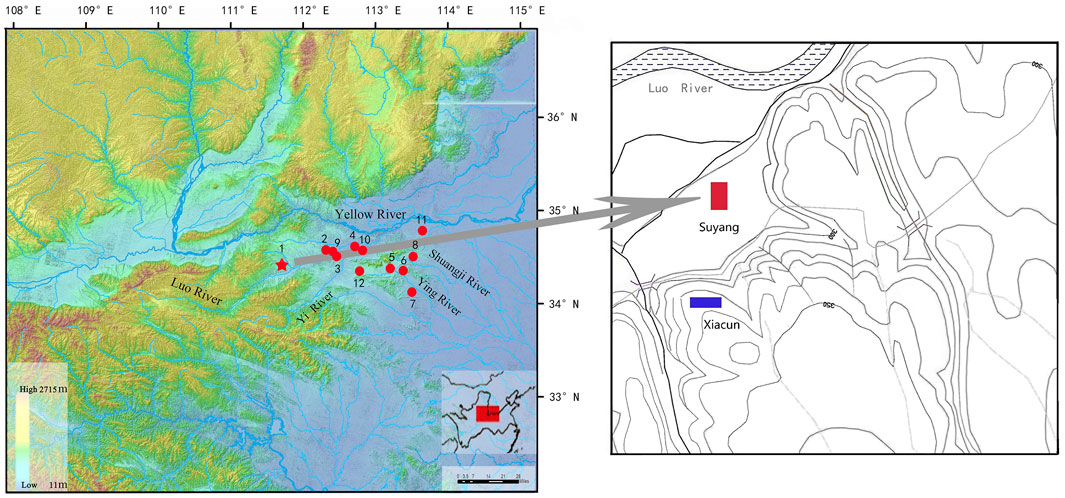
FIGURE 1. Map showing the location of sites mentioned in the text: (1. Suyang, 2. Zhonggou, 3. Wanggedang, 4. Erlitou, 5. Wangchenggang, 6. Chengyao, 7. Wadian, 8. Xinzhai, 9. Zaojiaoshu, 10. Huizui, 11. Zhuzhai, 12. Yingyang) and the spatial distribution of excavation areas of the Suyang site.
The site is divided into two areas: Suyang and Xiacun, which both have ditches that keep every area separate from the other. From 2016 to 2019, the Luoyang City Cultural Relics and Archaeology Research Institute conducted excavations in Suyang and Xiacun (Figure 1). The excavation areas covered 2,000 m2, exposing buildings, pits, ditches, and other types of relics. Dating from the late Yangshao cultural to the Miaodigou Ⅱ and Wangwan Ⅲ periods, because Miaodigou Ⅱ samples too little, this article merges Miaodigou Ⅱ and Wangwan Ⅲ into the Longshan period when discussing related issues (the latest excavation show that more Miaodigou Phase II remains have been found at the site, and more samples will be analyzed in the future to distinguish the agriculture of Miaodigou Phase II and Wangwan Phase III). The Suyang site was a large and important center during the late Yangshao and Longshan periods in the middle of the Luo River Valley (Ren, 2021).
Materials and Methods
The samples analyzed in this research were obtained from excavations undertaken during the 2016 and 2017 fieldwork seasons. All samples were collected using a targeted sampling strategy (Zhao, 2010). A total of 90 flotation samples were collected in 2016 from 63 contexts, including 10 samples from pits dating to the late Yangshao period and 53 samples from pits, stratum, and ditches dating to the Longshan period. Each sample has a volume ranging from 10 to 20 liters, with an average of 16.51 liters and a total of 1,040 liters. For the phytolith analysis, 54 samples were included, 32 from Suyang excavation pits and 11 from Xiacun excavation pits, and 11 from Xiacun excavation dishes.
All flotation samples were floated using bucket flotation on-site, and the carbonized plant remains were collected in 0.85 and 0.18 mm mesh. Once dried, the light fractions were transferred to sturdy plastic containers and labeled. After being sent to the Archaeobotany Laboratory at Shandong University (ALSDU), the light fractions were sorted, identified, and photographed using a Nikon SM 100. The number of unidentifiable seeds or plant parts was not included in the total number of analyses or the discussion.
All phytolith samples were processed and analyzed using Rosen’s protocol. (Rosen and Weniner, 1994; Rosen, 1999; Rosen, 2005). After sieving with a 0.3 mm mesh, 1 g of fine soil was removed and processed in the following steps: 1) 10% hydrochloric acid (HCL) and hydrogen peroxide (H2O2) was added to each sample to remove organic matter and minerals such as calcium and ferrum; 2) HCL was centrifuged with distilled water for 3–5 times to clean the acid; 3) 5% sodium hexametaphosphate solution was added and the samples were left for 12 h to break soil particles; 4) the soil was transferred to a test tube and pure water up to 8 ml was added; the samples were then stirred and left alone for 70 min before the water containing clay was poured out; this step was repeated five times until the clay was totally removed and the samples were then parched; 5) the samples were transferred to a small crucible and heated in a muffle oven at 500°C for 2–2.5 h; 6) the soil was transferred to a test tube while cadmium iodide heavy solution was added to make the phytoliths float on the surface of the solution. The phytoliths were then collected and washed with distilled water; and 7) fixed slides were made with neutral gum.
The identification and statistics of phytoliths were identified using a Nikon Eclipse LV100P0L microscope (200×). Four hundred phytoliths were randomly chosen from each sample to identify and count; then, they were photographed with a Nikon BF53 camera. All classifications and identifications were based on the International Code for Phytoliths Nomenclature 1.0, research on phytoliths of modern plants, and published documents on phytoliths. The identification of rice (Oryza sativa), foxtail millet (Setaria italica), and broomcorn millet (Panicum miliaceium) were based on the standards of Pearsall and Lu (Lu et al., 2009), which meant that the phytoliths of millet were only counted if it had more than two specific figures (Fujiwara, 1995; Pearsall et al., 1995; Lu et al., 2009; Gu et al., 2013; Weisskopf, 2014; Weisskopf and Lee, 2016). Some phytoliths such as square-, oblong-, pointed-, and rod-shaped phytoliths are counted even though they cannot be classified as any species because their assemblages are useful in rebuilding the ancient environment (Wang and Lu, 1993). The quantitative statistics of phytoliths follow Albert’s method, which calculates the concentration of phytoliths in 1 g soil and calculates the percentage of each kind of phytolith (Albert and Weiner, 2001). Every plant’s ubiquity is calculated by the formula the number of samples of a certain kind of plant: the total sample number ×100%.
Dating and Archaeobotanic Results
Dating
Thirteen cereal grain samples from the Suyang site were sent to the State Key Laboratory of Isotope Geochemistry accelerator mass spectrometry (AMS) radiocarbon dating at Guangzhou Institute of Geochemistry, Chinese Academy of Sciences. Each date was calibrated by OxCal v4.4.2, using the IntCal20 atmospheric curve. The 13 AMS C-14 dates obtained from the Suyang site are shown in Table 1. Except for one abnormal date from single wheat grain, the dates are consistent with the dates proposed by ceramic typology (Ren, 2021). The available dates can be grouped into two sets. The first set contains three dates covering the time interval 2,917–2,747 cal BC (95.4% range), which falls within the late Yangshao culture age. The second set covers the period from 2,760 to 1939 cal BC (95.4% range), which corresponds to the Longshan culture.
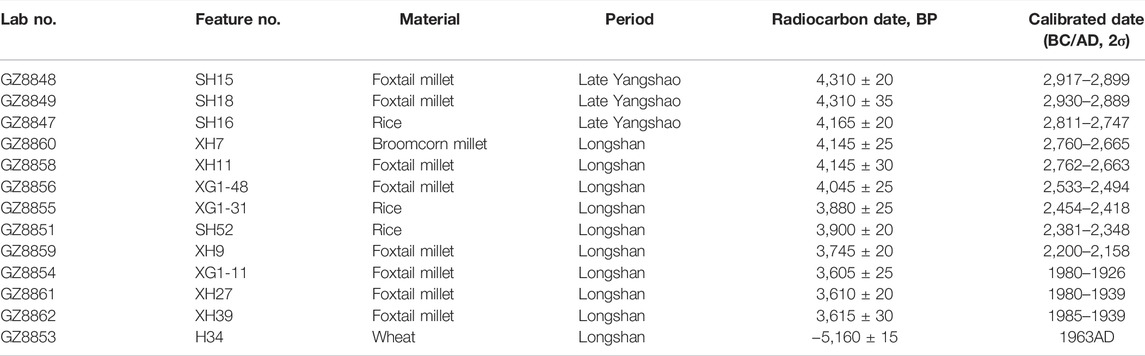
TABLE 1. Radiocarbon dates and calibration results of the Suyang site.
Macro-Botanical Remains
Except for 61 stems, 47,083 seeds or fruits were recovered from flotation, of which 45,963 were identified (Table 2 and Figure 2). The density was 44.2 seeds/fruits per liter of soil. Five types of crops were found in the samples, including foxtail millet, broomcorn millet, rice, soybean (Glycine max), and wheat (Triticum aestivum). The total amount was 45,562, accounting for 99.13% of the carbonized plant remains. Every sample had all these crops, so the ubiquity of each kind was 100%. Except for some immature millets, most millets were mature and complete. Among rice, broken fragments were more abundant than complete seeds, of which 1,850 were rice spikelet bases. There were not many soybeans found in the samples, but the complete ones were six times more than the incomplete ones. The relative percentages of each crop type were as follows: foxtail millet, 73.89%; rice, 25.19%; broomcorn millet, 0.75%; and soybean, 0.16%. The ubiquity of foxtail millet is clear from all samples and periods; therefore, it seems obvious that foxtail millet was the dominant crop at the Suyang site. However, there are interesting trends; the values of relative percentage and ubiquity changed throughout the study period. The relative percentage of foxtail millet declined from the late Yangshao period to the Longshan period, while rice witnessed an increase. Simultaneously, the ubiquity of the broomcorn millet saw a slight increase, but its amount was still far below that of the others. In contrast, soybean maintained a low relative percentage throughout the entire period (Figure 3). Finally, one wheat seed was found in the sample TN5W9H34; however, it turned out to be an intrusion from modern times after AMS C-14 dating (Table 1).
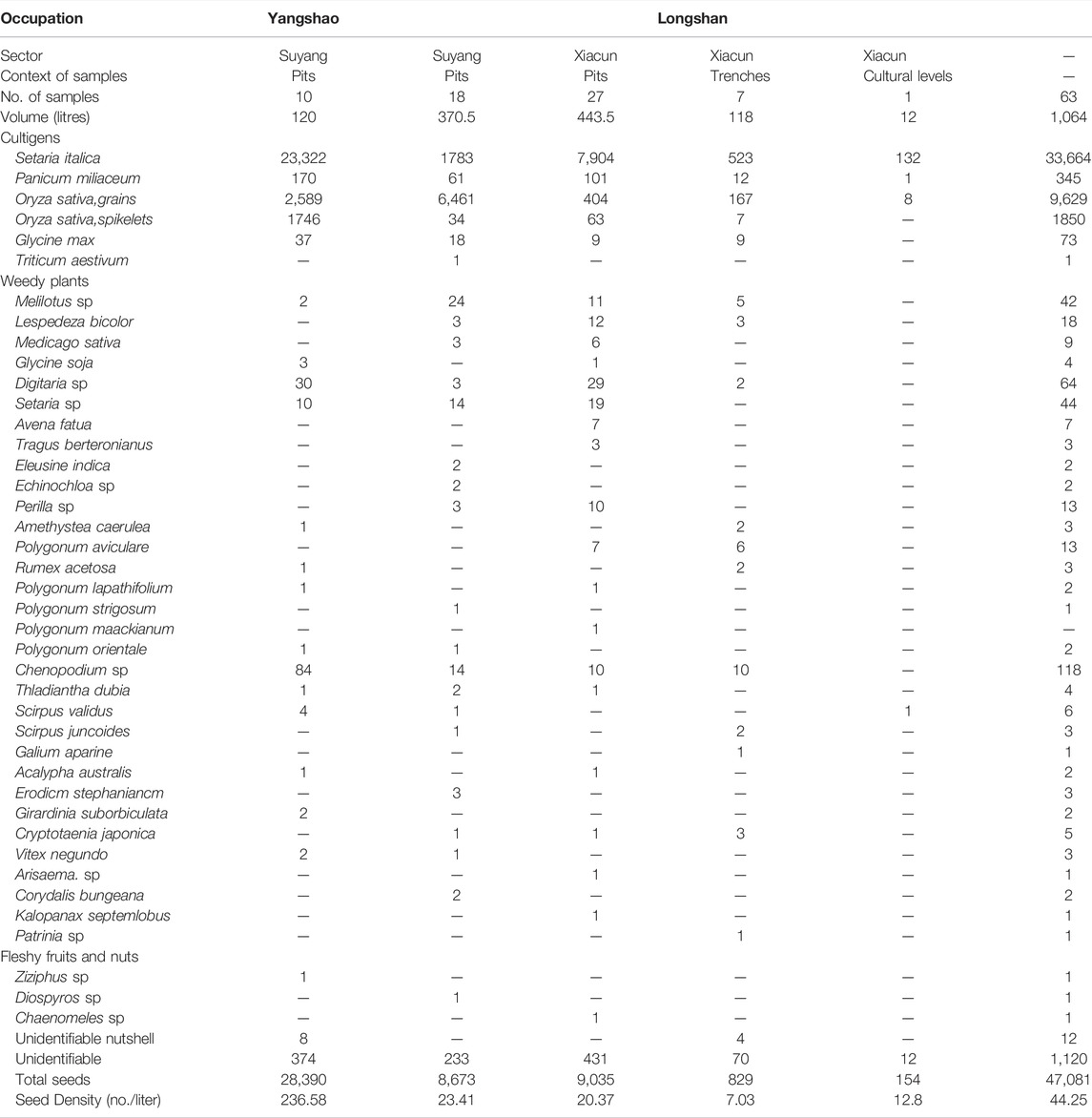
TABLE 2. Summary of the Suyang Site Flotation Samples (all phases combined).
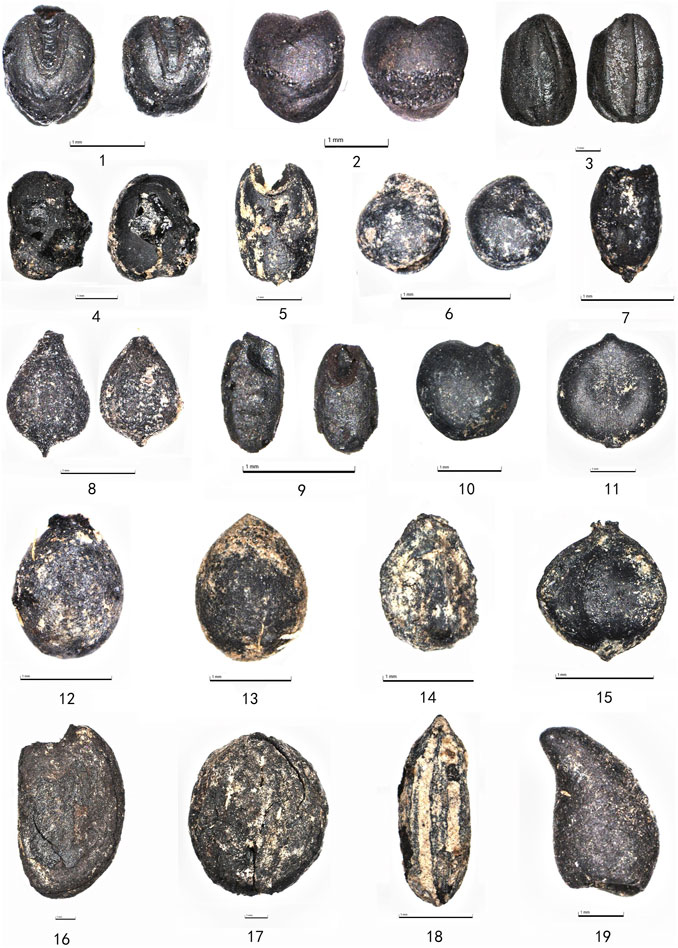
FIGURE 2. Representative charred plant remains from the Suyang site: (1) Setaria italica, (2) Panicum miliaceum, (3) Oryza sativa, (4) Glycine max, (5) Triticum aestivum, (6) Chenopodium sp., (7) Setaria sp., (8) Scirpus Validus, (9) Digitaria sp., (10) Corydalis sp., (11) Polygonum lapathifolium, (12) Acalypha australis, (13) Perilla sp., (14) Patrinia villosa, (15) Scirpus juncoides, (16) Diospyros sp., (17) Ziziphus sp., (18) Cryptotaenia japonica, (19) Chaenomeles sp.
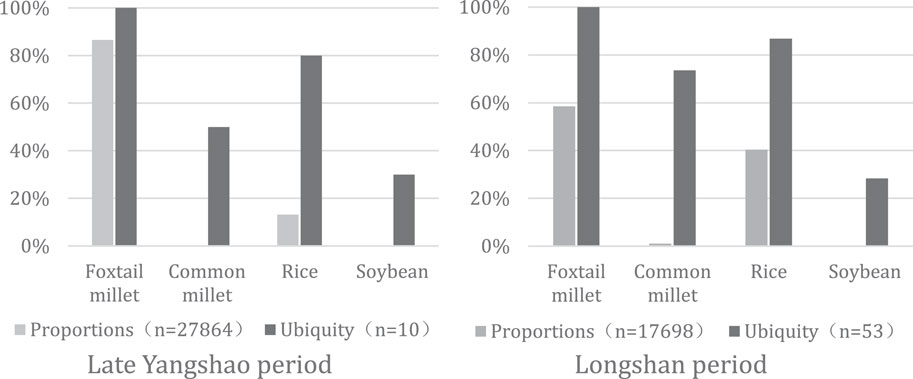
FIGURE 3. Proportions and ubiquity of crops at the Suyang site (Late Yangshao period and Longshan period).
In addition, 401 weeds with a 0.87% relative percentage and 73.02% ubiquity were found in the samples from 37 species, of which the most abundant were Leguminosae, Chenopodiaceae, Lamiaceae, Euphorbiaceae, Polygonaceae, and Cyperaceae. Chenopodium sp., Digitaria sp., Setaria sp., Lespedeza bicolor, Melilotus sp., Perilla sp., and Polygonum aviculare. Chenopodium sp. is a crop with a long history of cultivation in some areas, such as America and Taiwan (Smith, 1984). The seeds of Chenopodium sp. unearthed together with millet from the Han Yangling site might be the earliest evidence of Chenopodium’s cultivation (Yang et al., 2009). While Chenopodium sp. remains from the Nanwa site, the Guchengzhai site and the Erlitou site recognized these seeds as a cultivar (Cheng et al., 2012; Wu et al., 2014), whether Chenopodium sp. is a farmed crop remains uncertain. In Suyang, it is possible that people gathered this weed to eat as a vegetable. Lespedeza bicolor and Melilotus sp. are common at sites in central China, and they are recognized as fodder or fuel; however, those from the Suyang site do not necessarily fit this hypothesis based on their scarcity. Fruits found in the samples were rare and were probably used as food to enrich their diet.
Micro-Botanical Remains (Phytolith)
Various phytoliths were recovered from the samples, with an average density of 560,000 p/g. A total of 19,913 phytoliths from 54 samples were classified into 25 morphotypes. Densities varied significantly between positive samples, ranging from 2.10 to 22.84%. The identifiable morpho-types were from the husk or stem/leaf of rice and millet (Figure 4).
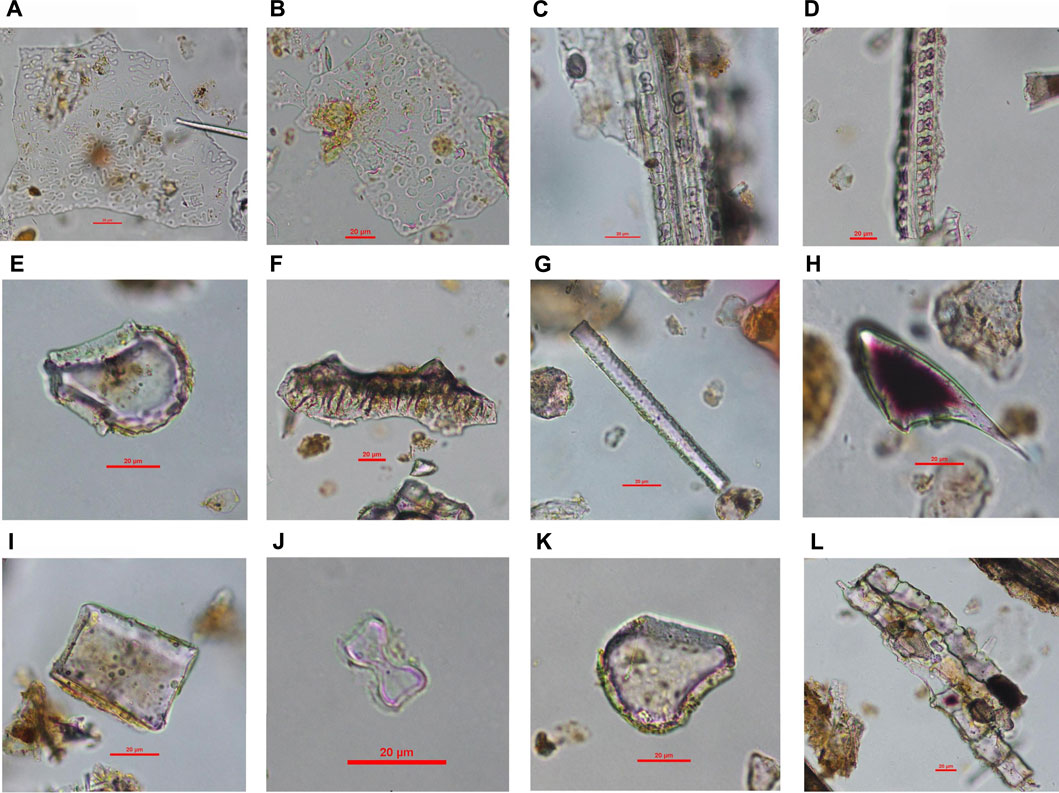
FIGURE 4. Main phytolith types from the Suyang site. (A) η-type from husks of common millet, (B) Ω-type from husks of foxtail millet, (C) Vertically-bilobe from Poaceae, (D) parallel-bilobe from rice leaf/stem, (E) bulliform from rice leaf, (F) double-peaked from rice husk, (G) smooth elongate, (H) pointed, (I) square, (J) bilobate, (K) bulliform, (L) rectangle.
The relative percentages of broomcorn millet, foxtail millet, and rice from the Yangshao period were 10.99, 11.46, and 77.55%, respectively (Figure 5). All samples from this period had more phytoliths from the husk than the stem/leaf, regardless of whether the phytoliths belonged to millet or rice. It is worth noting that the pits H1, H5, H15, and H16③ only had phytoliths belonging to the husk of millet or rice. For the Longshan period, the relative percentages of these three crops were 18.67, 14.25, and 67.09%, respectively. Similarly, in the former period, the phytoliths of husk were more abundant than those of stem/leaf. However, the relative percentage of the latter type increased. Pits SYH41, XCH7, XCH11②, XCH12②, XCH14, XCH15, and XCH17 reverted the trend where phytoliths of stem/leaf were more abundant than husk ones. In addition to rice and millet varieties, phytoliths belonging to reed were found in 28 samples (51.85%) There is a note-worthy difference between the results of phytoliths and carbonized seeds. The relative proportion of common millet and rice is much higher in the phytolith assemblage than in the carbonized results and this could be due to the biases of charred preservation (Tanja and Manfred, 2008). The microscopic nature of the phytolith should be noticed as well. The amount of each sediment sample is so small when compared to the whole feature that a tiny difference in sampling could be magnified to a larger extent on the data. After balancing the influencing factors, the carbonized plant remains will be used as the main evidence to discuss the relevant issues of crops, and the phytolith data will be the subordinate one.
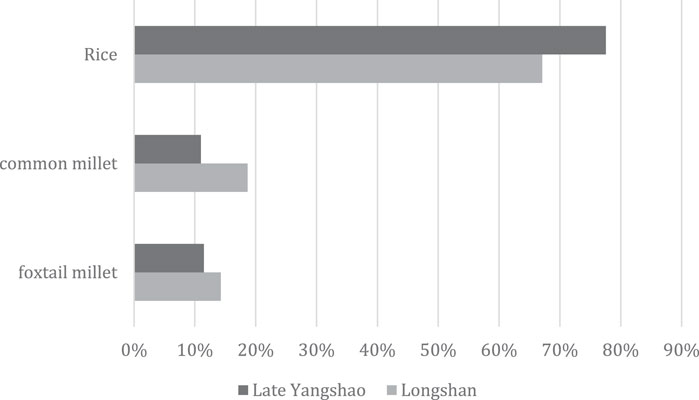
FIGURE 5. Proportions of glume phytoliths of common millet, foxtail millet, and rice at the Suyang site.
Discussion
The Status of Rice
Foxtail millet seemed to be the most important crop at the Suyang site during the late Yangshao period. Rice was less present but important at the site, considering its 80% ubiquity. Broomcorn and soybean did not equal the status of foxtail millet and rice, although broomcorn millet was slightly more important than soybean. During the Longshan period, while the status of rice seemed to improve over time.
The percentage and ubiquity of seed remains of foxtail millet would place this crop as the most important cultigen throughout both periods of occupation of the site. However, it is necessary to consider the grain size (weight) before estimating their role in the plant diet. According to the weight of carbonized seeds unearthed at the Suyang site, the results indicate that rice grew in prominence during the late Yangshao period and surpassed foxtail millet. Rice may have surpassed foxtail millet as the most important crop by the Longshan period, as shown in the graph below (Figure 6).
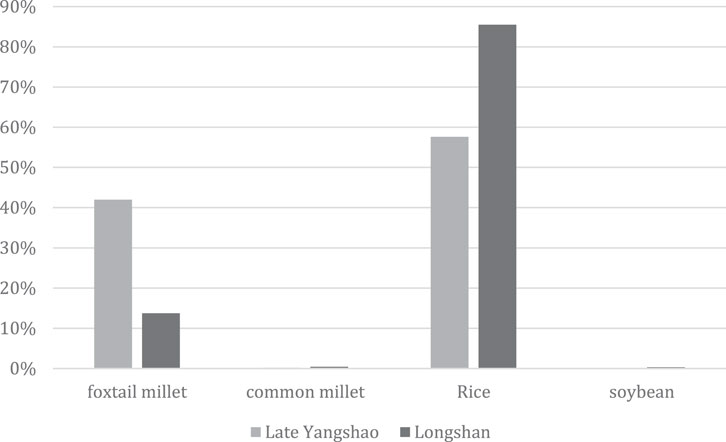
FIGURE 6. Proportions of crops in different periods in grain weight at the Suyang site.
Evidence from experimental archaeology also supports our result. When comparing the number of glume phytoliths from rice and millet of equal weight, the data showed underestimated the rice. Modern experiments have shown that millet produces more phytoliths than rice; therefore, it is expected that when millet and rice are equal in weight, millet phytoliths are more likely to occur (Zhang, 2010). In our analysis, glume phytoliths of rice were more abundant than millet, suggesting that more rice might have been produced than millet at the Suyang site. Meanwhile, we also need to pay attention to the following issues. First of all, because there are only experimental data on the glume of millet and rice, the above discussion is based on the glumes of millet and rice, and the stem leaves are not discussed. Second, phytoliths from millet husk are very fragile and more difficult to preserve, so the discussion based on husk is very preliminary, and more follow-up work is needed.
It is interesting to compare Suyang with other sites in Central China; as shown in Figure 7, the percentage and ubiquity of rice at the Suyang site are the highest. The Wanggedang site located in the Lower Luo River turned up 144 seeds of rice (4.09% of the total) recovered from systematic flotation, indicating that while rice could have been an essential part of the plant diet considering its 52% ubiquity (Zhong et al., 2019), it was still far inferior to the Suyang site. In comparison, the status of rice in the sites of Chengyao, Wangchenggang, and Xinzhai was lower than in others (Zhao, 2007; Zhong et al., 2018). In contrast, rice made a more critical contribution at the sites of Wadian in the middle of Ying River Valley, in the Mid-Holocene accumulation stage with the characteristics of minor altitude difference between terrace and riverbed, which is like a waterside village. Such a landscape made it possible for the ancients to excavate ditches and proceed with rice cultivation (Wang et al., 2015). Still, the rice in Wadian is not as crucial as that in Suyang.
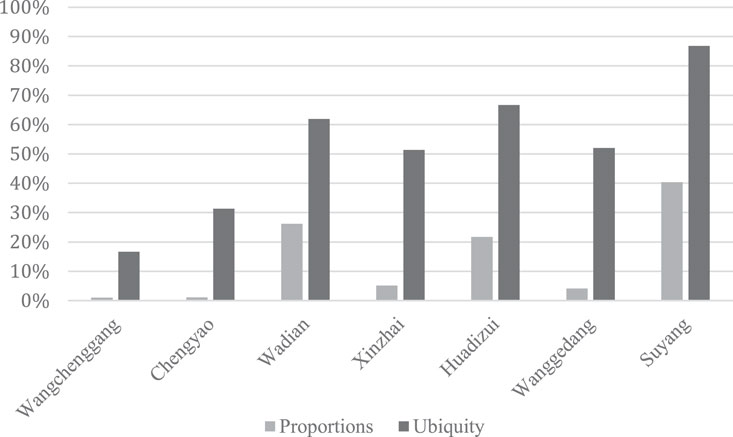
FIGURE 7. Proportions and ubiquity of rice in the Longshan period at the Central Plain.
The Rice Arable Systems at the Suyang Site: Wet or Dry?
The recovery of 1,850 rice spikelet bases (1746 from the late Yangshao period and 104 from the Longshan period) suggests that at least some rice was processed at the site. Phytoliths from the leaf/stem or the husk of rice spanning all kinds of contexts at the Suyang site and weeds common in paddy fields such as Echinochloa and Cyperaceae were recovered in flotation samples, suggesting that rice was produced locally. Given that previous research has failed to certify whether rice was cultivated by local people in the Luo River Valley (Lee et al., 2007), the Suyang site offers compelling evidence demonstrating that people during the late Yangshao period in the Luo River Valley cultivated rice.
Even though the research suggests that Central China had a favorable environment for rice cultivation in ancient times, the question remains as to what kind of rice people chose to cultivate (Wang et al., 2018). According to Weisskopf et al. (2015a), different ratios of phytolith morphotypes to produce silica in the grass (fixed) and those that need sufficient water (sensitive) could be used to rebuild rice water settings in rice cultivation. The fixed: sensitive ratio at Suyang demonstrated a substantially higher ratio of sensitivity to fixed phytoliths, indicating that the setting in the late Yangshao period was similar to that in the Tianluoshan and Shunshanji sites (Luo et al., 2020). In the case of Tianluoshan, the results suggested wet paddy agriculture (Weisskopf et al., 2015a). Therefore, it is likely that the rice remains from Suyang was cultivated in irrigated paddies (Figure 8). It is possible that the people living at the site might have taken advantage of the surrounding swamps to grow rice. In the following Longshan period, the setting did not seem to have changed according to the ratio.
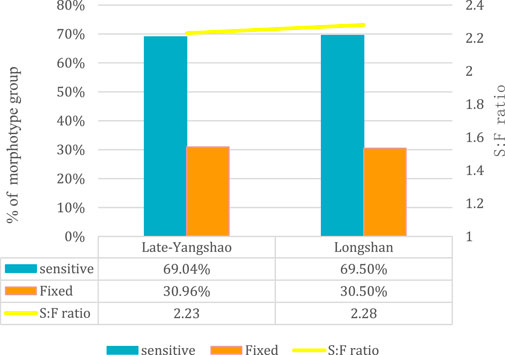
FIGURE 8. Percentage of sensitive versus fixed phytolith morphotypes in two periods at the Suyang site; percentages exclude all phytolith types not within the sensitive/fixed classification as defined by Weisskopf et al. (2015a).
Furthermore, four seeds of Scirpus juncoides, a shallow water plant, were recovered at Suyange, indicating wet conditions around the settlement. Additionally, a paddy system was found in the Huizui site located in the lower Yiluo River Valley, which led us to search for the same thing at Suyang (Rosen et al., 2017). Unfortunately, there have been no remains suggestive of a paddy field found, probably due to the small excavation areas.
Now, we answer why the status of rice in the Longshan period grew despite the lack of improvement in the cultivation method. Paleoenvironmental research suggests that Henan Province was under the influence of subtropical monsoon climate during the Yangshao period, which means that it had higher temperature and precipitation than in modern times (Li et al., 2015). For example, the deposited sediment from a profile at the Zaojiaoshu site revealed that the area had a warmer and wetter climate than the present, parallel to the modern climate in the middle-lower Yangtze Plain (Zhang and Li, 1997). The charcoal found in the Suyang site was from various species, including Aceraceae, Bambusoideae, Pinus sp., Quercus sp., Populus sp., Ulmus sp., and Cercidiphyllum sp. Bambusoidea, only grows in wet and humid environments, indicating that the area enjoyed a wetter climate in the past. Suyang Site is located on the T2 terrace of southern Luo River (Ren, 2021). About 7,200 years ago, the T1 terrace began to form along with the erosional downcutting of Luo River. The increasing sediment accumulation brought sediment-rich clay and ponding depressions which provided the appropriate setting for rice cultivation. It is credible that there are large floodplain areas suitable for rice cultivation on both sides of the Luo River near the he Suyang site (Rosen et al., 2015; Zhang et al., 2018; 2019).
In addition to environmental reasons, culture and population are also important factors affecting rice cultivation. From the late Yangshao period, the Qujialing culture showed a definite northward trend, the western Henan area and the Luoyang Basin was greatly influenced by the Qujialing culture from the Middle Yangtze Region (Dai, 1998; Meng, 2011). A few relics of Miaodigou II culture were found in the Suyang site, and many relics have Qujialing cultural characteristics. With the solid northward movement of Qujialing culture, the middle reaches of the Luo River were included in the late Yangshao period (Ren, 2021). The spread of the Qujialing culture into this area, the Suyang site would have impacted greatly on rice farming that focused Yangtze pattern.
The increase in population might have resulted from the rice agriculture in the Suyang site. According to the excavation results, there more relics of the Longshan period were recovered in the Xiacun areacomparing with the former period (Ren, 2021), which suggests the residential area of the settlement expanded to the Xiacun areas during the Longshan period. The possible reason behind this scenario could be the population growth. Rice is a higher-yielding crop with good taste than millet, and the large-scale cultivation of rice can feed more of the population. However, Rice is also a labor-intensive crop. From our data, the population growth could also mean an increased workforce used in water management and relative production activities in rice cultivation.
Crop Processing and Social Organization
Crop processing refers to the process that takes place after harvest and before consumption, which generally contains several stages such as threshing, winnowing, dehusking, and sieving (Reddy, 1997). Because the processing steps require particular assemblages, they can be identified by examining the composition of each sample. According to previous research, all processing steps belonged to either earlier stages featuring threshing reflected by many leaf/stem parts, small and light weed seeds, and immature grains in the byproducts; or to later stages featuring dehusking associated with clean grains and husks in the byproducts (Fuller and Steven, 2009; Fuller et al., 2014). Phytoliths can provide information about the crop processing style, provided that crops such as rice and millet produce different phytoliths in different parts of their body (Harvey and Fuller, 2005). For example, the ratios of the stem, husk, and weed can be used to infer the site, stages, and scale of crop processing, which can further reveal the division and organization of social labor and economy (Stevens, 2003; Fuller and Steven, 2009; Fuller et al., 2014; Weisskopf, 2014).
The phytoliths produced by the stem/leaf of millet and rice are ubiquitous at the Suyang site, indicating that the crops were harvested by reaping at the sheaf. Three samples (H1, H3, H6) of the Yangshao period only had phytoliths of husk and several mature grains, while the other samples have much the same phytoliths, which demonstrates that dehusking was a routine activity at the Suyang site. The samples of this period did not have any assemblage characteristic of the earlier stages of the crop processing, which is possible because the threshing field was not in the sampling area.
For the Longshan period samples, the amount and ubiquity of phytoliths produced by the stem/leaf of millet and rice were higher than the former, indicating continuity in the harvesting style. Some samples from the Suyang (H18, H26, H27) and Xiacun (H17, H18, G1(14)) areas have a large number of husk phytoliths, especially sample H18①-6 with a density of 830,000 particles per gram. These samples indicate that dehusking was still a routine activity at the Suyang site during the Longshan period. Meanwhile, other samples from the Suyang area (H7, H14, H41) and Xiacun area (H11②, H12②, H15) provided evidence based on stem/leaf phytoliths for threshing activity, suggesting that the whole processing activities were carried out inside the settlement in the Longshan period.
The absence of evidence suggestive of threshing activities on-site during the Yangshao period may also indicate that in earlier periods, these activities were communal and were undertaken in large open areas outside the settlement perimeter. If this is true, a change in the crop processing pattern in later periods when threshing and dehusking are observed inside the village may point to the development of nuclear families. Researchers have shown that the nuclear family as an economic unit started to show its independence and desire for wealth and status during this period, as a consequence of the development of social complexity in the area (Dai, 2013). Furthermore, evidence from the Baligang site (Weisskopf et al., 2015b), the sites in Ying River Valley (Zhao, 2007), Shu River Valley (Song et al., 2019), and the upper Hutuo River Valley (Jiang et al., 2019) all indicate the conversion of labor from the late Yangshao period to the Longshan period. It should be noted that t the number of samples analyzed in this study remains small, and this part is only a discussion based on the sampling area. When the site is re-excavated, we will supplement the sample size and discuss this again.
Conclusion
This research suggests that rice became a great crop opportunity produced locally. Large amounts of rice base remain in some common paddy weeds such as Echinochloa and Cyperaceae, and the ubiquity of phytoliths of stem/leaf all point toward this conclusion. While dry farming agriculture featuring foxtail millet was the primary subsistence economy at the Suyang site during its earlier periods, rice cultivation developed throughout the Longshan period and became a staple food. Population growth probably stimulated this change. Additionally, all lines of evidence indicate that rice played a much more critical role at the Suyang site than other sites in Central Plains; it may be related to many reasons such as suitable environmental and geomorphological conditions, the influence of the Qujialing culture, and population growth.
By combining the analyses of carbonized remains and phytoliths, we discussed two issues concerning the economic and social structure of Suyang. The dispersion of social production and the reduction of the social unit from communal to nuclear families seemed to have been widespread in northern China in later periods according to the crop processing patterns we analyzed. In future research, attention should be paid to the combination of carbonized plant remains, phytoliths, starch, and other micro-remains. The significance of the plant remains should be discussed from an interdisciplinary perspective. At the same time, multi-proxy investigations should provide a more informed understanding of the relationship between plant remains and human behavior, as well as ancient society.
Data Availability Statement
The original contributions presented in the study are included in the article/Supplementary Material, further inquiries can be directed to the corresponding authors.
Author Contributions
FY: Extraction and identification of carbonized plant remains and phytoliths,Writing Original Draft QD: Assist with phytolith extraction and data analysis BC: Site excavation and collation of archaeological background GR: Site excavation and collation of archaeological background YJ: Charcoal identification and analysis GJ: Provide research guidance, research funding and revise drafts.
Funding
This work was funded by the National Natural Science Foundation of China (41771230) and the Zhengzhou Source of China and Songshan Civilization Research Association Research Program (Y2020-3).
Conflict of Interest
The authors declare that the research was conducted in the absence of any commercial or financial relationships that could be construed as a potential conflict of interest.
Publisher’s Note
All claims expressed in this article are solely those of the authors and do not necessarily represent those of their affiliated organizations, or those of the publisher, the editors and the reviewers. Any product that may be evaluated in this article, or claim that may be made by its manufacturer, is not guaranteed or endorsed by the publisher.
Acknowledgments
The collection and flotation of samples in this research were assisted by Wang YH, Fan ZM, Wang SL, Wang JL, and Sun L.J. (all of them work for Luoyang City Cultural Relics and Archaeology Research Institute). Yang JG (The Institute of Archaeology CASS) offers great help for seed identification.
References
Albert, R. M., and Weiner, S. (2001). “Study of Phytoliths in Prehistoric Ash Layers Using a Quantitative Approach,” in Phytoliths: Applications in Earth Sciences and Human History. Lisse. Editors J. D. Meunier, and F. Colin (Lisse: A.A. Balkema Publishers), 251–266.
Bettinger, R. L., Barton, L., and Morgan, C. (2010). The Origins of Food Production in North China: A Different Kind of Agricultural Revolution. Evol. Anthropol. 19 (1), 9–21. doi:10.1002/evan.20236
Cheng, W. W., Zhang, J. Z., and Cai, Q. F. (2012). Analysis of Plant Reminds from the Guchengzhai Site in Xinmi, Henan. Huaxia Archaeol. 1, 54–62. doi:10.16143/j.cnki.1001-9928.2012.01.001
Crawford, G. W., Chen, X., Luan, F., and Wang, J. (2016). People and Plant Interaction at the Houli Culture Yuezhuang Site in Shandong Province, China. Holocene 26 (10), 1594–1604. doi:10.1177/0959683616650269
Dai, X. M. (1998). Evolution of the Neolithic Cultural Pattern in the Yellow River Valley. Acta Archaeol. Sin. 4, 389–418.
Dai, X. M. (2013). “The Process of Social Complication in the Longshan Period in the Central Plains. School of Archaeology and Museology and Chinese Archaeology Research Center,” in Archaeological Research(10). Editor Peking University (Beijing: science press), 539–581.
Fujiwara, H. (1995). “Research into the History of Rice Cultivation Using Plant Opal Analysis,” in Current Research in Phytolith Analysis, Application in Archaeology and Paleoecology. Editors D. M. Pearsall, and D. R. Piperno (Philadelphia(PA): MASCA, University of Pennsylvania), 147–158.
Fuller, D. Q., and Steven, C. (2009). “Agriculture and the Development of Complex Societies: an Archaeobotanical Agenda,” in From Foragers to Farmers: Papers in Honour of Gordon C. Hillman. Editors A. S. Fairbairn, and E. Weisskopf (Oxford and Oakville: Oxbow Books), 37–57.
Fuller, D. Q., Stevens, C., and McClatchie, M. (2014). “Routine Activities, Tertiary Refuse and Labor Organization: Social Inferences from Everyday Archaeobotany,” in Ancient Plants and People Contemporary Trends in Archaeobotany. Editors M. Madella, C. Lancelotti, and M. Savard (Tucson: University of Arizona Press), 174–217.
Gu, Y., Zhao, Z., and Pearsall, D. M. (2013). Phytolith Morphology Research on Wild and Domesticated Rice Species in East Asia. Quat. Int. 287 (FEB21), 141–148. doi:10.1016/j.quaint.2012.02.013
Han, J. Y. (2015). Early China-the Making of the Chinese Cultural Sphere. Shanghai: Shanghai Guji Press, 229.
Harvey, E. L., and Fuller, D. Q. (2005). Investigating Crop Processing Using Phytolith Analysis: the Example of Rice and Millets. J. Archaeol. Sci. 32 (5), 739–752. doi:10.1016/j.jas.2004.12.010
Jiang, Y. C., Dai, X. M., Wang, L. Z., Wang, X. Y., and Qin, L. (2019). Plant Macro Remains Reveal the Agricultural Pattern and Regional Variation of the Shanxi Plateau during the Longshan Period. Quat. Sci. 39 (1), 123–131. doi:10.11928/j.issn.1001-7410.2019.01.12
Lee, G.-A., Crawford, G. W., Liu, L., and Chen, X. (2007). Plants and People from the Early Neolithic to Shang Periods in North China. Proc. Natl. Acad. Sci. U.S.A. 104 (3), 1087–1092. doi:10.1073/pnas.0609763104
Li, K. F., Ma, C. M., Gao, W. H., Li, S. Y., Li, Z. X., and Pan, Y. F. (2015). Progress and Trend of Holocene Environmental Archaeology in Henan Province. Prog. Geogr. 34 (7), 883–897. doi:10.18306/dlkxjz.2015.07.010
Li, Y. P., and Zhang, J. N. (2020). The Influence of Landscape Evolution on Rice Planting in the Middle-Late Neolithic Period to Xia-Shang Dynasties in Luoyang Basin. Quat. Sci. 40 (2), 499–511. doi:10.11928/j.issn.10017410.2020.02.19
Li, Y., Zhang, J., Zhang, X., and Zhao, R. (2021). Agriculture, the Environment, and Social Complexity From the Early to Late Yangshao Periods (5000‐3000 BC): Insights From Macro-Botanical Remains in North-Central China. Front. Earth Sci. 9, 662391. doi:10.3389/feart.2021.662391
Liu, L., Chen, X., Lee, Y. K., Wright, H., and Rosen, A. (2002). Settlement Patterns and Development of Social Complexity in the Yiluo Region, North China. J. Field Archaeol. 29 (1/2), 75–100. doi:10.2307/3181486
Liu, X., Hunt, H. V., and Jones, M. K. (2009). River Valleys and Foothills: Changing Archaeological Perceptions of North China's Earliest Farms. Antiquity 83 (319), 82–95. doi:10.1017/S0003598X00098100
Lu, H. (2017). New Methods and Progress in Research on the Origins and Evolution of Prehistoric Agriculture in China. Sci. China Earth Sci. 60, 2141–2159. doi:10.1007/s11430-017-9145-2
Lu, H., Zhang, J., Wu, N., Liu, K.-b., Xu, D., and Li, Q. (2009). Phytoliths Analysis for the Discrimination of Foxtail Millet (Setaria Italica) and Common Millet (Panicum Miliaceum). PLoS ONE 4 (2), e4448. doi:10.1371/journal.pone.0004448
Luo, W., Yang, Y., Zhuang, L., Gan, H., Gu, C., Huang, C., et al. (2020). Phytolith Evidence of Water Management for Rice Growing and Processing between 8,500 and 7,500 Cal Years Bp in the Middle Huai River Valley, China. Veget Hist. Archaeobot 30, 243–254. doi:10.1007/s00334-020-00782-2
Märkle, T., and Rösch, M. (2008). Experiments on the Effects of Carbonization on Some Cultivated Plant Seeds. Veget Hist. Archaeobot 17 (Suppl. l .1), 257–263. doi:10.1007/s00334-008-0165-7
Meng, Y. Z. (2011). The Process of the Qujialing Culture from South to North. Huaxia Archaeol. 3, 51–63. doi:10.16143/j.cnki.1001-9928.2011.03.003
Pearsall, D. M., Piperno, D. R., Dinan, E. H., Umlauf, M., Zhao, Z., and Benfer, R. A. (1995). Distinguishing Rice (Oryza Sativa Poaceae) from Wild Oryza Species through Phytolith Analysis: Results of Preliminary Research. Econ. Bot. 49 (2), 183–196. doi:10.1007/BF02862923
Qin, L. (2012). Archaeobotanical Research and Expectation Chinese Agriculture Origin. School of archaeology and museology of Peking University, center of the study of Chinese archaeology of Peking University, archaeological research(9). Beijing: Cultural relics publishing house press, 260–315.
Reddy, S. N. (1997). If the Threshing Floor Could Talk: Integration of Agriculture and Pastoralism during the Late Harappan in Gujarat, India. J. Anthropol. Archaeol. 16 (2), 162–187. doi:10.1006/jaar.1997.0308
Ren, G. (2021). Brief Report on the Excavation of the Xiacun Area in the Suyang Site at Yiyang, Henan Province. Cult. Relics Central China 5, 23–38.
Rosen, A., Macphail, R., Liu, L., Chen, X., and Weisskopf, A. (2017). Rising Social Complexity, Agricultural Intensification, and the Earliest Rice Paddies on the Loess Plateau of Northern China. Quat. Int. 437, 50–59. doi:10.1016/j.quaint.2015.10.013
Rosen, A. M., Lee, J., Li, M., Wright, J., Wright, H. T., and Fang, H. (2015). The Anthropocene and the Landscape of Confucius: A Historical Ecology of Landscape Changes in Northern and Eastern China during the Middle to Late-Holocene. Holocene 25 (10), 1640–1650. doi:10.1177/0959683615594241
Rosen, A. M. (1999). “Phytolith Analysis in Near Eastern Archaeology,” in The Practical Impact of Science on Near Eastern and Aegean Archaeology, Weiner Laboratory Monograph 3. Editors S. Pike, and S. Gitin (London: Archae type Publications), 9–15.
Rosen, A. M. (2005). “Phytolith Indicators of Plant and Land Use at Çatalhöyük,” in Inhabiting Çatalhöyük, Reports from the 1995-99 Seasons. Editor I. Inhodder (CambridgeLondon: Mcdonald Institute for Archaeological Research, British. Institute of Archaeology at Ankara), 203–212.
Rosen, A. M., and Weiner, S. (1994). Identifying Ancient Irrigation: a New Method Using Opaline Phytoliths from Emmer Wheat. J. Archaeol. Sci. 21 (1), 125–132. doi:10.1006/jasc.1994.1013
Smith, B. D. (1984). Chenopodium as a Prehistoric Domesticate in Eastern North America: Evidence from Russell Cave, Alabama. Science 226 (4671), 165–167. doi:10.1126/science.226.4671.165
Song, J., Wang, L., and Fuller, D. Q. (2019). A Regional Case in the Development of Agriculture and Crop Processing in Northern China from the Neolithic to Bronze Age: Archaeobotanical Evidence from the Sushui River Survey, Shanxi province. Archaeol. Anthropol. Sci. 11, 667–682. doi:10.1007/s12520-017-0551-0
Stevens, C. J. (2003). An Investigation of Agricultural Consumption and Production Models for Prehistoric and Roman Britain. Environ. Archaeol. 8 (1), 61–76. doi:10.1179/env.2003.8.1.61
Wang, C., Lu, H., Gu, W., Wu, N., Zhang, J., Zuo, X., et al. (2019). The Development of Yangshao Agriculture and its Interaction with Social Dynamics in the Middle Yellow River Region, China. Holocene 29 (1), 173–180. doi:10.1177/0959683618804640
Wang, C., Lu, H., Gu, W., Zuo, X., Zhang, J., Liu, Y., et al. (2018). Temporal Changes of Mixed Millet and Rice Agriculture in Neolithic-Bronze Age Central Plain, China: Archaeobotanical Evidence from the Zhuzhai Site. Holocene 28 (5), 738–754. doi:10.1177/0959683617744269
Wang, H., Zhang, H., Zhang, J. F., and Fang, Y. M. (2015). Geomorphology Evolution Process and Related Issues at Wadian Site in Yuzhou, Henan Province. Cult. Relics South. China 4, 81–91. doi:10.3969/j.issn.1004-6275.2015.04.015
Wang, Y. J., and Lu, H. Y. (1993). Research and Application of Phytolith. Beijing, China: Ocean Press.
Weisskopf, A., Deng, Z., Qin, L., and Fuller, D. Q. (2015b). The Interplay of Millets and Rice in Neolithic Central China: Integrating Phytoliths into the Archaeobotany of Baligang. Archaeol. Res. Asia 4 (4), 36–45. doi:10.1016/j.ara.2015.10.002
Weisskopf, A., Qin, L., Ding, J., Ding, P., Sun, G., and Fuller, D. Q. (2015a). Phytoliths and Rice: from Wet to Dry and Back Again in the Neolithic Lower Yangtze. Antiquity 89 (347), 1051–1063. doi:10.15184/aqy.2015.94
Weisskopf, A. R., and Lee, G.-A. (2016). Phytolith Identification Criteria for Foxtail and Broomcorn Millets: a New Approach to Calculating Crop Ratios. Archaeol. Anthropol. Sci. 8 (1), 29–42. doi:10.1007/s12520-014-0190-7
Weisskopf, A. R. (2014). Millets, Rice and Farmers: Phytoliths as Indicators of Agricultural, Social and Ecological Change in Neolithic and Bronze Age Central China. BAR International Series. Oxford: Archaeo Press, 2589.
Wu, W. W., Zhang, J. H., and Jin, G. Y. (2014). Archaeobotany Evidence of Agriculture from Erlitou to Han Dynasty at Nanwa Site in Dengfeng, 1. Henan: Cultural Relics of Central China, 109–117.
Yang, X., Liu, C., Zhang, J., Yang, W., Zhang, X., and Lü, H. (2009). Plant Crop Remains from the Outer Burial Pit of the Han Yangling Mausoleum and Their Significance to Early Western Han Agriculture. Sci. Bull. 54 (13), 1738–1743. doi:10.1007/s11434-009-0048-z
Yang, Y. Z., Li, W. Y., YaoCheng, L. Z. J., Zhang, J. Z., and Xing, Y. J. (2015). Plant Resources Utilization at the Tanghu Site during the Peiligang Culture Period Based on Starch Grain Analysis, Henan Province. Quat. Sci. 35, 229–239.
Zhang, B. Y., and Li, R. Q. (1997). The Environmental Change of Luoyang Basin in Holocene. Holocene Climate in Luoyang Basin. J. Beijing Normal Univ. Sci. 33 (2), 275–280.
Zhang, J., Xia, Z., Zhang, X., Storozum, M. J., Huang, X., Han, J., et al. (2018). Early-middle Holocene Ecological Change and its Influence on Human Subsistence Strategies in the Luoyang Basin, North-Central China. Quat. Res. 89 (2), 446–458. doi:10.1017/qua.2017.104
Zhang, J., Zhang, X., and Xia, Z. (2014). Research on Charred Plant Remains from the Neolithic to the Bronze Age in Luoyang Basin. Chin. Sci. Bull. 59, 3388–3397. doi:10.1360/N972013-00022
Zhang, J., Zhang, X., Xia, Z., Xu, H., and Zhao, H. (2019). Geomorphic Changes along the Yiluo River Influenced the Emergence of the First Urban Center at the Erlitou Site, Central Plains of China. Quat. Int. 521, 90–103. doi:10.1016/j.quaint.2019.06.038
Zhao, Z. J. (2007). “Identification and Analysis of the Charts and Seeds by Flotation,” in Archaeological Discovery and Research at the Wangchenggang Site in Dengfeng (2002-2005).School of Archaeology and Museology, Peking University and Henan Provincial Institute of Cultural Relics and Archaeology (Zhengzhou: Great Elephant Publisher), 516–534.
Zhao, Z. J. (2014). The Process of Origin of Agriculture in China: Archaeological Evidence from Flotation Results. Quat. Sci. 34, 73–84. doi:10.3969/j.issn.1001-7410.2014.10
Zhao, Z. J., and Zhang, J. Z. (2009). Flotation Results of 2001 Excavation Season from Jiahu Site. Archaeology 8, 84–93.
Zhao, Z. J., ZhaoYu, C. H. J. C., Wang, T., Cui, T. X., and Guo, J. N. (2020). Analysis of Flotation Results from the Donghulin Site of Beijing. Archaeology 7, 99–106.
Zhong, H. (2018). The Tentative Research of the Spreading of Rice in the Central Plain during the Prehistoric Period. West. Archaeol. (15), 211–223.
Zhong, H., Wu, Y. H., Zhang, H. L., and Zhao, Z. J. (2019). Analysis of Flotation Results from the Wanggedang Site of Luoyang in Henan Province. Agric. Archaeol. 1, 7–17.
Keywords: agriculture, rice cultivation, people and the environment, social organization, yiluo river basin
Citation: Yang F, Duan Q, Cheng B, Ren G, Jia Y and Jin G (2022) The Agriculture and Society in the Yiluo River Basin: Archaeobotanical Evidence From the Suyang Site. Front. Earth Sci. 10:885837. doi: 10.3389/feart.2022.885837
Received: 28 February 2022; Accepted: 13 June 2022;
Published: 01 July 2022.
Edited by:
Ying Guan, Institute of Vertebrate Paleontology and Paleoanthropology (CAS), ChinaReviewed by:
Chenglong Deng, Institute of Geology and Geophysics (CAS), ChinaXianyan Wang, Nanjing University, China
Copyright © 2022 Yang, Duan, Cheng, Ren, Jia and Jin. This is an open-access article distributed under the terms of the Creative Commons Attribution License (CC BY). The use, distribution or reproduction in other forums is permitted, provided the original author(s) and the copyright owner(s) are credited and that the original publication in this journal is cited, in accordance with accepted academic practice. No use, distribution or reproduction is permitted which does not comply with these terms.
*Correspondence: Guiyun Jin, Z3lqaW5Ac2R1LmVkdS5jbg==; Fan Yang, eWFuZ2ZhbjMzQG1haWwuc2R1LmVkdS5jbg==