 Shikun Zhen
 Meiqing Sun2
 Chulin Xia
 Chang’en Quan
- 1Department of Geological Engineering, Qinghai University, Xining, China
- 2State Key Laboratory of Environmental Geochemistry, Institute of Geochemistry, Chinese Academy of Sciences, Guiyang, China
- 3Key Laboratory of Cenozoic Resources and Environment in the Northern Margin of Qinghai-Tibet Plateau, Xining, China
Gold is strongly enriched (up to 12 ppb) in the Hongqigou tectonic zone, which represents a potential metal source for the Wulonggou goldfield. In this study, a suite of 20 elements (Au, Ag, As, B, Ba, Bi, Cd, Co, Cu, Hg, Mn, Mo, Ni, Pb, Sb, Sn, Ti, V, W, and Zn) were analyzed on 30 altered rock samples from the tectonic zone. Compared with the average abundance of the earth's crust, these samples are generally enriched in Hg, have comparable Au, Ba, and As, and depleted in Ba, Co, and W. We suggested that Au, As, Hg, and Ba are the major ore-forming elements. The coupling relationship in multielement variation patterns between the altered rocks (in the tectonic zone) and wall rocks indicates wallrock involvement during the alteration process. Correlation statistical analysis (with SPSS software) on the 20 elements suggests that the elements of Ag, Cu, Pb, Hg, and Cd are closely related, and useful pathfinder elements include As, Sb, Hg, W, Sn, Cu, Ni, Mn, and Zn.
1 Introduction
The Wulonggou goldfield is located in the northern-central Qinghai province, Western China. It is a shear zone-hosted gold deposit with multistage mineralization (Li et al., 2014; Han et al., 2017a; Zhou et al., 2018). The Wulonggou goldfield is the largest and best-exploited goldfield in the East Kunlun orogen, with a total gold resource of 128.6 metric tonnes (t) (Wang and Luo, 2016), and contains eight gold deposits, namely, the super-large Hongqigou–Shenshuitan, large Baitgou, medium Yanjingou, small Freshwatergou, Zhongzhigou, Kushuiquan, and Dachaigou deposits (Liu et al., 2005; Hou et al., 2019).
The Wulonggou goldfield is composed of three ore belts, i.e., (from North to South) the Yanjingou, Yingshigou–Hongqigou, and Sandaoliang–Kushuiquan (Chen et al., 2019), and 15 ore zones (I–XV) (Zhang et al., 2011). The Hongqigou tectonic zone is an important part of the goldfield (Han et al., 2017b). For the Wulonggou goldfield, many studies have been carried out on its regional metallogenic-tectonic environment (Hu et al., 1998; Qian et al., 1998; Yuan et al., 2003; Feng et al., 2004; Mo et al., 2007), geochronology (Yuan et al., 2000; Lu et al., 2013; Li et al., 2014), ore geochemistry and metallogenesis (Li et al., 2001a; Zhang et al., 2001; Dang et al., 2006; Zhang et al., 2011), ore-controlling structures/factors (Qian et al., 1997; Zhang et al., 2007; Kou et al., 2015; Chen et al., 2016), gold mineralogy (Li et al., 2001b; Zhang et al., 2012), and gold prospecting indicators (Liu et al., 2016; Han et al., 2017a). However, there is no detailed study on the pathfinder elements for gold prospecting in the district. In this study, we used atomic absorption spectrometry (AAS), atomic fluorescence spectrometry (AFS), atomic emission spectrometry (AES), polarographic catalytic wave (POL), X-ray fluorescence (XRF), and inductively coupled plasma mass spectrometry (ICP-MS) to analyze 20 elements (Ag, As, Au, B, Ba, Bi, Cd, Co, Cu, Hg, Mn, Mo, Ni, Pb, Sb, Sn, Ti, V, W, and Zn) on 30 samples of wall rocks and rocks from the tectonic zone. With these new data, we discuss their correlation and prospecting significance.
2 Geological background
2.1 Regional geological setting
The Kunlun orogen is a key gold belt in China (Li et al., 2015), and the Wulonggou goldfield is located in the middle-eastern part of the orogen. Three nearly parallel ductile shear zones are exposed in this area, i.e., (from NW to NE) the Yanjingou, Yingshigou–Hongqigou, and Sandaoliang–Kushuiquan (Qian et al., 1998; Li et al., 2001a), and they control the distribution of major gold occurrences (Figure 1). The Hongqigou tectonic zone (Dulan County, central Qinghai province) belongs to the late Caledonian orogenic system. The northern Kunlun fault zone is adjacent to the late Mesozoic–Cenozoic Qaidam fault-bound basin, whilst the southern Kunlun fault zone is separated from the Xueshanfeng–Burhanbuda orogenic belt (Figure 1) (Deng, 2013).

FIGURE 1. (a) Geological sketch of the Wulonggou gold deposit (Zhang et al., 2011). Abbreviations are as follows: Qh, Quaternary alluvial and diluvial sediments; Pt22q, Qiujidonggou Formation; Pt21x, Xiaomiao Formation; Pt1j, Jinshuikou Group; T3ξγ, Late Triassic K-feldspar granite; D1ηγβ, lower Variscan biotite monzogranite; D1γ0, lower Variscan plagioclase granite; Є2γδβ, lower Caledonian biotite granodiorite; Pt3γδβ, Neoproterozoic biotite granodiorite; Pt3γ, Neoproterozoic granite with mafic microgranular enclaves; Pt3δ0, Neoproterozoic quartz diorite; N, mafic dikes; γβ, biotite granite dikes. (b) Tectonic map of Hongqigou (modified after Deng, 2013). (a) Main suture zone; (b) secondary suture zone; (c) dip direction of the Neoproterozoic–Early Paleozoic suture zone; (d) dip direction of the Late Paleozoic–Early Mesozoic suture zone; (e) A-type subduction zone.
2.2 Stratigraphy
Exposed stratigraphy in the goldfield comprises the Proterozoic Jinshuikou group, Xiaomiao Formation, and Qiujidonggou Formation, which is a suite of pyroclastic rocks with different metamorphic grades (Shi, 1997; Zhang, 2005). The Jinshuikou group is distributed at Yanjingou and is in faulted contact with the Xiaomiao Formation. It contains biotite plagioclase gneiss, biotite quartz schist, quartz/sericite schist, and light-gray/greenish diopside marble, among which the biotite–quartz/sericite schist is the main ore host at Hongqigou (Qi et al., 2021). The average gold content of the Jinshuikou group is 6.99 ppb (Table 1). The Mesoproterozoic Xiaomiao Formation is only locally exposed at Dachaigou and comprises mainly dark-grayish plagioclase/biotite gneiss with marble lenses and grayish-black plagioclase amphibolite. This formation is in faulted or unconformity contact with the overlying Qiujidonggou Formation (avg. 2.12 ppb Au). The Neoproterozoic Qiujidonggou Formation (part of the Qingbaikou System) is the main stratum in the region and is widely exposed in Yingshigou–Shihuigou with a WNW trend (NE-dipping). The formation (avg. 10.75 ppb Au) contains metamorphosed (schist) conglomerate, marble, and crystalline limestone in the lower part and metavolcanic rocks (andesite schist and meta-mafic volcaniclastics) in the upper part (Zhang et al., 2011).

TABLE 1. Average gold content in the main sequences of the Wulonggou gold deposit.
2.3 Magmatic rocks
Magmatism in the Hongqigou tectonic zone was extensive and multiphase (Qi et al., 2021). Most of the intrusions are distributed in an NW–SE trend, consistent with the regional tectonic direction, and can be divided into the Proterozoic, Cambrian, Devonian, and Triassic phases (Wang et al., 2017). The intrusive rocks are mainly intermediate–felsic granitoid, with minor mafic–ultramafic rocks (Ma and Yan, 2017). The average gold contents for the intrusive units are as follows: 5.7 ppb (granite), 5–19 ppb (granodiorite), 8 ppb (plagioclase granite), and 185 ppb (diorite porphyrite) (Deng, 2013), which are all above the average crustal value (Feng et al., 2000).
2.4 Wallrock alteration
Wallrock alteration in the Wulonggou goldfield is strong and weakened toward the periphery of the district. Alteration minerals in the Hongqigou tectonic zone include mainly pyrite, quartz, sericite, limonite, malachite, kaolinite, and minor carbonate (Wang et al., 2021a). The wallrock lithology is complex and includes mainly plagioclase granite, biotite–quartz schist, and tuffaceous slate (Zhang et al., 2011). Pyrite is the main gold-bearing mineral, and fine-grained pyrite is the most important indicator mineral and a proxy of mineralization intensity. Pyrite alteration is highly developed in the mining area and is the most important alteration type. Pyrite alteration altered rock can be observed in the mining area (Figure 2A). There is a positive correlation between the pyrite mineralization intensity and gold mineralization intensity (Cheng et al., 2019). Quartz vein-type mineralization is well developed (Yuan et al., 2002), with veinlet stockwork mainly distributed in the wallrock around the orebody. Decolored alteration halo is often developed along the quartz veins. Sericite mineralization is common in the mining area, and the silicic–sericite alteration site is usually gold ore-related (Xu et al., 2022). Limonite mineralization is relatively well developed in the local fracture zones (Figure 2B), which represents an important prospecting indicator. Malachite mineralization is widespread in the mining area, which is also locally gold ore-related (Figure 2C) and can be used for gold prospecting (Li et al., 2017). Kaolinite alteration is commonly orebody-proximal and associated with quartz–sericite alteration and is gold ore-related (Wang et al., 2021b).
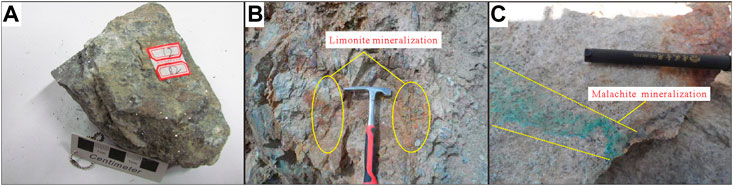
FIGURE 2. Supergene mineralization in the Hongqigou tectonic zone. (A) Pyritized rock; (B) limonite mineralization; (C) malachite mineralization.
2.5 Orebody characteristics
Wulonggou gold orebodies are mainly developed in the NW-trending fracture zone. There are 83 major faults at Wulonggou, of which 26 are ore-bearing (Hou et al., 2019). A total of 125 gold orebodies have been delineated in/around the Hongqigou mining area (Wang et al., 2021a). The orebodies are mostly NW-trending, 40–800 m long, and on average 1.7–7.7 m thick (Figure 3). The orebody distribution is discontinuous and locally pinched-out or interconnected. The orebodies occur in clusters or branch-like. Generally, the individual orebody is banded, vein-like, or lensoidal. The orebodies are mostly hosted in plagioclase granites and minor in marble, pyroxenite, and diorite porphyrite (or their tectonic breccias). Gold occurs mainly as native gold (∼10%) or in sulfides. Native gold grains are mainly found in the oxidized zone or as fracture-infill in pyrite. Invisible gold (∼57%) is dispersed in the lattice defects or cracks of pyrite and arsenopyrite and other minerals. The remaining gold (∼21%) occurs in the form of inclusions in gangue minerals.
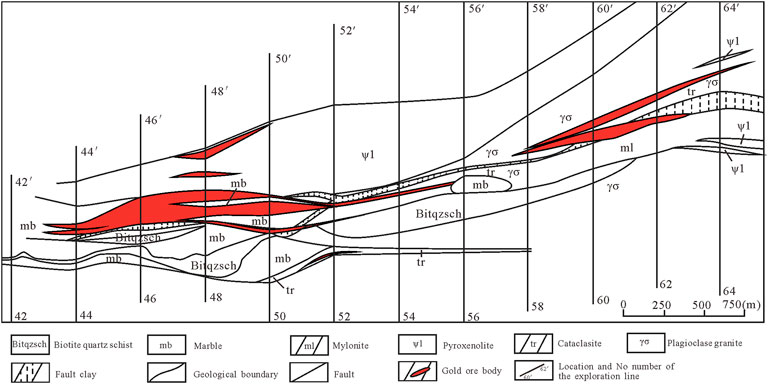
FIGURE 3. Distribution of orebodies in the middle section of the Hongqigou mining area.
2.6 Samples and methods
All samples used in this study were collected from the Hongqigou tectonic zone, with sampling intervals of 3–15 m along strike. When the tectonic belt or quartz vein width was larger than 5 m, samples were collected at 2–15 m vertical intervals. The weight of each sample is 300–500 g. Samples of ores (chalcopyrite–galena–sphalerite), ore-bearing skarn, pyritized rock with galena, monzogranite, and chlorite-altered granite from the Hongqigou tectonic zone were prepared into petrographic thin sections in the laboratory of the Hebei Institute of Regional Geology and Mineral Resources. The thin sections were observed under an OLYMPUS BX53 optical microscope. After that, AES, AAS, AFS, XRF, ICP-MS, and other analytical methods were used to analyze 15 samples in the tectonic zone and 15 wallrock samples from the alteration zone at Hongqigou.
Atomic absorption spectrometry (AAS) and atomic fluorescence spectrometry (AFS) were conducted on a GAF18–YG201 heavy metal analyzer and a 5300DV inductively coupled plasma emission spectrometer (Perkin Elmer Optima) (Wang et al., 2021b). The polarographic catalytic wave (POL) method was used to determine the W and Mo contents of the samples. The samples were melted with KOH and extracted with water. In the H2SO4–C14H12O3–C13H13N3–K2SO4 system, the W and Mo contents were determined by using a JP-06A precision polarographic analyzer, and the peak potentials of W and Mo are −0.76 V and −0.26 V (relatively saturated calomel electrode), respectively. When the contents of W and Mo are 1.0–100.0 ng/ml, the peak height is in a linear relationship with the concentration. The method was tested by the national first-class standard material, and the results are consistent with the recommended values for the standards. The precision (RSD%, n = 12) is satisfactory for W and Mo (Feng, 2014). Atomic emission spectrometry (AES) was conducted on an ARL4460 instrument and a KMK-Y-I argon purifier. Inductively coupled plasma mass spectrometry (ICP-MS) was performed to analyze most non-metallic elements, using X-SERIES II (Themo), DHG-9070A (Shanghai-Heng Science Instruments), and EH20Aplus (LabTech). The analysis error is better than 5%.
The detection limits (ppm) are as follows: 1) atomic absorption spectrometry: Au (0.0003), Ag (0.02), and Cd (0.1); 2) atomic fluorescence spectrometry: As (0.5), Sb (0.3), Bi (0.3), and Hg (0.005); 3) polarographic catalytic wave method: W (0.02) and Mo (0.02); 4) inductively coupled plasma: Cu (0.5), Pb (0.6), Zn (3), Mn (30), Co (1), Ba (20), Ni (5), Ti (10), and V (2); and 5) atomic emission spectrometry: B (5) and Sn (0.5). All the analyses were detected by the Mineral Resources Supervision and Inspection Center (Ministry of Land and Resources) of Xining City, and 20 gold and pathfinder elements were measured.
Cluster analysis is a multivariate statistical analysis method based on numerical characteristics, which is not limited by the degree of understanding of the research object, and the result is a dendritic spectrum. The application of R-type cluster analysis in geology can help understand ore genesis and element combination patterns (Yang, 2016). In this study, a correlation analysis of 20 trace elements in the samples was carried out by Statistical Product and Service Solutions (SPSS) software, in order to reveal the source of metallogenic materials and any prospecting (pathfinder) significance.
3 Results
3.1 Petrographic characteristics
Samples WLG-01, WLG-03, and WLG-05 are from the tectonic zone, and the sample WLG-06 is from the wall rock. Major characteristics of four representative samples from the Hongqigou tectonic zone and wall rocks are described as follows:
(1) WLG-01: pyrite alteration altered rock, subhedral granular and sparsely disseminated. Opaque minerals (90%) include mainly carbonaceous components, chalcopyrite, arsenopyrite, pyrrhotite, and pyrite. Carbonaceous components (4.5%) are scaly and fibrous, with a diameter of 0.005–0.06 mm. Chalcopyrite is granular with a grain size of generally 0.005–0.02 mm. Arsenopyrite is anhedral with a grain size of generally 0.005–0.08 mm. Arsenopyrite and chalcopyrite are disseminated (Figure 4A). Pyrite is euhedral granular with a grain size of 0.005–0.11 mm (Figure 4B).
(2) WLG-03: copper–lead–zinc ore, subhedral granular and densely disseminated. Metallic minerals include mainly pyrite, chalcopyrite, sphalerite, pyrrhotite, and galena, whilst gangue minerals include mainly carbonaceous components and calcite. Pyrite (∼23%) is mainly subhedral–anhedral (grain size: 0.01–7.2 mm) and disseminated, accompanied by marcasite mineralization. Chalcopyrite (∼2.5%) is subhedral–anhedral granular (grain size: 0.005–0.70 mm) and disseminated. Sphalerite (∼9.5%) is subhedral granular (grain size: 0.01–0.68 mm). Some chalcopyrite and galena grains are included in sphalerite, showing poikilitic texture (Figure 4C). Galena (∼5%) is subhedral–anhedral granular (grain size: 0.01–0.65 mm) and occurs as interstitial among pyrite grains. Carbonaceous components are flaky (diameter: 0.03–0.33 mm) and disseminated. Pyrite is subhedral–anhedral (grain size: 0.01–0.28 mm), disseminated, and relatively rare (Figure 4D).
(3) WLG-05: pyrite–galena mineralized rock. The sulfides are subhedral–anhedral granular and sparsely disseminated. Pyrite (grain size: 0.01–7.2 mm) accounts for ∼13% and is accompanied by marcasite mineralization. Galena has a grain size of 0.01–0.28 mm (Figure 4E).
(4) WLG-06: ore-bearing skarn is massive and is composed of actinolite (dominant), diopside, tremolite, garnet, epidote, quartz, and minor carbonate and opaque minerals. Actinolite and diopside are fibrous aggregates or columnar, with a grain size of 0.5–3.0 mm. Actinolite is weakly chloridized. Garnet (∼10%) occurs as granular, fine-grained aggregates (0.1–1.25 mm). Epidote is granular (grain size: 0.05–0.5 mm) and sporadically distributed. Quartz (∼10%) is granular (grain size: 0.5–10.0 mm), showing undulatory extinction (Figure 4F).
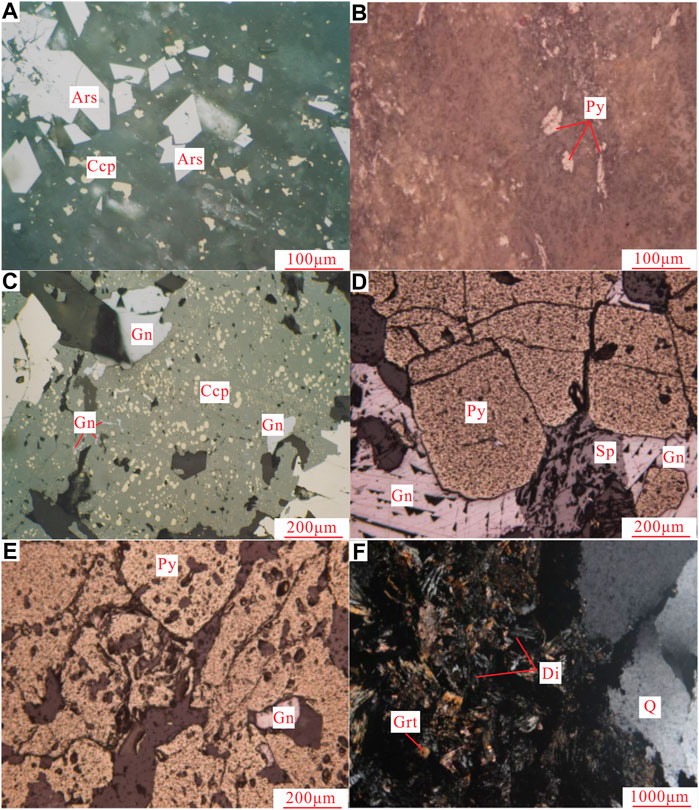
FIGURE 4. Microscopic photographs of the typical wall rock and altered rock in the Hongqigou tectonic zone (reflected light or crossed polar). (A) Disseminated texture (reflected light); (B) pyrite alteration altered rock; (C) poikilitic texture (reflected light); (D) copper–lead–zinc ore; (E) pyrite–galena mineralized rock; (F) ore-bearing skarn. Abbreviations: Ars = arsenopyrite; Ccp = chalcopyrite; Py = pyrite; Gn = galena; Sp = sphalerite; Di = diopside; Grt = garnet; Q = quartz.
3.2 Whole-rock geochemical compositions
Fifteen wallrock samples of the Hongqigou tectonic zone were analyzed (Table 2), and the results are summarized as follows: Ag = 37.00–335.00 (avg. 77.87); As = 2.20–75.48 (avg. 24.73); Au = 1.40–27.90 (avg. 6.04); B = 1.50–124.00 (avg. 21.31); Ba = 65.10– 1,412.00 (avg. 513.01); Bi = 0.08–0.67 (avg. 0.24); Cd = 0.05–0.49 (avg. 0.16); Co = 2.86–36.60 (avg. 10.97); Cu = 3.90–124.00 (avg. 33.24); Hg = 5.10–21.20 (avg. 7.38); Mn = 46.00–1,547.00 (avg. 596.73); Mo = 0.28–9.26 (avg. 1.24); Ni = 2.90–84.50 (avg. 15.48); Pb = 8.40–49.40 (avg. 23.62); Sb = 0.35–2.48 (avg. 0.99); Sn = 0.97–7.60 (avg. 3.16); Ti = 622.00–5,021.00 (avg. 2,711.27); V = 7.20–246.00 (avg. 78.83); W = 0.42–4.23 (avg. 1.83); and Zn = 18.50–205.00 (avg. 82.25). The contents of Ba, Mn and Ti are high (avg. > 100 ppm). The contents of As, B, Co, Cu, Hg, Mo, Ni, Pb, Sn, V, W, and Zn are medium (avg. 1–100 ppm), whilst those of Bi, Cd, and Sb are low (avg. < 1 ppm).
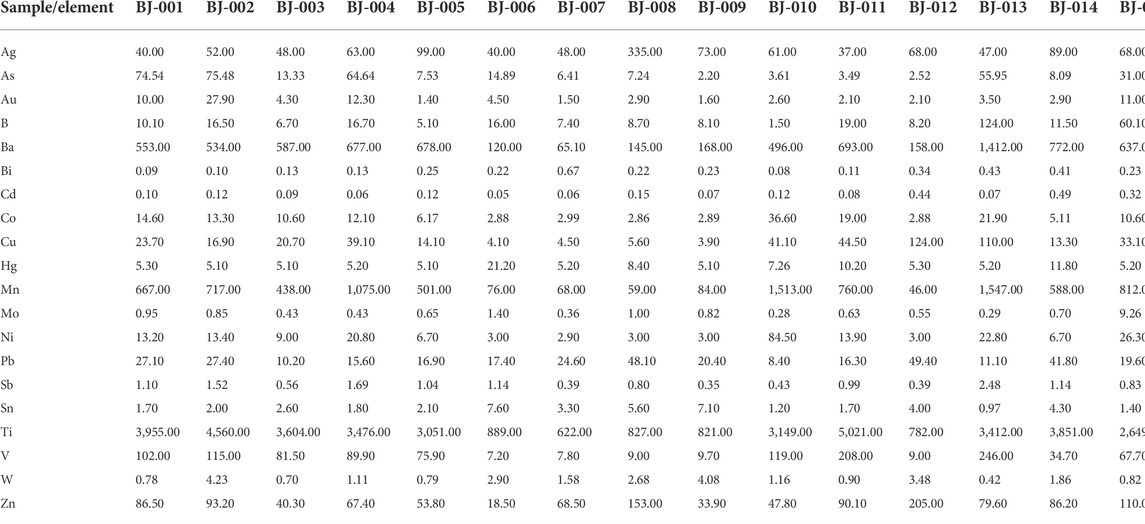
TABLE 2. Gold and pathfinder elements in wallrock samples from the Hongqigou tectonic zone (Ag and Au in ppb, other elements in ppm).
Fifteen altered rock samples from the Hongqigou tectonic zone were analyzed (Table 3), and the results are summarized as follows: Ag = 34.00–846.00 (avg. 166.87); As = 9.40–137.00 (avg. 35.16); Au = 0.70–15.40 (avg. 4.59); B = 12.5–200.00 (avg. 96.72); Ba = 163.00–1,046.00 (avg. 432.20); Bi = 0.20–1.54 (avg. 0.56); Cd = 0.04–0.57 (avg. 0.09); Co = 5.53 –34.70 (avg. 16.47); Cu = 10.20–71.00 (avg. 41.19); Hg = 5.10–29.80 (avg. 7.35); Mn = 171.00–3,259.00 (avg. 899.73); Mo = 0.28–0.82 (avg. 0.41); Ni = 7.30–50.00 (avg. 24.70); Pb = 10.30–74.80 (avg. 24.03); Sb = 0.71–3.02 (avg. 1.68); Sn = 1.50–4.80 (avg. 2.29); Ti = 2,118.00–4,883.00 (avg. 3,356.73); V = 72.40–185.00 (avg. 141.07); W = 0.61–3.21 (avg. 1.36); and Zn = 39.70–167.00 (avg. 94.74). The contents of Ba, Mn, and Ti are high (avg. > 100 ppm). The contents of As, B, Co, Cu, Hg, Ni, Pb, Sb, Sn, W, and Zn are medium (avg. 1–100 ppm), whilst those of Bi, Cd, and Mo are low (avg. < 1 ppm).
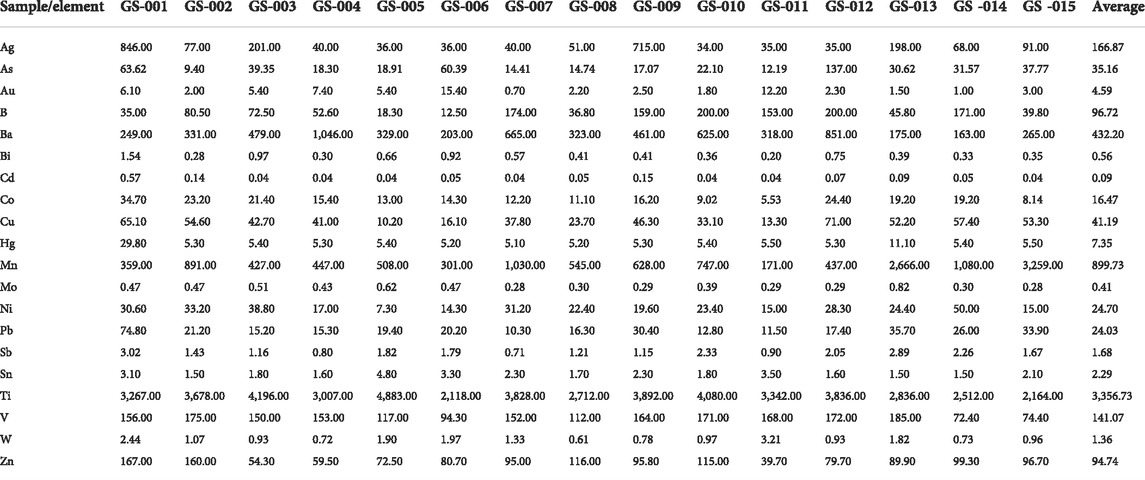
TABLE 3. Gold and pathfinder elements in altered rock samples from the Hongqigou tectonic zone (Ag and Au in ppb, other elements in ppm).
4 Discussion
4.1 Ore-controlling factors
According to the geological exploration results by the Qinghai #1 Geological and Mineral Exploration Institute, the exposed sequences in the mining area include the Proterozoic Qiujidonggou Formation, Xiaomiao Formation, and Jinshuikou Group. The gold content of the Qiujidonggou Formation is the highest among them. Gold enrichment during late activation and transfer may have provided the metal for the mineralization. The gold content of the Jinshuikou Group is higher than the crustal Clark value. All kinds of rocks in the district have high abundance values, which may have supplied the gold ore-forming materials. The gold orebodies are mostly distributed near these gold-rich strata and their contact zones, indicating a certain metallogenic link between the two (Ma et al., 2021).
Regional magmatic rocks are widespread and multistage, with mainly intermediate–felsic compositions. The gold contents of local plutonic rocks are higher than the average crustal values (e.g., 5.7 ppb (granite), 5–19 ppb (granodiorite), 8 ppb (plagioclase granite), and 185 ppb (diorite porphyrite); Ma et al., 2021), indicating that magmatism could promote gold migration and enrichment. The gold-rich magmatic intrusions may also represent an ore material source in the mining area.
From an alteration perspective, the area is mainly characterized by pyrite, silicic, sericite, kaolinite, limonite, and malachite, among which the former four are closely gold ore-related. The content and distribution of pyrite and arsenopyrite are closely related to gold mineralization.
4.2 Trace element characteristics
4.2.1 Abundance
For our samples from the Hongqigou tectonic zone, their gold and related elements contents are higher than those of the average crustal abundance (Levinson, 1974), and the contents of Ag, Au, Ba, Bi, Co, Pb, Cu, Sn, W, and Zn are close to crustal abundance. Meanwhile, their average contents of Ag, As, Au, Sb, B, Bi, Co, Cu, Pb, and Zn are higher than those in the eastern Kunlun region, whilst the Ni–Sn contents are close to those of the latter. The Au–As and Cu–Pb–Zn–Sb contents are very high in the Wulonggou gold mining area, indicating that Cu–Pb–Zn (–Au) polymetallic mineralization and skarn-type polymetallic mineralization are developed in the mining area (Qi et al., 2021) (Table 4).

TABLE 4. Average contents of Au and pathfinder elements in the Hongqigou tectonic zone samples.
It can be seen that the eastern Kunlun area has high background values of Au and other trace elements. The Hongqigou tectonic zone in the eastern Kunlun has particularly high contents of Ag, Au, As, Sb, B, Bi, Pb, and Cu, which provides a favorable geochemical background for the local gold ore formation. In addition, it was suggested that Au is related to Ag–Pb–Cu (Tian, 2012), especially to As and Sb in the Wulonggou mining area. Therefore, we considered that the high abundance of Ag, As, and Sb have indicative significance for gold exploration.
The average values of gold and related elements of our samples were compared with the average abundance of the earth’s crust (Levinson, 1974), and the results show the following (Table 5): the enrichment coefficient of Hg in the altered rock sample is 91.88 (i.e., strongly enriched), and the enrichment coefficients of As, B, Bi, and Sb are from 3.29 to 19.53 (i.e., moderately enriched). The enrichment coefficients of Ag, Au, Ba, Pb, Sn, V, and Zn are from 1.02 to 2.38 (i.e., slightly enriched). The enrichment coefficients of Cd, Co, Cu, Mo, Ni, and W are less than 1 (i.e., depleted). The enrichment coefficient of Hg in the wallrock samples is 92.25 (i.e., strongly enriched), whilst those of As and Sb are from 4.95 to 13.74 (i.e., moderately enriched). The enrichment coefficients of Ag, Au, B, Ba, Bi, Pb, Sn, W, and Zn are from 1.11 to 2.13 (i.e., slightly enriched). The enrichment coefficients of Cd, Co, Cu, Mo, Ni, and V are below 1 (i.e., depleted). Comparing the trace element contents in the altered rocks and wall rocks, Ag, B, and Bi are only enriched in the tectonic zone. In summary, Au and related elements in the Hongqigou tectonic zone and wall rocks are characterized by elevated Hg, medium As, B, and Sb, and low Cd, Co, Cu, Mo, and Ni. The tectonic zone may have provided some ore-forming materials (notably Hg, As, Sb, and B) for mineralization. In the multielement spidergrams of our samples (black line: wall rock; blue line: altered rock) (Figure 5), the rocks have varying compositions but show general features of very high Hg, high As–B–Bi–Sb, and low Ba–Co–Mo–Ni–V. This further supports that the rocks in the tectonic zone have contributed ore-forming materials for mineralization.
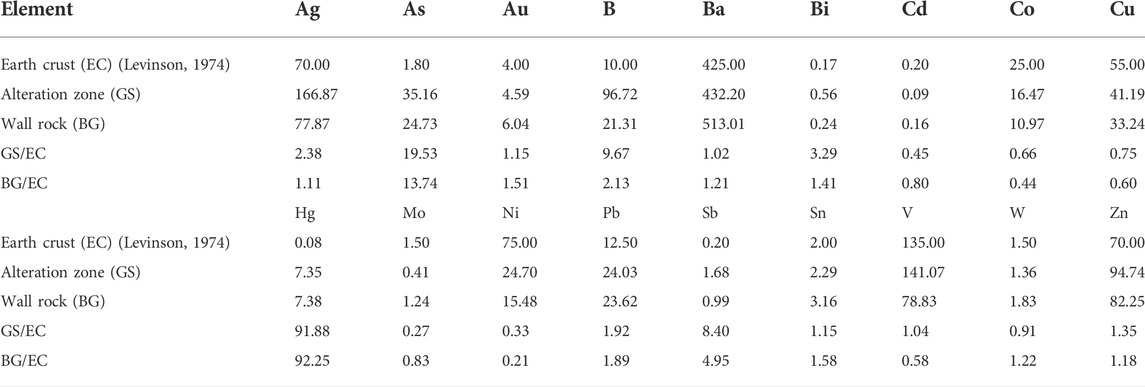
TABLE 5. Comparison table of the mean concentration of Au and related elements in the tectonic alteration zone and wall rock in the Wulonggou gold deposit and average abundance earth crust (Au and Ag in ppb, other elements in ppm).
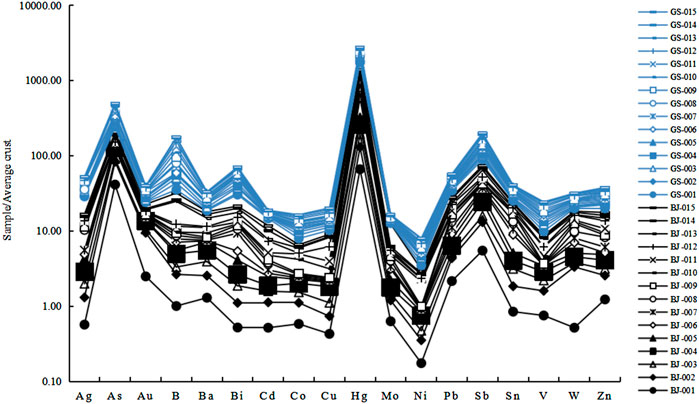
FIGURE 5. Earth crust-normalized spidergram of Au and pathfinder elements of wall rocks and altered rocks in the Hongqiggou area.
4.2.2 Element correlation and R-type cluster analysis
From the correlation analysis of Au and related elements from the Hongqigou tectonic zone (Table 6), the following correlation can be yielded: 1) element pairs with high correlation are Ag–Cd (0.83), Hg–Cd (0.946), Pb–Ag (0.8), Pb–Cd (0.898), and Pb–Hg (0.912); 2) elements with high correlation with Au are B (−0.373), Zn (−0.41), Mn (−0.42), Ni (−0.474), Cu (−0.55), Sn (0.568), and W (0.621). Among these elements, B–Zn–Mn–Ni–Cu and Sn–W are negatively and positively correlated with Au, respectively. It can be seen from the pedigree diagram that when the threshold value is 5, the ore-forming elements are mainly composed of one group (Cd–Hg–Pb; Figure 6), and the other elements are independent. When the threshold value is 15, the ore-forming elements are merged into three groups (Cd–Hg–Pb–Ag–Bi–Zn–Sb, Co–Cu–Ni, and Sn–W–Au), indicating that there are geochemical conditions for the mineralization of various elements in the area.
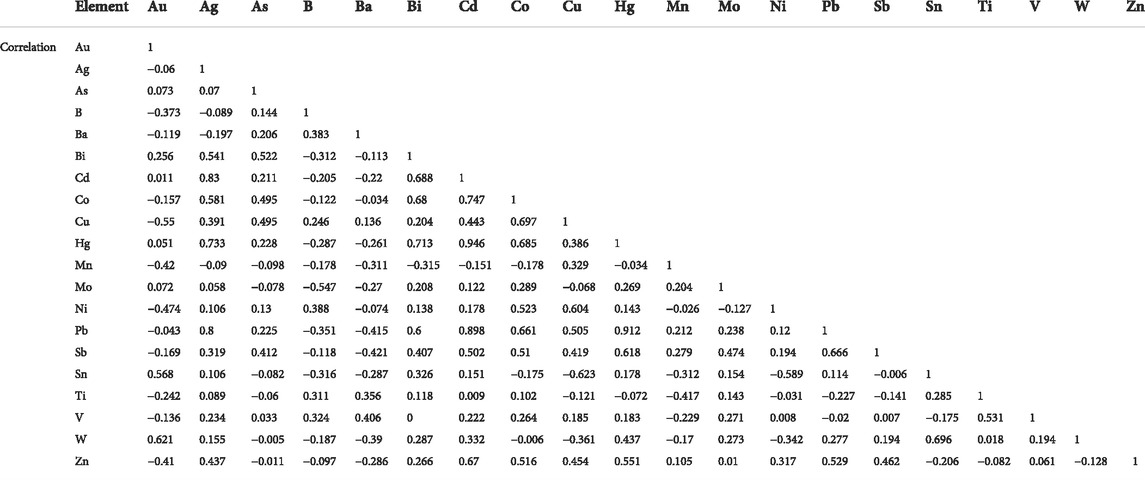
TABLE 6. Correlation matrix of 20 elements in samples from the Hongqigou tectonic zone.
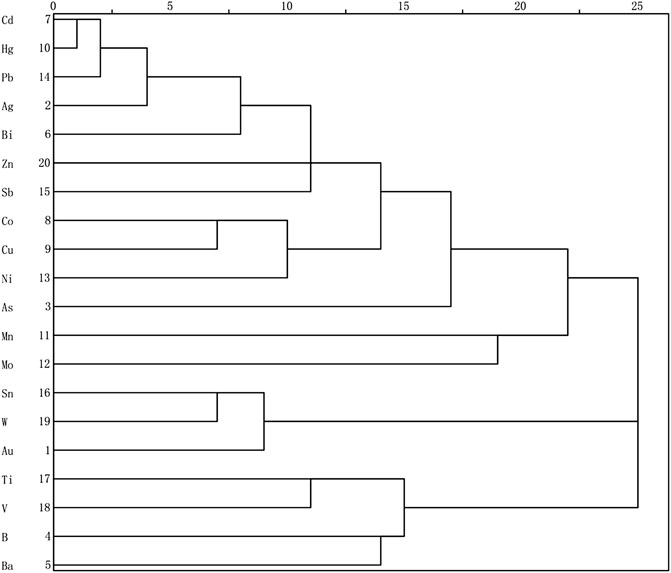
FIGURE 6. R-type cluster analysis pedigree of 20 elements in the samples from the Hongqigou tectonic zone.
Zou and Shi (2004) concluded that the regional geochemical anomaly in the Wulonggou goldfield is complex, dominated by Au, As, Sb, Ag, Cd, Pb, and Zn. Li et al. (2017) suggested that the best indicator elements for exploring concealed orebodies in the Wulonggou mining area are Au, As, Sb, Hg, B, Ag, Cu, Pb, Zn, Bi, Mo, Mn, Co, and Ni. Therefore, based on these previous studies and our new element correlation analysis, we argued that Ag–Pb–Hg–Cd–Cu are best correlated in the Hongqigou tectonic zone and that the elements closely related to Au are Sn, W, Ni, Zn, and Mn. Consequently, the best combination of pathfinder elements for local gold exploration is Ag, As, Bi, Co, Cu, Hg, Mn, Mo, Ni, Pb, Sb, and Zn.
5 Conclusion
(1) The average and maximum gold contents of the Qiujidonggou Formation (main strata in the Hongqigou tectonic zone) are high (10.75 and 12 ppb, respectively). The gold-rich strata and plutonic rocks may represent a possible gold source. Pyrite, sericite, silicic, and kaolinite alterations are closely related to gold mineralization and can be used as an important prospecting tool.
(2) Gold and related elements of the alteration zone and wall rock in the Hongqigou area are generally characterized by rich Hg, medium As, B, and Sb, and low Cd, Co, Cu, Mo, and Ni. The synchronous change relationship of the cobweb diagram of the two shows that the tectonic zone has the participation of the late surrounding rock material in the alteration process, and the high abundance of elements such as Ag, As, and Sb in the area has a certain indicative significance for the prediction of gold orebodies.
(3) The elements with close correlations at Hongqigou are Ag, Pb, Hg, Cd, and Cu, and the best pathfinder elements for local gold exploration are Au, As, Sb, Hg, W, Sn, Cu, Ni, Mn, and Zn. These characteristics of elements combination have important significance for finding the same type of the gold orebody.
Data availability statement
The original contributions presented in the study are included in the article/Supplementary Material; further inquiries can be directed to the corresponding author.
Author contributions
All authors contributed to the study's conception and design. Material preparation, data collection, and analysis were performed by SZ and CX. The first draft of the manuscript was written by SZ. CX, MS, and WZ conducted a field geological survey and collected samples; ZH, YD, and CQ took part in the sample experiment work and carried out the experiment data collection and processing; CX and SZ analyzed the data and composed the original draft of the manuscript.
Funding
This study was supported by the Application Basic Research Project of Qinghai Province Science and Technology Plan (Grant No. 2020-ZJ-762).
Acknowledgments
We thank the Laboratory of Hebei Institute of Regional Geological and Mineral Exploration and the Xining Mineral Resources Supervision and Testing Center (Ministry of Land and Resources) for helping with the analysis. We also thank the editor and reviewers for their insightful comments and suggestions, which greatly enhanced this study.
Conflict of interest
The authors declare that the research was conducted in the absence of any commercial or financial relationships that could be construed as a potential conflict of interest.
Publisher’s note
All claims expressed in this article are solely those of the authors and do not necessarily represent those of their affiliated organizations, or those of the publisher, the editors, and the reviewers. Any product that may be evaluated in this article, or claim that may be made by its manufacturer, is not guaranteed or endorsed by the publisher.
References
Chen, B. L., Deng, Y. L., Chen, J. L., Zhang, Y. L., Wang, Y., Zhang, H., et al. (2016). Two ore-controlling structure systems in Wulonggou gold orefield, Qinghai province and its expecting significance. Geotect. Metallogenia 40 (2), 224–236. doi:10.16539/j.ddgzyckx.2016.02.004
Chen, B. L., Wang, Y., Han, Y., and Chen, J. L. (2019). Metallogenic age of Yanjingou gold deposit in Wulonggou gold orefield, eastern Kunlun Mountains. Mineral. Deposits 38 (3), 541–556. doi:10.16111/j.0258-7106.2019.03.06
Cheng, L., Ding, Q. F., Deng, Y. L., Song, K., and Zhang, Q. (2019). Petrogenesis of middle triassic diabase veins in Wulonggou ore concentrated areas within East Kunlun orogen: Chronology, geochemistry and tectonic significance. J. Jilin Univ. (Earth Sci. Ed. 49 (6), 1628–1648. doi:10.13278/j.cnki.jjuese.20190068
Dang, X. Y., Fan, G. Z., Li, Z. M., Fan, X. H., and Gu, Y. (2006). Typic deposit analysis in the eastern Kunlun area, NW China. Northwest. Geol. 2, 143–155. doi:10.3969/j.issn.1009-6248.2006.02.009
Deng, Y. L. (2013). Wulonggou exploration model and further prospecting deployment. Manag. Strategy Qinghai Land & Resour. 6, 54–59. doi:10.3969/j.issn.1671-8704.2013.06.018
Feng, C. Y., Zhang, D. Q., Wang, F. C., She, H. Q., Li, D. X., and Wang, Y. (2004). Multiple orogenic processes and geological characteristics of the major orogenic gold deposits in East Kunlun area, Qinghai province. Acta Geosci. Sin. 4, 415–422. doi:10.3321/j.issn:1006-3021.2004.04.005
Feng, J. (2014). Determination of tungsten and molybdenum in geochemical samples by polarographic catalytic wave method. Acta Geol. Sichuan 34 (S1), 99–103. doi:10.3969/j.issn.1006-0995.2014.z1.021
Feng, J. Z., Zeng, Y. S., and Fu, S. X. (2000). Geology, genetic types and metallogeny of gold deposits in the eastern tianshan, xinjiang. Acta Geol. Sin. 74 (3), 559–564. doi:10.3321/j.issn:1000-9515.2000.03.022
Han, Y., Chen, B. L., Deng, Y. L., Chen, J. L., Wang, Y., Zhang, H., et al. (2017a). Two alteration episodes of the Wulonggou gold ore field in Qinghai province and its prospecting significance. Acta Geol. Sin. 91 (3), 561–570. doi:10.3969/j.issn.0001-5717.2017.03.005
Han, Y., Sun, F. Z., Li, S. N., Ma, Y. J., Li, D. S., Deng, Y. L., et al. (2017b). Deep prospecting prediction of structural superimposed halo of Hongqigou gold deposit in Dulan, Qinghai. Contributions Geol. Mineral Resour. 32 (3), 476–484. doi:10.6053/j.issn.1001-1412.2017.03.018
Hou, M. L., Cao, M. S., Ma, B. C., and Zhou, L. X. (2019). The studying of metallogenic model for Wulonggou gold deposits. Gansu Metall. 41 (3), 84–87. doi:10.3969/j.issn.1672-4461.2019.03.020
Hu, Z. G., Liu, J. Q., Qian, Z. Z., Li, H. M., Sun, J. D., Su, C. Q., et al. (1998). A study of the regional metallogenetic regularity in East Kunlun Mountain. Gold Sci. Technol. Z1, 7–14.
Kou, L. L., Zhang, S., Zhong, K. H., and Tian, C. S. (2015). A study of the deformation characteristics of the ductile shear zone in the Wulonggou gold ore concentration area, East Kunlun, Qinghai. Geol. China 42 (2), 495–503. doi:10.3969/j.issn.1000-3657.2015.02.010
Levinson, A. A. (1974). Introduction to exploration geochemistry. Calgary, Alta: Applied Publishing Ltd.
Li, H. M., Shen, Y. C., Hu, Z. G., and Qian, Z. Z. (2001a). Minerogenetic mechanism and condition of Wulonggou gold deposit in East Kunlun mountains Qinghai province. Geol. Explor. 1, 65–69. doi:10.3969/j.issn.0495-5331.2001.01.015
Li, H. M., Shen, Y. C., Hu, Z. G., Tang, H. Y., Qian, Z. Z., Liu, J. Q., et al. (2001b). Study on the occurrence and content of Gold in minerals and ores of Wulongou gold deposit, Qinghai Province. Acta Mineral. Sin. 1, 89–94. doi:10.3321/j.issn:1000-4734.2001.01.015
Li, J. C., Du, W., Cheng, Y. S., Kong, H. L., Liu, J. X., Li, Y. Z., et al. (2015). Characteristics of gold deposits and ore-control factors in the east Kunlun mineralization belt, Qinghai province. Geol. Explor. 51 (6), 1079–1088. doi:10.13712/j.cnki.dzykt.2015.06.009
Li, S. N., Zhao, Y., La, P. X., and Ma, Y. J. (2017). Geochemical characteristics and prospecting prospect of the gold mineralization in the Hongqi Gully of the northern Qaidam basin. World Nonferrous Met. 12, 132+134.
Li, X., Yuan, W. M., Hao, N. N., Duan, H. W., Chen, X. N., Mo, X. X., et al. (2014). Characteristics and tectonic setting of granite in Wulonggou area, East Kunlun mountains. World Geol. 33 (2), 275–288. doi:10.3969/j.issn.1004-5589.2014.02.004
Liu, S. B., Wei, Z. H., Dou, G. Y., Dang, H. L., Yun, Q. C., Qi, C. W., et al. (2016). Mineralized elements enrichment regularity of Orebody and its predictive effect of Wulonggou gold deposit in Dulan County, Qinghai Province. Geol. Mineral Resour. South China 32 (1), 43–50. doi:10.3969/j.issn.1007-3701.2016.01.006
Liu, Z. T., Ren, J. Q., Yang, Y. Z., and Sun, C. R. (2005). Qinghai gold deposit. Beijing: Geological Publishing House, 1–375.
Lu, L., Zhang, Y. L., Wu, Z. H., and Hu, D. G. (2013). Zircon U-Pb dating of early paleozoic granites from the east Kunlun mountains and its geological significance. Acta Geosci. Sin. 34 (4), 447–454. doi:10.3975/cagsb.2013.04.07
Ma, F. S., and Yan, Z. J. (2017). Characteristics of orebodies and origin of ore deposits in East Kunlun metallogenic belt, Qinghai Province-Dulan County in Wulonggou gold mine as an example. World Nonferrous Met. 10, 236–237.
Ma, L., Sun, J. X., and Qi, Y. M. (2021). Geological characteristics and Genesis of Wulonggou gold deposit, Dulan county, Qinghai province. Mineral. Explor. 12 (9), 1888–1897. doi:10.3969/j.issn.1674-7801.2021.09.004
Mo, X. X., Luo, Z. H., Deng, J. F., Yu, X. H., Liu, C. D., Chen, H. W., et al. (2007). Granitoids and crustal growth in the east-Kunlun orogenic belt. Geol. J. China Univ. 3, 403–414. doi:10.3969/j.issn.1006-7493.2007.03.010
Qi, Y. M., Li, X. B., and Ma, L. (2021). Geological characteristics and prospecting signs of red flag ditch-shenshuitan gold mine in Wulonggou, dulan county. World Nonferrous Met. 14, 79–80. doi:10.3969/j.issn.1002-5065.2021.14.035
Qian, Z. Z., Hu, Z. G., and Liu, J. Q. (1998). Northwest ductile shear zones and their tectonic setting in the east of Kunlun Mountains. J. Chengdu Univ. Technol. 2, 95–99.
Qian, Z. Z., Li, H. M., and Hu, Z. G. (1997). Limit theorem for polling systems with exhaustive service in heavy traffic. J. Earth Sci. Environ. S1, 27–32.
Shi, J. Y. (1997). Geological features and prospecting criteria of Wulonggou gold deposit of dulan couty, Qinghai province. North China Geol. 2, 29–36.
Tian, C. S. (2012). Research on gold mineralization and metallogenic prognosis in Wulonggou ore concentration areas of East Kunlun middle part. Beijing: China University of Geosciences.
Wang, J. J., Zhao, W. L., and Zheng, Y. R. (2017). Study on geological characteristics and ore deposit Genesis of Wulonggou. World Nonferrous Met. 9, 285–286.
Wang, Q. J., and Luo, S. F. (2016). Over 100 tons of gold resources were detected in Wulonggou integrated exploration area in Qinghai Province. China J. Min 4, 1.
Wang, Y. N., Guo, D. F., Li, L., Li, B. P., Zhang, L. S., and Liu, R. P. (2021a). Determination of arsenic in phosphoric acid prepared from phosphorite by atomic fluorescence spectrometry. Chin. J. Inorg. Anal. Chem. 11 (06), 8–11. doi:10.3969/j.issn.2095-1035.2021.06.002
Wang, Z., Li, P. G., and Han, Y. (2021b). Geological characteristics and Genesis of hongqigou-shenshuitan gold deposit in Wulonggou area, dulan county, Qinghai province. China Energy Environ. Prot. 43 (6), 121–125+132. doi:10.19389/j.cnki.1003-0506.2021.06.020
Xu, Y. W., Mao, G. Z., Liu, X. T., An, P. R., Wang, Y., Cao, M. P., et al. (2022). Genesis of the zhaoxian gold deposit, jiaodong peninsula, China: Insights from in-situ pyrite geochemistry and S-He-Ar isotopes, and zircon U-Pb geochronology. Front. Earth Sci. 10, 1–14. doi:10.3389/feart.2022.886975
Yang, G. H. (2016). Application of R-type cluster Analysis in determining metallogenic element combination-take shuiyindong gold mine for example. Resour. Inf. Eng. 31 (04), 12–14+16. doi:10.19534/j.cnki.zyxxygc.2016.04.008
Yuan, W. M., Mo, X. X., Wang, S. C., and Zhang, X. T. (2003). The relationship between gold mineralization and regional tectonic evolution the Eastern Kunlun Mountains. Geol. Explor. 3, 5–8. doi:10.3969/j.issn.0495-5331.2003.03.002
Yuan, W. M., Mo, X. X., Yu, X. H., and Luo, Z. H. (2000). The record of indosinian tectonic setting from the granitoid of eastern Kunlun mountains. Geol. Rev. 2, 203–211. doi:10.16509/j.georeview.2000.02.013
Yuan, W. M., Mo, X. X., Yu, X. H., Luo, Z. H., and Wang, S. C. (2002). Indication of quartz ree geochemistry on gold mineralization in Wulonggou gold-ore area eastern Kunlun mountains, Qinghai province. Geol. Explor. 1, 15–17. doi:10.3969/j.issn.0495-5331.2002.01.005
Zhang, D. Q., Feng, C. Y., Li, D. X., Xu, W. Y., Yan, S. H., She, H. Q., et al. (2001). Orogenic gold deposits in the north Qaidam and East Kunlun orogen, west China. Mineral. Deposits 2, 137–146. doi:10.3969/j.issn.0258-7106.2001.02.006
Zhang, D. Q., Wang, F. C., She, H. Q., Feng, C. Y., Li, D. X., and Li, J. W. (2007). Three-order-ore-controlling structural system of orogenic gold deposits in the northern Qaidam margin-East Kunlun region. Geol. China 1, 92–100. doi:10.3969/j.issn.1000-3657.2007.01.014
Zhang, J. Y., Ma, C. Q., and Li, J. W. (2012). Visible gold-forming environment evidenced by sulfide mineralogical characteristics of Shuizhadonggou-Huanglonggou Gold Deposit in eastern Kunlun orogen. Mineral. Deposits 31 (6), 1184–1194. doi:10.16111/j.0258-7106.2012.06.016
Zhang, W. Q. (2000). Geochemical chart of East Kunlun in Qinghai Province. Xining: Qinghai Institute of Geochemical Exploration Technology.
Zhang, X. T. (2005). 1: 1 million Qinghai provincial geotectonic map and instructions. Xining: Qinghai Geological Survey Institute.
Zhang, Y. L., Han, Y., Zhang, P. Q., Tian, C. S., and Chen, J. L. (2011). Characteristics and prospecting potential of gold mineralized zone Ⅺ in Wulonggou gold deposit, Eastern Kunlun. Gold 32 (9), 9–15. doi:10.3969/j.issn.1001-1277.2011.09.003
Zhou, P., Ma, H. Y., Zhou, S. M., Hu, G. J. L., Ma, Y. J., and Zhao, Y. X. (2018). Structural superimposed halo characteristics and deep prospecting prediction in Baitgou gold deposit, Qinghai. Mineral. Explor. 9 (5), 958–965. doi:10.3969/j.issn.1674-7801.2018.05.021
Keywords: Wulonggou goldfield, Hongqigou alteration zone, gold ore-forming elements, correlation, path-finding elements
Citation: Zhen S, Sun M, Xia C, Zhang W, Quan C, Han Z and Du Y (2022) Pathfinder elements for gold exploration in the Hongqigou tectonic zone of the Wulonggou goldfield (Qinghai Province, Western China). Front. Earth Sci. 10:952031. doi: 10.3389/feart.2022.952031
Received: 24 May 2022; Accepted: 04 July 2022;
Published: 17 August 2022.
Edited by:
Kit Lai, Fortescue Metals Group, AustraliaReviewed by:
Xiao-Dong Chen, Central South University, ChinaShiwei Wang, Hefei University of Technology, China
Copyright © 2022 Zhen, Sun, Xia, Zhang, Quan, Han and Du. This is an open-access article distributed under the terms of the Creative Commons Attribution License (CC BY). The use, distribution or reproduction in other forums is permitted, provided the original author(s) and the copyright owner(s) are credited and that the original publication in this journal is cited, in accordance with accepted academic practice. No use, distribution or reproduction is permitted which does not comply with these terms.
*Correspondence: Chulin Xia, eGlhY2h1bGluQDE2My5jb20=