 Masaki Eda
 Hiroe Izumi1
 Minoru Yoneda
- 1Hokkaido University Museum, Hokkaido University, Sapporo, Japan
- 2The University Museum, The University of Tokyo, Tokyo, Japan
- 3Tawaramoto Town Board of Education, Tawaramoto, Japan
The chicken (Gallus gallus domesticus) is the most conventional domestic animal whose main ancestor is the red junglefowl, found in Southeastern Asia and the southern part of China. Chickens were believed to have been brought to the Japanese Archipelago through the Korean Peninsula during the Yayoi period, but its exact age is unknown. Based on the sexual dimorphism of morphology, we pointed out that most chickens in the Yayoi period were males and that they were rarely bred in Japanese Archipelago. During the 58th survey of the Karako-Kagi site (Tawaramoto Town, Nara Prefecture), four pieces of immature Phasianidae bone were excavated from a division groove dating from the early middle Yayoi period. In this study, we performed collagen peptide fingerprinting identification and radiocarbon dating of immature Phasianidae bones from the Karako-Kagi site. Consequently, two peptide mass peaks unique to chickens were observed in samples from the immature bones, which were revealed to be derived from immature chickens. The calibrated age of the sample was confirmed to be between the fourth and third century BCE, which coincided with the opening age of the division groove. These results suggest that chickens have been successively bred since the beginning of the middle Yayoi period, at least in the Karako-Kagi village. The date was regarded as the lower limit for the introduction of chickens into the Japanese Archipelago, Korean Peninsula, and East Asia.
1 Introduction
Estimated at more than 33 billion birds, the domestic chicken (Gallus gallus domesticus) is the most common livestock in the world (Robinson et al., 2014; Lawler, 2015; FAO, 2022). It is bred in all continents except Antarctica and in all countries except the Vatican City. According to the latest genome research, its main ancestor is a subspecies of the red junglefowl (G. g. spadiceus), which is distributed in Northern Thailand, Myanmar, and Southwestern China and is thought to have interbred with other subspecies of the red junglefowl and other Gallus fowls in the process of domestication (Wang et al., 2020). The common ancestor of the subspecies of the red junglefowl and domestic chickens is estimated to have diverged approximately 12,800 to 6,200 years ago (Wang et al., 2020). It has been clarified that chicken bones reported from Chinese and European sites during the early and middle Holocene are often misidentified or belong to a later age (Eda et al., 2016b; Peters et al., 2016; Best et al., 2022; Peters et al., 2022). How chickens have spread around the world is still being debated (Zeuner, 1963; Xiang et al., 2014; Eda et al., 2016b; Peters et al., 2016; Eda, 2021; Peters et al., 2022).
Historical records indicate that chicken exploitation in ancient China had begun by 641 BCE at the latest (Yuan, 2010). This is based on the mention of “six livestock” including horses, cattle, sheep, pigs, dogs, and chickens in an ancient Chinese historical narrative history, “Zuo Zhuan, 19th year of Xi Gong” (=641 BCE). Meanwhile, 14 sites (seven in China, six in Japan, and one in Mongolia) were shown as early sites where red junglefowl/domestic chicken existed in East Asia in the recent review by Peters et al. (2022). Among these, the oldest bones were found in Yinxu and Dasikongcun (Henan Province, Late Shang Dynasty, 1,320–1046 BCE) (Ma et al., 1955; Hou, 1989). However, both were evidently older than 641 BCE. Although Peters et al. (2022) regarded those records as acceptable, none of the bones were directory dated and could have belonged to a later age. The two chicken skeletons found in Dasikongcun were chronologically reliable as they were found in royal tombs of the late Shang dynasty (Ma et al., 1955). However, there was no explanation for the bone identification and no figures of bones. As far as we know, no reliably identified domestic chicken bones have been directly dated in the East Asia outside of these two sites, and the date of chicken introduction to the eastern regions, such as the Korean Peninsula and Japanese Archipelago, is not well known.
Chickens are thought to have been introduced to Japanese Archipelago from the Chinese continent and the Korean peninsula (Nishimoto, 1993; Eda, 2018). In Japan, Peters et al. (2022) identified six sites in the Yayoi period as early habitats of the red junglefowl/domestic chicken. Additionally, chicken and candidate chicken bones were found in the Karako-Kagi site, Tawaramoto Town, Nara Prefecture, Japan (Eda et al., 2016a). These bones were dated to be from the beginning of the middle Yayoi period (the late fourth to early third century BCE) and are regarded as the oldest in the Japanese Archipelago (Eda, 2018). On the site, one reliably identified chicken tarsometatarsus and four pieces (a femur and three elements of the pelvis) of immature Phasianidae bones were found (Eda et al., 2016a). As the successive breeding of chickens was questioned by the male-biased sex ratio in the Yayoi Period (Eda, 2016; Eda, 2018), the identification of immature Phasianidae bones was required. However, morphological discrimination criteria for immature chicken bones from Japanese wild indigenous pheasants (green pheasant (Phasianus versicolor) and copper pheasants (Syrmaticus soemmerringii)) have not been established.
Zooarchaeology by mass spectrometry (ZooMS) (Buckley et al., 2010) has been a rapidly evolving approach in the last decade (Richter et al., 2022). Some of the advantages of using bone collagen instead of DNA for analyzing archaeological samples include a higher extraction rate, lower risk of contamination, smaller sample, and lower cost (Buckley et al., 2010), although the risk of contamination is currently widely recognized (Hendy et al., 2018). The ZooMS approach allows the identification of zooarchaeological Phasianidae bones from Japanese archaeological sites (Eda et al., 2020). Eda et al. (2020) revealed that modern chickens and Japanese wild indigenous pheasants showed different peptide mass peaks and that these were useful to the differentiation of chicken bones from those of wild pheasants.
To determine the timing of chicken dispersal in the Japanese Archipelago, this study conducted direct radiocarbon dating of a chicken bone from the Karako-Kagi site. Prior to the dating, we used the ZooMS approach to identify immature Phasianidae bones and explore the possibility of successive breeding during the Yayoi period. The date was regarded as the lower limit for the introduction of chickens into the Japanese Archipelago, Korean Peninsula, and East Asia.
2 Materials and methods
2.1 Archaeological samples
The Karako-Kagi site is a settlement from the Yayoi period (from ∼fifth century BCE to ∼second century CE), surrounded by multiple moats and located at the center of the Nara Basin, on an alluvial area at 48–50 m altitude (Fujita, 2019) (Figure 1). The area of the site is estimated to be ∼420,000 m2 (650 m in the east and west, 750 m in the north and south). It is presumed that the mainstream and tributaries of the Hase River flowed northeast and southwest of the village and that branched-out smaller rivers flowed near the village and into moats. Many artifacts, including earthenware, woodenware, and metalware, as well as the remains of large buildings, have been excavated. Some of the artifacts were brought in from remote regions (more than 500 km away), suggesting that a wide range of exchanges had already occurred. Based on these characteristics, it is considered that the Karako-Kagi village was a settlement that played the role of a leader of the Kinki region (Fujita, 2019).
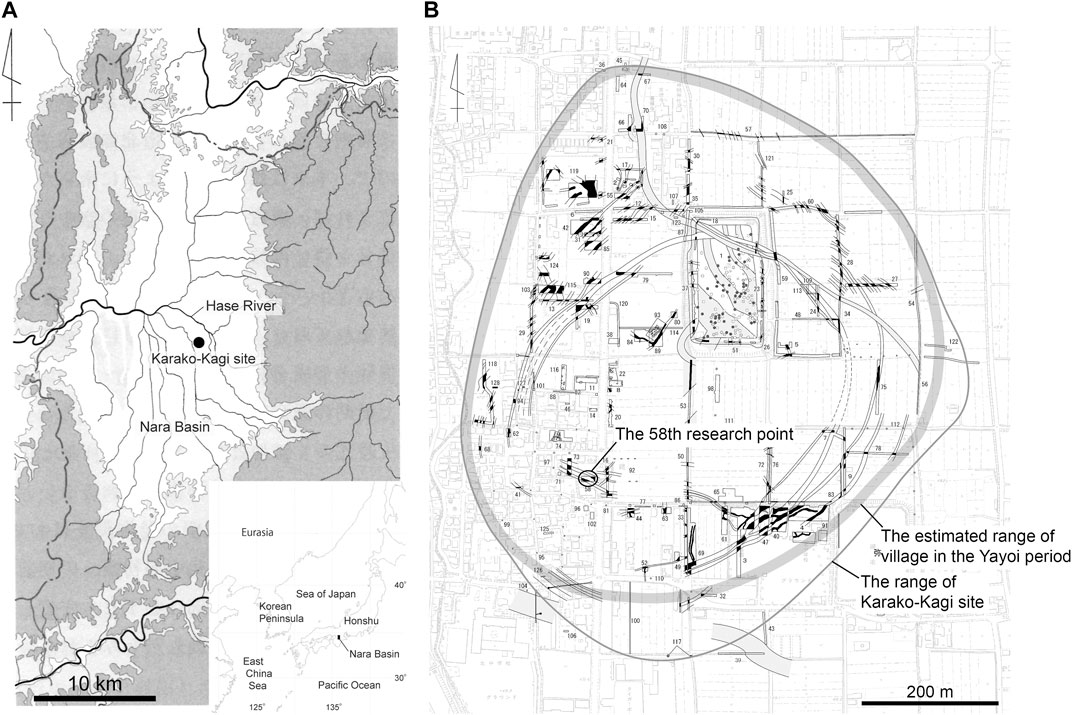
FIGURE 1. Location of the Karako-Kagi site (A) and its 58th research point (B).
The 58th research point of the Karako-Kagi site is located in the western part of the site (Eda et al., 2016a). The research area of the point was 138 m2 (20 m in the east and west, 6.6–7.6 m in the north and south) and provided 180 containers of artifacts and natural remains from the early Yayoi period and the Middle Age. Most of the animal remains were found in a division groove (SD-106 and SD-106 B) and were assumed to date back to the Yayoi period, based on the accompanying pottery that belonged to the same period. Carp (Cyprinus carpio), frog (Anura), pheasant/fowl (Phasianidae) including domestic chicken and green pheasant, duck (Anatidae), passerine (Passeriformes), Japanese hare (Lepus brachyurus), rodent (Muridae) including large Japanese field mouse (Apodemus speciosus), red fox (Vulpes), marten (Martes melampus), boar (Sus scrofa), and sika deer (Cervus nippon) were identified based on 194 bones (Eda et al., 2016a). Of these animals, mammals were predominant—especially boars, which may have included domestic ones—and most were considered for meat.
In total, 10 bones of Phasianidae were found at the point: nine from a division groove, SD-106, and one from waste soil (Eda et al., 2016a). The 15 m-long groove, confirmed at the southwest corner of the 58th research point, is presumed to extend outside the excavation area. It is interpreted that the groove was dug up twice: the first (SD-106 B) being ∼4.0 m wide and 1.3 m deep, and the second (SD-106) being ∼3.0 m wide and 0.9 m deep. The opening age of the groove was estimated based on the accompanying pottery: mainly Yamato II-1 and II-2 types for the former, and mainly Yamato II-3 type for the latter. According to Eda and Inoué (2011), three of the Phasianidae bones were identified as belonging to a lower taxonomic level: a tarsometatarsus with the medial plantar crest from SD-106 was identified as domestic chicken, a femur with grater trochanter foramina from waste soil was recognized as green pheasant, and an immature femur without grater trochanter foramina (Figure 2.1) from SD-106 was confirmed as chicken/copper pheasant. Other seven Phasianidae bones, including three immature unfused bone elements of Phasianidae pelvis (Figure 2.2), were also found, but it was impossible to ascertain whether they were derived from chickens or wild pheasants. The immature femur and a piece of the pelvis were collected for analysis. For the ZooMS analysis, bone powder (∼1 mg) was sampled in an ancient biomolecule laboratory at the Hokkaido University Museum using sterilized powder-free nitrile gloves, and dental drills cleaned with hydrochloric acid (HCl) and distilled water. Radiocarbon dating was conducted on the immature femur by taking ∼100 mg of bone powder to a clean room at the University Museum of the University of Tokyo.
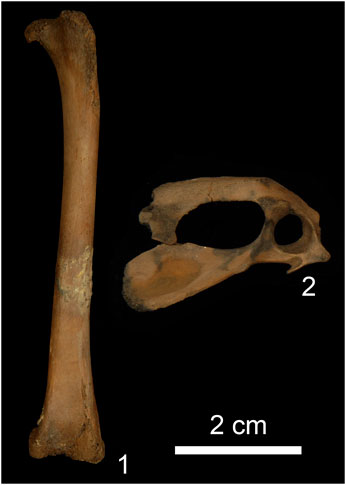
FIGURE 2. Studied immature Phasianidae bones from the Karako-Kagi site. 1: left femur; 2: right pelvis (fused ilium and ischium).
2.2 ZooMS analysis
Isolation and digestion of collagen peptides were conducted as described in Eda et al. (2020) in an ancient biomolecule laboratory at the Hokkaido University Museum. In brief, the bone powder was demineralized with HCl, the acid-insoluble pellet was gelatinized by heating in ammonium bicarbonate, and the gelatinized sample was digested with sequencing-grade trypsin. Following the digestion, the supernatant was acidified with trifluoroacetic acid and desalinated using a C18 ZipTip. The sample solution was spotted onto a target plate and mixed with α-cyano-4-hydroxycinnamic acid matrix solution. Fractions of each collagen digest were analyzed using an UltrafleXtreme mass spectrometer (Bruker, Billerica, MA, United States) at the Central Institute of Isotope Science, Hokkaido University. Eda et al. (2020) revealed that chickens and red junglefowls have peaks of 1604.8 m/z (1+; GDPGPVGPVGPAGAFGPR) and frequently 1620.8 m/z (1+; GDP*GPVGPVGPAGAFGPR, in which * shows postmortem oxidation), while green and copper pheasants have a peak of 1578.8 m/z (1+; GDPGPVGAVGPAGAFGPR) because of an amino acid substitution. Discrimination of domestic chicken/red junglefowl and Japanese wild pheasant was conducted based on the presence or absence of these biomarkers. Peaks within ±0.2 m/z were considered to be the same.
2.3 Radiocarbon dating
To measure 14C, collagen was prepared using a modified Longin’s method (Longin, 1971; Yoneda et al., 2002) and graphitized using the methods described by Omori et al. (2017). An elemental analyzer (Vario ISOTOPE select, Elementar Analysensysteme GmbH) was used to combust the samples and isolate pure CO2 from the combusted gas (Omori et al., 2017). Graphite was then produced by the catalytic reduction of the sample CO2 with H2 gas and Fe powder. The radiocarbon content of the graphite was measured using an accelerator mass spectrometer (AMS) at the University Museum of the University of Tokyo. The radiocarbon dates were calibrated using OxCal4.2 software (Bronk Ramsey, 2009) and IntCal20 calibration curves (Reimer et al., 2020).
3 Results
3.1 ZooMS analysis
Peaks of 1604.8 and 1620.8 rather than 1578.8 were observed in both the immature femur and pelvis (Figure 3, Supporting Material). A comparison of these peaks with those from reference modern Phasianidae specimens showed that these immature samples from the Karako-Kagi site were derived from chickens.
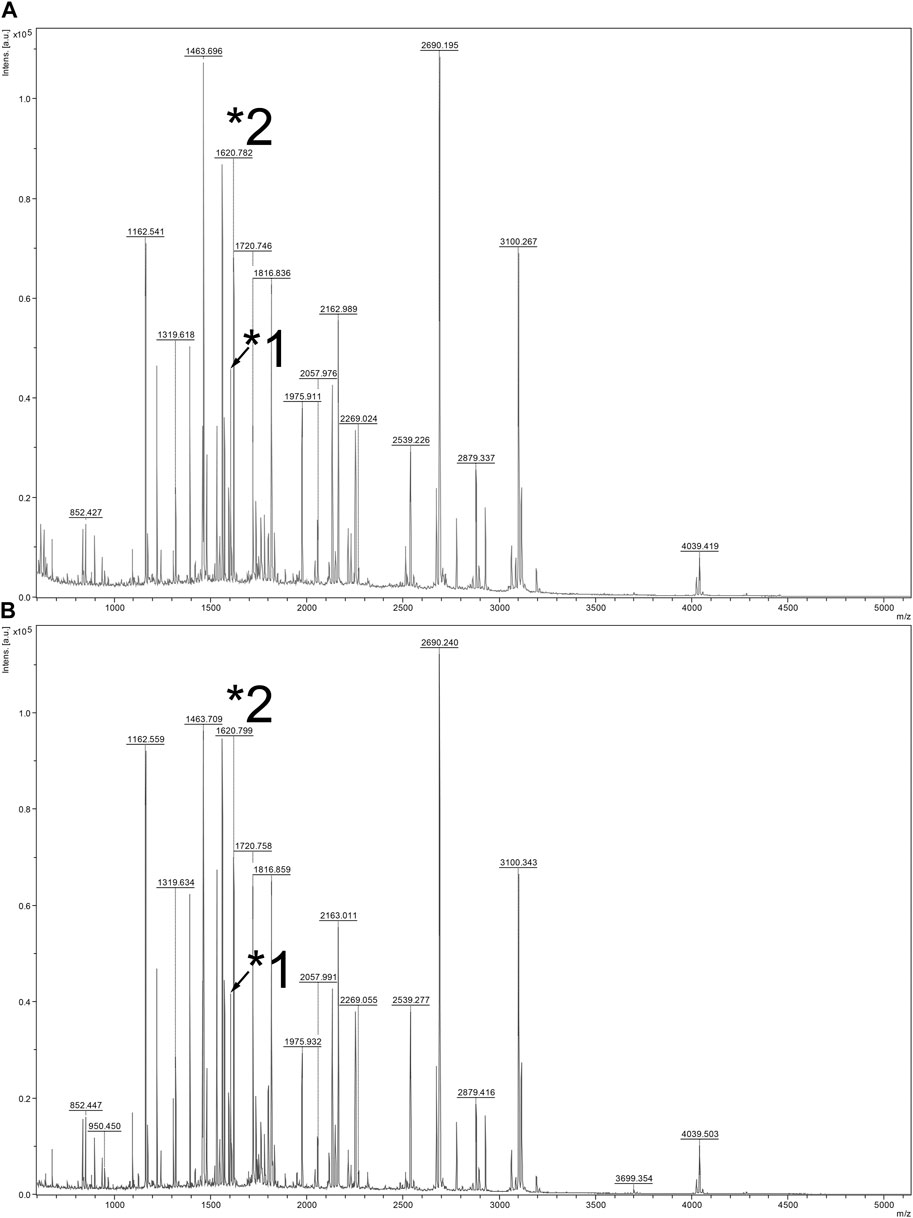
FIGURE 3. Time-of-flight mass spectrometry profile of two samples from the Karako-Kagi site [(A): left femur and (B) right pelvis]. Note that both samples were identified as chicken due to the presence of two peaks (*1 and *2).
3.2 Radiocarbon dating
Carbon and nitrogen concentrations (weight %) of extracted collagen were 42.4% and 14.6%, respectively, showing a good agreement of its atomic C/N ratio of 3.4 with a biological range between 2.9 and 3.6 (DeNiro, 1985). The 14C age of the immature femur was determined to be 2,231 ± 22 BP. After calibration, the age was calculated at 381–204 BCE (95.4%) (Figure 4), corresponding to the middle Yayoi period as assigned to its archaeological context (Fujio, 2013).
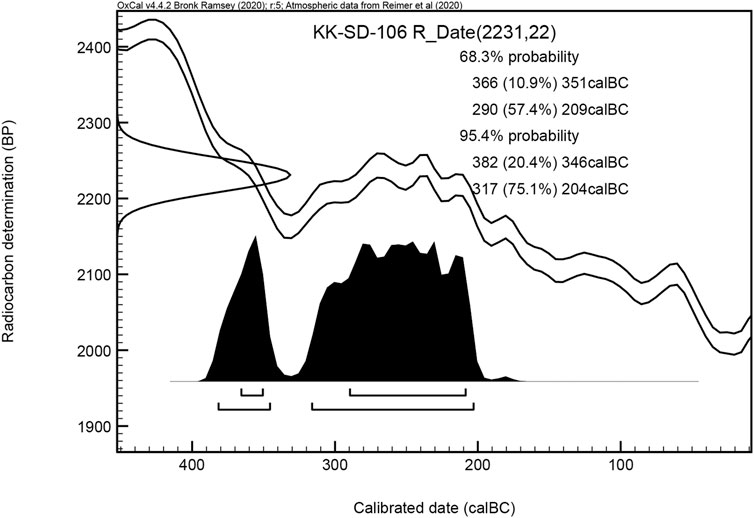
FIGURE 4. Calibrated 14C date of collagen from immature chicken bone collected from the Karako-Kagi site.
4 Discussion
The ZooMS analysis identified two immature Phasianidae bones from the Karako-Kagi site as chicken/red junglefowl based on two biomarkers. The radiocarbon dating clearly showed that the immature femur dated between the fourth and third century BCE, which is consistent with the chronological feature of the accompanied pottery (the late fourth to early third century BCE) (Fujita, 2019). This suggests that the bone is not intrusive from a later age. To the best of our knowledge, this is the first case of direct radiocarbon dating of a chicken bone from a Japanese and East Asian archaeological site. Furthermore, the immature chicken femur was found in a stratigraphic layer from the middle Yayoi period, which is the oldest stratigraphic context for chicken bone findings (Eda, 2018). As mentioned in the Introduction, chickens were perhaps introduced to Japanese Archipelago from the Chinese continent and the Korean peninsula (Nishimoto, 1993; Eda, 2018). Therefore, the estimated age, fourth to third century BCE, is regarded as the lower limit for their introduction onto the Japanese Archipelago and East Asia, especially the Korean Peninsula.
Thus far, most of the confirmed or candidate chicken (10 out of 11) bones in the Yayoi period were identified as male parts (Eda et al., 2016a; Eda, 2016), suggesting that chickens could not have been reproduced in most of the Japanese Archipelago (Eda, 2018). However, the existence of an immature chicken at the Karako-Kagi site during the middle Yayoi period (fourth to third century BCE) suggests that domestic chickens were successively bred and not only male but also female chickens were brought into the Karako-Kagi village. The finding seems insufficient to consider that the successive breeding of domestic chickens was popular during the Yayoi period because of the unique characteristics of the Karako-Kagi site. The village is considered to have been one of the largest during the Yayoi period, and it flourished the most in the middle of this era (Fujita, 2019). At the Karako-Kagi site, various local pottery objects were found, such as from the Totoumi (current Shizuoka Prefecture) and Shinano regions (current Nagano Prefecture) in the east and northern Kyushu in the west, which cover an area of 700 km. There were few central-hub village sites where a large number of such pottery artifacts have been found, suggesting that a distribution network to Karako-Kagi village had been established (Fujita, 2019). The successive breeding of domestic chickens during the Yayoi period could have only been possible in a powerful central-hub village such as the Karako-Kagi.
Hitherto, no morphological criteria have been established for distinguishing domestic chicken/red junglefowl bones from indigenous wild pheasants in East Asia. As the ZooMS approach used in this study was created to identify chickens from the middle size wild pheasant species in Japan (Eda et al., 2020), further studies of modern osteological specimens are necessary to identify materials from East Asia, excluding Japan. However, the approach is still effective in distinguishing between candidate chicken bones and non-chicken bones. Applying ancient DNA analysis to bones in which chicken-specific peaks were observed, it was possible to reliably identify chicken bones in East Asia.
Recent critical reviews of studies on the westward expansion of the domestic chicken (Best et al., 2022; Peters et al., 2022) revealed some intriguing patterns of the human-chicken relationship that differed from those observed for the Yayoi period. In many areas of Europe, such as Britain, Italy, and the Czech Republic, chickens appeared initially as skeletons buried individually, and then along with humans (Best et al., 2022). There is a consistent time lag between the introduction of chickens and their consumption by humans, suggesting that they were initially regarded as exotica and recognized as a source of food only several centuries later (Best et al., 2022). Chicken bones have been reported as burial goods in tombs or materials excavated from cemeteries at Dasikongcun (Late Shang Dynasty), Maojiaping (Gansu Province, spring and autumn Period, 770–476 BCE and Warring States Period, 476–221 BCE), Jiuliandun (Hubei Province, Warring States Period) and Shenmingpu (Henan Province, Early Han Dynasty, 202–141 BCE) in China (Peters et al., 2022). Further, a chicken skull was reported from an ash pit in Yinxu while six chicken bones were reported from settlement layers at the capital city of Zhu (Shandong Province, spring and autumn Period and Warring States Period). There are no records of chickens being buried alone in East Asia (Peters et al., 2022).
Although chickens in the Japanese Archipelago do not seem to have been recognized as a source of food in the Yayoi period (Nishimoto, 1993; Niimi, 2009), there are no reports of chickens that were individually buried or buried with humans, and none of the bones were found in any special context (Eda, 2018). Female chickens with medullary bone have been found from the early times in England, while juvenile bones have been found in Italy (Best et al., 2022). Therefore, the male-biased appearance, similar to the Japanese Yayoi period, has not been recognized in other parts of the world. It has also been pointed out that the introduction of chickens to the Western region happened around the same time as that of rice (Oryza sativa) (indica) and Chinese millets (Panicum miliaceum and Setaria italica) (Peters et al., 2022). However, the domestication or introduction of rice and Chinese millets in East Asia, including the Japanese Archipelago, would have occurred much earlier than that of the chicken. Rice (japonica) domestication was established by the fourth millennium BCE in southern China while Chinese millets domestication was established by the sixth millennium BCE in northern China (Larson et al., 2014). These cereals were introduced to the Korean Peninsula in the middle second millennium BCE (Shoda, 2009), then to the Japanese Archipelago in the later Final Jomon Period (∼10th century BCE) (Nakazawa, 2009). The difference between the introduction of chickens to the Western region and that to the Japanese Archipelago and East Asia is a topic for future research.
Data availability statement
The datasets presented in this study can be found in online repositories. The names of the repository/repositories and accession number(s) can be found in the article/Supplementary Material.
Author contributions
ME designed the research; SF organized the samples; ME and HI performed the ZooMS analysis; MY performed the radiocarbon dating; ME wrote the draft, and all the authors approved the final version of the article.
Funding
This work had partial financial support from the Japan Society for the Promotion of Science KAKENHI (JP18K18521, JP20H01367, and 20H05819).
Conflict of interest
The authors declare that the research was conducted in the absence of any commercial or financial relationships that could be construed as a potential conflict of interest.
Publisher’s note
All claims expressed in this article are solely those of the authors and do not necessarily represent those of their affiliated organizations, or those of the publisher, the editors and the reviewers. Any product that may be evaluated in this article, or claim that may be made by its manufacturer, is not guaranteed or endorsed by the publisher.
Supplementary material
The Supplementary Material for this article can be found online at: https://www.frontiersin.org/articles/10.3389/feart.2023.1104535/full#supplementary-material
References
Best, J., Doherty, S., Armit, I., Boev, Z., BSter, L., Cunliffe, B., et al. (2022). Redefining the timing and circumstances of the chicken’s introduction to Europe and north-west africa. Antiquity 96, 868–882. doi:10.15184/aqy.2021.90
Bronk Ramsey, C. (2009). Bayesian analysis of radiocarbon dates. Radiocarbon 51, 337–360. doi:10.1017/s0033822200033865
Buckley, M., Kansa, S. W., Howard, S., Campbell, S., Thomas-Oates, J., and Collins, M. (2010). Distinguishing between archaeological sheep and goat bones using a single collagen peptide. J. Of Archaeol. Sci. 37, 13–20. doi:10.1016/j.jas.2009.08.020
Deniro, M. J. (1985). Postmortem preservation and alteration of in vivo bone collagen isotope ratios in relation to palaeodietary reconstruction. Nature 317, 806–809. doi:10.1038/317806a0
Eda, M., Abe, M., Maruyama, M., and Fujita, S. (2016a). Animal remains from the 58th research on Karako-Kagi site. Annu. Res. Rep. Of Archaeol. Tawaramoto Town 24, 119–132.
Eda, M., Bessho, H., and Inoué, T. (2014). Bird exploitation in the Kawachi lowland plain during the prehistoric times, based on zooarchaeological analysis of bird remains at Miyanoshita site, Osaka Prefecture. Jpn. J. Of Zooarchaeology 31, 21–32.
Eda, M. (2016). Chickens in the Yayoi Period: In the context of osteological microevolution under domestication. Jpn. J. Of Zooarchaeology 33, 49–61.
Eda, M., and Inoué, T. (2011). Identification of Phasianidae (chicken and indigenous fowls in Japan) bones using nonmetric characteristics and its application for reevaluation of chickens from the Yayoi Period. Jpn. J. Of Zooarchaeology 28, 23–33.
Eda, M., Lu, P., Kikuchi, H., Li, Z., Li, F., and Yuan, J. (2016b). Reevaluation of early Holocene chicken domestication in northern China. J. Of Archaeol. Sci. 67, 25–31. doi:10.1016/j.jas.2016.01.012
Eda, M., Morimoto, M., Mizuta, T., and Inoué, T. (2020). Zooms for birds: Discrimination of Japanese archaeological chickens and indigenous pheasants using collagen peptide fingerprinting. J. Of Archaeol. Sci. Rep. 34, 102635. doi:10.1016/j.jasrep.2020.102635
Eda, M. (2021). Origin of the domestic chicken from modern biological and zooarchaeological approaches. Anim. Front. 11, 52–61. doi:10.1093/af/vfab016
Fao. 2022. Gateway to poultry production and products. [Online]. Available: http://www.fao.org/poultry-production-products/en/(Accessed 2/23 2022).
Fujita, S. (2019). A village that laid the foundation for the birth of the Yamato sovereignty, Karako-Kagi site. Tokyo: Shinsen Sha.
Hendy, J., Welker, F., Demarchi, B., Speller, C., Warinner, C., and Collins, M. J. (2018). A guide to ancient protein studies. Nat. Ecol. Evol. 2, 791–799. doi:10.1038/s41559-018-0510-x
Larson, G., Piperno, D. R., Allaby, R. G., Purugganan, M. D., Andersson, L., Arroyo-Kalin, M., et al. (2014). Current perspectives and the future of domestication studies. Proc. Natl. Acad. Sci. 111, 6139–6146. doi:10.1073/pnas.1323964111
Longin, R. (1971). New method of collagen extraction for radiocarbon dating. Nature 230, 241–242. doi:10.1038/230241a0
Ma, D., Zhou, Y., and Zhang, Y. (1955). Excavation report of Dasikong village in An’yang 1953. Kaogu Xuebao (Acta Archaeol. Sin.) 9, 25–90.
Nakazawa, M. (2009). “On Jomon agricultural theory: Focusing on the verification of cultivated plant seeds,” in Archaeology of the Yayoi Period. Editors H. Shitara, S. Fujio, and T. Matsugi (Tokyo: Douseisha), 3, 228–246.
Niimi, M. (2009). “Livestock breeding of Yayoi culture,” in Archaeology of the Yayoi Period. Editors H. Shitara, S. Fujio, and T. Matsugi (Tokyo: Douseisha), 3, 95–103.
Omori, T., Yamazaki, K., Itahashi, Y., Ozaki, H., and Yoneda, M. (2017). “Development of a simple automated graphitization system for radiocarbon dating at the university of Tokyo,” in 14th international conference on accelerator mass spectrometry (Ottawa: University Of Ottawa).
Peters, J., Lebrasseur, O., Deng, H., and Larson, G. (2016). Holocene cultural history of red junglefowl (Gallus gallus) and its domestic descendant in East Asia. Quat. Sci. Rev. 142, 102–119. doi:10.1016/j.quascirev.2016.04.004
Peters, J., Lebrasseur, O., Irving-Pease, E. K., Paxinos, P. D., Best, J., Smallman, R., et al. (2022). The biocultural origins and dispersal of domestic chickens. Proc. Of Natl. Acad. Of Sci. 119, E2121978119. doi:10.1073/pnas.2121978119
Reimer, P. J., Austin, W. E. N., Bard, E., Bayliss, A., Blackwell, P. G., Bronk Ramsey, C., et al. (2020). The Intcal20 northern hemisphere radiocarbon age calibration curve (0–55 cal kbp). Radiocarbon 62, 725–757. doi:10.1017/rdc.2020.41
Richter, K. K., Codlin, M. C., Seabrook, M., and Warinner, C. (2022). A primer for zooms applications in Archaeology. Proc. Of Natl. Acad. Of Sci. 119, E2109323119. doi:10.1073/pnas.2109323119
Robinson, T. P., Wint, G. R. W., Conchedda, G., Van Boeckel, T. P., Ercoli, V., Palamara, E., et al. (2014). Mapping the global distribution of livestock. Plos One 9, E96084. doi:10.1371/journal.pone.0096084
Shoda, S. (2009). “Prehistoric agriculture and Yayoi agriculture in northeast Asia: Focusing on the Korean Peninsula,” in Archaeology of the Yayoi Period. Editors H. Shitara, S. Fujio, and T. Matsugi (Tokyo: Douseisha), 3, 39–54.
Wang, M.-S., Thakur, M., Peng, M.-S., Jiang, Y., Frantz, L. A. F., Li, M., et al. (2020). 863 genomes reveal the origin and domestication of chicken. Cell Res. 30, 693–701. doi:10.1038/s41422-020-0349-y
Xiang, H., Gao, J., Yu, B., Zhou, H., Cai, D., Zhang, Y., et al. (2014). Early Holocene chicken domestication in northern China. Proc. Of Natl. Acad. Of Sci. 111, 17564–17569. doi:10.1073/pnas.1411882111
Yoneda, M., Hirota, M., Uchida, M., Tanaka, A., Shibata, Y., Morita, M., et al. (2002). Radiocarbon and stable isotope analyses on the earliest jomon skeletons from the Tochibara rockshelter, Nagano, Japan. Radiocarbon 44, 549–557. doi:10.1017/s0033822200031908
Yuan, J. (2010). Zooarchaeological study on the domestic animals in ancient China. Quat. Sci. 30, 298–306.
Keywords: collagen peptide fingerprinting, domestic chicken, Japan, radiocarbon dating, ZooMS
Citation: Eda M, Izumi H, Yoneda M and Fujita S (2023) The earliest evidence of domestic chickens in the Japanese Archipelago. Front. Earth Sci. 11:1104535. doi: 10.3389/feart.2023.1104535
Received: 21 November 2022; Accepted: 24 March 2023;
Published: 20 April 2023.
Edited by:
Nadia Solovieva, University College London, United KingdomReviewed by:
Xianglong Chen, Chinese Academy of Social Sciences, ChinaSaverio Bartolini Lucenti, University of Florence, Italy
Copyright © 2023 Eda, Izumi, Yoneda and Fujita. This is an open-access article distributed under the terms of the Creative Commons Attribution License (CC BY). The use, distribution or reproduction in other forums is permitted, provided the original author(s) and the copyright owner(s) are credited and that the original publication in this journal is cited, in accordance with accepted academic practice. No use, distribution or reproduction is permitted which does not comply with these terms.
*Correspondence: Masaki Eda, ZWRhbXNrQG11c2V1bS5ob2t1ZGFpLmFjLmpw