 Saskia E. Ryan1,2*
 Eric Douville2
 Arnaud Dapoigny2
 Pierre Deschamps3
 Vincent Battesti4Abel Guihou3Matthieu Lebon5Jérôme Rohmer6Vladimir Dabrowski1Patricia Dal Prà7Laïla Nehmé8Antoine Zazzo1†
 Charlène Bouchaud1†
- 1Archéozoologie, Archéobotanique: Sociétés, Pratiques et Environnements (AASPE, UMR 7209), Muséum National d’Histoire Naturelle, CNRS, Paris, France
- 2Laboratoire des Sciences du Climat et de l’Environnement, LSCE/IPSL, UMR CEA-CNRS-UVSQ, Université Paris-Saclay, Gif-sur-Yvette, France
- 3Aix Marseille University, CNRS, IRD, INRAE, CEREGE, Aix-en-Provence, France
- 4Éco-Anthropologie (EA UMR 7206), CNRS, Muséum National d’Histoire Naturelle, Université Paris Cité, Musée de l’Homme, Paris, France
- 5Histoire Naturelle de l’Homme Préhistorique (HNHP, UMR 7194), Muséum National d’Histoire Naturelle, CNRS, UPVD, Musée de l’Homme, Paris, France
- 6CNRS, UMR 8167 Orient & Méditerranée, Ivry-sur-Seine, France
- 7Institut National du Patrimoine, Aubervilliers, France
- 8Orient & Méditerranée (UMR 8167), CNRS, Ivry-sur-Seine, France
With a view to understanding the dynamics of ancient trade and agrobiodiversity, archaeobotanical remains provide a means of tracing the trajectories of certain agricultural commodities. A prime example is cotton in Arabia, a plant that is non-native but has been found in raw seed and processed textile form at Hegra and Dadan, in the region of al-ʿUlā, north-western Saudi Arabia—sites of critical importance given their role in the trans-Arabian trading routes during Antiquity. Here, we demonstrate that the measurement of strontium isotopes from pre-cleaned archaeological cotton is methodologically sound and is an informative addition to the study of ancient plant/textile provenance, in this case, putting forward evidence for local production of cotton in oasis agrosystems and possible external supply. The presence of locally-grown cotton at these sites from the late 1st c. BCE–mid 6th c. CE is significant as it demonstrates that cotton cultivation in Arabia was a Pre-Islamic socio-technical feat, while imported cotton highlights the dynamism of trade at that time.
1 Introduction
Reconstructing ancient plant provenance informs on past agricultural systems, economies and trade but comes with its challenges. These are due in some cases to poor and/or unrepresentative sources (or proxies), but often hindered by methodological barriers. A pertinent example of this is cotton (Gossypium arboreum/herbaceum, Malvaceae), a plant which was originally domesticated in tropical and sub-tropical zones of the Indian sub-continent (for G. arboreum) and Africa (for G. herbaceum) but has since reached extensive geographical coverage (Kulkarni et al., 2009; Viot, 2019). Its cultivation in the desertic environment that exists over much of the Arabian Peninsula provides a case study to understand past diffusion paths and trade dynamics of a non-native plant. It was long considered that this plant was introduced with the so-called “Arab agricultural revolution” (Watson, 1974). This concept, based on the study of written sources, suggests the 7th c. CE Islamic conquest and unification of the Middle East, Central Asia and Mediterranean regions created opportunities for acclimatization of new crops, including cotton (Watson, 1974; Watson, 1981; Watson, 1983). Watson’s thesis has been influential (Squatriti, 2014), although more recent works, especially archaeobotanical studies, have provided a more nuanced view by hypothesizing Pre-Islamic plant introduction (Decker, 2009; Bouchaud et al., 2011; Bouchaud, 2015; Bouchaud et al., 2018; Fuks et al., 2020). In this paper, we aim to use the strontium (Sr) isotope composition of cotton in order to determine if 1) there was local production of cotton before the Islamic period in the northern part of the Arabian Peninsula, or 2) the material found on site was imported or 3) a combination of these two scenarios was taking place.
Cotton is non-native to the Arabian Peninsula, but archaeological and textual sources demonstrate that it has a long history in the region. To the North in the Levant, early traces of cotton fibers were found at Tel Tsaf, Israel (ca. 5200–4700 BCE) (Liu et al., 2022) and at Dhuweila, eastern Jordan (4450–3000 BCE) (Betts et al., 1994) suggesting possible very ancient trade of cotton fibers. The Greek philosopher and botanist Theophrastus (371–288 BCE) (Historia Plantarum, IV.7.7 [Amigues, 2010, p. 159]), mentions the cultivation of “wool-bearing trees” in Arabia for the first time during the 4th c. BCE on the island of Tylos, namely, the Bahrain archipelago. This textual reference, in conjunction with the north-western archaeological preserved cotton remains in the form of seeds, bolls (raw unginned fibers) and textiles in later sites such as Aila in southern Jordan (Ramsay and Parker, 2016), Hegra in northwestern Arabia (Bouchaud et al., 2018; Bouchaud et al., 2011) and Mleiha in the UAE (Kerfant and Dabrowski, 2017; Ryan et al., 2021), provide evidence for the far-reaching presence of cotton across the Arabian Peninsula by the turn of the 1st mill. CE. However, the simple occurrence alone of cotton does not prove that local cultivation of the crop was taking place. It remains difficult to demonstrate without ambiguity that the archaeological material testifies to the introduction of cotton agriculture rather than to the importation of cotton products by long-distance trade. At the site of Mleiha (Sharjah, United Arab Emirates), for instance, both charred cotton seeds and textiles were found in a burned-down building, radiocarbon dated to the beginning of the 3rd c. CE (Ryan et al., 2021). The strontium isotope values of archaeological cotton from Mleiha were inconsistent with those observed from modern plants growing both in the immediate vicinity of the site and in the region surrounding it and they are therefore considered as “non-local” (Ryan et al., 2021). The relatively radiogenic, non-local cotton remains were likely sourced from vast distances away, with strontium isotope data, archaeological and textual evidence pointing towards regions of western India as the likely place of origin.
Some of the first direct archaeological evidence of cotton in the Arabian Peninsula comes from the two sites that are the subject of this study: Hegra/Madā’in Sālih, today al-Hijr (26°47′ 1.38″ N; 37° 57′ 16.81″ E) and Dadan/al-Khuraybah (26° 39′ 23.3″ N; 37° 54′ 57.31″ E), both located in north-west Saudi Arabia in the al-‘Ulā region (Supplementary Appendix S1). Hundreds of carbonized cotton seeds were unearthed suggesting that cotton bolls were being processed, i.e., the fibers were removed from the seeds in the domestic areas, making it very plausible for cotton to have been grown locally over centuries (Bouchaud et al., 2011; Bouchaud et al., 2018; Charloux et al., 2018). However, the provenance of the seeds is ambiguous and it is even less certain whether desiccated textiles, uncovered within funerary chambers at Hegra, were produced locally or imported.
In the current paper, we aim to use strontium isotope ratios of both the archaeological charred cotton seeds and the desiccated textiles to determine if they were out-sourced or potentially produced on site. To do so, comparison with modern bio-available reference material, including plants and groundwater, is used to understand what can be deemed as ‘local’ from a geochemical standpoint. Radiocarbon dating of the material is undertaken to establish the precise chronology of cotton spread into Arabia. Isotope data already obtained from other Late Pre-Islamic sites (Ryan et al., 2021) is also drawn on to define more clearly the nature and chronology of the cotton spread throughout the Arabian Peninsula.
The use of strontium isotopes as a provenance tool is underpinned by the fact that strontium from bedrock is assimilated by plants, thus plants retain the isotopic fingerprint of the geological setting in which they grew (Capo et al., 1998). This allows geological and consequently, geographical variation in the radiogenic Sr isotope values (reported as the isotope ratio 87Sr/86Sr) of plant materials to be matched with, or distinguished from, a local site geology. Strontium isotopes have previously been used in an attempt to provenance plant material, such as wooden timbers (English et al., 2001; Reynolds et al., 2005; Hajj et al., 2017; Domínguez-Delmás et al., 2020; Pinta et al., 2021), textiles including cotton (Frei and Bjerregaard, 2017; Stanish et al., 2018; Ryan et al., 2021; Wozniak and Belka, 2022) and willow and tule (Benson et al., 2006). In a recent isotopic study of ancient cotton textiles, Wozniak and Belka (2022) suggest that Late Antique and Medieval cotton fabrics found in the middle of the Nile Valley (Sudan) could not have been grown locally based on their too-radiogenic strontium isotope values and technical characteristics, instead linking their presence to trade from potential places including Western Egypt, the west coast of India, Pakistan or the Arabian Peninsula. This study, as well as the aforementioned study conducted on cotton seeds and textiles at Mleiha, Eastern Arabia (Ryan et al., 2021), attest to the ancient long-distance, transcontinental trade of cotton. Such isotopic investigations into archaeological plant and textile origins are still relatively rare due to concerns over potential contamination with Sr from the burial environment. It is well established that some plant material, such as timber, is highly susceptible to diagenetic alteration from waterlogging in the burial environment (Van Ham-Meert et al., 2020; Snoeck et al., 2021). While water saturation is not considered an issue here, given the arid environmental conditions that resulted in the desiccation of the textiles and the charred state of the seeds that enabled their exceptional conservation, sand and dust contaminants are of concern. It has been demonstrated that leachates and residual cotton material differ in their 87Sr/86Sr ratios (Ryan et al., 2021), indicating the existence of exogenous Sr adhering to the archaeological remains, which could potentially complicate the interpretation of Sr isotope signature of botanical material. In the case of animal-derived textile material, a number of studies have shown that while desiccated wool textiles can adsorb exogenous Sr from the soil in which they are buried, it is possible to remove, at least in part, contaminant Sr by leaching the textile in acid, enabling one to determine if the strontium isotope value of residual material overlaps or not with the Sr isotope signature of the local area (Frei et al., 2009a; Frei et al., 2009b; Frei et al., 2010; Bergfjord et al., 2012; Frei et al., 2015; Frei et al., 2017). Here, we test an acid-leach protocol on cotton, linen and wool textiles and cotton seeds to ensure the methodology is appropriate for use when measuring the 87Sr/86Sr values on these materials and that it is possible to extract reliable provenance information from ancient plant materials.
2 Methods
2.1 Contaminant detection and removal
Residues were identified on the surfaces of the textiles. To identify the nature of these residues, a subset of six textiles were selected for Fourier transform infrared spectroscopy (FTIR) analysis (See Supplementary Material for full details). The analyses were carried out in transmission mode (after pressing the sample in a diamond cell), on the infrared spectroscopy platform of the Muséum national d’Histoire naturelle (MNHN, Paris).
Acid leaching was required to pre-clean the archaeological material (details in Supplementary Appendix S3). The resulting acid leachates and residual textiles were analyzed to test the efficacy of this pre-cleaning treatment. Four archaeological cotton textiles from the site of Mleiha and their corresponding acid leachates were previously analyzed for their strontium isotope composition (Ryan et al., 2021), and here, were analyzed for strontium concentrations. This material provides an external check on the efficacy of the pre-treatment.
2.2 Digestion and ion chromatographic procedures
The entire acid digestion process (Ryan et al., 2021) and subsequent Sr purification were achieved under a class 100 laminar flow hood in a class 10,000 clean room (ISO 7).
Strontium isotopic analyses of groundwater samples were carried out at the European Center for Research and Education in Environmental Geosciences (CEREGE, Aix-en-Provence, France) following a procedure described in Mahamat Nour et al. (2020). A volume of water corresponding to about 200 ng of Sr was evaporated. Separation and purification of the strontium fraction were carried out using the Sr-Spec resin on a 200 μL column in HNO3 media. The fraction was evaporated and then attacked with HNO3 + H2O2 to mineralize any organic residues of the Sr-Spec resin.
2.3 Mass spectrometry
Strontium isotope analyses of the botanical material were performed on a Thermo Scientific NeptunePlus Multi-Collector Inductively Coupled Plasma Mass Spectrometer (MC-ICPMS), at the Laboratoire des Sciences du Climat et de l’Environnement (LSCE, France). The purified strontium fractions were adjusted to a strontium concentration of 20 μg/L by dilution with 0.5 N HNO3. The LSCE has recently updated the analytical method for measurement of Sr isotopes using MC-ICPMS—for details see Ryan et al. (2021).
The reproducibility of the 87Sr/86Sr measurements was evaluated by repeated analysis of NBS 987 standard. Mean values of 0.710231 ± 0.000005 (n = 27), 0.710265 ± 0.000008 (n = 35) and 0.710281 ± 0.000007 (n = 35) were obtained in this study across three runs. Isotopic ratios were corrected using a standard-sample bracketing method and normalized to the NBS 987 standard value of 0.710245. The corresponding external reproducibility measured for the 3 runs using NBS 987 standard ranged between 14 and 22 ppm (2σ). For each sample, the 87Sr/86Sr value is reported with a 2σ uncertainty, taking into account the standard reproducibility and the measurement standard error of each sample. However, such analytical precision does not take into account the uncertainties related to the efficiency of the different treatments applied to the samples, their size or the Sr content present in the remains after leaching or the fact that it is difficult to perform meaningful reproducibility tests on such small samples. For this reason, in this study, we considered the values of Sr isotope ratios to the fourth decimal place.
For groundwater samples, strontium isotopes were performed on a NeptunePlus MC-ICP-MS at CEREGE. Dry samples were taken up and dissolved with HNO3 1%. Long-term external reproducibility assessed through repeated analyses of the AQUA-1 drinking water certified reference material (Yeghicheyan et al., 2021) is better than 15 ppm.
2.4 Radiocarbon dating
Five cotton seeds and two pieces of cotton textile were selected from different contexts at Hegra. In addition, two seeds of date palm, one barley grain and two undetermined wood charcoal fragments uncovered in different archaeological units which also contained cotton seeds (but not a sufficient quantity for analysis) were selected. Two cotton seeds were selected from the site of Dadan. Eight of the samples were prepared at the 14C lab of the MNHN and graphitization and 14C measurements were carried out at LSCE (France) using the AGE 3 automatized graphitization system and the compact AMS ECHoMICADAS’. Six of the samples were prepared at the Centre de Datation par le Radio-Carbone in Lyon (France), combusted in a vacuum line and ca. 1 mg C of purified CO2 was sealed in a glass tube, followed by graphitization with 14C measurements being carried out on the ARTEMIS AMS in Saclay. In both cases, the materials were prepared for radiocarbon dating using the standard acid-alkali-acid (AAA) method.
The textile samples were prepared by addition of chloroform:methanol 2:1 followed by the classical AAA procedure: 1 N HCl for 1 h, 0.1 N NaOH at room temperature for 15 min, and again 1 N HCl for 30 min. They were then loaded into tin capsules prior to combustion and graphitized using an automated AGE 3 device. The radiocarbon ages were calibrated using the Oxcal 4.4. software and the IntCal20 atmospheric curve (Bronk Ramsey, 2020; Reimer et al., 2020).
2.5 ICP-MS determination of trace elements
Strontium concentrations were measured via the LSCE’s Inductively Coupled Plasma Mass Spectrometry Thermo Scientific iCAP TQ. In preparation for analysis, a 0.2 mL aliquot of each of the solutions was sub-sampled and diluted to produce a 2% (v/v) HNO3 solution bearing a mixed internal standard with Ge, In and Re for the purpose of correcting instrument drift and signal suppression during analysis. To evaluate analytical uncertainties linked to Sr concentration measurements, two geo-standards, USGS BCR-1 (basalt) and NIST SRM 1640a (water), were regularly analyzed during the Q ICP-MS run. The measured mean values were 1,401 ± 97 mg/kg (n = 5) and 129 ± 5 μg/L, respectively in agreement with expected reference values and with an analytical uncertainty of 7% and 4% (1 σ), respectively.
3 Results
3.1 Modern plants
Fifteen modern plants collected from the wadi al-‘Ulā, and twenty-two modern plant samples from the wider region were analyzed to characterize 87Sr/86Sr variations across the region (Figures 1, 2). 87Sr/86Sr values of all plants from the entire region ranged from 0.7051 to 0.7104 (n = 37) (Supplementary Table S1). These data define what can be considered as the regional range in bioavailable strontium values (see open and closed circles in Figure 3).

FIGURE 1. Geological map of the study area with strontium isotope values of sampled plants [USGS basemap (Brown et al., 1963) https://pubs.er.usgs.gov/publication/i204A]. Green-outlined sites = wadi al-‘Ulā, immediately surrounding Hegra/Dadan. All sites = regional.
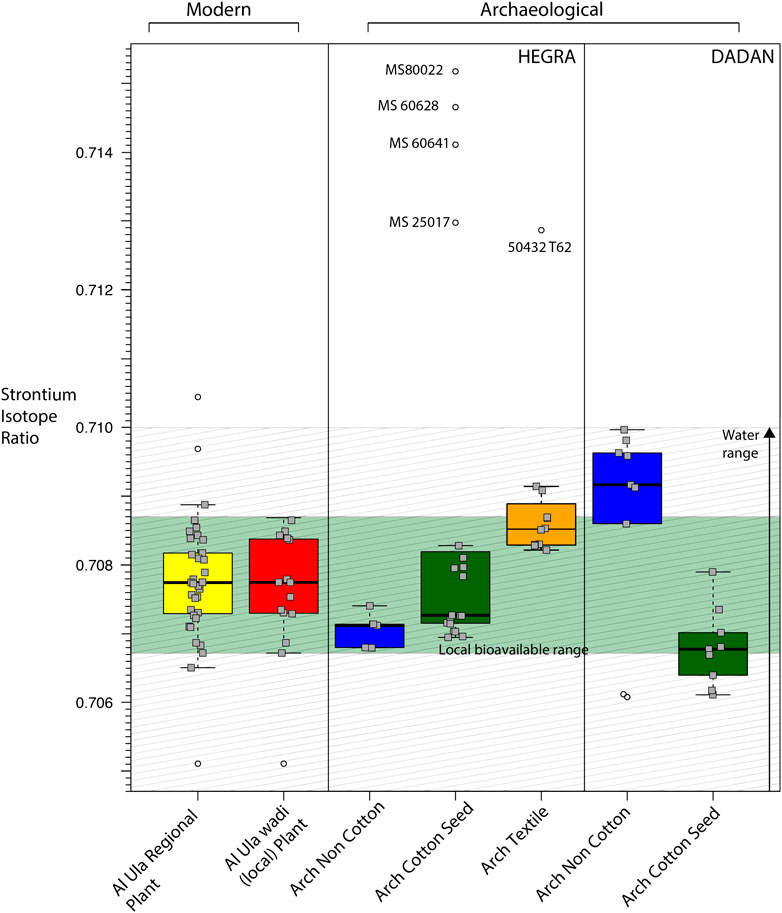
FIGURE 2. Comparative of strontium isotopes of modern plants, archaeological non-cotton plants (barley grain, date palm seed and charcoal, tamarisk charcoal, Amaranthaceae charcoal), cotton seeds, cotton textiles and groundwater. Circles indicate boxplot outliers.
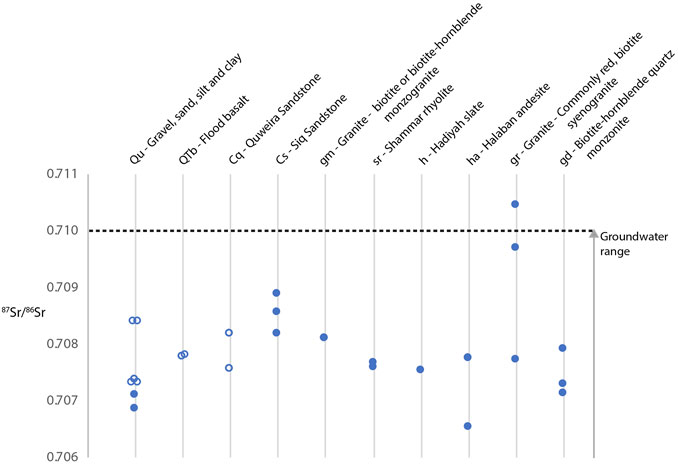
FIGURE 3. Strontium isotope values of modern bioavailable plant material, categorized based on the geological unit on which they grew. Open circles = local (Site of Hegra/Dadan and wadi al-‘Ulā), all circles = regional.
87Sr/86Sr values of plants collected from the wadi al-‘Ulā ranged from 0.7051 to 0.7087 (n = 15), or 0.7067 to 0.7087 excluding one outlier. The wadi broadly encompasses three geological groups. The Harrat al-Rahah and Harrat al-‘Uwayrid (QTb, Figure 1) are exposed directly north-west and west, respectively, of Hegra/Dadan and have a defined bio-available strontium isotope ratio of 0.7077 and 0.7078. Plants growing on the Cambrian Quweira (Cq) and Siq (Cs) sandstone outcrops directly at, and to the east of, Hegra/Dadan having values at 0.7075 and 0.7051, respectively. The modern plants overlying the Quaternary sediments in the low-lying region between the basalt and sandstone outcrops range from 0.7067 to 0.7087 (n = 11). These data define what can be considered as the local range in bioavailable strontium values (see open circles in Figure 3).
3.2 Groundwater
Analyses of strontium isotopes obtained on 71 groundwater samples collected in the Saq sandstone aquifer and alluvial aquifers located south of al-‘Ulā valley show 87Sr/86Sr values ranging between 0.7035 and 0.7099 (Figure 2; Supplementary Figure S2; Supplementary Table S2). Detailed study of major element analyses, together with a view to the spatial distribution of groundwater 87Sr/86Sr signature, show that this quite large range can be explained by the presence of two end-members contributing to the regional groundwater strontium composition (Deschamps et al., in prep): on one hand, a less radiogenic end-member (∼0.704), consistent with the isotopic signature of the Harrat al-‘Uwayrid volcanic field that shows quite a homogeneous 87Sr/86Sr isotopic signature around 0.703 (Altherr et al., 2019; Sanfilippo et al., 2021), and, on the other hand, a more radiogenic end-member (∼0.709) corresponding to the fingerprint of the Saq sandstone end-member. Intermediate mixing between these two end-members is noted.
3.3 Archaeological material
The strontium isotope composition of 38 archaeological remains from Hegra and 18 from Dadan were analyzed (for sample details see Supplementary Appendix S1). This included seeds of cotton, textiles of cotton, linen and wool, seeds of date palm and barley, as well as tamarisk, date palm and Amaranthaceae charcoal. Date palm, barley and tamarisk at Hegra were found to range from 0.7068 to 0.7074 (n = 5) and those at Dadan from 0.7061 to 0.7100 (n = 9). FTIR analysis on a subset of the textiles from Hegra revealed the presence of non-cellulose material(s) on some of the fabrics (Supplementary Appendix S2, Supplementary Figures S3–S10, Supplementary Table S3), so acid leaching was used as an effective pre-cleaning step to decontaminate the textiles (Supplementary Appendix S3; Supplementary Figure S11; Supplementary Table S4).
At Hegra, nineteen archaeological cotton seeds and twelve archaeological textiles (with two duplicates), ten of which are composed of cotton fibers, were analyzed. The isotopic range of the textiles composed only of cotton is 0.7082–0.7088. Duplicate cotton textiles measurements produce differences of Δ 0.000258 and 0.000033 from 50432_T41 and 50045_T06, respectively. This shows that heterogeneities in the textile strontium isotope values from a single fabric negate provenance interpretation on values on the order of the fourth decimal place or smaller. Archaeological wool textiles have much more disparate values (50240_T11 = 0.7092, 50240_L2 = 0.7087, 50432_T62 = 0.7129) and a textile with linen/cotton mixed composition had a value of 0.7091 (50432_T51). Excluding statistical outliers, archaeological cotton seeds range from 0.7069 to 0.7083 (n = 15). At Dadan, nine archaeological cotton seeds range from 0.7061 to 0.7079 (n = 9).
3.4 Radiocarbon dates
The calibrated radiocarbon ages of the cotton textiles from Hegra range between 47 cal. BCE to 237 cal. CE (Supplementary Figure S12; Supplementary Table S5). Hegra cotton seeds date to a range from 120 cal. BCE to 423 cal. CE and those from Dadan date to a range from 415 to 547 cal. CE. From Hegra, a barley caryopsis, two date palm seeds and two undetermined charcoal fragments located in five stratigraphic units containing cotton seeds have a range in age from cal. 80 BCE to 540 cal. CE.
4 Discussion
4.1 Bioavailable (plant and water) strontium isotope values
Using both modern plants and waters is the gold standard when defining a regional baseline range in strontium isotope values, as has been done here for the extended al-‘Ulā area. The collected plant samples cover a wide variety of geological bedrocks including basalt, granite, sandstone and sediments, ranging from Precambrian to Quaternary in age and have a range in strontium isotope values from 0.7051 to 0.7105 (n = 37) (Figure 2). While this range in the local and regional signatures is not geographically unique to this area, archaeological material with values falling widely outside this range signify material that is unlikely to have been grown within the region.
4.1.1 Modern, local plant signatures
Narrowing the geographical extent of the possible growth area correspondingly narrows the range in strontium isotope values one can deem as “local,” based on plant material alone. The Harrat al-Rahah and the Harrat al-‘Uwayrid (QTb, Figure 1), the Cambrian Quweira sandstone outcrops to the east of Hegra (Cq) and plants overlying the Quaternary sediments (Qu) in the low-lying wadi al-‘Ulā region between the basalt and sandstone outcrops range from 0.7067 to 0.7087 (n = 14, excludes one outlier). This range can be used as an upper and lower limit of what could be expected for plants growing locally (Figure 2), ideally to be considered in conjunction with the local water values.
4.1.2 Modern, regional groundwater signatures
While soil/regolith is the principal source of bioavailable strontium to plants, groundwater can have a critical effect on the isotopic composition of bioavailable strontium (Price et al., 2002; Bentley, 2006), especially in the case of oases where water input can be sizable. Moreover, soils average strontium over a relatively small area but ground/surface water generally average bioavailable strontium over a wider, regional catchment area (Evans et al., 2010; Willmes et al., 2014). Strontium isotope analyses of spring and well water from the al-‘Ulā region illustrate that there are two clear end-members contributing to the regional water strontium composition. These water strontium isotope values encompass and surpass the entire range in bioavailable plant values, which represent the mixing of the two water Sr sources to varying degrees, in addition to the localized soil contribution. Due to the specific geographical configuration of the al-‘Ulā area, groundwater from the Saq aquifer fed the oasis ecosystem during the historical period and was at the near surface (<8 m) up until the 1950s, as testified by observation of numerous abandoned jet pumps in the valley. This would have made water easily accessible during the last millennia (Courbon, 2008), as such, water input was an important contributor to the potential local plant strontium budget, especially in an oasis setting.
4.1.3 Reconstructing ancient bioavailable signatures
When comparing the archaeological plant data from the sites of Dadan and Hegra, the growth environment needs to be considered. Archaeological seeds of barley (n = 1), date palm (n = 2) and wood charcoal from the Amaranthaceae family (n = 2), from Hegra as well as tamarisk (n = 7) and date palm charcoal (n = 2) from Dadan can be used as an additional proxy for baseline bioavailable values. This is because they are assumed to have been grown locally based on phytogeographical data, their presence in large quantities and their common occurrence at sites in Arabia since the Bronze Age (Tengberg, 2012). However, the growth environment may give rise to some disparities between supposed “local” values. Archaeological tamarisk from the site of Dadan has a mean of 0.7092 ± 0.0009 2SD (n = 7), while date palm charcoal has a mean of 0.7061 ± 0.001 2SD (n = 2) (Figure 2). The local water encapsulates this range in values. Less radiogenic basaltic-influenced groundwater input to oases may explain the lower values in the oasis date palm and other plants that grew in the most irrigated soils. More radiogenic water input, associated with sandstone lithologies in the region, could explain the higher values in plants such as tamarisk that would have grown on the edge of the palm grove (possibly planted and used for wood and as a rustic wind-breaker) or further out spontaneously on the sandy plain. Although of low probability, we cannot fully rule out that tamarisk could have come from a neighboring place with higher strontium values relative to the oasis-grown plants. We recommend that both modern local plants and water, as well as assumed locally-grown archaeological material, be collected as the best medium for defining the local baseline strontium isotope values to ensure the entire source pool(s) of strontium are covered, particularly for oasis environments.
4.2 First geochemical evidence of ancient cotton cultivation in Arabia
Prior to our initial analyses, no strontium isotope analyses on archaeological material from north-western Arabia had been carried out to date. The analyses of archaeological cotton seeds from Hegra exhibit a range in values between 0.7069 and 0.7152 (n = 19) (Supplementary Table S1). The vast majority of the archaeological cotton seeds (n = 15, out of 19 total) fall within what has been determined to be the local range, using local modern plant values (n = 15). We can consider two major origins for the seeds at Hegra. The first is a local, less radiogenic group ranging from 0.7069 to 0.7083 (n = 15), while the second is a non-local, more radiogenic group ranging from 0.7130 to 0.7152 (n = 4) (Figure 2). Within the former grouping, there is potentially a subgrouping due to local heterogeneities in the growth environment(s). At Dadan, four of the nineteen cotton seeds fall below 0.7067, the defined lower limit of the bioavailable modern plant range, but are still considered to be within the local water ranges.
Sr isotope values from processed textiles from Hegra have an overlapping but smaller range of 0.7082–0.7129 (n = 14 including two duplicates), with one clear statistical outlier made of wool (50432 T62) that does not fit within the local band of plant/water isotope values (Figure 2). This could be indicative that this wool textile was non-local, thus imported. Alternatively, it may be that the keratin is more susceptible to alteration from environmental processes than cotton fibers (Hu et al., 2020). Six of the textiles fall marginally within the defined local bioavailable strontium range and therefore are in line with production on site (Figure 2). In terms of the textile preparation, FTIR revealed the presence of gum, egg yolk and possibly madder on some of the cotton textiles (for details see Supplementary Table S3; Supplementary Figures S3–S10). None of these substances are indicative of a particular provenance as their use cannot be considered unusual at this place or time. The presence of madder was already known in Hegra on wool textile (Bouchaud et al., 2015). From an archaeological perspective, certain properties of textiles can be used to distinguish different textile-producing spheres, namely, the way in which the threads have been spun, i.e., clockwise (Z) or anticlockwise (S) (Wild, 1997). This tends to have cultural and thus, geographical associations, however, this is a very limited approach which must be used as an indicator only in combination with other lines of evidence (Bouchaud et al., 2019). All of the cotton textiles from Hegra are Z-spun (Supplementary Table S3), potentially a style of the Nabatean textile industry (Bouchaud et al., 2011). Based on the isotope data and material evidence, local cotton textile production at Hegra is most probable; it also appears from the isotope data that a smaller proportion of the studied cotton seeds—likely in the form of raw cotton balls—were traded to the site of Hegra.
It cannot be entirely ruled out that the cotton material falling within the bioavailable local ranges defined here were grown elsewhere, in a region with overlapping bioavailable isotope values. For instance, strontium isotope analysis of human and faunal remains, as well as groundwater, from the port city of Aila, southern Jordan, demonstrate a local and immigrant population profile with local values 0.7076–0.7086 (Perry et al., 2017). Human dental enamel from Egyptian and Nubian sites have 87Sr/86Sr values in agreement with the local values to al-‘Ulā (mean of 0.7078 ± 0.0003 and 0.7076 ± 0.0004, respectively, with faunal material from the Nile Valley having a mean of 0.7079 ± 0.0023, n = 61) (Buzon and Simonetti, 2013) and 87Sr/86Sr values of 75 human dental enamel samples from Tell el-Dabca in Egypt have a mean of 0.7079 ± 0.0002 (Stantis et al., 2020). Wool textiles from the Nile Valley, with a range of 0.7075–0.7084, fall within the supposed local values for the region from which they were excavated based on sheep/goat values of 0.7068–0.7082 (Wozniak and Belka, 2022). Bioavailable strontium isotope values from modern plants from Egypt and the southern Levant have a mean of 0.7086 ± 0.0003 (Arnold et al., 2016). Further east, sites from Pakistan, Iran, Iraq, Kuwait, Bahrain and UAE have values within the “local” al-‘Ulā range (see Ryan et al., 2021 for a compilation of references therein). Despite the existence of these isotopically overlapping regions of potential origin, the cotton seeds from Hegra were found in the context of habitats, in domestic fireplaces and dumping areas, likely having been disposed of as part of the ginning process (Bouchaud et al., 2011; Bouchaud et al., 2018; Charloux et al., 2018). The context of the finds, combined with the large quantity of seeds over centuries, again suggests local processing.
While modern plant material is used here to give a range of potential regional values across the varied geological units, in reality, cotton would have only been feasibly grown close enough to an irrigation system (see Supplementary Figure S2 for location and distribution of archaeological wells at Madâ’in Salih; the water structures at Dadan in the Late Antique period are as of yet unknown but under study) and within the agricultural plots dedicated to the other oasian palm grove crops (Bouchaud et al., 2011; Bouchaud et al., 2018) probably located within or in the close vicinity of residential areas. It is not known exactly what the water requirements of ancient cotton plants were; they may have been less water-requiring than modern cotton crops, although irrigation remained essential under such hyper-arid climate (Bouchaud and Tallet, 2020).
The archaeological and isotope data leads us to conclude that most of the cotton was likely grown and processed on site during the period of occupation at Hegra—increasing in amount through time (Bouchaud et al., 2018). Although not exclusive to the al-‘Ulā region, the defined local strontium isotope ranges from modern plants and water do not contradict but rather support the archaeological evidence. Hegra, and the Nabateans who inhabited the site, appear to have played a critical role in the introduction/spread of cotton into the oasis of Arabia which would have required specific expertise i.e., growing, picking, ginning and spinning. It is not yet possible to say from existing information if the cotton was produced solely to meet local demand or if it was produced to surplus, making it a cash crop for widespread distribution. Given the capability of cotton production with irrigation systems and the key location of the site within trading networks, it is easily conceivable that the cotton produced on-site contributed to regional trade, potentially even entering wider Arabian and even Egyptian, Indian, and Mediterranean economies. Concurrently, cotton textiles could have been both produced on site, with some material being imported—possibly due to differing characteristics/value of imported fabrics.
The radiocarbon dates from Hegra pre-date and overlap in chronology with cotton finds at Mleiha on the Oman Peninsula (Ryan et al., 2021). Although they are broadly contemporaneous sites, there is a clear difference in the relationship with cotton at each of these settlements. With the exception of the textual mention of cotton growing in Bahrain during the 4th c. BCE (Theophrastus, Historia plantarum: 4.4.8) (Amigues, 2010), the cotton remains at Hegra represent the earliest production site of cotton on the Arabian Peninsula. The vast majority of radiocarbon and relative dates, combined with strontium isotope values, indicate that cotton production blossomed from the end of the 1st c. CE to the end of the occupation of the site, at the turn of the 5th c. CE and that it was also cultivated in the neighboring site of Dadan during the 5th–6th c. CE. While the full extent to which cotton growth and trade were taking place remains to be determined, this represents the earliest evidence for cotton production to date in western Arabia. In comparison, cuneiform texts show that cotton grew in several places in Mesopotamia during the 1st mill. BCE while the first secure evidence of cotton production we have in north-eastern Africa (Central Sudan and Western oasis of Egypt) dates back to the 1st–2nd c. CE (Bagnall, 2008; Clapham and Rowley-Conwy, 2009; Fuller, 2014, see synthesis in Bouchaud et al., 2018). Our study demonstrates the first multi-proxy evidence for cotton production in Arabia in Pre-Islamic times and offers a new milestone into the complex history of cotton diffusion through the Ancient world.
Data availability statement
The original contributions presented in the study are included in the article/Supplementary Material, further inquiries can be directed to the corresponding author.
Author contributions
SR: Conceptualization, Data curation, Formal Analysis, Investigation, Methodology, Project administration, Validation, Visualization, Writing–original draft, Writing–review and editing. ED: Data curation, Formal Analysis, Methodology, Resources, Validation, Writing–review and editing. AD: Formal Analysis, Writing–review and editing. PD: Data curation, Formal Analysis, Resources, Writing–review and editing. VB: Investigation, Methodology, Resources, Writing–review and editing. AG: Formal Analysis, Writing–review and editing. ML: Data curation, Formal Analysis, Resources, Validation, Visualization, Writing–review and editing. JR: Investigation, Writing–review and editing. VD: Investigation, Resources, Writing–review and editing. PDP: Resources, Writing–review and editing. LN: Resources, Writing–review and editing. AZ: Conceptualization, Data curation, Funding acquisition, Investigation, Methodology, Project administration, Resources, Validation, Writing–original draft. CB: Conceptualization, Data curation, Funding acquisition, Investigation, Methodology, Project administration, Resources, Validation, Writing–original draft.
Funding
The authors declare financial support was received for the research, authorship, and/or publication of this article. The study was part of the ECO-SEED project directed by Charléne Bouchaud (CNRS) and the WAO (Past, present and future Water resources in Al-Ula Oasis) project, both funded by the French Agency for the Development of AlUla (AFALULA).
Acknowledgments
We wish to thank AFALULA and the Royal Commission for AlUla for their support. We thank the members of the excavation team from the Archaeological mission of Madâ’in Sâlih and Dadan for their contribution. We also thank Louise Bordier for assistance with Quadrupole-ICP-MS measurements (pre-dilutions for Neptune), as well as the ECHoMICADAS team from LSCE for graphitization and AMS measurement (notably, Nadine Tisnerat-Laborde and François Thil). Thanks to Michel Lemoine and Olivier Tombret from AASPE for their assistance with sample preparation. Imen Khabouchi and Hélène Mariot are thanked for their help in groundwater sampling and for their technical support in strontium analyses at CEREGE.
Conflict of interest
The authors declare that the research was conducted in the absence of any commercial or financial relationships that could be construed as a potential conflict of interest.
Publisher’s note
All claims expressed in this article are solely those of the authors and do not necessarily represent those of their affiliated organizations, or those of the publisher, the editors and the reviewers. Any product that may be evaluated in this article, or claim that may be made by its manufacturer, is not guaranteed or endorsed by the publisher.
Supplementary material
The Supplementary Material for this article can be found online at: https://www.frontiersin.org/articles/10.3389/feart.2023.1257482/full#supplementary-material
References
Altherr, R., Mertz-Kraus, R., Volker, F., Kreuzer, H., Henjes-Kunst, F., and Lange, U. (2019). Geodynamic setting of Upper Miocene to Quaternary alkaline basalts from Harrat al ‘Uwayrid (NW Saudi Arabia): constraints from K–Ar dating, chemical and Sr-Nd-Pb isotope compositions, and petrological modeling. Lithos 330-331, 120–138. doi:10.1016/j.lithos.2019.02.007
Amigues, S. (2010). Théophraste. Recherches sur les plantes: à l’origine de la botanique. Paris, Belin: L’Historie.
Arnold, E. R., Hartman, G., Greenfield, H. J., Shai, I., Babcock, L. E., and Maeir, A. M. (2016). Isotopic evidence for early trade in animals between Old Kingdom Egypt and Canaan. PLoS One 11, e0157650. doi:10.1371/journal.pone.0157650
Bagnall, R. S. (2008). SB 6.9025, Cotton, and the economy of the small oasis. Bull. Am. Soc. Papyrol. 45.
Benson, L. V., Hattori, E. M., Taylor, H. E., Poulson, S. R., and Jolie, E. A. (2006). Isotope sourcing of prehistoric willow and tule textiles recovered from western Great Basin rock shelters and caves - proof of concept. J. Archaeol. Sci. 33, 1588–1599. doi:10.1016/j.jas.2006.02.012
Bentley, R. A. (2006). Strontium isotopes from the Earth to the archaeological skeleton: a review. J. Archaeol. Method Theory 13, 135–187. doi:10.1007/s10816-006-9009-x
Bergfjord, C., Mannering, U., Frei, K. M., Gleba, M., Scharff, A. B., Skals, I., et al. (2012). Nettle as a distinct Bronze Age textile plant. Sci. Rep. 2, 664–4. doi:10.1038/srep00664
Betts, A., van Der Borg, K., de Jong, A., McClintock, C., and Van Strydonck, M. (1994). Early cotton in north Arabia. J. Archaeol. Sci. 21, 489–499. doi:10.1006/jasc.1994.1049
Bouchaud, C. (2015). Agrarian legacies and innovations in the nabataean territory. Archeosciences, Rev. d’Archéométrie 39, 103–124. doi:10.4000/archeosciences.4421
Bouchaud, C., Clapham, A., and Newton, C. (2018). “Cottoning on to cotton (gossypium sp.) in Arabia and Africa during antiquity,” in Plants and people in the african past plants (Berlin, Germany: Springer).
Bouchaud, C., Sachet, I., Dal Prà, P., Delhopital, N., Douaud, R., and Leguilloux, M. (2015). New discoveries in a Nabataean tomb. Burial practices and ‘plant jewellery’ in ancient Hegra (Madâ’in Sâlih, Saudi Arabia). Arab. Archaeol. Epigr. 26, 28–42. doi:10.1111/aae.12047
Bouchaud, C., and Tallet, G. (2020). “L’intégration du coton au sein des économies agraires antiques: un marqueur discret d’innovation,” in Le changement dans les économies antiques. Editors F. Lerouxel, and J. Zurbach (Bordeaux: Ausonius), 227–263.
Bouchaud, C., Tengberg, M., and Prà, P. D. (2011). Cotton cultivation and textile production in the Arabian Peninsula during antiquity; the evidence from Madâ’in Sâlih (Saudi Arabia) and Qal’at al-Bahrain (Bahrain). Veg. Hist. Archaeobot. 2011. doi:10.1007/s00334-011-0296-0
Bouchaud, C., Yvanez, E., and Wild, J. P. (2019). Tightening the thread from seed to cloth. New enquiries in the archaeology of Old World cottonTendre un fil de la graine à l’habit. Nouvelles recherches sur l’archéologie du coton dans l’Ancien Monde: l’apport de l’interdisciplinarité. Rev. D’ethnoécologie. 2019. doi:10.4000/ethnoecologie.4501
Bronk Ramsey, C. (2020). OxCal [WWW document]. Available at: https://c14.arch.ox.ac.uk/oxcal.html (Accessed January 11, 2021).
Brown, G. F., Jackson, R. O., Bogue, R. G., and Elberg, E. L. (1963). Geology of the northwestern hijaz quadrangle, kingdom of Saudi Arabia. Saudi Arabia: U.S. Geological Survey.
Buzon, M. R., and Simonetti, A. (2013). Strontium isotope (87Sr/86Sr) variability in the Nile Valley: identifying residential mobility during ancient Egyptian and Nubian sociopolitical changes in the New Kingdom and Napatan periods. Am. J. Phys. Anthropol. 151, 1–9. doi:10.1002/ajpa.22235
Capo, R. C., Stewart, B. W., and Chadwick, O. A. (1998). Strontium isotopes as tracers of ecosystem processes: theory and Methods. Geoderma 82, 197–225. doi:10.1016/s0016-7061(97)00102-x
Charloux, G., Bouchaud, C., Durand, C., Gerber, Y., and Studer, J., 2018. Living in Madâ’in Sâlih/Hegra during the late pre-Islamic period. The excavations of Area 1 in the ancient city., in: J. Jansen van Rensburg, and S. J. Power T, Proceedings of the seminar for arabian studies. Archaeopress, Oxford, pp. 47–65.
Clapham, A., and Rowley-Conwy, P. (2009). “The archaeobotany of cotton (gossypium sp. L.) in Egypt and nubia with special reference to qasr ibrim, Egyptian nubia,” in From foragers to farmers. Papers in honour of gordon C. Hillman. Editors A. Fairbairn, and E. Weiss (Oxford: Oxbow Books), 244–253.
Courbon, P. (2008). Les puits nabatéens de Mad in āli (arabie saoudite). Arab. Archaeol. Epigr. 19, 48–70. doi:10.1111/j.1600-0471.2007.00288.x
Decker, M. (2009). Plants and progress: rethinking the islamic agricultural revolution. J. World Hist., 208–226. doi:10.5040/9781474220118.ch-008
Domínguez-Delmás, M., Rich, S., Traoré, M., Hajj, F., Poszwa, A., Akhmetzyanov, L., et al. (2020). Tree-ring chronologies, stable strontium isotopes and biochemical compounds: towards reference datasets to provenance Iberian shipwreck timbers. J. Archaeol. Sci. Rep. 34, 102640. doi:10.1016/j.jasrep.2020.102640
English, N. B., Betancourt, J. L., Dean, J. S., and Quade, J. (2001). Strontium isotopes reveal distant sources of architectural timber in Chaco Canyon, New Mexico. Proc. Natl. Acad. Sci. U. S. A. 98, 11891–11896. doi:10.1073/pnas.211305498
Evans, J. A., Montgomery, J., Wildman, G., and Boulton, N. (2010). Spatial variations in biosphere 87Sr/86Sr in Britain. J. Geol. Soc. Lond. 167, 1–4. doi:10.1144/0016-76492009-090
Frei, K. M., Berghe, I. V., Frei, R., Mannering, U., and Lyngstrøm, H. (2010). Removal of natural organic dyes from wool-implications for ancient textile provenance studies. J. Archaeol. Sci. 37, 2136–2145. doi:10.1016/j.jas.2010.02.012
Frei, K. M., and Bjerregaard, L. (2017). “Provenance investigations of raw materials in pre- Columbian textiles from Pachacamac; strontium isotope analyses,” in PreColumbian textile conference VII/jornadas de Textiles PreColombinos VII. Editor L. B. Peters (Lincoln, NE: Zea Books), 387–397. doi:10.13014/K25D8Q1X
Frei, K. M., Frei, R., Mannering, U., Gleba, M., Nosch, M. L., and Lyngstrøm, H. (2009a). Provenance of ancient textiles-a pilot study evaluating the strontium isotope system in wool. Archaeometry 51, 252–276. doi:10.1111/j.1475-4754.2008.00396.x
Frei, K. M., Mannering, U., Kristiansen, K., Allentoft, M. E., Wilson, A. S., Skals, I., et al. (2015). Tracing the dynamic life story of a Bronze age female. Sci. Rep. 5, 10431. doi:10.1038/srep10431
Frei, K. M., Mannering, U., Vanden Berghe, I., and Kristiansen, K. (2017). Bronze Age wool: provenance and dye investigations of Danish textiles. Antiquity 91, 640–654. doi:10.15184/aqy.2017.64
Frei, K. M., Skals, I., Gleba, M., and Lyngstrøm, H. (2009b). The Huldremose Iron Age textiles, Denmark: an attempt to define their provenance applying the strontium isotope system. J. Archaeol. Sci. 36, 1965–1971. doi:10.1016/j.jas.2009.05.007
Fuks, D., Amichay, O., and Weiss, E. (2020). Innovation or preservation? Abbasid aubergines, archaeobotany, and the islamic green revolution. Archaeol. Anthropol. Sci. 12, 50. doi:10.1007/s12520-019-00959-5
Fuller, D. Q. (2014). “Agriculture innovation and state collapse in Meroitic Nubia,” in Archaeology of african plant use. Editors C. J. Stevens, S. Nixon, M. A. Murray, and D. Q. Fuller (United States: Left Coast Press), 165–177.
Hajj, F., Poszwa, A., Bouchez, J., and Guérold, F. (2017). Radiogenic and “stable” strontium isotopes in provenance studies: a review and first results on archaeological wood from shipwrecks. J. Archaeol. Sci. 86, 24–49. doi:10.1016/j.jas.2017.09.005
Hu, L., Chartrand, M. M. G., St-Jean, G., Lopes, M., and Bataille, C. P. (2020). Assessing the reliability of mobility interpretation from a multi-isotope hair profile on a traveling individual. Front. Ecol. Evol. 8. doi:10.3389/fevo.2020.568943
Kerfant, C., and Dabrowski, V. (2017). “Cotton fibres and seeds at Mleiha: a cotton production centre in southeast Arabian peninsula during Late Pre-Islamic period?,” in Le coton dans l’Ancien monde: domestication, culture (Commerce: Usage).
Kulkarni, V. N., Khadi, B. M., Maralappanavar, M. S., Deshapande, L. A., and Narayanan, S. S. (2009). The worldwide gene pools of Gossypium arboreum L. and G. herbaceum L., and their improvment. Genet. Genomics Cott. 2009. doi:10.1007/978-0-387-70810-2_4
Liu, L., Levin, M. J., Klimscha, F., and Rosenberg, D. (2022). The earliest cotton fibers and Pan-regional contacts in the Near East. Front. Plant Sci. 13, 1045554. doi:10.3389/fpls.2022.1045554
Mahamat Nour, A., Vallet-Coulomb, C., Bouchez, C., Ginot, P., Doumnang, J. C., Sylvestre, F., et al. (2020). Geochemistry of the lake Chad tributaries under strongly varying hydro-climatic conditions. Aquat. Geochem. 26, 3–29. doi:10.1007/s10498-019-09363-w
Perry, M. A., Jennings, C., and Coleman, D. S. (2017). Strontium isotope evidence for long-distance immigration into the Byzantine port city of Aila, modern Aqaba, Jordan. Archaeol. Anthropol. Sci. 9, 943–964. doi:10.1007/s12520-016-0314-3
Pinta, É., Pacheco-Forés, S. I., Wallace, E. P., and Knudson, K. J. (2021). Provenancing wood used in the Norse Greenlandic settlements: a biogeochemical study using hydrogen, oxygen, and strontium isotopes. J. Archaeol. Sci. 131, 105407. doi:10.1016/j.jas.2021.105407
Price, T. D., Burton, J. H., and Bentley, R. A. (2002). The characterization of biologically available strontium isotope ratios for the study of prehistoric migration. Archaeometry 1, 117–135. doi:10.1111/1475-4754.00047
Ramsay, J. H., and Parker, S. T. (2016). A diachronic look at the agricultural economy at the Red Sea Port of Aila: an archaeobotanical case for hinterland production in arid environments. Bull. Am. Sch. Orient. Res. 376, 101–120. doi:10.5615/bullamerschoorie.376.0101
Reimer, P. J., Austin, W. E. N., Bard, E., Bayliss, A., Blackwell, P. G., Bronk Ramsey, C., et al. (2020). The IntCal20 northern hemisphere radiocarbon age calibration curve (0-55 cal kBP). Radiocarbon 62, 725–757. doi:10.1017/RDC.2020.41
Reynolds, A. C., Betancourt, J. L., Quade, J., Patchett, P. J., Dean, J. S., and Stein, J. (2005). 87Sr/86Sr sourcing of ponderosa pine used in Anasazi great house construction at Chaco Canyon, New Mexico. J. Archaeol. Sci. 32, 1061–1075. doi:10.1016/j.jas.2005.01.016
Ryan, S. E., Dabrowski, V., Dapoigny, A., Gauthier, C., Douville, E., Tengberg, M., et al. (2021). Strontium isotope evidence for a trade network between southeastern Arabia and India during Antiquity. Sci. Rep. 11, 303–310. doi:10.1038/s41598-020-79675-3
Sanfilippo, A., Sani, C., Rasul, N. M. A., Stewart, I. C. F., Vigliotti, L., Widinly, N., et al. (2021). Hidden but ubiquitous: the pre-rift continental mantle in the red sea region. Front. Earth Sci. 9. doi:10.3389/feart.2021.699460
Snoeck, C., Schulting, R. J., Brock, F., Rodler, A. S., Van Ham-Meert, A., Mattielli, N., et al. (2021). Testing various pre-treatments on artificially waterlogged and pitch-contaminated wood for strontium isotope analyses. Front. Ecol. Evol. 8, 1–10. doi:10.3389/fevo.2020.589154
Squatriti, P. (2014). Of seeds, seasons, and seas: andrew Watson’s medieval agrarian revolution forty years later. J. Econ. Hist. 74, 1205–1220. doi:10.1017/S0022050714000904
Stanish, C., Tantaleán, H., and Knudson, K. (2018). Feasting and the evolution of cooperative social organizations circa 2300 B.P. in Paracas culture, southern Peru. Proc. Natl. Acad. Sci. U. S. A. 115, E6716-E6721. doi:10.1073/pnas.1806632115
Stantis, C., Kharobi, A., Maaranen, N., Nowell, G. M., Bietak, M., Prell, S., et al. (2020). Who were the Hyksos? Challenging traditional narratives using strontium isotope (87Sr/86Sr) analysis of human remains from ancient Egypt. PLoS One 15, e0235414. doi:10.1371/journal.pone.0235414
Tengberg, M. (2012). Beginnings and early history of date palm garden cultivation in the Middle East. J. Arid. Environ. 86, 139–147. doi:10.1016/j.jaridenv.2011.11.022
Van Ham-Meert, A., Rodler, A. S., Waight, T. E., and Daly, A. (2020). Determining the Sr isotopic composition of waterlogged wood – cleaning more is not always better. J. Archaeol. Sci. 124, 105261. doi:10.1016/j.jas.2020.105261
Viot, C. (2019). Domestication et diversification variétale des cotons cultivés (Gossypium sp.) de l’Ancien Monde dans l’Antiquité. Rev. D’ethnoécologie. 2019. doi:10.4000/ethnoecologie.4404
Watson, A. M. (1974). The arab agricultural revolution and its diffusion, 700–1100. J. Econ. Hist. 34, 8–35. doi:10.1017/S0022050700079602
Watson, A. M. (1981). “A medieval green revolution: new crops and farming techniques in the Early Islamic world,” in The islamic Middle East 700–1900: studies in economic and social history. Editor A. L. Udovitch (Princeton: The Darwin Press).
Watson, A. M. (1983). Agricultural innovation in the early Islamic world: the diffusion of crops and farming techniques. Cambridge: Cambridge University Press.
Willmes, M., Mcmorrow, L., Kinsley, L., Armstrong, R. A., Aubert, M., Eggins, S., et al. (2014). The IRHUM (Isotopic Reconstruction of Human Migration) database - bioavailable strontium isotope ratios for geochemical fingerprinting in France. Earth Syst. Sci. Data 6, 117–122. doi:10.5194/essd-6-117-2014
Wozniak, M. M., and Belka, Z. (2022). The provenance of ancient cotton and wool textiles from nubia: insights from technical textile analysis and strontium isotopes. J. Afr. Archaeol. 150, 202–216. doi:10.1163/21915784-bja10019
Yeghicheyan, D., Grinberg, P., Alleman, L. Y., Belhadj, M., Causse, L., Chmeleff, J., et al. (2021). Collaborative determination of trace element mass fractions and isotope ratios in AQUA-1 drinking water certified reference material. Anal. Bioanal. Chem. 413, 4959–4978. doi:10.1007/s00216-021-03456-8
Keywords: cotton (Gossypium arboreum/herbaceum), strontium isotopes, provenance, Nabatean Kingdom, Hegra, Dadan, Saudi Arabia, archaeobotany
Citation: Ryan SE, Douville E, Dapoigny A, Deschamps P, Battesti V, Guihou A, Lebon M, Rohmer J, Dabrowski V, Dal Prà P, Nehmé L, Zazzo A and Bouchaud C (2023) Strontium isotope evidence for Pre-Islamic cotton cultivation in Arabia. Front. Earth Sci. 11:1257482. doi: 10.3389/feart.2023.1257482
Received: 20 July 2023; Accepted: 07 November 2023;
Published: 18 December 2023.
Edited by:
Dominik Fleitmann, University of Basel, SwitzerlandReviewed by:
Yehudit Harlavan, Geological Survey of Israel, IsraelNadia Solovieva, University College London, United Kingdom
Copyright © 2023 Ryan, Douville, Dapoigny, Deschamps, Battesti, Guihou, Lebon, Rohmer, Dabrowski, Dal Prà, Nehmé, Zazzo and Bouchaud. This is an open-access article distributed under the terms of the Creative Commons Attribution License (CC BY). The use, distribution or reproduction in other forums is permitted, provided the original author(s) and the copyright owner(s) are credited and that the original publication in this journal is cited, in accordance with accepted academic practice. No use, distribution or reproduction is permitted which does not comply with these terms.
*Correspondence: Saskia E. Ryan, cnlhbnMyMkB0Y2QuaWU=
†These authors have contributed equally to this work