 Hao Wang
 Jianping Huang
 Jidong Yang
 Yi Shen
- School of Geosciences, China University of Petroleum (East China), Qingdao, China
The accurate simulation of anisotropic media is critical in seismic imaging and inversion. In recent years, some scholars have dedicated efforts to the study of precise elastic waves in anisotropic media; however, it is easy to separate P-wave and S-wave from elastic wave fields in isotropic media but difficult to separate them in anisotropic media. To address this issue, others have proposed pseudo-pure-wave equations based on the theory of wave-mode separation, but shear wave interference still exists. Therefore, we derived the first-order pure quasi-P-wave equation with no shear wave component in orthorhombic anisotropic media (ORT) which is common in the Earth’s crust and has very important research value. The presence of a pseudodifferential operator in the equation poses a challenge for solving. In order to solve the pure wave equation, we decomposed the original pseudodifferential operator into an elliptic differential operator and a scalar operator, both of which are easily solvable. In addition, we extended the equation from ORT media to tilted ORT (TORT) media. The example results indicate that our pure quasi-P-wave equation can yield a more stable and accurate P-wave field. The pure wave equation we propose can be applied in reverse time migration (RTM), the least squares RTM (LSRTM), and even the full waveform inversion (FWI).
1 Introduction
With the growing complexity of targets in oil and gas exploration, precise high-resolution imaging technology has emerged as a vital tool, offering robust technical support and emphasizing the significance of accounting for underground media anisotropy (Chen et al., 2010; Fowler et al., 2010; Du et al., 2015). Various migration and inversion imaging methods have been developed based on anisotropic media, including Vertical Transverse Isotropy media (VTI) (S. Sun et al., 2022), (C. Luo et al., 2022), (R. Bloot et al., 2012), tilted TI (TTI) media (Han Q et al., 2022), and orthorhombic anisotropic media (ORT) media. However, certain challenges emerge when using the original elastic wave equation for forward numerical simulations. This may result in a complex algorithm and significant computational costs, especially given the current hardware limitations (Du and Qin, 2009; Cheng J B et al., 2013). Furthermore, the separation of elastic wave fields using wavefield separation techniques faces several challenges in anisotropic media (Dellinger J and Etgen J, 1990; Cheng J and Fomel S, 2014). As a result, scholars from various countries have recently devoted themselves to the study of single-mode wave propagation, such as the quasi-P-wave. Broadly speaking, anisotropic numerical simulations of single-mode waves can be categorized into two main types of methods. The first approach is based on the acoustic approximation proposed by Alkhalifah T (1998), and the core idea of this acoustic approximation is to set the shear wave velocity along each anisotropic symmetry axis to zero. Subsequently, he (Alkhalifah T, 2000) derived a fourth-order wave equation for TI media within the framework of the acoustic approximation and this equation was proven to be challenging to solve. Following this, other researchers decomposed this high-order linear partial differential equation into lower-order forms that are more easily solvable. Applying these simplified equations to wavefield simulation and RTM can enhance computational efficiency (Zhou H et al., 2006; Du X et al., 2008; Fowler PJ et al., 2010). However, when using these simplified equations for numerical simulations, several issues may arise, including potential wavefield interference caused by pseudo-shear waves (Grechka et al., 2004) and the possibility of numerical instability when the anisotropic symmetry axis undergoes abrupt changes (Fletcher et al., 2009; Duveneck and Bakker, 2011; Zhang et al., 2011). The second method is based on the pure P-wave equation, thereby fundamentally eliminating interference from shear waves. In this regard, Klie and Toro (2001) employed a previous version of the acoustic equation to eliminate an analytical artifact in Alkhalifah’s solution. Pestana et al. (2011) and Chu et al. (2013) introduced a new equation that contains intricate pseudo-differential operators, with all of its model parameters being separable. This equation can be solved using the pseudospectral method, but computational efficiency decreases when dealing with complex anisotropic parameters. The dispersion relation for decoupled qP and qSV waves was introduced under the assumption of the acoustic approximation in VTI media (Liu et al., 2009). This approach has proven to be effective in solving the equation when the anisotropic parameter model remains relatively stable. Cheng et al. (2013) derived a pseudo-pure wave equation based on the theory of elastic wave separation. By isolating the scalar-mode wave from pseudo-pure-mode wave equations, residual shear wave components were successfully eliminated (Cheng et al., 2014). Section 3.1 (Example 1) showcases the results of forward wave field simulations using the pseudo-pure P-wave equation in ORT. Based on different theories, Sheng and Zhou (2014) derived a new pure qP wave equation applicable to TTI media. Their approach presents a broadly adaptable solution for handling pseudo-differential operators.
To simplify the algorithms for numerical simulation in anisotropic media, approximations for the phase and group velocities of qP waves have found widespread use. Many approximate algorithms have been introduced previously to meet the numerical simulation requirements for various purposes. Dellinger and Etgen (1990) presented two consecutive continuous scalar anisotropic approximations expressed directly as rational polynomials. Alkhalifah and Tsvankin (1995) recommended performing velocity analysis by inversely deducing the dependency of P-wave moveout velocities on the ray parameter in TI media. Tsvankin (1996) examined the p-wave velocity and summarized its sign in TI media. Fomel (2004) and Fomel et al. (2013) put forward the approximation approach for three-dimensional anisotropic media on the basis of previous studies. Qi et al. (2014) and Qi et al. (2015) simplified the P-wave phase velocity by an elliptic approximation and they further elucidated the correlation between elastic coefficients and Thomsen-type parameters of ORT media. Zhang et al. (2022) systematically clarified the approximation of P-, S1- and S2- wave reflection coefficients in ORT. Guo et al. (2019), Guo et al. (2021), and Li et al. (2023) proposed theoretical models for rock effective elastic properties in the TI media, and these models provide the basis to link fracture properties to seismic attributes.
In this article, we have derived the dispersion equation for pure qP waves in ORT media. Instead of employing the exact dispersion relation presented by Tsvankin (1997), we utilized the phase velocity equation for pure qP waves introduced by Qi and Stovas (2016) to simplify the expression of the equation. This choice was driven by the goal of significantly decreasing the computational workload in ORT media. Importantly, the simplified phase velocity approximation remains highly accurate for acoustic or elastic ORT media characterized by strong anisotropy. After that, we deconstruct the pseudo-differential operator in the aforementioned dispersion equation into an elliptic differential operator and a scalar operator. This equation became easy to solve using this method and the wave field simulated in this way will have more balanced amplitudes, as demonstrated in the work by Sheng et al. (2015). Notably, when the differential operator is substituted with a Laplacian operator, following the approach by Sheng and Zhou (2014), the equation exhibits an improved tolerance to directional errors. Lastly, we extend the equation from ORT media to TORT media, to better simulate real geological stratum media.
2 Materials and methods
To reduce algorithm complexity, we start from the last of the three formulas: the GMA-type approximate formula, the Fomel approximation, and the simplified Fomel approximation for ORT media proposed by Qi and Stovas (2016). All the formulas are accurate for elastic or acoustic orthorhombic media with strong anisotropy and the simplified one reduces the steps of the algorithm but has no effect on the final result. The simplified phase velocity in ORT media has the following form:
And all the parameters are defined as:
where
We bring the following relationship function into Eq. 1,
So we get the dispersion equation in ORT media as:
Where
Where
At this time, the dispersion equation is still hard to solve. We use the elliptic differential operator method proposed by Sheng et al. (2015) to solve the equation. First, we rewrite Eq. 5 into the format:
We define
Then we rewrite Eq. 9 into the first order form, and the first order pure qP-wave equation of ORT media can be defined as:
In order to ensure the stability of the equation, we introduce the self-conjugate differential operator in the rotating coordinate system according to Zhang et al. (2011) and Bube et al. (2012) in tilted media. Finally, the first-order pure qP-wave equation of TORT media can be derived as
Where
3 Numerical tests
3.1 Example 1
In order to verify the correctness of the pure qP wave equation derived in this paper of ORT and TORT anisotropic media. Firstly, we extend the pseudo-pure P-wave equation of Cheng et al. (2013) to ORT media and remove residual shear wave components in wavefields, then compared these results with ours’. All three models’ parameters are shown in Table 1. Model 1 is used by the pseudo-pure wave simulation. The parameters

TABLE 1. Orthotropic parameter values in Thomsen form.
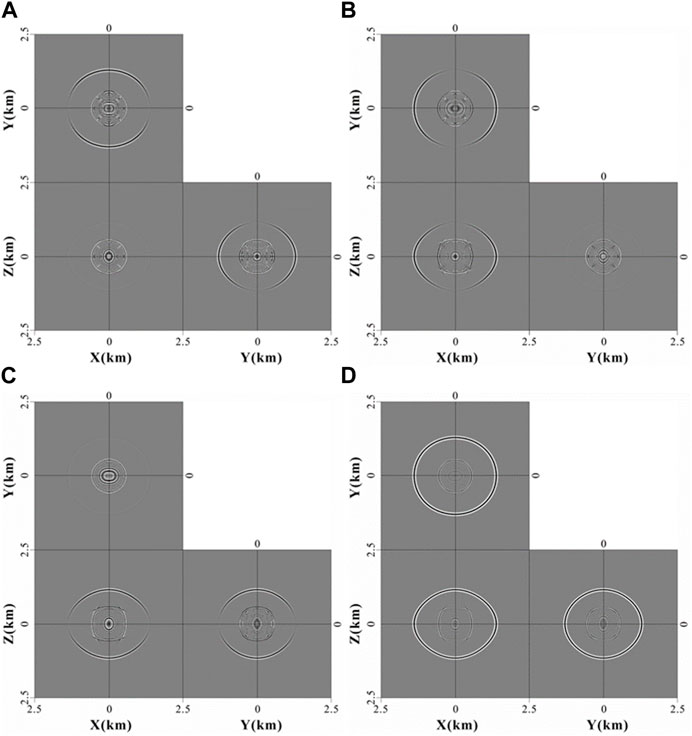
FIGURE 1. Wavefield modeling in ORT media. (A–C) are two horizontal and one vertical component of pseudo-pure qP-wave fields. (D) is the summation of three components.
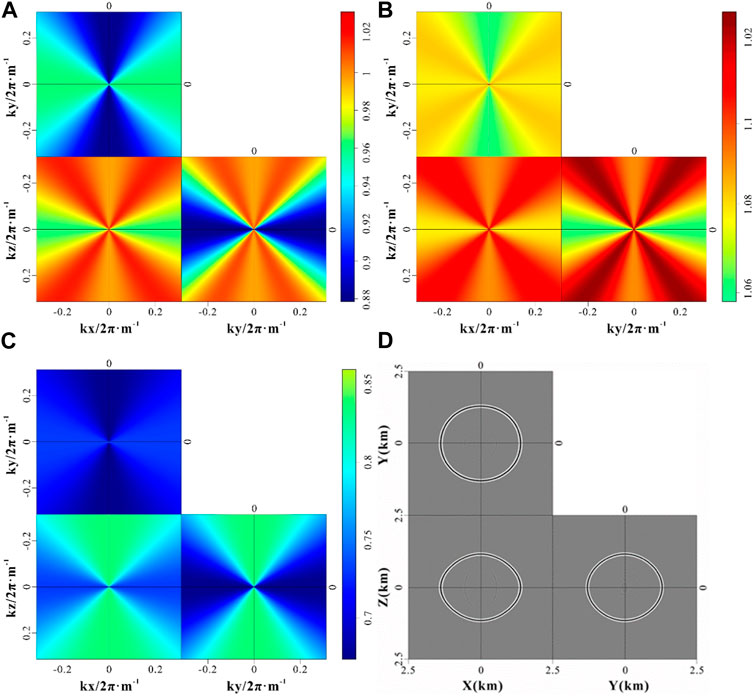
FIGURE 2. Wavenumber domain divergence, polarization projection, and deviation operators in ORT
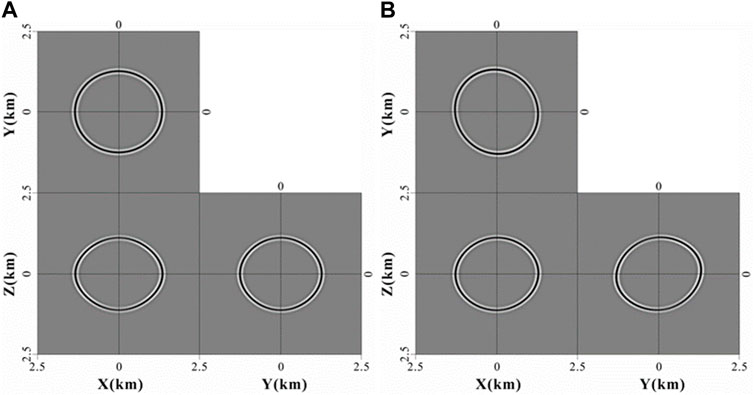
FIGURE 3. The pure qP-waves fields snapshots in ORT and TORT anisotropic media. (A) represents two horizontal and vertical components of snapshots in ORT. (B) is two horizontal and vertical components of snapshots in TORT.
The length, width, and height of all the models contain 300 sampling points, and the sampling interval is 25. The source wavelet is Rick wavelet, with a dominant frequency of 25 Hz. The source point is located in the center of the model. All wavefield snapshots are at the time t = 500ms.
3.2 Example 2
In order to test the applicability of the algorithm, we used the modified actual anisotropic parameter fields for numerical simulation. Because each parameter field is constant and does not change in Example 1, the anisotropic parameter field is variable in space in the actual seismic data processing or simulation, so just completing Example 1 is not enough to prove the reliability of the method. Figures 4A–I shows nine anisotropic parameter fields. The inline has 1,220 sampling points, the crossline has 195 sampling points, and the z-axis contains 1,510 sampling points. The x-axis and y-axis have the same sampling interval is 25, and the z-axis is 10. The source wavelet is Rick wavelet, with a dominant frequency of 25 Hz. The source point is in the surface of the model. Figure 4J shows the wavefield snapshots of the real model at the time t = 2,500 ms. Figure 4K represents a three-dimensional shot record and the length of record t is 2,000 ms. Figures 4J, K have relatively clear wave fields, and it can be seen that the wave field changes with the change of space in the anisotropic parameters.
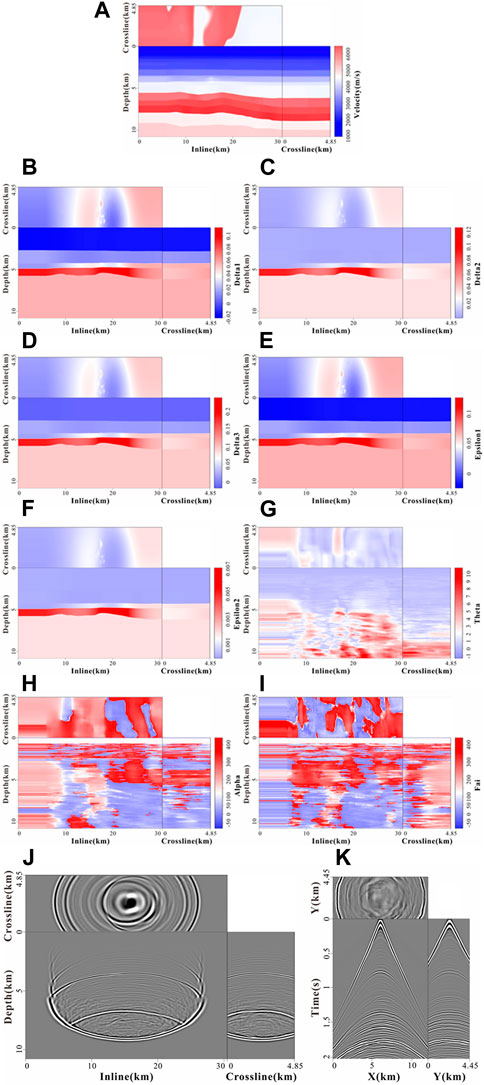
FIGURE 4. The pure qP-waves forward simulation with the modified actual anisotropic parameter field in ORT media. (A–I) respectively are
4 Conclusion
We derived a first-order pure qP-wave equation of ORT and extended the equation to TORT media. The problem of solving pseudo-differential operators is solved by using anelliptic approximation method. The differential operator is replaced by an elliptic differential operator instead of a Laplacian operator, so the pure qP-wave equation could simulate a more stable and balanced amplitude P-wave field. It can be seen from Example 1 that the equation we derived is correct, furthermore, there is no shear wave energy and Eq. 11 can also simulate a stable wave field under a large dip angle. The accuracy of our equation is relatively high and meets the accuracy of the current actual production based on the results in Example 2. In subsequent research, we are going to apply the equation to the RTM and simulate seismic wave fields using equations without approximation in orthotropic media.
Data availability statement
The datasets presented in this study can be obtained by contacting the corresponding author directly at: MTUyNzUyNjY5NjBAMTYzLmNvbQ==.
Author contributions
HW: Writing–original draft. JH: Writing–review and editing. JY: Investigation, Writing–review and editing. YS: Investigation, Writing–review and editing.
Funding
The author(s) declare financial support was received for the research, authorship, and/or publication of this article. This study is supported by the Marine S&T Fund of Shandong Province for Pilot National Laboratory for Marine Science and Technology (Qingdao) (No. 2021QNLM020001), the Major Scientific and Technological Projects of Shandong Energy Group (No. SNKJ2022A06R23), the Funds of Creative Research Groups of China (No. 41821002), National Natural Science Foundation of China Outstanding Youth Science Fund Project (Overseas) (No. ZX20230152), the Major Scientific and Technological Projects of CNPC (No. ZD2019-183-003).
Acknowledgments
This work was carried out at China University of Petroleum (East China).
Conflict of interest
The authors declare that the research was conducted in the absence of any commercial or financial relationships that could be construed as a potential conflict of interest.
Publisher’s note
All claims expressed in this article are solely those of the authors and do not necessarily represent those of their affiliated organizations, or those of the publisher, the editors and the reviewers. Any product that may be evaluated in this article, or claim that may be made by its manufacturer, is not guaranteed or endorsed by the publisher.
References
Alkhalifah, T. (1998). Acoustic approximations for processing in transversely isotropic media. Geophysics 63 (2), 623–631. doi:10.1190/1.1444361
Alkhalifah, T. (2000). An acoustic wave equation for anisotropic media. Geophysics 65 (4), 1239–1250. doi:10.1190/1.1820311
Alkhalifah, T., and Tsvankin, I. (1995). Velocity analysis for transversely isotropic media. Geophysics 60, 1550–1566. doi:10.1190/1.1443888
Bloot, R., Schleicher, J., and Santos, L. T. (2012). On the elastic wave equation in weakly anisotropic VTI media. Geophys. J. Int. 192 (3), 1144–1155. doi:10.1093/gji/ggs066
Bube, K. P., Nemeth, T., Stefani, J. P., Ergas, R., Liu, W., Nihei, K. T., et al. (2012). On the instability in second-order systems for acoustic VTI and TTI media. Geophysics 77 (5), T171–T186. doi:10.1190/geo2011-0250.1
Chen, W. G., Kai, L., and Dongying, S. (2010). The analysis of phase velocity and polarization feature for elastic wave in TTI media. Chin. J. Geophys. 53 (8), 1914–1923.
Cheng, J. B., Chen, M. G., Wang, T. F., and Kang, W. (2014). Description of qp-wave propagation in anisotropic media, part ii: separation of pure-mode scalar waves. Chin. J. Geophys. 57 (10), 3389–3401.
Cheng, J. B., Kang, W., and Wang, T. F. (2013). Description of qP-wave propagation in anisotropic media, Part I: pseudo-pure-mode wave equations. ChineseJ.Geophys. (in Chin. 56 (10), 3474–3486. doi:10.6038/cjg20131022
ChengFomel, J. S. (2014). Fast algorithms for elastic-wave-mode separation and vector decomposition using low-rank approximation for anisotropic media. Geophysics 79 (4), C97–C110. doi:10.1190/geo2014-0032.1
Chu, C. L., Macy, B. K., and Anno, P. D. (2013). Pure acoustic wave propagation in transversely isotropic media by the pseudospectral method. Geophys. Prospect. 61 (3), 556–567. doi:10.1111/j.1365-2478.2012.01077.x
Dellinger, J., and Etgen, J. (1990). Wave-field separation in two-dimensional anisotropic media. Geophysics 55 (7), 914–919. doi:10.1190/1.1442906
Dellinger, J., Muir, F., and Karrenbach, M. (1993). Anelliptic approximations for TI media. Iournal Seismic Exnloration 2, 23–40.
Du, Q. Z., Guo, C. F., and Gong, X. F. (2015). Hybrid PS/FD numerical simulation and stability analysis of pure p-wave propagation in VTI media. Chin. J.Geophys. 58 (4), 1290–1304. (in Chinese). doi:10.6038/cjg20150417
Du, Q. Z., and Qin, T. (2009). Multicomponent prestack reverse-time migration of elastic waves in transverse isotropic medium. ChineseJ.Geophys.(in Chin. 52 (3), 471–478. doi:10.1002/cjg2.1367
Du, X., Fletcher, R. P., and Fowler, P. J. (2008). “A new pseudo-acoustic wave equation for VTI media”. In Proceeding of the 70th EAGE Conference 8.Exhibition,Extended Abstracts, H033.
DuveneckBakker, E. P. M. (2011). Stable P-wave modeling for reverse-time migration in tilted TI media. Geophysics 76 (2), S65–S75. doi:10.1190/1.3533964
Fletcher, R. P., Du, X., and Fowler, P. J. (2009). Reverse time migration in tilted transversely isotropic (TTI) media. Geophysics 74 (6), WCA179–WCA187. doi:10.1190/1.3269902
Fomel, S. (2004). On anelliptic approximations for qP velocities in VTI media. Geophys. Prospect. 52, 247–259. doi:10.1111/j.1365-2478200400413x
Fomel, S., Ying, L., and Song, X. (2013). Seismic wave extrapolation using lowrank symbol approximation. Geophys. Prospect. 61 (3), 526–536. doi:10.1111/j.1365-2478.2012.01064.x
Fowler, P. J., Du, X., and Fletcher, R. P. (2010). Coupled equations for reverse time migration in transversely isotropic media. Geophysics 75 (1), S11–S22. doi:10.1190/1.3294572
Grechka, V., Zhang, L. B., and Rector, J. W. Ⅲ (2004). Shear waves in acoustic anisotropic media. Geophysics 69 (2), 576–582. doi:10.1190/1.1707077
Guo, J., Han, T., Fu, L., and Fang, X. (2019). Effective elastic properties of rocks with transversely isotropic background permeated by aligned penny-shaped cracks. J. Geophys. Res. Solid Earth 124, 400–424. doi:10.1029/2018jb016412
Guo, J., Zhao, L., Yang, Z., and Li, H. (2021). Analytical model for rock effective elastic properties with aligned elliptical cracks embedded in transversely isotropic background. Geophys. Prospect. 69, 1515–1530. doi:10.1111/1365-2478.13105
Han, J., Lü, Q., Zhang, H., Gu, B., and Liu, Z. (2022). PS-wave angle-domain imaging with Gaussian beam summation in 2-D TTI media. IEEE Geoscience Remote Sens. Lett. 19, 1–5. Art no. 3005205. doi:10.1109/LGRS.2021.3135533
Klie, H., and Toro, W. (2001). “A new acoustic wave equation for modeling in anisotropic media”, In 71st annual international meeting. Expanded Abstracts: SEG, 1171–1174.
Li, S., Wang, W., Su, Y., and Guo, J. (2023). Effective elastic properties and S-wave anisotropy for rocks containing any oriented penny-shaped cracks in transversely isotropic background. Geophysics 88, MR65–MR81. doi:10.1190/geo2022-0388.1
Liu, F., Morton, S. A., Jiang, S. S., Ni, L., and Leveille, J. P. (2009). Decoupled wave equations for P and SV waves in an acoustic VTI media. SEG Tech. Program Expanded Abstracts 2009.
Luo, C., Ba, J., and Carcione, J. M. (2022). A hierarchical prestack seismic inversion scheme for VTI media based on the exact reflection coefficient. IEEE Trans. Geoscience Remote Sens. 60, 1–16. Art no. 4507416. doi:10.1109/TGRS.2021.3140133
Pestana, R. C., Ursin, B., and Stoffa, P. L. (2011). Separate P-and SV-wave equations for VTI media. 12th Int. Congr. Braz. Geophys. Soc., 1227–1232. doi:10.1190/1.3627518
Qi, H., and Stovas, A. (2016). Analytic calculation of phase and group velocities of P-waves in orthorhombic media. Geophysics 81 (3), C79–C97. doi:10.1190/geo2015-0156.1
Qi, H., Stovas, A., and Norway, N. (2014). “Anelliptic approximation for P-wave phase-velocity in orthorhombic media”, In 16th international workshop on seismic anisotropy.
Sheng, X., Bing, T., Mu, J., and Zhou, H. (2015). Quasi-P wave propagation with an elliptic differential operator. Seg. New Orleans Annu. Meeting2015. doi:10.1190/segam2015-5866645.1
Sheng, X., and Zhou, H. B. (2014). Accurate simulations of pure quasi-P-waves in complex anisotropic media. Geophysics. J. Soc. Explor. Geophys. doi:10.1190/GEO2014-0242.1
Sun, S., Mao, W., Ouyang, W., Du, M., and Yang, M. (2022). Amplitude-preserving imaging condition for scattering-based RTM in acoustic VTI media. IEEE Geoscience Remote Sens. Lett. 19, 1–5. Art no. 3009005. doi:10.1109/LGRS.2022.3220774
Tsvankin, I. (1997). Anisotropic parameters and P-wave velocity for orthorhombic media. Geophysics 62, 1292–1309. doi:10.1190/1.1444231
Tsvankin, I. (1996). P-wave signatures and notation for transversely isotropic media: an overview. Geophysics 61, 467–483. doi:10.1190/1.1443974
Zhang, Y., Zhang, H., and Zhang, G. (2011). A stable TTI reverse time migration and its implementation. Geophys. J. Soc. Explor. Geophys. 76 (3). doi:10.1190/1.3554411
ZhangLuZhang, Z. J. X., and Wang, Y. (2022). Approximation of P-S1-and S2-wave reflection coefficients for orthorhombic media. Geophys. J. Soc. Explor. Geophys. 87 (4), C63–C76. doi:10.1190/geo2021-0400.1
Keywords: orthorhombic anisotropic media (ORT), quasi-P-waves, differential operator, anisotropic, forward
Citation: Wang H, Huang J, Yang J and Shen Y (2023) Numerical simulations of pure quasi-P-waves in orthorhombic anisotropic media. Front. Earth Sci. 11:1261033. doi: 10.3389/feart.2023.1261033
Received: 18 July 2023; Accepted: 03 October 2023;
Published: 19 October 2023.
Edited by:
Shaoping Lu, Sun Yat-sen University, ChinaReviewed by:
Qiang Guo, China University of Mining and Technology, ChinaJunxin Guo, Southern University of Science and Technology, China
Copyright © 2023 Wang, Huang, Yang and Shen. This is an open-access article distributed under the terms of the Creative Commons Attribution License (CC BY). The use, distribution or reproduction in other forums is permitted, provided the original author(s) and the copyright owner(s) are credited and that the original publication in this journal is cited, in accordance with accepted academic practice. No use, distribution or reproduction is permitted which does not comply with these terms.
*Correspondence: Hao Wang, MTUyNzUyNjY5NjBAMTYzLmNvbQ==