 Jianxue Feng
 Xiaoyu Dong1
 Long Wang
- 1School of Civil Engineering and Architecture, Guizhou Minzu University, Guiyang, China
- 2School of Environment and Civil Engineering, Jiangnan University, Wuxi, China
- 3Faculty of Architecture, Civil Engineering and Applied Arts, Academy of Silesia, Katowice, Poland
- 4Ocean College, Zhejiang University, Zhoushan, China
Introduction: Many theories of consolidation for soils have been proposed in the past, but most of them have ignored the structural characteristics of clay, yet the natural layered soils are widely distributed around the world.
Methods: A theoretical model is established to analyze the one-dimensional consolidation behavior of layered soils, in which a time-dependent drainage boundary and the structural characteristics of the soil are taken into account. Using the integral transform and characteristic function methods, the analytical solution is derived, the effectiveness of which is evaluated against the degradation of solutions and the numerical results calculated using the finite element method.
Results and discussion: Finally, the influences of interface parameter, soil permeability coefficient and soil compressibility on consolidation behaviors are discussed. Results show that in structured soils, early dissipation of excess pore water pressure and consolidation rates are predominantly influenced by interface parameters, permeability, and volume compression coefficients. Higher values of these parameters accelerate early stages of consolidation, which is especially evident in the upper soil layers. Over time, the distinct effects of interface and permeability coefficients on consolidation diminish. Higher volume compression coefficients, while initially beneficial, eventually slow down the consolidation process, indicating an interaction with the ongoing soil structural changes.
1 Introduction
Natural saturated soft clay, affected by its depositional history and formation condition, often has low permeability and high compressibility, thus typically showing long consolidation time, large deformation, and low bearing capacity in engineering projects (Burland, 1990; Poskitt, 1969). In addition, many laboratory and field tests indicate that soft soil exhibits significant structural characteristics and yielding phenomenon upon loading, and structural failure occurs only when the effective stress exceeds the structural yield stress (Leroueil and Vaughan, 1990; Shen, 1998; Zhang, 1983).
In the exploration of structured soil mechanics, significant efforts have been made through the development of analytical models that delineate the relationship between effective stress and key soil properties, i.e., the permeability and compression coefficients (Tang et al., 2007; Wang and Chen, 2003; Wang et al., 2004). These models are broadly categorized into linear segmented and nonlinear types, each stemming from rigorous experimental research. Linear models clarified the consolidation behavior of soils in simple and complex formation, providing a sound theoretical basis for practical applications (An et al., 2012; Xie et al., 2016a; Xie et al., 2016b). Furthermore, nonlinear models helped to advance the understanding of soil responses under variable loading conditions. These formulations integrated the nonlinearities of soil properties, and can be solved by machine learning (Li et al., 2024) and robust numerical techniques, such as the Crank-Nicolson method (Cao et al., 2006; Hu et al., 2018). The advancements in semi-analytical solutions, which account for the peculiarities of soil structure and loading variabilities, have enriched the theoretical framework and enhanced the predictive accuracy, especially through the integration of one-dimensional nonlinear large deformation consolidation analysis (Cui et al., 2018; Hu et al., 2020). Additionally, these models’ applicability to marine environments has been substantiated by explorations using the finite difference method, specifically examining the large deformation consolidation behavior of marine soft clay, and thereby offering valuable insights into marine soil mechanics (Li et al., 2020).
The consolidation theory, pioneered by Terzaghi, is based on the effective stress principle (Terzaghi, 1925), and provides the crucial theoretical framework underpinning the response of soil deformation. This theory incorporates a set of governing equations along with specific initial and boundary conditions. Traditional approaches often depict the boundary conditions as either entirely drained or undrained, which is inconsistent with the reality. Subsequently, Gray (1945) introduced a semi-permeable drainage boundary to bridge this gap, merging the features of both permeable and impermeable types, but significant complexities were introduced in derivation due to the lack of straightforward solutions. Alternatively, Mei et al. (2011) proposed the continuous drainage boundary that can capture the exponential decay of excess pore water pressure at the boundary. The continuous drainage boundary was further improved in subsequent research, enabling it to accurately describe the dissipation process of excess pore water pressure during loading (Feng et al., 2019a).
The exploration of consolidation research with continuous drainage boundaries also includes linear and nonlinear analyses. Techniques, such as the Laplace transformation and finite Fourier transform, have facilitated the development of linear analytical models, addressing the effects of various factors, such as soil’s self-weight (Feng et al., 2019b), loading conditions (Liu and Lei, 2013) and soil stratification (Yang et al., 2024). In the realm of nonlinear consolidation, studies have focused on material behaviors and large deformation impacts, with notable models addressing one-dimensional consolidation of viscoelastic soil under dynamic loads (Chen et al., 2021; Feng et al., 2023; Zong et al., 2022; Zong et al., 2023). However, the role of soil structural properties in the consolidation responses under continuous drainage boundaries remains unclear, presenting an opportunity for further research. Feng et al. (2024) derived a semi-analytical solution of consolidation for single-layer structured soil with continuous drainage boundaries. However, the consolidation theory of layered structured soil with continuous drainage boundaries has not yet been reported in the literature.
In this study, a mathematical model for one-dimensional consolidation under continuous drainage boundaries considering soil structural properties and soil stratification is established. Then, the corresponding analytical solutions of the model are derived, and the correctness of the proposed solutions is evaluated by comparing with the results of boundary condition degradation and numerical calculation using the finite element method. Subsequently, the influences of interface parameters and soil structural properties on the consolidation process of layered foundation are discussed through numerical analyses.
2 Model description
The settlement rate of clay soils is controlled by two consolidation processes (Cosenza and Korošak, 2014; Liu et al., 2018). However, this paper mainly considers the primary consolidation and does not consider secondary consolidation issues, as secondary consolidation does not involve the process of excess pore water pressure dissipation. As illustrated in Figure 1, the continuous drainage boundaries of the calculation model for layered soft soil foundation are characterized by an interface parameter
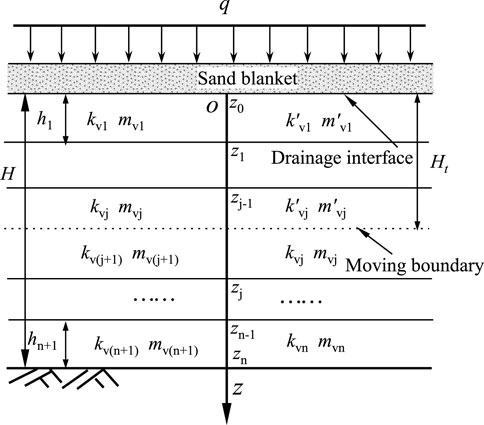
Figure 1. Schematic of the one-dimensional consolidation model applied to layered soils.
Within the interval
During the interval
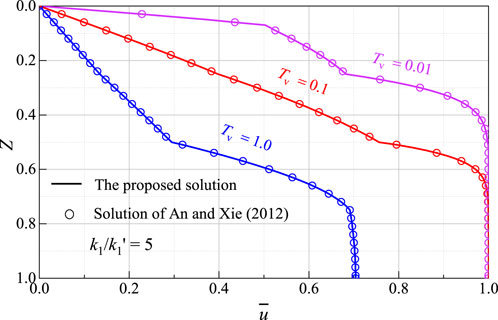
Figure 2. Assessment of the proposed solution by degenerated analyses.
Once
3 Solving procedures
3.1 Undamaged stage
During the period where the soil structure remains undamaged, namely,
Governing equation:
Boundary conditions:
Initial conditions:
Initially, the non-homogeneous boundary is homogenized, i.e.,
Substituting Equation 5 into the governing equation of Equation 1 and solving conditions of Equations 2–5, one can get Equations 6–9
where
The following dimensionless parameters are taken into account in the analysis, i.e., Equation 10,
The formulation for excess pore water pressure is assumed to follow the form of Equation 11, namely,
where
The coefficients
Parameter
where the calculation formulas for the coefficients
Parameter
where
The undetermined coefficients
Finally, the solution of excess pore water pressure can be expressed as Equation 17:
where
3.2 Failure stage
During the structural failure stage of the soil, specifically when
Governing equation:
Boundary conditions:
where
Initial conditions:
First, the non-homogeneous boundary is homogenized by setting
Substituting Equation 22 into the governing equation of Equation 18 and solving conditions of Equation 19 - Equation 21, one can get Equations 23–26
where
Assuming the solution satisfies the above equation, one can derive Equation 27:
where
The coefficients
The matrix
where
Where
On this basis, the solution of excess pore water pressure in the failure stage can be expressed as Equation 32
In the aforementioned expressions,
If
where
The above Equation 33 represents the corresponding relationship between
3.3 Complete failure stage
In the phase of complete soil structural failure (occurring when
where
The average consolidation degree defined by excess pore water pressure can be expressed as Equation Equation 35
where
3.4 Evaluation of the proposed solution
3.4.1 Comparison against degenerated cases
An et al. (2012) provided an analytical solution for the consolidation of layered structured soil, where the upper boundary condition is considered as a completely permeable boundary. In order to evaluate the correctness of the solutions proposed in this study, the proposed solution is degenerated when the interface parameter
3.4.2 Comparison against numerical calculations
To further assess the correctness of the proposed analytical solutions, numerical analyses are conducted using the finite element method for comparison. The computational model consists of four soil layers, and the parameter values of each soil layer are as follows: (1) the permeability coefficients for each soil layer are
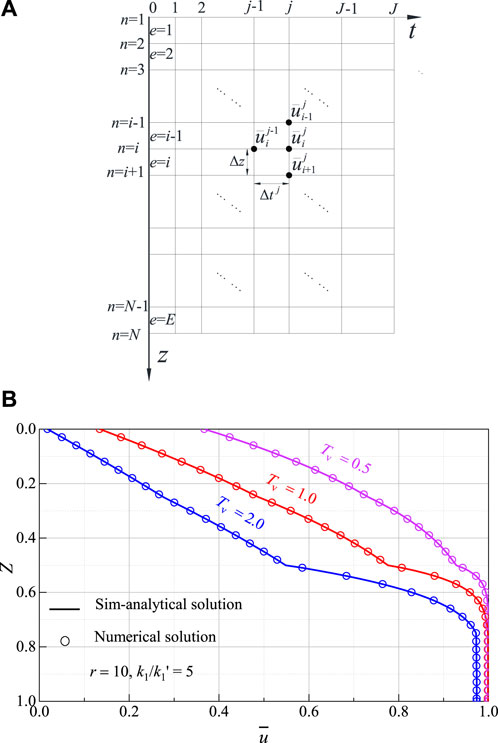
Figure 3. (A)Schematic diagram of numerical model and unit discretization. (B) Comparison of calculated results using the presented solution and the numerical approach.
4 Results and discussions
In this section, a four-layer structured soil with continuous drainage boundary is taken as a case study to analyze the impact of interface parameter, permeability, and compressibility of the soil on the soil consolidation characteristics. The calculation parameters for remolded soil are shown in Table 1.

Table 1. Calculating parameters of remolded soil for a four-layer structured soil foundation.
4.1 Influence of interface parameter
Figure 4 illustrates the impact of interface parameter on the vertical distribution of excess pore water pressure in the foundation soil, in which the parameters vary from
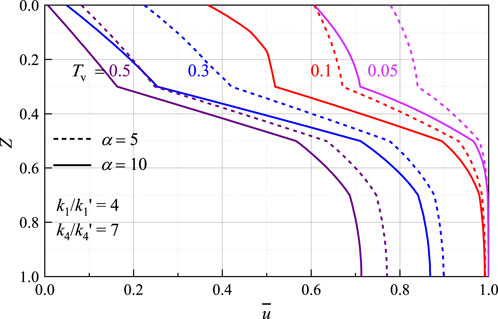
Figure 4. Influence of interface parameter on the profile of excess pore water pressure with depth.
The effect of interface parameters on the consolidation degree of layered structured soil is shown in Figure 5. It can be seen that the greater the interface parameter, the faster the consolidation rate, and the larger the early differences in consolidation. In the later stages of consolidation, the differences in consolidation degree between different interface parameters gradually decrease. This indicates that the impact of interface parameters on the average consolidation degree of structured soils is significant in the early stages of consolidation.

Figure 5. Influence of interface parameter on average degree of consolidation.
4.2 Influence of soil permeability coefficient
Figure 6 illustrates the effects of soil permeability coefficient on the vertical distribution of excess pore water pressures in layered structured soil, in which the parameters are
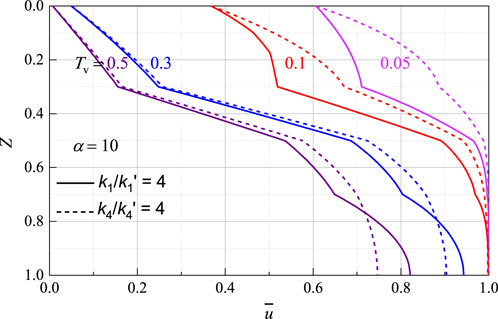
Figure 6. Influence of permeability coefficient on the profile of excess pore water pressure with depth.
The impact of permeability coefficient on consolidation is shown in Figure 7, which indicates that different permeability ratios have little effect on the later stages of consolidation. In the early stages, the ratio of
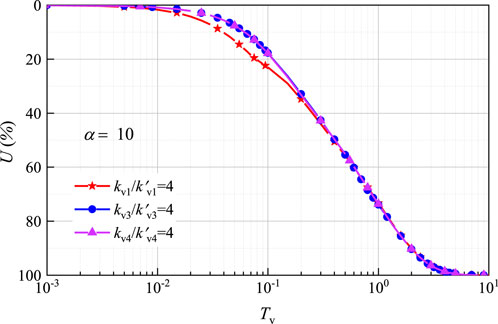
Figure 7. Influence of permeability coefficient on the average degree of consolidation.
4.3 Influence of soil compressibility
Figure 8 shows the impact of volume compression coefficient on the distribution of excess pore water pressure in layered structured soil, in which the parameters are
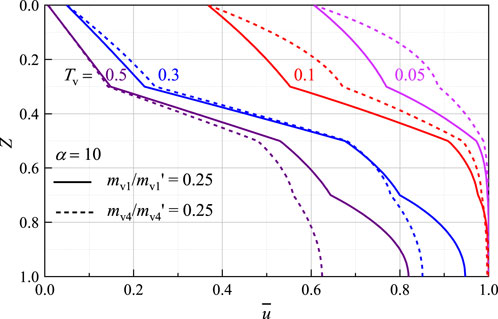
Figure 8. Influence of compression coefficient on the profile of excess porewater pressure with depth.
Figure 9 shows the impact of volume compression coefficient on the consolidation of layered structured soil with continuous drainage boundary, in which the interface parameter is
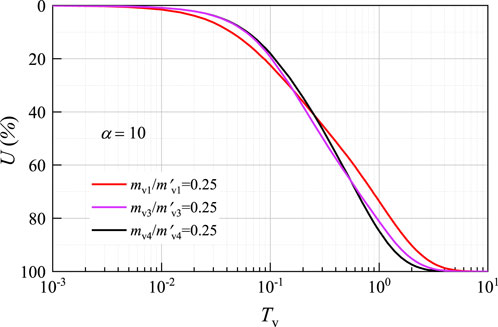
Figure 9. Influence of compression coefficient on the consolidation degree.
5 Conclusion
To fill the knowledge gap in consolidation solutions for layered structured soil foundation with continuous drainage boundary, an analytical solution is then proposed by using integral transform methods. The effectiveness of the proposed solution is discussed by comparing against a degenerated case and the numerical results calculated using the finite element method. Parametric analysis is carried out to study the influence of interface parameter, soil permeability coefficient and soil compressibility on consolidation behaviors of foundation soils. The main conclusions in this study are summarized as follows:
(1) Initial soil consolidation is markedly affected by the permeability coefficient, with higher values accelerating excess pore water pressure dissipation in the upper layers. As the consolidation progresses, these effects become less pronounced, indicating that higher permeability leads to more rapid initial consolidation stage, but it has minimal impact in later stages.
(2) The volume compression coefficient markedly influences the early dissipation of excess pore water pressure in structured soil, with pronounced effects in upper layers that diminish over time.
(3) Higher interface parameters significantly accelerate the dissipation of excess pore water pressure and enhance the initial consolidation rate in structured soil. However, the differences in consolidation due to varying interface parameters diminish over time.
Data availability statement
The original contributions presented in the study are included in the article/supplementary material, further inquiries can be directed to the corresponding author.
Author contributions
JF: Conceptualization, Data curation, Investigation, Methodology, Writing–original draft, Writing–review and editing. XD: Conceptualization, Data curation, Methodology, Writing–review and editing. RL: Conceptualization, Data curation, Methodology, Writing–review and editing. LoW: Data curation, Writing–review and editing. LiW: Validation, Software and Writing–review and editing. GM: Conceptualization, Writing–review and editing.
Funding
The author(s) declare that no financial support was received for the research, authorship, and/or publication of this article. This work was supported by the National Natural Science Foundation of China (52008124, 52268054 and 52208345), the China Postdoctoral Science Foundation (2020M683210), and the Natural Science Foundation of Guizhou Minzu University (GZMUZK[2023]CXTD04).
Conflict of interest
The authors declare that the research was conducted in the absence of any commercial or financial relationships that could be construed as a potential conflict of interest.
Publisher’s note
All claims expressed in this article are solely those of the authors and do not necessarily represent those of their affiliated organizations, or those of the publisher, the editors and the reviewers. Any product that may be evaluated in this article, or claim that may be made by its manufacturer, is not guaranteed or endorsed by the publisher.
References
An, R., Xie, K., Deng, Y., and Wang, K. (2012). Approximate solution for one-dimensional consolidation of structured soils under time-dependent loading. Rock Soil Mech. 33 (10), 3194–3200. doi:10.16285/j.rsm.2012.10.021
Burland, J. B. (1990). On the compressibility and shear strength of natural clays. Geotechnique 40 (3), 329–378. doi:10.1680/geot.1990.40.3.329
Cao, Y., Chen, Y., and Huang, M. (2006). One-dimensional nonlinear consolidation analysis of structured natural soft clay subjected to arbitrarily time-dependent construction loading. Chin. J. Geotechnical Eng. 28 (5), 569–574.
Chen, P., Li, J., Huang, M., and Li, D. (2021). Consolidation of viscoelastic soil with vertical drains for continuous drainage boundary conditions incorporating a fractional derivative model. Front. Mater. 8, 670150. doi:10.3389/fmats.2021.670150
Cosenza, P., and Korošak, D. (2014). Secondary consolidation of clay as an anomalous diffusion process. Int. J. Numer. Anal. Methods Geomechanics 38 (12), 1231–1246. doi:10.1002/nag.2256
Cui, J., Xie, K., Xia, C., Hu, A., and Zhou, Y. (2018). One-dimensional nonlinear consolidation analysis of double layered structured soils under time-dependent loading. J. Central South Univ. Technol. 49 (7), 1710–1717. doi:10.11817/j.issn.1672-7207.2018.07.018
Feng, J., Chen, Z., Li, Y., and Mei, G. (2019a). Analytical solution for one-dimensional consolidation of soft clayey soil with a continuous drainage boundary under linear loading. Eng. Mech. 36 (6), 219–226.
Feng, J., Ma, X., Liu, X., Wang, L., Wu, Z., and Mei, G. (2024). Analytical solution for one-dimensional consolidation of structured soft soils with continuous drainage boundary. Rev. Int. 40 (1), 1–14. doi:10.23967/j.rimni.2024.01.007
Feng, J., Ni, P., and Mei, G. (2019b). One-dimensional self-weight consolidation with continuous drainage boundary conditions: solution and application to clay-drain reclamation. Int. J. Numer. Anal. Methods Geomechanics 43 (8), 1634–1652. doi:10.1002/nag.2928
Feng, X., Zong, M., Tian, Y., Mei, G., and Wu, W. (2023). Approximate solution for one-dimensional nonlinear consolidation theory of soil considering the time effect of boundary drainage. Eng. Mech. 40 (1), 100–110.
Gray, H. (1945). Simultaneous consolidation of contiguous layers of unlike compressive soils. Am. Soc. Civ. Eng. 110, 1327–1356.
Hu, A., Xia, C., Cui, J., Li, C., and Xie, K. (2018). Nonlinear consolidation analysis of natural structured clays under time-dependent loading. Int. J. Geomechanics 18 (2), 04017140. doi:10.1061/(asce)gm.1943-5622.0001059
Hu, A., Zhou, Y., Chen, Y., Xia, C., and Xie, K. (2020). Semi-analytical solutions for one-dimensional nonlinear large strain consolidation of structured soft clay. Rock Soil Mech. 41 (8), 2583–2591. doi:10.16285/j.rsm.2018.2047
Leroueil, S., and Vaughan, P. R. (1990). The general and congruent effects of structure in natural soils and weak rocks. Geotechnique 40 (3), 467–488. doi:10.1680/geot.1990.40.3.467
Li, C., Wang, L., Li, J., and Chen, Y. (2024). Application of multi-algorithm ensemble methods in high-dimensional and small-sample data of geotechnical engineering: a case study of swelling pressure of expansive soils. J. Rock Mech. Geotechnical Eng. 16 (5), 1896–1917. doi:10.1016/j.jrmge.2023.10.015
Li, C., Xiao, J., Wu, W., Mei, G., Ni, P., and Leo, C. (2020). Analysis of 1D large strain consolidation of structured marine soft clays. J. Zhejiang Univ-Sc A 21 (1), 29–43. doi:10.1631/jzus.a1900268
Liu, J., and Lei, G. (2013). One-dimensional consolidation of layered soils with exponentially time-growing drainage boundaries. Comput. Geotechnics 54 (10), 202–209. doi:10.1016/j.compgeo.2013.07.009
Liu, Q., Deng, Y. B., and Wang, T. Y. (2018). One-dimensional nonlinear consolidation theory for soft ground considering secondary consolidation and the thermal effect. Comput. and Geotechnics 104 (DEC.), 22–28. doi:10.1016/j.compgeo.2018.08.007
Mei, G., Xia, J., and Mei, L. (2011). Terzaghi’s one-dimensional consolidation equation and its solution based on asymmetric continuous drainage boundary. Chin. J. Geotech. Eng. 33 (1), 28–31.
Ng, C. W. W., Guo, H., Ni, J., Chen, R., Xue, Q., Zhang, Y., et al. (2024a). Long-term field performance of non-vegetated and vegetated three-layer landfill cover systems using construction waste without geomembrane. Géotechnique. 74 (2), 155–173. doi:10.1680/jgeot.21.00238
Ng, C. W. W., Zhang, Q., Zhang, S., Lau, S. Y., Guo, H., and Li, Z. (2024b). A new state-dependent constitutive model for cyclic thermo-mechanical behaviour of unsaturated vegetated soil. Can. Geotechnical J. 61 (10), 2155–2179. doi:10.1139/cgj-2023-0268
Poskitt, T. J. (1969). The consolidation of saturated clay with variable permeability and compressibility. Géotechnique. 19 (2), 234–252. doi:10.1680/geot.1969.19.2.234
Shen, Z. (1998). Engineering properties of soft soils and design of soft ground. Chin. J. Geotechnical Eng. 20 (1), 100–111.
Tang, Y., Zhou, M., and Jiang, L. (2007). One dimensional nonlinear semi-analytical solution for structured soft soils. Chin. J. Undergr. Space Eng. 3 (4), 605–608. doi:10.3969/j.issn.1673-0836.2007.04.005
Wang, J., and Chen, Y. (2003). Analytical solution to 1-D consolidation of uniform structured soft foundation. J. Hydraulic Eng. 34 (3), 19–24.
Wang, L., Ding, L., Chen, Y., and Li, L. (2004). Study on compressibility of structured soft soil. China Civ. Eng. J. 37 (4), 46–53. doi:10.15951/j.tmgcxb.2004.04.010
Xie, K., Xia, C., An, R., Hu, A., and Zhang, W. P. (2016a). A study on the one-dimensional consolidation of double-layered structured soils. Comput. Geotechnics 73 (1), 189–198. doi:10.1016/j.compgeo.2015.12.007
Xie, K., Xia, C., An, R., Ying, H., and Wu, H. (2016b). A study on one-dimensional consolidation of layered structured soils. Int. J. Numer. Anal. Methods Geomechanics 40 (7), 1081–1098. doi:10.1002/nag.2477
Yang, W., Qiu, C., Duan, Y., Feng, J., and Mei, G. (2024). One-dimensional consolidation analysis of layered foundations subjected to arbitrary loads under a continuous drainage boundary. Int. J. Geomechanics 24 (6), 04024091. doi:10.1061/ijgnai.gmeng-9317
Zhang, C. (1983). Geotechnical characteristics of two structure clays. J. Nanjing Hydraulic Res. Inst. 4, 65–71.
Zong, M., Tian, Y., Liang, R., Wu, W., Xu, M., and Mei, G. (2022). One-dimensional nonlinear consolidation analysis of soil with continuous drainage boundary. J. Cent. South Univ. 29 (1), 270–281. doi:10.1007/s11771-022-4916-x
Keywords: consolidation, layered foundation, structured soil, continuous drainage boundary, the analytical solution
Citation: Feng J, Dong X, Luo R, Wang L, Wang L and Mei G (2024) One-dimensional consolidation analysis of layered foundations with continuous drainage boundaries considering soil structure and physical properties. Front. Earth Sci. 12:1493821. doi: 10.3389/feart.2024.1493821
Received: 09 September 2024; Accepted: 19 November 2024;
Published: 10 December 2024.
Edited by:
Rui Yong, Ningbo University, ChinaReviewed by:
Haowen Guo, Hong Kong University of Science and Technology, Hong Kong SAR, ChinaLei Wang, Shanghai University of Engineering Sciences, China
Copyright © 2024 Feng, Dong, Luo, Wang, Wang and Mei. This is an open-access article distributed under the terms of the Creative Commons Attribution License (CC BY). The use, distribution or reproduction in other forums is permitted, provided the original author(s) and the copyright owner(s) are credited and that the original publication in this journal is cited, in accordance with accepted academic practice. No use, distribution or reproduction is permitted which does not comply with these terms.
*Correspondence: Jianxue Feng, Zmp4Z2VvQDE2My5jb20=