 You-Hua Chen
 Pu-Yan Nie3
 Chan Wang
 Yong-Cong Yang
 Henry Wang
- 1College of Economic and Management, South China Agricultural University, Guangzhou, China
- 2Research Center for Green Development of Agriculture, South China Agricultural University, Guangzhou, China
- 3School of Finance, Guangdong University Finance & Economics, Guangzhou, China
- 4Institute of Studies for the Greater Bay Area, Guangdong University of Foreign Studies, Guangzhou, China
- 5Department of Economics, University of Missouri, Columbia, MO, United States
Editorial on the Research Topic
Sustainable Energy Systems with Policies in China
The earth has undergone tremendous changes since industrial civilization, and among these, climate change is one of the most obvious phenomena (IPCC, 2022). The average temperature of the earth has raised for nearly 1.5°C since 1900, which results in many catastrophes such as floods and droughts (Latif et al., 2022). Climate change caused by greenhouse gas emissions (GHGs) is a key issue for sustainable development all over the world (Mooney and Sjogersten, 2022). Globally, most countries are working hard to reduce carbon emissions by energy policies reform (Meys et al., 2021).
As the largest developing country, China is facing the dual constraints of economic development and environmental protection (Chen et al., 2017; Chen et al., 2020). On the one hand, China needs continuous development to improve the welfare of its residents. On the other hand, its ecology and environment have been severely damaged. A more efficient energy system is needed for China to alleviate this conflict (Rikap, 2022). So, the concern is how to maintain green and sustainable development through low-carbon energy systems. Based on the above, the journal Frontiers in Energy Research agreed to host a Research Topic about Sustainable Energy Systems with Policies in China. Nearly 50 papers have been submitted to this Research Topic and 22 of them are finally accepted, including 18 original research, 1 perspective, 1 policy and practice reviews and 2 policy briefs. The 22 published papers can be classified to 4 topics: industry, emission, energy and policy (See the following Table 1).
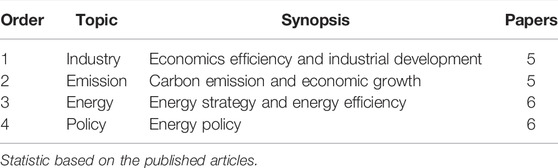
TABLE 1. summary of the published papers
Economics Efficiency and Industrial Development
Totally five papers involve the topic of economics efficiency and industrial development. Zheng et al. surveyed the linkage development of the logistics and manufacturing industry by evaluating ecological efficiency evaluation and spatiotemporal characteristics. After classifying the carbon emissions from the logistics industry and pollution emissions from the manufacturing industry, the authors declared that the linkage ecological efficiency of the two industries will tend to be stable in the future. Jiang et al. studied the effect of market power and intertemporal permits trading (IPE) on economic efficiency. They showed that the producing and discharging behaviors of firms depend on the permits price elasticity of output price without the banking and borrowing (BB) system. The conclusions are helpful for the development of BB system. Pingkuo et al. investigated how to promote energy transition with market design by using an institution-economics-technology-behavior (IETB) analysis framework in China’s electric power industry. They issued that market design should be pertinent and objective. Zhang et al. concerned on the economic impacts and challenges of Chinese mining industry (MI) by employing the input-output model. Their results shown that the policy-makers should combine the MI within national economic system reform and planning. Qiu et al. prospected the development of China’s renewable automotive industry (RAI) after subsidies shrinking and declared that the decrease of subsidies will have a critical impact on the development of RAI.
Carbon Emission and Economic Growth
For the technology constraints, there is a conflict between carbon emission and economic growth. Li et al. shown compared to 2012, several provinces and cities increase their direct CO2 emissions for the development of economy. But interestingly, several papers found that carbon emissions reducing and economic growth can be compatible. For example, using provincial panel data of China from 2000 to 2017, Zhang et al. shown that the increase of low-emission electricity increases GDP but reduces CO2 emissions. Another study from Wang also shown that it is possible to achieve the green and sustainable economic development by stimulating green energy use. Besides, Li et al. concerned the effects of carbon emission trading market on carbon emissions of public buildings. They issued that reducing the cost of energy-conservation and emission-reduction technologies and appropriately subsidizing were effective methods to motivate public building owners to participate in carbon emission trading. Besides, Sun et al. investigated the relationships of carbon emissions and endogenous between two economic system. The marginal contribution for this study is that they consider two competitive economic system.
Energy Strategy and Energy Efficiency
Energy efficiency is a major topic in energy economics. Six papers published are focused on this field. Pan et al. evaluated the national new energy strategy (NNES) from the political economics perspective and, declared to design the NNES based on core technology research, innovative industry financing, cultivating professional talents, and continuous expansion of opening up. Different from Pan et al., Li et al. investigated the supply sustainability of the traditional energy, coal in China by employing a new comprehensive evaluation methodology. Two papers concerned on energy poverty. Wu et al. shown that energy poverty reduces the rural labor wages of China and so the government should to enhance the accessibility of energy consumption in rural areas to reduce energy poverty. Che et al. evaluated global energy poverty aligned with UN ADG 7 with a multidimensional assessment model. Chen et al. research the effect of urban spatial from on energy efficiency by a cross-sectional study in China and issued optimizing the urban spatial form is an important way to improve the energy efficiency. The study from Wang et al. surveyed the water-energy-food-ecology (WEFE) nexus in northwest China and their results shown the WEFE nexus in the investigated areas present a spatial convergence tread.
Energy Policy
Fu et al. surveyed the support policy, such as feed-in tariff and subsidy of photovoltaic (PV) power generation in China. And they declared that the development of PV in China is aggressive, which is harmful for PV innovation. Hu examined the Coal to Clean Heating Project (CCHP) implemented in northern rural China from a policy process perspective. They claimed that beside the positive effect of CCHP, it also created mounting socio-economic and political challenges. Ma et al. investigated the effect of fiscal decentralization policy on the garbage classifications, while Chen et al. analyzed the fee-to tax reform on water resources. Li and Xiong examined the phased energy -saving and emission-reducing effects of dual-credit policy on the auto industry in China. Wu et al. assessed China’s power system reform (PSR) by a comparative study on the transmission management between China and the United States. They concluded PSR ensure the timely and effective allocation of national power energy and is helpful to concentrate all kinds of resources to develop large-scale power projects.
As the largest developing country, China has carried out many beneficial reforms to its energy and development policies. The main purpose of the Research Topic was to assess the effects of China’s energy policy reforms. Fortunately, it has received extensive attention and active contributions from scholars. Published articles are of high quality and cover numerous subjects in the energy economics, such as Economics efficiency and industrial development, Carbon emission and economic growth, Energy strategy and energy efficiency and, Energy policy in China. These research papers not only help people understand China’s energy policy reform performance, but also help the Chinese government to further promote reform.
Author Contributions
All authors listed have made a substantial, direct, and intellectual contribution to the work and approved it for publication.
Funding
This work was supported by the Guangdong Natural Science Foundation (2021A1515011960), the Foundation for Guangdong Province Universities and Colleges Pearl River Scholar Funded Scheme, (GDUPS 2019), the Guangdong Natural Science Outstanding Youth Fund Project (2022B1515020034), the Key Program of the National Social Science Foundation of China (20&ZD117).
Conflict of Interest
The authors declare that the research was conducted in the absence of any commercial or financial relationships that could be construed as a potential conflict of interest.
Publisher’s Note
All claims expressed in this article are solely those of the authors and do not necessarily represent those of their affiliated organizations, or those of the publisher, the editors and the reviewers. Any product that may be evaluated in this article, or claim that may be made by its manufacturer, is not guaranteed or endorsed by the publisher.
References
Chen, Y.-H., Chen, M.-X., and Mishra, A. K. (2020). Subsidies under Uncertainty: Modeling of Input- and Output-Oriented Policies. Econ. Model. 85, 39–56. doi:10.1016/j.econmod.2019.05.005
Chen, Y.-H., Wen, X.-W., Wang, B., and Nie, P.-Y. (2017). Agricultural Pollution and Regulation: How to Subsidize Agriculture? J. Clean. Prod. 164, 258–264. doi:10.1016/j.jclepro.2017.06.216
IPCC (2022). Climate Change 2022: Mitigation of Climate Change. Working Group III Contribution to the IPCC Sixth Assessment Report. Available at: https://www.ipcc.ch/report/sixth-assessment-report-working-group-3/ (Accessed: May 11, 2022).
Latif, M., Sun, J., Visbeck, M., and Hadi Bordbar, M. (2022). Natural Variability Has Dominated Atlantic Meridional Overturning Circulation since 1900. Nat. Clim. Chang. 12, 455–460. doi:10.1038/s41558-022-01342-4
Meys, R., Kätelhön, A., Bachmann, M., Winter, B., Zibunas, C., Suh, S., et al. (2021). Achieving Net-Zero Greenhouse Gas Emission Plastics by a Circular Carbon Economy. Science 374 (6563), 71–76. doi:10.1126/science.abg9853
Mooney, S. J., and Sjogersten, S. (2022). Greenhouse Gas Emissions Rise Due to Tillage. Nat. Food 3, 246. doi:10.1038/s43016-022-00491-1
Keywords: energy efficiency, energy policy, green and sustainable development, new energy strategy, China
Citation: Chen Y-H, Nie P-Y, Wang C, Yang Y-C and Wang H (2022) Editorial: Sustainable Energy Systems With Policies in China. Front. Energy Res. 10:943665. doi: 10.3389/fenrg.2022.943665
Received: 14 May 2022; Accepted: 13 June 2022;
Published: 28 June 2022.
Edited and reviewed by:
Simone Bastianoni, University of Siena, ItalyCopyright © 2022 Chen, Nie, Wang, Yang and Wang. This is an open-access article distributed under the terms of the Creative Commons Attribution License (CC BY). The use, distribution or reproduction in other forums is permitted, provided the original author(s) and the copyright owner(s) are credited and that the original publication in this journal is cited, in accordance with accepted academic practice. No use, distribution or reproduction is permitted which does not comply with these terms.
*Correspondence: You-Hua Chen, eWhjaGVuMjE0QHNjYXUuZWR1LmNu