 Klara J. Winkler
 Joshua H. Viers3
 Kimberly A. Nicholas
- 1Ecological Economics, Department of Business Administration, Economics and Law, Carl-von-Ossietzky University Oldenburg, Oldenburg, Germany
- 2Lund University Centre for Sustainability Studies, Lund University, Lund, Sweden
- 3School of Engineering, University of California–Merced, Merced, CA, USA
Vineyards shape important economic, cultural, and ecological systems in many temperate biomes. Like other agricultural systems, they can be multifunctional landscapes that not only produce grapes, but also for example serve as wildlife habitat, sequester carbon, and are places of rich traditions. However, research and management practices often focus mostly on individual, specific ecosystem services, without considering multifunctionality. Therefore, we set out to meet four research objectives: (1) evaluate how frequently the ecosystem services approach has been applied in vineyard systems; (2) identify which individual ecosystem services have been most frequently studied in vineyard systems, (3) summarize knowledge on the key ecosystem services identified in (2), and (4) illustrate approaches to multifunctionality in vineyards to inform more holistic land management. For research objective (1), we identified 45 publications that used the term “ecosystem services” in relation to vineyards, but found that only seven fully apply the ecosystem service concept to their research. For research objective (2), we operationalized the Common International Classification of Ecosystem Services (CICES) for 27 ecosystem services in vineyards, in order to consider provisioning, regulating, and cultural services through an analysis of more than 4,000 scientific papers that mentioned individual services. We found the six most frequently studied ecosystem services included (1) cultivated crops, (2) filtration, sequestration, storage and accumulation by the vineyards, (3) pest control and (4) disease control, (5) heritage, cultural and (6) scientific services. For research objective (3), we found that research on these six single ecosystem services is highly developed, but relationships between single ecosystem services are less studied. Therefore, we suggest that greater adoption of the ecosystem services approach could help scientists and practitioners to acknowledge the multifunctionality of the agricultural system and gain a holistic perspective that supports more sustainable land management.
Introduction
Agricultural landscapes provide a multitude of services and benefits to people and nature (Lovell and Taylor, 2013; Galler et al., 2015), including their critical roles in food production, but also to enhance rural livelihoods and ensure functional ecosystems (Hart et al., 2016). Thus, many agricultural systems are examples of multifunctional landscapes, which provide multiple ecosystem services (Lovell et al., 2010; Bennett, 2017). Multifunctional landscapes are often more resilient to ecosystem shocks and disturbances, such as human-induced changes like deforestation, or climate-induced environmental variation (DeClerck et al., 2016). They provide a wider range of services, which can be beneficial when reacting to future challenges, such as climate change or water scarcity, as they can either buffer disturbances or offer alternatives to current situations (Lovell and Taylor, 2013). There is increasing recognition that land management balancing a wide variety of functions is critical to meet the Sustainable Development Goals, especially as they may present trade-offs and interlinkages (Nilsson et al., 2016).
Despite the benefits of recognizing and pursuing land management strategies that consider the multifunctionality of the landscape to meet multiple desired human and ecosystem goals, this is rarely done in practice. So far, the most common approach is to concentrate on one service (e.g., high crop yields from high-intensity farming) and ignore the potential for other ecosystem services in the landscape, such as regulating and cultural services. For example, many ecosystem service studies identify, quantify, and evaluate a single identified service, such as carbon sequestration, without considering the impact on related services (Seppelt et al., 2011; Lee and Lautenbach, 2016). This single-minded focus, either in scientific inquiry or management activity, neglects the importance of the range of services and benefits the land can provide if managed holistically.
The ecosystem services approach pursues an holistic view on ecosystems and their benefits to people (Everard, 2015), which can help to achieve multifunctional landscapes through recognizing and managing a comprehensive range of ecosystem services. Land managers often aim to optimize across competing endpoints, such as maximizing crop quality or production and minimizing labor or inputs, thereby creating trade-offs among different ecosystem services and management priorities. This can overshadow potential benefits of having multiple ecosystem services if such services are in competition, neglected, or unrecognized. For example, in the Napa River winegrowing region of California, USA, maximizing vineyard production area resulted in the reduction of riparian vegetation, which in turn reduced the positive benefits of pest and disease control agents hosted in such habitats (Baumgartner et al., 2006).
While it is likely not possible to achieve all desired ecosystem management outcomes at a maximal level (sensu Foley et al., 2005), it may be possible to achieve multifunctional agricultural landscapes providing a plentitude of ecosystem services. To date, however, the range of ecosystem services available in such landscapes is poorly understood, limiting the potential to manage landscapes to optimize their benefits.
Vineyards are important economic, cultural, and ecological systems in many temperate biomes (Figure 1). Globally, the 7.5 million hectares of vines produce about 75.7 million tons of grapes annually, which are used for wine (ca. 45%), as table grapes (ca. 36%) and dried grapes (ca. 8%) OIV, 2016. In 2016, 258 million hectoliters of wine were produced worldwide and the total value of exported wines was €28 billion (OIV, 2016). In some areas in high producing wine countries such as Spain, Italy and France, more than 20% of the agricultural land is under vines (EC, 2009). As perennial agricultural systems, vineyards shape the appearance of whole landscapes, create unique ecosystems as well as cultural traditions (Daniel et al., 2012). The UNESCO has conferred the title of World Heritage Site to multiple winegrowing areas, such as the Piedmont in Italy and Burgundy in France.
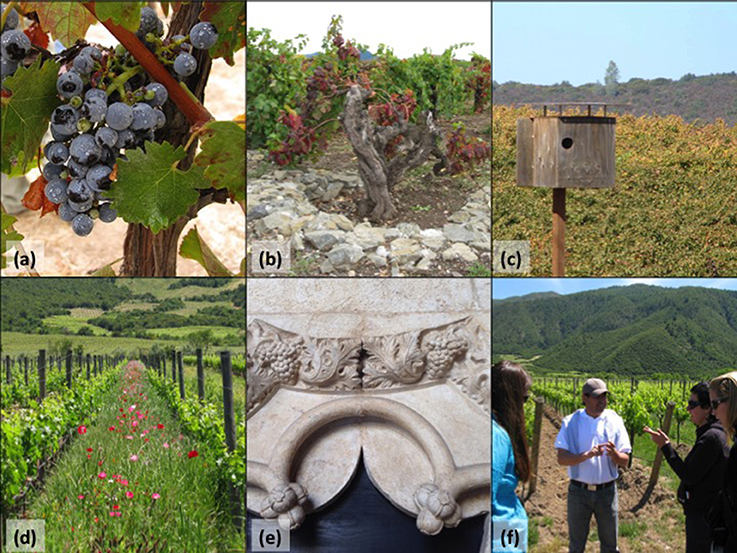
Figure 1. Pictures illustrating the six key ecosystem services we identified in vineyards. Top row (left to right): (a) winegrapes (cultivated crops); (b) vines storing carbon (sequestration); (c) owl box for rodent control (pest control). Bottom row (d) providing habitat for beneficial insects (disease control); (e) grapes motif decorating 500 years old monastery in Portugal (heritage); (f) vineyards as research grounds (scientific). [pictures: KAN (a); JHV (b,c,d,f); KJW (e)].
In order to examine an agricultural system that provides documented provisioning, regulating, and cultural ecosystem services, we set out to achieve four objectives: (1) evaluate how frequently the ecosystem services approach has been applied in vineyard systems; (2) identify which individual ecosystem services have been most frequently studied in vineyard systems; (3) summarize knowledge on the key ecosystem services identified in (2); and (4) illustrate approaches to multifunctionality in vineyards.
We approach the first two research objectives through operationalizing the Common International Classification of Ecosystem Services (CICES; Haines-Young and Potschin, 2012) framework for vineyards to guide a systematic review of academic literature. To our knowledge, CICES has not previously been applied in a comprehensive and consistent way to design a literature analysis of an agricultural landscape. Using the insights gained as a starting point, we then synthesize how the identified six key ecosystem services have been studied to date. Last, we elaborate how the six key ecosystem services relate to each other to inform more holistic land management. Our overall goal was to understand how the ecosystem services concept is currently applied in studying vineyard landscapes, and examine the potential for promoting a multifunctional perspective in the future.
Methods
In order to achieve the first and second objectives, we conducted a structured literature search in the Scopus database for peer-reviewed literature in English including all available publications until July 2016. Scopus covers publications back to 1823, but more than 60% of the records are post-1995 (Elsevier, 2016). For the first objective, we looked for publications that specifically used the term “ecosystem services” or synonyms in combination with a variety of possible search terms connected to winegrowing (e.g., “viticulture,” “vineyard”) in their title, keywords, or abstract (Figure 2).
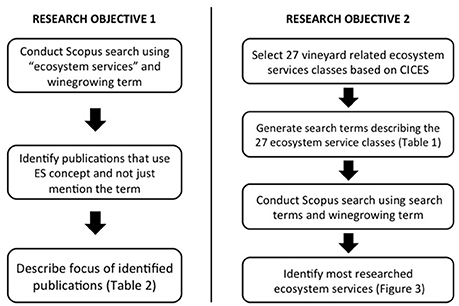
Figure 2. Overview of the research process for the first and second research objective. The first search looked for publications focused on applying the ecosystem services concept in vineyard landscapes by searching for a combination of the term “ecosystem services” and winegrowing terms (e.g., “vineyard*,” “viticulture*,” “wine,” “grape* grow*,” “wine* grow”), identifying seven papers that specifically focused on vineyard ecosystem services, which were described in Table 2. The second search looked for publications researching single ecosystem services by operationalizing 27 CICES ecosystem services classes for vineyards (shown in Table 1) and generating search terms for each ecosystem service in order to conduct a literature search for peer-reviewed publications to identify the most researched ecosystem services (shown in Figure 3).
However, researchers frequently study one or more ecosystem services without specifically using the term “ecosystem services.” A study may for example examine the effect of integrated pest management (regulating service), without referring to “ecosystem services.” For our second research objective, we selected 27 of the 42 CICES ecosystem services classes most relevant for vineyards to capture such studies (Figure 2). We excluded the other 15 ecosystem services classes in the CICES classification (for example, surface water for drinking) because we deemed them not relevant for vineyards.
In order to operationalize the ecosystem services classes, we identified search terms for each ecosystem services class based on our expertise in research on vineyards as an author team (e.g., Nicholas et al., 2011; Viers et al., 2013; Winkler and Nicholas, 2016). For example, we started with the CICES ecosystem services class cultivated crops under the provisioning section, and developed a list of 15 search terms that were specific to grape and vineyard crop cultivation, continuing through each of the 27 classes (Table 1). We then used these search terms to conduct the literature search in Scopus to identify papers that had these search terms appearing in the title, keywords, or abstract; we did not analyze the full text of each publication to ascertain that the publications really did deal with the specific ecosystem service in vineyards. We assumed that search terms returning more than 2,000 hits were too general to be useful and were therefore refined to be more specific, with the original results excluded from further analysis.
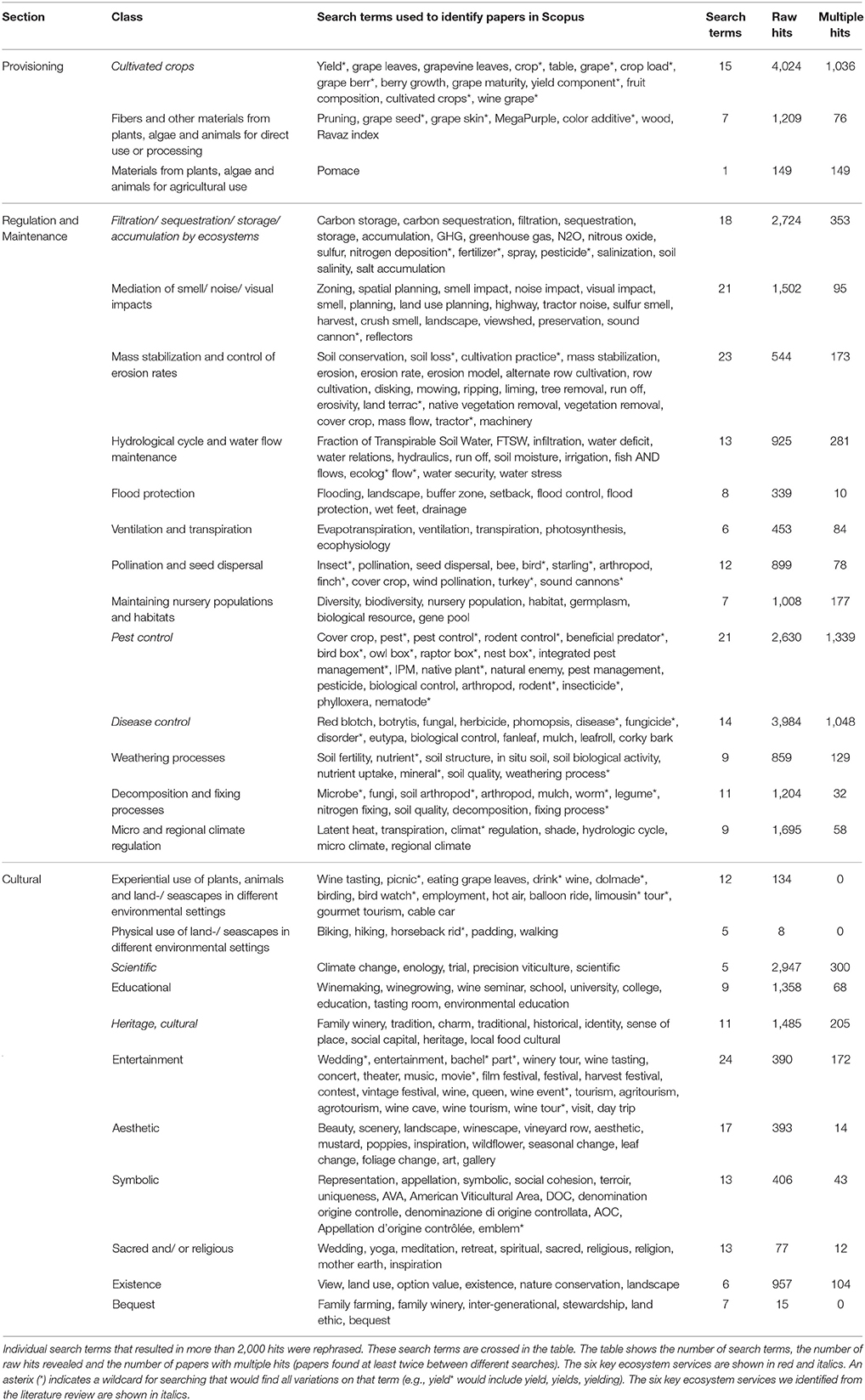
Table 1. Search terms used to find peer-reviewed papers in Scopus on the three sections of ecosystem services in vineyards and 27 selected ecosystem services classes within them, following the CICES classification (CICES, 2013).
Our second objective was to identify the most frequently studied ecosystem services using these keyword searches. Therefore, we wanted a robust measure for the frequency that each service appeared in the scientific literature. We assumed that if the same publication was found twice or more often for the same ecosystem service using different search terms, it was more likely that the publication really dealt with the specific ecosystem service. Because we were able to identify more search terms for some services than others, and we recognized that the number of search terms used could bias how many publications were found for each service, we calculated ratios. We compared the “hits” (the number of publications returned for each search for the different ecosystem services in vineyards) in four ways: (1) the number of hits, (2) a ratio of the number of hits and the number of search terms, (3) the number of papers that were found at least twice for one ecosystem service by using different search terms within one service class (multiple hits), and (4) a ratio between the multiple hits and the number of search terms. In the end, we judged the most researched ecosystem services as those ranked high in three of our four ranking systems.
We approached our third research objective by using the literature captured from the first two research objectives to briefly describe the six key ecosystem services in vineyard systems, to capture what is already known about these services and identify potential research gaps. We also created a visual snapshot (word cloud) of the key terms associated with each of the key ecosystem service in vineyards we identified in the second research objective, based on the abstracts of all of the papers identified for each ecosystem service.
Last, we selected different ways to research the fourth research objective, where we wanted to illustrate multifunctionality in vineyards. First, we looked for papers that appeared in two or more ecosystem service classes. Since each service had a different number of publications identified (Table 1), we calculated the number of papers overlapping relative to each service. In addition, we draw on the literature and previous knowledge to elaborate on relationships between the six key ecosystem services, and also the different scales of the vineyard system they appear in.
Results
Objective 1: Papers Applying the Ecosystem Services Approach in Vineyards
From the literature search on the term “ecosystem services” and vineyards, we found 45 publications specifically addressing ecosystem services and vineyards. We read all of these papers in full and judged that only seven fully applied the ecosystem services concept to their research (Table 2). For example, Fiedler et al. (2008) operationalize the concept studying how habitat management affects ecosystem services such as pest control, soil quality, water quality, and aesthetics in vineyards. Six of these seven papers focused on regulating and maintenance ecosystem services, particularly pest control, but also carbon sequestration and soil characteristics. Two articles dealt with cultural ecosystem services (Fiedler et al., 2008; Winkler and Nicholas, 2016) and only one directly studied grape yields termed as a provisioning ecosystem service (Kross et al., 2012). However, most of these papers discussed regulating and maintenance ecosystem services as important to allow high crop yields, thereby drawing a connection to provisioning ecosystem services.
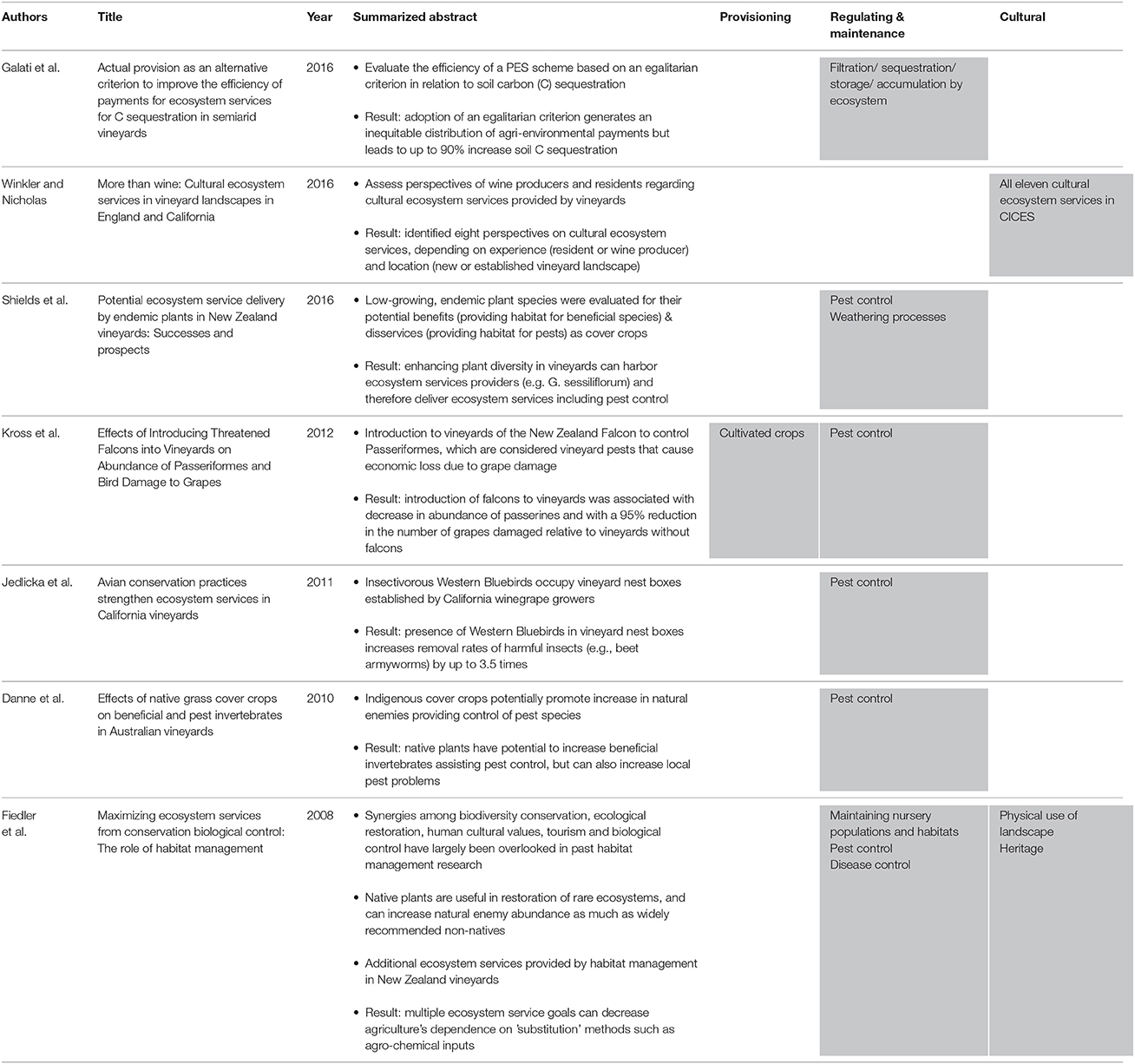
Table 2. Overview of seven publications fully applying the ecosystem services concept in vineyards, identified through systematic literature search.
The remaining 38 publications that mentioned the term ecosystem services in their title, keywords or abstract did not further operationalize the concept for their research. For example, Kelly et al. (2016) use “ecosystem services” as a keyword, but do not use or apply it in the text, which instead focuses on bat activity in vineyards.
Objective 2: Identifying Most Studied Vineyard Ecosystem Services
Using the search terms in Table 1, the literature search on single ecosystem services resulted in more than 32,000 hits, with the most commonly researched ecosystem services being cultivated crops and disease control, both with around 4,000 raw hits (Figure 3; Table 1). The regulating ecosystem services filtration/sequestration/storage/accumulation by ecosystems (hereafter called “sequestration”) and pest control, and the cultural service scientific, each had between 2,500 and 3,000 raw hits (Table 1). To factor in the varying numbers of search terms, we calculated the ratio between the raw hits and the number of search terms: the ecosystem service classes scientific, disease control, and cultivated crops had high ratios, meaning that regardless of the amount of search terms used, many publications were identified for these classes. When checking for multiple hits (papers found at least twice for one ecosystem service using different search terms), the three service classes pest control, disease control, and cultivated crops performed well, with more than 1,000 multiple hits (Figure 3). For the other calculated ratio (multiple hits per search term), the ecosystem services disease control and cultivated crops and this time pest control resulted in high ratios.
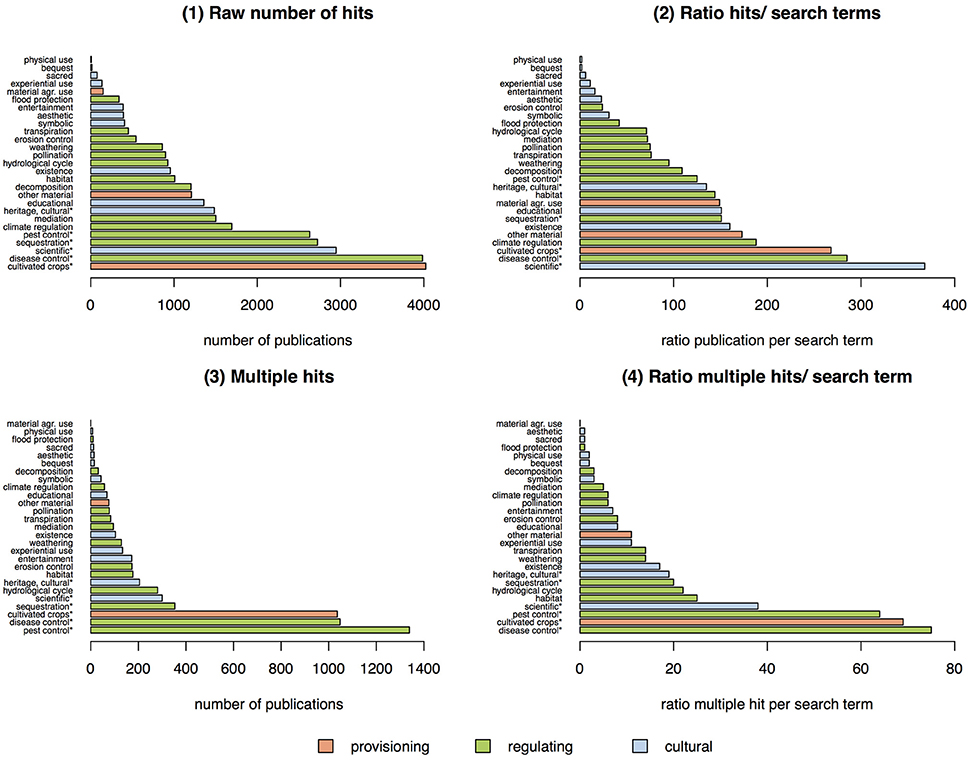
Figure 3. Comparison of publications found for single ecosystem services in vineyards (research objective 2), identified from the full literature review using search terms from Table 1. We compared the “hits” (the number of publications returned for each search for the different ecosystem services in vineyards) in four ways: (1) the raw number of hits, (2) a ratio of the number of hits and the number of search terms, (3) the number of papers that were found at least twice for one ecosystem service by using different search terms within one service class (multiple hits), and (4) a ratio between the multiple hits and the number of search terms. We identified six key ecosystem services as the most widely researched, based on their high rating in at least three out of the four methods (indicated with *).
There were few studies for most cultural ecosystem services (entertainment, experiential use, symbolic, aesthetic, bequest, sacred and/or religious, and physical use), as well as the provisioning service materials from plants for agricultural use and the regulating service flood protection, with each class containing fewer than 410 hits (Figure 3).
In the end, we selected six key ecosystem services as the most widely studied in vineyard systems (Figure 1), based on their high ranking in three of our four ranking systems (Figure 3): cultivated crops, sequestration, pest control, disease control, scientific, and heritage, cultural (hereafter called “heritage”). Given that we performed a review of scientific literature, it is not surprising that we identified scientific as one of the key ecosystem services commonly studied; this reflects the nature of our approach and provides further evidence that vineyards provide compelling agroecosystems for scientific investigation, especially around the search term climate change.
Objective 3: Knowledge on Key Ecosystem Services in Vineyards
Provisioning Services
Cultivated crops
Cultivated crops include items for direct human consumption like cereals, vegetables and fruits. In connection with vineyard systems, they mainly include table and wine grapes harvested from vineyards, as well as vine leaves used for eating in some Mediterranean cuisines (Figure 4). Wine growers aim to increase or stabilize both the quality and quantity of the grapes (Kross et al., 2012). While a high yield is one goal, quality aspects such as fruit composition and taste are also important for most grape growers, as quality can contribute to a variation in price of over 10-fold for the same grape variety grown within 320 km (Nicholas, 2015). Nevertheless, the ecosystem service cultivated crops is easy to measure, and various vine and wine associations from the global to regional level publish annual harvest numbers (e.g., OIV, 2016, 2014; UKVA, 2012; Wine Institute, 2013).
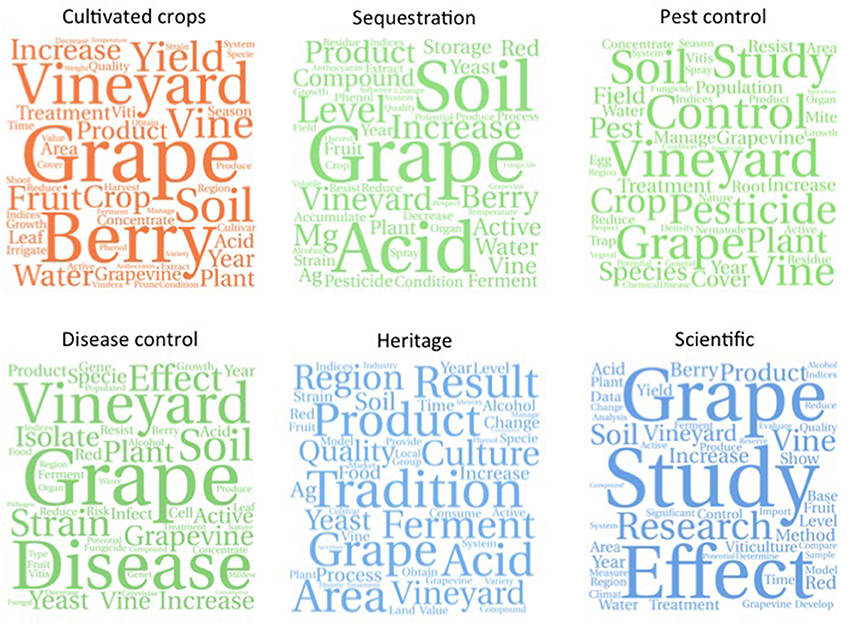
Figure 4. Word clouds for the six key vineyard ecosystem services we identified in existing research. For each word cloud, the abstracts of the publications (raw hits) of the CICES ecosystem service class shown in the title were used. The size of the font is determined by absolute frequency of the word in the abstracts of this ecosystem service. Provisioning services are shown in orange, regulating and maintenance in green, and cultural in blue.
Regulating and Maintenance Services
Filtration/Sequestration/Storage/Accumulation by Ecosystems
This ecosystem service describes bio-physicochemical filtration, sequestration, storage, and accumulation processes that help to fix pollutants and organic compounds in the soil as a result of a combination of biotic and abiotic factors (CICES, 2013). Like all long-lived perennial systems, vineyards play a role as potential places to sequester carbon, with vineyard research in this category focusing especially on soil (Morandé et al., 2017; Figure 4). Naturally, with their lower biomass, vineyards store less carbon than woody wildlands (Kroodsma and Field, 2006). However, the management of vineyards can increase the amount carbon stored in soil and as perennial wood up to 90% (Galati et al., 2016). At the landscape scale, a mixed land cover in vineyards with vines and native natural vegetation increases carbon stocks in the soil, compared with monocultural vineyard management (Steenwerth and Belina, 2008; Williams et al., 2011).
Emissions of nitrous oxide (N2O), a greenhouse gas 298 times more potent than carbon dioxide (Forster et al., 2007), are found in agricultural systems including many vineyards due to mineral nitrogen fertilizer applications. There are strategies that can be employed to reduce the level of N2O emissions in vineyards. The most commonsense strategy to mitigate N2O emissions is to adopt a sustainable nitrogen fertility program. Practices can include spatiotemporal accounting of nitrogen, specific N2O limitation through timely manure management, use of N-fixing legumes as cover crops in place of synthetic fertilizers, and management of soil carbon and alkalinity to limit undesirable biochemical reactions (Dalal et al., 2003). Further, it has been shown that increased soil C and microbial biomass can elevate N retention in soils (Steenwerth and Belina, 2010), suggesting synergistic benefits from holistic soil management.
Pest Control
Pest control describes natural processes provided by ecosystems that help to reduce and limit pests in the ecosystem. As for all agricultural landscapes, pest control is important in vineyards to protect the vines from damage caused by animals attacking the growing vines (e.g., nematodes feeding on grapevine roots, or grapeleaf skeletonizers attacking the leaves), or eating or damaging the crop (e.g., passerine bird damage in New Zealand is a serious economic problem, where up to 83% of a vineyard's crop have been damaged (Kross et al., 2012). Considerable effort and financial resources are dedicated to pest control in vineyards, often using pesticides (as appearing in Figure 4), especially since pests can easily spread in monocultures.
However, there is mounting evidence that vineyards can benefit significantly from the pest control services provided by natural enemies (e.g., parasitoids, predators, antagonists, pathogens) of grapevine pests living in the vineyard landscape (Kross et al., 2012). Many vineyards provide good habitat for pests, but provide only minimal food or shelter for natural enemies.
Vineyard management using knowledge of conservation biology and integrated pest management (IPM) can contribute to the reduced need for chemical pesticides (Campos and Zhang, 2004), as well as herbicides used against weeds that compete with the vines. For example, creating habitat to meet the needs of certain animals and plants can strengthen food webs and native biodiversity (Fiedler et al., 2008; Tompkins, 2010; Jedlicka et al., 2011; Orre-Gordon et al., 2013). Integrated pest management aims to reduce the usage of synthetic chemical inputs using existing knowledge of the grapes and possible pests, while enhancing ecosystem services including the cultivated crops of the vineyards. This method works by promoting conditions for natural pest control; for example, mulching supports beneficial organisms like arthropods (Addison et al., 2013). However, IPM must be practiced carefully, as including native plants can also intensify pest problems (Danne et al., 2010).
Disease Control
The ecosystem service of disease control describes the natural reduction or limitation of diseases caused by pathogens. Grapevines are subject to infection from a variety of diseases caused by viral, bacterial, or fungal infections. Disease control is often closely related to pest control, as vineyard pests spread many diseases. For example, the glassy-winged sharpshooter is a vector for the deadly bacterium Xylella fastidiosa responsible for Pierce's Disease, and the dagger nematode spreads the grapevine fanleaf virus.
Careful vineyard management can provide the service of disease control (Figure 4). For example, maintaining natural habitat or a diversity of agricultural crops near vineyards can help provide from disease control services in vineyard systems (Shields et al., 2016). Management practices to increase the biological degradation of vine debris can decrease harmful fungus abundance (Jacometti et al., 2007). Pruning, leafing, and other grapevine canopy management strategies improve air circulation and light penetration, which is beneficial for disease control. Some growers believe that their efforts to increase the soil quality and improve vine health strengthen the plant's ability to withstand disease pressure, for example phylloxera (Nicholas and Durham, 2012).
Fungal diseases, such as downy mildew, are often correlated with warm and damp weather conditions that favor the growth of rots and molds. Controlling such diseases involves careful weather monitoring to only spray control material when it is most necessary and effective. The powdery mildew Risk Assessment Index program in California, where growers can look up the disease risk online in real time based on local weather conditions and plan their fungicide spraying schedule accordingly, has successfully reduced spraying fungicides by 2–3 times per year, with equally effective disease control (Gubler et al., 1999).
Cultural ecosystem services
Heritage
Ecosystems provide not only tangible services, but also non-material ecosystem services such as heritage and cultural traditions. These can be preserved in physical landscapes and also in historic records and traditional knowledge. In many wine-growing areas, such as Champagne, France, or Napa, California, vineyards are a dominant land use that characterize not only the local landscapes but also local cultural traditions, heritages and identities (Figure 4; Winkler and Nicholas, 2016). The wines as well as the vineyard landscape act as trademarks for the whole region (Daniel et al., 2012; Orre-Gordon et al., 2013). Especially the emphasis on wine production as part of the regional tradition can contribute to symbolic positions that are useful for marketing wine or the wine region (Beckert et al., 2014). The United Nations Educational, Scientific and Cultural Organization (UNESCO) has designated multiple vineyard landscapes as World Heritage Sites, including Piedmont Vineyard Landscape in Italy and the terroirs of Burgundy in France (UNESCO, 2016).
Furthermore, beside the natural conditions such as soil composition and regional climate, heritage and cultural services in the form of the regional traditions of wine production contribute to terroir, the “taste of place” that many wine aficionados prize. Terroir reflects the unique aspects of a growing region with its typical winemaking traditions (Trubek, 2008). The existence of labels for protected appellation of origins, such as the Appellation d'Origine Controlée (AOC) in France and Switzerland, show the significance of heritage for the terroir of wines.
Scientific
The ecosystem services class scientific comprises the idea that the ecosystem is subject for research (CICES, 2013). Complementing the heritage and cultural services that they provide, vineyard systems are also an important subject of scientific research. Winemaking may date back as early as 10,000 BC, with grapevine cultivation beginning between 4,000 and 6,000 BC in the mountains near present-day Turkey (Unwin, 1991). Over this long history, the study of winegrapes has spanned diverse research fields, with applications to many other areas. While the practice of grafting vines with desirable fruit onto locally adapted rootstocks was known since ancient times, it became popular in the 1870s to fight the vineyard pest phylloxera in France (Campbell, 2004) and has since become widespread in horticulture for many cultivated perennials, from roses to apples. In the mid-1800s, Pasteur used wine to describe the fermentation processes and necessary steps to manage it. More recently, wines have become an important focus for sensory science, e.g., in the study of more than 1,000 volatile compounds found in wine, and their interaction to produce aroma perceived by the consumer (Polášková et al., 2008). Vineyards have been examined as a model system for sustainable agriculture integrating ecological and agricultural practices (Viers et al., 2013), as well as for climate adaptation, due to their high climate sensitivity as well as high potential for innovation and adaptation to climate change (Nicholas and Durham, 2012).
Objective 4: Relationships and Multifunctionality in Vineyards
Correlations among Services
We checked how many papers from the full Scopus literature review were found in more than one ecosystem service class. About 60% of the papers were found in at least two ecosystem service classes, and 32% were found in more than three ecosystem services classes. One explanation for the rather high numbers could be that some search terms were used for multiple ecosystem services. We used for example “landscape” as search term for services including mediation of smell/noise/visual impacts, flood protection, aesthetic, and existence (Table 1).
When looking at correlations among the publications identified for two single ecosystem service classes, we found that the single service classes most likely to appear in a publication with another service class were cultivated crops (28% of the papers that studied cultivated crops also studied another service) and scientific (22% overlap; Table 3, Supplementary Table 1). Not surprisingly this reflects the importance of crop production in agricultural landscapes within our target of scientific publications. These numbers are a bit lower for other services within the six key services we identified (Table 3). Especially, publications found in heritage rarely study other ecosystem service classes. This seems to imply that research on heritage in vineyards pursues another research branch than the research that covers viticulture topics (e.g., cultivated crops or disease control).
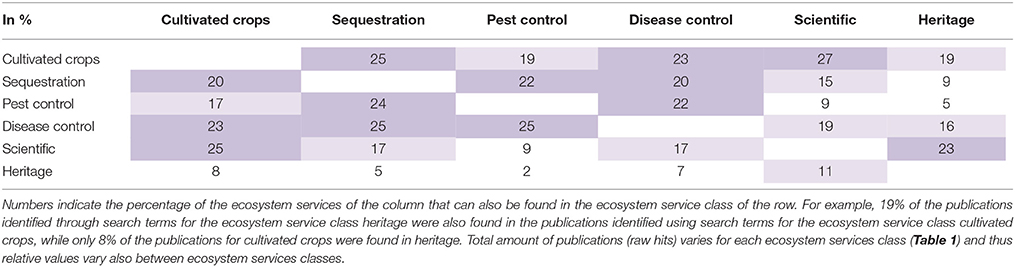
Table 3. Percent overlap between publications across the six key ecosystem service classes we identified in vineyards, with darker shading indicating greater overlap between the two ecosystem service classes.
Multifunctional landscapes provide multiple ecosystem services that are interlinked. Looking at vineyards, the six key ecosystem services are also connected (Figure 5). Much like the complexity of a fine wine and the human appreciation of its “bouquet,” the interplay of ecosystem services and the ability of science to identify and assess such linkages increases our understanding and appreciation. Disease control and pest control increase the yield of cultivated crops because only healthy plants can maximize productivity. The vines grown to produce the cultivated crops (grapes) also conduct photosynthesis, and thereby carbon sequestration in the vineyards. Lastly, winegrape production and the vineyard landscape foster a special cultural heritage. Without winegrapes and vineyards, large parts of the Mediterranean, and other global wine regions, would lose a key defining element of cultural identity. We have highlighted some of the most obvious relationships between the six key ecosystem services, but many other ecosystem services are highly connected, like pollination and pest control or erosion control, and weathering processes.
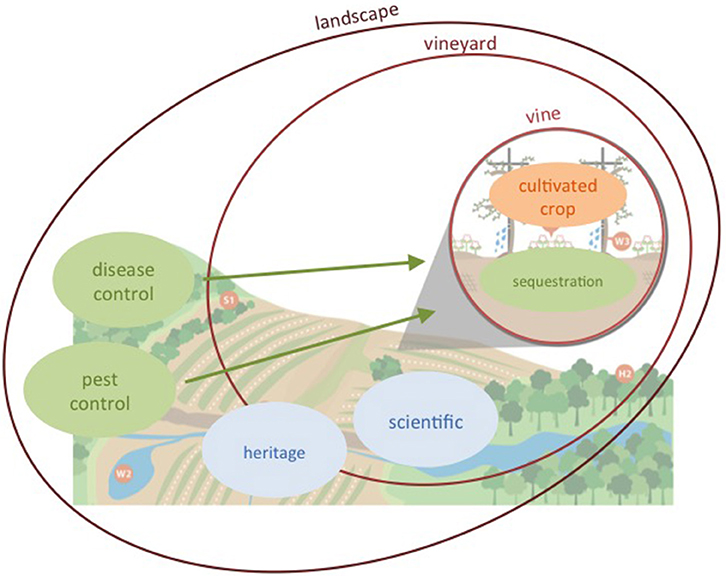
Figure 5. Multifunctional vineyard system showing some relationships between the six key ecosystem services we identified (see text). The scale of ecosystem service provision varies from the vine, to the vineyard, to the surrounding vineyard landscape. (Underlying graphic from Viers et al., 2013; used with permission).
The six key ecosystem services we identified are provided at a range of scales (Figure 5). At a small scale, the vines themselves provide cultivated crops and sequestration. Scientific services are provided at the vineyard scale (e.g., studying vineyard agronomy), while heritage results from a combination of the vineyard and larger surrounding landscape scale. Disease control and pest control may be provided from habitat within vineyards as well as the surrounding habitat (e.g., hosting natural predators) at the landscape scale. This shows not only that most ecosystem services in a landscape are connected but also that a multifunctional landscape can provide ecosystem services at a range of scales that need to be considered.
Discussion
We found a wide range of ecosystem services in vineyards. Nevertheless, a few services like pest and disease control as well as the cultivated crops are in the center of interest: visible ecosystem services that influence the performance of the agrarian system and the marketable good produced. This does not mean that other ecosystem services do not exist or are of less importance for vineyard systems. Review studies on ecosystem services show that ecosystem services that are difficult to quantify are less often studied (Seppelt et al., 2011). Hence, there is a need for a greater acknowledgment of the range of services provided by ecosystems including vineyards.
In order to promote a multifunctional landscape, we must better capture a full range of ecosystem services and their connections. However, one of the current challenges in ecology is that there is only limited knowledge on these relationships, requiring future research (Bommarco et al., 2013; Birkhofer et al., 2015). A better scientific understanding of this multifunctionality can help to support maximizing the total benefit of a multitude of ecosystem services instead of maximizing one or two single ecosystem services at potentially high cost to others (e.g., Foley et al., 2005; Lovell et al., 2010).
A next step would be the consideration of how ecosystem management choices affect the provision of key ecosystem services. So far a broader perspective on a landscape, by e.g., adapting an ecosystem services approach, is often lacking (Bommarco et al., 2013). Based on the logic of Foley et al. (2005), adapting a land management strategy that aims to maximize a bundle of ecosystem services could promote a broad perspective on an agricultural system that will support a more long-term sustainable use of the land.
The ecosystem services concept can help to go beyond a narrow way of looking at the system and enlarge it by pointing out the multifunctionality of the land (Partelow and Winkler, 2016). The CICES classification includes 42 ecosystem services in three sections. In our case, we identified 27 of the 42 ecosystem service classes as relevant for vineyard systems. Our results indicate that ecosystem services in all three sections are studied, with a much stronger focus on provisioning and regulating and maintenance services than cultural services. The ecosystem services concept promotes inclusion for less studied or obvious services. The exercise of going through the whole list of ecosystem services to operationalize it in a specific ecosystem highlighted the multifunctionality of the system. This said, so far most publications on ecosystem services concentrate on one or two very specific ecosystem services (Seppelt et al., 2011) and many assessment methods can be criticized for their methodological narrowness (Silvertown, 2015). However, the research field is evolving: the use of broader valuation and assessment methods benefits the ecosystem services concept (Schröter and van Oudenhoven, 2016) and bundles of services are increasingly a topic of research (Queiroz et al., 2015; Renard et al., 2015; Mouchet et al., 2017).
Producers could use the ecosystem services approach to assess and promote the multifunctionality of their managed land and thereby choose to create multifunctional landscapes (TEEB, 2015; DeClerck et al., 2016). For vineyard systems specifically, they can adopt ideas like vinecology, which combines practices of ecology and viticulture (Viers et al., 2013): for example, creating wildlife habitat like hedgerows and vegetation strips in the vineyards to attract wildlife including pollinators, to enhance natural pest control, and to increase the aesthetic value to people (Jedlicka et al., 2011; Orre-Gordon et al., 2013). While voluntary actions in vinecology, such as set-asides for natural habitat and improved water management techniques, enhance and support ecosystem services, the economics to sustain such practices are often only realized when coupled with a robust market and targeted marketing strategies.
Limitations and Further Research
To our knowledge, this is the first effort to operationalize the CICES classification for a specific ecosystem (vineyard), and to do a systematic review if and how the resulting ecosystem services are researched. Other studies reviewing ecosystem services of one ecosystem did not stick to one classification, but rather merged different classifications schemes or stayed on the section level (e.g., provisioning, regulating, cultural; e.g., Liquete et al., 2013; Luederitz et al., 2015). We tried four different approaches to guide our search in order to meet the goal of discovering the full suite of relevant publications even if they did not use the specific term from the classification system.
While we believe this captures the most widely researched services, future studies could use a more methodically approach (see e.g., Schmidt et al., 2017). This goal could be achieved by e.g., using machine learning, or a broader and more formal expert elicitation, to select the search terms, to ensure the most relevant search terms are selected and avoid repetition of search terms between classes. This would help limit the subjectivity inherent in such an exercise of selecting search terms. In addition, we recommend considering balancing the number of search terms for each service studied, to avoid biasing the findings. A method comparison on the sensitivity of approaches for such a literature search would be useful to guide future efforts.
Despite these methodological limitations, we see great promise in operationalizing CICES to study specific ecosystems, as the comparability is a major purpose of the framework. Finally, this study can serve as a model for how one can do a first assessment of ecosystem services in a specific (agro) ecosystem. We hope our study can lay a base for future studies in order to be able to compare other production systems, and better study natural systems as well.
Conclusion
Our findings show that the ecosystem services concept has not often been used in research on vineyards. However, research exists on a plentitude of single ecosystem services, although it is typically not framed in the ecosystem services language. Vineyards are mainly considered as agrarian landscapes with a focus on visible ecosystem services such as pest and disease control and grape production. This limited focus is likely true of many agroecological systems, reducing our ability to manage for multifunctionality of the landscapes and thus for benefits for both people and nature. While it remains unclear why multifunctional studies have not been published more often, we believe that the ecosystem services approach could help scientists and practitioners to gain an understanding of the multifunctionality of agricultural landscapes which in turn would help to promote more sustainable land management.
Author Contributions
KW and KN designed the study. KW conducted the literature review. KW, KN, and JV wrote the article.
Conflict of Interest Statement
The authors declare that the research was conducted in the absence of any commercial or financial relationships that could be construed as a potential conflict of interest.
Acknowledgments
We thank Rodd Kelsey and two reviewers for their comments on an earlier version that greatly helped to improve this paper. This research was partly conducted as part of the EU FP7-research project OPERAs (308393). KW is funded by the Ministry of Science and Culture of Lower Saxony (MWK) Research Training “Interdisciplinary approach to functional biodiversity research”(IBR) at Carl-von-Ossietzky-University, Oldenburg.
Supplementary Material
The Supplementary Material for this article can be found online at: http://journal.frontiersin.org/article/10.3389/fenvs.2017.00015/full#supplementary-material
References
Addison, P., Baauw, A. H., and Groenewald, G. A. (2013). An initial investigation of the effects of mulch layers on soil-dwelling arthropod assemblages in vineyards. South African. J. Enol. Vitic. 34, 266–271. doi: 10.21548/34-2-1104
Baumgartner, K., Greenleaf, S., Quinn, J. F., and Viers, J. H. (2006). “Significance of riparian plants in the epidemiology of Pierce's Disease,” in 2006 Pierce's Disease Symposium (Sacramento, CA: California Department of Food and Agriculture), 260–263. Available online at: http://files.piercesdisease.org/proceedings/2006/2006_269-273.pdf
Beckert, J., Rössel, J., and Schenk, P. (2014). Wine as a cultural product: symbolic capital and price formation in the wine field. Cologne 1–18. doi: 10.2139/ssrn.2464015
Bennett, E. M. (2017). Changing the agriculture and environment conversation. Nat. Ecol. Evol. 1, 1–2. doi: 10.1038/s41559-016-0018
Birkhofer, K., Eva, D., Andersson, J., Ekroos, J., Früh-Müller, A., Machnikowski, F., et al. (2015). Ecosystem services—current challenges and opportunities for ecological research. Front. Ecol. Evol. 2, 1–12. doi: 10.3389/fevo.2014.00087
Bommarco, R., Kleijn, D., and Potts, S. G. (2013). Ecological intensification: harnessing ecosystem services for food security. Trends Ecol. Evol. 28, 230–238. doi: 10.1016/j.tree.2012.10.012
Campbell, C. (2004). The Botanist and the Vintner: How Wine was Saved for the World. New York, NY: Algonquin Books of Chapel Hill.
Campos, J., and Zhang, M. H. (2004). Progress toward reduced-risk pest management. Pract. Winer. Vineyard 25, 5–19.
CICES (2013). Towards a Common International Classification for Ecosystem Service v.4.3. Available online at: http://cices.eu/resources/
Dalal, R., Wang, W. J., Robertson, G. P., Parton, W. J., Myer, C. M., and Raison, R. J. (2003). Emission Sources of Nitrous Oxide from Australian Agricultural and Forest Lands and Mitigation Options. National Carbon Accounting System Technical Report No. 35. Canberra, ACT.
Daniel, T. C., Muhar, A., Arnberger, A., Aznar, O., Boyd, J. W., Chan, K. M. A., et al. (2012). Contributions of cultural services to the ecosystem services agenda. Proc. Natl. Acad. Sci. U.S.A. 109, 8812–8819. doi: 10.1073/pnas.1114773109
Danne, A., Thomson, L. J., Sharley, D. J., Penfold, C. M., and Hoffmann, A. A. (2010). Effects of native grass cover crops on beneficial and pest invertebrates in Australian vineyards. Environ. Entomol. 39, 970–978. doi: 10.1603/EN09144
DeClerck, F., Jones, S., Attwood, S., Bossio, D., Girvetz, E., Chaplin-Kramer, B., et al. (2016). Agricultural ecosystems and their services: the vanguard of sustainability? Curr. Opin. Environ. Sustain. 23, 92–99. doi: 10.1016/j.cosust.2016.11.016
Elsevier, B. V. (2016). Scopus: Content Coverage Guide. Available online at: https://www.elsevier.com/__data/assets/pdf_file/0007/69451/scopus_content_coverage_guide.pdf.
Everard, M. (2015). Communicating Ecosystem Services. Ecosyst. News. Available online at: http://ecosystemsknowledge.net.
Fiedler, A. K., Landis, D. A., and Wratten, S. D. (2008). Maximizing ecosystem services from conservation biological control: the role of habitat management. Biol. Control 45, 254–271. doi: 10.1016/j.biocontrol.2007.12.009
Foley, J. A., Defries, R., Asner, G. P., Barford, C., Bonan, G., Carpenter, S. R., et al. (2005). Global consequences of land use. Science 309, 570–574. doi: 10.1126/science.1111772
Forster, P., Ramaswamy, V., Artaxo, P., Berntsen, T., Betts, R., Fahey, D. W., et al. (2007). “Changes in atmospheric constituents and in radiative forcing. in climate change 2007: The physical science basis,” in Contribution of Working Group I to the Fourth Assessment Report of the Intergovernmental Panel on Climate Change, eds S. Solomon, D. Qin, M. Manning, Z. Chen, M. Marquis, K. B. Averyt, et al. (Cambridge, UK and New York, NY: Cambridge University Press), 129–234.
Galati, A., Crescimanno, M., Gristina, L., Keesstra, S., and Novara, A. (2016). Actual provision as an alternative criterion to improve the efficiency of payments for ecosystem services for C sequestration in semiarid vineyards. Agric. Syst. 144, 58–64. doi: 10.1016/j.agsy.2016.02.004
Galler, C., von Haaren, C., and Albert, C. (2015). Optimizing environmental measures for landscape multifunctionality: effectiveness, efficiency and recommendations for agri-environmental programs. J. Environ. Manage. 151C, 243–257. doi: 10.1016/j.jenvman.2014.12.011
Gubler, W. D., Rademacher, M. R., and Vasquez, S. J. (1999). Control of powdery mildew using the UC Davis powdery mildew risk index. APSnet Featur. Artic. doi: 10.1094/APSnetFeature-1999-0199
Haines-Young, R., and Potschin, M. (2012). Common International Classification of Ecosystem Services (CICES): Consultation on version 4, August-December 2012. EEA Framework Contract No. Available online at: www.cices.eu.
Hart, A. K., McMichael, P., Milder, J. C., and Scherr, S. J. (2016). Multi-functional landscapes from the grassroots? The role of rural producer movements. Agric. Hum. Values 33, 305–322. doi: 10.1007/s10460-015-9611-1
International Organisation of Vine Wine (OIV) (2016). World Vitiviniculture Situation. OIV Statistical Report on World Vitiviniculture. Available online at: http://www.oiv.int/public/medias/5029/world-vitiviniculture-situation-2016.pdf
Jacometti, M. A., Wratten, S. D., and Walter, M. (2007). Enhancing ecosystem services in vineyards: using cover crops to decrease botrytis bunch rot severity. Int. J. Agric. Sustain. 5, 305–314. doi: 10.1080/14735903.2007.9684830
Jedlicka, J. A., Greenberg, R., and Letourneau, D. K. (2011). Avian conservation practices strengthen ecosystem services in California vineyards. PLoS ONE 6:e27347. doi: 10.1371/journal.pone.0027347
Kelly, R. M., Kitzes, J., Wilson, H., and Merenlender, A. (2016). Habitat diversity promotes bat activity in a vineyard landscape. Agric. Ecosyst. Environ. 223, 175–181. doi: 10.1016/j.agee.2016.03.010
Kroodsma, D. A., and Field, C. B. (2006). Carbon sequestration in California agriculture, 1980–2000. Ecol. Appl. 16, 1975–1985. doi: 10.1890/1051-0761(2006)016[1975:CSICA]2.0.CO;2
Kross, S. M., Tylianakis, J. M., and Nelson, X. J. (2012). Effects of introducing threatened falcons into vineyards on abundance of passeriformes and bird damage to grapes. Conserv. Biol. 26, 142–149. doi: 10.1111/j.1523-1739.2011.01756.x
Lee, H., and Lautenbach, S. (2016). A quantitative review of relationships between ecosystem services. Ecol. Indic. 66, 340–351. doi: 10.1016/j.ecolind.2016.02.004
Liquete, C., Piroddi, C., Drakou, E. G., Gurney, L., Katsanevakis, S., Charef, A., et al. (2013). Current status and future prospects for the assessment of marine and coastal ecosystem services: a systematic review. PLoS ONE 8:e67737. doi: 10.1371/journal.pone.0067737
Lovell, S. T., DeSantis, S., Nathan, C. A., Olson, M. B., Ernesto Méndez, V., Kominami, H. C., et al. (2010). Integrating agroecology and landscape multifunctionality in Vermont: an evolving framework to evaluate the design of agroecosystems. Agric. Syst. 103, 327–341. doi: 10.1016/j.agsy.2010.03.003
Lovell, S. T., and Taylor, J. R. (2013). Supplying urban ecosystem services through multifunctional green infrastructure in the United States. Landsc. Ecol. 28, 1447–1463. doi: 10.1007/s10980-013-9912-y
Luederitz, C., Brink, E., Gralla, F., Hermelingmeier, V., Meyer, M., Niven, L., et al. (2015). A review of urban ecosystem services: six key challenges for future research. Ecosyst. Serv. 14, 98–112. doi: 10.1016/j.ecoser.2015.05.001
Morandé, J. A., Stockert, C. M., Liles, G. C., Williams, J. N., Smart, D. R., and Viers, J. H. (2017). From berries to blocks: carbon stock quantification of a California vineyard. Carbon Balance Manag. 12, 5. doi: 10.1186/s13021-017-0071-3
Mouchet, M. A., Paracchini, M. L., Schulp, C. J. E., Stürck, J., Verkerk, P. J., Verburg, P. H., et al. (2017). Bundles of ecosystem (dis) services and multifunctionality across European landscapes. Ecol. Indic. 73, 23–28. doi: 10.1016/j.ecolind.2016.09.026
Nicholas, K. A. (2015). Will we still enjoy Pinot noir? Sci. Am. 312, 60–67. doi: 10.1038/scientificamerican0115-60
Nicholas, K. A., and Durham, W. H. (2012). Farm-scale adaptation and vulnerability to environmental stresses: insights from winegrowing in Northern California. Glob. Environ. Chang. 22, 483–494. doi: 10.1016/j.gloenvcha.2012.01.001
Nicholas, K. A., Matthews, M. A., Lobell, D. B., Willits, N. H., and Field, C. B. (2011). Effect of vineyard-scale climate variability on Pinot noir phenolic composition. Agric. For. Meteorol. 151, 1556–1567. doi: 10.1016/j.agrformet.2011.06.010
Nilsson, M., Griggs, D., and Visbeck, M. (2016). Policy: map the interactions between sustainable development goals. Nature 534, 320–322. doi: 10.1038/534320a
Orre-Gordon, S., Jacometti, M., Tompkins, J.-M., and Wratten, S. D. (2013). “Viticulture can be modified to provide multiple ecosystem services,” in Ecosystem Services in Agricultural and Urban Landscapes, eds S. Wratten, H. Sandhu, R. Cullen, and R. Constanza (Oxford: Wiley-Blackwell), 43–57.
Partelow, S., and Winkler, K. J. (2016). Interlinking ecosystem services and Ostrom's framework through orientation in sustainability research. Ecol. Soc. 21, art27. doi: 10.5751/ES-08524-210327
Polášková, P., Herszage, J., and Ebeler, S. E. (2008). Wine flavor: chemistry in a glass. Chem. Soc. Rev. 37, 2478. doi: 10.1039/b714455p
Queiroz, C., Meacham, M., Richter, K., Norström, A. V., Andersson, E., Norberg, J., et al. (2015). Mapping bundles of ecosystem services reveals distinct types of multifunctionality within a Swedish landscape. Ambio 44, 89–101. doi: 10.1007/s13280-014-0601-0
Renard, D., Rhemtulla, J. M., and Bennett, E. M. (2015). Historical dynamics in ecosystem service bundles. Proc. Natl. Acad. Sci. U.S.A. 112, 13411–13416. doi: 10.1073/pnas.1502565112
Schmidt, M., Weißhuhn, P., Augustin, J., Funk, R., Häfner, K., König, H., et al. (2017). Evaluation of the ecosystem services approach in agricultural literature. One Ecosyst. 2, e11613. doi: 10.3897/oneeco.2.e11613
Schröter, M., and van Oudenhoven, A. P. E. (2016). Ecosystem services go beyond money and markets: reply to Silvertown. Trends Ecol. Evol. 31, 333–334. doi: 10.1016/j.tree.2016.03.001
Seppelt, R., Dormann, C. F., Eppink, F. V., Lautenbach, S., and Schmidt, S. (2011). A quantitative review of ecosystem service studies: approaches, shortcomings and the road ahead. J. Appl. Ecol. 48, 630–636. doi: 10.1111/j.1365-2664.2010.01952.x
Shields, M. W., Tompkins, J.-M., Saville, D. J., Meurk, C. D., and Wratten, S. (2016). Potential ecosystem service delivery by endemic plants in New Zealand vineyards: successes and prospects. PeerJ 4:e2042. doi: 10.7717/peerj.2042
Silvertown, J. (2015). Have ecosystem services been oversold? Trends Ecol. Evol. 30, 641–648. doi: 10.1016/j.tree.2015.08.007
Steenwerth, K., and Belina, K. M. (2008). Cover crops and cultivation: impacts on soil N dynamics and microbiological function in a Mediterranean vineyard agroecosystem. Appl. Soil Ecol. 40, 370–380. doi: 10.1016/j.apsoil.2008.06.004
Steenwerth, K. L., and Belina, K. M. (2010). Vineyard weed management practices influence nitrate leaching and nitrous oxide emissions. Agric. Ecosyst. Environ. 138, 127–131. doi: 10.1016/j.agee.2010.03.016
TEEB. (2015). TEEB for Agriculture & Food: An Interim Report. Geneva, Switzerland Available online at: http://img.teebweb.org/wp-content/uploads/2016/01/TEEBAgFood_Interim_Report_2015_web.pdf.
Tompkins, J.-M. (2010). Ecosytem Services Provided by Native New Zealand Plants in Vineyards. Thesis, Lincoln University
Trubek, A. B. (2008). The Taste of Place: A Cultural Journey into Terroir. Berkeley, CA; Los Angeles, CA: University of California Press.
UNESCO (2016). World Heritage List. Available online at: http://whc.unesco.org/en/list (Accessed July 20, 2016).
Unwin, T. (1991). Wine and the Vine: A Historical Geography of Viticulture and the Wine Trade. London: Routledge.
Viers, J. H., Williams, J. N., Nicholas, K. A., Barbosa, O., Kotzé, I., Spence, L., et al. (2013). Vinecology: pairing wine with nature. Conserv. Lett. 6, 287–299. doi: 10.1111/conl.12011
Williams, J. N., Hollander, A. D., O'Geen, A., Thrupp, L. A., Hanifin, R., Steenwerth, K., et al. (2011). Assessment of carbon in woody plants and soil across a vineyard-woodland landscape. Carbon Balance Manag. 6:11. doi: 10.1186/1750-0680-6-11
Wine Institute (2013). US/California Wine Production. Available online at: http://www.wineinstitute.org/resources/statistics/article83 (Accessed March 27, 2013).
Keywords: vinecology, multifunctional agriculture, ecosystem services bundles, operationalization, wine, viticulture
Citation: Winkler KJ, Viers JH and Nicholas KA (2017) Assessing Ecosystem Services and Multifunctionality for Vineyard Systems. Front. Environ. Sci. 5:15. doi: 10.3389/fenvs.2017.00015
Received: 14 October 2016; Accepted: 03 April 2017;
Published: 21 April 2017.
Edited by:
Evangelia G. Drakou, University of Twente, NetherlandsReviewed by:
Adrien Rusch, Institut National de la Recherche Agronomique, FranceVisa Nuutinen, Natural Resources Institute Finland (Luke), Finland
Copyright © 2017 Winkler, Viers and Nicholas. This is an open-access article distributed under the terms of the Creative Commons Attribution License (CC BY). The use, distribution or reproduction in other forums is permitted, provided the original author(s) or licensor are credited and that the original publication in this journal is cited, in accordance with accepted academic practice. No use, distribution or reproduction is permitted which does not comply with these terms.
*Correspondence: Klara J. Winkler, a2xhcmEuam9oYW5uYS53aW5rbGVyQHVuaS1vbGRlbmJ1cmcuZGU=