 Mohammad Al-Saidi
- Center for Sustainable Development, College of Arts and Sciences, Qatar University, Doha, Qatar
Water reuse is considered a technologically viable option to meet the increasing demands of the domestic, industrial and agricultural sectors. Alongside challenges such as environmental health, infrastructure and regulations, water reuse is often hindered by lack of acceptance and dismissive attitudes. This paper seeks to structure knowledge about acceptance of water use. It provides a systematic look at the overall reuse challenges and social attitudes towards water reuse considering the three integrative elements of water reuse, namely the water source, the technology, and the end use. It first maps the challenges and common insights that constitute the enigma of water reuse acceptance. Later, it conceptualizes acceptance as a social process consisting of the interdependent components of public perception, politicization, individual acceptance, and use adaptation. Using this conceptual framework, solutions to increasing water acceptance stemming from different bodies of acceptance studies are reviewed. The paper reiterates the need for a nuanced view on water reuse acceptance that incorporates spatio-temporal considerations as well as knowledge from different disciplines.
Introduction
Water reuse is on the rise worldwide as a viable option for countering scarcities of local water resources. The benefits of water reuse are manifold; e.g., the provision of additional water supply, environmental improvements through decreased discharge of polluted water, opportunities to expand agriculture or recharge groundwater, and additional benefits through the valorization of wastewater for the production of fertilizers or energy (Barnes 2014; Angelakis and Snyder 2015; Duong and Saphores 2015; McClaran et al., 2020). These benefits often exceed the capital costs and negative impacts in many areas, such as Beijing, where the total benefits of wastewater reuse are 1.7 times the costs (Fan et al., 2013). Alongside economic costs, the environmental and social costs (e.g., related to environmental health and public safety) are largely manageable, while the benefits often outweigh these costs (Garcia and Pargament 2015). Water reuse can be a viable option for achieving improved water-use efficiency, reducing water scarcity and mitigating environmental shocks such as droughts (Garcia and Pargament 2015; Brown et al., 2018; Lee and Jepson 2020). As such, it can be seen as an instrument for achieving key sustainability targets such as the Sustainable Development Goals (SDGs) Target 6.3 on sustainable water quality, wastewater treatment and safe reuse, and Target 6.4 on water-use efficiency and water scarcity.
Urban water reuse networks have been growing for the last 50 years and are increasingly deployed in areas experiencing water scarcity (Wilcox et al., 2016). Wastewater treatment, for example, is evolving rapidly, particularly in countries affected by water scarcity and arid conditions as well as the accumulating impacts of climate change (Mu’azu et al., 2020; Scruggs and Thomson 2017; Bichai et al., 2018; Lee and Jepson 2020). As a result, it has been increasing by an annual average of 25% in countries such as the United States, China, Japan, Spain, Israel and Australia (Angelakis and Snyder 2015). Different types of water (e.g., greywater, seawater, wastewater, brackish water, and produced water) can be reused by using different technologies for various subsequent uses such as landscaping, edible and non-edible agriculture, groundwater recharge, industrial purposes and domestic use. Multi-purpose and multi-source water reuse systems exist nowadays in some reuse-pioneering countries such as Singapore, United States, Australia, Japan, some EU countries, Namibia, and increasingly, in countries of the Middle East.
The growth and diversity of reuse supply infrastructure are determined by the ability to overcome the multi-dimensional challenges of large-scale water reuse (van Rensburg 2016; Scruggs and Thomson 2017; Bichai et al., 2018; Lee and Jepson 2020). Despite these challenges, the academic literature reports a positive reception of the idea of water reuse among policymakers, business leaders and public authorities as a solution to a range of external and internal water-use problems (Chen et al., 2015a; Smith et al., 2015). While there is largely positive reception to water reuse as a water supply option, empirical evidence often indicates less favorable attitudes towards the direct use of water for food, drinking, showering or swimming (Fielding et al., 2018). Furthermore, attitudes towards water reuse have been unstable, and this presents a fundamental problem for large-scale water reuse applications. In fact, studies on reactions and attitudes towards water reuse are scattered across individual cases, selected reuse options, and specific technologies. Water reuse acceptance is studied through assessing momentary attitudes (being for or against water reuse at a certain moment), which is a “thin narrative” of the complex acceptance problem (Ching 2016). Furthermore, simple remedies for water reuse (e.g., awareness and campaigns), binary frames (e.g., a yes/no acceptance problem), and narrow disciplinary perspectives have often failed to capture the complex and multidimensional problem of acceptance or to promote water reuse (Russell and Lux 2009; Beveridge et al., 2017). Generalizations from water reuse studies are also difficult due to the wide variety of methods deployed and the lack of contextualization of results.
There is a need to provide insights into improving water reuse acceptance based on examples from a wide range of academic disciplines and a broad understanding of acceptance. This study aims to explore the advancement of the understanding of water reuse attitudes by structuring state-of-the-art knowledge on water reuse acceptance. The paper also proposes a novel, holistic framework for analyzing attitudes towards water reuse as a complex process of social acceptability. This study maps the recent literature referring to (social) acceptance and (public or individual) attitudes depending on water reuse source/technology/end use. First, it introduces water reuse acceptance as one of many interrelated water reuse challenges. Secondly, it structures knowledge of common elements as well as the heterogeneity of perceptions of or attitudes to water reuse across different case studies. While doing this, it also conceptualizes the relationships between the three constituent elements of water reuse (water source, technology, and reuse purpose) and acceptance of the reuse. Thirdly, the paper proposes a framework for understanding acceptance as a long-term social acceptability process consisting of interactional debates on the sub-components of acceptability, namely public perception, politicization, individual acceptance, and use adaptation. Using the conceptual framework, it summarizes perspectives coming from different bodies of research on water reuse acceptance and relates them to the social acceptability process. Finally, remedies to increase the social acceptability of water reuse are presented, and overarching insights are summarized.
In Company With Acceptance: Complementary Challenges of Large-Scale Water Reuse
Water reuse acceptance does not represent the only challenge facing the expansion of water reuse. It is one among several major challenges, which are often interrelated. These challenges bridge technology, science/knowledge, finance, and policymaking, and understanding them is an important initial step in contextualizing the water reuse acceptance issue. If some of these challenges are not solved or are perceived to constitute a problem in a certain case, water reuse acceptance can diminish greatly. As will be explained later in this paper, these challenges present key contextual factors that can affect the outcomes of the public or/and private debates in the social process that engulfs the acceptability of water reuse. This makes it difficult to frame the acceptance or acceptability problem without first examining the prevalence of the challenges on a local level. Based on a review of key literature, this paper identifies six key challenges that can hinder the development of large-scale water reuse or negatively influence the public perception of its safety and usefulness (Table 1). While these are common critical challenges of water reuse, their importance can change from one case study to another.
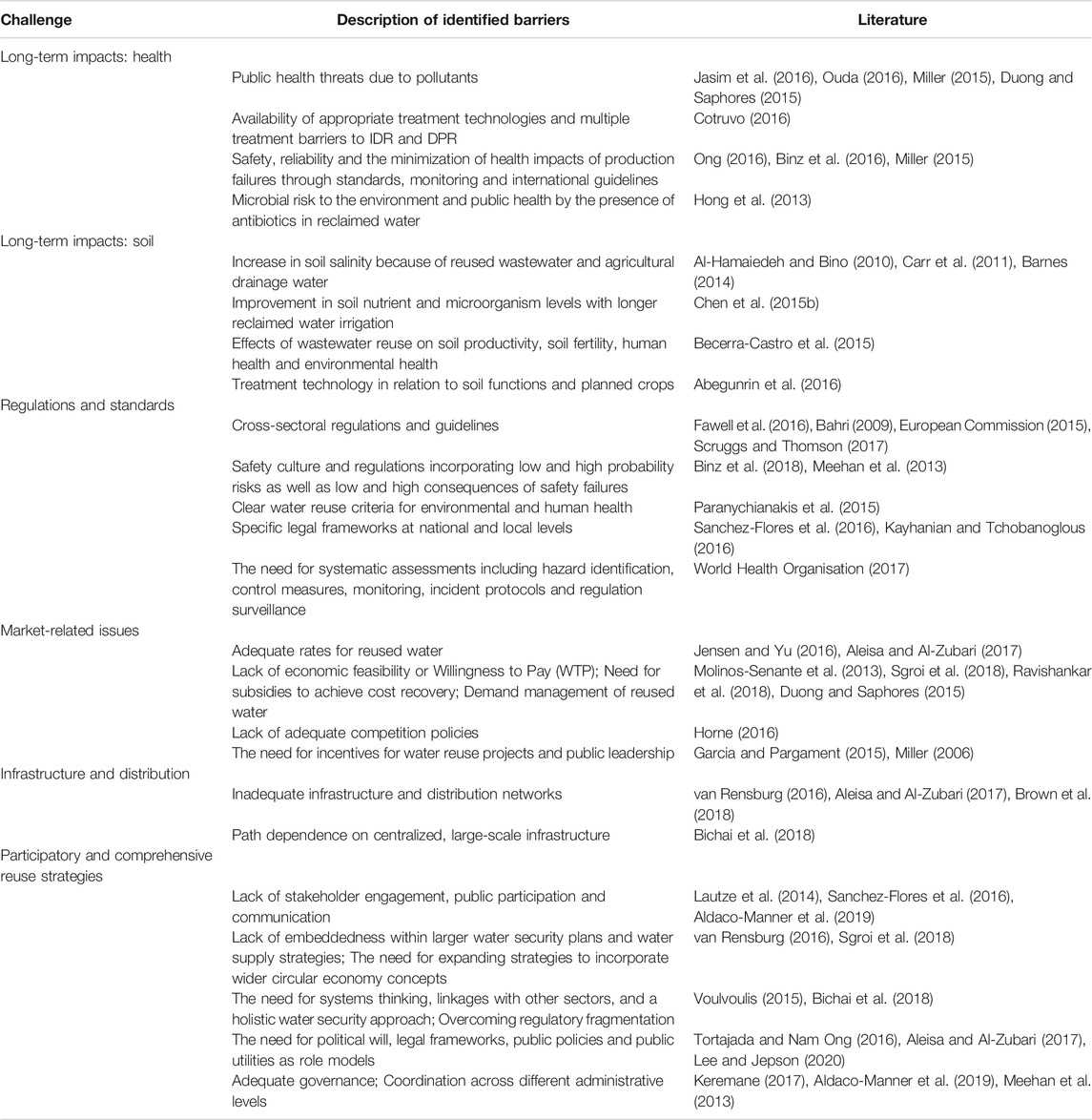
TABLE 1. Challenges of large-scale water reuse.
Long-term impacts of water reuse on human health and the environment particularly soil are arguably at the forefront of research and public debates. However, evidence from state-of-the-art applications shows that, with appropriate monitoring and multi-barrier technology, public health risks are quite low (Ong 2016; Binz et al., 2018). Successful case studies such as Singapore, or Windhoek in Namibia, confirm the importance of comprehensive regulatory frameworks and clear technological guidelines (Cotruvo 2016; Lee and Tan 2016). Often, the reuse of water for potable purposes is achieved indirectly through, for example, discharge into sources such as rivers and streams in order to augment these sources (sometimes called blended water). Water users can consume reused water indirectly by using these rivers, streams or canals. This Indirect Potable Reuse (IPR) is less associated with social acceptance problems than the Direct Potable Reuse (DPR) (reusing treated water without any blending of it with other water sources). IPR is thus more feasible despite the availability of adequate technologies, policies and regulations to make DPR widely available; e.g., (Horne 2016) for the case of Australia, or (López-Ruiz et al., 2020) for Southern Spain.
Health concerns are found in cases where water reuse infrastructure is still emerging and DPR is not practiced; e.g., Australia (Horne 2016) or the Gulf Cooperation Council (GCC) region (Aleisa and Al-Zubari 2017). For example, studies from Saudi Arabia and Qatar show that the presence of pathogens, chemicals, heavy metals or antibiotics is the primary limiting factor for the reuse of treated wastewater for recharging of aquifers and irrigation (Hong et al., 2013; Jasim et al., 2016; Ouda 2016). There is, nonetheless, agreement on the beneficial potential of water reuse for the GCC region and the technical feasibility of expanding this important option (Aleisa and Al-Zubari 2017; Brown et al., 2018).
The long-term impacts of reused water on different types of soil are relevant considerations for many countries. For example, in Qatar, a salinity of about 1,000 mg/L at treatment plants means that water use for agriculture is problematic (Ministry of Development Planning and Statistics 2016), while excessive nutrients in treated wastewater represent a threat to soil health (Jasim et al., 2016). In reality, more research is required into the long-term impacts of different types of reused water and associated technologies on local soil and crops. Such impacts are largely specific to the case study and the related technology. Studies show that water reuse can have contradictory effects such as an increase in both soil salinity and soil fertility (Al-Hamaiedeh and Bino 2010; Barnes 2014; Chen et al., 2015b). In order to manage such effects, the treatment technology needs to match soil characteristics and the envisioned cropping pattern (Carr et al., 2011; Abegunrin et al., 2016). At the same time, long-term effects of reused water on the water-holding capacity of different local soil types need to be monitored and analyzed (Mohtar 2015).
The complex interactions in water reuse between the required inputs and the impacts or benefits for humans, nature and the economy require comprehensive, multi-level regulations. This need for regulation is more evident in regions with large reuse systems such as in the European Union (EU) or the United States. For example, in the EU, some member states are lagging behind in terms of potable water reuse regulations, while the EU has been reluctant to develop a unified regulatory framework (Fawell et al., 2016). Indeed, the lack of uniform water reuse criteria has been the most important obstacle to the exploitation of the high potential for water reuse in the EU (Paranychianakis et al., 2015). Regulation is the issue most demanded by the sector’s practitioners in the EU (European Commission 2015). While the United States might have more reuse regulations than some EU countries, some national and local regulations require revisions and adaptation to more direct uses as well as emerging issues such as climate variability (Sanchez-Flores et al., 2016). Particularly in the case of DPR, it is important to develop a safety culture in the reuse industry as well as comprehensive regulations for different risks and probabilities (Binz et al., 2018).
Other important and interrelated challenges are those related to markets, infrastructure and strategies/participation (summarised in Table 1). Monetary considerations such as the correct pricing policies, the provision of subsidies and incentives for water reuse projects, and the encouragement of competition represent critical components of any reuse strategies. However, a financial approach to water reuse might fail if not embedded within a broader policy context taking into consideration the overall use of resources. Water reuse strategies should be based on holistic planning to incorporate key issues such as stakeholder participation, public awareness, and integration among policies. The public sector has a key leadership role in such policies since it can act as a regulator, initiator and major financier of water reuse projects. Water reuse needs also to be seen as a major supply option, especially in dry regions, within a broader water security plan. The emergence of water reuse as a viable and renewable supply option is largely dependent on a greater political appreciation of water issues, especially of water quality (Biswas 2016), and the abilities of public sector agents such as the utilities to lead by example (Tortajada and Nam Ong 2016). For example, a strong political will and strict and comprehensive reuse regulations, together with persistent public engagement, can help make DPR a reality, as in famous cases such as Singapore (Lee and Tan 2016) or Windhoek, Namibia (van Rensburg 2016; Lahnsteiner et al., 2018).
A Synthesis of the Reuse Acceptance Enigma
With water reuse attracting increased attention as a viable solution to supply shortages, the acceptance challenge has been investigated in many surveys and in-depth case studies. In reviewing this literature, an important question can be formulated: What are the key lessons learnt and the implications from empirical research on water reuse across different case study locations and contexts? In response, in this section, this paper synthesizes some common observations regarding both similarities and discrepancies. This synthesis shows that while there are general acceptance problems across the globe, the solutions need to be based on scientific evidence collected locally and tailored to local circumstances. Comparative studies of water reuse acceptance have been conducted across different locations in the United States (Hartley 2006; Garcia-Cuerva et al., 2016; Scruggs et al., 2020), Turkey (Buyukkamaci and Alkan 2013) and across different countries (Crampton et al., 2016; Hurlimann and Dolnicar 2016). Single-case studies on local acceptance surveys are also available for comparison of similarities and differences. The key insights into similarities and discrepancies in response to water reuse are summarized in the following section.
Similarity Observations
Similarity observations relate to highly aggregated observations from empirical studies on similar public and individual attitudes to water reuse. They have been stable over the majority of surveys, and they represent important starting points for understanding the enigma of water reuse acceptance.
High Support for Water Reuse
In the majority of cases, there is a positive perception of, and a level of high support for, the overall idea of water use as an alternative water source. This might be due to growing scarcities and stresses on water resources. For example, regions experiencing recent droughts are more likely to support reclaimed water (Garcia-Cuerva et al., 2016). Key institutional water stakeholders (e.g., managers, researchers or bigger users, etc.) regard water reuse highly (Chen et al., 2015a). There is an increasing receptivity towards recycling water, and this is especially true for non-potable purposes and in developed regions of the world, e.g., in Europe (Smith et al., 2015). In particular, wastewater reuse is supported by many stakeholders as an important option for water supply augmentation (Duong and Saphores 2015). However, being for or against water reuse might be a misleading “thin narrative”, which needs to be replaced by a more nuanced understanding of individual stances on recycled water (Ching 2016). Furthermore, public responses can be unstable and susceptible to change in the wake of contamination accidents, public debates, rumors, media reports, etc. (Russell and Hampton 2006).
Decrease in Support for Reuse With Close-to-Person Uses
Acceptance of water reuse decreases in cases of close-to-person uses such as bathing, cooking or drinking. This similarity pattern emerges across acceptance case studies (Fielding et al., 2018). Despite the complexity of individuals’ attitudes to contacts with reused water, the less favorable view of close-to-person contacts is stable across locations and users (Chen et al., 2015a). For example, farmers surveyed in Jordan reported a negative opinion on touching reused water or using it for fruit and vegetable cultivation despite the perceived benefits for soil productivity (Carr et al., 2011). Similarly, in Iran, the acceptance of non-personal use of treated wastewater was much higher than for close-to-person uses; e.g., 87% acceptance for public consumption such as landscaping or firefighting vs. 8% for cooking or drinking (Baghapour et al., 2017). Similar attitudes are found in Latin America, e.g., Chile (Segura et al., 2018). This is due to many reason such as the famous “yuck” effect of coming in contact with previously “dirty” water (Duong and Saphores 2015; Wester et al., 2016). This attitude of negativity or disgust can be psychologically, culturally and/or socially constructed; e.g., influenced by the media (Ching 2010). It can also be linked to a complex set of individual and contextual factors, or what Bennett et al. (2010) called “fright factors”, which include issues such as risk exposure and distribution, the level of damage and the level of trust in others and in public and civil organizations. However, ever since the beginnings of research on public attitudes during the 1960s and 1970s, the decrease in acceptance with close-to-person use has been a stable observation that is less affected by psychological or water price factors (Baumann 1983).
Low Awareness of Water Quality and Associated Risks
Awareness and knowledge on water quality and associated risks of water reuse seem to be low across regions. This finding is combined with a high demand from consumers for more information. This is because knowledge of water recycling processes has been confirmed to be quite low across cases (Fielding et al., 2018). Hurlimann and Dolnicar (2016) found knowledge about recycled and desalinated water to be low across all nine surveyed locations and suggested a higher communication and engagement level with communities. Similarly, Buyukkamaci and Alkan (2013) reported a high demand by 375 respondents in Turkey to be told more about the health and food safety impacts of water reuse. In Jordan, farmers’ perceptions did not correspond to the water quality delivered to their farms (Carr et al., 2011). In reality, awareness of health risks is generally low across many surveys of farmers in other locations (Keraita et al., 2010). While low awareness is a salient factor in many surveys, it does not apply to some location such as in Singapore where engagement with the community, the media and the public seems to be relatively high (Lee and Tan 2016). There, the attitudes towards water reuse are more influenced by economic interests, ecological limitations and national security rather than by norms or information (Ching 2016).
Divergence Experiences
Acceptance of water reuse projects is primarily a context-specific issue. Therefore, divergent experiences are expected, while improving acceptance should be addressed with the participation of local stakeholders. In the following section, insights from comparative research are presented with regard to the key reasons behind the locale-specificity and divergence of water reuse acceptance.
Variance With Sources and use Purposes
Water reuse acceptance varies with different water sources and reuse purposes. While acceptance decreases with close-to-person uses, the exact preference order is dependent on the location and the characteristics of the water presented to consumers. Hurlimann and Dolnicar (2016) found that rainwater is more often preferred to desalinated water for the least personal uses (garden watering and toilet flushing), but the differences in the preferred source depend on the purpose use and vary in certain locations. In fact, water originating from desalination (i.e., reused seawater) is widely accepted in many parts of the world for all types of purposes including DPR. Desalination is the main source of domestic water in GCC countries, while it is also used to a limited extent in agriculture (Aleisa and Al-Zubari 2017). In Australia, the factors behind the likelihood of using desalinated water can be similar to those behind the likelihood of using recycled water (wastewater) (Dolnicar et al., 2011). However, this conclusion is site-specific, since accepting one resource type does not automatically indicate a higher willingness to accept other types. In the GCC region, for example, wastewater reuse in agriculture is largely not accepted or practiced despite the overwhelming endorsement of desalination (Brown et al., 2018).
The consumer perception of the quality and health risks of reused water for a specific purpose is affected by other factors beyond the water source (location of collection), use purpose, or treatment technology. For example, Menegaki et al. (2009) found that labeling treated wastewater as “recycled water” would increase its use acceptance. Inaccurate labels such as “toilet to tap” (T-to-T) are used by opponents of water reuse to scare potential consumers. At the same time, events including public figures drinking beer brewed with reused water can help overcome the “yuck factor” (Katz and Tennyson 2018). Figure 1 explains how acceptance of water reuse usually changes with the source and the use purpose of such water. Here, brackish water is understood as being water from lagoons or collected from rain, while greywater is the collected and treated wastewater gathered at household level. The collection source differs, but all water sources need a high level of treatment (e.g., tertiary treatment) to be used for most purposes, especially the close-to-person types.
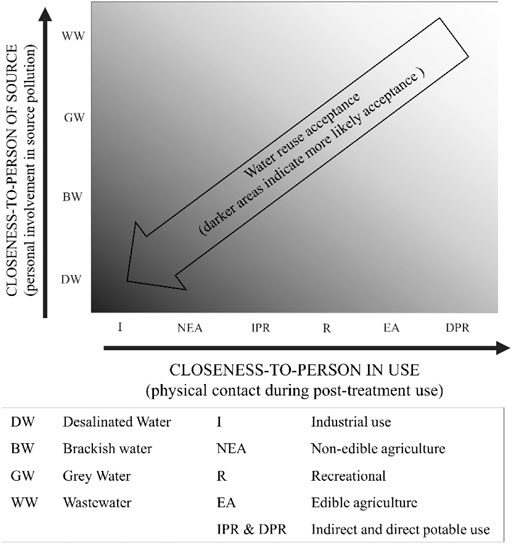
FIGURE 1. Typical patterns of water reuse acceptance based on reuse purposes and water sources.
A Plethora of Awareness Determinants
Factors that can increase awareness, acceptance, and trust of water reuse schemes are site-specific; e.g., education, religion, role models, media coverage, etc. The contribution of these specific factors to increasing awareness and ultimately acceptance of water reuse has been reviewed by Fielding et al. (2018), Hurlimann and Dolnicar (2016). Empirical studies show the importance of local conditions, while results are mixed for all determinant categories. One reason for the mixed results might be the heterogeneity of methods and the vagueness of the measured conceptual objects; i.e., whether studies seek to determine the incidents/perceptions/risks related to acceptance, or simply the attitudes of individuals, communities, stakeholders, or the public.
Among the many determinants of awareness and acceptance and despite the inconsistent results across all studies, education, economic and climatic factors seem to stand out in large acceptance surveys, while some other factors can be less substantive factors. These three factor groups (economic wellbeing, education and climate) were the most influential in a survey with 2,800 people in the United States by Garcia-Cuerva et al. (2016), while sex, age, location and the last monthly water bill showed no significant effect. Robinson et al. (2005) show that both men and women in the United States view wastewater reuse for personal uses unfavorably, while high income and education can lead to having greater knowledge on water reuse. Menegaki et al. (2007) showed in the case of Creta, Greece, that factors influencing willingness to reuse water are related to scarcity condition, information and awareness, income, and water price, but that age and sex still played a role. Gender did not, however, play a significant role in surveys in Turkey (Buyukkamaci and Alkan 2013). Aitken et al. (2014) found that demographic factors such as the membership of the Muslim community can lead to less support for water reuse in South-East England, while religion was seen not seen as a limiting factor in the study in Jordan (Carr et al., 2011).
Another often-cited determinant of awareness is the media. Buyukkamaci and Alkan (2013) identified the media as the most important method for informing the community. However, Goodwin et al. (2017) found that media coverage of a proposal to introduce IPR in London (United Kingdom) had no impact on online public reaction. In the case of Australia and New Zealand, Crampton et al. (2016) founded the media to be the least likely information source on drinking water quality for the respondents and stressed the role of expert knowledge, technical plans, and the involvement of communities. Similarly, Dolnicar et al. (2011) did not find any influence of TV watching on attitudes towards water reuse and stressed broader issues such as perception and prior knowledge.
Site-specific Risk Factors and Perception
A key discussion in water acceptance experiences is related to risk perception of recycled water. Risk perception and risk factors differ from location to location. This is also true for trust in public authorities to mitigate and adapt to these risks. Such authorities are largely behind large-scale, technical and centralized water reuse projects (Meehan et al., 2013) and their (lack of) competence is a key factor in assuring the public of safe water reuse. Doria (2010) examined risk and acceptance variables of water reuse and emphasized individual factors related to risk perception as well as contextual factors such as the supply system in general, trust in the suppliers, quality of information provided by media, and public trust. Crampton et al. (2016) found risk perception to be significantly correlated with employment status and sex, with location being insignificant in the case of New Zealand and Australia. Dolnicar et al. (2011) reviewed acceptance surveys and identified trust in the authorities as a key category for determining acceptance. Similarly, Fielding et al. (2018) identified risk perception and trust among many “psychological” factors of acceptance surveys, alongside other issues in this broadly defined category such as social norms, fairness, disgust, environmental issues, knowledge, etc.
Influence of Local Resource Types on Acceptance
The acceptance of water reuse cannot be separated from local factors such as the specific potential depending on available water resources, the exposure to certain forms of water reuse and the reuse practicability in terms of associated costs of treatment and distribution. In some regions, some water sources might be more accepted due to scarcity conditions, and awareness of water scarcity can even increase the likelihood of accepting water reuse (Dolnicar et al., 2011; Fielding et al., 2018; Scruggs et al., 2020). In regions of water abundance, some water sources such as desalination might not be accepted. Other regions have a different acceptance pattern due to differences in resource availability. In the GCC region as an example, desalinated water is largely accepted as it supplies more than 90% of domestic and industrial needs in the region, but it is too costly for irrigation (Brown et al., 2018). In this region, brackish water is available in limited amounts in some cases and can be used for recharging ground water and then reused for drinking or agriculture. Produced water is significant in the oil and gas industry and can be utilized locally or provided in limited amounts for least-personal uses. Greywater represents a high potential due to the very large water use footprints per capita in the region, and it could be reused in the future on a household level for recreation or agriculture. Wastewater reclamation is expanding and is used for all kinds of purposes such as landscaping or aquifer recharge (Aleisa and Al-Zubari 2017). Finally, acceptance of certain water types can be high in urban areas. For example, in Australian cities, the use of stormwater for aquifer recharge and supply augmentation is largely accepted and more positively perceived than recycled wastewater (Mankad et al., 2015).
A Structuring Proposition: Social Acceptability Instead of Acceptance
The acceptance of water reuse is understood in this section as a complex and dynamic social process. Following on from viewing water reuse acceptance as one of several interrelated reuse challenges (In Company with Acceptance: Complementary Challenges of Large-Scale Water Reuse) and a critical and site-specific intervention (A Synthesis of the Reuse Acceptance Enigma), this section structures reuse acceptance phases and studies. It seeks to move the debate beyond studying and comparing incidents of acceptance and towards understanding water reuse as a complex social acceptability process. Such a process is structured in order to break down the different concepts and ideas regarding the multi-disciplinary and multi-sphere issue of the social acceptability of water reuse.
The Social Acceptability Process of Water Reuse
In this section, the relevance of understanding attitudes towards water reuse within a broader process of social acceptability is explained. Furthermore, the contents of this process are presented.
Justification and Relevance
Water acceptance studies deliver divergent conclusions with few overarching commonalities, but many local specific factors. The resulting insights from comparisons of acceptance studies cover a large breadth of issues. Often, review studies (e.g., Dolnicar et al., 2011; Duong and Saphores 2015; Hurlimann and Dolnicar 2016; Wester et al., 2016; Fielding et al., 2018) will stress factors including socio-demographic characteristics of respondents, reuse technologies and locations, contextual challenges facing water reuse (Table 1), (risk) perceptions and trust, socio-psychological factors (e.g., disgust), and socio-political environments (e.g., politics, role models, etc.). The key conceptual difficulty here is that these categories of acceptance factors/determinants relate to different aspects of the water acceptance phenomenon. Many studies do not define key concepts such as the acceptance by whom? (e.g, acceptance by “users/consumers”, “stakeholders”, the “reuse sector”, or the “public”) and of what? (i.e., which source, use or technology, and in which sites). Furthermore, the divergence of results is indicative of the temporality of water reuse acceptance: i.e., water reuse acceptance varies with the change in innumerable site-specific factors (e.g., adaptation to use, trust, policies, awareness, modernization, etc.). At the same time, the standalone approach of water reuse surveys is often inadequate for capturing the complexity of acceptance, as it gauges mere incidents or snapshots of supports, acceptance, or other momentary attitudes (e.g., favorable or skeptical).
As will be explained in the following sections, water reuse acceptance should be framed as an acceptability problem that is not merely related to individual or group attitudes, nor is it entirely a matter of public opinion. The demand for a more nuanced and contextual understanding of acceptability based on social norms and processes was also reiterated by other studies (e.g., Ching 2016; Crampton et al., 2016). Such a broad understanding of acceptance can lead to broader recommendations and can be used for structuring knowledge from acceptance case studies (Discussion). In a similar sense, Harris-Lovett et al. (2015) viewed potable water reuse from the broader perspective of whether a reuse technology is seen as legitimate or desirable in a certain social context. Beveridge et al. (2017) consider the whole water reuse issue as inherently social, with important spatial and political dimensions. Using a review of the relevant literature, this paper argues that the acceptability of water reuse projects requires a holistic understanding as a multi-layered social process of interactions between humans, technology and nature that takes place in norm-based and interlinked debates in both the public and private spheres.
Framing the Social Acceptability Process
The framework presented here to understand social acceptability (the willingness to accept) distinguishes four components (public perception, politicization, individual acceptance, and use adaptation), in which the debate about water reuse takes place and thus the view on water reuse is shaped (Figure 2). Policymakers can address each social acceptability component through various instruments, to be presented later in Mapping solutions across the social acceptability components. For a high acceptability of water reuse, the majority of debates on all components need to end with positive outcomes, since these components are largely interdependent. In each of the respective social acceptability components, one or more of the three issues or aspects of water reuse (water source, treatment technology and reuse purpose) figures prominently. As argued previously in A Synthesis of the Reuse Acceptance Enigma, water reuse experiences and acceptance vary significantly based on these three issues (source, technology and use). These issues are embedded in debates on other reuse challenges (In Company with Acceptance: Complementary Challenges of Large-Scale Water Reuse), which, in turn, can also affect the social acceptability of water reuse.
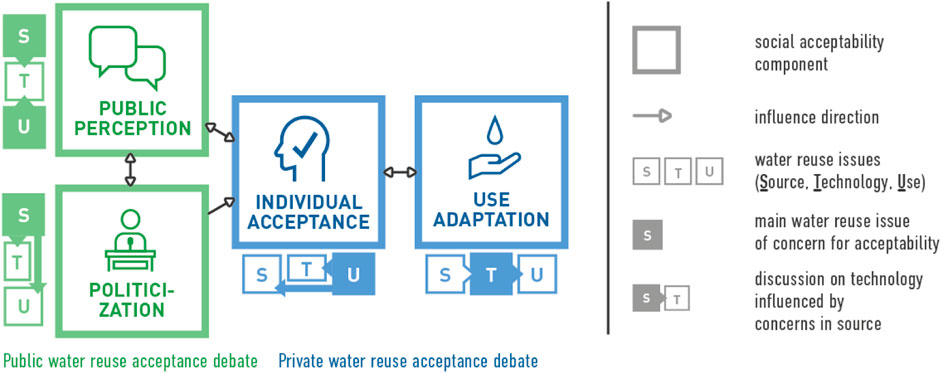
FIGURE 2. The social acceptability process of water reuse.
The social acceptability process of water reuse is divided into two main debates, the public debate and the private one. These debates are interrelated, while acceptance studies usually provide snapshots of sub-topics in one of these debates. These studies can be classified as placing more emphasis on either the private debate (Evidence highlighting the private debate dimension) or the public debate (Evidence highlighting the public debate dimension), but they often start from one acceptability component and ultimately recommend remedies beyond this particular component. This is due to the fact that improving water acceptance is rarely possible through a simple set of interventions (See Discussion).
The private acceptance debate of water reuse is influenced by considerations regarding the use purpose and treatment technology of the recycled water. This is repeatedly highlighted in bodies of literature using methods such as surveys, perceptions, or narratives and psychological tests (Evidence highlighting the private debate dimension). Individual acceptance depends on risk perceptions associated with certain reuse purposes such as drinking, cooking or irrigation. As mentioned previously, this is a highly individual process influenced by previous experiences, attitudes towards the environment, personal values or discussions with others (Bennett et al., 2010; Doria 2010; Ching 2016). Individual acceptance is susceptible to influences from political debates and public perception, but is also independent from these debates to a certain extent. For example, economic factors such as the cost of recycled water, incentives or subsidies for different reuse purposes can help to increase individual acceptance; e.g., (Molinos-Senante et al., 2013; Duong and Saphores 2015; Ravishankar et al., 2018; Sgroi et al., 2018). Similarly, use adaptation entails a private debate concerned with the technology used to recycle water. Consumers try to acquire information about the quality of delivered water and the associated risks (Binz et al., 2018). They form their opinions on the use safety and the required measures before the final use, e.g., filtration mechanisms or heating of water, depending on the source. Debates about the reliability of water treatment or other previously mentioned challenges of the safety of water reuse influence the determined use of recycled water by consumers. Ultimately, the ability to adapt to the use of recycled water is highly relevant for the individual acceptance, and often independent from other factors such as ideology and values.
Public perception is the most difficult, but arguably the most important, component of social acceptability. Indeed, under this component, all kinds of political, technical or scientific, religious and cultural debates take place in public and with the participation of various actors such as policymakers, scientists and experts as well as public and religious figures. The importance of this public debate is highlighted by several bodies of research on reuse acceptance, such as economic, institutional and social studies (See Evidence highlighting the public debate dimension). Ideas and norms compete in these debates to form an important public perception of water reuse. Here, the media is an important factor in this regard, while the debates are often less technical and rather broad; e.g., benefits vs. advantages of reuse, or reuse as desirable or alarming (Russell and Hampton 2006; Ching 2010; Lee and Tan 2016). The outcomes of public debates can be determined by a number of locally specific issues such as scarcity conditions, socio-political systems, role models and religious/cultural aspects (Po et al., 2003; Robinson et al., 2005; Hartley 2006; Doria 2010; Garcia-Cuerva et al., 2016; Hurlimann and Dolnicar 2016). During public debates on water reuse, politicization represents a deliberative process to highlight reuse as relevant for a society’s development, peace and order, relationship with nature, etc. At the same time, water reuse can become politicized in the wake of contamination incidents, project failures or constraints in the reuse system (Russell and Hampton 2006). However, in line with securitization theories (e.g., Allouche et al., 2011; Fischhendler 2015), politicization often takes place as a way to promote water reuse and prioritize action towards achieving it. Issues related to the water source such as water quality, source control, trust in supply authorities and effects of communities at the source are at the forefront of politicization debates (e.g., Fischhendler 2015; Beveridge et al., 2017). In cases of politicization incidents, these can significantly affect public perception.
Evidence Highlighting the Private Debate Dimension
Several bodies of acceptance literature have highlighted one or another component of what this paper calls the social acceptability process of water reuse. In this section, the academic studies are presented with regard to their key approaches and potential contributions to illuminating the acceptance problem from the starting point of the private debate in the social acceptability process.
Traditional Acceptance Studies
Traditional perception studies (e.g., Robinson et al., 2005; Hartley 2006; Russell and Hampton 2006; Carr et al., 2011; Buyukkamaci and Alkan 2013; Aitken et al., 2014; European Commission 2015; Crampton et al., 2016; Garcia-Cuerva et al., 2016; Hurlimann and Dolnicar 2016; Baghapour et al., 2017) look at public responses to water reuse projects using perception and opinion surveys. This body of literature represents the most common approach in water acceptance research. The surveys de facto target the individual acceptance component of the social acceptability process. As highlighted previously in the review of similarities and divergences of experiences of acceptance of water reuse, (A Synthesis of the Reuse Acceptance Enigma), issues related to the particular use (i.e., Which source and technology is used for which use purpose?) dominate debates in acceptance surveys. Since individual acceptance lies at the center of the social acceptability process of water reuse, it is influenced by all of the other components. In this sense, acceptance surveys often link incidences of the acceptance or rejection of a certain water reuse issue to factors that might arise from other acceptability components.
In reality, traditional acceptance studies use individual acceptance or perceptions as a starting point of analysis. They then gauge a plethora of determinants related to the characteristics of individuals, debates in the public sphere, and contextual issues that represent the challenges related to water reuse (earlier described in Table 1). Some overviews of the determinants of acceptance and contextual challenges found in acceptance surveys are provided in Fielding et al. (2018), Dolnicar et al. (2011). Although some studies (e.g., Duong and Saphores 2015; Ravishankar et al., 2018; Smith et al., 2018) investigate “public” or “social” perceptions or acceptance, the focus is less on analyzing discourses or debates happening in the public sphere; rather, these mostly survey-based studies center on users’ acceptance and its determinants. Finally, since the focus of the traditional studies is on the conceptual constructs of perception, attitudes and acceptance incidents, the suggested remedies are mostly informational; i.e., stressing awareness, debates, education campaigns, etc.
Narrative and Psychological Studies
Psychological and narrative studies (e.g., Hampton 2004; Menegaki et al., 2009; Ching 2010; Ching 2016; Leong 2016; Wester et al., 2016; Greenaway and Fielding 2020; Nemeroff et al., 2020) look at factors affecting individual attitudes towards water reuse. These factors include internalization processes of certain opinions, individual experiences, discourses, semantics, framing of water reuse information, etc. The methods deployed include surveys, observations or narratives and conceptualizations based on grounded theory. In the social acceptability process, the starting point for psychological studies is often the use adaptation component; e.g., disgust experiences (the yuck factor), emotions, or lived experiences. Often, psychological determinants such as disgust are presented as the most relevant determinants or predictors of acceptance (e.g., Duong and Saphores 2015; Wester et al., 2016). However, disgust is also seen as resulting from other factors. For example, education, prior knowledge, psychologically prepared information, labeling and public debates can mediate disgust experience (Ching 2010; Wester et al., 2016; Goodwin et al., 2017). In this sense, the recommendations of psychological or narrative-based studies often go beyond the component of the use adaptation.
Other studies in this body of literature relate emotions, attitudes and willingness to use to environmental values and personal profiles. For example, one approach in psychological studies is to link disgust with peoples’ sensitivity/aversion towards contagion/cleanness (Fielding et al., 2018). While these approaches are highly revealing about processes in the private acceptance debate of water reuse, some insights, e.g., on the “yuck discourse”, is of limited value for explaining how to change peoples’ responses towards water reuse (Russell and Lux 2009). Therefore, it is important to translate psychological insights into actionable implications. For example, psychological insights can help to improve the design of environmental nudging (Byerly et al., 2018), the targeting of awareness campaigns, the framing/labeling of water reuse strategies (McClaran et al., 2020), or interventions to facilitate the adaptation of households (Nemeroff et al., 2020).
Evidence Highlighting the Public Debate Dimension
In this section, bodies of academic literature are presented with the public debates as a point of departure. They include studies focusing on the influence of institutional, regulatory and social issues. Although not all studies highlighting the public debate on reuse acceptability can be classified, the two categories presented represent the commonest approaches in the literature on acceptance.
Economic and Institutional Studies
Economic and institutional studies (e.g., Lloyd Owen 2016; Molinos-Senante et al., 2013; Menegaki et al., 2007; Fan et al., 2013; Garcia and Pargament 2015) reiterate the role of economics and contractual (rights-based) approaches in improving acceptance of water reuse. The basic premise here is understanding such acceptance as a regulation problem. This means that better rules and incentives can improve the outcomes of challenges directly affecting reuse acceptance, particularly those challenges of safety, distribution, participation, economics and governance. In this sense, the literature on these related challenges presented in Table 1 can also be seen as a part of this body of academic literature; e.g. framing water reuse as a function of better communication among agencies (Aldaco-Manner et al., 2019), or holistic circular economy strategies (Sgroi et al., 2018). Furthermore, improving regulation and the institutional set-up of water reuse can yield favorable outcomes in debates happening in all components of the acceptability process. However, the focus is rather on the public acceptance debate. Regulating resource allocations and (private) incentives for water reuse is a task centered in the overall governance or public policy context.
Social Legitimacy and Justice Studies
Closely related to the economic and institutional studies are social legitimacy and justice studies (e.g., Russell and Lux 2009; Harris-Lovett et al., 2015; Binz et al., 2016; Beveridge et al., 2017), which stress the complementary aspects of legitimate processes and decision-making, participation, consultations and transparency. The focus here is rather related to the public debate on reuse acceptance and whether the public perceives the system and technologies of water reuse as adequate, necessary, legitimate, transparent, or trustworthy. Often, studies in this body of literature use mixed methods and provide critical insights into classic approaches to understanding acceptance. For example, Russell and Lux (2009) criticized the premises that disgust and lack of information or awareness are deterministic for people’s responses. Instead, they propose a cultural (rather than psychological) approach in which people’s responses to reuse are seen as amendable through understanding local contexts and complexities and designing a participatory/deliberative planning structure for water reuse schemes. Another example is the framing of water reuse in California as a broad endeavor (beyond acceptance) to achieve the legitimacy of this new technology/innovation through institutional work and legitimacy strategies (Harris-Lovett et al., 2015; Binz et al., 2016).
Discussion
In this section, the reviewed literature and the structured process of water reuse acceptability will be used to advance current discussions on the promotion of water reuse. First, some solutions or remedies for advancing the social acceptability of water reuse are summarized. Later, some key insights and contextualized lessons are presented.
Mapping Solutions Across the Social Acceptability Components
The previously presented analysis framework for the social acceptability of water reuse shows the complexity of the acceptance question as a process, and the need for nuanced solutions across different components of this process. It can be used for mapping solutions to water reuse acceptance problems based on recommendations regarding immediate action put forward by different bodies of literature. In fact, there are numerous solutions proposed in the academic literature to help increase the acceptance of water reuse. However, suggestions from broad, descriptive studies on water reuse (e.g., Po et al., 2003; Doria 2010; Yi et al., 2011; Duong and Saphores 2015; Wilcox et al., 2016; Fielding et al., 2018; Smith et al., 2018) are difficult to interpret in terms of which components of reuse acceptability should be addressed by which instruments, and when. There is also a conceptual difficulty in the use of same terms in different scientific and contextual frames. Furthermore, it can be difficult to mainstream or gauge the meaning of insights coming from different bodies of literature. For example, surveys indicating discomfort with the idea of DPR do not necessarily result in a negative public perception or a lack of individual acceptance. Even if we interpret discomfort as a problem for reuse acceptance, such a survey-based result might not predict acceptance in a certain location, as this is a long-term social process with many intermediate outcomes and debates across several components. Instead of focusing on single (and often unstable or intermediate) roots of the acceptance problem or seeking cross-case panaceas for increasing acceptance, remedies should be sold as a package of measures based on interdisciplinary knowledge and tailored to the complex and long-term process of the social acceptability of water reuse. Table 2 provides a high-level overview of such solutions to increasing acceptability based on remedies arising from different bodies of studies. Although these studies usually focus on specific components or debates within social acceptability (Evidence highlighting the private debate dimension and Evidence highlighting the public debate dimension), Table 2 summarizes most relevant remedies across the interrelated components. Traditional acceptance studies often stress the importance of marketing or information, public campaigns, debates, and community involvement. Psychological and narrative studies complement these insights through tools related to role models, testimonials, labels, brands and group-based reuse promotions. Economic studies highlight the role of incentives, prices, regulations and private-sector participation as measures to achieve optimal allocation, instill trust and incentivize individual adaptation and acceptance. Finally, social justice and institutional studies introduce remedies related to good governance, legitimacy and representation.
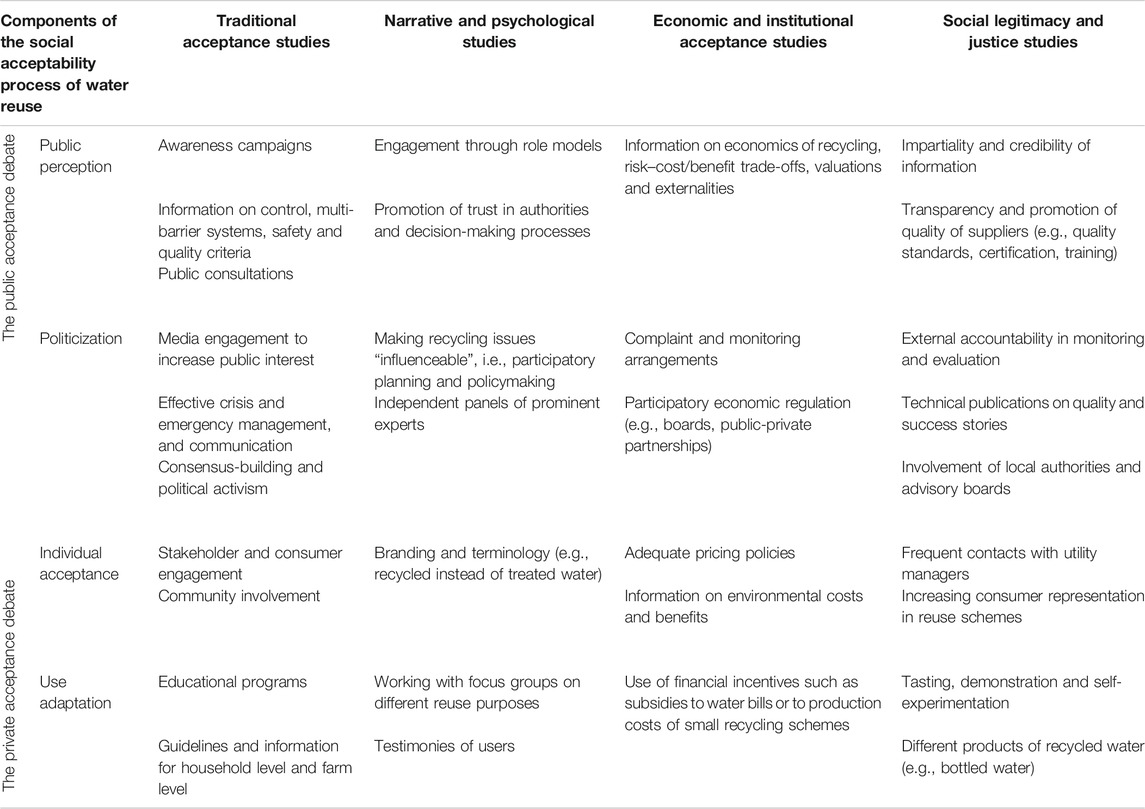
TABLE 2. Solutions for increasing social acceptability from different acceptance studies.
Contextualization and Overarching Insights
The academic literature has shown that there are many different perspectives from which to look at water reuse acceptance. The most common ones are related to polling studies, psychology, economics, institutionalism and social justice, while important perspectives such as those of politics/politicization and security studies are still lacking. Similarly to other authors (e.g., Russell and Lux 2009; Beveridge et al., 2017), this paper stresses that water reuse is a multi-dimensional process that is inherently political, cultural and social, as well as being influenced by the classic factors of technology, climate and resource availability, economy, and infrastructure, or individual values and psychology. This process needs to be better structured with regard to its temporal and spatial components, and also better embedded in its contextual environments. In this context, two overarching insights can be highlighted from the previous analysis. Firstly, the reuse acceptance issue cannot be studied or addressed in isolation from other challenges hindering large-scale reuse. Case studies on water reuse reveal that acceptance increases if the other challenges highlighted earlier in this paper are addressed adequately (e.g., health and safety, markets, regulation and guidelines). Thus, water reuse (acceptance) cannot be separated from the local water governance arrangements, the socio-political culture, and economic development at large. In this sense, promoting large-scale water reuse requires broader policies that tackle the interrelated challenges, including a set of measures to promote acceptability. A stronger public role can help tackle many of these challenges (e.g., infrastructure, safety regulations, monitoring arrangements, investments, campaigns, debates, or politicization/securitization). Public policies can also embed the promotion of water reuse in overarching developmental policies as well as global targets to increase wastewater treatment (Indicator 6.3.1. of the SDGs agenda), improve water use efficiency (e.g., Indicator 6.4, SDGs) and decrease the stress facing freshwater resources (Indicator 6.4.1, SDGs).
Secondly, this paper argues for a holistic and nuanced understanding of water reuse acceptance as an acceptability process that should be understood within a specific context. Here, it is important to analyze local reuse acceptability processes and examine debates, challenges and remedies. Such holistic and nuanced analyses of water reuse acceptability should look at different spatial (i.e., households, sources, treatment systems, public arenas) and temporal aspects (e.g., initial debates, politicization, reception of people, adaptation and feedbacks) and incorporate insights from different academic disciplines. Indeed, descriptions of deployed solutions in successful case studies on water reuse (e.g., Horne 2016; Lee and Tan 2016; van Rensburg 2016; Lahnsteiner et al., 2018) emphasize the importance of multi-layered approaches to increasing social acceptability. The long-standing emphasis on “acceptance” as merely a stance or attitudes attached to individuals and groups has been misleading. Such a premise merely produces snapshots of a complex social reality, while giving the false hope that reluctant people can be “convinced otherwise” through simply remedies, or that “rejection” can be “switched” into “acceptance” through some short-term interventions. As this paper has previously argued, it is highly relevant to contextualize the local context by examining the overall challenges and the site-specific acceptability debates. Alongside improving the enabling environment through enhancing reuse technologies, infrastructure, policies and regulations, it is also important to invest in a set of reuse acceptability measures, including various socio-economic, political and psychological instruments. At the same time, the acceptance issue should be perceived as a social acceptability process of complex components that are best addressed and studied on a local level through gradual, iterative and long-term efforts. Such a perception can have important implications for how to design context-specific measures that are decided locally. Future case study research on reuse acceptability can highlight these locally embedded processes and describe interesting efforts to push site-specific measures; e.g., by involving influential actors (e.g., from civil society or media), empowering certain user groups (e.g., women), providing targeted incentives, solving certain adaptation problems, or politicizing the importance of water reuse.
Conclusion
Responses by individuals and the general public to water reuse endeavors might be the most restrictive challenge facing the wide adoption of water reuse. There are other (more manageable) concerns such as the effects of water reuse on human and environmental health, the need for infrastructure and regulations as well as the long-term impacts on soil quality. These challenges are recurrent issues in acceptance surveys, and they can also affect the overall acceptance of water reuse. Although numerous studies have shown a positive appreciation of the idea of water reuse, people are skeptical of the use of recycled water for close-to-person purposes such as drinking, cooking, or irrigating edible agriculture. Evidence shows that appropriate technologies for each water source, combined with multi-layered and strict regulation and monitoring, can significantly increase the safety of water reuse, which, in turn, can improve trust and help improve its public perception. However, there is a need for further studies at the local level that examine the occurrence of, and interrelations between, specific water reuse challenges as well as the suitable technology standard-sets. The acceptance gap (between the positive perception of the idea of water reuse and dismissive attitudes towards certain reuse purposes) represents a complex phenomenon requiring nuanced analysis.
Negative response to water reuse can be related to the lack of knowledge of aspects of water quality and state-of-the-art advancements in water reuse, but more importantly, to perceptions about the ability of the utilities and public authorities to deliver on water reuse. Here, there is mounting criticism related to the absence of common and updated standards on water reuse for different uses in many regions, as well as a lack of comprehensive and participatory reuse strategies embedded in larger water-sector policies. Overall, water reuse acceptance cannot be separated from the broader challenges facing the upscaling of water reuse. It can also be incentivized and promoted through measures such as adequate pricing schemes, strong public leadership, and financing or subsidies for consumers. In light of the expansion of water reuse projects to new countries and cities, we need to analyze the issue of water reuse in the totality of its interrelated challenges while investing more in social research in order to understand individual attitudes and collective responses at the local level.
Water reuse represents a significant and untapped potential. For example, it can alleviate the pressures on scarce water resources in dry areas. In arid regions, water recycling is on the rise due to deteriorating conditions of water stress. The reuse of treated wastewater is increasing, while reuse can be expanded to other water sources such as produced water or greywater, exploiting the high consumption level of these water types. Much can be gained by studying successful experiences or applying methods to increase awareness and knowledge of the local water reuse options.
This paper has structured knowledge on water reuse acceptance and shown the diversity of approaches and results, so generalizations are quite difficult. Reuse acceptance levels will differ according to the source, the reuse purpose and the deployed technology. Therefore, acceptance needs to be investigated with local populations using interdisciplinary knowledge, while it can be best promoted gradually and iteratively. At the same time, it is important to move beyond incidents of negative responses to consider attitudes of acceptance or the willingness to accept (acceptability) as a social process comprising public and private debates taking place at different spatial and temporal points. On the one hand, debates regarding the public perception of water reuse can be influenced through positive messages and discourses, thus increasing trust in the authorities and the supply system. Such debates require a wide engagement of technocrats and role models. Furthermore, water reuse can (and sometimes has to) be politicized in the context of water security and development needs. On the other hand, individual acceptance is a subjective component that can be influenced by public debates or framings or personal values, but also by the ability to adapt to the use of recycled water. It can be targeted by measures to decrease the perception of risks associated with certain uses. At the same time, pathways to adapt to the use of this new renewable water resource can be demonstrated.
Several instruments for increasing reuse acceptance are found in the academic literature. Detailed water reuse strategies need to incorporate insights from traditional awareness studies as well as socio-economic, psychological, discursive and narrative analyses. Such insights can be integrated into multi-level and participatory planning approaches during water reuse projects. Non-acceptance of certain water reuse projects can be temporary, and often decrease with awareness, trust and adaptation. Until water reuse becomes a normal practice in water supply, we need to promote its acceptance as a generally sustainable, safe and renewable water source. Furthermore, for water reuse to become a serious supply option, it has to be mainstreamed into water governance frameworks. Similarly to water conservation or water efficiency issues, water reuse can be an integral part of national water sector strategies, management plans, regulatory frameworks and public debates on resource governance. The treatment of water reuse in many countries as a side issue or an emerging topic is masking its potential as well as the repertoire of knowledge and technologies available for public authorities to enforce and promote its implementation.
Author Contributions
The author confirms being the sole contributor of this work and has approved it for publication.
Conflict of Interest
The author declares that the research was conducted in the absence of any commercial or financial relationships that could be construed as a potential conflict of interest.
References
Abegunrin, T. P., Awe, G. O., Idowu, D. O., and Adejumobi, M. A. (2016). Impact of wastewater irrigation on soil physico-chemical properties, growth and water use pattern of two indigenous vegetables in southwest Nigeria. CATENA 139, 167–178. doi:10.1016/j.catena.2015.12.014
Aitken, V., Bell, S., Hills, S., and Rees, L. (2014). Public acceptability of indirect potable water reuse in the south-east of England. Water Sci. Technol. 14, 875–885. doi:10.2166/ws.2014.051
Al-Hamaiedeh, H., and Bino, M. (2010). Effect of treated grey water reuse in irrigation on soil and plants. Desalination 256, 115–119. doi:10.1016/j.desal.2010.02.004
Aldaco-Manner, L., Mohtar, R., and Portney, K. (2019). Analysis of four governance factors on efforts of water governing agencies to increase water reuse in the San Antonio Region. Sci. Total Environ. 647, 1498–1507. doi:10.1016/j.scitotenv.2018.07.366
Aleisa, E., and Al-Zubari, W. (2017). Wastewater reuse in the countries of the gulf cooperation council (GCC): the lost opportunity. Environ. Monit. Assess. 189, 553. doi:10.1007/s10661-017-6269-8
Allouche, J., Nicol, A., and Mehta, L. (2011). Water security: towards the human securitization of water. Whitehead J. Dipl. Int. Relat. 12, 153.
Angelakis, A., and Snyder, S. (2015). Wastewater treatment and reuse: past, present, and future. Water 7, 4887–4895. doi:10.3390/w7094887
Baghapour, M. A., Shooshtarian, M. R., and Djahed, B. (2017). A survey of attitudes and acceptance of wastewater reuse in Iran: shiraz City as a case study. J. Water Reuse Desalination 7, 511–519. doi:10.2166/wrd.2016.117
Bahri, A. (2009). Managing the other side of the water cycle: making wastewater an asset. Stockholm, Sweden: Global Water Partnership, 62.
Barnes, J. (2014). Mixing waters: the reuse of agricultural drainage water in Egypt. Geoforum 57, 181–191. doi:10.1016/j.geoforum.2012.11.019
Baumann, D. D. (1983). Social acceptance of water reuse. Appl. Geogr. 3, 79–84. doi:10.1016/0143-6228(83)90007-3
Becerra-Castro, C., Lopes, A. R., Vaz-Moreira, I., Silva, E. F., Manaia, C. M., and Nunes, O. C. (2015). Wastewater reuse in irrigation: a microbiological perspective on implications in soil fertility and human and environmental health. Environ. Int. 75, 117–135. doi:10.1016/j.envint.2014.11.001
Bennett, P., Calman, K., Curtis, S., and Fischbacher-Smith, D. (2010). “Understanding public responses to risk: policy and practice,” in Risk communication and public health. Editor P. Bennett (Oxford, United Kingdom: Oxford University Press), 3–22.
Beveridge, R., Moss, T., and Naumann, M. (2017). Sociospatial understanding of water politics: tracing the multidimensionality of water reuse. Water Alter. 10, 22–40.
Bichai, F., Kajenthira Grindle, A., and Murthy, S. L. (2018). Addressing barriers in the water-recycling innovation system to reach water security in arid countries. J. Clean. Prod. 171, S97–S109. doi:10.1016/j.jclepro.2016.07.062
Binz, C., Harris-Lovett, S., Kiparsky, M., Sedlak, D. L., and Truffer, B. (2016). The thorny road to technology legitimation - institutional work for potable water reuse in California. Technol. Forecast. Soc. Change 103, 249–263. doi:10.1016/j.techfore.2015.10.005
Binz, C., Razavian, N. B., and Kiparsky, M. (2018). Of dreamliners and drinking water: developing risk regulation and a safety culture for direct potable reuse. Water Resour. Manage. 32, 511–525. doi:10.1007/s11269-017-1824-1
Biswas, A. K. (2016). Preface. Int. J. Water Resour. Dev. 32, 497–499. doi:10.1080/07900627.2016.1181473
Brown, J., Das, P., and Al-Saidi, M. (2018). Sustainable agriculture in the arabian/Persian Gulf region utilizing marginal water resources: making the best of a bad situation. Sustainability 10, 1364. doi:10.3390/su10051364
Buyukkamaci, N., and Alkan, H. S. (2013). Public acceptance potential for reuse applications in Turkey. Resour. Conserv. Recycl. 80, 32–35. doi:10.1016/j.resconrec.2013.08.001
Byerly, H., Balmford, A., Ferraro, P. J., Hammond Wagner, C., Palchak, E., Polasky, S., et al. (2018). Nudging pro-environmental behavior: evidence and opportunities. Front. Ecol. Environ. 16, 159–168. doi:10.1002/fee.1777
Carr, G., Potter, R. B., and Nortcliff, S. (2011). Water reuse for irrigation in Jordan: perceptions of water quality among farmers. Agric. Water Manage. 98, 847–854. doi:10.1016/j.agwat.2010.12.011
Chen, W., Bai, Y., Zhang, W., Lyu, S., and Jiao, W. (2015a). Perceptions of different stakeholders on reclaimed water reuse: the case of beijing, China. Sustainability 7, 9696–9710. doi:10.3390/su7079696
Chen, W., Lu, S., Pan, N., Wang, Y., and Wu, L. (2015b). Impact of reclaimed water irrigation on soil health in urban green areas. Chemosphere 119, 654–661. doi:10.1016/j.chemosphere.2014.07.035
Ching, L. (2016). A lived-experience investigation of narratives: recycled drinking water. Int. J. Water Resour. Dev. 32, 637–649. doi:10.1080/07900627.2015.1126235
Ching, L. (2010). Eliminating “yuck”: a simple exposition of media and social change in water reuse policies. Int. J. Water Resour. Dev. 26, 111–124. doi:10.1080/07900620903392174
Cotruvo, J. A. (2016). Potable water reuse history and a new framework for decision making. Int. J. Water Resour. Dev. 32, 503–513. doi:10.1080/07900627.2015.1099520
Crampton, A., Ragusa, A. T., and Ragusa, A. (2016). Exploring perceptions and behaviors about drinking water in Australia and New Zealand: is it risky to drink water, when and why?. Hydrology 3, 8. doi:10.3390/hydrology3010008
Dolnicar, S., Hurlimann, A., and Grün, B. (2011). What affects public acceptance of recycled and desalinated water? Water Res. 45, 933–943. doi:10.1016/j.watres.2010.09.030
Doria, M. F. (2010). Factors influencing public perception of drinking water quality. Water Policy 12, 1–19. doi:10.2166/wp.2009.051
Duong, K., and Saphores, J.-D. M. (2015). Obstacles to wastewater reuse: an overview. WIREs Water 2, 199–214. doi:10.1002/wat2.1074
European Commission (2015). Final report prepared for the European Commission (DG ENV), Part I. Optimising water reuse in the EU. Available at: https://doi.org/10.2779/393475 (Accessed Febuary 12, 2015).
Fan, Y., Chen, W., Jiao, W., and Chang, A. C. (2013). Cost-benefit analysis of reclaimed wastewater reuses in Beijing. Desalination Water Treat. 33, 1–10. doi:10.1080/19443994.2013.859102
Fawell, J., Le Corre, K., and Jeffrey, P. (2016). Common or independent? The debate over regulations and standards for water reuse in Europe. Int. J. Water Resour. Dev. 32, 559–572. doi:10.1080/07900627.2016.1138399
Fielding, K. S., Dolnicar, S., and Schultz, T. (2018). Public acceptance of recycled water. Int. J. Water Resour. Dev. 23, 1–36. doi:10.1080/07900627.2017.1419125
Fischhendler, I. (2015). The securitization of water discourse: theoretical foundations, research gaps and objectives of the special issue. Int. Environ. Agreem. 15, 245–255. doi:10.1007/s10784-015-9277-6
Garcia, X., and Pargament, D. (2015). Reusing wastewater to cope with water scarcity: economic, social and environmental considerations for decision-making. Resour. Conserv. Recycl. 101, 154–166. doi:10.1016/j.resconrec.2015.05.015
Garcia-Cuerva, L., Berglund, E. Z., and Binder, A. R. (2016). Public perceptions of water shortages, conservation behaviors, and support for water reuse in the U.S. Resour. Conserv. Recycl. 113, 106–115. doi:10.1016/j.resconrec.2016.06.006
Goodwin, D., Raffin, M., Jeffrey, P., and Smith, H. M. (2017). Evaluating media framing and public reactions in the context of a water reuse proposal. Int. J. Water Resour. Dev. 8, 1–21. doi:10.1080/07900627.2017.1347085
Greenaway, T., and Fielding, K. S. (2020). Positive affective framing of information reduces risk perceptions and increases acceptance of recycled water. Environ. Commun. 14, 391–402. doi:10.1080/17524032.2019.1680408
Hampton, G. (2004). Enhancing public participation through narrative analysis. Policy Sci. 37, 261–276. doi:10.1007/s11077-005-1763-1
Harris-Lovett, S. R., Binz, C., Sedlak, D. L., Kiparsky, M., and Truffer, B. (2015). Beyond user acceptance: a legitimacy framework for potable water reuse in California. Environ. Sci. Technol. 49, 7552–7561. doi:10.1021/acs.est.5b00504
Hartley, T. W. (2006). Public perception and participation in water reuse. Desalination 187, 115–126. doi:10.1016/j.desal.2005.04.072
Hong, P. Y., Al-Jassim, N., Ansari, M. I., and Mackie, R. I. (2013). Environmental and public health implications of water reuse: antibiotics, antibiotic resistant bacteria, and antibiotic resistance genes. Antibiotics 2, 367–399. doi:10.3390/antibiotics2030367
Horne, J. (2016). Policy issues confronting Australian urban water reuse. Int. J. Water Resour. Dev. 32, 573–589. doi:10.1080/07900627.2015.1090901
Hurlimann, A., and Dolnicar, S. (2016). Public acceptance and perceptions of alternative water sources: a comparative study in nine locations. Int. J. Water Resour. Dev. 32, 650–673. doi:10.1080/07900627.2016.1143350
Jasim, S. Y., Saththasivam, J., Loganathan, K., Ogunbiyi, O. O., and Sarp, S. (2016). Reuse of treated sewage effluent (TSE) in Qatar. J. Water Process Eng. 11, 174–182. doi:10.1016/j.jwpe.2016.05.003
Jensen, O., and Yu, X. (2016). Wastewater reuse in Beijing: an evolving hybrid system. Int. J. Water Resour. Dev. 32, 590–610. doi:10.1080/07900627.2016.1148589
Katz, S. M., and Tennyson, P. (2018). Coming full circle: craft brewers demonstrate potable reuse acceptance. J. Am. Water Works Assoc. 110, 62–67. doi:10.5942/jawwa.2018.110.0008
Kayhanian, M., and Tchobanoglous, G. (2016). Water reuse in Iran with an emphasis on potable reuse. Sci. Iran. 23, 1594–1617. doi:10.24200/sci.2016.2231
Keraita, B., Drechsel, P., Seidu, R., Amerasinghe, P., Cofie, O. O., and Konradsen, F. (2010). Harnessing farmers’ knowledge and perceptions for health-risk reduction in wastewater-irrigated agriculture. 1st Edn. London, United Kingdom: Routledge, 337–354.
Keremane, G. (2017). Governance of urban wastewater reuse for agriculture. A framework for understanding and action in metropolitan regions. Cham, Switzerland: Springer, 117.
Lahnsteiner, J., van Rensburg, P., and Esterhuizen, J. (2018). Direct potable reuse - a feasible water management option. J. Water Reuse Desalination 8, 14–28. doi:10.2166/wrd.2017.172
Lautze, J., Stander, E., Drechsel, P., da Silva, A. K., and Keraita, B. (2014). Global experiences in water reuse. Sri Lanka: Colombo, 31.
Lee, H., and Tan, T. P. (2016). Singapore’s experience with reclaimed water: NEWater. Int. J. Water Resour. Dev. 32, 611–621. doi:10.1080/07900627.2015.1120188
Lee, K., and Jepson, W. (2020). Drivers and barriers to urban water reuse: a systematic review. Water Secur. 11, 100073. doi:10.1016/j.wasec.2020.100073
Leong, C. (2016). The role of emotions in drinking recycled water. Water 8, 548. doi:10.3390/w8110548
Lloyd Owen, D. A. (2016). Public-private partnerships in the water reuse sector: a global assessment. Int. J. Water Resour. Dev. 32, 526–535. doi:10.1080/07900627.2015.1137211
López-Ruiz, S., Moya-Fernández, P. J., García-Rubio, M. A., and González-Gómez, F. (2020). Acceptance of direct potable water reuse for domestic purposes: evidence from southern Spain. Int. J. Water Resour. Dev., 1–21. doi:10.1080/07900627.2020.1799762
Mankad, A., Walton, A., and Alexander, K. (2015). Key dimensions of public acceptance for managed aquifer recharge of urban stormwater. J. Clean. Prod. 89, 214–223. doi:10.1016/j.jclepro.2014.11.028
McClaran, N., Behe, B. K., Huddleston, P., and Fernandez, R. T. (2020). Recycled or reclaimed? the effect of terminology on water reuse perceptions. J. Environ. Manage. 261, 110144. doi:10.1016/j.jenvman.2020.110144
Meehan, K., Ormerod, K. J., and Moore, S. A. (2013). Remaking waste as water: the governance of recycled effluent for potable water supply. Water Alternatives 6, 67–85. doi:10.1016/j.jenvman.2017.11.021
Menegaki, A. N., Hanley, N., and Tsagarakis, K. P. (2007). The social acceptability and valuation of recycled water in Crete: a study of consumers’ and farmers’ attitudes. Ecol. Econ. 62, 7–18. doi:10.1016/j.ecolecon.2007.01.008
Menegaki, A. N., Mellon, R. C., Vrentzou, A., Koumakis, G., and Tsagarakis, K. P. (2009). What’s in a name: framing treated wastewater as recycled water increases willingness to use and willingness to pay. J. Econ. Psychol. 30, 285–292. doi:10.1016/j.joep.2008.08.007
Miller, G. W. (2015). Direct potable reuse: its time has come. J. Am. Water Works Assoc. 107, 14–20. doi:10.5942/jawwa.2015.107.0075
Miller, G. W. (2006). Integrated concepts in water reuse: managing global water needs. Desalination 187, 65–75. doi:10.1016/j.desal.2005.04.068
Ministry of Development Planning and Statistics (2016). Water Statistics in the state of Qatar 2013. Qatar: Doha, 47.
Mohtar, R. H. (2015). Ven Te chow memorial lecture: localizing water and food security. Water Int. 40, 559–567. doi:10.1080/02508060.2015.1084209
Molinos-Senante, M., Hernandez-Sancho, F., and Sala-Garrido, R. (2013). Tariffs and cost recovery in water reuse. Water Resour. Manag. 27, 1797–1808. doi:10.1007/s11269-012-0111-4
Mu’azu, N. D., Abubakar, I. R., and Blaisi, N. I. (2020). Public acceptability of treated wastewater reuse in Saudi Arabia: implications for water management policy. Sci. Total Environ. 721, 137659. doi:10.1016/j.scitotenv.2020.137659
Nemeroff, C., Rozin, P., Haddad, B., and Slovic, P. (2020). Psychological barriers to urban recycled water acceptance: a review of relevant principles in decision psychology. Int. J. Water Resour. Dev. 36, 956–971. doi:10.1080/07900627.2020.1804841
Ong, C. N. (2016). Water reuse, emerging contaminants and public health: state-of-the-art analysis. Int. J. Water Resour. Dev. 32, 514–525. doi:10.1080/07900627.2015.1096765
Ouda, O. K. M. (2016). Treated wastewater use in Saudi Arabia: challenges and initiatives. Int. J. Water Resour. Dev. 32, 799–809. doi:10.1080/07900627.2015.1116435
Paranychianakis, N. V., Salgot, M., Snyder, S. A., and Angelakis, A. N. (2015). Water reuse in EU states: necessity for uniform criteria to mitigate human and environmental risks. Crit. Rev. Environ. Sci. Technol. 45, 1409–1468. doi:10.1080/10643389.2014.955629
Po, M., Kaercher, J. D., and Nancarrow, B. E. (2003). Report No.54/03. Literature review of factors influencing public perceptions of water reuse. Available at: https://doi.org/10.4225/08/5867f411b42b620 (Accessed June 16, 2019).
Ravishankar, C., Nautiyal, S., and Seshaiah, M. (2018). Social acceptance for reclaimed water use: a case study in Bengaluru. Recycling 3, 4. doi:10.3390/recycling3010004
Robinson, K. G., Robinson, C. H., and Hawkins, S. A. (2005). Assessment of public perception regarding wastewater reuse. Water Sci. Technol. Water Supply 5, 59–65. doi:10.2166/ws.2005.0008
Russell, S., and Hampton, G. (2006). Challenges in understanding public responses and providing effective public consultation on water reuse. Desalination 187, 215–227. doi:10.1016/j.desal.2005.04.081
Russell, S., and Lux, C. (2009). Getting over yuck: moving from psychological to cultural and sociotechnical analyses of responses to water recycling. Water Policy 11, 21–35. doi:10.2166/wp.2009.007s
Sanchez-Flores, R., Conner, A., and Kaiser, R. A. (2016). The regulatory framework of reclaimed wastewater for potable reuse in the United States. Int. J. Water Resour. Dev. 32, 536–558. doi:10.1080/07900627.2015.1129318
Scruggs, C. E., Pratesi, C. B., and Fleck, J. R. (2020). Direct potable water reuse in five arid inland communities: an analysis of factors influencing public acceptance. J. Environ. Plann. Manag. 63, 1470–1500. doi:10.1080/09640568.2019.1671815
Scruggs, C. E., and Thomson, B. M. (2017). Opportunities and challenges for direct potable water reuse in arid inland communities. J. Water Resour. Plann. Manag. 143, 04017064. doi:10.1061/(asce)wr.1943-5452.0000822
Segura, D., Carrillo, V., Remonsellez, F., Araya, M., and Vidal, G. (2018). Comparison of public perception in desert and rainy regions of Chile regarding the reuse of treated sewage water. Water 10, 334. doi:10.3390/w10030334
Sgroi, M., Vagliasindi, F. G. A., and Roccaro, P. (2018). Feasibility, sustainability and circular economy concepts in water reuse. Curr. Opin. Environ. Sci. Health 2, 20–25. doi:10.1016/j.coesh.2018.01.004
Smith, H. M., Brouwer, S., Jeffrey, P., and Frijns, J. (2018). Public responses to water reuse - understanding the evidence. J. Environ. Manag. 207, 43–50. doi:10.1016/j.jenvman.2017.11.021
Smith, H. M., Rutter, P., and Jeffrey, P. (2015). Public perceptions of recycled water: a survey of visitors to the London 2012 Olympic Park. J. Water Reuse Desalination 5, 189–195. doi:10.2166/wrd.2014.146
Tortajada, C., and Nam Ong, C. (2016). Reused water policies for potable use. Int. J. Water Resour. Dev. 32, 500–502. doi:10.1080/07900627.2016.1179177
van Rensburg, P. (2016). Overcoming global water reuse barriers: the windhoek experience. Int. J. Water Resour. Dev. 32, 622–636. doi:10.1080/07900627.2015.1129319
Voulvoulis, N. (2015). The potential of water reuse as a management option for water security under the ecosystem services approach. Desalination Water Treat. 53, 3263–3271. doi:10.1080/19443994.2014.934106
Wester, J., Timpano, K. R., Çek, D., and Broad, K. (2016). The psychology of recycled water: factors predicting disgust and willingness to use. Water Resour. Res. 52, 3212–3226. doi:10.1002/2015wr018340
Wilcox, J., Nasiri, F., Bell, S., and Rahaman, M. S. (2016). Urban water reuse: a triple bottom line assessment framework and review. Sustain. Cities Soc. 27, 448–456. doi:10.1016/j.scs.2016.06.021
World Health Organisation (2017). Potable reuse. Guidance for producing safe drinking-water. Geneva, Switzerland: World Health Organization, 138.
Keywords: water reuse, water reuse acceptance, potable water reuse, water supply, water recycling, water reuse strategy
Citation: Al-Saidi M (2021) From Acceptance Snapshots to the Social Acceptability Process: Structuring Knowledge on Attitudes Towards Water Reuse. Front. Environ. Sci. 9:633841. doi: 10.3389/fenvs.2021.633841
Received: 26 November 2020; Accepted: 08 February 2021;
Published: 19 March 2021.
Edited by:
Alex Oriel Godoy, Universidad del Desarrollo, ChileReviewed by:
Wei Zhang, International Food Policy Research Institute, United StatesJialiang Cai, Aalto University, Finland
Copyright © 2021 Al-Saidi. This is an open-access article distributed under the terms of the Creative Commons Attribution License (CC BY). The use, distribution or reproduction in other forums is permitted, provided the original author(s) and the copyright owner(s) are credited and that the original publication in this journal is cited, in accordance with accepted academic practice. No use, distribution or reproduction is permitted which does not comply with these terms.
*Correspondence: Mohammad Al-Saidi, bWFsc2FpZGlAcXUuZWR1LnFh