 Saeid Karimi1*
 Sahra Mohammadimehr2
- 1Faculty of Agriculture, Bu-Ali Sina University, Hamedan, Iran
- 2Shiraz University, Shiraz, Iran
The main purpose of this research was to identify factors influencing Iranian rural women’s pro-environmental intentions and behaviors by integrating the Theory of Planned Behavior and the Value-Belief-Norm theory into a theoretical framework. The model was tested using the partial least squares structural equation modeling (PLS-SEM) on data collected through a questionnaire survey from 332 Iranian rural women. The results indicated that the integrated model could account for 67 and 29 percent of the variance in pro-environmental intentions and behaviors, respectively. Perceived behavioral control was the strongest antecedent of pro-environmental behaviors, followed by intention. Perceived behavioral control was also the strongest direct determinant of intentions, followed by subjective norms and attitudes. In addition, the results revealed that awareness of consequences was indirectly and significantly related to intention through subjective norms, attitudes, and perceived behavioral control. Overall, the results provided a strong support for the integrative model and yielded more insight into socio-psychological factors influencing Iranian rural women’s pro-environmental intentions and behaviors. The empirical findings of this study can be used by researchers, policymakers, and governments to develop and implement effective programs to promote sustainable behaviors among rural women.
Introduction
Unsustainable activities at the global level have created numerous environmental issues, e.g., climate change, global warming, pollution, ozone layer depletion, the loss of biological diversity, deforestation, and desertification (Ateş, 2020). Evidence shows that Iran has also been subject to these issues, so that its environment is in a critical condition, and it is aggravating like many other countries. According to the Environmental Performance Index (EPI), Iran was ranked 67th among 180 countries in 2020, reflecting the inadequacy of measures taken for the conservation and sustainable remediation of the environment (Wendling et al., 2020). It is worth noting that Iran has signed many international environmental agreements and has enacted detailed environmental policies and regulations. For instance, sixty countries globally are said to mention the environment in their constitution and Iran is one of them. Article 50 of Iran’s constitution is the highest-ranking legal reference, addressing environmental conservation. The Iranian parliament has also paid attention to environmental protection of natural resources and passed several environmental protection laws since the 1950 s (Khosravi et al., 2019). While they cover most important aspects of environemntal conservation, the current implementation of these laws and regulations is inadequate.
Since most current environmental problems are mainly caused by human activities, the possible solutions for these growing issues also need people’s behavior change and their full cooperation (Onel and Mukherjee, 2015). In other words, most of these environmental problems are directly related to human behavior (Steg and Vlek, 2009; Hirsh, 2010), so we need behavioral solutions. Indeed, these problems can be managed by shifting to proper environmental behaviors (Steg et al., 2014; Karimi, 2019). Therefore, researchers in environmental psychology studies have focused on the concept of pro-environmental behaviors (PEBs) in recent years (Ateş, 2020; Karimi and Saghaleini, 2021a; Karimi et al., 2022).
A pro-environmental behavior refers to a behavior that is taken to alleviate adverse effects on natural resources (Kollmuss and Agyeman, 2002; Rhead, Elliot, and Upham, 2015) and/or improve environmental quality (Dresner et al., 2015). But, how can people be motivated to take environmental actions, and what factors influence the promotion of PEBs? Although extensive research has addressed the factors underpinning people’s behaviors, scholars suggest that further research is required to clarify the methods and variables influencing environment conservation behaviors due to their significance (Mancha and Yoder, 2015; Esfandiar et al., 2020). If the antecedents of PEBs are better recognized and understood, effective public campaigns can then be designed to promote people’s awareness of environmental issues and problems and convert this awareness to PEBs (Nguyen et al., 2016).
Iran’s rural ecological environment protection has a late start, weak foundation, and weak management mechanism. Although some results have been achieved, there is still serious environmental pollution and ecological destruction in most rural areas. The rural ecological environment faces a series of problems caused mainly by human actions, such as water scarcity, soil erosion, the excessive use of agricultural inputs, destruction of natural resources, improper disposal of household waste, and over use of energy (Pourghasem et al., 2019). Therefore, at present, it is an urgent task to improve the management of rural ecological environment and to foster sustainable rural development. One of the groups that can play a key role in the management and improvement of rural ecological environment is women. As has been emphasized by Article 20 of the Rio Forum Resolution, women’s role and full cooperation are vital for environment management and sustainable development. Therefore, all UN member states were requested to consider greater and more effective share for women in development planning (decision-making, planning, and management) in their policies and remove barriers against their participation in environmental movements. This means that environmental conservation will fail if women are not actively involved in solving environmental challenges (Alvarez 2013). Due to their knowledge and experience in facing environmental challenges and house-making tasks, women have been accompanied with environmental issues more than men.
Women, especially in rural households, are active in environmental conservation and restoration, and they are the victims of any sort of environmental degradation due to the dependence of their livelihood on natural resources (Ghasemi et al., 2021). In other words, women in rural areas depend on and are associated with the environment more closely and strongly. Since rural women constitute a significant part of the rural population in Iran and participate in most agricultural and rural activities, they can play an effective role in accomplishing sustainable development goals in general and environmental sustainability in particular in rural areas. On the other hand, rural women have always been potentially able to make culture and contribute to conservation along with the goals of the sustainability of natural resources and the environment. Within families, given their role in transmitting educative and cultural points to their children, they can transfer environmental conservation behaviors to their husbands, children, and other people and help correct environmentally-unfriendly behaviors (Naeimi et al., 2018). It is, therefore, necessary to pay more attention to their environmental measures and behaviors and the underpinning factors.
However, PEBs are influenced by numerous factors. Social psychologists have developed different theoretical models to examine factors influencing PEBs, such as the norm activation model (NAM: Schwartz, 1977), the protection motivation theory (PMT, Rogers, 1983), the theory of planned behavior (TBT: Ajzen, 1991), value-belief-norm theory (VBN: Stern, 2000), and the model of pro-environmental behavior (Kollmuss and Agyeman, 2002). These theoretical models have been informative about PEBs in certain aspects and their relatively few components have allowed testing them easily. But, this simplicity costs at incompleteness so that many factors that have an obvious role are excluded (Gifford, 2014). Therefore, previous studies that have used only a single theory or model to comprehend environmental measures might not be enough to adequately explain PEBs (Steg et al., 2014). Thus, scholars have suggested integrating theories and developing a comprehensive integrated socio-psychological and environmental framework for studying PEBs (Gkargkavouzi et al., 2019; Wang et al., 2019; Esfandiar et al., 2020). Nonetheless, few studies have practically employed integrated models to investigate PEBs (Wang et al., 2019; Carfora et al., 2020).
In the context of social psychology, the TPB (Ajzen, 1991) possesses a suitable and rational decision framework. This framework has widely been used in different fields, including the environment, to explain and predict pro-environmental intentions and behaviors (Chin et al., 2016; Wang et al., 2019). The model is based on self-interests and assumes that people are rationalist and their behaviors result from precise thinking and informed and intentional planning (Liu et al., 2019; Wang et al., 2020). The VBN theory is another model in environmental psychology that has extensively been used to predict and explain PEBs (Han, 2015; Lind et al., 2015; van der Werff and Steg, 2016; Karimi, 2019). In explaining people’s behaviors, the theory mainly focuses on moral norms and values (KaiserHubner and Bogner, 2006). According to a recent study by Zhang et al. (2020), the TPB outperforms in explaining self-interest-oriented environmental behaviors, whereas the VBN theory outperforms in explaining altruistic environmental behaviors. In summary, although the TPB and the VBN are separate theories, they supplement one another. So, the present research integrates these two theories to enjoy their complementary advantages. The integration of these two theories can improve our understanding of the factors influencing PEBs and show which socio-psychological factors are more influential on rural women’s pro-environmental intentions and behaviors in Iran, so it can provide a theoretical basis for the management and improvement of environmental and natural resources conservation in rural areas. To the authors’ best knowledge, this is the first study in which a comprehensive integrated framework is applied to investigate rural women’s PEBs.
Theoretical framework and hypotheses development
Theory of planned behavior
The TPB, which was presented by Ajzen (1991), is based on the reasoned action theory (Fishbein and Ajzen, 1977). This theory predicts the occurrence of a certain behavior provided that the individual intends to do it. Intention shows the individual’s readiness to show some certain behavior so that this readiness influences the behavior directly and strongly. The intention to do behavior is predicted by three factors, including attitudes toward the behavior (i.e., the individual’s positive or negative appraisal of the behavior), subjective norms (i.e., the perceived social pressure to do or not to do the behavior), and perceived behavioral control (PBC: i.e., the perceived difficulty or ease of doing the behavior and the extent of success in doing it). Briefly, more desirable attitudes and subjective norms, as well as greater perceived control, will most likely increase the individual’s intention to perform the behavior. Based on the TPB, PBC may affect behavior both directly and indirectly through behavioral intention (Ajzen, 1991). In this regard, Ajzen (2006) states that since most behaviors can be performed with difficulty, which may limit voluntary control, it is better to consider PBC a proxy for the actual behavior.
Various studies in the field of environmental psychology have indicated that the TPB is an appropriate and successful model for explaining pro-environmental intentions and behaviors (Gao et al., 2017; Liao et al., 2018; Wang et al., 2019; Karimi and Saghaleini, 2021b; Karimi et al., 2021). According to the literature, pro-environmental intention is the main predictor of PEBs (Li et al., 2018; Sujata et al., 2019; Fu et al., 2020; Si et al., 2020; Karimi et al., 2021). A meta-analysis that explored conventional theories of environmental psychology revealed that intention was the strongest determinant of behavior (Klockner, 2013). It should be noted that attitudes, subjective norms, and PBC do not have the same role in predicting intention and behavior, but their functions depend on the behavior type and the nature of the situation (Ajzen, 1991). However, studies have generally proven the relations within the TPB framework in different contexts of environmentally friendly behaviors (de Leeuw et al., 2015; Wang et al., 2019; Savari and Gharechaee, 2020; Karimi and Saghaleini, 2021a). For instance, Aguilar-Luzón et al. (2012) found that attitudes and PBC had positive effects on behavioral intention and that behavioral intention and PBC had positive effects on Spanish homemakers’ recycling behavior. According to Wang et al.’s report (2019), attitudes and subjective norms were positively effective in behavior intention and, in turn, PBC and behavioral intention were positively effective in the pro-environmental behavior of Chinese farmers. In a study on Iranian ranchers, Karimi and Saghaleini (2021a) revealed the significant influence of attitudes, subjective norms, and PBC on ranchers’ intention to protect rangelands and natural resources. Savari and Gharechaee (2020) found that subjective norms, PBC, and attitudes had a positive and significant influence on Iranian farmers’ intention to use chemical fertilizers safely. Also, a meta-analysis of different PEBs showed that subjective norms, PBC, and attitudes had a positive and significant association with pro-environmental intention. Intention and PBC were also found to have a positive and significant association with PEBs (Bamberg and Möser 2007; Klöckner, 2013). Accordingly, the following hypotheses were formulated:
H1:Attitudes are positively associated with pro-environmental intentions.
H2:Subjective norms are positively associated with -environmental intentions.
H3:Perceived behavioral control is associated with pro-environmental intentions.
H4:Perceived behavioral control is positively associated with PEBs.
H5:Pro-environmental intentions are positively associated with PEBs.
Value-belief-norm theory
The VBN model (Stern et al., 1999; Stern, 2000) is an extension of value theory (Schwartz, 1992; 1994), the New Environmental Paradigm (NEP: Dunlap and van Liere, 1978), and the NAM (Schwartz, 1977). This theory provides a theoretical basis for understanding how values and moral norms affect PEBs (Stern et al., 1999). The VBN theory encompasses a causal chain of variables, including value orientations, beliefs (which includes ecological worldview, awareness of consequences, and ascription of responsibility), personal norms, and behaviors. In this causal chain, personal values (i.e., general goals that act as guiding principles in people’s lives) influence ecological worldview (i.e., fundamental beliefs about human-nature interaction), and ecological worldview directly influences awareness of consequences (i.e., people’s awareness of the negative impacts of their environmentally-unfriendly behaviors). Awareness of consequences, in turn, affects ascription of responsibility (i.e., a sense of being responsible for the negative effect of not performing PEBs), which, in turn, activates personal norms (i.e., a sense of moral commitment and obligation to perform or avoid a certain behavior) (Han, 2015; Lind et al., 2015; Hiratsuka et al., 2018; Li et al., 2018; Ünal et al., 2019). In this chain, personal norms are the main and direct predictor of intentions or behaviors (Klockner, 2013; Lind et al., 2015; Hiratsuka et al., 2018; Li et al., 2018; Karimi, 2019). Values in the VBN theory are composed of three value orientations, including the biospheric (valuing the environment and the biosphere itself), altruistic (welfare of other people), and egoistic (self-interest). Biospheric and altruistic values have a positive relationship but egoistic values have a negative relationship with ecological views (Stern, 2000). De Groot and Steg (2007) state that among these three values, biospheric values may best explain certain behavioral values exhibited by people when they face environmental issues. Similarly, Karimi. (2019) and Ciocirlan et al. (2020) reported that biospheric values had the strongest relationship with ecological views among these three values. Since ecological issues have been more apparent in recent years, a separate biospheric value is emerging, which is considered an important aspect of value in explaining decision processes and PEBs. People with a higher level of perceived biospheric value orientations tend to be more concerned about global warming, pollution, the environment, and the biosphere itself than those with a lower level of perceived biospheric value orientations (De Groot et al., 2007).
Numerous studies have employed the VBN theory to explain different PEBs and have found significant relationships among the VBN variables. So, the effectiveness of the VBN theory has been well-documented in predicting pro-environmental intentions and behaviors (Lind et al., 2015; Fornara et al., 2016; Hiratsuka et al., 2018; Karimi, 2019; Tezel and Giritli, 2019; Ciocirlan et al., 2020; Sharma and Gupta, 2020).
For example, in a study on Iranian students, Karimi (2019) found the causal relationships from values, ecological worldview, awareness of consequences, ascription of responsibility, personal norms to PEBs. In their study of European countries, Fornara et al. (2020) reported that the VBN theory was suitable for predicting biodiversity and nature conservation measures and confirmed the consecutive chain assumed by the theory. Likewise, Ciocirlan et al. (2020) reported that personal norms had a positive and significant association with the PEBs of United Kingdom employees in organizations. Ascription of responsibility affected personal norms positively and significantly, and awareness of consequences affected ascription of responsibility positively and significantly. Furthermore, biospheric values had a strong effect on ecological worldview. According to Safa et al. (2018), the components of values, beliefs and norms had positive and significant effects on one another and on the dependent variable of the research, i.e., environment conservation behaviors of rural people in Iran, in a sequential and causal chain.
Researchers argue that ascription of responsibility (i.e., a person’s feeling of responsibility for performing a specific behavior) is closely related to personal norms () and its measurement indicators may be similarly related to personal norms, too, possibly causing the issues of reliability or validity in data analysis (Harland et al., 1999). In the literature, some researchers have also supported excluding ascription of responsibility as an antecedent of personal norms. For instance, Esfandiar et al. (2021) removed ascription of responsibility from their conceptual model and argued that it could be integrated into personal norms because the personal responsibility scale was similar to the concept of moral norms. Moreover, some recent studies have supported the direct influence of the awareness of consequences on personal norms. (Park and Ha, 2014; Esfandiar et al., 2021; Shi et al., 2021). They argue that ascription of responsibility does not mediate the link between awareness of consequences and behavior but may moderate this relationship (Park and Ha, 2014; Esfandiar et al., 2021). As the focus of study was to develop a predictive model of PEBs, we also excluded the ascription of responsibility was from our conceptual model. Based on the above literature review, the following hypotheses were presented:
H6:Biospheric value is positively associated with ecological worldview.
H7:Ecological worldview is positively associated with awareness of consequences.
H8:Awareness of consequences is positively associated with personal norm.
H9:Personal norm is positively associated with pro-environmental intentions.
Relationships among the TBP and VBN variables in the integrated model
Theories in the fields of sociology and psychology can be expanded and modified by including other important variables provided that this can improve the explanatory power of intentions and behaviors (Han, 2015). As stated by Ajzen (1991), the TPB is expandable and can be integrated with other theories and variables. Also, a critique of TPB is that moral norms are neglected in this model. In the environmental context, variables from the TPB and the VBN models are often incorporated into robust models with higher prediction validity in order to understand PEBs better and include the moral dimension (Han, 2015; Wan et al., 2017; Gkargkavouzi et al., 2019). The resulting integrated model considers both the rational self-interest dimension and the values and moral norms, so it can enhance the explanatory power of the component theories and contribute to a better understanding of PEBs (Ateş, 2020). Therefore, these two theories were integrated in this study to investigate the key factors influencing rural women’s PEBs (Figure 1).
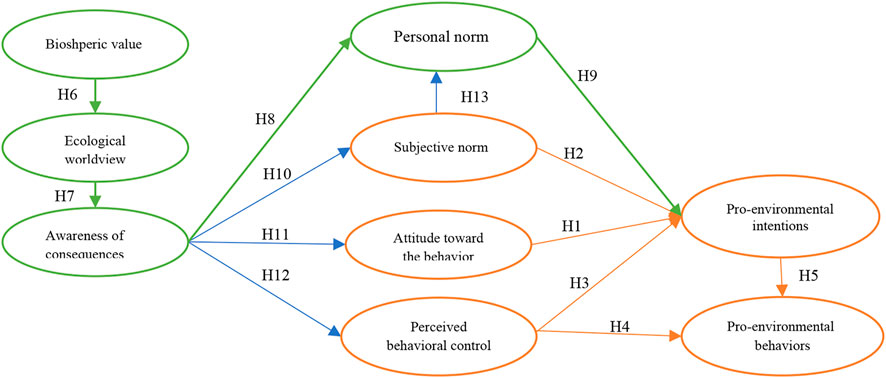
FIGURE 1. Research model.
The literature regarding the relationship between the TPB and the VBN models has gradually converted to a consensus. Awareness of consequences directly affects subjective norms, attitudes, and PBC, and subjective norms influence personal norms directly (Han, 2015; Zhang et al., 2017; Gkargkavouzi et al., 2019; Arkorful et al., 2021). For instance, Zhang et al. (2017) found that high levels of awareness of consequences will increase subjective norms and attitudes toward PEBs. Han (2015) reported that awareness of consequences had a positive effect on attitudes toward the behavior, subjective norms, and PBC. Karimi and Saghaleini (2021a) found that individuals’ perception of social pressure (i.e., subjective norms) had a positive relationship with their sense of obligation to take pro-environmental measures (i.e., personal norms). Finally, Gkargkavouzi et al. (2019) showed that awareness of consequences has a positive effect on subjective norms, attitudes, and PBC. Hence, the following hypotheses were postulated:
H10:Awareness of consequences is positively associated with subjective norms.
H11:Awareness of consequences is positively associated with attitudes.
H12:Awareness of consequences is positively associated with perceived behavioral control.
H13:Subjective norms are positively associated with personal norm.
Methodology
Measurements
All measurement scales were adapted from previously validated measures after carefully analyzing the literature and were accommodated as required based on the research conditions, the pilot study, and the experts’ opinions.
Biospheric value was measured using four items (e.g., “protecting the environment”; “unity with nature”). Respondents were asked to rate the importance of each item as a guiding principle in their lives (on a 5-point Likert scale ranging from 1 = not important at all to 5 = very important). Following the previous studies (Stern et al., 1999; Han, 2015; Gkargkavouzi et al., 2019; Zhang et al., 2020), ecological worldview was measured using five items from New Ecological Paradigm (NEP) scale (Dunlap et al., 2000; Fielding et al., 2008: e.g., “The balance of nature is very delicate and easily upset”). Awareness of consequences was measured using six items (Han, 2015; Li et al., 2018; Bronfman et al., 2015; Gkargkavouzi et al., 2019: e.g., “Pollution will be caused if we do not protect the environment”) and personal norm was measured using six items (Gkargkavouzi et al., 2019; Li et al., 2018; van der Werff et al., 2013: e.g., “I feel morally obliged to act in an environmentally-friendly manner”). These measures were assessed with a five-point Likert-type scale from “completely disagree” 1) to “completely agree” 5).
Attitudes toward PEBs were assessed with five items (example item: “I think it is useful to behave pro-environmentally”), subjective norms with four items (example item: “Most people who are important to me think I should protect the environment.”), perceived behavioral control with seven items (example item:“ It would be easy for me to perform pro-environmental behaviors”), and pro-environmental intentions with six items (example item: “I intend to engage in behaviors to protect the environment”). The measurement items of the TPB constructs were adapted from previous studies (e.g., López-Mosquera and Sánchez, 2012; De Leeuw et al., 2015; Yadav and Pathak, 2016; Gao et al., 2017; Gkargkavouzi et al., 2019; Liao and Yang, 2021). Respondents were asked to express their level of agreement regarding the measurement items of the constructs on a five-point scale ranging from strongly disagree 1) to strongly agree 5).
Following previous studies, past PEBs were used in this study as a proxy for future behavior (Ates, 2020; Dorce et al., 2021; Liao and Yang, 2021). PEBs were measured using 12 items adapted from prior literature (De Leeuw et al., 2015; Jagers et al., 2016; Miao and Wei, 2016; Liao and Yang, 2021; Ortiz and Sarrias, 2022). Respondents were asked to indicate how often they do different PEBs, including household recycling behaviors, water and energy conservation (example items: “I turn off the tap when washing dishes, bathing, brushing teeth, etc.” and “I recycle recyclable materials like newspapers, cans, or bottles”).
Participants and procedure
Cross-sectional data were collected through a structured questionnaire from November to December 2021. The second author completed the questionnaire by face-to-face interviews with rural women. The study population was composed of all rural women aged 18–65 years in Kermanshah County, Western Iran, who amounted to 1700 people. The sample size was estimated at 313 people using Bartlett et al. (2001). The participants were selected with the multi-stage random sampling technique. First, two rural districts were randomly selected from the total of eight rural districts of Kermanshah. Then, five villages were randomly taken from each rural district. Eventually, about 40 questionnaires were filled in each village. Based on our previous experience, we expected the non-response rate to be about 15% as with other rural surveys, so we distributed 400 questionnaires among the rural women to ensure reaching the desired sample size. Finally, after collecting the questionnaires and eliminating the imperfect ones, 332 questionnaires were subjected to analysis. So, the rate of questionnaire return was found to be 83%.
The questionnaire was composed of two sections–one for the respondents’ demographic characteristics and the other for items related to the measurement of the research variables. The face validity of the questionnaire was confirmed by a panel of experts who were specialized in the study subject. Before distributing the final questionnaire, to ensure the clarity and comprehensibility of the choices and develop a better questionnaire, a pilot study was conducted on 30 rural women outside the research sample. Then, the questionnaire was finalized after making some minor changes.
Data analysis
Data and hypotheses were analyzed with the partial least square based structural equation modeling (PLS-SEM) technique using the SmartPLS 3 software package (Ringle et al., 2015). PLS-SEM is capable of managing complex models and calculating a model’s parameters under non-normal conditions. In addition, PLS-SEM is very useful for exploratory research that examines less developed or still developing theories (Hair et al., 2021). So, it is a famous method that is growingly used in different research fields, including research on accounting for PEBs (e.g., Ciocirlan et al., 2020; Liu et al., 2020; Zhang et al., 2020; Karimi and Saghaleini, 2021b; Karimi et al., 2022). Hair et al. (2021) state that PLS-SEM is a causal-predictive technique that is statistically robust irrespective of the sample size. It is a two-stage analysis technique. In the first stage, the measurement model (the outer model) is checked for reliability and validity, while the research hypotheses are tested by the structural model (the inner model) in the second stage (Hair et al., 2021).
Results
Based on the results, the studied rural women were, on average, 33.61 years old with a mean family size of 4.8 people. Most respondents (67%) were married. In terms of the educational level, 15 percent were illiterate, 49.5 percent had under-diploma degrees, 26.5 percent had diplomas, and 9 percent had academic degrees. Most respondents were mainly homemakers, but 95 percent were also occupied by farming, gardening, ranching, and handicrafts, and the remaining 5 percent were employees too. Most rural women acquire their environmental information from radio and TV programs (51%), as well as the Internet and social networks (35%). The mean annual income of the respondents’ families was about 59,620,000 IRR.
Descriptive statistics and correlation matrix are presented in Table 1. The results showed significant positive correlations between any pair of biospheric value, ecological worldview, awareness of consequences, personal norm, subjective norms, attitudes, perceived behavioral control, pro-environmental intentions and behaviors.
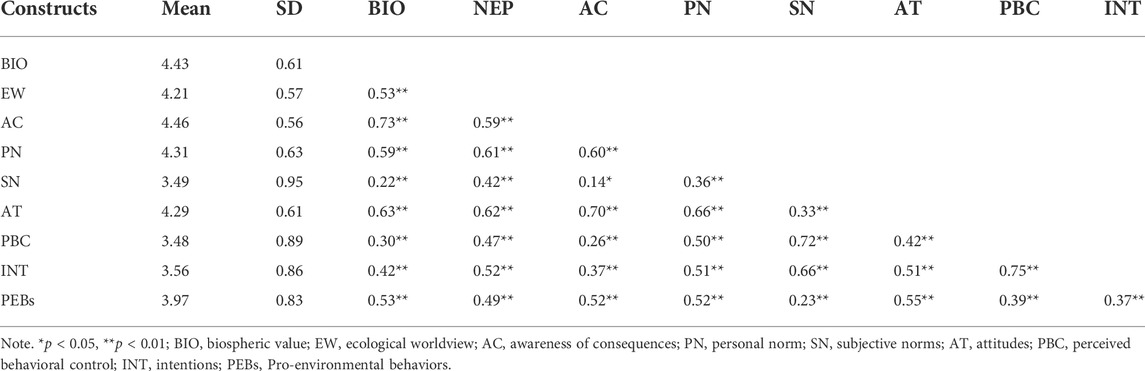
TABLE 1. Descriptive statistics and correlation matrix.
Measurement (outer) model evaluation
As suggested by Hair et al. (2021), convergent validity, reliability indicators, and discriminant validity were used to assess the measurement model. The convergent validity of the constructs was evaluated using both factor loadings and the average variance extracted (AVE). Table 2 shows that the all the items’ factor loadings were well above the recommended threshold level of 0.5 (Hair et al., 2021). In addition, all the AVE values were above or close to 0.50, confirming a sufficient level of convergent validity. The reliability of the constructs was assessed by Cronbach’s alpha and composite reliability (Hair et al., 2021). The results in Table 2 show that the coefficients of Cronbach’s alpha and composite reliability were higher than the threshold level of 0.7 for all constructs, indicating satisfactory internal consistency. The Heterotrait Monotrait correlations (HTMT) approach was employed to assess the divergent validity (Henseler et al., 2015). Based on the results (Table 3), all HTMT values were lower than the acceptable level of 0.85, reflecting the discriminant validity of the research scales (Kline, 2015).
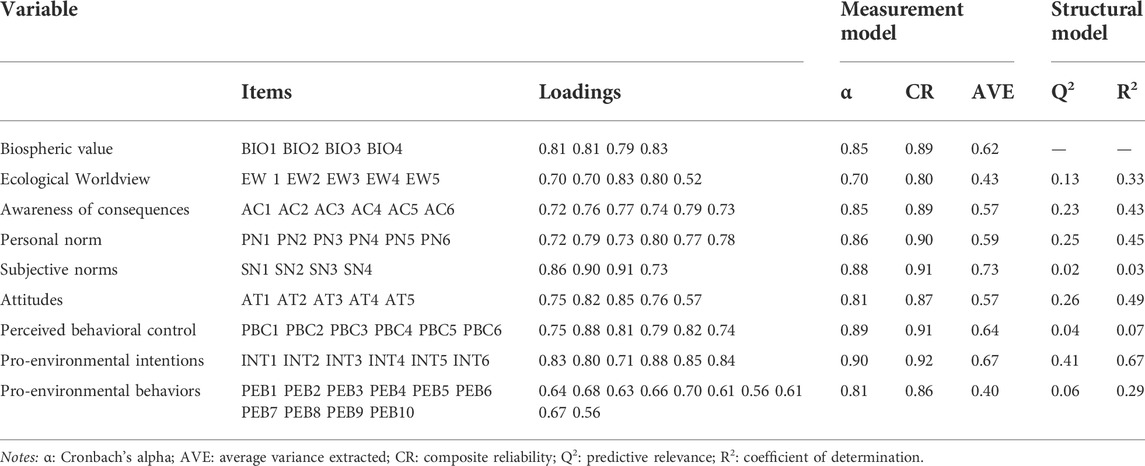
TABLE 2. Assessment results of the measurement and structural models.
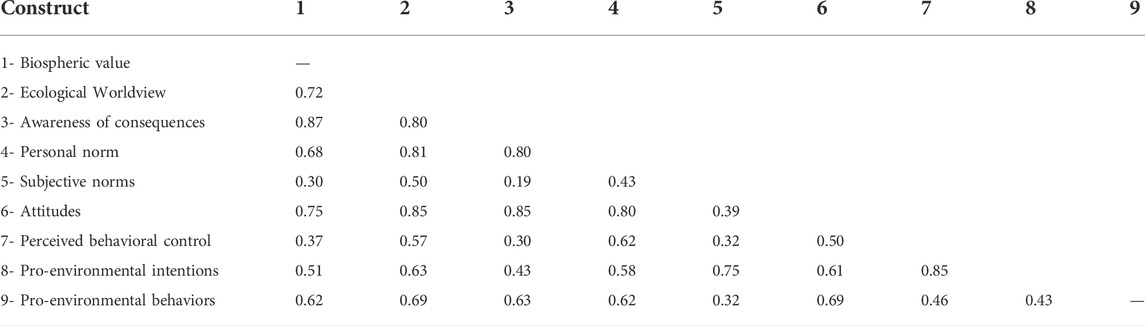
TABLE 3. Heterotrait-monotrait ratio of Correlation (HTMT).
Structural (inner) model evaluation
After confirming the reliability and validity of the measurement model, the structural model was examined. Before assessing the structural model, it was necessary to check the collinearity of the structural model. All of variance inflation factor (VIF) values were less than the suggested value of 5, which indicated that there was no issue of multicollinearity among the endogenous constructs (Hair et al., 2021). Then, the overall fit of the model was measured through the goodness-of-fit (GoF) index (Tenenhaus et al., 2005) and SRMR (standardized root means square residual) (Henseler et al., 2016). The GoF index may range from 0 to 1, where 0.1 represents small, 0.25 represents medium, and 0.36 represents large fit. The calculated GoF index was 0.448, indicating the strong fit of the overall research model. In addition, the PLS results showed that the SRMR value was 0.09, which is smaller than the threshold value of 0.10. Thus, the overall fit of the structural model was confirmed (Hair et al., 2021).
In the next step, the coefficients of determination (R2) were calculated for the endogenous constructs. According to Cohen (1998), the R2 values of 0.19, 0.33, and 0.60 represent weak, moderate, and substantial values in behavioral science research, respectively. The R2 value was 0.29 for PEBs, implying its weak predicting power. However, it was 0.67 for pro-environmental intentions, indicating substantial explanatory power of the model. Furthermore, the Stone-Geisser test revealed that the Q2 values were positive (Table 2), which confirmed the predictive relevance of the model in relation to the endogenous latent variables (Cohen et al., 2013).
The significance of coefficients for the paths assumed in the research model was assessed by the bootstrapping procedure with 5,000 re-samples (Hair et al., 2021). The results showed that 11 hypotheses out of the 12 research hypotheses (i.e., the direct impacts) were significant (Table 4). We first examined the relationships between the TPB variables (H1-H5). As expected, all relationships were found to be significant (Subjective norms →Pro-environmental intentions: β = 0.24, p < 0.01; Attitudes →Pro-environmental intentions: β = 0.21, p < 0.01; PBC →Pro-environmental intentions: β = 0.48, p < 0.01; PBC →PEBs: β = 0.38, p < 0.01; Pro-environmental intentions →PEBs: β = 0.19, p < 0.05). Thus, hypotheses 1, 2, 3, 4, and 5 were supported. Then, the relationships between the variables of the VBN theory were tested (H6-H9). The results revealed positive and significant relationships between biospheric values and ecological view (β = 0.59, p < 0.01), between ecological view and awareness of consequences (β = 0.57, p < 0.01), and between awareness of consequences and personal norms (β = 0.55, p < 0.01). But there was not a significant association between personal norms and intention (β = 0.03, p > 0.05). Therefore, hypotheses 6, 7, and 8 were supported but hypothesis 9 was not supported. The results also indicated that awareness of consequences was significantly related to attitudes (β = 0.70, p < 0.01), subjective norms (β = 0.17, p < 0.01), and PBC (β = 0.27, p < 0.01). Moreover, there was a positive significant association between subjective norms and personal norm (β = 0.31, p < 0.01). Thus, hypotheses 10, 11, 12, and 13 were supported.

TABLE 4. Standardized path coefficients of the structural model and hypotheses testing.
As is seen in Table 5, most indirect effects were positive and significant. The relationship between biospheric value and awareness of consequences was mediated by ecological view (β = 0.37, p < 0.01). In addition, ecological view indirectly influenced subjective norms (β = 0.11, p < 0.01), personal norm (β = 0.36, p < 0.01), attitudes (β = 0.46, p < 0.01), and PBC (β = 0.17, p < 0.01) through awareness of consequences. The relationship between awareness of consequences and personal norm (β = 0.05, p < 0.01) and the relationship between awareness of consequences and intentions (β = 0.04, p < 0.01) were significantly mediated through subjective norms. Further, the relationship between awareness of consequences and intentions was mediated through attitudes (β = 0.15, p < 0.01). PBC also mediated the relationship between awareness of consequences and pro-environmental intentions (β = 0.13, p < 0.01) and PEBs (β = 0.10, p < 0.01). Lastly, the indirect effects of subjective norms (β = 0.05, p < 0.05), attitudes (β = 0.04, p < 0.05), and PBC (β = 0.09, p < 0.05) on PEBs were significantly mediated through pro-environmental intentions. However, the indirect influences of awareness of consequences and subjective norms on PEBs via intentions were not significant. In addition, the indirect effect of personal norm on PEBs through intention was not significant.
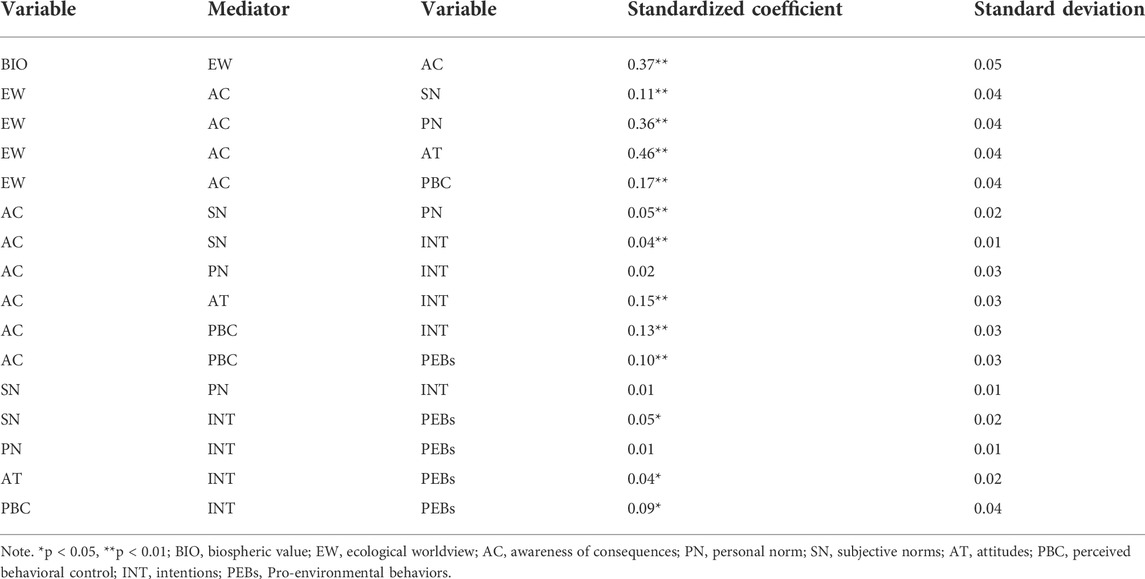
TABLE 5. Results of mediation effect.
Discussion
Despite the importance of rural women and their role in environmental protection, little attention has been paid to the socio-psychological factors influencing their pro-environmental behaviors (PEBs) in previous studies. This research attempted to predict rural women’s PEBs and corresponding determinants based on an integrative model that included the variables from two theoretical frameworks, the theory of planned behavior (TPB) and the value belief norm theory (VBN). Taken together, the results of the current research provide empirical evidence to support the integrative model as argued by several other scholars too (Han, 2015; Zhang et al., 2017; Gkargkavouzi et al., 2019). In particular, the main findings indicated that perceived behavioral control (PBC), subjective norms, and attitudes (i.e., self-interest motive) were more effective in pro-environmental intention and behaviors than values, ecological worldview, awareness of consequences, and personal norms (i.e., moral norms or pro-social motives).
Interestingly, the results showed that personal norms did not influence the intention significantly. This means that moral commitment standards are not so strong among rural Iranian women to significantly persuade them to do PEBs. This is not consistent with previous studies in different pro-environmental contexts that reported that moral norms were more influential on environmental intention and behaviors than self-interest motives (e.g., Han, 2015; Esfandiar et al., 2021). This result can be explained by the norm activation process (Schwartz, 1977) according to which the sense of moral commitment may be deactivated by the denial of responsibility resulting from the anticipation of a personal cost. It is, therefore, reasonable to conclude that rural Iranian women do not feel morally committed to exhibiting these behaviors because of their troubles and the problems of PEBs. It can also be attributed to the fact that rural women do not voluntarily participate in PEBs. This is very interesting in the rural conditions of Iran as a developing country where the standards of living significantly differs from developed countries. Here, people may seek active participation in environmental activities for financial rewards. They show less willingness towards environmental behaviors because no personal benefit is obtained from PEBs. Another likely reason is that the weights of PBC, attitudes, and subjective norms dominate the weight of personal norms in the integrated model since the association between personal norms and pro-environmental intention was found to be significant when the VBN model was examined separately. It should also be noted that moral norms are essentially affected by institutional, socio-economic, and cultural structures (Pekerti and Arli, 2017; Chatzidakis et al., 2021), so they differ among different cultures and countries. This point is recommended to be further studied in future research.
However, some studies in Iran and other developing countries have shown that self-interest motive are more influential on PEBs than pro-social motives and moral norms (e.g., Li et al., 2018; Khan et al., 2019; Karimi and Saghaleini, 2021a). For example, Karimi and Saghaleini (2021a), who studied Iranian ranchers, reported that moral norms did not influence the ranchers’ intention to protect the rangelands significantly, but self-interest motives were found to be more important in this respect. Khan et al. (2019) concluded that moral norms did not have a significant association with the Pakistani families’ intention for recycling. In a study in China, Li et al. (2018) reached similar results. They explain that China is a developing country where most people are still fighting for better life quality. According to Maslow’s hierarchy of needs, spiritual accomplishment gains importance only when the basic needs are satisfied. So, it is not surprising that people in these countries are less influenced by moral norms.
Our results also revealed that among self-interest motives, the rural women’s pro-environmental intention was most strongly influenced by PBC, as has been reported by previous empirical studies too (e.g., Ru et al., 2019; Ates, 2020; Liu et al., 2020). PBC had the strongest effect not only on the rural women’s pro-environmental intention but also on their PEBs. Accordingly, the fact that how much people can effectively control perceived factors or barriers of environmentally-friendly behavior is a key determinant of their intentions and behaviors.
Awareness of consequences had positive and significant associations with subjective and personal norms, attitudes, and PBC. It also had an indirect influence on behavioral intentions, which agrees with previous studies (e.g., Han, 2015; Gkargkavouzi et al., 2019; Esfandiar et al., 2021). According to the results, the relationship between awareness of consequences and attitude was the strongest in the model. The PLS-SEM results also indicated that awareness of consequences was the second most influential factor after PBC on intention (Total effect = 0.34) and PEBs (Total effect = 0.16). This reflects the significance of awareness of consequences in determining personal and social norms, PBC, and especially, the attitudes of rural women and subsequently their environmental intention and behavior. Rural women who are aware of the negative consequences of not performing PEBs and know that avoiding the adoption of a more sustainable lifestyle will have negative implications for the physical environment, themselves, and their society are more intended to have a more positive attitude, stronger social and personal norms, and more behavioral control towards performing PEBs (Zhang et al., 2017; Gkargkavouzi et al., 2019).
It was also revealed that awareness of consequences was affected by the ecological view, which is consistent with previous research (Han, 2015; Karimi, 2019; Wang et al., 2021). In other words, individuals who are more concerned about the environment, animals, and plants are more aware of the negative implications of environmental issues (Stern et al., 1999). The primary motive for PEBs is rooted in the structure of biospheric values because all other relations, which were explained above, required the confirmation of strong biospheric values, which creates an ecological worldview (Steg et al., 2014; Gkargkavouzi et al., 2019).
Theoretical implications
This study makes significant contribution to the existing body of literature on pro-environmental behaviors in several ways. First, the current study made an effort to increase current insights on how well the TPB and the VBN models can be integrated to explain factors influencing PEBs. In addition, this is the first study in which a comprehensive integrated framework is applied to investigate rural women’s PEBs in a developing country. Indeed, this study tested an integrative model of pro-environmental behavior composed of both self-interest and pro-social motives among Iranian rural women. According to the results, the integrative model provides a comprehensive, effective, and useful framework for studying socio-psychological factors that determine rural women’s environmental intention and behavior in a developing country. So, the research provided empirical support for integrating the variables of the TPB and the VBN in PEBs research. Based on the results, the integrative model could account for 67 and 29 percent of the variance in the intention and behavior, respectively, whereas the counterpart figures were 65 and 28 percent for the TPB and 27 and 23 percent for the VBN, respectively. In general, the integration of the TPB and the VBN models improved the research model’s capability of predicting rural women’s PEBs and emphasized the significance of the moral and non-moral determinant factors (i.e., rationality) as was already supported by previous studies (Esfandiar et al., 2021; Zhang et al., 2020; Li and Wu, 2019). However, the importance of motives was different.
Practical implications
Our findings have important practical implications. They can help extension agents, policymakers, and governmental and non-governmental organizations to design and implement effective plans and proper strategies for the improvement of PEBs among rural women. According to the results, attitudes, subjective norms, and PBC are significant factors encouraging intention among rural women. So, the government and non-governmental organizations should develop environmental protection plans that specifically target promoting rural women’s subjective norms, improving their attitudes toward environmental protection, and resolving perceived barriers against PEBs. Given the strong effect of PBC on intention and behavior, arrangements should be made to ensure that PEBs are easy to adopt, especially for women. Furthermore, governments need to incentivize companies to reduce the huge costs of PEBs. For instance, companies are encouraged to reduce the price of environmentally friendly products through tax cuts or exemptions (Liao and Yang, 2021). Also, attempts should be made to increase rural women’s optimal assessment of PEBs. Authorities should train rural women that PEBs are an effective and valuable way for solving environmental problems. All these actions can boost the role of attitudes and PBC on creating intention and pro-environmental behavior among rural women.
The Iranian society is a religious society. This environment has a great potential for using religious values in protecting and improving the environment (Karimi et al., 2022). As stated, subjective norms or social influence positively affect rural women’s pro-environmental intentions. Considering this capacity, religious people, communities, and meetings can refer to the emphasis Islam puts on protecting and preserving the environment in their gatherings and lectures. As a result, they can internalize PEBs in their members and fans through social norms and describe PEBs as signs of religiosity (Karimi et al., 2022). In addition, the media can increase subjective norms and social influence by improving the awareness of rural women’s reference groups, such as family members and friends regarding environmental protection. They can emphasize on the prevalence of environmental behaviors in the society and improve the perceptions of social expectations towards this desirable behavior (Karimi et al., 2021). Indeed, when members of family and society have more information regarding the importance of the environement and its conservation and think that environmental behaviors are prevalent, social pressure on rural women to protect the evironment is likely to increase.
The results suggest that rural women’s personal and subjective norms, attitudes, and PBC can be improved by raising their awareness of the negative effects of environmentally-unfriendly actions. Environmental campaigns and media can improve women’s awareness of the need for environmental conservation for reducing adverse implications and experiencing positive effects (i.e., physical and mental health), can activate the formation of a positive attitude, and can emphasize that conservative behavior is socially desirable and people are responsible for the conservation of the environment, thereby enhancing their behavioral intentions (Han, 2015; Gao et al., 2017). As stated, both traditional and modern media, including TV, radio, the Internet, and social networks, can play a significant role in this context because it has been proven that they are influential on public opinion and affect norms, attitudes, and personal and social beliefs (Wang et al., 2018; Karimi et al., 2021). These media are useful instruments for disseminating knowledge of environmental conservation and PEBs, creating social expectations, and fostering a pro-environmental social climate (Zhang et al., 2017). By enhancing awareness of consequences and social pressure, rural women will be highly likely to develop higher levels of subjective and moral norms, attitudes, and PBC, which will directly enhance their intention and behavior towards environmental conservation. Accordingly, the ecological worldview can be used to improve awareness of consequences. In this regard, extension agents can embed the ecological worldview as an environmental concern in curricula. Campaigns on environmental issues can provoke environmental concerns among rural women and finally motivate a sense of commitment to pro-environmental decision-making. Also, to improve ecological view, focus can be placed on people’s biospheric values. Although the studied statistical sample had relatively strong biospheric values, environmental programs can further reinforce them, especially among younger generations, by increasing their awareness and knowledge of the advantages of environmental measures (Steg, 2016). This will undoubtedly be for the benefit of the environment and society in the long run.
Limitations and future research
The present research had some limitations that should be addressed in further studies. Firstly, this research was a cross-sectional study design. As a result, the use of the structural equations modeling approach does not prove causality between pro-environmental intentions and behaviors. Therefore, it is suggested that future studies take a longitudinal approach, which would provide a greater opportunity for analyzing causality. Secondly, measuring actual behavior in the current research was impossible for practical reasons, so only self-reported past behavior was measured as a proxy for future behavior, which does not guarantee a reliable measure of actual behavior and limits the interpretation of the path leading from intention to behavior in the TPB (Ajzen, 2011). Future research might use the actual PEBs to improve measurement reliability. Thirdly, as the results revealed, the proposed model could capture 67 percent of the variance in pro-environmental intentions whereas it accounted for only 29 percent of the variance in PEBs. In the meantime, PBC was more influential on behavior than intention, but the behavioral intention is usually regarded as a primary determinant of behavior (Ajzen, 1991; Bamberg and Moser, 2007). So, the intention-behavior gap and the barriers between them need to be subject to further research. Fourthly, data collection by the questionnaire was based on self-reporting criteria. The respondents may have overestimated their intention and behavior due to social suitability. Qualitative research can provide a more comprehensive understanding through observation and interviews. Fifthly, although the findings may be generalizable to other similar fields, caution should be exercised when applying them to other fields because data were collected at a certain region. Sixthly, the research successfully used the TPB and the VBN models to explain rural women’s pro-environmental intentions and behaviors. While the capacity of the hybrid model was acceptable for predicting intention and behavior, it failed to account for the total variance in intention and behavior. So, future studies should examine the application of other socio-psychological theories (such as the goal-oriented behavior model, the model of pro-environmental behavior and protection motivation theory) in developing an integrated model. Seventhly, the present research focused on general PEBs to improve the explanatory power of the model. Future studies can focus on certain pro-environmental behavior, e.g., recycling, energy saving, or water conservation. Eventually, the integrated TPB-VBN model accounted for 67 percent of the variance in pro-environmental intention, implying that other factors such as environmental knowledge (Karimi and Saghaleini, 2021a), the use of media (Karimi et al., 2021), altruism, and empathy (Schwartz, 1977) may affect rural women’s environmental intention. These factors can be included in the integrated model to improve its explanatory power.
Data availability statement
The raw data supporting the conclusion of this article will be made available by the authors, without undue reservation.
Ethics statement
Ethical review and approval was not required for the study on human participants in accordance with the local legislation and institutional requirements. The patients/participants provided their written informed consent to participate in this study.
Author contributions
SK and SM. contributed to the design and implementation of the research, to the analysis of the results and to the writing of the manuscript.
Conflict of interest
The authors declare that the research was conducted in the absence of any commercial or financial relationships that could be construed as a potential conflict of interest.
Publisher’s note
All claims expressed in this article are solely those of the authors and do not necessarily represent those of their affiliated organizations, or those of the publisher, the editors and the reviewers. Any product that may be evaluated in this article, or claim that may be made by its manufacturer, is not guaranteed or endorsed by the publisher.
References
Aguilar‐Luzón, M. D. C., García‐Martínez, J. M. Á., Calvo‐Salguero, A., and Salinas, J. M. (2012). Comparative study between the theory of planned behavior and the value–belief–norm model regarding the environment, on Spanish housewives' recycling behavior. J. Appl. Soc. Psychol. 42 (11), 2797–2833. doi:10.1111/j.1559-1816.2012.00962.x
Ajzen, I. (2006). Constructing a theory of planned behavior questionnaire. Available at: http://people. umass.edu/∼aizen/pdf/tpb.measurement.pdf.
Ajzen, I. (1991). The theory of planned behavior. Organ. Behav. Hum. Decis. process. 50 (2), 179–211. doi:10.1016/0749-5978(91)90020-t
Alvarez, M. L. (2013). From unheard screams to powerful voices: A case study of women’s political empowerment in the Philippines. Seoul, Korea: Thesis.
Arkorful, V. E., Lugu, B. K., and Shuliang, Z. (2021). Unearthing mask waste separation behavior in COVID-19 pandemic period: An empirical evidence from Ghana using an integrated theory of planned behavior and norm activation model. Curr. Psychol. 1-16, 1–16. doi:10.1007/s12144-021-02313-2
Ateş, H. (2020). Merging theory of planned behavior and value identity personal norm model to explain pro-environmental behaviors. Sustain. Prod. Consum. 24, 169–180. doi:10.1016/j.spc.2020.07.006
Bamberg, S., and Möser, G. (2007). Twenty years after hines, hungerford, and tomera: A new meta-analysis of psycho-social determinants of pro-environmental behaviour. J. Environ. Psychol. 27 (1), 14–25. doi:10.1016/j.jenvp.2006.12.002
Bartlett, J. E., Kotolike, J. W., and Higgins, C. C. (2001). Organizational research: Determining appropriate sample size in survey research appropriate sample size in survey research. Inf. Technol. Learn. Perform. J. 19 (1), 43–50.
Bronfman, N., Cisternas, P., López-Vázquez, E., Maza, C., and Oyanedel, J. (2015). Understanding attitudes and pro-environmental behaviors in a Chilean community. Sustainability 7, 14133–14152. doi:10.3390/su71014133
Carfora, V., Conner, M., Caso, D., and Catellani, P. (2020). Rational and moral motives to reduce red and processed meat consumption. J. Appl. Soc. Psychol. 50 (12), 744–755. doi:10.1111/jasp.12710
Chatzidakis, A., Shaw, D., and Allen, M. (2021). A psycho-social approach to consumer ethics. J. Consumer Cult. 21 (2), 123–145. doi:10.1177/1469540518773815
Chin, H. C., Choong, W. W., Alwi, S. R. W., and Mohammed, A. H. (2016). Using Theory of Planned Behaviour to explore oil palm smallholder planters' intention to supply oil palm residues. J. Clean. Prod. 126, 428–439. doi:10.1016/j.jclepro.2016.03.042
Ciocirlan, C. E., Gregory‐Smith, D., Manika, D., and Wells, V. (2020). Using values, beliefs, and norms to predict conserving behaviors in organizations. Eur. Manag. Rev. 17 (2), 543–558. doi:10.1111/emre.12388
Cohen, J. (1998). Statistical power analysis for the behavioral sciences. Hillsdale, NJ: ErlbaumRoutledge.
Cohen, L., Manion, L., and Morrison, K. (2013). Research methods in education. Hillsdale, NJ: Routledge.
De Groot, J. I. M., Steg, L., and Dicke, M. (2007). Transportation research trends. New York, NY: NOVA Publishers.Morality and reducing car use: Testing the norm activation model of prosocial behavior
De Groot, J. I., and Steg, L. (2007). Value orientations and environmental beliefs in five countries: Validity of an instrument to measure egoistic, altruistic and biospheric value orientations. J. Cross. Cult. Psychol. 38 (3), 318–332. doi:10.1177/0022022107300278
De Leeuw, A., Valois, P., Ajzen, I., and Schmidt, P. (2015). Using the theory of planned behavior to identify key beliefs underlying pro-environmental behavior in high-school students: Implications for educational interventions. J. Environ. Psychol. 42, 128–138. doi:10.1016/j.jenvp.2015.03.005
Dorce, L. C., da Silva, M. C., Mauad, J. R. C., de Faria Domingues, C. H., and Borges, J. A. R. (2021). Extending the theory of planned behavior to understand consumer purchase behavior for organic vegetables in Brazil: The role of perceived health benefits, perceived sustainability benefits and perceived price. Food Qual. prefer. 91, 104191. doi:10.1016/j.foodqual.2021.104191
Dresner, M., Handelman, C., Braun, S., and Rollwagen-Bollens, G. (2015). Environmental identity, pro-environmental behaviors, and civic engagement of volunteer stewards in Portland area parks. Environ. Educ. Res. 21 (7), 991–1010. doi:10.1080/13504622.2014.964188
Dunlap, R. E. V. L., Liere, K. V., Mertig, A., and Jones, R. E. (2000). Measuring endorsement of the new ecological paradigm: A revised NEP scale. J. Soc. Issues. 56 (3), 425–442. doi:10.1111/0022-4537.00176
Esfandiar, K., Dowling, R., Pearce, J., and Goh, E. (2020). Personal norms and the adoption of pro-environmental binning behaviour in national parks: An integrated structural model approach. J. Sustain. Tour. 28 (1), 10–32. doi:10.1080/09669582.2019.1663203
Esfandiar, K., Dowling, R., Pearce, J., and Goh, E. (2021). What a load of rubbish! the efficacy of theory of planned behaviour and norm activation model in predicting visitors’ binning behaviour in national parks. J. Hosp. Tour. Manag. 46, 304–315. doi:10.1016/j.jhtm.2021.01.001
Fielding, K. S., McDonald, R., and Louis, W. R. (2008). Theory of planned behaviour, identity and intentions to engage in environmental activism. J. Environ. Psychol. 28 (4), 318–326. doi:10.1016/j.jenvp.2008.03.003
Fishbein, M., and Ajzen, I. (1977). Belief, attitude, intention, and behavior: An introduction to theory and research. Contemp. Sociol. 10 (2), 244. doi:10.2307/2065853
Fornara, F., Molinario, E., Scopelliti, M., Bonnes, M., Bonaiuto, F., Cicero, L., et al. (2020). The extended Value-Belief-Norm theory predicts committed action for nature and biodiversity in Europe. Environ. Impact Assess. Rev. 81, 106338. doi:10.1016/j.eiar.2019.106338
Fornara, F., Pattitoni, P., Mura, M., and Strazzera, E. (2016). Predicting intention to improve household energy efficiency: The role of value-belief-norm theory, normative and informational influence, and specific attitude. J. Environ. Psychol. 45, 1–10. doi:10.1016/j.jenvp.2015.11.001
Fu, L., Sun, Z., Zha, L., Liu, F., He, L., Sun, X., et al. (2020). Environmental awareness and pro-environmental behavior within China’s road freight transportation industry: Moderating role of perceived policy effectiveness. J. Clean. Prod. 252, 119796. doi:10.1016/j.jclepro.2019.119796
Gao, L., Wang, S., Li, J., and Li, H. (2017). Application of the extended theory of planned behavior to understand individual’s energy saving behavior in workplaces. Resour. Conserv. Recycl. 127, 107–113. doi:10.1016/j.resconrec.2017.08.030
Ghasemi, M., Badsar, M., Falahati, L., and Karamidehkordi, E. (2021). The mediation effect of rural women empowerment between social factors and environment conservation (combination of empowerment and ecofeminist theories). Environ. Dev. Sustain. 1-23, 13755–13777. doi:10.1007/s10668-021-01237-y
Gkargkavouzi, A., Halkos, G., and Matsiori, S. (2019). Environmental behavior in a private-sphere context: Integrating theories of planned behavior and value belief norm, self-identity and habit. Resour. Conserv. Recycl. 148, 145–156. doi:10.1016/j.resconrec.2019.01.039
Hair, J. F., Hult, G. T. M., Ringle, C. M., and Sarstedt, M. (2021). A primer on partial least squares structural equation modeling (PLS-SEM). New York: Sage publications.
Han, H. (2015). Travelers' pro-environmental behavior in a green lodging context: Converging value-belief-norm theory and the theory of planned behavior. Tour. Manag. 47, 164–177. doi:10.1016/j.tourman.2014.09.014
Harland, P., Staats, H., and Wilke, H. A. (1999). Explaining pro-environmental intention and behavior by personal norms and the Theory of Planned Behavior 1. J. Appl. Soc. Psychol. 29 (12), 2505–2528. doi:10.1111/j.1559-1816.1999.tb00123.x
Henseler, J., Hubona, G., and Ray, P. A. (2016). Using PLS path modeling in new technology research: Updated guidelines. Industrial Manag. Data Syst. 116 (1), 2–20. doi:10.1108/imds-09-2015-0382
Henseler, J., Ringle, C. M., and Sarstedt, M. (2015). A new criterion for assessing discriminant validity in variance-based structural equation modeling. J. Acad. Mark. Sci. 43 (1), 115–135. doi:10.1007/s11747-014-0403-8
Hiratsuka, J., Perlaviciute, G., and Steg, L. (2018). Testing VBN theory in Japan: Relationships between values, beliefs, norms, and acceptability and expected effects of a car pricing policy. Transp. Res. Part F Traffic Psychol. Behav. 53, 74–83. doi:10.1016/j.trf.2017.12.015
Hirsh, J. B. (2010). Personality and environmental concern. J. Environ. Psychol. 30 (2), 245–248. doi:10.1016/j.jenvp.2010.01.004
Jagers, S. C., Martinsson, J., and Matti, S. (2016). The environmental psychology of the ecological citizen: Comparing competing models of pro‐environmental behavior. Soc. Sci. Q. 97 (5), 1005–1022. doi:10.1111/ssqu.12313
Kaiser, F., Hübner, G., and Bogner, F. X. (2006). Contrasting the theory of planned behavior with the value-belief-norm model in explaining conservation behavior. J. Appl. Soc. Psychol. 15, 2150–2170. doi:10.1111/j.1559-1816.2005.tb02213.x
Karimi, S., Liobikienė, G., and Alitavakoli, F. (2022). The effect of religiosity on pro-environmental behavior based on the theory of planned behavior: A cross-sectional study among Iranian rural female facilitators. Front. Psychol. 13, 745019. doi:10.3389/fpsyg.2022.745019
Karimi, S., Liobikienė, G., Saadi, H., and Sepahvand, F. (2021). The influence of media usage on iranian students’ pro-environmental behaviors: An application of the extended theory of planned behavior. Sustainability 13 (15), 8299. doi:10.3390/su13158299
Karimi, S. (2019). Pro-environmental behaviours among agricultural students: An examination of the value-belief-norm theory. J. Agric. Sci. Technol. 21 (2), 249–263. doi:10.2139/ssrn.3398141
Karimi, S., and Saghaleini, A. (2021a). Factors influencing ranchers’ intentions to conserve rangelands through an extended theory of planned behavior. Glob. Ecol. Conserv. 26, e01513. doi:10.1016/j.gecco.2021.e01513
Karimi, S., and Saghaleini, A. (2021b). What drives ranchers’ intention to conserve rangelands: The role of environmental concern (a case study of angoshteh watershed in borujerd county, Iran). J. Rangel. Sci. 11 (4), 419–430.
Khan, F., Ahmed, W., and Najmi, A. (2019). Understanding consumers’ behavior intentions towards dealing with the plastic waste: Perspective of a developing country. Resour. Conserv. Recycl. 142, 49–58. doi:10.1016/j.resconrec.2018.11.020
Khosravi, F., Jha-Thakur, U., and Fischer, T. B. (2019). Evaluation of the environmental impact assessment system in Iran. Environ. Impact Assess. Rev. 74, 63–72. doi:10.1016/j.eiar.2018.10.005
Kline, R. B. (2015). Principles and practice of structural equation modeling. New York City: Guilford publications.
Klöckner, C. A. (2013). A comprehensive model of the psychology of environmental behaviour—a meta-analysis. Glob. Environ. Change 23 (5), 1028–1038. doi:10.1016/j.gloenvcha.2013.05.014
Kollmuss, A., and Agyeman, J. (2002). Mind the gap: Why do people act environmentally and what are the barriers to pro-environmental behavior? Environ. Educ. Res. 8 (3), 239–260. doi:10.1080/13504620220145401
Li, J., Zuo, J., Cai, H., and Zillante, G. (2018). Construction waste reduction behavior of contractor employees: An extended theory of planned behavior model approach. J. Clean. Prod. 172, 1399–1408. doi:10.1016/j.jclepro.2017.10.138
Li, L., Yue, G., Xinquan, G., Yingmei, Y., Hua, C., Jianping, H., et al. (2018). Exploring the residents’ intention to separate MSW in Beijing and understanding the reasons: An explanation by extended VBN theory. Sustain. Cities Soc. 37, 637–648. doi:10.1016/j.scs.2017.11.036
Liao, C., Zhao, D., and Zhang, S. (2018). Psychological and conditional factors influencing staff’s takeaway waste separation intention: An application of the extended theory of planned behavior. Sustain. Cities Soc. 41, 186–194. doi:10.1016/j.scs.2018.05.046
Liao, Y., and Yang, W. (2021). The determinants of different types of private-sphere pro-environmental behaviour: An integrating framework. Environ. Dev. Sustain. 24, 8566–8592. doi:10.1007/s10668-021-01800-7
Lind, H. B., Nordfjærn, T., Jørgensen, S. H., and Rundmo, T. (2015). The value-belief-norm theory, personal norms and sustainable travel mode choice in urban areas. J. Environ. Psychol. 44, 119–125. doi:10.1016/j.jenvp.2015.06.001
Liu, X., Wang, Q., Wei, H. H., Chi, H. L., Ma, Y., and Jian, I. Y. (2020). Psychological and demographic factors affecting household energy-saving intentions: A TPB-based study in northwest China. Sustainability 12 (3), 836. doi:10.3390/su12030836
Liu, X., Wang, Z., Li, W., Li, G., and Zhang, Y. (2019). Mechanisms of public education influencing waste classification willingness of urban residents. Resour. Conserv. Recycl. 149, 381–390. doi:10.1016/j.resconrec.2019.06.001
López-Mosquera, N., and Sánchez, M. (2012). Theory of Planned Behavior and the Value-Belief-Norm Theory explaining willingness to pay for a suburban park. J. Environ. Manage. 113, 251–262. doi:10.1016/j.jenvman.2012.08.029
Mancha, R. M., and Yoder, C. Y. (2015). Cultural antecedents of green behavioral intent: An environmental theory of planned behavior. J. Environ. Psychol. 43, 145–154. doi:10.1016/j.jenvp.2015.06.005
Miao, L., and Wei, W. (2016). Consumers’ pro-environmental behavior and its determinants in the lodging segment. J. Hosp. Tour. Res. 40 (3), 319–338. doi:10.1177/1096348013495699
Naeimi, A., Mehni Raftar, R., and Sobhani, S. (2018). Investigating the rural women's environmental behavior in halilrood watershed area of jiroft county of Iran using theory of planned behavior (TPB). Village Dev. 21 (3), 97–121.
Nguyen, T. N., Lobo, A., and Greenland, S. (2016). Pro-environmental purchase behaviour: The role of consumers' biospheric values. J. Retail. Consumer Serv. 33, 98–108. doi:10.1016/j.jretconser.2016.08.010
Onel, N., and Mukherjee, A. (2015). Understanding environmentally sensitive consumer behaviour: An integrative research perspective. World J. Entrepreneursh. Manag. Sustain. Dev. 11 (1), 2–16. doi:10.1108/wjemsd-07-2014-0021
Ortiz, C., and Sarrias, M. (2022). Estimating the non-pecuniary benefit of engaging in pro-environmental behaviors: Incorporating both heterogeneous preferences and income endogeneity. J. Environ. Manage. 302, 114040. doi:10.1016/j.jenvman.2021.114040
Park, J., and Ha, S. (2014). Understanding consumer recycling behavior: Combining the theory of planned behavior and the norm activation model. Fam. Consum. Sci. Res. J. 42 (3), 278–291. doi:10.1111/fcsr.12061
Pekerti, A. A., and Arli, D. (2017). Do cultural and generational cohorts matter to ideologies and consumer ethics? A comparative study of Australians, Indonesians, and Indonesian migrants in Australia. J. Bus. Ethics 143 (2), 387–404. doi:10.1007/s10551-015-2777-z
Pourghasem, F., Alibaygi, A., and Papzan, A. (2019). Study of environmental knowledge and behaviors of rural women in Kermanshah province. Environ. Res. 10 (19), 205–217.
Rhead, R., Elliot, M., and Upham, P. (2015). Assessing the structure of UK environmental concern and its association with pro-environmental behaviour. J. Environ. Psychol. 43, 175–183. doi:10.1016/j.jenvp.2015.06.002
Ringle, C. M., Wende, S., and Becker, J.-M. (2015). ‘SmartPLS 3’, boenningstedt: SmartPLS GmbH. Available at: http://www.smartpls.com (accessed May 4, 2019).
Rogers, R. W. (1983). “Cognitive and physiological processes in fear-based attitude change: A revised theory of protection motivation,” in Social psychophvsiologyy. A sozircebook. Editors J. Cacioppo, and R. Petty (New York. NY: Guilford), 153–176.
Ru, X., Qin, H., and Wang, S. (2019). Young people’s behaviour intentions towards reducing PM2. 5 in China: Extending the theory of planned behaviour. Resour. Conserv. Recycl. 141, 99–108. doi:10.1016/j.resconrec.2018.10.019
Safa, L., Salahi-Moghaddam, N., and Ganjkhanloo, M. (2018). Pro-environmental behavior modeling of rural people based on value-belief-norm theory (the case of khodabandeh county). Iran. Agric. Ext. Educ. J. 13 (2), 91–108.
Savari, M., and Gharechaee, H. (2020). Application of the extended theory of planned behavior to predict Iranian farmers’ intention for safe use of chemical fertilizers. J. Clean. Prod. 263, 121512. doi:10.1016/j.jclepro.2020.121512
Schwartz, S. H. (1977). Normative influences on altruism. Adv. Exp. Soc. Psychol. 10, 221–279. doi:10.1016/S0065-2601(08)60358-5
Sharma, R., and Gupta, A. (2020). Pro-environmental behaviour among tourists visiting national parks: Application of value-belief-norm theory in an emerging economy context. Asia Pac. J. Tour. Res. 25 (8), 829–840. doi:10.1080/10941665.2020.1774784
Shi, J. G., Xu, K., Si, H., Song, L., and Duan, K. (2021). Investigating intention and behaviour towards sorting household waste in Chinese rural and urban–rural integration areas. J. Clean. Prod. 298, 126827. doi:10.1016/j.jclepro.2021.126827
Si, H., Shi, J. G., Tang, D., Wu, G., and Lan, J. (2020). Understanding intention and behavior toward sustainable usage of bike sharing by extending the theory of planned behavior. Resour. Conserv. Recycl. 152, 104513. doi:10.1016/j.resconrec.2019.104513
Steg, L., Perlaviciute, G., Van der Werff, E., and Lurvink, J. (2014). The significance of hedonic values for environmentally relevant attitudes, preferences, and actions. Environ. Behav. 46 (2), 163–192. doi:10.1177/0013916512454730
Steg, L. (2016). Values, norms, and intrinsic motivation to act pro-environmentally. Annu. Rev. Environ. Resour. 41, 277–292. doi:10.1146/annurev-environ-110615-085947
Steg, L., and Vlek, C. (2009). Encouraging pro-environmental behaviour: An integrative review and research agenda. J. Environ. Psychol. 29, 309–317. doi:10.1016/j.jenvp.2008.10.004
Stern, P. C., Dietz, T., Abel, T., Guagnano, G. A., and Kalof, L. (1999). A value-belief-norm theory of support for social movements: The case of environmentalism. Hum. Ecol. Rev., 81–97.
Stern, P. C., and Dietz, T. (1994). The value basis of environmental concern. J. Soc. Issues 50 (3), 65–84. doi:10.1111/j.1540-4560.1994.tb02420.x
Stern, P. (2000). New environmental theories: Toward a coherent theory of environmentally significant behavior. J. Soc. Issues 56 (3), 407–424. doi:10.1111/0022-4537.00175
Sujata, M., Khor, K. S., Ramayah, T., and Teoh, A. P. (2019). The role of social media on recycling behaviour. Sustain. Prod. Consum. 20, 365–374. doi:10.1016/j.spc.2019.08.005
Tezel, E., and Giritli, H. (2019). Understanding pro-environmental workplace behavior: A comparative study. F. 37 (9-10), 669–683. doi:10.1108/f-12-2017-0134
Ünal, A. B., Steg, L., and Granskaya, J. (2019). To support or not to support, that is the question”. Testing the VBN theory in predicting support for car use reduction policies in Russia. Transp. Res. Part A Policy Pract. 119, 73–81. doi:10.1016/j.tra.2018.10.042
Van der Werff, E., Steg, L., and Keizer, K. (2013). The value of environmental self-identity: The relationship between biospheric values, environmental self-identity and environmental preferences, intentions and behaviour. J. Environ. Psychol. 34, 55–63. doi:10.1016/j.jenvp.2012.12.006
van der Werff, E., and Steg, L. (2016). The psychology of participation and interest in smart energy systems: Comparing the value-belief-norm theory and the value-identity-personal norm model. Energy Res. Soc. Sci. 22, 107–114. doi:10.1016/j.erss.2016.08.022
Wan, C., Shen, G. Q., and Choi, S. (2017). Experiential and instrumental attitudes: Interaction effect of attitude and subjective norm on recycling intention. J. Environ. Psychol. 50, 69–79. doi:10.1016/j.jenvp.2017.02.006
Wang, B., Wang, X., Guo, D., Zhang, B., and Wang, Z. (2018). Analysis of factors influencing residents’ habitual energy-saving behaviour based on NAM and TPB models: Egoism or altruism? Energy Policy 116, 68–77. doi:10.1016/j.enpol.2018.01.055
Wang, L., Wang, Z. X., Zhang, Q., Jebbouri, A., and Wong, P. P. W. (2021). Consumers’ intention to visit green hotels–a goal-framing theory perspective. J. Sustain. Tour., 1–21. doi:10.1080/09669582.2021.1977937
Wang, S., Wang, J., Yang, S., Li, J., and Zhou, K. (2020). From intention to behavior: Comprehending residents’ waste sorting intention and behavior formation process. Waste Manag. 113, 41–50. doi:10.1016/j.wasman.2020.05.031
Wang, Y., Liang, J., Yang, J., Ma, X., Li, X., Wu, J., et al. (2019). Analysis of the environmental behavior of farmers for non-point source pollution control and management: An integration of the theory of planned behavior and the protection motivation theory. J. Environ. Manage. 237, 15–23. doi:10.1016/j.jenvman.2019.02.070
Wendling, Z. A., Emerson, J. W., de Sherbinin, A., and Esty, D. C. (2020). Environmental performance index. New Haven, CT: Yale Center for Environmental Law and Policy, 2020. epi.yale.edu.
Yadav, R., and Pathak, G. S. (2016). Young consumers' intention towards buying green products in a developing nation: Extending the theory of planned behavior. J. Clean. Prod. 135, 732–739. doi:10.1016/j.jclepro.2016.06.120
Zhang, L., Ruiz-Menjivar, J., Luo, B., Liang, Z., and Swisher, M. E. (2020). Predicting climate change mitigation and adaptation behaviors in agricultural production: A comparison of the theory of planned behavior and the value-belief-norm theory. J. Environ. Psychol. 68, 101408. doi:10.1016/j.jenvp.2020.101408
Keywords: pro-environmental behaviors, theory of planned behavior, value-belief-norm theory, rural women, self-interest motive, pro-social motive, integrative model
Citation: Karimi S and Mohammadimehr S (2022) Socio-psychological antecedents of pro-environmental intentions and behaviors among Iranian rural women: An integrative framework. Front. Environ. Sci. 10:979728. doi: 10.3389/fenvs.2022.979728
Received: 27 June 2022; Accepted: 09 September 2022;
Published: 26 September 2022.
Edited by:
Ali Nawaz Khan, Hubei Engineering University, ChinaReviewed by:
Yibin Ao, Chengdu University of Technology, ChinaMaosheng Yang, Renmin University of China, China
Copyright © 2022 Karimi and Mohammadimehr. This is an open-access article distributed under the terms of the Creative Commons Attribution License (CC BY). The use, distribution or reproduction in other forums is permitted, provided the original author(s) and the copyright owner(s) are credited and that the original publication in this journal is cited, in accordance with accepted academic practice. No use, distribution or reproduction is permitted which does not comply with these terms.
*Correspondence: Saeid Karimi, c2thcmltaUBiYXN1LmFjLmly