 Xia Tong
 Yutong Gu
 Ruirui Yang
 Shenrong Gao
- School of Economics and Management, Yangtze River Economic Belt Research Institute, Nantong University, Nantong, China
With the expanding scale of aquatic product imports, safety issues have arisen. Among them, the lack of supervision by government agencies, illegal importation by unscrupulous enterprises and the lack of regulatory bodies such as consumers are major reasons for the occurrence of unsafe imported aquatic products. Therefore, this paper adopts a two-by-two static game model between government agencies and importers, importers and consumers, and a three-way sequential dynamic game model between government agencies, importers and consumers to analyze the causes of quality and safety problems of imported aquatic products in China. The results show that when the safety problems of imported fishery products occur, consumers choose to report importers when the compensation they receive due to reporting increases or when the cost of reporting is reduced by not reporting; government agencies choose to strictly regulate importers when the cost of regulation is reduced by loose regulation and reputation loss increases, or when the revenue from fines obtained by strict regulation increases. It is further verified through empirical evidence that both government agency regulation and consumer monitoring have positive effects on importers’ self-regulation. Finally, countermeasures to ensure the quality and safety of imported aquatic products in China are proposed.
1 Introduction
Aquatic products are rich in high-quality animal protein, which is important for people’s health. As China’s economy continues to grow and living standards improve, people are pursuing a more nutritious and balanced diet, and fish products are becoming an increasingly popular dining choice for most Chinese consumers. According to the National Bureau of Statistics of China, the per capita consumption of aquatic products by urban and rural residents in China reached 13.9 kg in 2020. The proportion of Chinese residents consuming aquatic products has increased from 23% in the past to nearly 30% today. The China Food and Nutrition Development Programme (2021-2035), jointly led by the Ministry of Agriculture and Rural Development and the National Health Development Commission, predicts that the average consumption demand for aquatic products will exceed 32 kg in 2035. The growing demand for aquatic products is making it difficult to meet the supply of domestic aquatic products, and imported aquatic products are gaining more and more popularity among Chinese consumers due to their more delicious taste and richer nutrition (Zhang and Ma, 2022).
As the scale of aquatic products imports continues to expand, safety issues also arise. In particular, during COVID-19, a series of unsafe imported aquatic products sounded the alarm for the relevant authorities. Beijing Xinfadi wholesale market of imported salmon, imported frozen shrimp from Ecuador and other countries and several imported aquatic products tested positive for COVID-19. The lack of supervision by government agencies, illegal importation by enterprises and consumer rights are major reasons for the occurrence of unsafe incidents of imported aquatic products. Therefore, this paper analyzes the government agencies, importers and consumers in the safety of imported aquatic products in China, reveals the interest relationship between the regulatory bodies of imported aquatic products safety through the game model, and explores the causes of food safety problems. At the same time, we collected data through a questionnaire survey and used structural equation model to analyze the relationship between regulatory bodies and the influencing factors, so as to provide countermeasure suggestions for ensuring the safety of imported aquatic products in China.
The innovation and contribution of this research are as follows:
A combination of theoretical and empirical approaches is used to study the safety regulation of imported aquatic products in China. The theoretical study uses a game model to analyze the strategic choices among the subjects involved in the regulation of imported aquatic safety in China, and the empirical analysis uses a structural equation model to study the causes of imported aquatic safety problems from both qualitative and quantitative perspectives. In review, game model and structural equation model have been widely used to study food safety regulation, but the literature combining the two is scarce, especially not applied to the practical study of the regulatory behavior of relevant subjects in the imported aquatic safety system. Using game model and structural equation model, we can provide a clearer understanding of the inter-subject relationship and comprehensively investigate the causes of the quality insecurity of imported aquatic products in China, especially for the formulation of policies to ensure the safety of imported aquatic products in China.
The remainder of the article is organized as follows. Section 2 reviews the relevant literature. In Section 3, Section 4, we present model assumptions and results. Section 5 includes implications of the research. Section 6 concludes and puts forward proposals.
2 Related literature
The use of game theory to analyze food safety issues occurred early in foreign research. Henson and Caswell (1999) argued that game analysis among food safety stakeholders determines the development of food safety-related policies. Starbird and Amanor-Boadu (2007) showed that companies make decisions based on food traceability systems by means of backward induction. In a study of the factors influencing food safety, D Martínez-Simarro et al. (2010) used a game model to analyze the effect of price on product quality, namely, at what price level the product will gradually show the trend of quality. Bekker and Jooste (2011) analyzed the behavior of farmers, distributors, policymakers and regulators in the meat supply chain based on game theory. Cen and Zhuang (2017) modeled a game between government departments, distributors and farmers to study the use of chemicals in agricultural products. Ma Z et al. (2021) constructed a three-way evolutionary game model between government regulators, e-commerce retailers and manufacturers to analyze the evolutionary process between e-commerce retailers and manufacturers under changing government regulations.
In China, Chao (2016) also used the same model to analyze the behavioral motivations of government and enterprises in food safety regulation under complete and incomplete information. Chang et al. (2020) constructed a tripartite evolutionary game model of food enterprises, consumers and regulators. They studied food enterprises’ breach of trust in terms of game equilibrium based on the size of the profit of the enterprises’ breach of trust. Zhao and Tang (2020) analyzed the game relationship between government agencies, enterprises and social organizations involved in food safety regulation, and proposed the necessity of collaborative governance among multiple actors for food safety regulation. Cao et al. (2021) investigated the optimal strategy choice between government agency regulation and safe production of food companies under the involvement of online platforms for online food safety in China. Yang et al. (2022) demonstrated that food safety stakeholder behavioral decisions are the result of mutual game play among subjects, arguing that the benefits of non-compliance by food companies, the intensity of government penalties, and government rewards to the public are key factors that influence the behavioral choices of each participating subject.
Concerning the safety of imported aquatic products, there is relatively little foreign research. Liu et al. (2012) highlights that the effectiveness of imported aquatic products safety systems is unlikely to be guaranteed through increased government regulation alone, and that it is necessary to encourage the development of regulatory systems involving the private sector. Freitas et al. (2020) pointed out that markets, consumer preferences and food safety concerns are affecting the aquatic products trade industry, forcing the upgrading of quality management systems. Godoy et al. (2021) illustrated how to promote the sustainability of the global fresh frozen fish trade and aquaculture industry during COVID-19. Yin et al. (2022) measured consumer preferences for different aquatic product safety information attributes (organic certification, traceability information, brands and geographical indications) to enable more effective aquatic product safety information delivery by aquatic product producers. In China, Wang et al. (2021) combined blockchain technology with customs supervision to improve the quality of imported aquatic products and the traceability management system in China. Based on the context of COVID-19. Zhao et al. (2021) researched the main factors for the reduction in the scale of China’s imported aquatic products in 2020 during the COVID-19 and made observations to meet the people’s demand for a better life and to stabilize market supply. Liu et al. (2021) argued that the epidemic has adversely affected major countries in the world in terms of aquatic product production and import or export countries, and also revealed that there are still some loopholes and blind spots in the safe supply and quality supervision of aquatic products in China. He et al. (2021) suggested the construction of an aquatic product quality and safety standard system that is in line with international standards. Lu et al. (2021) argued that the current import structure of Chinese aquatic products has been in the stage of transformation and upgrading, and the existing diversified channel guarantee capacity of Chinese aquatic products import should be improved to cope with potential risks.
In summary, some scholars have analyzed the equilibrium strategy and proposed countermeasures to ensure food quality and safety by constructing a game model among food safety subjects from several perspectives. Other scholars have conducted studies on the safety regulation of imported aquatic products and proposed measures to promote the sustainable development of aquatic product import trade. The quality and safety of aquatic products has always been an important issue in the quality and safety of agricultural products in various countries, especially the study of imported aquatic products quality and safety regulation, which is a gap in research perspectives. Game model and structural equation model have been widely used in food safety regulation, but the combination of them has rarely been studied. It has not been applied to the practical study of the regulatory behavior of relevant subjects in the imported aquatic product safety system, which is the gap of research methods. Based on previous theoretical research results, this paper applies game theory to the field of imported aquatic products safety in China, analyzes the quality and safety of imported aquatic products in China by constructing a game model, studies the causes of imported aquatic products safety problems, and provides useful countermeasure suggestions to promote the healthy development of China’s imported aquatic products trade industry.
3 Construction and analysis of game model
3.1 Model assumptions
The relevant bodies involved in the regulatory system for the safety of imported aquatic products in China are government agencies, importers and consumers. Government agencies are the main regulators of the safety of imported aquatic products, including customs agencies responsible for entry safety and market supervision authorities responsible for the safety of domestic market circulation; Importers are the key entities responsible for the safety of imported aquatic products and the main duty bearers, subject to the supervision of government agencies and consumers, as well as self-monitoring to ensure the safety of the aquatic products they sell; Except for the direct demanders of imported aquatic products, consumers are the direct bearers of the safety. Also, they play a role in monitoring the safety of the products. Government agencies, importers and consumers form a constraint relationship (Figure 1) and are jointly responsible for the safety of imported aquatic products. The following basic assumptions are made based on the safety monitoring behavior of the three main actors of imported aquatic products in China.
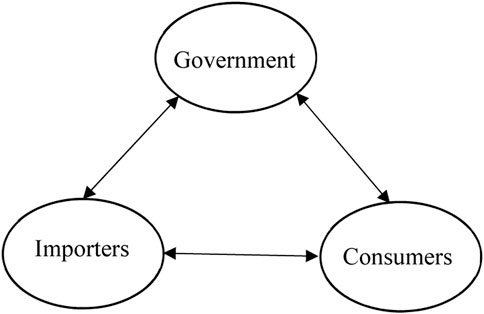
FIGURE 1. The triangular relationship between government agencies, importers and consumers.
Government agencies, importers and consumers are all rational agents. In this paper, we assume that the principle of maximizing the benefits of government agencies is to save the cost of regulation and reduce the loss of reputation. We do not directly assume that social welfare is maximized because there are many evaluation indicators of social welfare maximization, and this paper mainly discusses from the perspective of regulation. Therefore, government agencies choose two strategies: strict regulation or loose regulation. Besides, we assume that importers choose two strategies of regulated imports or unregulated imports according to the profit maximization principle, while consumers choose two strategies of reporting or not reporting according to the utility maximization principle. The utility maximization principle here specifically means that consumers decide on the optimal strategy by comparing the health loss, the cost of reporting, and the compensation from the unsafe event.
3.2 Analysis of the game between government agencies, importers and consumers
The two-by-two static game models between government agencies and importers, and between importers and consumers are available in the Supplementary Material. The following section constructs a three-way sequential dynamic game model between importers, government agencies and consumers, which are the main actors involved in the regulation of imported aquatic products. It is assumed that the level of regulation of imported aquatic products by government agencies is given, which is in line with the current level of regulation of imported aquatic products by government agencies in China. The three-way sequential dynamic game model is used to analyze the strategic choices of importers, government agencies and consumers. The sequence is as follows: firstly, importers decide to choose whether regulated imports or unregulated imports; secondly, government agencies decide whether to strictly regulate or not in response to the choice of importers; and finally, consumers choose to report or not. The game tree is used to demonstrate the specific decision process in Figure 2, where the importer corresponds to I, the government agency to G and the consumer to C.
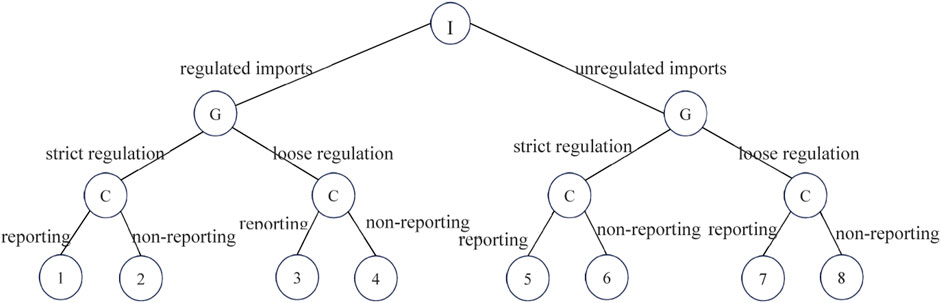
FIGURE 2. Sequential game model.
The game tree shown in Figure 2 has eight combinatorial strategy choices, denoted by nodes ①-⑧. The vector of benefits at each node is expressed as importer, government agency, consumer, as shown in Table 1.
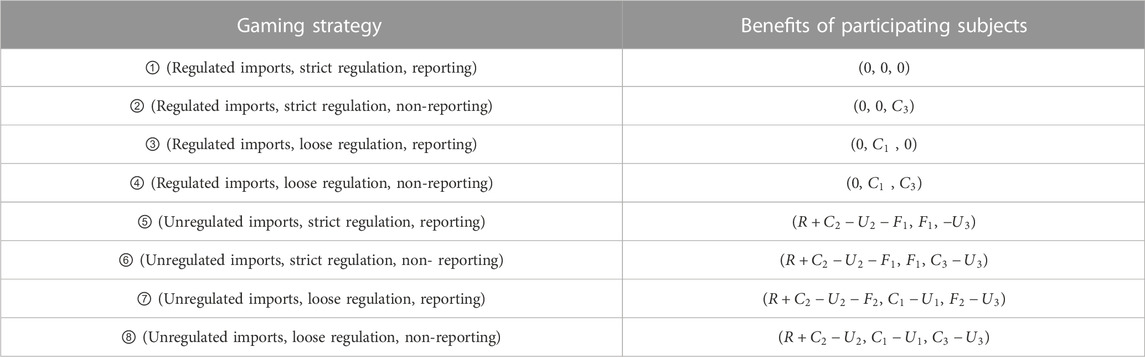
TABLE 1. Importer-government agency-consumer benefits.
The equilibrium strategies of the three-party game model are analyzed below using the inverse induction method. First, the analysis starts with the consumer strategy, comparing the consumer gains at each node in Table 1 according to the utility maximization principle. Choose ② among ① and ②, ④ among ③ and ④, ⑥ among ⑤ and ⑥, and compare ⑦ and ⑧. If
(1) When
(2) When
(3) When
(4) When
In conclusion, consumers choose to report when the cost savings from non-reporting decreases; consumers choose to report when the compensation they receive for reporting increases; government agencies choose to regulate strictly when the regulatory cost savings from loose regulation decreases and the loss of reputation increases; government agencies choose to regulate strictly when the profits from fines received from strict regulation increase; and importers choose regulated imports when the additional revenue gained and import cost savings from unregulated imports decrease, and when future revenue losses, fines paid to government agencies and compensation paid to consumers increase.
4 Empirical analysis of safety regulation of imported aquatic products
Through the game analysis between the subjects of imported aquatic product safety regulation in China above, it is concluded that the strategic choice of government agencies to strictly regulate, importers to regulate imports and consumers to report in order to promote the safety of imported aquatic products is influenced by a variety of factors. At the same time, government agencies and importers promote each other and constrain each other’s behavior of imported aquatic product safety regulation, which jointly determine the quality and safety of imported aquatic products. In order to verify the conclusions of the game model in the previous chapter, this section will use the structural equation model to quantitatively study the intrinsic role and mutual influence degree of government agencies, importers and consumers in the regulation of imported aquatic products safety, and obtain regulatory data through questionnaire distribution to deeply analyze the causes of imported aquatic products safety problem. A total of 519 valid questionnaires were obtained and the analysis is as follows.
4.1 Individual characteristics of respondents
It can be seen that among the respondents who participated in this questionnaire (Table 2), 63.6% were female, which was slightly higher than that of male; 365 respondents were aged 36-50, accounting for 70.3%; the percentage of respondents with education in high school or junior college or below was smaller, 20.7%, while the percentage of respondents with education in bachelor or college was the largest, 46.8%, and the second largest, 32.6%, was postgraduate; respondents mainly came from East China, including Shandong, Jiangsu, Anhui, Zhejiang, Fujian and Shanghai, with a total of 396 people, accounting for 76.3%; the majority of respondents had a per capita monthly household income of RMB 5,000-10,000, with 204 people, accounting for 39.3%. Most of East China is near the sea, consumers in this region prefer to buy seafood, and the highly educated group focuses on the nutrition and quality of food, which is one of the main consumers of imported aquatic products. At present, Chinese families are still mainly related to women cooking, and the proportion of female consumers buying imported aquatic products is usually higher than men. Therefore, the group structure of the respondents is in line with the actual situation of imported aquatic products consumers in China, and the survey sample is representative.
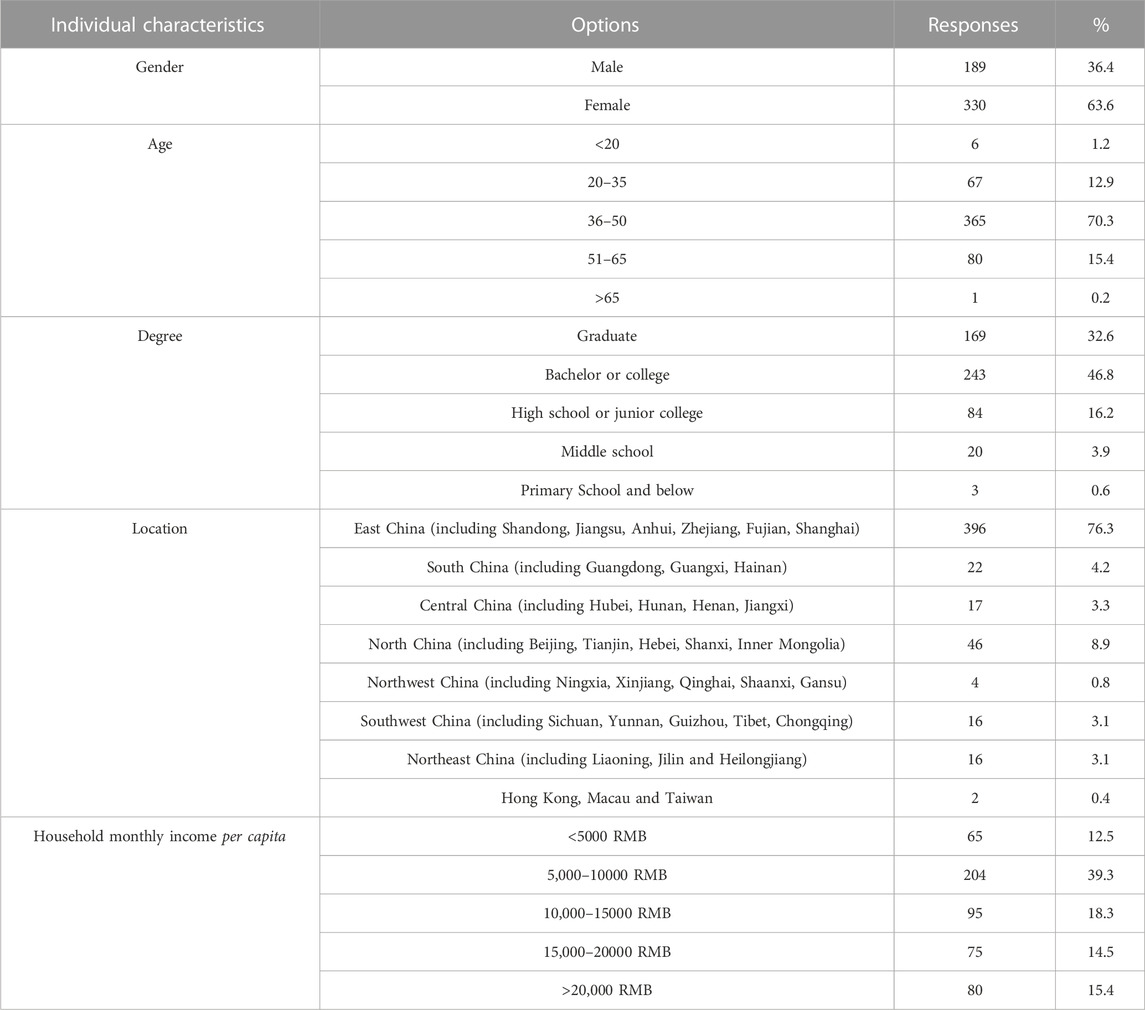
TABLE 2. Individual characteristics of respondents.
4.2 Model assumptions
Based on the above two-two game analysis between government agencies and importers, two-two game analysis between importers and consumers, and three-way game analysis between government agencies, importers and consumers, the following hypotheses to test are proposed between government agency regulation, importer self-regulation, consumer monitoring and imported fish safety in the structural equation model.
Hypothesis 1:. Government agency regulation has a positive effect on self-regulation of importers.
Hypothesis 2:. Consumer monitoring has a positive impact on importer self-regulation.
Hypothesis 3:. Importer self-regulation has a positive impact on the safety of imported aquatic products.
Hypothesis 4:. Government agencies have a positive impact on the safety of imported aquatic products.
4.3 Structural equation modeling
Linear SEM estimates two kinds of models: a measurement model and a structural model. A measurement model specifies some number of latent, unmeasured variables or factors, each with a specified number of measured indicators or variables. A structural model includes a set of paths (regression coefficients) or correlations between the various measured and unmeasured variables in the overall model.
A structural model can be expressed as Eq. 1, where Y (latent variable) represents importer self-regulation or imported aquatic products, X represents government regulation or consumer monitoring. θ is the coefficient of action between latent variables, i.e., the direction and degree of action of latent variables on other latent variables, e is the residual term, reflecting the part that cannot be explained between latent variables. Eqs 2, 3 are the measurement equation, where
In this paper, the measurement model and the structural model is displayed in Figure 3. The circles represent unobserved, latent variables, and the squares represent the observed variables. All analyses were conducted by using the SPSS 26.0 for Windows computer package and Amos 26.0. The model estimation was performed using the great likelihood method, and the estimation results are shown in the Table 3. The standardized coefficients in the table can be used directly to compare the degree of influence between different variables. For example, the standardized coefficient of government agency regulation on importer self-regulation is 0.650, while the standardized coefficient of consumer monitoring on importer self-regulation is 0.121, which indicates that the degree of influence of government agency regulation on importer self-regulation is greater than the degree of influence of consumer monitoring on importer self-regulation. All paths reach the statistical significance level, while observing the standardized path coefficients among the latent variables is not difficult to find: the standardized coefficient of government agency regulation on importer self-regulation is positive, indicating that government agency regulation on importer self-regulation is a positive influence, Hypothesis 1 holds; The standardized coefficient of consumer monitoring on importer self-regulation is positive, indicating that consumer monitoring has a positive effect on importer self-regulation, assuming that Hypothesis 2 holds; The standardized coefficient of self-regulation of importers on the safety of imported fish products is positive, indicating that self-regulation of importers on the safety of imported fish products is positive, and the Hypothesis 3 is valid; The standardized coefficient of government agency regulation on the safety of imported fish products is positive, indicating that government agency regulation on the safety of imported fish products has a positive impact, and the Hypothesis 4 is valid.
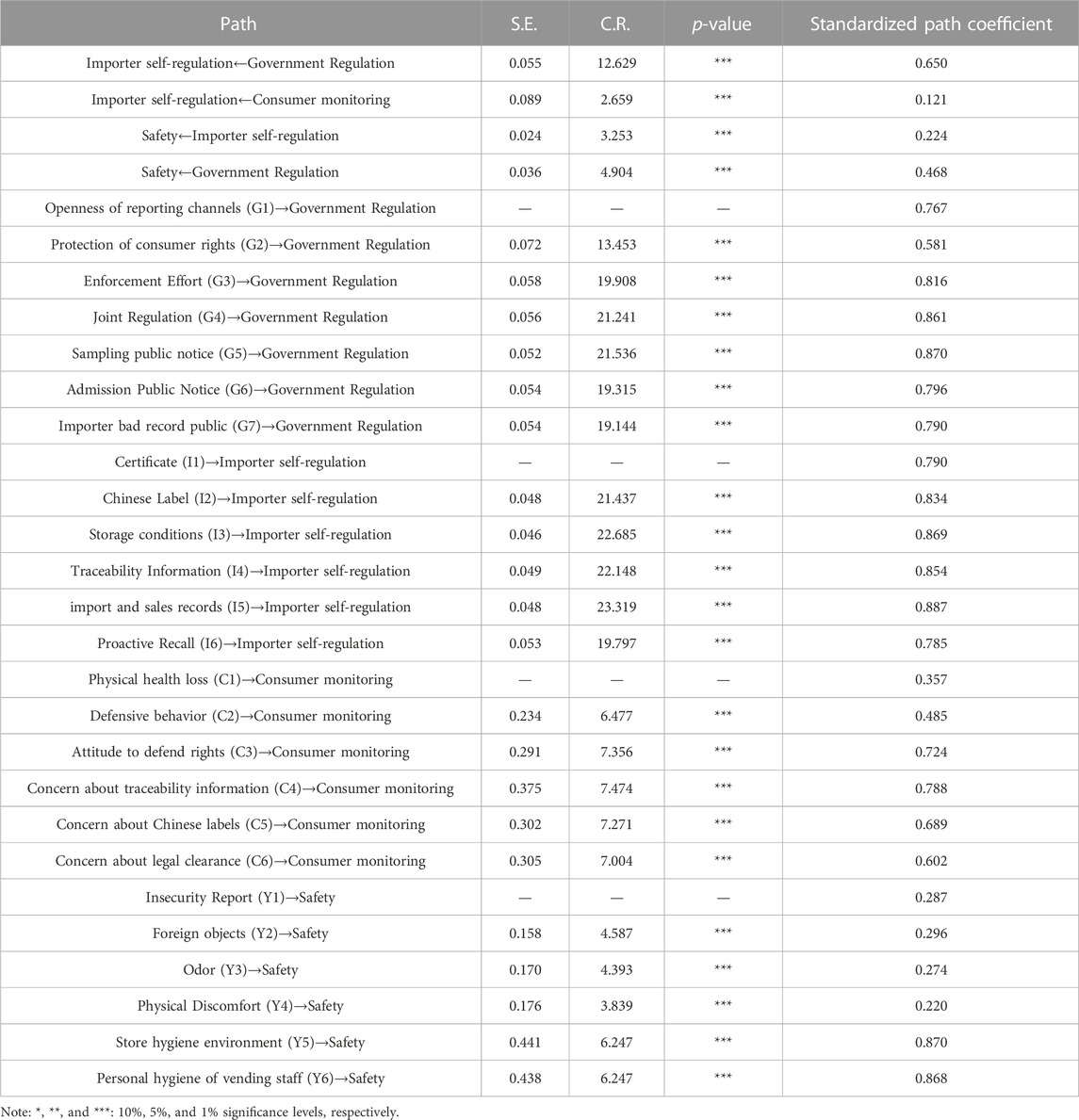
TABLE 3. Coefficient estimation results of SEM.
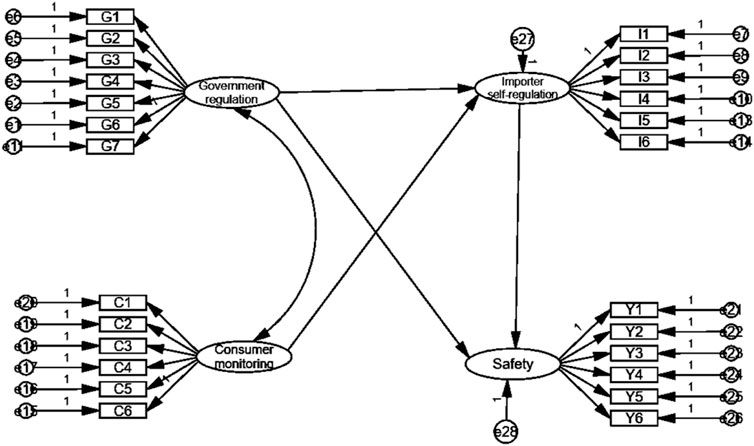
FIGURE 3. SEM path diagram.
The assessment of the model fit is also revealed by the goodness of fit index (GFI) and other statistics such as the NFI and CFI. It is generally recognized that the GFI, NFI and GFI close or to above 0.90 indicate a good model fit. Parsimonious goodness-of-fit index (PGFI) above 0.5 indicates a good model. The smaller the Consistent Akaike information criterion (CAIC), the better (Table 4).

TABLE 4. Assessment of the model fit.
4.4 Analysis of structural equation model estimation results
The direct, indirect and total effects among variables are generally used to analyze the results of structural equation model estimation. The standardized coefficients and coefficient products among latent variables are used to represent the direct and indirect effects respectively. The sum of the direct and indirect effects is the total effect.
As can be seen from Table 5; Figure 4: the direct effect of government agency regulation and consumer supervision on importer self-regulation is 0.650 and 0.121 respectively, which means that for every 1 unit increase in the level of government agency regulation and consumer supervision, the level of importer self-regulation will increase by 0.650 and 0.121 units respectively. Therefore, strict government regulation will lead to increased self-regulation by importers. The direct effect of importer self-regulation and government agency supervision on the safety of imported fish products is 0.224 and 0.468, that is, the level of importer self-regulation and government agency supervision for each unit increases, the level of safety of imported fish products will be increased by 0.224 and 0.468 units respectively. The indirect effect of consumer supervision on the safety of imported fishery products is 0.027, that is, for every 1 unit increase in the level of consumer supervision, the level of safety of imported fishery products will be indirectly increased by 0.027 units through the effect of self-regulation of importers. The above illustrates the important role of government agencies and self-regulation of importers in the regulation of imported aquatic product safety. On the one hand, the importer is directly responsible for the safety of imported aquatic products. On the other hand, the importer plays an intermediate role as a bridge between government agencies and consumers to promote the safety of imported aquatic products. In terms of the strength of the effect, the role of government agencies to regulate importers themselves is more effective. At the same time government agencies in addition to promoting the safety of imported fish through the regulation of importers, its regulatory measures can also play a direct role in the safety of imported aquatic products.
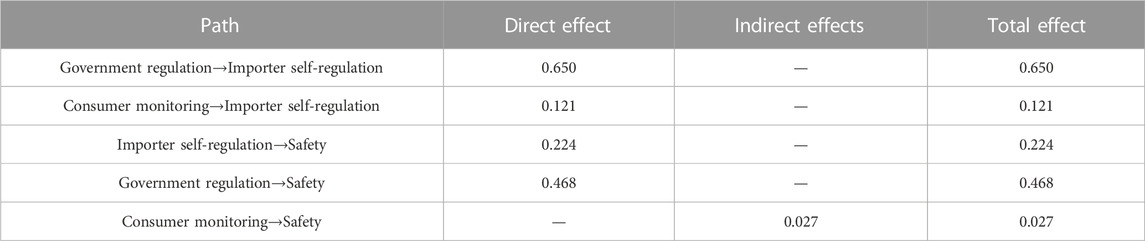
TABLE 5. Direct, indirect, and total effects among latent variables.
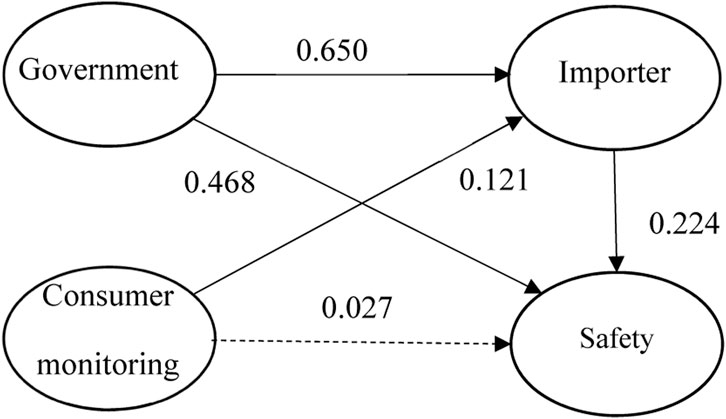
FIGURE 4. Effect diagram.
5 Implications of the research
5.1 Theory implications
Although the issue of imported food safety is receiving more and more attention, scholar have conducted many relevant studies. However, fewer are based on behavioral analysis of relevant subjects in the food safety supply chain, while even fewer use standardized role coefficients to quantitatively evaluate the responsible subjects for food safety problems. In this paper, we analyze the behavioral strategies of imported aquatic product safety regulatory bodies from the perspective of government agencies, importers and consumers using a game model, and then establish a structural equation model for empirical analysis to quantitatively study the relationship between imported aquatic product safety regulatory bodies and the factors influencing the implementation of effective regulatory behavior, and accordingly propose a series of policy recommendations to ensure the safety of imported aquatic products. On the one hand, it can enrich the application of game model and structural equation model in the field of imported aquatic products safety, and on the other hand, it can provide theoretical basis for the improvement of China’s imported aquatic products safety regulatory policy system.
5.2 Practical implications
Imported aquatic products as a consumer product increasingly purchased by residents, to ensure the quality and safety of imported aquatic products is of great importance to the improvement of public diet quality. In order to solve the quality and safety problems of imported aquatic products in China and minimize the safety risks of imported aquatic products, it is necessary to study the regulatory effectiveness of different stakeholders on the quality and safety of imported aquatic products in terms of the relevant subjects involved. In this paper, we analyze the behavioral strategies of stakeholders such as government agencies, importers and consumers using game theory and empirical research to propose policy recommendations to promote the safety of imported aquatic products in China, with respect to the current situation of imported aquatic products safety in China. This study has important practical significance for government agencies to strictly regulate, importers to strengthen the awareness of the first responsible body, and consumers to improve food safety and rights awareness. It also has certain reference value for the implementation of multi-governance to promote the healthy development of China’s imported aquatic products industry.
6 Conclusion and countermeasures
6.1 Conclusion
6.1.1 Game analysis result
Firstly, consumers choose to report when the cost of reporting saved by consumers not reporting decreases. Consumers choose to report when the compensation they receive due to reporting increases. Secondly, government agencies choose to strictly regulate when the cost of regulation saved by government agencies deregulating decreases and the loss of reputation increases. Government agencies choose to strictly regulate when the fines obtained by strictly regulating increase. Thirdly, importers choose regulate imports when the additional revenue gained and import cost savings from unregulated imports are reduced, and when future revenue losses, fines paid to government agencies, and compensation paid to consumers are increased. In a previous study, Yang et al. (2022) also argued that food enterprises’ revenue from violations, the intensity of government penalties and government rewards to the public are the key factors affecting the equilibrium strategy of the three parties. They find that food enterprises tend to provide safe food when the revenue from violations by providing unsafe food is less than the intensity of government penalties and when government rewards to the public are less than the cost of public participation in regulation.
6.1.2 Empirical analysis results
From the results of the structural model estimation, the plot of the effect between latent variables shows the important role of government agencies and importers in the regulation of imported aquatic products. Firstly, on the one hand, government agencies play a direct role in the safety of imported aquatic products, with a direct effect coefficient of 0.468. On the other hand, they indirectly promote the safety of imported aquatic products by regulating the behavior of importers, and the effectiveness of government agencies in regulating importers themselves is stronger. As the main body responsible for the safety of imported aquatic products, importers play a direct role in the safety of imported aquatic products, the direct effect coefficient is 0.224. For consumers, the positive impact on the safety of imported aquatic products is mainly indirect through the intermediate bridge role of importers, with an indirect effect coefficient of 0.027.
6.2 Countermeasures
It is difficult to achieve “zero risk” of imported aquatic products safety, but it is possible to reduce the occurrence of unsafe imported aquatic products by optimizing the regulatory system to prevent safety hazards and reduce safety risks, and a perfect supervision and management system of imported aquatic products safety should be able to make the relevant actors tend to make good choices. Given the existing problems of China’s existing regulatory mechanism for imported aquatic products safety, combined with the game behavior between government agencies, importers and consumers, the specific policy recommendations of the major regulatory bodies to optimize the game equilibrium solution.
Firstly, Government must improve strict regulatory effectiveness. As a comprehensive public utility, the regulation of imported aquatic products safety involves many government departments, such as fisheries, catering and trade. The different division of labor is likely to result in overlapping functions and blind spots between different departments, which greatly reduces the efficiency of governance. Only by strengthening inter-departmental coordination and cooperation, avoiding the fragmentation of departments and stopgap measures, can the effectiveness of government regulation be improved. The implementation of the “single window” and “customs and inspection” policies fully reflects the orderly coordination of inter-departmental work by the country. Besides, it is necessary to strengthen the constraints on the power of government agencies that enjoy the right to regulate food, such as customs, by making relevant laws and regulations to clearly define the responsibility of government departments for the regulation of imported aquatic products, and at the same time establish a system of accountability to deal with illegal regulatory practices, so as to avoid the abuse of power induced by interests and the opening of the “entry” channel for illegal enterprises.
Secondly, it is of great necessity to accelerate the implementation of the main responsibility of enterprises. A key reason for the frequent occurrence of quality and safety problems of imported aquatic products is that importers disregard laws and regulations and market demand due to corporate profits. Government departments should make full use of the macro-regulatory role of the law to monitor the entry and operation of importers to the large extent. Through the development of laws and regulations and the establishment of a corresponding reward and punishment system to help enterprises to achieve legal business purposes, to promote the healthy development of China’s aquatic products trade industry. Fish importers should also raise awareness of their social responsibility under the basic norms of honesty, trustworthiness and compliance, and actively provide product information related to the quality and safety of imported aquatic products in China, in order to increase buyers’ awareness of information on the process of sourcing and selling aquatic products. By actively disclosing information on the quality of imported aquatic products, importers can generate a good public image among market groups and gain wider consumer trust for greater economic benefits.
Thirdly, the public monitoring and incentive system is supposed to be improved. By enhancing the public’s knowledge of imported aquatic products such as Chinese labels, traceability information and legal customs clearance conditions, and raising awareness of safety and rights, it is beneficial for consumers to purchase quality imported aquatic products and avoid going into consumer misconceptions. However, in reality, due to the high cost of rights, the first thing that comes to the public’s mind when faced with an unsafe imported aquatic product is to withdraw from the aquatic product market. Improving the public monitoring incentive system can prompt consumers to take the initiative to take up legal weapons and actively defend their legitimate rights and interests. In addition to the need for the government to give the public some help in defending their rights and improve the ease of reporting rights, it is also necessary to implement rewards for consumers who defend their rights under the law, which could be funded by fines for imported aquatic products merchants who sell fake food. In addition, government departments can set up special media to facilitate consumers to report cases of unsafe imported aquatic products timely, and disclose information about the importers and the outcome of the disposal afterwards, so as to effectively meet consumers’ expectations for the protection of their rights.
Finally, nothing is more important than promoting the development of co-governance. The public issue is so complex that no single organization or even the authority can effectively deal with them, and it is necessary to rely on the combined efforts of multiple actors to solve them (Chen, Wang and Yin, 2019). As the safety of imported aquatic products is a broad and mobile issue, it is urgent to have a sound multi-dimensional cooperation mechanism for governance. In addition to fully mobilizing the government, enterprises and consumers to achieve safety regulation of imported aquatic products, we must actively encourage other subjects such as fisheries associations, social groups and the media to participate in the safety regulation of imported aquatic products, creating a new situation of shared governance and solving the unsafe problems of imported aquatic products in China in many ways. The joint governance body with the participation of multiple parties makes full use of the governance advantages of different subjects, realizes the sharing of information and resources through synergistic effects, and makes joint efforts to control the safety risks of imported aquatic products. This will bring “visible” and “tangible” safety protection to the consumers of imported aquatic products and effectively enhance people’s sense of security and wellbeing.
6.3 Limitations and future research
This paper also has shortcomings. The questionnaire developed in this paper needs to be further revised due to the lack of a relatively mature questionnaire that can be drawn on for the participation of subjects related to imported aquatic products safety regulation. In addition, due to the COVID-19, it is difficult to conduct offline research, and the use of online surveys may lead to the fact that the demographic characteristics of respondents in this paper’s questionnaire are not exactly the same as those of Chinese demographics, and the research findings need to be further validated. In the future, the evolutionary game model can be used to study the equilibrium strategy among the subjects of imported aquatic products safety regulation and simulated by numerical analysis. In terms of research content, it is possible to analyze the regulation of imported aquatic products in a specific region such as the Yangtze River Delta, or to study the differences between different regions.
Data availability statement
The raw data supporting the conclusion of this article will be made available by the authors, without undue reservation.
Ethics statement
The studies involving human participants were reviewed and approved by Nantong University. The patients/participants provided their written informed consent to participate in this study.
Author contributions
The author XT was responsible for planning and coordinating the steps of the research. Conceptualization, SG; methodology, RY; formal analysis, YG; writing—original draft preparation, XT; writing—review and editing, SG. All authors have read and agreed to the published version of the manuscript.
Funding
This research is supported by a major national social science project in 2020, called “Research on Social Co-governance of Food Safety Risks and Cross-border Cooperation Mechanism”, Project code 20&ZD117.
Conflict of interest
The authors declare that the research was conducted in the absence of any commercial or financial relationships that could be construed as a potential conflict of interest.
Publisher’s note
All claims expressed in this article are solely those of the authors and do not necessarily represent those of their affiliated organizations, or those of the publisher, the editors and the reviewers. Any product that may be evaluated in this article, or claim that may be made by its manufacturer, is not guaranteed or endorsed by the publisher.
Supplementary material
The Supplementary Material for this article can be found online at: https://www.frontiersin.org/articles/10.3389/fenvs.2023.1084601/full#supplementary-material
References
Bekker, J. L., and Jooste, P. J. (2011). Knowledge of stakeholders in the game meat industry and its effect on compliance with food safety standards. Int. J. Environ. Health Res. 21 (5), 341–363. doi:10.1080/09603123.2011.552715
Cao, Y., Wang, X. B., and Wan, G. Y. (2021). Research on government regulation strategy of Internet food safety on platform participation. Operations Res. Manag. Sci. 30 (06), 111–117. doi:10.12005/orms.2021.0188
Cen, S., and Zhuang, J. (2017). Modeling a government-manufacturer-farmer game for food supply chain risk management. Food control. 78, 443–455. doi:10.1016/j.foodcont.2017.02.047
Chang, L., Liu, C., Yu, T., and Sun, Z. K. (2020). Food fraud tripartite evolutionary game in social Co-regulation. Chin. J. Manag. Sci. 28 (9), 10. doi:10.16381/j.cnki.issn1003-207x.2019.1958
Chao, Y. X. (2016). Static game analysis of food safety regulation problem. Mod. Manag. Sci. 01, 112–114. doi:10.3969/j.issn.1007-368X.2016.01.037
Freitas, J., Vaz-Pires, P., and Câmara, J. S. (2020). From aquaculture production to consumption: freshness, safety, traceability and authentication, the four pillars of quality. Aquaculture 518, 734857. doi:10.1016/j.aquaculture.2019.734857
GodoyKibenge, M. G. M., and Kibenge, F. (2021). Sars-cov-2 transmission via aquatic food animal species or their products: A review. Aquaculture 536 (1), 736460. doi:10.1016/j.aquaculture.2021.736460
He, J. Y., Han, G., Guo, L. Y., and Zhou, W. H. (2021). China's aquatic products WTO/SPS special trade concern analysis and countermeasure suggestions. World Agric. 4, 23-31–111-112. doi:10.13856/j.cn11-1097/s.2021.04.003
Henson, S. J., and Caswell, J. A. (1999). Food safety regulation: An overview of contemporary issues. Food Policy 24 (6), 589–603. doi:10.1016/s0306-9192(99)00072-x
Liu, H., Kerr, W. A., and Hobbs, J. E. (2012). A review of Chinese food safety strategies implemented after several food safety incidents involving export of Chinese aquatic products. Br. Food J. 114 (3), 372–386. doi:10.1108/00070701211213474
Liu, J. J., Zhang, J. Y., and Chen, J. (2021). Analysis of changes in the international supply chain of aquatic products under the impact of Covid-19 epidemic and the safety supply situation of Chinese aquatic products. World Agric. 1, 20–27. doi:10.13856/j.cn11-1097/s.2021.01.003
Lu, K., Wang, X. L., Pierre, F., Chen, Y. Y., and Wang, Q. Y. (2021). The measurement of the impact China-us trade friction on China’s international trade of aquatic products. Issues Agric. Econ. 8, 125–134. doi:10.13246/j.cnki.iae.20210617.001
MaChenTianGong, Z. J. G. Y., and Cheng, F. (2021). Regulations on the corporate social irresponsibility in the supply chain under the multiparty game: Taking China's organic food supply chain as an example. J. Clean. Prod. 317 (15), 128459. doi:10.1016/j.jclepro.2021.128459
Martínez-Simarro, D., Sánchez, J. M. P., and Vela, R. A. (2010). “Gaps to fill between theoretical interoperable quality and food safety environment and enterprise implementations,” in Enterprise interoperability IV. Editors K. Popplewell, J. Harding, R. Poler, and R. Chalmeta (London: Springer). doi:10.1007/978-1-84996-257-5_35
Starbird, S. A., and Amanor-Boadu, V. (2007). Contract selectivity, food safety, and traceability. J. Agric. Food Industrial Organ. 5 (1). doi:10.2202/1542-0485.1141
Wang, W., Zhao, H. J., Wang, Z. J., Li, Z. J., Zhou, J., Yang, Z. L., et al. (2021). Study on the application exploration of blockchain in traceability of imported aquatic products in Zhanjian. Food Saf. Qual. Detect. Technol. 12 (18), 7831–7839.
Yang, S., Zhang, Y., and Wang, A. (2022). Stability of food safety social Co-governance evolutionary game with multi-agent participation. Chin. J. Manag. Sci. doi:10.16381/j.cnki.issn1003-207x.2021.1008
Yin, S., Wang, J., Han, F., Chen, M., and Yan, Z. (2022). Consumer preference for food safety attributes of white shrimp in China: Evidence from choice experiment with stated attribute non-attendance. FoodControl 137, 108938. doi:10.1016/j.foodcont.2022.108938
Zhang, W., and Ma, X. (2022). Sustainable supply of aquatic food in China. J. Shanghai Ocean Univ. 31 (05), 1304–1316. doi:10.12024/jsou.20220703927
Zhao, D. Y., and Tang, B. (2020). Multi-agent Game Analysis of co-regulation on food safety. J. South China Agric. Univ. Soc. Sci. Ed. 19 (05), 80–92. CNKI:SUN:HNNA.0.2020-05-009.
Keywords: imported aquatic products, safety supervision, game analysis, structural equation modeling, regulatory bodies behaviors
Citation: Tong X, Gu Y, Yang R and Gao S (2023) Game study on safety supervision of imported aquatic products in China. Front. Environ. Sci. 11:1084601. doi: 10.3389/fenvs.2023.1084601
Received: 11 November 2022; Accepted: 09 February 2023;
Published: 22 February 2023.
Edited by:
Xiaolei Sun, Chinese Academy of Sciences (CAS), ChinaReviewed by:
Subhodeep Mukherjee, Gandhi Institute of Technology and Management (GITAM), IndiaLIjie Shan, Jiangnan University, China
Copyright © 2023 Tong, Gu, Yang and Gao. This is an open-access article distributed under the terms of the Creative Commons Attribution License (CC BY). The use, distribution or reproduction in other forums is permitted, provided the original author(s) and the copyright owner(s) are credited and that the original publication in this journal is cited, in accordance with accepted academic practice. No use, distribution or reproduction is permitted which does not comply with these terms.
*Correspondence: Shenrong Gao, dG9uZ3hpYWdhb0AxMjYuY29t