 Jing Hua
 Ruining Li
- 1College of Economics and Management, Ningxia University, Yinchuan, China
- 2College of Agriculture, Ningxia University, Yinchuan, China
Introduction: As an exclusive group resulting from land requisition and demolition during the process of urbanization, the education of children belonging to land-loss farming families has received worldwide attention. However, few studies have explored the mechanisms and effects of land loss on adolescents’ academic performance.
Method: Using 5,133 family samples in 2014 and 3,810 family samples in 2018 from China Family Panel Studies (CFPS), this study employed the PSM-DID and KHB models to explore the impact of land loss on the academic performance of rural adolescents.
Results: The findings indicate that compared to non-land-loss families, the academic performances of adolescents in the land-loss families were lower. Additionally, land-loss families have a lower awareness of educational value. This verifies the logical mechanism of “land loss→ family education cognition→ family human capital investment→ adolescents’ academic performance.” Gender differences exist in the negative effects of land loss on adolescents’ academic performance; land loss has a greater impact on boys.
Discussion: The government should strengthen the training system for land-loss farmers, improve the social security system and state of female-led families, and focus on boys affected by land loss.
1 Introduction
Adolescence is the most important phase in human capital formation (Heckman and Kautz, 2014), and the human capital of rural adolescents is pivotal in the sustainable development of the national economy and society. The academic performance of adolescents helps them realize their own human capital accumulation and evade the intergenerational transmission of poverty (Bai et al., 2019; Nong et al., 2022; Victora et al., 2022). However, the academic performance of urban and rural adolescents is still not at par (Wang et al., 2021; Liu and Helwig, 2022). According to the China Family Panel Studies (CFPS) 2020 data, only 20.46% of educated adolescents in rural families in China had “excellent” scores in both Chinese and mathematics. Therefore, there is an increasing awareness of the importance and urgency of improving the academic performance of rural adolescents to promote balanced educational development (Agger et al., 2018; Boeren, 2019). The Chinese government has issued a series of documents, including the “No. 1 Central Committee Document of 2021” and “Opinions of the State Council on the Implementation of the Rural Revitalization Strategy,” aimed at achieving the equalization of rural and urban education by prioritizing its development and improving the quality of education and teaching. However, despite the efforts of governments at all levels to promote the rural education guarantee mechanism, they still fail to effectively achieve the comprehensive and high-quality development of rural education.
In China, investment in education generally includes investment in both public education and family education. Compared with public government educational investment, family private educational investment has a greater influence on the resources and growth environment that enable children’s development and adolescents’ academic performance (Ghanney, 2018; Kim et al., 2020; Fretwell, 2021). Previous studies mainly focused on the relationship between parental involvement and children’s academic performance, particularly discussing the influence of parents’ educational expectations (Cross et al., 2019; Pinquart and Ebeling, 2020), personal characteristics (such as education and income levels) (Assari and Caldwell, 2019; Poon, 2020), personal status (such as social status and economic status) (Duan et al., 2018; Tan et al., 2020), and specific behaviors (such as parenting style and parent-child interaction) (Talin et al., 2021; Toor, 2021) on children’s academic performance. These studies are useful for understanding the relationship between parental involvement and children’s academic performance. However, research on the structural factors, such as parental background, influencing the mechanism of educational inequality is scant. With the comprehensive deepening of China’s urban-rural integration process, a significant amount of rural collective land has been converted to urban construction land, resulting in a rapidly growing number of land-loss farmers as an exclusive group (Xie, 2019; Wang et al., 2020; Bao et al., 2021). Consequently, in terms of the right and quality of learning, the academic performance of Chinese land-loss farmers’ adolescent children is adversely affected, along with the process of achieving balanced educational development.
Among the studies on the impact of land loss on the academic performance of adolescents, some studies have explored the inequality of educational opportunities between land-loss farmers and urban families based on time (Tang and Li, 2021). Additionally, some scholars have used social conflict patterns to analyze the impact of land acquisition on children’s education (Le and Nguyen, 2020). However, this literature is based on the direct impact of land loss on children’s education, while neglecting the invisible link between land loss and children’s academic performance. Therefore, to fill this gap, the current study investigates the influencing variables of adolescents’ academic performance based on the logical framework of “land loss→ family education cognition→ family human capital investment→ adolescents’ academic performance” to further explore the path of improving the academic performance of rural adolescents.
As a major life event, land loss has a significant effect on farmers’ life choices. It leads to a loss of permanent income from land for rural families (Li et al., 2018; Coulibaly and Li, 2020; Tuan, 2021), making it rational for them to seek non-farm work in cities. However, this often leads to frequent unemployment and unstable employment (Liu, 2020; Kang and Li, 2022), increasing the mental pressure on parents. This can result in them prioritizing their own livelihood decisions over those of their adolescent children’s in terms of quality of learning motivation and learning rights, owing to their social status and emotional changes (Xu, 2020; Palit, 2022), and this pressure forces land-lost farmers to reduce expenditures on their adolescents’ education. In addition, the mental stress caused by the loss of land may cause land-lost farmers to adopt inappropriate parenting methods (McLeod and Shanahan, 1993) and the intergenerational transfer of family culture can result in internalization of adolescents’ learning attitude and academic expectations, thus affecting family education cognition and affecting their children’s educational views (Yang, 2021; Furukawa Marques and Lagier, 2022). Land loss may affect adolescents’ academic performance through parenting methods (education cognition) and human capital investment of the families.
In summary, this study focuses on identifying the impact of land loss on the academic performance of rural adolescents and analyzes the heterogeneous effects of differences in the gender of decision makers and the gender of adolescents. The innovative aspect of this study is as follows: 1) It tests the influence of the mechanism of land loss on rural adolescents’ academic performance based on the adolescent stage of human capital investment, according to the logic of “land loss → family education cognition → family human capital investment → adolescents’ academic performance;” 2) To improve the robustness of the research results, this study improves the covariates by setting the family characteristic variable, the household economic variable, and the community variables, while progressively enriching the dependent variable in terms of educational cognition, family human capital investment, and academic performance; 3) It thoroughly investigates the impact of land loss on the academic performance of adolescents based on the gender of decision makers and adolescents’ gender differences and analyzes the reality of “gender equality” in the education of adolescents in rural China. The research content and implications of this article are also applicable to developing countries with similar national conditions and resource endowments as China, intending to serve as a lesson to these countries, particularly for issues related to land-loss.
The remainder of this paper is organized as follows: Section 2 introduces the theoretical framework, whereas Section 3 introduces the data sources, variable selection, and model construction. Section 4 presents the empirical results. Section 5 provides an in-depth discussion of these results. The conclusions and related policy recommendations are presented in Section 6.
2 Theoretical framework and hypotheses
The role of parents in family education is crucial. Parents can shape children’s values and behaviors through parent-child relationships and family interactions, ultimately impacting their learning achievement through educational expectations (Veas et al., 2019; Pinquart and Ebeling, 2020). However, urbanization has disrupted the lifestyle of land-lost farmers, forcing them to expend most of their energy and time on finding and adapting to new work, which can have negative impacts on the mental state of family members (Ding et al., 2020; Wu and Wang, 2021; Han et al., 2022). As a result, land-lost farmers equate children’s education with formal schooling, and thus, neither devote time nor energy to it. Moreover, the education level of land-lost farmers is generally low, and they often lack the necessary skills to engage in non-agricultural industries, which limits their job opportunities during urban expansion (Liu et al., 2018; Memon et al., 2019). Their education level and employment environment limitations lead to the choice of livelihood strategies and their educational concepts and behaviors are limited by the cultural concept of “content with the status quo.” This leads to a misestimation of the urban-rural integration process of education and neglecting the adolescents’ education.
In terms of research methods, these studies have mostly focused on qualitative descriptions of cases in specific regions and lack empirical analyses based on nationally representative sample data in China. Although some studies have used Tobit, Tobit-IV, and DID models to explore the effects of court environment on adolescents’ academic performance, they have been unable to well attenuate the effects of unobservable intergroup differences on assessment results. In terms of research content, while these studies have demonstrated an implicit link between landlessness and adolescents’ human capital, they have not thoroughly examined the impact of landlessness on academic performance indicators that directly reflect individual human capital status and require a careful analysis of the causal mechanisms involved. Land acquisition can be considered the loss of the most important capital for livelihood (Xu et al., 2019; Le and Nguyen, 2020). Limited by resource endowment, land-lost farmers struggle to secure suitable employment in cities, leading to changes in their family’s main income patterns. This difficulty in compensating for the loss of direct income through capital or labor after the loss of land often results in a decline in family income (Belay and Mengistu, 2019; Kojin, 2020). Given that family income significantly affects education consumption expenditure (Jabar et al., 2021; Wei et al., 2021), land-lost farmers struggle to afford the cost of their children’s education when family economic conditions are severely constrained. As a result, children from many land-lost families fail to enter high-quality schools, negatively impacting their academic performance due to lack of investment in their education, as compared to those from non-land-lost families. Therefore, we propose the following hypotheses:
H1: The academic performance of adolescents from land-loss families is worse, and earning females have a promoting effect on the academic performance of children.
H2: Compared with non-land-loss rural families, land-loss farmers have lower levels of family education cognition and lower human capital investment.
The emotional and mental impact of land loss on farmers (Duncan et al., 2019; Chen, 2020) hinders their ability to guide their children, resulting in neglect of their children’s studies and negatively impacting their academic performance. According to the family division of labor theory, housework and childcare responsibilities are exclusive to women (Koster et al., 2022). Among land-lost farmers, female employment can provide additional economic support to the family and alleviate the economic pressure caused by land loss. Moreover, compared to fathers, mothers are more likely to allocate family resources to children’s education and related expenditures (Yunxia and Xinrong, 2020; Wang and Cheng, 2021; Koster et al., 2022), which can improve their adolescents’ academic performance. Additionally, boys are more competitive and sensitive to their environment than girls (Bully et al., 2019; Shi et al., 2021). In a land-lost environment, boys are more affected by the non-learning-oriented surroundings and their academic performance is lower compared to girls. Therefore, we propose the following hypothesis:
H3: Among the children, the academic performance of boys is affected more by land loss than that of girls.
Figure 1 illustrates the pathways by which land loss affects adolescent academic performance.
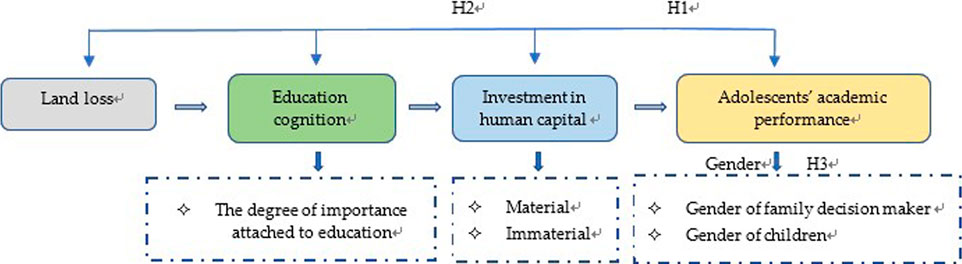
FIGURE 1. Theoretical framework.
3 Data, variables, and methods
3.1 Data
The data used in this study were obtained from the 2014 and 2018 CFPS databases established by the China Center for Social Sciences Investigation (ISSS) of Peking University. The sample covered 25 provinces, municipalities, or autonomous regions. All family members identified in the 2010 baseline survey and their future biological or adopted children were permanently tracked as genetic members of the CFPS. Four types of questionnaires were used: community, family, adult, and children, and the survey objects included all family members in the sample households. The land situation and human capital investment status of the interviewed households was investigated in detail. The study focused on rural families with adolescent children aged 10–15 and excluded families with incomplete land acquisition information or without school-aged children. After data cleaning, there were 5,133 household samples in 2014, with 312 belonging to the treatment group (land was expropriated before 2018) and the remaining 4,821 in the control group. In 2018, the sample consisted of 3,810 households, with 295 belonging to the treatment group (land acquired during the current period), and the remaining 3,515 in the control group.
3.2 Variables
The aim of this study was to investigate the impact and mechanism of land loss on the academic performance of rural adolescents. The core treatment variable was treated, which denoted whether land was acquired. Before applying the PSM-DID model, the treatment variable was constructed based on whether the rural family experienced land acquisition in 2018 and not 2014. If so, it was included in the treatment group with a value of 1. If a rural household did not experience land expropriation in both 2014 and 2018, it was set in the control group with a value of 0. According to Table 1, 6.78% of the rural household land in the sample was expropriated.
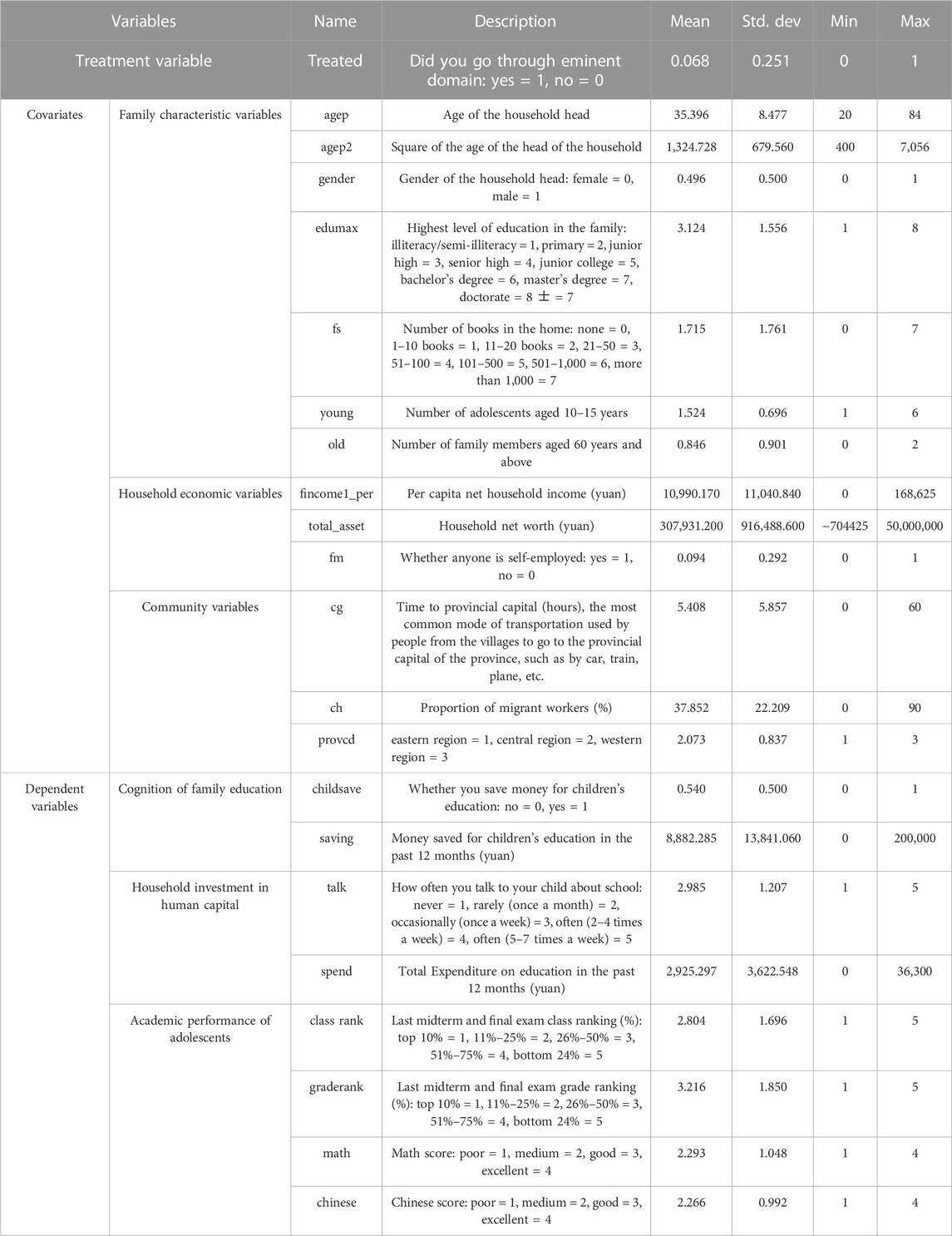
TABLE 1. Variable selection and descriptive statistical analysis.
Following the analytical logic of “land loss→ family education cognition→ family human capital investment→ adolescents’ academic performance”, the dependent variables in this study were divided into three levels: 1) childsave and saving, which represented the family’s emphasis on education, for analyzing the impact of land loss on family education cognition; 2) spend and talk for measuring human capital investment in education expenditure and non-material human capital investment in children’s learning, respectively; 3) class rank, grade rank, Chinese, and math, which represented the adolescents’ academic performance, for analyzing the effects of land loss on the accumulation of adolescent human capital, and on the relative and absolute evaluation of academic performance.
Multiple factors can affect adolescents’ academic performance. In addition to the key variable of land acquisition, this study selected covariates based on the literature (Zhihua et al., 2015; Junlong, 2017; Haochen, 2019). We included 13 indicators, including family characteristics, family economy, and community variables. Table 1 presents the variables and descriptive statistics used in this study.
3.3 Methods
where
where
Assuming that the treatment and control groups have the same time trend, Eq. 3 is used for DID estimation:
where
PSM is a commonly used method to study land issues, but PSM-DID has the advantage of further attenuating the effect of unobservable intergroup differences on assessment results compared to PSM alone. If the assumption of a common trend is not satisfied, “selection bias” of the samples will occur, and the reliability of the model results will be compromised. PSM constructs counterfactual events by finding samples from the control group that have similar characteristics to those in the treatment group. It thereby overcomes “selection bias,” and by combining PSM with the DID method, we can control for non-observable, time-dependent between-group differences, and address endogeneity. Overall, PSM-DID can reduce or eliminate the difference in time trends between the two types of households by estimating propensity scores for dislocated and non-dislocated households through observable covariates and matching each dislocated household with its closest non-dislocated household, solving the endogeneity problem caused by sample selection. In this study, we adopted the PSM-DID method to effectively identify and evaluate the “treatment effect” using STATA 17.0 software (Fan and Zhang, 2021; Zhang et al., 2022).
This study implemented the differential PSM model proposed by Heckman et al. (1998) to investigate the impact of land loss on rural families’ human capital investment and adolescents’ academic performance. Prior to estimation, the two types of families were matched based on propensity scores. Specifically, propensity scores were calculated for land-loss and non-land-loss households based on observable household characteristics (covariates). Then, each land-loss household was matched with the closest non-land-loss household, thereby eliminating the time trend of two types of families. Subsequently, the treatment effect was calculated using the DID method as per Eq. 3. The specific steps taken are as follows:
First, PSM processing was performed. A logit model was constructed for regression with treated as the explained variable, and a group of new observed samples were obtained by “1:1 nearest neighbor” matching method.
where
Second, the difference model was constructed as:
where γ represented the treatment effect of the policy,
To identify the mechanism of land loss on the academic performance, this paper draws on Breen et al. (2013) and uses the KHB mediation effects test to test whether education cognition and family human capital investments affect adolescents’ academic performance. For the test of mediating effects, the traditional test of mediating effects is only applicable to linear models and cannot test nonlinear models. The KHB mediation effect test can effectively decompose linear and nonlinear regression models of the mediating effects.
4 Results
4.1 The influence of land loss on the academic performance of adolescents
4.1.1 Test of balance
An important prerequisite for the application of the PSM-DID method is to balance the control variables. The balancing hypothesis requires that the bias between the matched treatment and control groups is less than 5%, or that the t-test results show no significant difference between the matched treatment and control groups. Table 2 presents the balance test results for the control variables before and after matching. The mean standard error of the control variables decreased from 16.1% to 3.8% after matching. The Pseudo R2 value, which measures the goodness of fit of propensity score regression, was low after matching. The p-value of the joint significance test of the coefficients of the control variables was 0.994, indicating that the coefficients of the control variables were jointly significant before matching, and the null hypothesis that the coefficients of the control variables were jointly 0 could not be rejected after matching. To ensure the quality of matching between samples, the kernel density plots were further plotted after obtaining the propensity scores to examine the common support domain after sample matching (see Figure 2). It can be seen that there is a large range of overlap between the propensity scores of the experimental and control groups after matching, and most of the observations are in the common range of values. The above test results demonstrate that this study has well-matched land-lost families and non-land-lost families, the common support assumption is satisfied, so the PSM-DID model is applicable to this study.
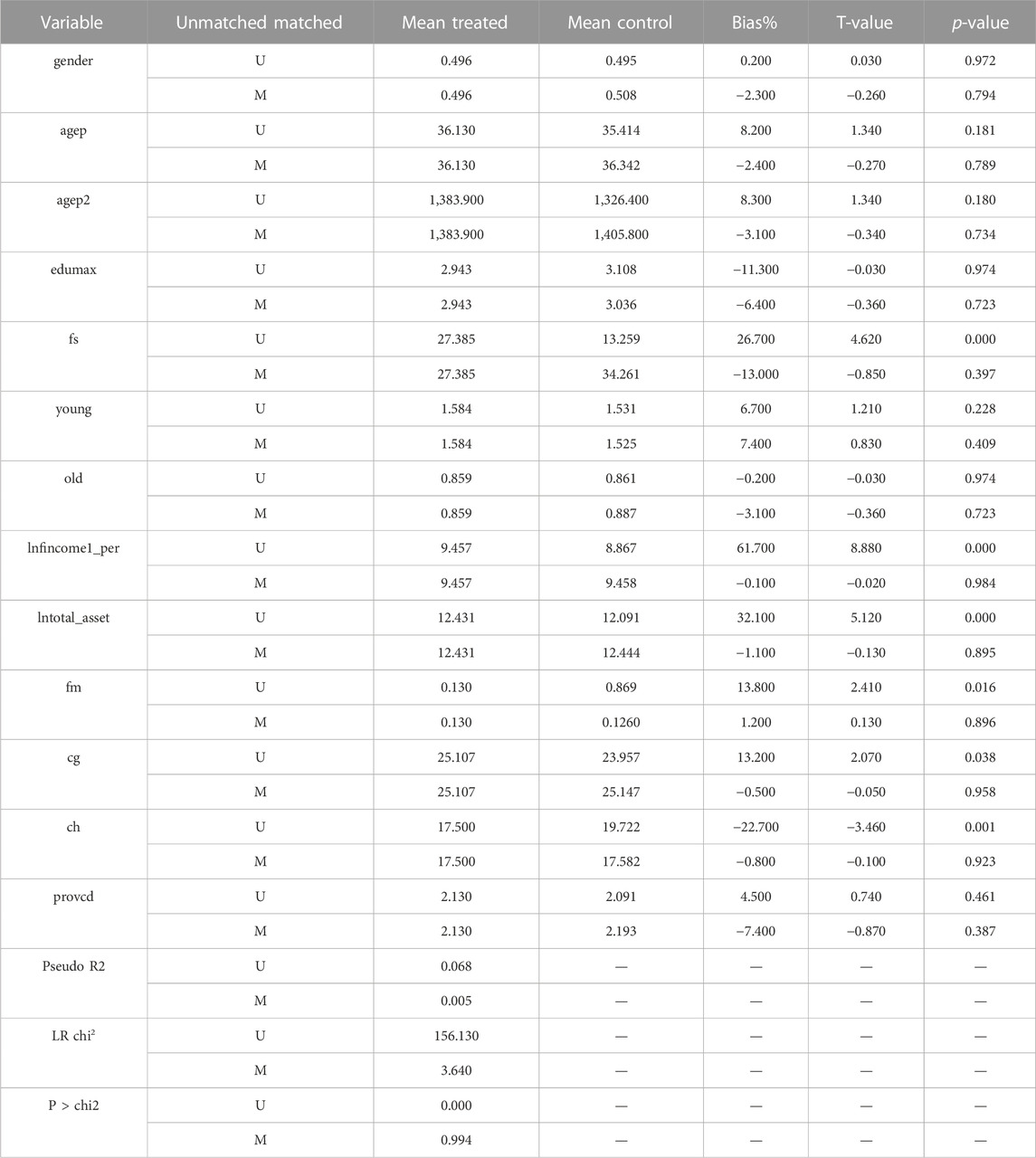
TABLE 2. Balance test results of control variables before and after matching.
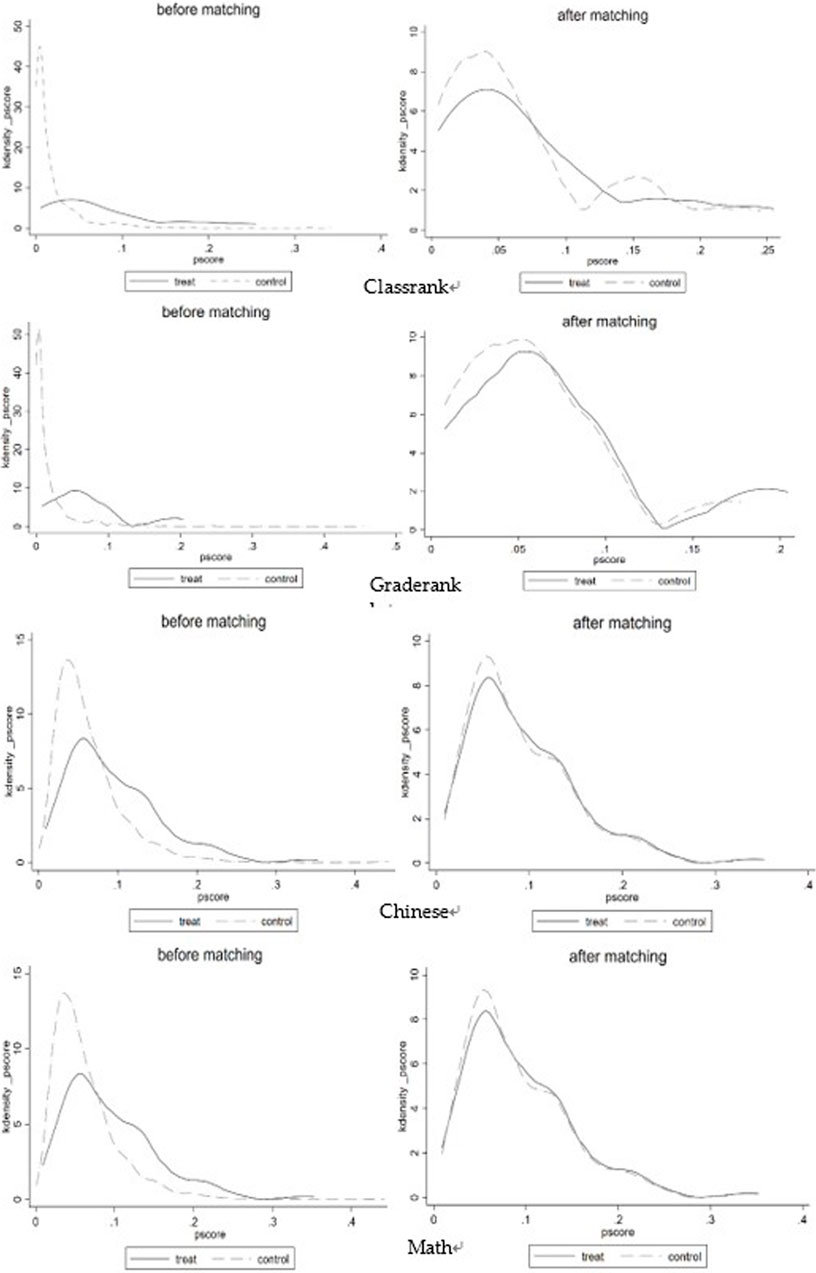
FIGURE 2. Kernel density of adolescents’ academic performance before and after matching (1:1 Nearest Neighbor Matching).
4.1.2 Benchmark regression results
Table 3 presents the results of land loss on the academic performance of rural adolescents. Models 1 to 4 use class rank, grade rank, Chinese score, and math score, respectively, as the dependent variables, and include land-loss variables and covariates. The first two columns analyze the academic performance differences between land-loss families and non-land-loss families, while the last two columns show the differences in single subject scores of adolescents. According to Models 1 and 2, after controlling for other variables, the land-loss variables are all significantly positive at the 5% significance level, suggesting that the achievement ranking of adolescents from land-loss families is lower than that of non-land-loss families. Model 3 shows that the coefficient of the land-loss variable is −0.7352, which is significantly negative, indicating that compared to the non-land-loss families, the Chinese scores of the adolescents from land-loss families are lower. Model 4 shows similar results, with the math scores of the land-loss families being lower than those of the non-land-loss families. Furthermore, combining Models 3 and 4, it can be concluded that loss of land has a greater impact on the performance in Chinese of adolescents in rural families. Therefore, Hypothesis 1 is confirmed, suggesting that when rural families face the high external risk of land expropriation, the physical health and mental states of parents are affected, and this negative effect is transmitted across generations, leading to a reduction in academic achievements and performance of adolescent girls.
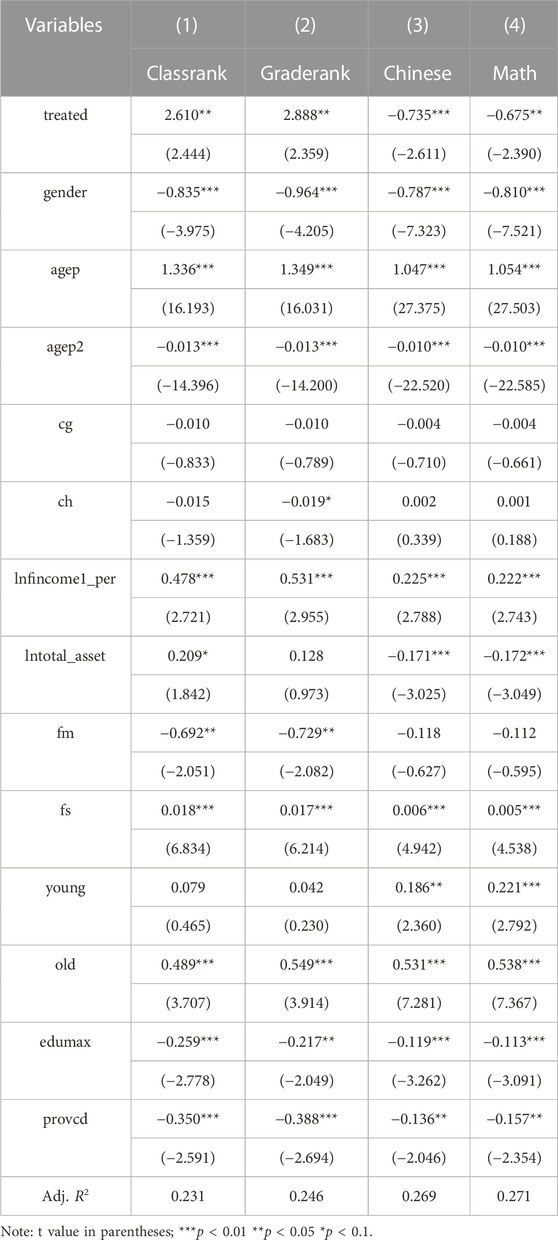
TABLE 3. Influence of land-loss on the academic performance of adolescents.
4.2 Mechanism analysis
4.2.1 The influence of land loss on the family value cognition
According to the analytical logic of “land loss→ family education cognition→ family human capital investment→ adolescents’ academic performance,” Table 4 presents the results of the PSM-DID model to assess the impact of land loss on rural family education cognition (the degree of emphasis on adolescents’ education). The coefficients of land-loss variables in Models 5 and 6 are −0.3516 and −0.2118, respectively. This indicates that land-loss families have a lower awareness of saving for their children, and the amount of money saved is significantly lower than that of non-land-loss families, which implies that the loss of land significantly reduces the cognition of the educational value for rural families. Possibly, rural families are devastated after the loss of land, and their living standards significantly decrease. Rural families may prioritize their survival and may be unable to devote enough time and energy to children to alleviate material hardship, which has negative consequences for child development (Brooks-Gunn et al., 2013; Desmond and Kimbro, 2015).
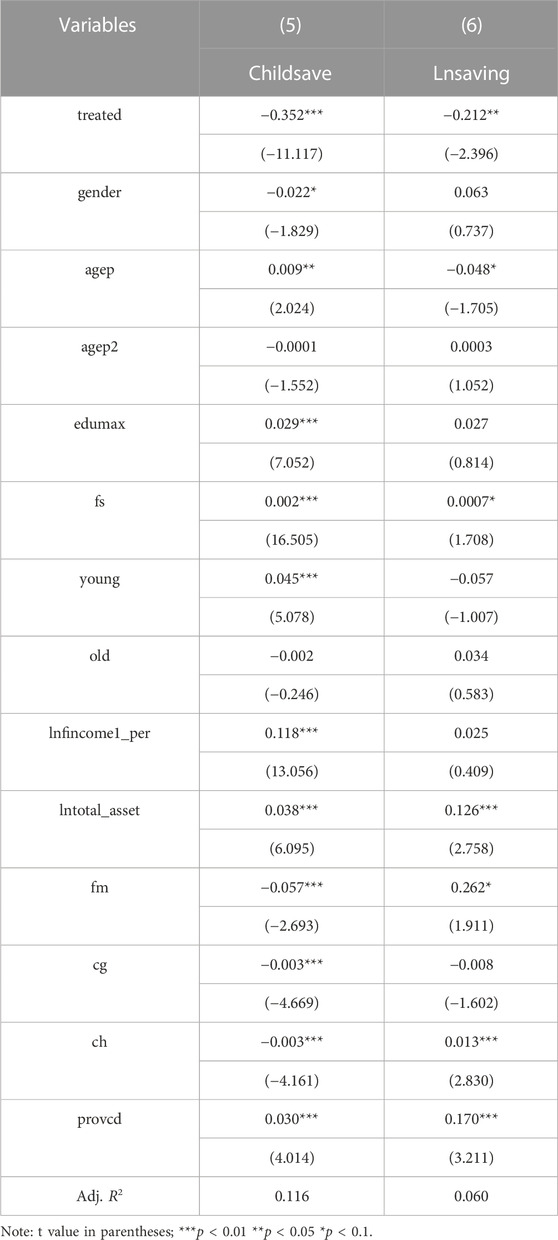
TABLE 4. Impact of land loss on the family education cognition.
4.2.2 The impact of land loss on the family human capital investment
Table 5 presents the PSM-DID estimation results of the impact of land loss on the human capital investment of rural families. In Model 7, the coefficient of land-loss variable is 0.668, which is significant at the 1% level, indicating that compared to families whose land is not expropriated, families who have lost their land talk less frequently to their children about school and pay less attention to their children’s school conditions. This is because rural families face external risks due to land expropriation and must choose a new livelihood, causing parents to devote more time and energy to employment and relax their focus on their children’s study requirements and discipline. In Model 8, the variable of land loss is significantly negative. After land loss, families’ adolescent education expenditure decreases, which is 0.22 units lower than that of families without land loss. These results are consistent with the findings in the literature (Leventhal and Newman, 2010; Brooks-Gunn et al., 2013; Desmond and Kimbro, 2015). Therefore, Hypothesis 2 is thus confirmed.
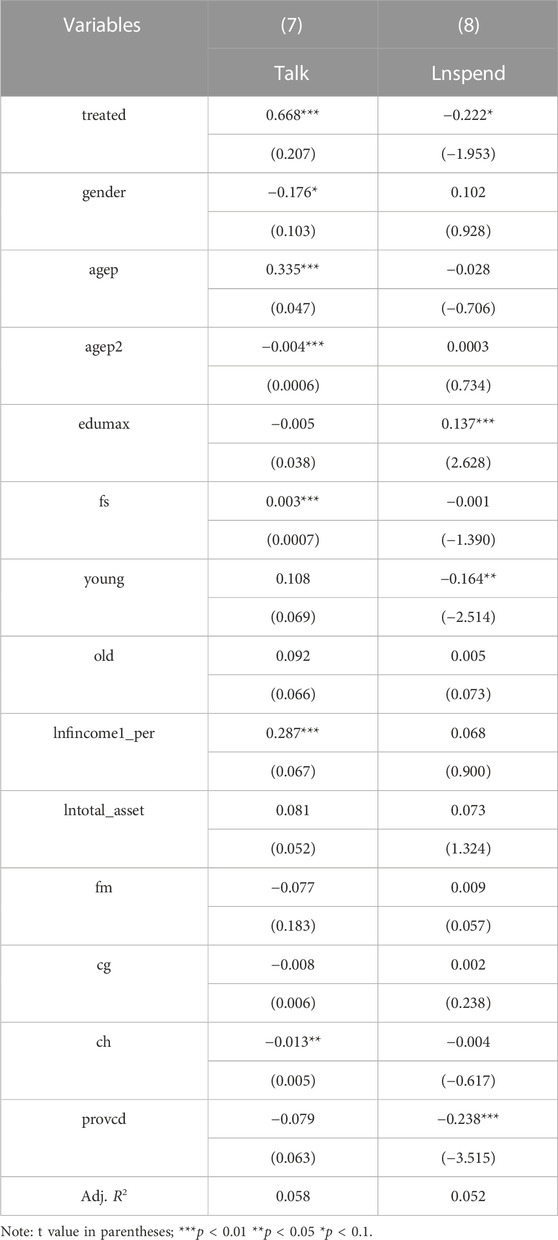
TABLE 5. Impact of land loss on the household human capital investment.
4.2.3 Land loss, human capital investment, and adolescent academic performance
To further verify the existence of a behavior-shaping mechanism between land-loss status and adolescents’ academic performance, this section presents mechanism tests based on the KHB method (Breen et al., 2013) following the logic of “land loss→ family education cognition →family human capital investment→ adolescents’ academic performance”. Models 8 and 9 (as presented in Table 6) verify the relationship between family education cognition and family human capital investment. Model 8 was a base model that contained only the control variables. Model 9 added a variable to measure the value of family education. The results of Model 9 show that after adding the variable of family education cognition, the coefficient of the land-loss variable decreases compared to the base model and is significant at the 5% level. This indicates that the negative effect of land loss on adolescents’ academic performance can be alleviated by improving families’ perception of educational value. Moreover, Models 1 and 10 were used to verify the relationship between family human capital investment and adolescents’ academic performance. Model 10 included education expenditure to measure family human capital investment in comparison to the basic Model 1 with just the control variables. The results of Model 10 show that the coefficient of the land-loss variable significantly decreases compared to that in Model 1, and the coefficient of lnspend variable is significantly positive, indicating that the negative pass-through effect of land loss on adolescents’ academic performance can also be effectively compensated by the increase in human capital investment. It can be preliminarily concluded that the academic achievement difference of adolescents from land-loss families is affected by their cognition of educational value, the scale of educational resources, and their own learning requirements (Grossman et al., 2011; Liu and Xie, 2015).
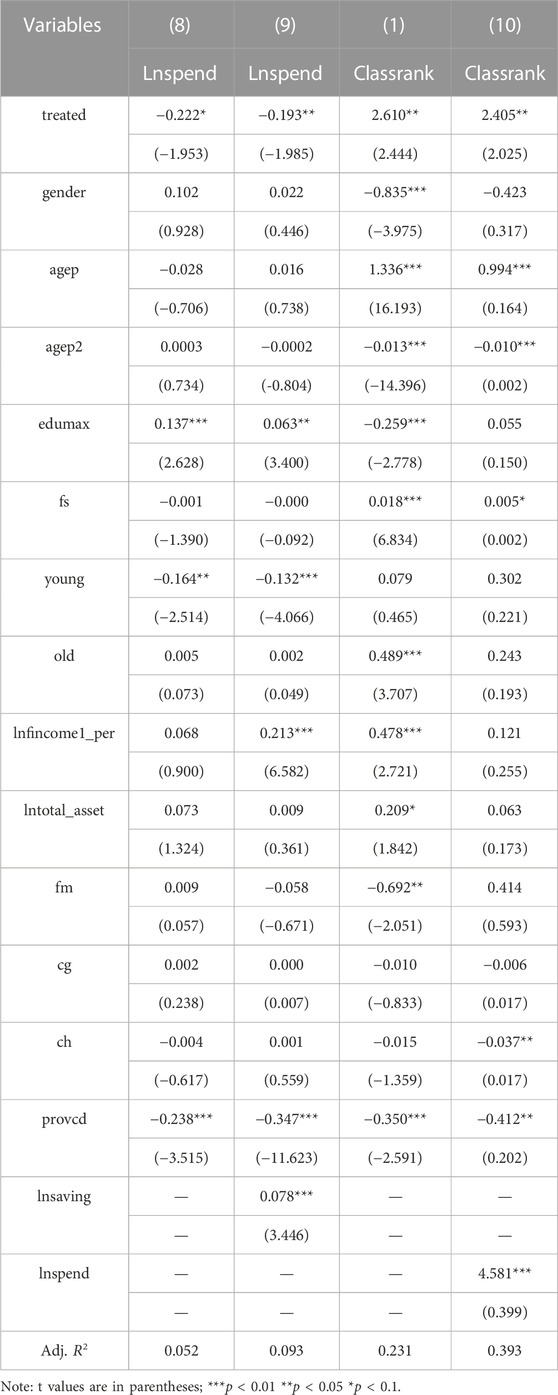
TABLE 6. Results of KHB mediated effects test.
4.3 Analysis of heterogeneity
This section continues the discussion on the relationship between land loss and academic performance of adolescents from rural families from the gender perspective. Table 7 presents the sub-sample regression analysis of the academic performance of adolescents, factoring in the gender differences of family decision-makers. The analysis shows that land loss has a negative impact on adolescents’ academic performance. However, compared to families with male decision makers, the Chinese scores, math scores, class rank, and grade rank of adolescents from families with female decision makers are higher. This is consistent with the literature suggesting that “compared to men, women usually take greater responsibility for ensuring adolescents’ education and thus have a strong preference for educational investment” (Moses, 1977; Xu, 2018; Xinrong et al., 2021; L’Roe et al., 2022). Even under the external risks of land expropriation, women continue to prioritize investment in education.
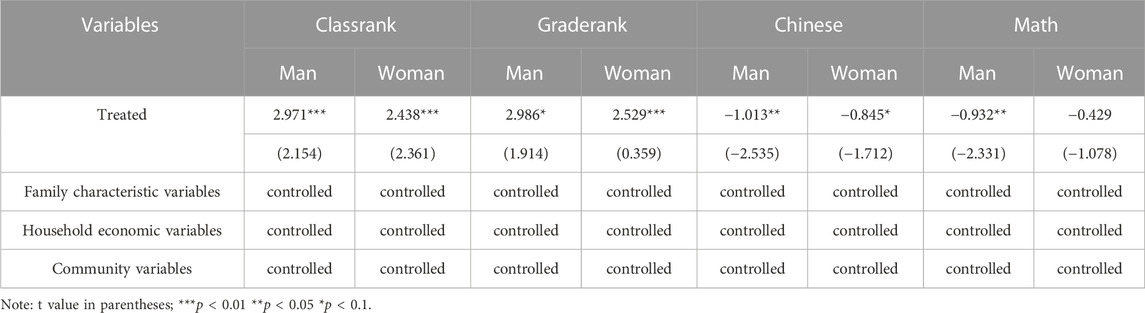
TABLE 7. Gender heterogeneity of household decision makers.
Table 8 shows the results of the sub-sample regression under the gender difference of adolescents. The analysis reveals that the Chinese and math scores, as well as the class and grade rankings of boys from land-loss families are significantly lower than those of boys from non-land-loss families. The Chinese scores of boys in land-loss families (influence coefficient: −1.1137) are significantly worse compared to the math scores (the influence coefficient is −0.6950). For girls from land-loss families, the Chinese and math scores of the girls are significantly lower than those of girls from non-land-loss families (the influence coefficient was −0.7970), but the class and grade rankings are not significantly different. The regression results also indicate that the coefficient value of the land-loss variable is significantly lower for boys than for girls from land-loss families, which is consistent with the literature that suggests that girls tend to maintain superior academic performance despite adverse learning environments (Hall, 1978; Epstein, 1998; Wei and Chen, 2018). Therefore, it can be concluded that the negative impact of land loss on academic performance is significantly greater for boys than for girls, and is consistent with previous studies (Jiankun and Guangye, 2019). Hypothesis 3 is therefore confirmed.
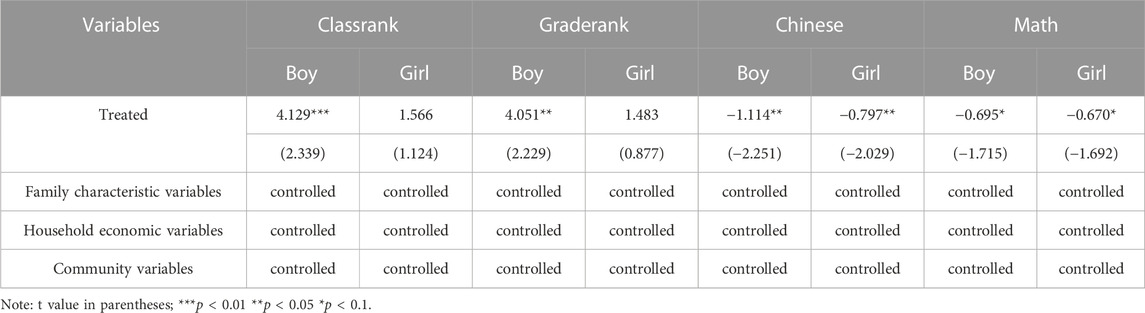
TABLE 8. Gender differences of adolescents.
4.4 Test for robustness
In the above discussion, Chinese and math scores, as well as class and grade rankings of adolescents, were selected as the comprehensive measurement indicators of their academic performance. Table 9 shows the robustness test result, where the total score for Chinese and mathematics was taken as the dependent variable. Fixed-effects and PSM-DID models were implemented to measure the differences in academic performance between adolescents from land-loss and non-land-loss families. The results show that the coefficient value of the land-loss variable is significantly negative. The impact effect (the absolute value of the coefficient) is significantly larger than the impact of Chinese or math scores (the impact coefficients of Models 3 and Model 4 are −0.7352 and −0.6747, respectively). This indicates that adolescents from land-loss families have significantly lower overall performance than those from non-land-loss families and land expropriation will produce a negative intergenerational transmission effect. Therefore, these results confirm that the above regression results are robust.
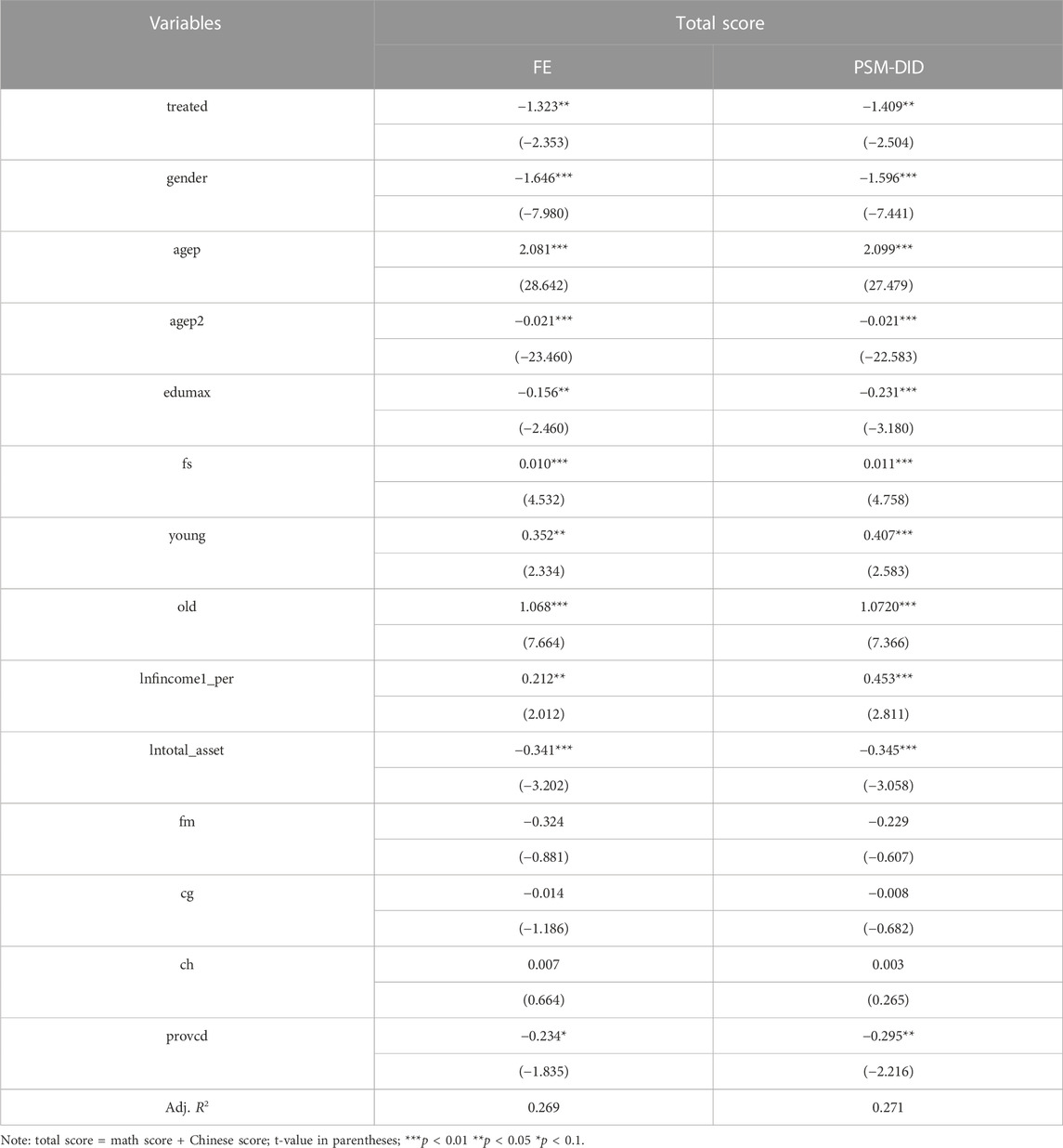
TABLE 9. Robustness test.
5 Discussion
The rapid pace of urbanization has led to a significant rise in the number of land-loss farmers. These farmers experience passive urbanization, which forcefully separates them from the traditional agriculture-based rural community, thereby altering their institutional identity (Kumar et al., 2021). Additionally, due to low labor skills, they have an incomplete establishment of the employment relationship network that reflects the modern dimension. Together, the lack of necessary psychological transition and adjustment in the process of urbanization hinders land-loss farmers from adapting to city life. Therefore, it is a realistic problem to consider whether they can integrate into urban life and adjust to urban production immediately after losing their land.
The literature includes a follow-up survey on the income level and life quality of land-loss farmers, revealing that most land-loss farmers experience negative effects during urbanization, such as income decline and a high unemployment rate, which negatively affect the physical and mental development of their children due to changes in their parents’ social status (Qin, 2003; Chi, 2004). Adolescence is a critical stage in the formation of individual human capital, and this study focuses on the adolescent group to supplement and verify the relationship between land-loss and adolescent academic performance. The results in Table 3 show a significant negative effect on adolescents’ academic performance, confirming that land loss weakens adolescent academic performance and indicating that the negative impact of landlessness on the human capital of family members is intergenerational transmission. This puts the whole family at risk of remaining in chronic poverty, as landless farmers have difficulty entering the higher labor force, and their children lack the ability to access quality educational resources. When farmers’ income decreases, they are more likely to prioritize livelihood security over their children’s learning and discipline requirements, directing more time and energy toward acquiring employments and constraining their children’s learning and educational expenditure, ultimately reflecting a decline in academic performance. This confirms the influencing mechanism of land loss on the academic performance of adolescents based on the logic of “land loss→ family education cognition →family human capital investment→ adolescents’ academic performance.” Investment in human capital as a mediating mechanism, including both material educational expenditures and immaterial parenting styles, is actually caused by the deterioration of family economic conditions after land loss, and post-loss work status is critical to block or enhance the impact of land loss on children’s development (Liu and Xie, 2015; Ma and Lin, 2019). To further alleviate the negative impact of land loss on adolescents’ academic performance, vocational training should be strengthened to produce higher marginal benefits and to effectively overcome the unemployment risk.
Previous studies have shown that mothers have a strong preference for educational investments (Wang and Cheng, 2021). Compared to men, women pay more attention to their children’s food, clothing, housing, transportation, education, and educational investment, being more motivated to invest in their children’s human capital formation (Xinrong et al., 2021). The results of the present study confirm this finding. Children’s academic performance is higher in families with female decision makers than in families with male decision makers. Thus, compared to other family members, mothers have a greater influence on children’s academic performance, being more inclined to allocate resources toward education.
The boy crisis is a serious issue not limited to China, but observed globally. Boys falling behind in academics will have a significant impact on individuals and society. Moreover, the boy crisis is not limited to academics; boys lag behind in terms of mental health, physical fitness, and social adjustment. This study’s conclusion supports the boy crisis theory, specifically shown through the effect of land loss on adolescents’ gender. The findings of the current study demonstrate that boys’ academic performance is significantly more affected than that of girls, and girls can continue their studies even in an unfavorable learning environment. To promote intergenerational investment in human capital, we should focus on optimizing policies to improve the academic performance of land-loss adolescents and pay more attention to boys. In conclusion, this study will help protect the benefits of land-loss farmers, reduce the risk of unemployment, prevent the adverse impact of land loss on adolescents’ human capital investment and academic performance, and help the land-loss group escape poverty.
6 Conclusion and suggestions
In order to identify the impact and mechanism of land loss on the academic performance of rural adolescents, this study utilizes data from the China CFPS 2014 and 2018 and applies the PSM-DID and KHB models to explore the effect and mechanism of land loss on rural family human capital investment and adolescents’ academic performance based on the cognition-investment-performance framework. The results indicate that land loss has negative effects on rural families’ education expenditure and adolescents’ academic performance, verifying the logical mechanism of “land loss→ family education cognition→ family human capital investment→ adolescents’ academic performance”. Therefore, the following conclusions can be drawn:
The academic performance of adolescents from land-loss families was found to be lower than that of adolescents from non-land-loss families, as measured by class and grade ranking, as well as Chinese and mathematics scores.
Land-loss families were found to have lower awareness of educational value compared to non-land-loss families. As a result, they divert their attention from their children’s learning and discipline requirements, leading to lower family spending on children’s education.
The logical mechanism of “land loss → family education cognition → family human capital investment → adolescents’ academic performance” was verified. The differences in the academic performance of adolescents from land-loss families were found to be jointly affected by educational value cognition, educational resource acquisition scale, and their own learning requirements.
The negative effects of land loss on adolescents’ academic performance showed gender differences. The academic performance of adolescents in families with female decision makers was found to be higher than that of adolescents in families with male decision makers, and the academic performance of boys in families with land loss was significantly more affected than that of girls.
Based on the conclusions, we suggest the following policy recommendations:
Improving income provides a good economic foundation for adolescents’ education to reduce academic performance loss. This can be achieved through targeted and improved professional training and educational programs for land-loss farmers, as well as differentiated employment and vocational skill training for their diverse needs. An employment information platform for land-loss farmers should be established, and relevant preferential policies should be formulated to guide land-loss farmers in starting businesses and helping them accumulate specific human capital.
The social security system should be strengthened by providing suitable forms of old-age security, expanding the coverage of social insurance, and including land-loss farmers in the urban pension and medical insurance system. The unemployment insurance and assistance system should be improved to ease the pressure of reemployment. Moreover, an educational target management file system for adolescents of land-loss families should be established to ensure they complete school and improve their academic performance.
Employment training and job information for women should be provided to optimize their employment environment. A hierarchical assistance strategy should be implemented to support married and child-bearing women who have lost their land. Family support can be strengthened through sharing more housework and childcare responsibilities and enhancing women’s family status. Attention should be paid to the educational needs of boys. Adolescents’ mental health education should be strengthened to obtain maximum development opportunities and reduce the impact of land loss on boys’ learning status.
This study, however, has some limitations. Although it provides empirical evidence from rural areas in China, it is limited by the use of CFPS survey data. Adolescents’ academic performance is obtained by asking parents to evaluate their children’s performance, which is subjective and may be biased. Furthermore, while this study provides empirical evidence on the relationship between land acquisition and adolescent academic performance in China, it is unclear whether the findings apply to other countries with different national conditions or resource endowments, particularly in countries with severe land loss conditions. Moreover, in 2021, China introduced a “double reduction policy”. Whether the impact of land loss on the human capital accumulation of rural adolescents will change as a result of this policy is a topic worth investigating. Therefore, future research should aim to collect more regional data, describe adolescents’ academic performance more objectively, and incorporate real social variables to deepen our understanding of the influence mechanism between the two.
Data availability statement
Publicly available datasets were analyzed in this study. This data can be found here: http://www.isss.pku.edu.cn/cfps/.
Author contributions
Conceptualization, JH; methodology, JH; software, JH; validation, JH; formal analysis, JH and RL; investigation, JH; resources, JH; data curation, JH; writing—original draft preparation, JH and RL; writing—review and editing, JH and RL; visualization, JH and RL; supervision, JH and RL. All authors have read and agreed to the published version of the manuscript.
Funding
This research was funded by the National Social Science Foundation of China, “Research on Intergenerational Conflict and Intervention Countermeasures of Rural Family Parenting Support;” Ningxia Natural Science Foundation Project “Decision-making Mechanism and Simulation of Rural Family Human Capital Investment Based on ABM;” Ningxia University first-class discipline construction (theoretical economics) funding project, grant numbers 21CSH020, 2022AAC03015, and NXYLXK 2017B04.
Acknowledgments
We thank commentators and editors.
Conflict of interest
The authors declare that the research was conducted in the absence of any commercial or financial relationships that could be construed as a potential conflict of interest.
Publisher’s note
All claims expressed in this article are solely those of the authors and do not necessarily represent those of their affiliated organizations, or those of the publisher, the editors and the reviewers. Any product that may be evaluated in this article, or claim that may be made by its manufacturer, is not guaranteed or endorsed by the publisher.
References
Agger, C., Meece, J., and Byun, S. Y. (2018). The influences of family and place on rural adolescents’ educational aspirations and post-secondary enrollment. J. Youth Adolesc. 47, 2554–2568. doi:10.1007/s10964-018-0893-7
Assari, S., and Caldwell, C. H. (2019). Parental educational attainment differentially boosts school performance of American adolescents: Minorities’ diminished returns. J. Fam. Reprod. Health. 13, 7–13. doi:10.18502/jfrh.v13i1.1607
Bai, Y., Zhang, S., Wang, L., Dang, R., Abbey, C., and Rozelle, S. (2019). Past successes and future challenges in rural China’s human capital. J. Contemp. China. 28, 883–898. doi:10.1080/10670564.2019.1594102
Bao, H., Han, L., Wu, H., and Zeng, X. (2021). What affects the “house-for-pension” scheme consumption behavior of land-lost farmers in China? Habitat Int. 116, 102415. doi:10.1016/j.habitatint.2021.102415
Belay, T., and Mengistu, D. A. (2019). Land use and land cover dynamics and drivers in the Muga watershed, upper Blue Nile Basin, Ethiopia. Remote Sens. Appl. Soc. Environ. 15, 100249. doi:10.1016/j.rsase.2019.100249
Boeren, E. (2019). “Understanding sustainable development goal (SDG) 4 on ‘quality education’ from micro, meso and macro perspectives,” in International review of education (Union Council), 65, 277–294. doi:10.1007/s11159-019-09772-7
Breen, R., Karlson, K. B., and Holm, A. (2013). Total, direct, and indirect effects in logit and probit models. Sociol. Methods Res. 42, 164–191. doi:10.1177/0049124113494572
Brooks-Gunn, J., Schneider, W., and Waldfogel, J. (2013). The Great Recession and the risk for child maltreatment. Child abuse Negl. 37 (10), 721–729. doi:10.1016/j.chiabu.2013.08.004
Bully, P., Jaureguizar, J., Bernaras, E., and Redondo, I. (2019). Relationship between parental socialization, emotional symptoms, and academic performance during adolescence: The influence of parents’ and teenagers’ gender. Int. J. Environ. Res. Public Health. 16, 2231. doi:10.3390/ijerph16122231
Chen, A. (2020). The impact of land requisition on peasant life in China. Mod. China. 46, 79–110. doi:10.1177/0097700419839638
Chi, M. R. Z. X. P. (2004). Study on the employment of landless peasants in the process of urbanization. Soft Sci. 06, 18–20 + 38. doi:10.3969/j.issn.1001-8409.2004.06.006
Coulibaly, B., and Li, S. (2020). Impact of agricultural land loss on rural livelihoods in peri-urban areas: Empirical evidence from sebougou, Mali. Mali. Land. 9, 470. doi:10.3390/land9120470
Cross, F. L., Marchand, A. D., Medina, M., Villafuerte, A., and Rivas-Drake, D. (2019). Academic socialization, parental educational expectations, and academic self-efficacy among Latino adolescents. Psychol. Schs. 56, 483–496. doi:10.1002/pits.22239
Desmond, M., and Kimbro, R. T. (2015). Eviction's fallout: Housing, hardship, and health. Soc. forces 94 (1), 295–324. doi:10.1093/sf/sov044
Ding, J., Wang, Z., Liu, Y., and Yu, F. (2020). Rural households’ livelihood responses to industry-based poverty alleviation as a sustainable route out of poverty. Reg. Sustain. 1, 68–81. doi:10.1016/j.regsus.2020.07.002
Duan, W., Guan, Y., and Bu, H. (2018). The effect of parental involvement and socioeconomic status on junior school students’ academic achievement and school behavior in China. Front. Psychol. 9, 952. doi:10.3389/fpsyg.2018.00952
Duncan, G., Magnuson, K., Murnane, R., and Votruba-Drzal, E. (2019). Income inequality and the well-being of American families. Fam. Relat. 68, 313–325. doi:10.1111/fare.12364
Fan, F., and Zhang, X. (2021). Transformation effect of resource-based cities based on PSM-DID model: An empirical analysis from China. Environ. Impact Assess. Rev. 91, 106648. doi:10.1016/j.eiar.2021.106648
Fretwell, N. (2021). “Between home and school: Mobilising “hard to reach” White British Parents to engage with their children’s education,” in Education science, evidence, and the public good, 97–116.
Furukawa Marques, D., and Lagier, C. (2022). Internationalism as political praxis: Everyday actions and transnational solidarity building in the Brazilian landless rural workers’ movement. Lat. Am. Perspect. 49, 161–180. doi:10.1177/0094582X221116813
Ghanney, R. A. (2018). How parental education and literacy skill levels affect the education of their wards: The case of two schools in the Effutu Municipality of Ghana. Int. J. Educ. Pract. 6, 107–119. doi:10.18488/journal.61.2018.63.107.119
Grossman, J. A., Strein, W., and Kuhn-Mckearin, M. (2011). Parental expectations and academic achievement: Mediators and school effects. Washington, DC: University of Maryland – College Park. doi:10.1037/e695232011-001
Hall, J. A. (1978). Gender effects in decoding nonverbal cues. Psychol. Bull. 85 (4), 845–857. doi:10.1037/0033-2909.85.4.845
Han, J., Huo, Z., and Sun, X. (2022). Loss of happiness for land-expropriated, urbanised residents: A comparison based on multiple groups. Int. J. Environ. Res. Public Health. 19, 2425. doi:10.3390/ijerph19042425
Haochen, Z. X. Q. (2019). The impact of the parenting style on the formation of adolescent human capital. J. Financ. Econ. 45, 46–58.
Heckman, J., and Kautz, T. (2014). Fostering and measuring skills: Interventions that improve character and cognition. Cambridge, MA: National Bureau of Economic Research.
Heckman, J. J., Ichimura, H., and Todd, P. (1998). Matching as an econometric evaluation estimator. Rev. Econ. Stud. 65, 261–294. doi:10.1111/1467-937X.00044
Jabar, M., Kasilag, R., Collado, Z., and Jamoral, R. (2021). Family capital and parental involvement among parents in Public Elementary and Secondary Schools in the Philippines: Perspectives of parents and children. Asia Pac. J. Educ. 1, 1–17. doi:10.1080/02188791.2021.1944841
Jiankun, L., and Guangye, H. (2019). Does farmers’ loss of farmland affect their children’s academic performance——evidence from the Chinese family tracking survey. Educ. Res. 8, 115–126.
Junlong, M. (2017). Migration, educational expectation and children’s school performance. Educ. Econ. 5, 87–96.
Kang, C., and Li, J. (2022). Work stability and urban psychological integration of migrant workers. Soc. Dev. Res. 9 (03), 143–161+245.
Kim, Y., Mok, S. Y., and Seidel, T. (2020). Parental influences on immigrant students’ achievement-related motivation and achievement: A meta-analysis. Educ. Res. Rev. 30, 100327. doi:10.1016/j.edurev.2020.100327
Kojin, E. (2020). Diversifying factors of income inequality in the rural Mekong Delta: Evidence of commune-level heterogeneity. Dev. Econ. 58, 360–391. doi:10.1111/deve.12259
Koster, T., Poortman, A.-R., van der Lippe, T., and Kleingeld, P. (2022). Fairness perceptions of the division of household labor: Housework and childcare. J. Fam. Issues. 43, 679–702. doi:10.1177/0192513X21993899
Kumar, P., Kumar, P., and Garg, R. K. (2021). A study on farmers’ satisfaction and happiness after the land sale for urban expansion in India. Land Use Policy 109, 105603. doi:10.1016/j.landusepol.2021.105603
L’Roe, J., Kimambo, N. E., Strull, R., Kuzaara, D., Kyengonzi, F., and Naughton-Treves, L. (2022). ‘Education Is the Land I Give Them’ – mothers’ investments in children’s future livelihoods amid growing land competition in rural Uganda. J. Land Use Sci. 17, 181–194. doi:10.1080/1747423X.2022.2027533
Le, K., and Nguyen, M. (2020). The impacts of farmland expropriation on Vietnam’s rural households. Rev. Dev. Econ. 24, 1560–1582. doi:10.1111/rode.12702
Leventhal, T., and Newman, S. (2010). Housing and child development. Child. Youth Serv. Rev. 32 (9), 1165–1174. doi:10.1016/j.childyouth.2010.03.008
Li, C., Wang, M., and Song, Y. (2018). Vulnerability and livelihood restoration of landless households after land acquisition: Evidence from peri-urban China. Habitat Int. 79, 109–115. doi:10.1016/j.habitatint.2018.08.003
Liu, G. X. Y., and Helwig, C. C. (2022). Autonomy, social inequality, and support in Chinese urban and rural adolescents’ reasoning about the Chinese college entrance examination (gaokao). J. Adolesc. Res. 37, 639–671. doi:10.1177/0743558420914082
Liu, A., and Xie, Y. (2015). Influences of monetary and non-monetary family resources on children's development in verbal ability in China. Res. Soc. Stratif. Mobil. 40, 59–70. doi:10.1016/j.rssm.2015.02.003
Liu, Y., Li, J., and Yang, Y. (2018). Strategic adjustment of land use policy under the economic transformation. Land Use Policy 74, 5–14. doi:10.1016/j.landusepol.2017.07.005
Liu, J. (2020). Hukou discrimination, human capital differences and urban income inequality in China: From the perspective of labor market segmentation. Soc. Dev. Res. 4 (04), 66–84+238.
Ma, M. Y., and Lin, G. H. (2019). The effect of non-agricultural employment on extracurricular education expenditure of rural families: Empirical analysis based on CFPS. J. Hunan Agric. Univ. Soc. Sci. 20, 85–92. doi:10.13331/j.cnki.jhau(ss).2019.06.012
McLeod, J. D., and Shanahan, M. J. (1993). Poverty, parenting, and children's mental health. Am. Sociol. Rev. 58, 351–366. doi:10.2307/2095905
Memon, Q. U. A., Wagan, S. A., Chunyu, D., Shuangxi, X., and Jingdong, L. (2019). An analysis of poverty situation of landless peasants: Evidence from Sindh Pakistan. J. Pover. 23, 269–281. doi:10.1080/10875549.2018.1550462
Moses, Y. T. (1977). Female status, the family, and male dominance in a West Indian community. Signs J. Women Cult. Soc. 3, 142–153. doi:10.1086/493447
Nong, H., Zhang, Q., Zhu, H., and Zhu, R. (2022). Targeted poverty alleviation and children’s academic performance in China. Rev. Income Wealth 68, 951–969. doi:10.1111/roiw.12517
Palit, P. K. (2022). After effect of land acquisition in children of Singur, West Bengal: An anthropological appraisal. Indiana J. humanit. Soc. Sci. 03, 44–46. doi:10.2307/4415675
Pinquart, M., and Ebeling, M. (2020). Parental educational expectations and academic achievement in children and adolescents—a meta-analysis. Educ. Psychol. Rev. 32, 463–480. doi:10.1007/s10648-019-09506-z
Poon, K. (2020). The impact of socioeconomic status on parental factors in promoting academic achievement in Chinese children. Int. J. Educ. Dev. 75, 102175. doi:10.1016/j.ijedudev.2020.102175
Qin, X. (2003). The social function of rural land and the benefit compensation of landless peasants. Jianghai J. 06, 75–80. doi:10.3969/j.issn.1000-856X.2003.06.013
Shi, J., Li, L., Wu, D., and Li, H. (2021). Are only children always better? Testing the sibling effects on academic performance in rural Chinese adolescents. Child. Youth Serv. Rev. 131, 106291. doi:10.1016/j.childyouth.2021.106291
Talin, R., Sharif, S., Bikar Singh, S. S., and Kiok, P. (2021). Parenting styles of the Kadazandusun community in rural areas of Sabah in ensuring child’s success in school. MJSSH (Malays.) 6, 265–275. doi:10.47405/mjssh.v6i6.830
Tan, C. Y., Lyu, M., and Peng, B. (2020). Academic benefits from parental involvement are stratified by parental socioeconomic status: A meta-analysis. Parenting 20, 241–287. doi:10.1080/15295192.2019.1694836
Tang, Q., and Li, B. (2021). Logic of land-lost farmers’ children education: Analysis based on time attribute. Rev. Sociol. 9, 102–119. doi:10.3969/j.issn.2095-5154.2021.04.006
Toor, K. K. (2021). Parent-child relationship and students’ academic achievement: A study of secondary school students. MJESTP, 38–56. doi:10.52634/mier/2018/v8/i1/1418
Tuan, N. T. (2021). The consequences of expropriation of agricultural land and loss of livelihoods on those households who lost land in Da Nang, Vietnam. Environ. Socio Econ. Stud. 9, 26–38. doi:10.2478/environ-2021-0008
Veas, A., Castejón, J. L., Miñano, P., and Gilar-Corbí, R. (2019). Relationship between parent involvement and academic achievement through metacognitive strategies: A multiple multilevel mediation analysis. Br. J. Educ. Psychol. 89, 393–411. doi:10.1111/bjep.12245
Victora, C. G., Hartwig, F. P., Vidaletti, L. P., Martorell, R., Osmond, C., Richter, L. M., et al. (2022). Effects of early-life poverty on health and human capital in children and adolescents: Analyses of national surveys and birth cohort studies in LMICs. Lancet 399, 1741–1752. doi:10.1016/S0140-6736(21)02716-1
Wang, H., and Cheng, Z. (2021). Mama loves you: The gender wage gap and expenditure on children’s education in China. J. Econ. Behav. Organ. 188, 1015–1034. doi:10.1016/j.jebo.2021.06.031
Wang, H., Cheng, P., Liang, P., Liu, K., and Nie, X. (2020). Invisible windfalls and wipeouts: What is the impact of spatial regulation on the welfare of land-lost farmers? Habitat Int. 99, 102159. doi:10.1016/j.habitatint.2020.102159
Wang, J., Chen, C., and Gong, X. (2021). The impact of family socioeconomic status and parenting styles on children’s academic trajectories: A longitudinal study comparing migrant and urban children in China. New Dir. Child. Adolesc. Dev. 2021, 81–102. doi:10.1002/cad.20394
Wei, D., and Chen, X. (2018). Empathic companionship and mental health of left-behind children--an empirical study based on the 2010 Chinese Family Tracking Survey, 05, 74–93. World Economic Literature.
Wei, H., Guo, R., Sun, H., and Wang, N. (2021). Household leverage and education expenditure: The role of household investment. Finan. Res. Lett. 38, 101837. doi:10.1016/j.frl.2020.101837
Wu, X., and Wang, L. (2021). Community sample II: Spatial resettlement and social integration: Research on resettlement space for land-lost peasants. SPRINGERGEOGR, 167–307. doi:10.1007/978-981-16-4892-2_3
Xie, Y. (2019). Land expropriation, shock to employment, and employment differentiation: Findings from land-lost farmers in Nanjing, China. Land Use Policy 87, 104040. doi:10.1016/j.landusepol.2019.104040
Xinrong, L., Xiao-yong, C., and Shan-shan, Z. (2021). Women’s family status and its impacts on children’s human capital investment. J. Guizhou Univ. Fin. Econ. 04, 74–82. doi:10.3969/j.issn.1003-6636.2021.04.008
Xu, Z., Liu, Z., Qin, H., and Ma, L. (2019). The sustainable development of land-lost peasants’ citizenization: A case study of dongbang town, China. Sustainability 11, 5560. doi:10.3390/su11205560
Xu, W. (2018). Family status and intergenerational poverty alleviation of rural women. Wuhan: Zhongnan University of Economics and Law.
Xu, L. (2020). “Analysis on the impact of legally paid land acquisition on the employment of land-lost farmers in the process of urbanization,” in Proceedings of the Proceedings of the 2020 6th International Conference on Social Science and Higher Education (ICSSHE 2020) (Paris, France: Atlantis Press). doi:10.2991/assehr.k.201214.090
Yang, S. (2021). Research on the urban adaptation of landless peasants during the construction of new urban districts—a case study of zhanghe new district in jingmen city, hubei province, China. Open J. Soc. Sci. 09, 417–439. doi:10.4236/jss.2021.910029
Yunxia, F., and Xinrong, Z. (2020). A division of labor perspective on mothers who accompany their children’s study—a case study of student guardianship among M town’s working families. Soc. Sci. China. 41, 159–181. doi:10.1080/02529203.2020.1719740
Zhang, Y., Wang, W., and Feng, Y. (2022). Impact of different models of rural land consolidation on rural household poverty vulnerability. Land Use Policy 114, 105963. doi:10.1016/j.landusepol.2021.105963
Keywords: land loss, academic performance, teenagers, gender difference, rural revitalization
Citation: Hua J and Li R (2023) Impact of land loss on academic performance among rural adolescents in China: based on cognition-investment-performance framework. Front. Environ. Sci. 11:1172537. doi: 10.3389/fenvs.2023.1172537
Received: 23 February 2023; Accepted: 17 April 2023;
Published: 16 June 2023.
Edited by:
Xiangbin Kong, China Agricultural University, ChinaReviewed by:
Ashar Awan, Nişantaşı University, TürkiyeQian Li, Beijing Technology and Business University, China
Yin W. Ang, Zhengzhou University, China
Copyright © 2023 Hua and Li. This is an open-access article distributed under the terms of the Creative Commons Attribution License (CC BY). The use, distribution or reproduction in other forums is permitted, provided the original author(s) and the copyright owner(s) are credited and that the original publication in this journal is cited, in accordance with accepted academic practice. No use, distribution or reproduction is permitted which does not comply with these terms.
*Correspondence: Ruining Li, bGk5NkBzdHUubnh1LmVkdS5jbg==