 Chiang-Hui Wang
- Financial Technology Applications Program, School of Financial Technology, Ming Chuan University, Taoyuan City, Taiwan
1 Introduction
As the public begins to pay attention to global warming and environmental issues, this awareness of environmental protection has also driven the trend of environmental protection in rich countries (Hermanson, 2019). In particular, consumers have become aware of the impact of environmental degradation on the quality of life and have begun to shift their consumption behavior towards green values. Some companies have realized the trend of green products and started to transform the product manufacturing process to develop innovative green products, such as circular products (Yadav et al., 2022). Since the transformation of manufacturers requires a lot of resources and time, some manufacturers try to adopt the strategy of the green image but do not produce green products (Madueño et al., 2016), which is called greenwashing. In addition, to attract consumers to buy green products, manufacturers use excessively exquisite packaging for green products, which makes consumers feel greenwashed (Qayyum et al., 2022), which in turn creates negative attitudes towards circular products (such as product confusion).
Unlike previous surveys that only explored the positive drivers of purchase intentions for green products, this article explores the factors that hinder the willingness to accept circular products and uses signaling theory (Spence, 1973) to build a model of acceptance intentions for circular products. That said, this article explores the factors that hinder people’s willingness to accept circular products from the perspective of excessively exquisite packaging. This article uses signaling theory to explain why excessively exquisite packaging will cause consumers’ greenwashing perception, which will lead to green confusion, and ultimately reduce the willingness to accept circular products. Since a series of policies adopted by the government still cannot effectively curb global warming and environmental pollution, circular products have been verified as an effective strategy to alleviate this problem (Yadav et al., 2022).
This article validates the circular product purchase model (Figure 1) by collecting qualitative transcripts from three directors of circular product companies and three consumers in Taiwan and uses qualitative analysis to verify the green behavioral model of this article (please see Table 1).
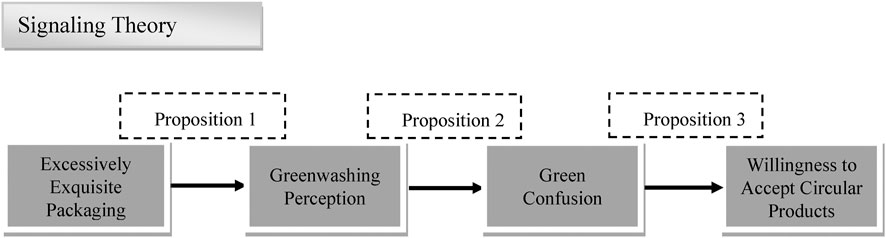
FIGURE 1. Circular product purchase model.

TABLE 1. Analysis result.
2 Literature reviewing
1) Signal theory
Signaling theory (Spence, 1973), developed in conditions of imperfect markets and asymmetric information, assumes that only the managers of the firm know the true quality of the product. That is, consumers do not have complete information to discern the true quality of the product. This article adopts signaling theory to describe the consumer mechanism of circular products. In the case of circular products, consumers can only judge circular products through a few external signals such as packaging, product description, or brand, which makes it more difficult for consumers to compare and distinguish the authenticity of circular products. Therefore, consumers will judge the attributes of circular products through obvious signals, such as excessively exquisite packaging. Since circular products are remanufactured from recycled resources, excessively exquisite packaging will make consumers doubt the authenticity of circular products. On the contrary, the signal of simple packaging will make consumers feel that it meets the attributes of circular products.
2) Excessively exquisite packaging and greenwash perception
In the purchase decision process, consumers do not know the actual attributes of circular products, so they will use more external information than internal information to evaluate circular products, which is called “signaling theory” (Spence, 1973). To attract consumers to buy products, manufacturers usually use excessively exquisite packaging to distinguish competitors' products, thereby increasing consumers’ willingness to purchase (Zhao et al., 2021). According to signal theory, consumers may regard packaging as a kind of external information to evaluate products (Wallenburg et al., 2021), because product packaging is an easy-to-observe external signal. If manufacturers overpackage circular products to increase consumers’ willingness to purchase, it may damage the brand’s green image (Ratna and Ojha, 2022). That is to say, the signal of excessively exquisite packaging will make consumers feel that the circular product attributes claimed by the manufacturer are invalid and unreliable, and then consumers will judge that the brand may falsify green information (greenwashing) because it violates the concept of energy saving and carbon reduction. Therefore, this article makes the first claim.
Proposition 1 Excessively exquisite packaging promotes greenwash perception.
3) Greenwash perception and green confusion.
Consumer confusion about a product refers to a biased evaluation of a product, and failure to recognize its attributes (Rajendran and Arun, 2021). As green products are more and more valued by consumers, the marketing of various green products by manufacturers often makes it impossible for consumers to judge whether a product is a green product, causing green confusion. Greenwashing is when a business only promotes its green image without any real green product attributes (Cao et al., 2022). Manufacturers promote their green image without any green product attributes which may confuse consumers' evaluation of circular products. Consumers will start to confuse whether the product is a green product, which will damage the brand image. That is, according to signaling theory, when consumers' greenwashing perception (signal) rises, they will be confused about whether the product is circular or not. Therefore, this article makes the second claim.
Proposition 2 Greenwash perception promotes green confusion.
4) Green Confusion and Willingness to Accept Circular Products
When consumers have a high degree of green confusion, it will be difficult to evaluate green products (Tarabieh, 2021). In fact, according to signaling theory, when consumers are confused about green, the confusing perception (signal) will start to make consumers not believe whether the product is circular, resulting in hesitation and negative attitudes (Wandira, 2020), thereby reducing willingness to accept circular products. Therefore, this article makes the third claim.
Proposition 3 Green confusion reduces willingness to accept circular products.
3 Methodology
This article verified the theoretical model (Figure 1) through qualitative coding analysis and collected qualitative transcripts from three supervisors of circular product companies and three consumers in Taiwan. This article adopts six samples because the past survey has proposed that more samples only can obtain similar information (Nielsen, 2000). This article uses A, B, C, D, E, and F to represent the codings and analyze if these codings support the three propositions. The purpose of qualitative coding analysis was to code the responses of the six interviewees and to analyze whether these codes were propositions previously made. For example, A1 represents the first classification code of the content answered by the first interviewer. This code describes that interviewer A thinks excessive product packaging is very strange because it violates the definition of circular products. Interviewer A has a greenwashing perception of whether this circular product is fake.
Cohen’s kappa coefficient (Warrens, 2015) is employed to calculate the coding reliability, and the triangulation method is used to confirm the reliability of the qualitative transcript.
4 Discussion
This article draws on signaling theory to build a circular product acceptance model and describes how consumers evaluate circular products through the mechanisms of excessively exquisite packaging, greenwashing perception, and green confusion. Previous surveys rarely pay attention to barriers to the willingness to accept circular products, so this article draws on signaling theory to open the black box of barriers to the willingness to accept circular products and provides a significant incremental contribution to circular products. In addition, this article focuses on circular products, because circular products can effectively reduce environmental pollution and climate warming, thereby achieving the goal of environmentally sustainable development.
Second, the qualitative analysis preliminarily supports the proposition of this paper. In other words, excessively exquisite packaging will reduce the willingness to accept circular products through the intermediary mechanism of greenwashing perception and green confusion. Although past investigation has examined the negative effects of excessively exquisite packaging (Chang and Hung, 2022), they have not examined in detail the behavioral mechanism between excessively exquisite packaging and willingness to accept circular products.
In summary, this article discusses three strategies for marketing circular products. First of all, manufacturers of circular products should make product packaging as simple as possible to match the attributes of circular products. Consumers will be unable to judge the attributes of circular products because the packaging is too exquisite, resulting in inconsistent cognition, which ultimately causes negative cognitions (such as greenwashing and green confusion). In addition, past empirical investigations also found that simple packaging can enhance consumers’ green awareness of products (Zhang, 2022). Secondly, to alleviate consumers’ “greenwashing” concept, manufacturers of circular products should not only maintain their green image but also demonstrate more green business activities, such as obtaining green product certification, to increase consumers’ green concept. Finally, to reduce consumers’ green confusion, manufacturers of round products should not only use simple packaging but also introduce the manufacturing process of round products in the packaging instructions, such as adding a QR code to introduce the website, which can reduce consumers’ green confusion.
5 Future Research and Limitations
Although this paper employs excessively exquisite packaging as an antecedent of willingness to accept circular products, there may be other factors that may lead to similar behaviors, such as discounts and promotions (Zou et al., 2021). Further research should examine the different factors. Second, this article addresses that excessively exquisite packaging, greenwash perception, and green confusion can form the willingness to accept circular products, but there may be other important mechanisms in different contexts that are ignored. Further study must explore and examine more possible mechanisms in different contexts to rich the literature on circular products. For example, death anxiety may be a possible variable to the willingness to accept circular products, because consumers want to reduce global warming issues. Third, this paper adopts the signal theory to construct the theoretical model of this paper. Further research should explore different theories in different backgrounds to verify the theoretical model of this paper. Finally, the propositions presented in the paper may be insufficient, so further research must collect more literature to supplement these propositions. In addition, a deeply qualitative interview or a quantitative survey must also be employed to validate these hypotheses.
Author contributions
The author confirms being the sole contributor of this work and has approved it for publication.
Conflict of interest
The author declares that the research was conducted in the absence of any commercial or financial relationships that could be construed as a potential conflict of interest.
Publisher’s note
All claims expressed in this article are solely those of the authors and do not necessarily represent those of their affiliated organizations, or those of the publisher, the editors and the reviewers. Any product that may be evaluated in this article, or claim that may be made by its manufacturer, is not guaranteed or endorsed by the publisher.
References
Cao, Q., Zhou, Y., Du, H., Ren, M., and Zhen, W. (2022). Carbon information disclosure quality, greenwashing behavior, and enterprise value. Front. Psychol. 13, 892415. doi:10.3389/fpsyg.2022.892415
Chang, T. W., and Hung, C. Z. (2022). Sustainable consumption: Research on examining the influence of the psychological process of consumer green purchase intention by using a theoretical model of consumer affective events. Environ. Dev. Sustain., 1–21. doi:10.1007/s10668-022-02152-6
Hermanson, A. S. (2019). Green movements and their political development in the Nordic countries. The nordic environments. Routledge, 91–110.
Madueño, J. H., Jorge, M. L., Conesa, I. M., and Martínez-Martínez, D. (2016). Relationship between corporate social responsibility and competitive performance in Spanish SMEs: Empirical evidence from a stakeholders’ perspective. BRQ Bus. Res. Q. 19 (1), 55–72. doi:10.1016/j.brq.2015.06.002
Nielsen, J. (2000). Why you only need to test with 5 users. available at https://www.nngroup.com/articles/why-you-only-need-to-test-with-5-users/.
Polonsky, M. J., Grau, S. L., and Garma, R. (2010). The new greenwash? Potential marketing problems with carbon offsets. Int. J. Bus. Stud. 18 (1), 49–54.
Rajendran, R. P., and Arun, J. (2021). The effect of consumer confusion proneness on intention to recommend the role of discrete emotions. Acad. Mark. Stud. J. 25, 1–6.
Ratna, V. V., and Ojha, R. K. (2022). Green brand management: Nexus between brand attachment, satisfaction and loyalty of green products. Int. J. Green Econ. 16 (2), 1–129. doi:10.1504/ijge.2022.10052431
Tarabieh, S. M. Z. A. (2021). The impact of greenwash practices over green purchase intention: The mediating effects of green confusion, Green perceived risk, and green trust. Manag. Sci. Lett. 11 (2), 451–464. doi:10.5267/j.msl.2020.9.022
Wallenburg, C. M., Einmahl, L., Lee, K. B., and Rao, S. (2021). On packaging and product returns in online retail—mailing boxes or sending signals? J. Bus. Logist. 42 (2), 291–308. doi:10.1111/jbl.12273
Wandira, R. K. (2020). Negative emotions in excessive product packaging: The effect of environmental concerns. Int. J. Innovation, Creativity Change 10 (12), 543–553.
Zhang, S. (2022). Research on energy-saving packaging design based on artificial intelligence. Energy Rep. 8, 480–489. doi:10.1016/j.egyr.2022.05.069
Zhao, H., Yao, X., Liu, Z., and Yang, Q. (2021). Impact of pricing and product information on consumer buying behavior with customer satisfaction in a mediating role. Front. Psychol. 12, 720151. doi:10.3389/fpsyg.2021.720151
Keywords: excessively exquisite packaging, greenwashing perception, green confusion, willingness to accept circular products, sustainability
Citation: Wang C-H (2023) Why does excessively exquisite packaging hinder consumers to buy circular products? a perspective of signaling theory. Front. Environ. Sci. 11:1198788. doi: 10.3389/fenvs.2023.1198788
Received: 02 April 2023; Accepted: 09 June 2023;
Published: 30 June 2023.
Edited by:
Anat Tchetchik, Bar-Ilan University, IsraelReviewed by:
Amar Razzaq, Huanggang Normal University, ChinaCopyright © 2023 Wang. This is an open-access article distributed under the terms of the Creative Commons Attribution License (CC BY). The use, distribution or reproduction in other forums is permitted, provided the original author(s) and the copyright owner(s) are credited and that the original publication in this journal is cited, in accordance with accepted academic practice. No use, distribution or reproduction is permitted which does not comply with these terms.
*Correspondence: Chiang-Hui Wang, bWFuZHl3QG1haWwubWN1LmVkdS50dw==